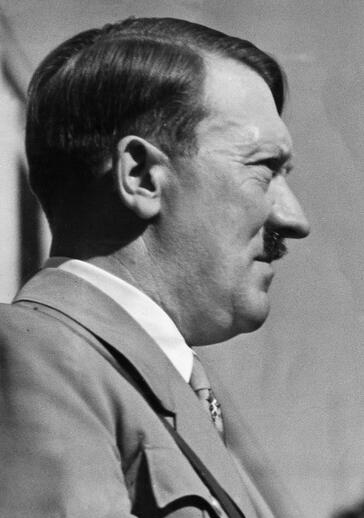
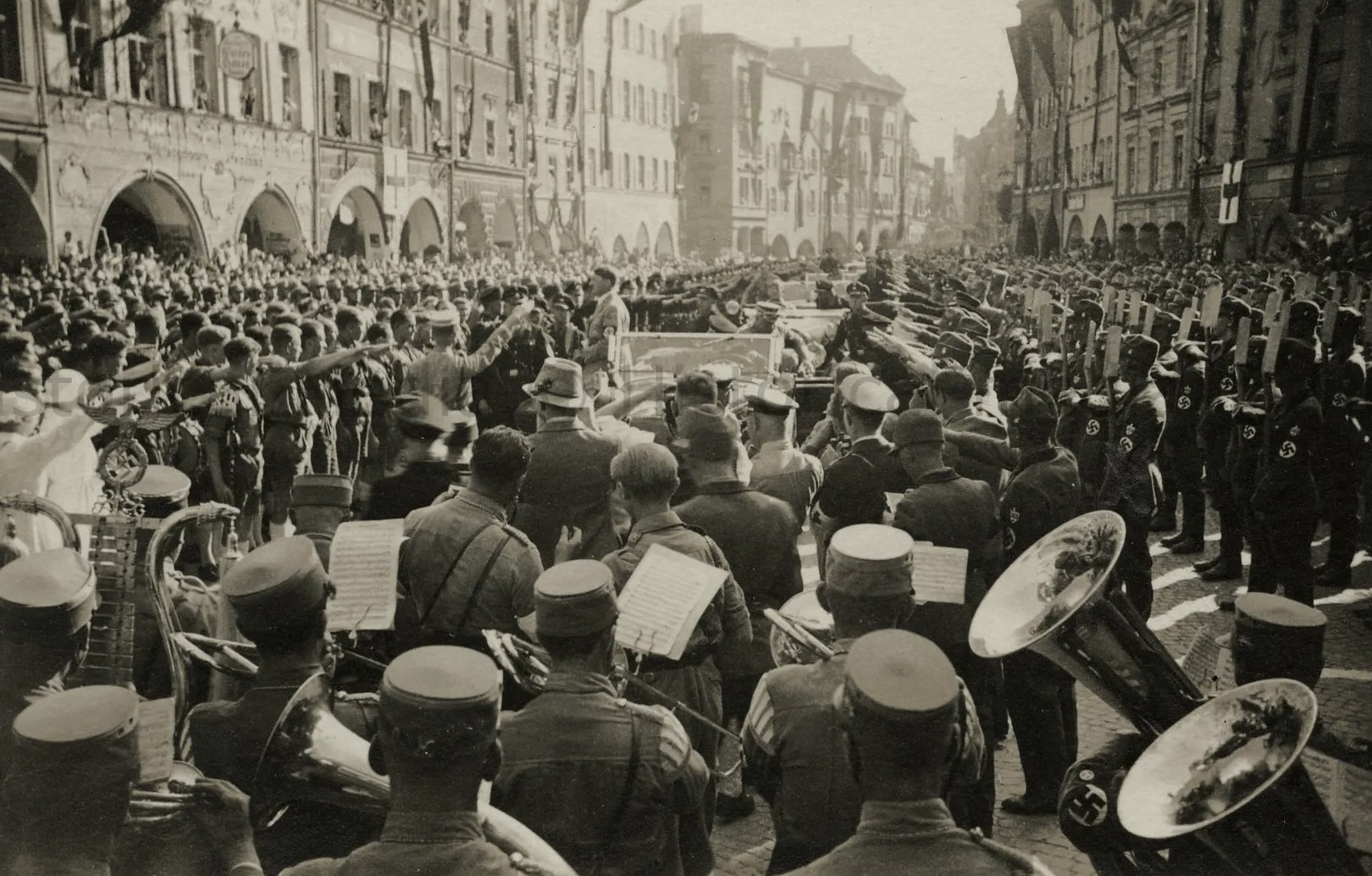
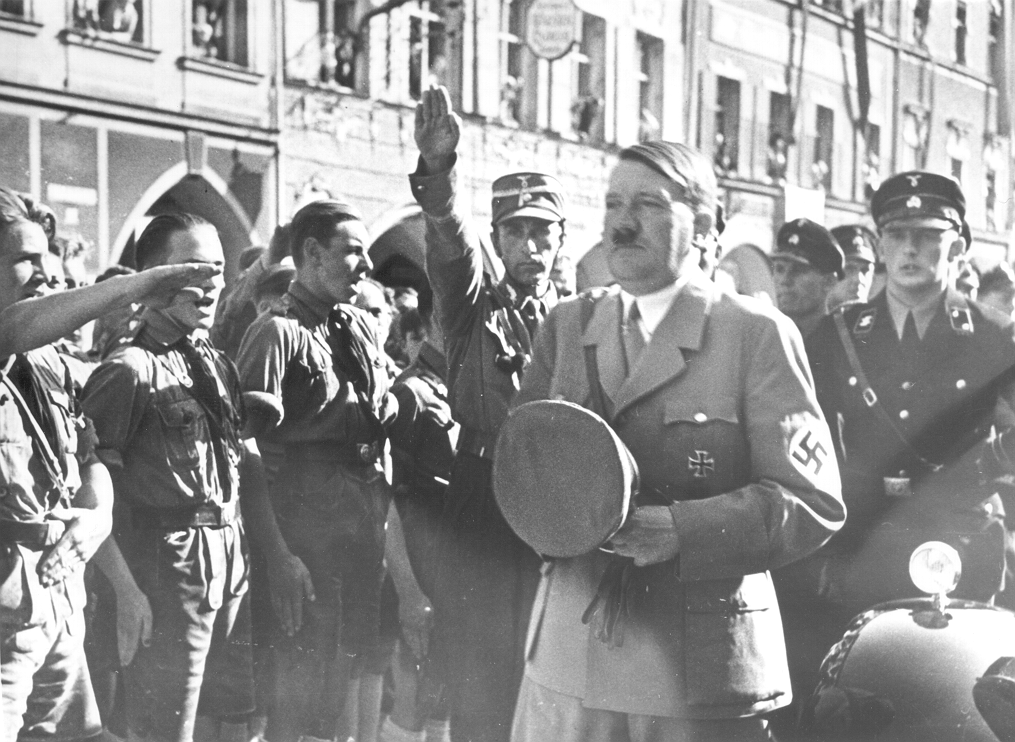
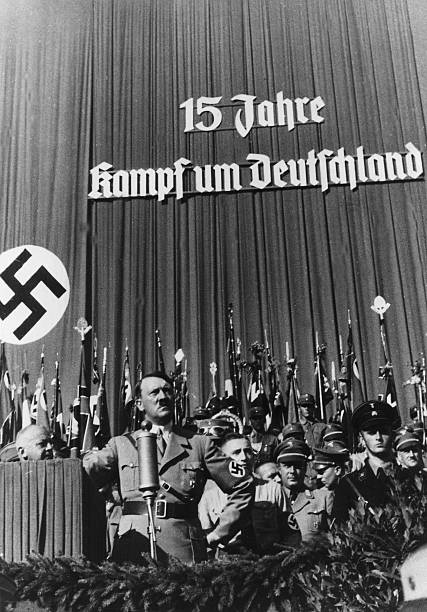
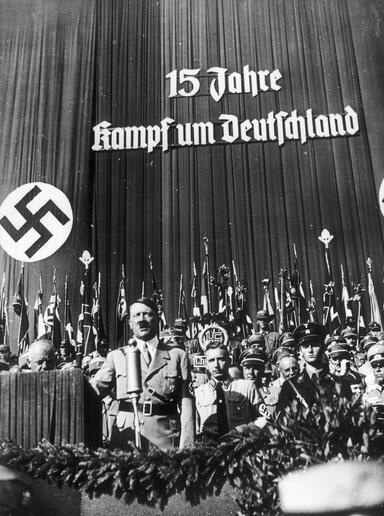
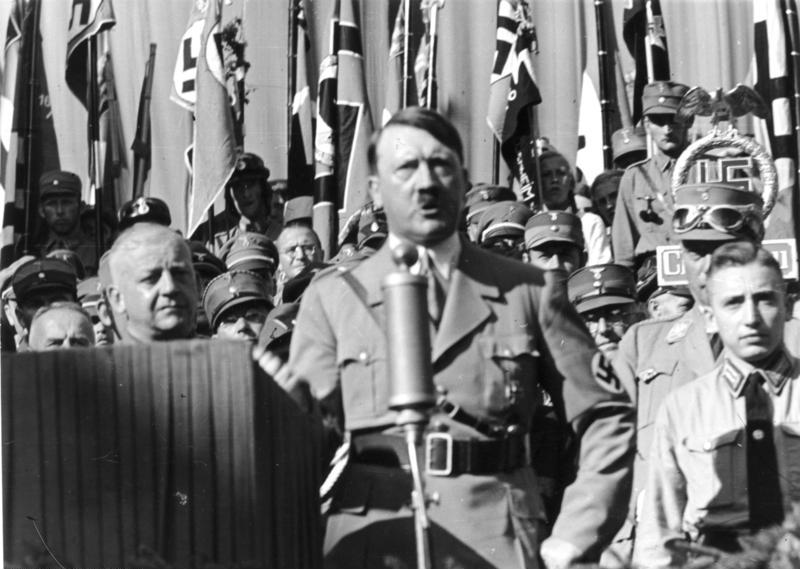
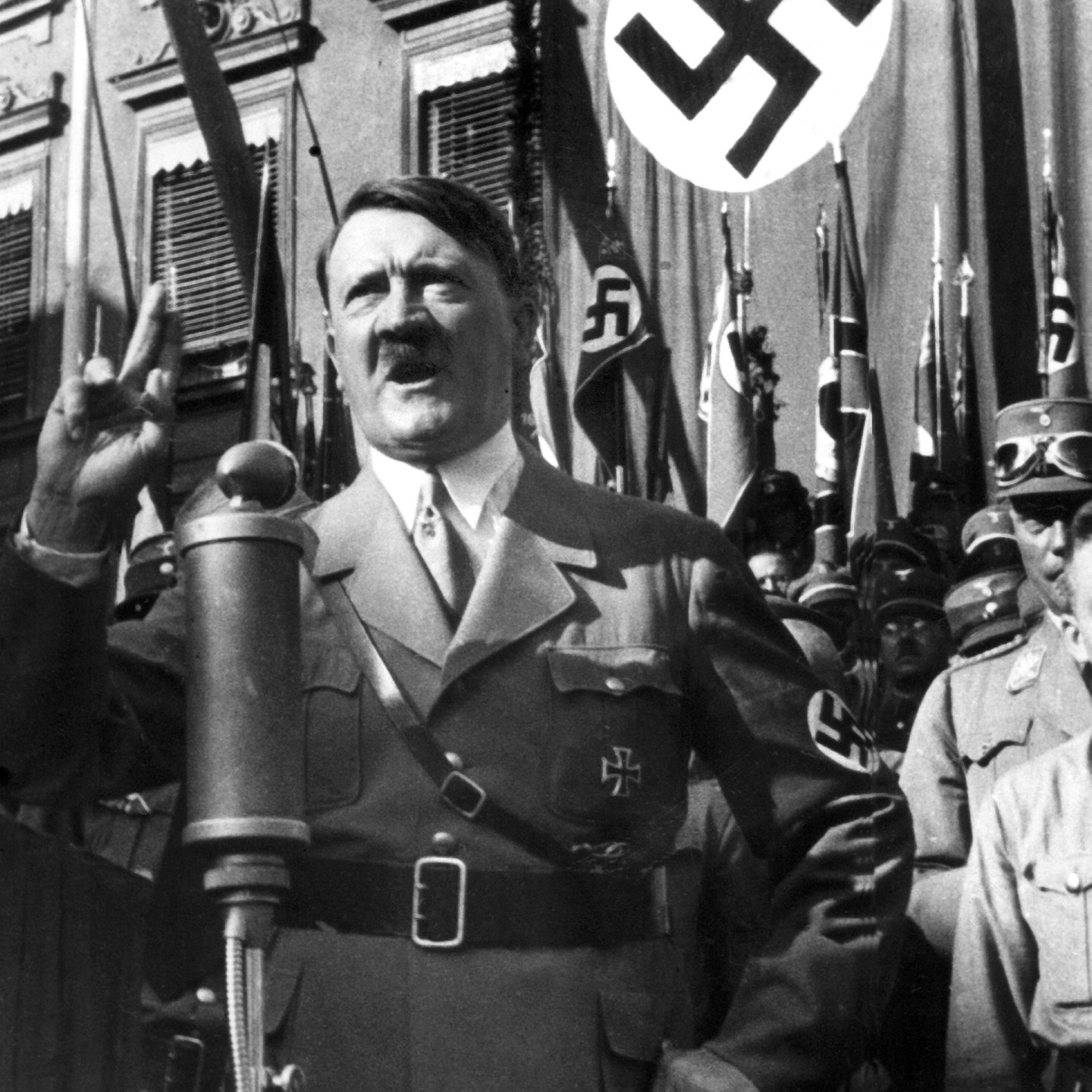
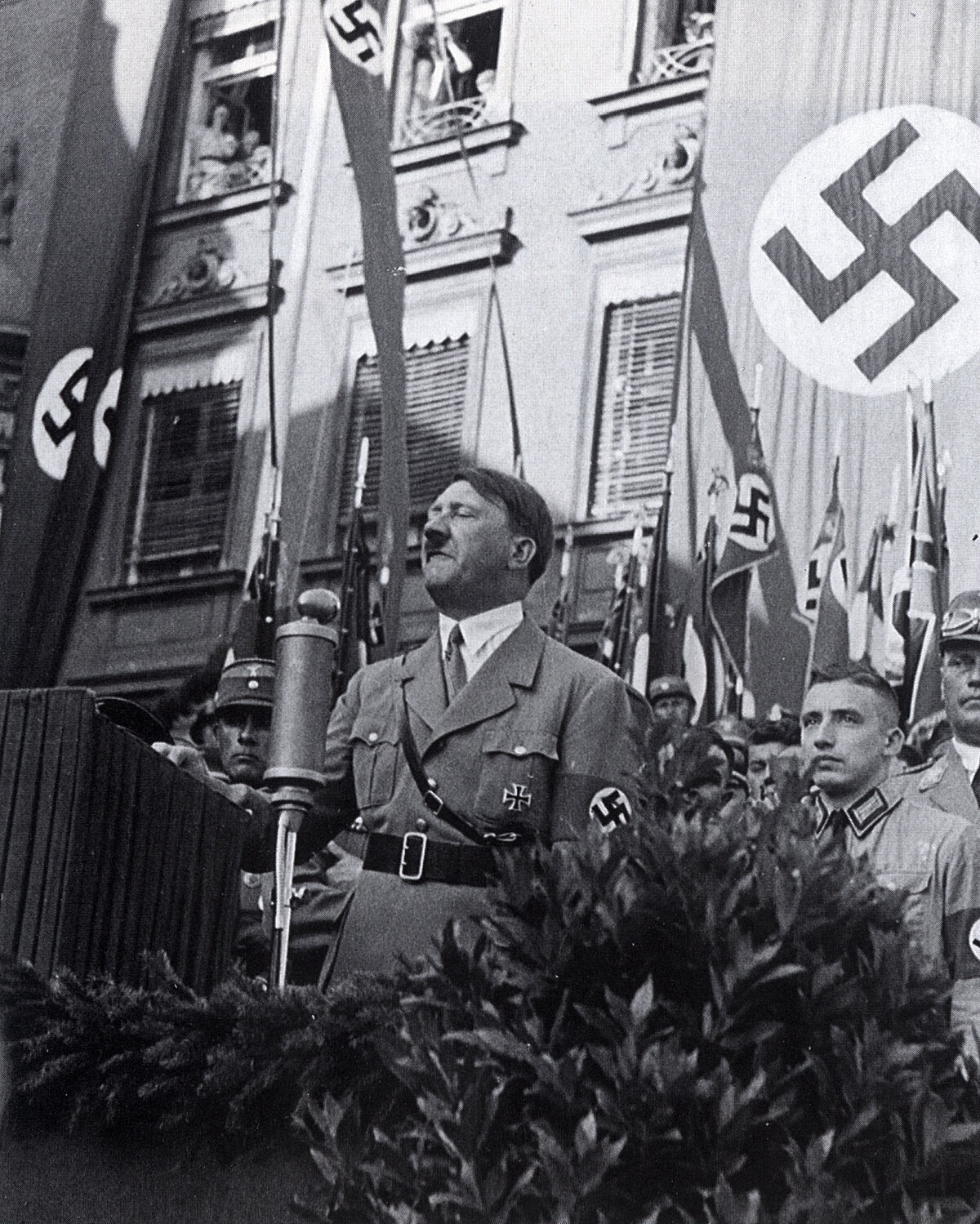
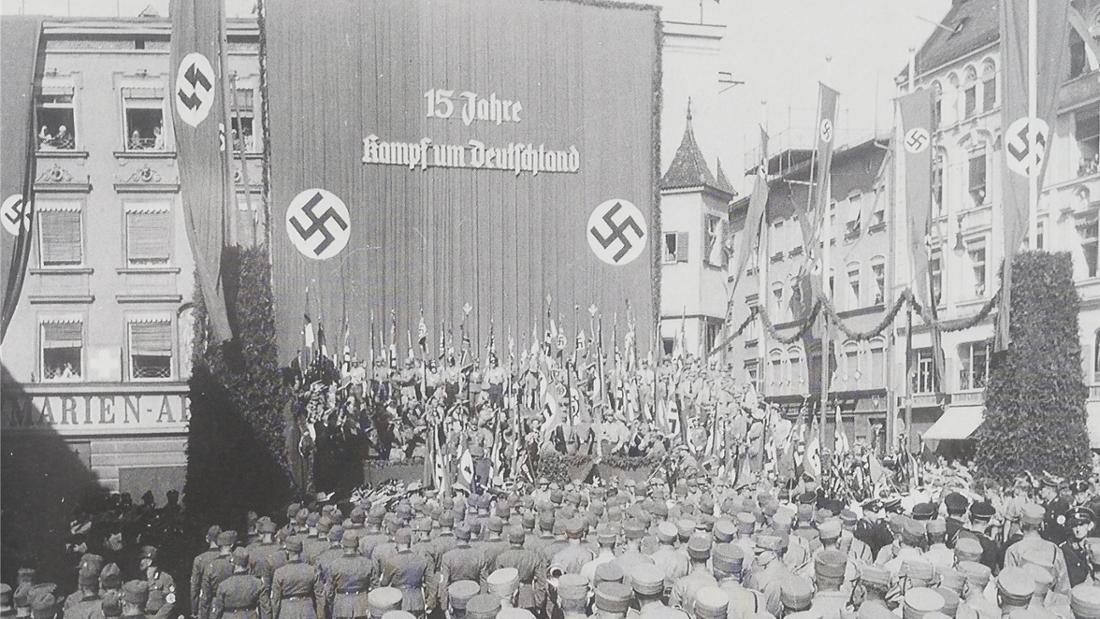
On 11 August 1935, Adolf Hitler paid a surprise visit to Rosenheim to deliver a special speech at the Max-Joseph-Platz to mark the 15th anniversary of the founding of their local Nazi Party (NSDAP) branch. Rosenheim was the second local group of the NSDAP to be founded in Germany, the very first outside of Munich. Their branch started with only 13 members but had expanded to over 260 by the end of the year 1920. The founding of the Rosenheim NSDAP took place well over two years before the famous Coburg Day, and three and a half years before the 1923 Putsch. An estimated crowd of 10,000 people attended the afternoon event and commemorative speech.
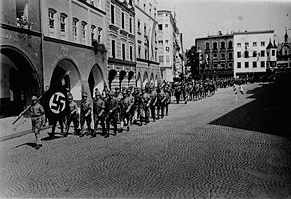
The SA march at the Gau party congress held in Rosenheim on 1 September 1929. Rosenheim was an early stronghold of the National Socialists.
Even before the celebrations began, the two Rosenheim daily newspapers reported in words and pictures on the “old guard” who, on 18 April 1920, at the initiative of government councilor Theodor Lauböck, had founded the first National Socialist local group outside Munich in Rosenheim. Hitler himself had appeared as a speaker many times in Rosenheim during the founding year, but the programs for the anniversary event initially listed only the Gauleiter of Munich-Upper Bavaria, Adolf Wagner, as the main speaker. A heraldic rose, from whose blossom a swastika grows, adorned the clothing of Rosenheim citizens as a commemorative pin on the evening of August 10, when they awaited the parade of party formations for the Grand Tattoo, scheduled for 11 p.m. in front of the Hotel “Deutscher Kaiser.” Meanwhile, Deputy Gauleiter Otto Nippold spoke in the Hofbräuhaus at the ceremony held there. However, only party members and “comrades-in-arms” were allowed entry. A pageant performed by the Reich Labor Service concluded the event.
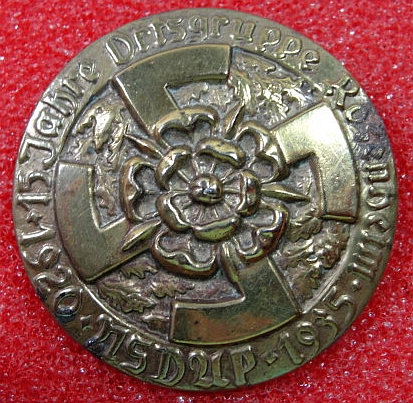
The tinnie produced for this occasion featured the wording “1920. 15 Jahre Ortsgruppe Rosenheim. 1935. NSDAP” running around the border. The center had a large swastika with Rosenheim’s coat of arms superimposed on it.
The actual celebrations, however, took place on the following day. In the city, bedecked with swastika flags, a procession of all local Nazi organizations assembled on Chiemseestraße at 7 a.m. after the SS had sounded the alarm. The march’s destination was the war memorial on the Loretowiese, where a ceremony honoring fallen soldiers was held. Parallel to the local group’s founding celebration, the laying of the foundation stone for the new Municipal Gallery took place around 11 a.m. in the presence of Mayor Georg Zahler and Legal Advisor Erich Holper. The foundation stone box, donated by Karl Göpfert, contained not only pictures of Hitler and Göring but also the commemorative coin and the commemorative publication for the local group’s anniversary. After the lunch break, the march resumed: A “propaganda procession of three thousand” marched in rows of six along Prinzregentenstraße and Küpferlingstraße to Max-Josefs-Platz, led by the “old fighters” of the 10th SA Company.
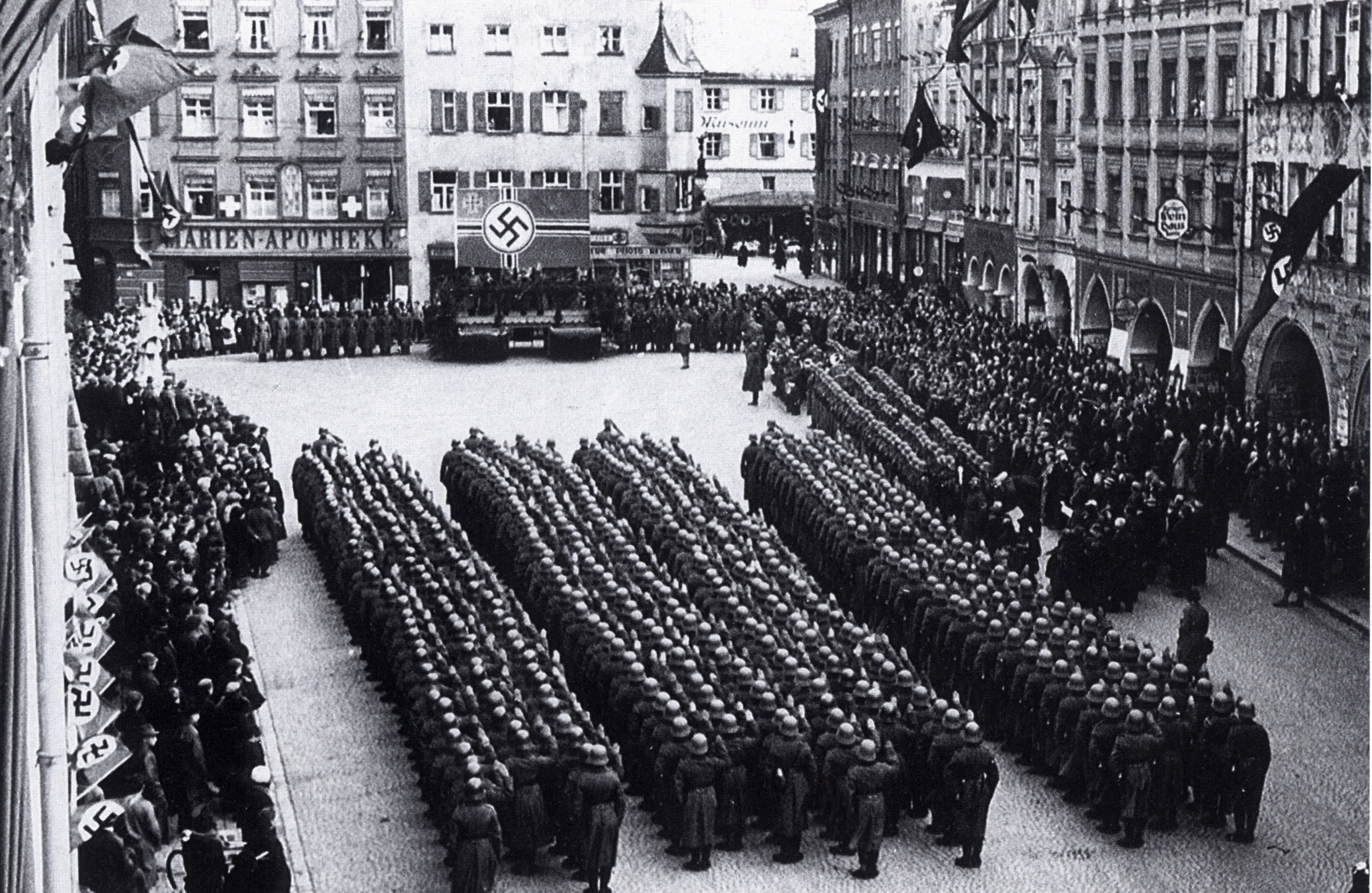
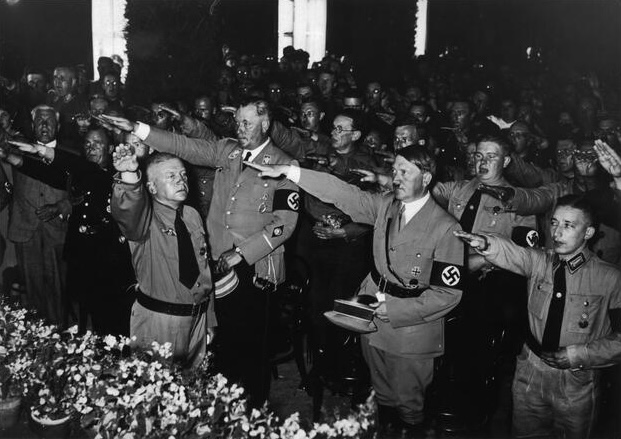
By now, word had spread among the assembled crowd that Hitler himself was expected in Rosenheim. At 3:40 p.m., a motorcade finally approached from Königstrasse. The Rosenheimer Tagblatt described Hitler’s arrival at the Hofbräuhaus in dramatic fashion:
“Suddenly, the entire hall is transformed. The men in brown uniforms stand up. They climb onto the chairs. With difficulty, an aisle is kept clear between those waiting (…) and now, followed by the Gauleiter, now comes the Führer himself! The Führer has not forgotten his loyal local group! The Führer has come to Rosenheim!”
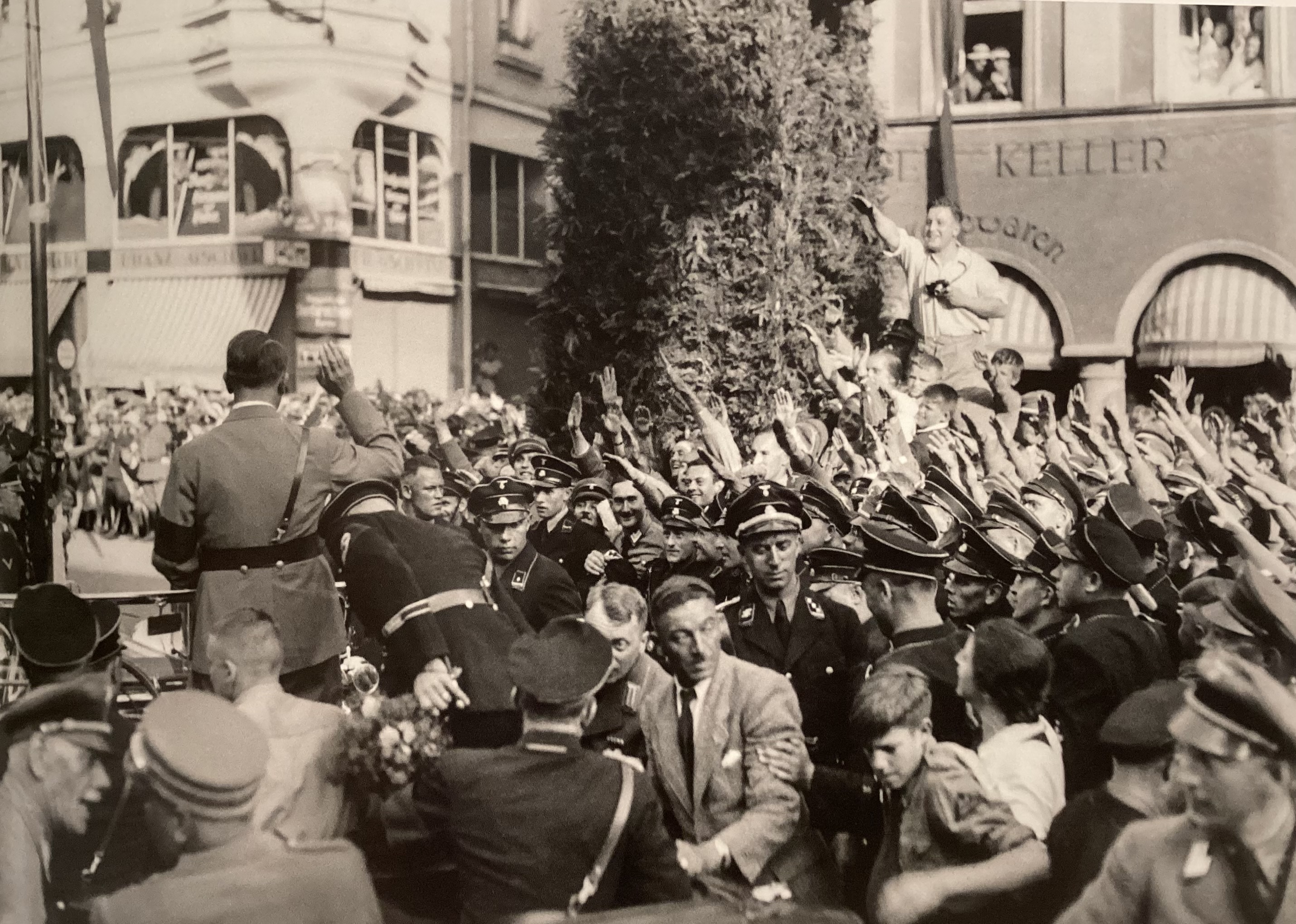
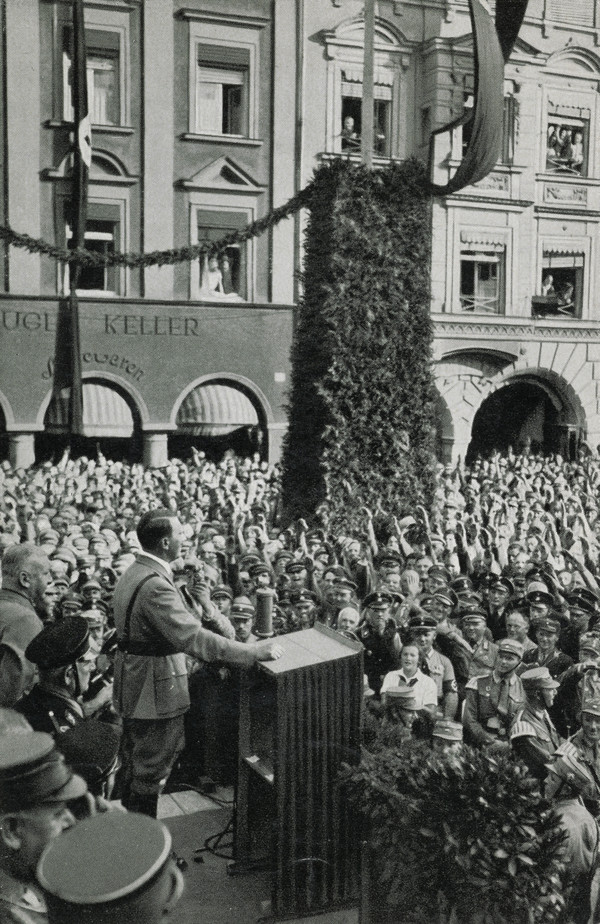
The scenes were repeated in Max-Josefs-Platz, packed with 10,000 people: enthusiastic crowds, little girls with bouquets of flowers. Hitler stepped onto the platform and delivered a rousing speech about the “struggle of the movement” and his first visits to Rosenheim. His unannounced appearance in Rosenheim, staged as a sudden arrival, was intended to suggest spontaneity and underscore Hitler’s connection with his old comrades in the Innstadt. With political acumen, Hitler supposedly still remembered every single member of the “Old Guard,” with whom he amiably sat in the swastika-adorned room of the Flötzinger Löchl after the festivities, reminiscing about old times. Even days after Hitler’s visit to Rosenheim, the local newspapers were full of articles and photos of the “great event.”
On the 18th of April 1920, the first local group of the NSDAP outside Munich was founded in Rosenheim. This made Rosenheim the second local group of the NSDAP in Germany. Already on the 2nd of May the first public meeting took place, at which Hitler, among others, spoke on the subject of “German workers and German communism”.
Until the end of 1920, Hitler appeared eight more times as a speaker in Rosenheim. According to police reports, these gatherings were always well attended. The local NSDAP group, initially founded by 13 members, grew rapidly to over 260 members during the course of 1920. In 1921 and 1922, the previously stormy party growth stagnated. Even the establishment of other local groups in the surrounding area, for example in Kolbermoor, did not initially succeed. Interested parties therefore joined the local group in Rosenheim.
As early as 1920, a “security troop” was formed, which ensured that the assemblies of the NSDAP took an undisturbed course. In 1921, this security troop of about twenty men was converted into a storm department (SA), which was led by Josef Maier and Ignaz Dirschl and was also actively involved in Munich heer hall battles.
The founding members of the Rosenheim local group came mainly from the middle and upper classes. After Hitler’s coup attempt on 9 November 1923 and the prohibition of NSDAP and SA, the NSDAP also seemed to have received a considerable setback in the number of members in Rosenheim. But the appearance of “disguissed” National Socialists in the Rosenheim city council as an “apolitical citizen list” even before the party’s re-admission in February 1925 shows that the hard core of the NSDAP continued to be active.
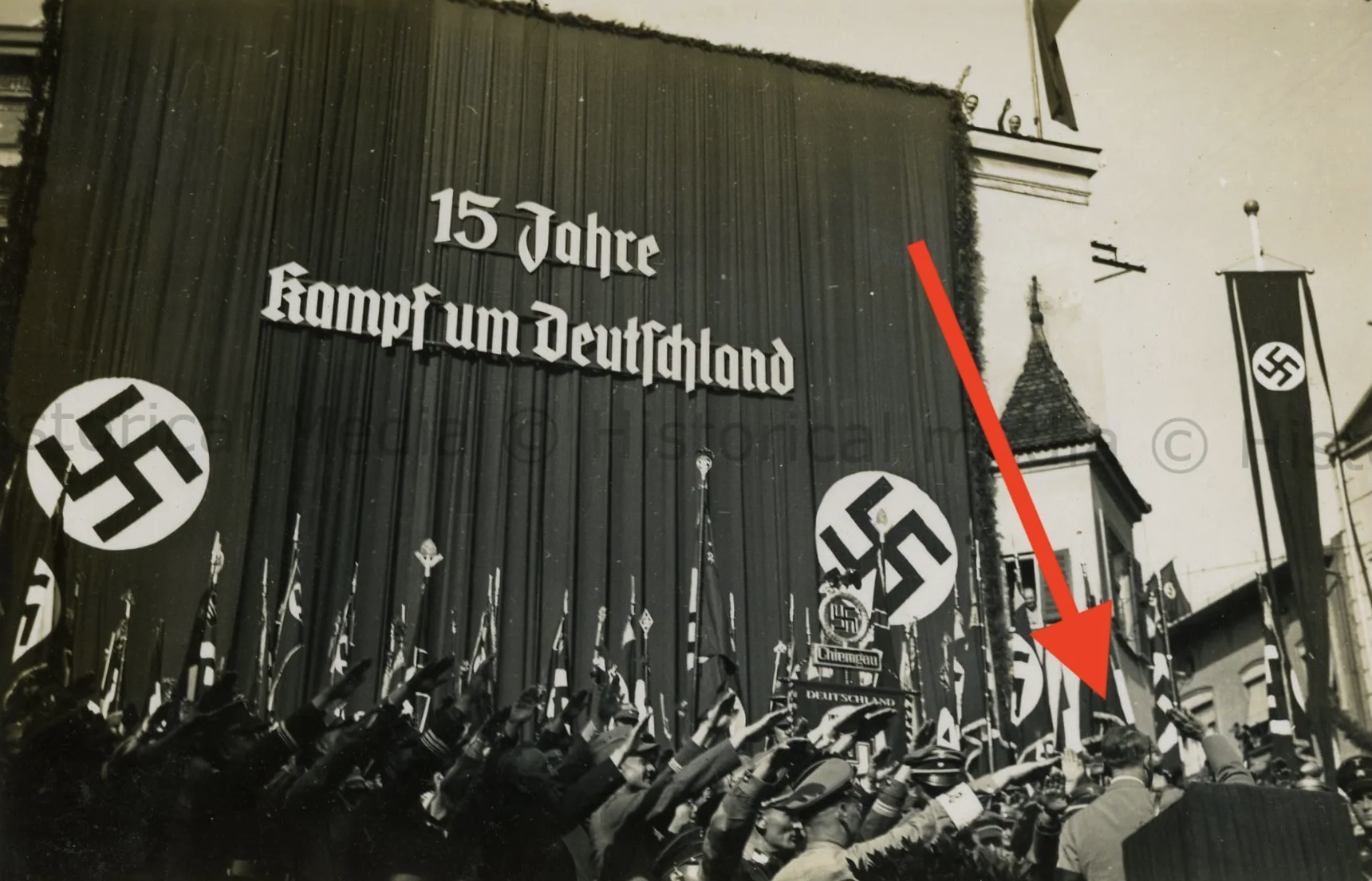
The exact location this event took place is in front of the current Deutsche Bank and Cafe Weth, located at Max-Josefs-Platz 30 in Rosenheim.
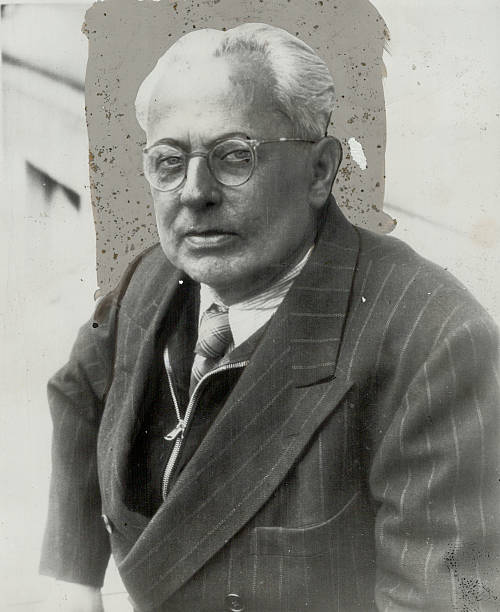
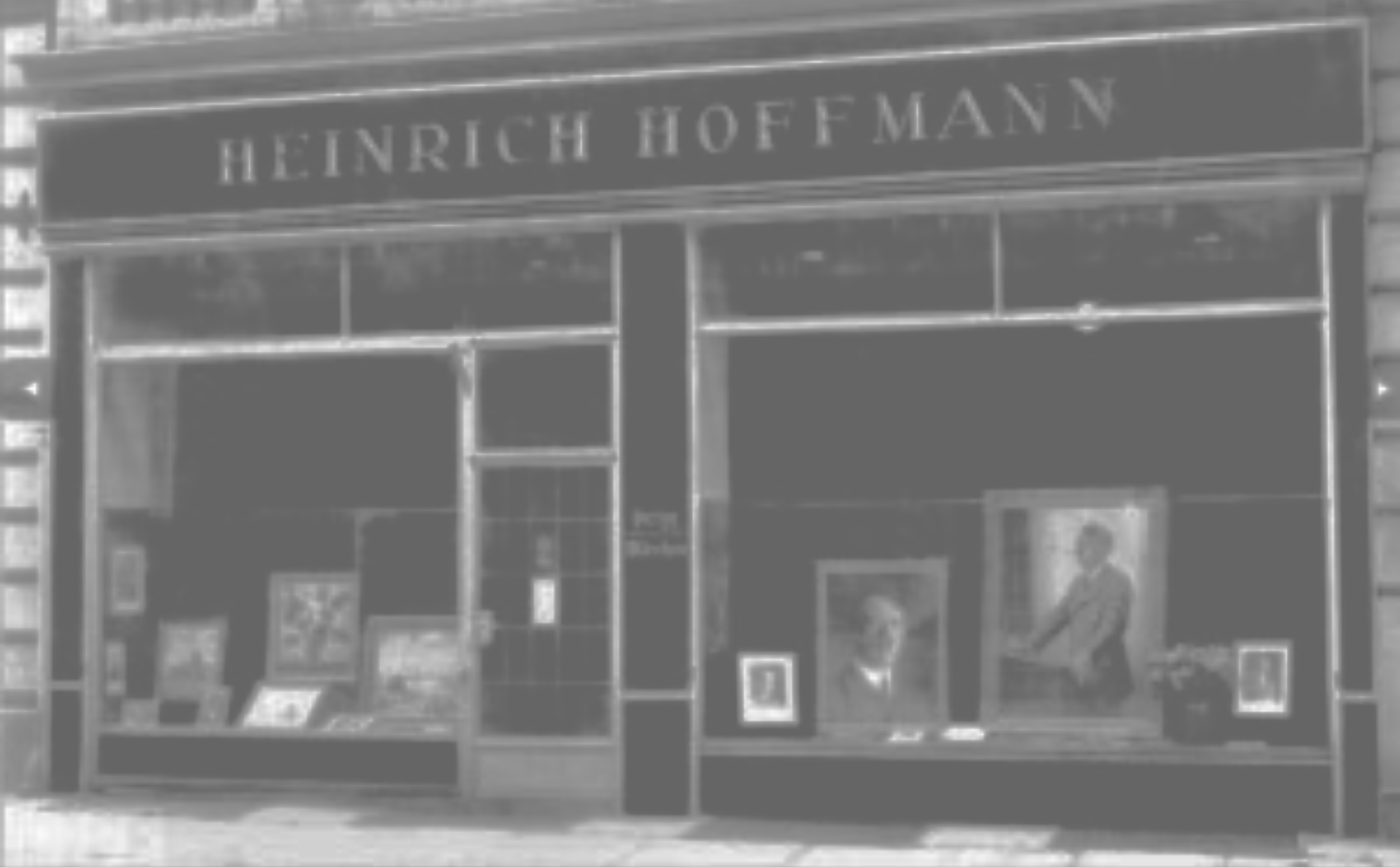
Interestingly Heinrich Hoffmann was arrested near Rosenheim on 10 May 1945, less than 10 years after this event. This photo appeared with the phrase “More Nazi Chiefs Land in Allied Net” as a newspaper headline across the world at the end of World War II, referring to the rapid capture of high-ranking Nazi commanders and officials by Allied forces as the Third Reich collapsed.