On 14 October 1922, Adolf Hitler and approximately 800 members of his paramilitary Sturmabteilung (SA) boarded a special chartered train from Munich to Coburg for a nationalist rally known as “German Day” (Deutscher Tag). The journey and the subsequent event became a foundational cornerstone of Nazi Party mythology. Hitler even dedicated an entire chapter to this train trip and its aftermath in Mein Kampf, and titled it “Zug nach Coburg” (which translates to “March on Coburg” or “Train to Coburg”). Upon arriving in Coburg, the SA men engaged in fierce, violent street battles against communist and socialist workers. Hitler and the Nazis used their victory to claim that they had “liberated” the city from the “Red Terror” of the left.
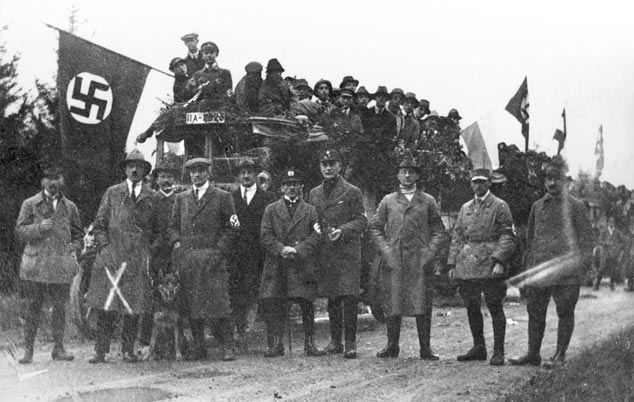
Hitler departed Munich around 6.00 a.m. on Saturday the 14th of October. He marched down Corneliusstraße to the train station with 800 men of the SA. Mocking songs were sung to Jewish travelers during a stopover in Nuremberg. Around 11:00 a.m the train arrived for the third German Day, a major event carried out by the Deutschvölkischer Schutz- und Trutzbund, which is held annually at changing locations. For the NSDAP, this is their first performance outside of Bavaria, although Coburg has been Bavarian since 1920. Hitler resists police orders and marches through Lossaustraße and Mohrenstraße to the Hofbräu restaurants in Mohrenstraße 19. The police close the gates, but Hitler argues with a police major, gives a short speech to his supporters and forces the opening of the gate. He marches through Löwenstraße and Viktoriastraße to the Alte Schießhaus an dem Anger. Here he personally becomes violent against demonstrators by hitting them with his stick, while he himself is almost hit with brass knuckles. Around 8 p.m., Hitler gives a speech in the upper hall of the Hofbräu restaurants. During the night, a member of the SA is stabbed, becoming “the first dead of the movement”. Hitler lets the SA roam the city and take prisoners. He stays overnight in the old shooting house.
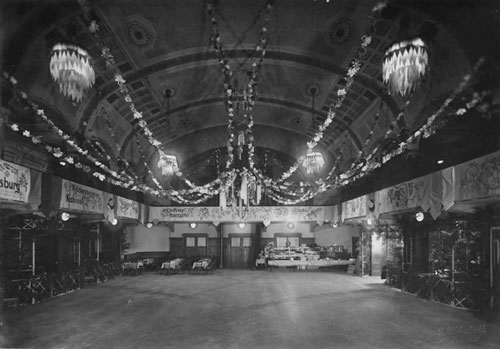
Adolf Hitler gave his first speech outside of Munich during the so-called “German Day” at the Hofbräugaststätten in der Mohrenstraße in Coburg. This is the grand Hofbräusaal as it appeared in 1928. It was demolished in 1972.
On Sunday morning Hitler walked over the Schlossplatz and through the Hofgarten up to the Veste, where he met with Carl Eduard Duke of Saxony-Coburg and Gotha. During the German Day, the SA was tested and proven as a fighting force and the use of uniforms will now begin. Around 10 p.m. Hitler returned to Munich with overnight stay on the train.
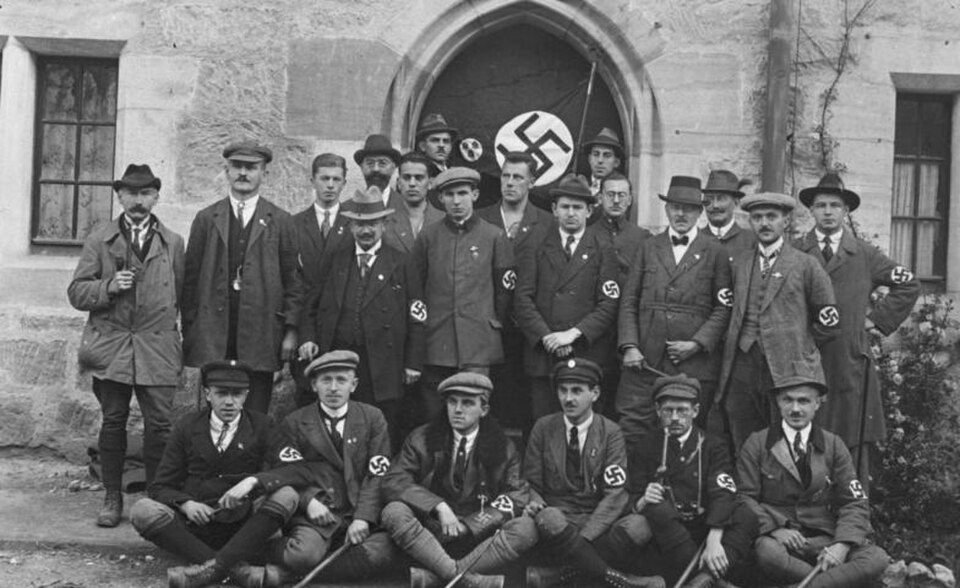
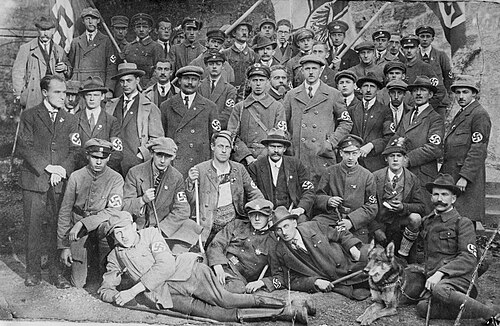
Coburg earned a reputation as one of the earliest and most enthusiastic centers of support for National Socialism in Germany, electing a Nazi-dominated city council as early as 1929. Hitler frequently returned to Coburg for anniversary celebrations of the 1922 event, such as the 15th-anniversary rally in October 1937, where he praised the Veste Coburg region and the local “old guard”. The NSDAP elevated this event to legendary status. In 1932, Hitler established the Coburg Badge (Coburger Abzeichen), which became one of the highest-ranking decorations within the Nazi Party, awarded to those who participated in the 1922 “liberation” clashes.
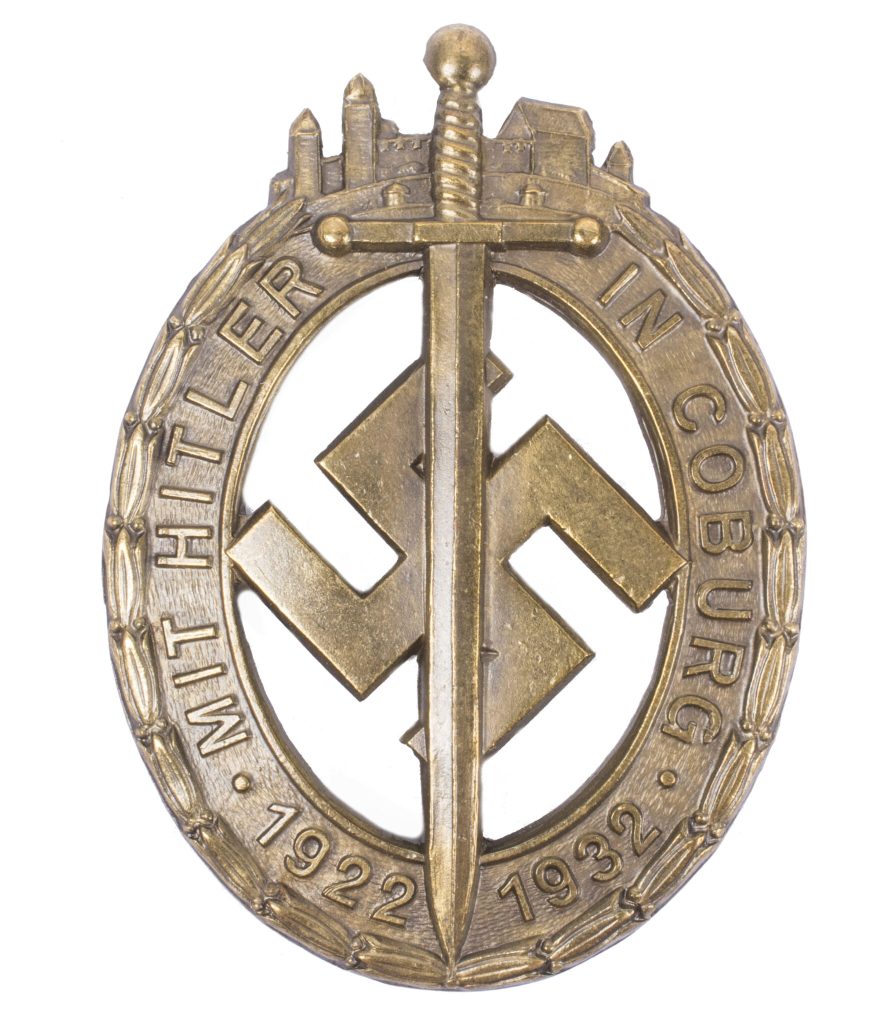
Hitler ordered the Coburg Badge to be struck on 14 October 1932 to memorialize the event which took place ten years earlier, on Saturday, 14 October 1922, and to honor the participants.
The victories in the 1922 street battles became a cornerstone myth for the Nazi regime, celebrated as the “capture” or “liberation” of Coburg from the left. The event was seen as a demonstration that the NSDAP was expanding beyond a local Munich faction into a formidable nationwide force. Fueled by the events of 1922 and the open support of Duke Carl Eduard (the last reigning Duke of Saxe-Coburg and Gotha), Coburg rapidly radicalized and paved the way for the NSDAP achieving absolute power in Germany.
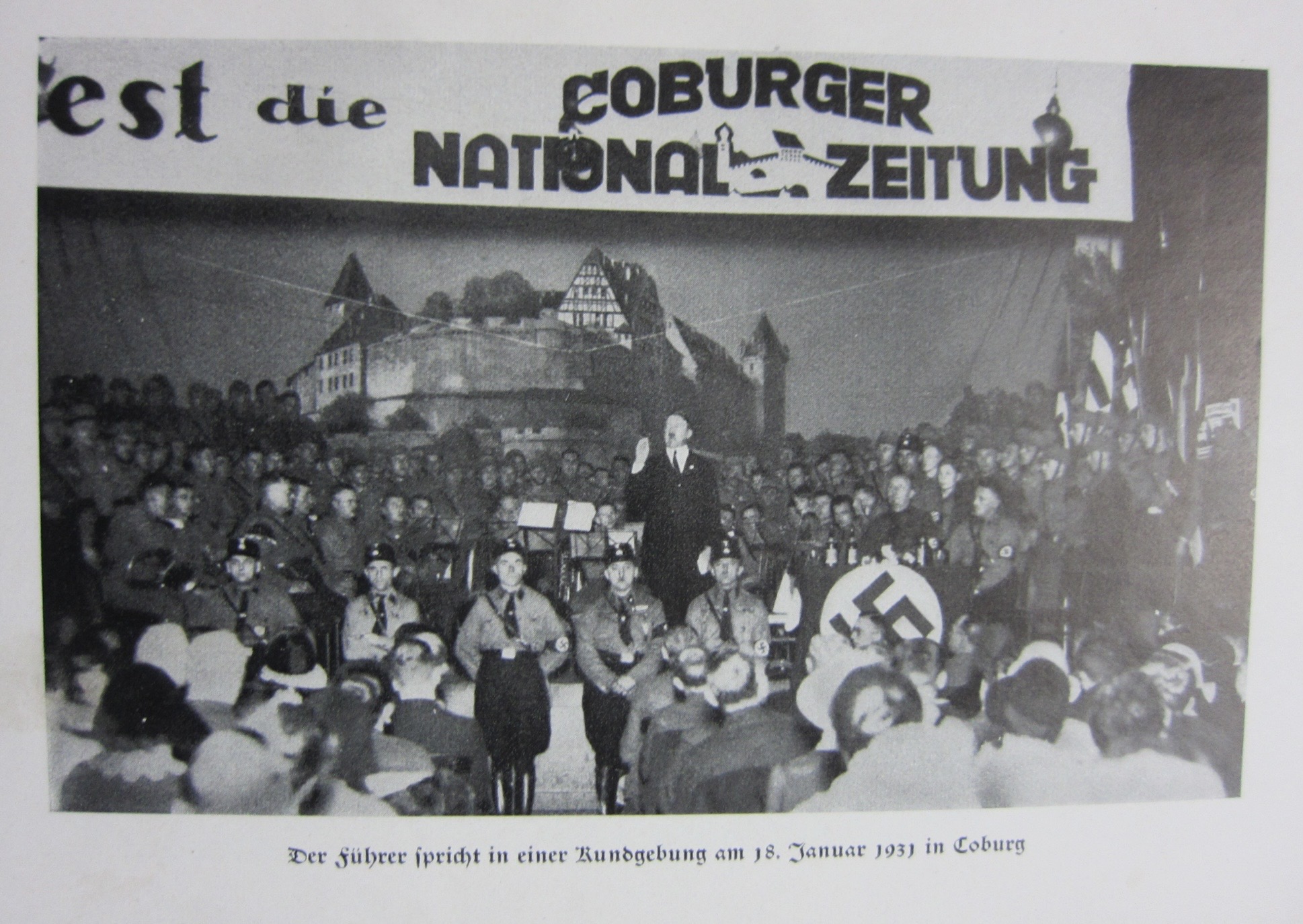
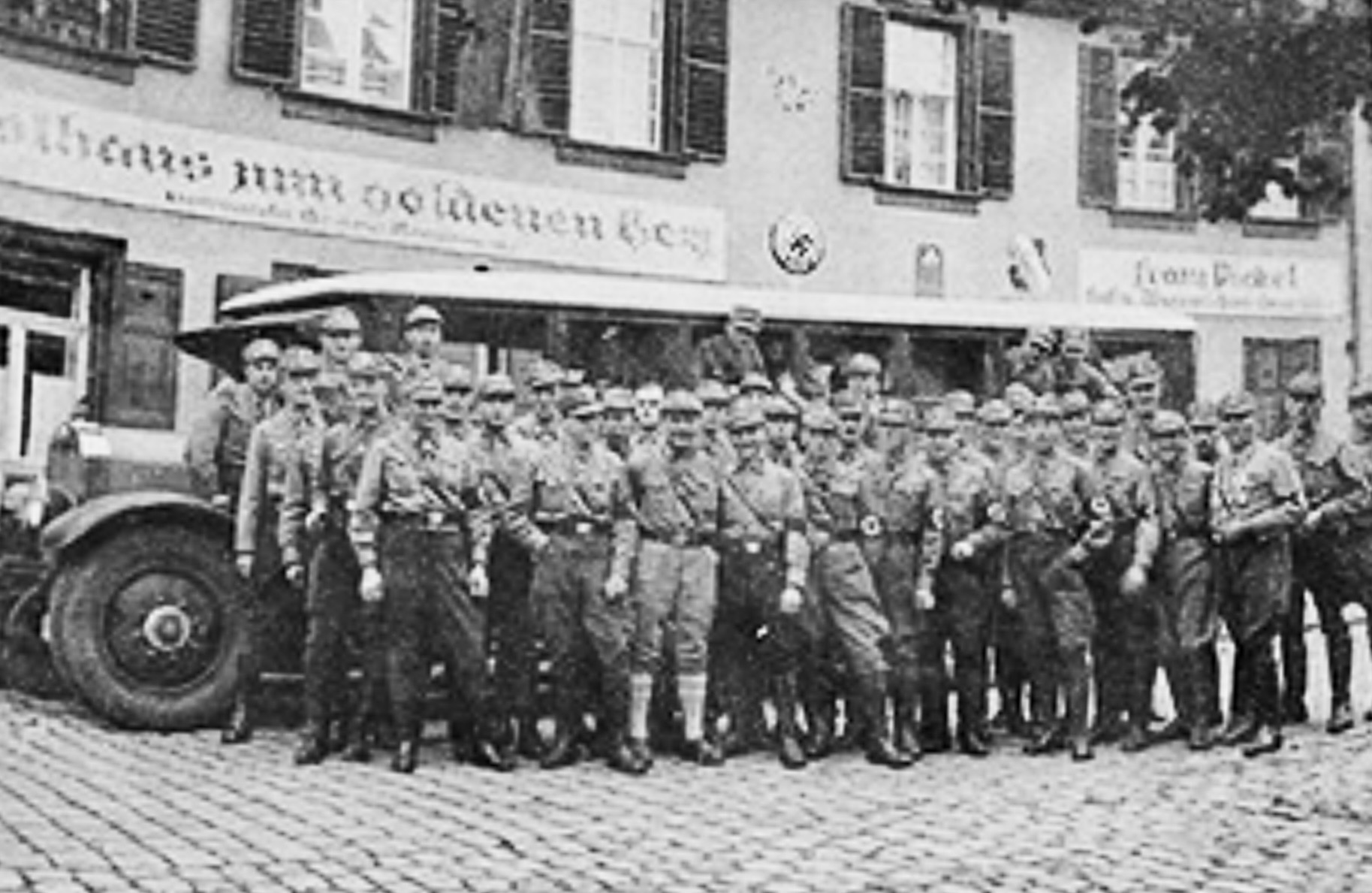
10th Anniversary 1932
Hitler returned to Coburg ten years after the German Day of 1922. He arrived on 16 October 1932 and met with Winifred Wagner and Wieland Wagner in the town hall. He paid a visit to the Regimentsstube and the Heimatmuseum and then moved on to deliver a speech in the stadium in Wiesenstraße in front of 30,000 listeners. Hitler is presented with the first German honorary citizenship certificate by the city of Coburg. Hitler criticizes Reich Chancellor Franz von Papen because of his domestic and foreign policy in an open letter. Hitler departs and continues on by car to Schweinfurt, to deliver a speech on the Schützenplatz in front of 9000 listeners. He also delivers a third speech in Würzburg in the Ludwigshalle located in Theaterstraße 21 in front of 5000 listeners.
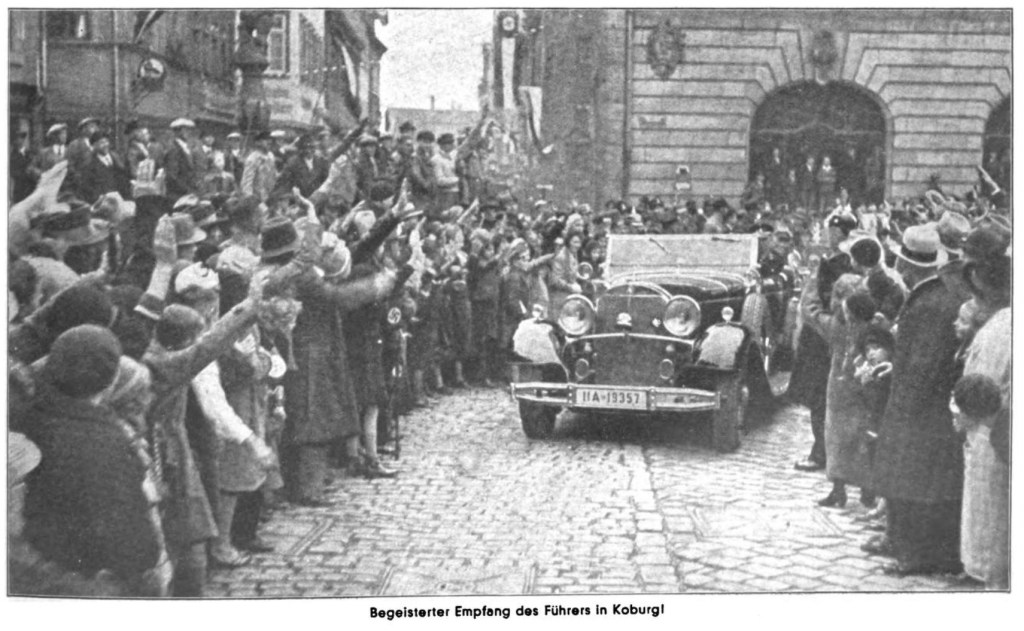
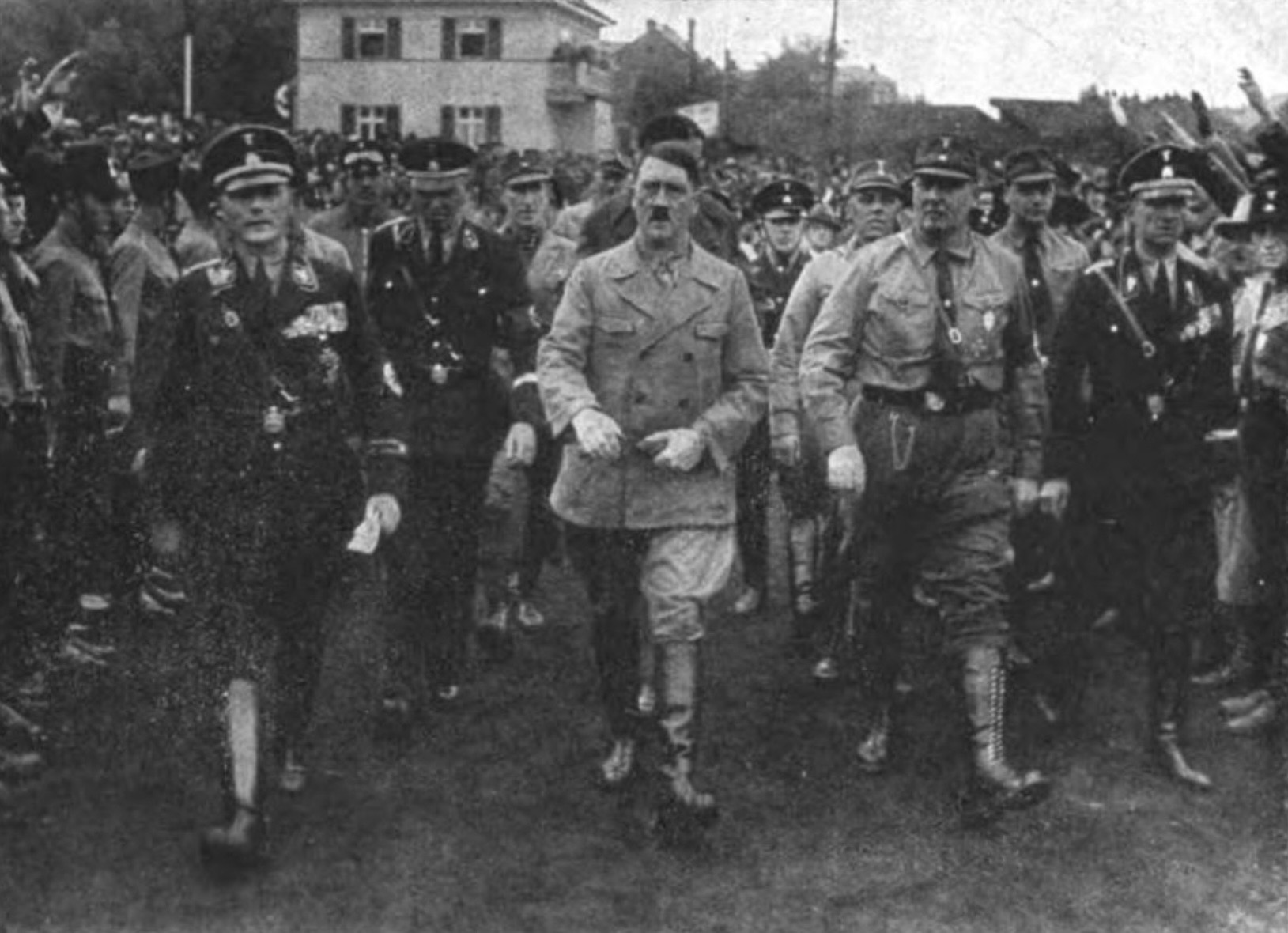
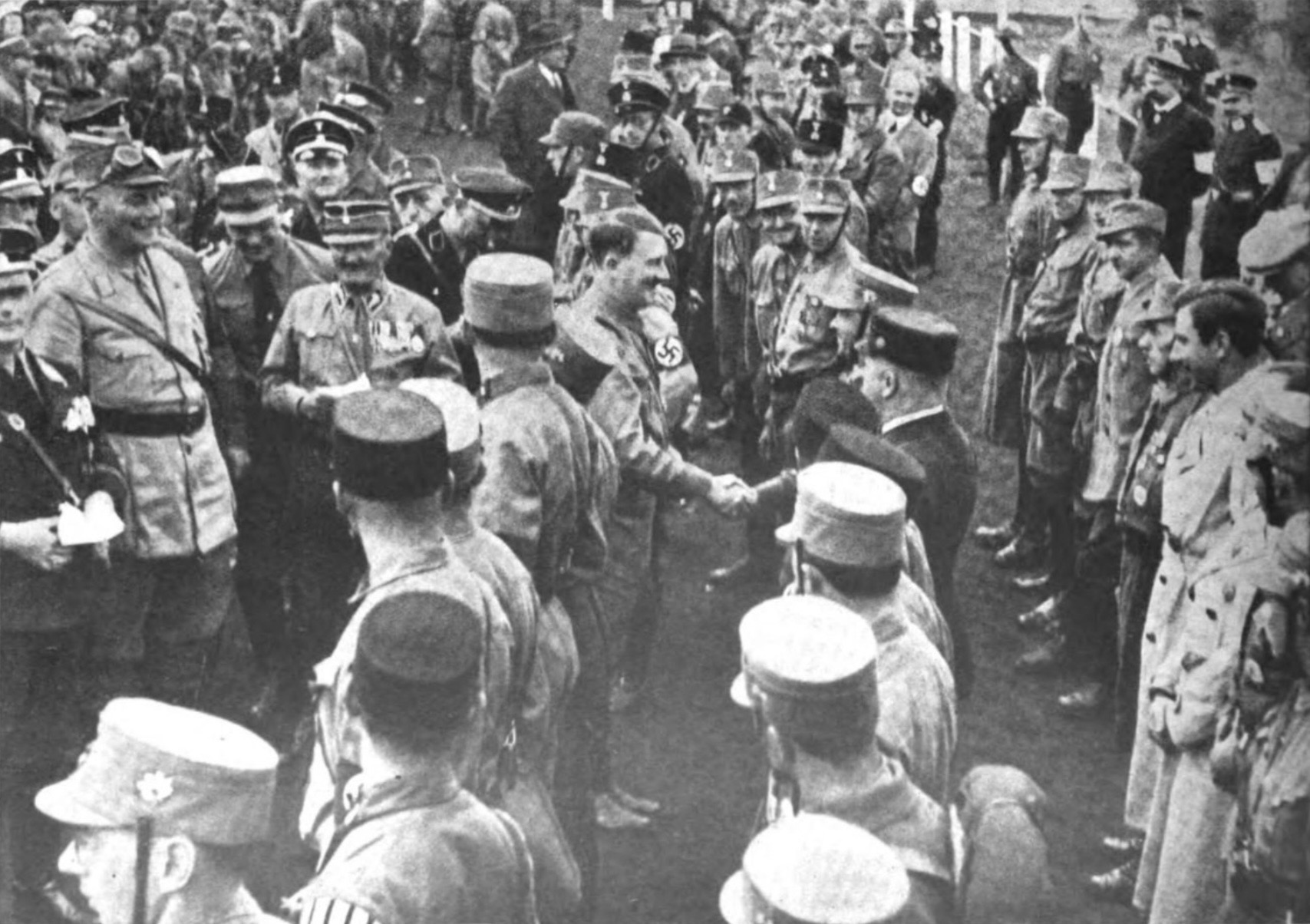
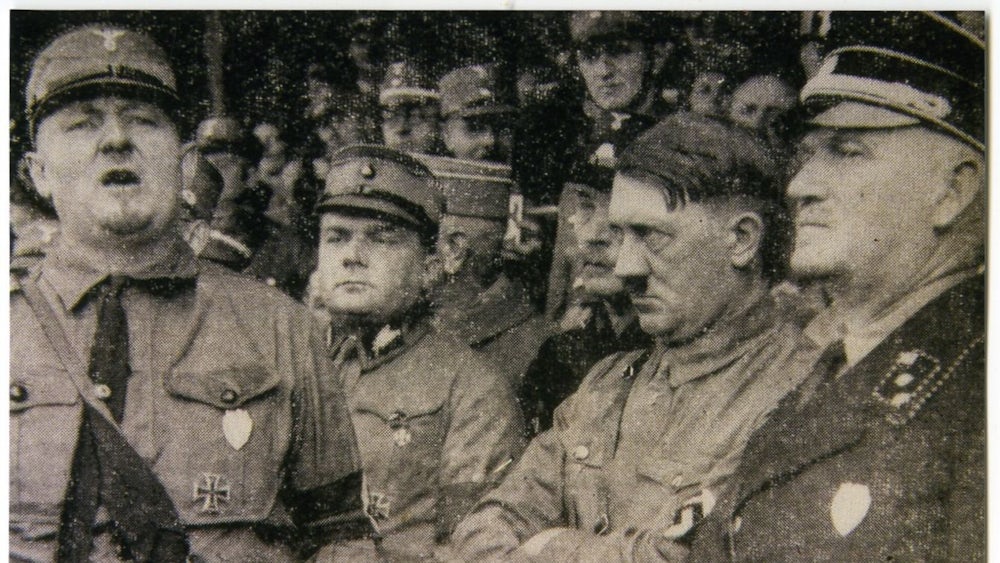
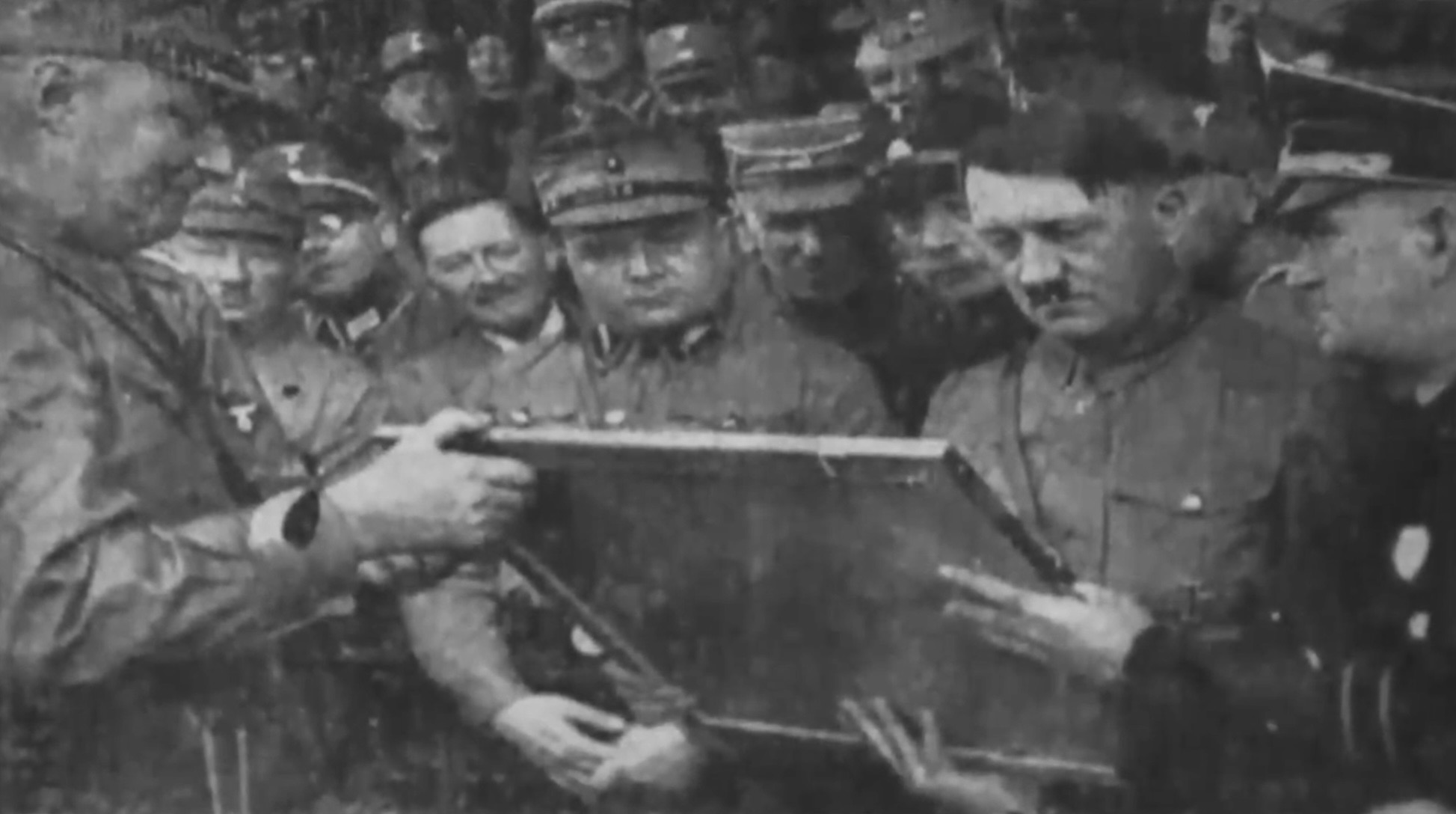
Coburg earned a reputation as one of the earliest and most enthusiastic centers of support for National Socialism in Germany, electing a Nazi-dominated city council as early as 1929. Coburg bore the honorary title “First National Socialist City of Germany.” In 1933, mayor Franz Schwede dedicated the Coburg City Hall’s new bell, which bore the rhyming inscription Zu Adolf Hitler ruf ich dich, Franz Schwede-Glocke heiße ich (roughly translated “To Adolf Hitler I call, I am called the Franz Schwede Bell”).
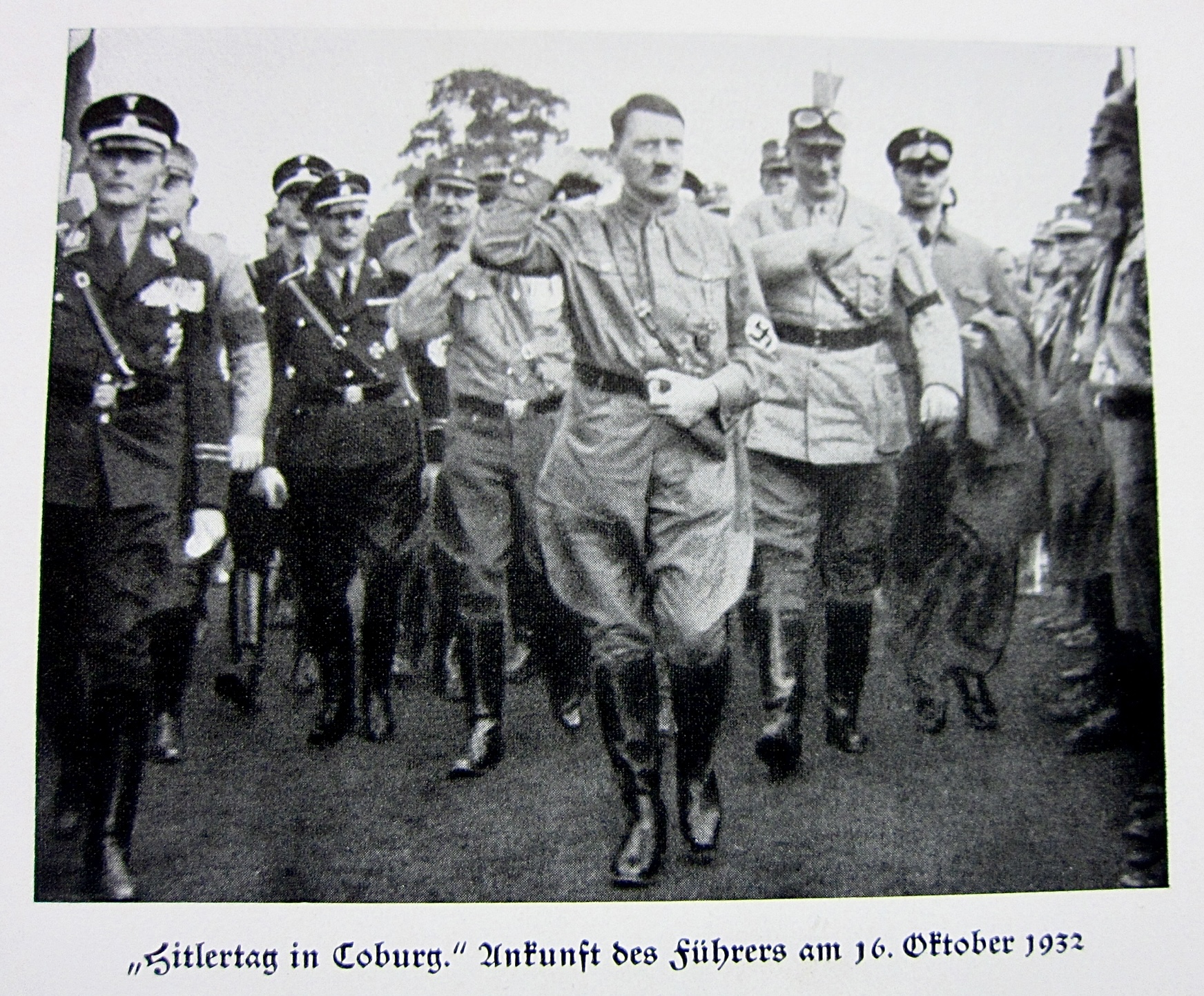
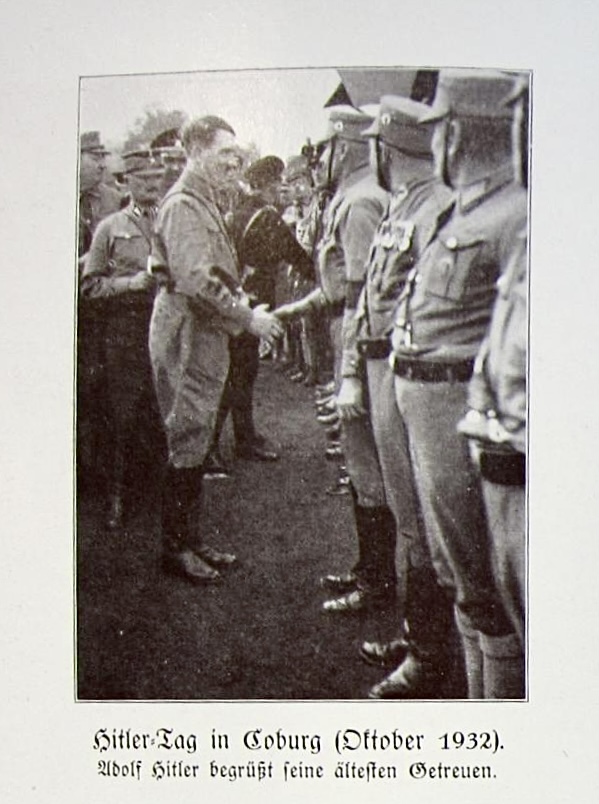
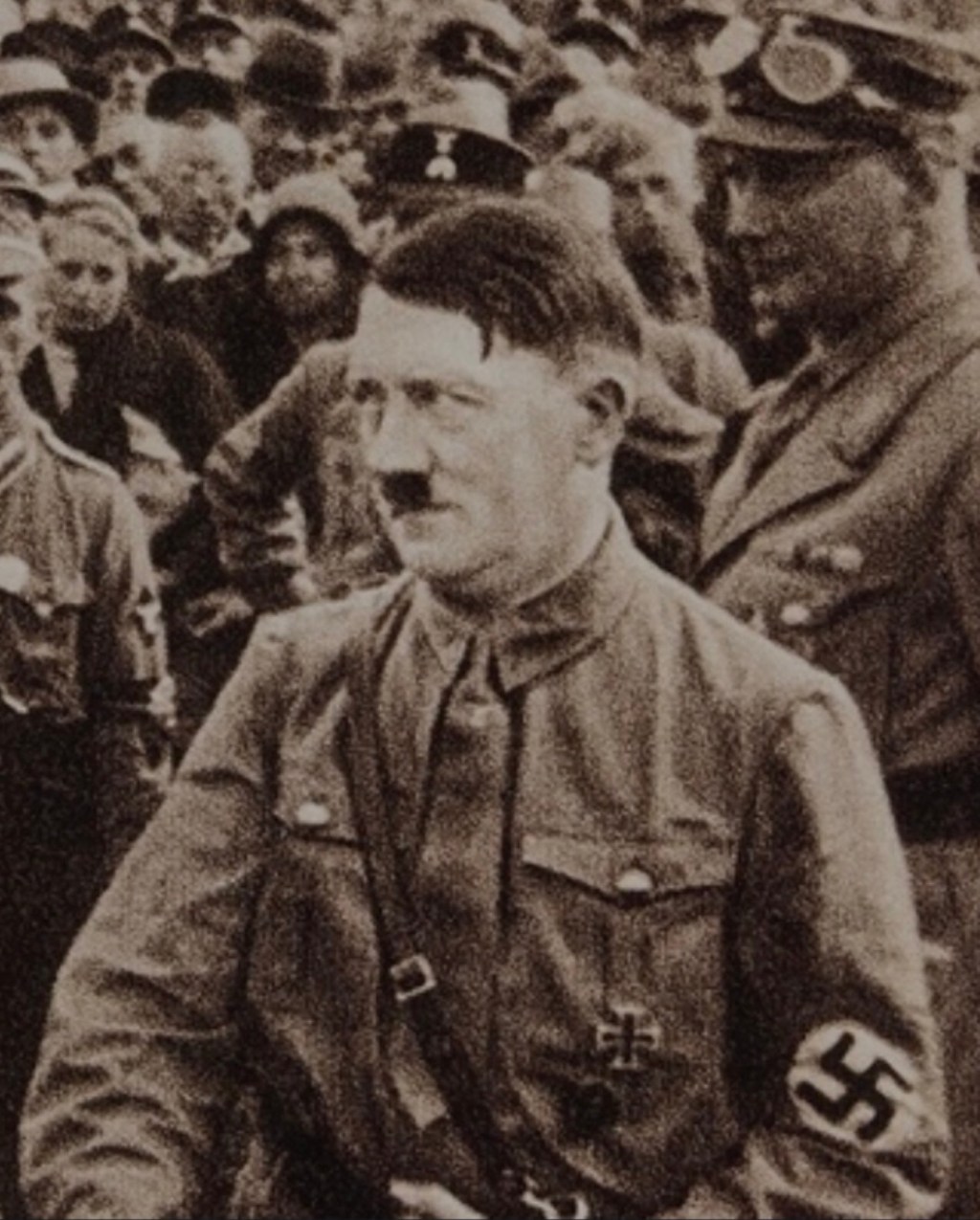
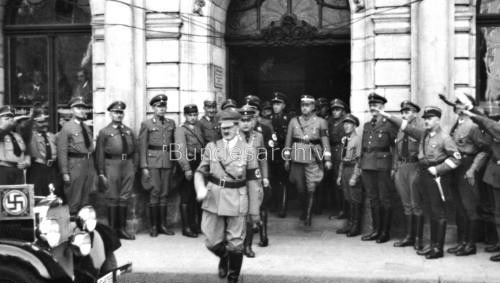
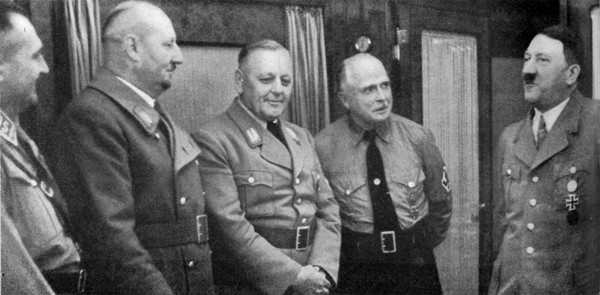
Adolf Hitler greets his oldest followers.
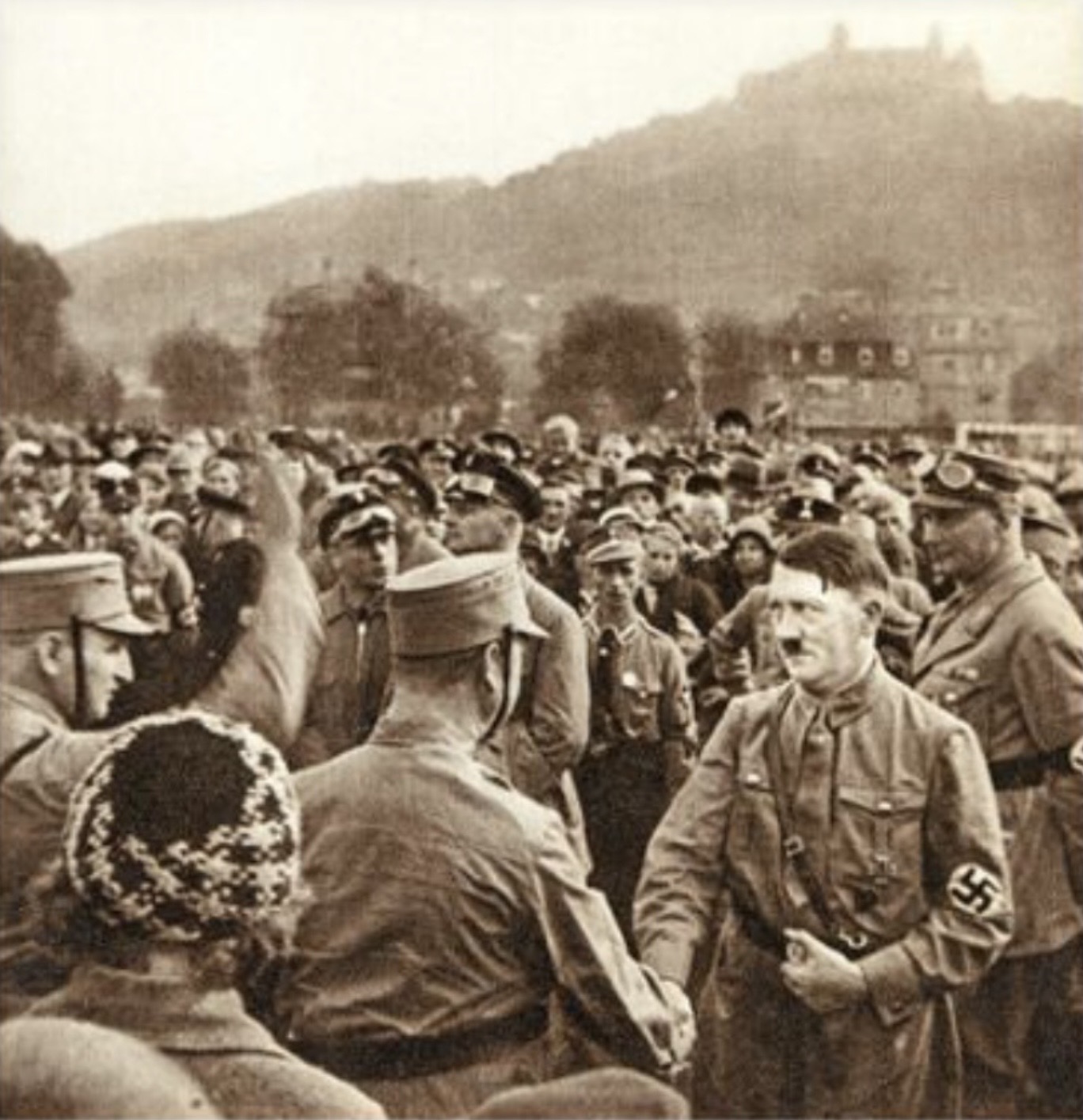
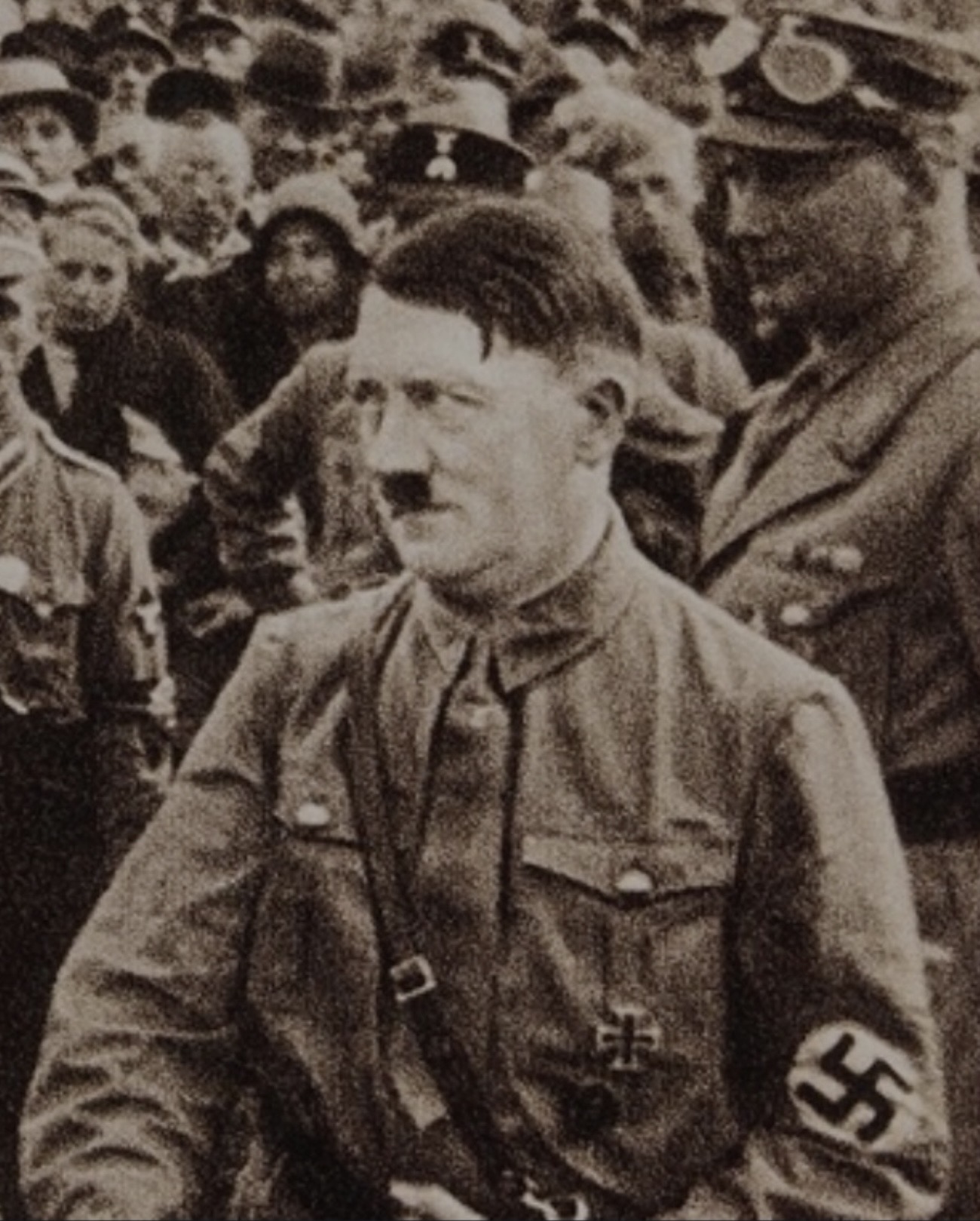
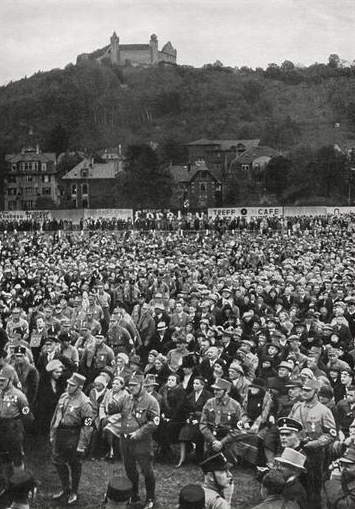
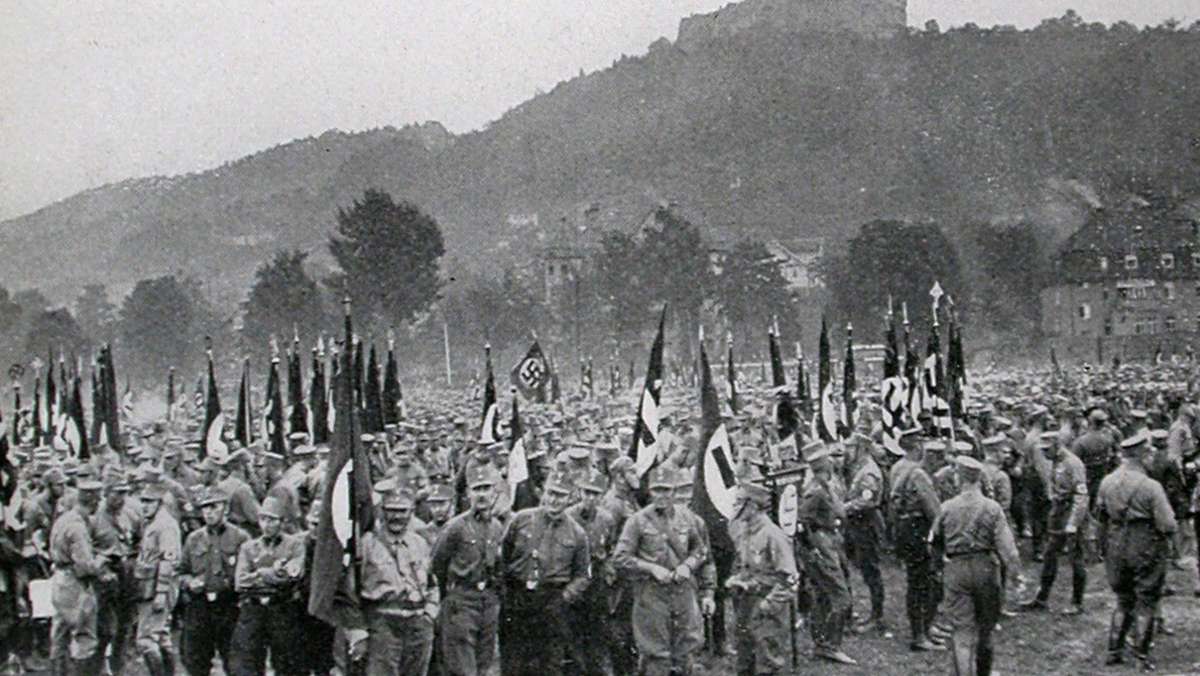
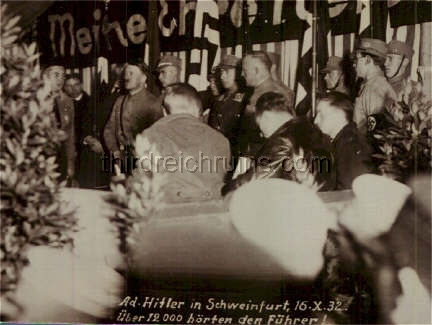
13th Anniversary 1935
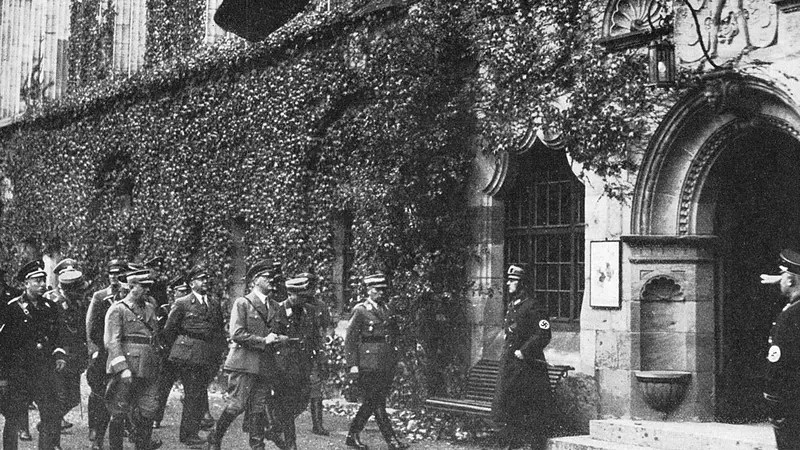
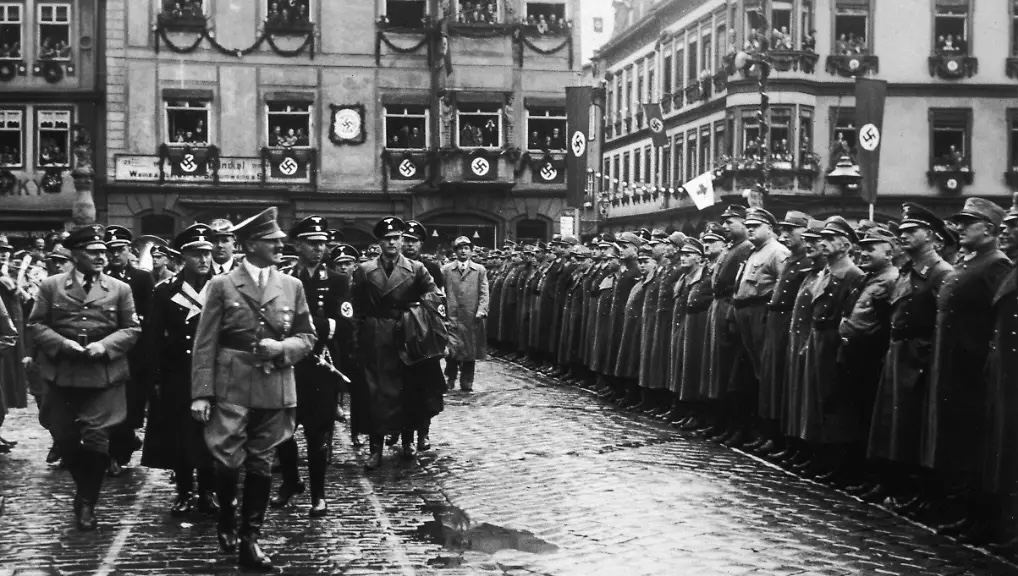
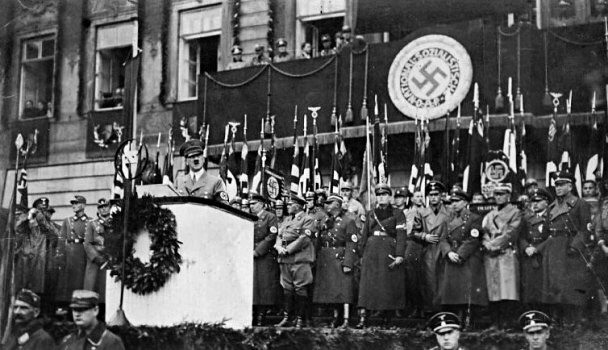
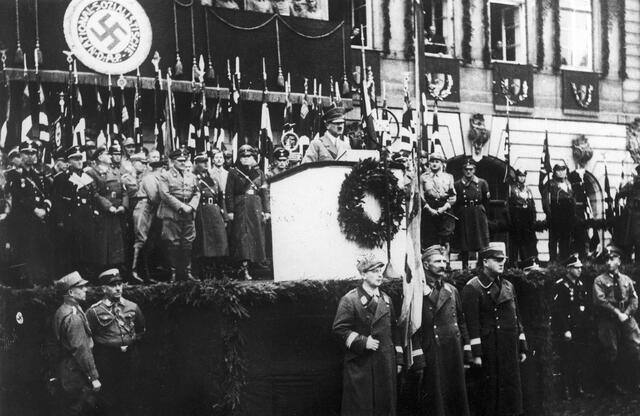
On the 19th of October 1935, Hitler took a train ride from Berlin to Coburg to commemorate the 13th anniversary of the March on Coburg. He first observed an honorary formation on the Bahnhofsplatz before driving through the Adolf-Hitler-Straße, Allee and through the Hofgarten up to the imposing Veste Coburg. There he delivered a apeech to the National Socialist Motor Vehicle Corps (NSKK). He then drove to the Schlossplatz to visit a newly constructed war memorial before delivering another speech inside of the town hall. He stated that “The name Coburg is more than the name of any other German city”. Hitler continued to assure his listeners that he will never surrender. He then departed and took a train ride to Nuremberg.
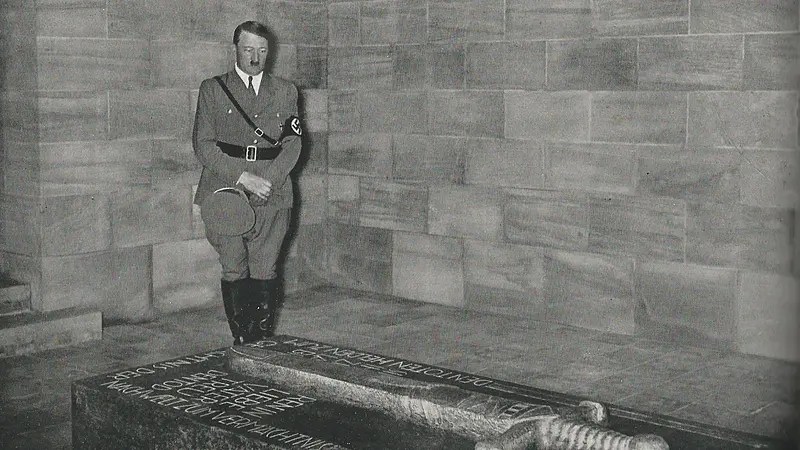
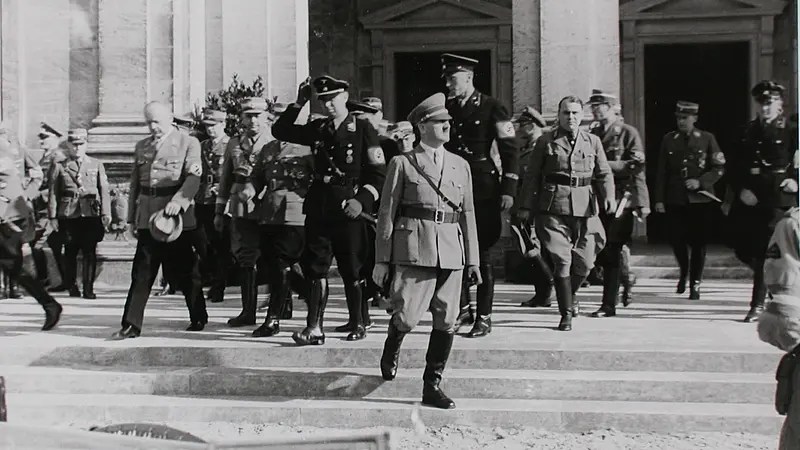
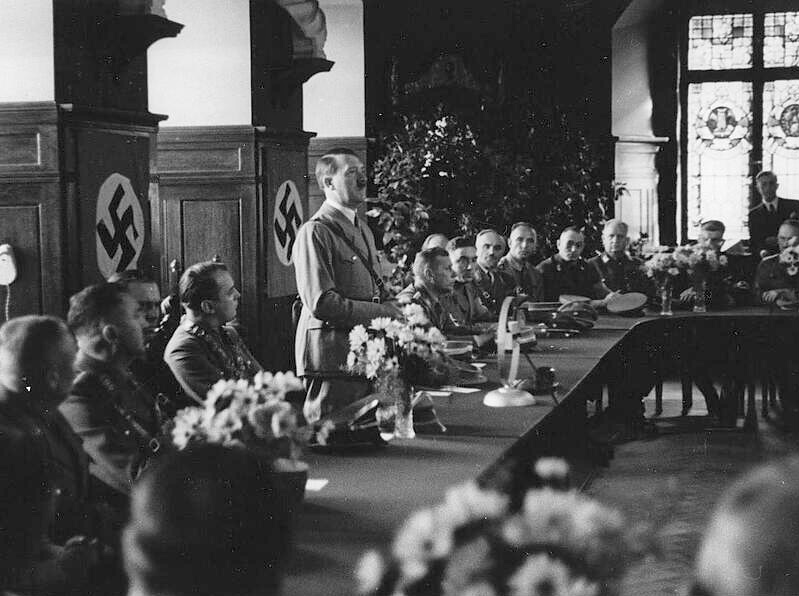
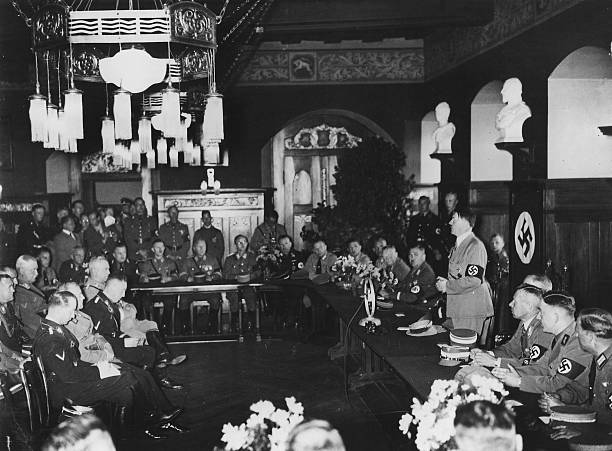
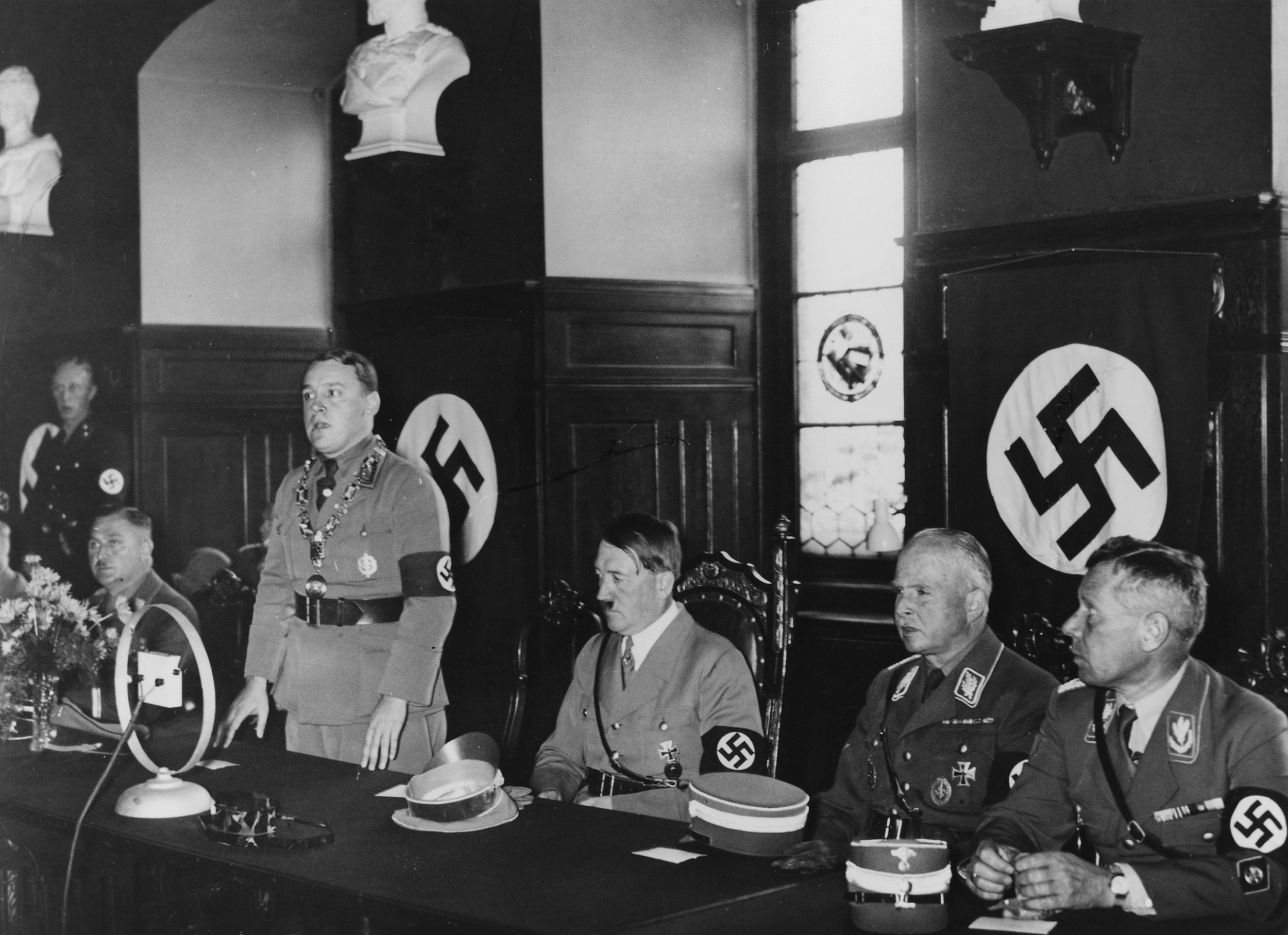
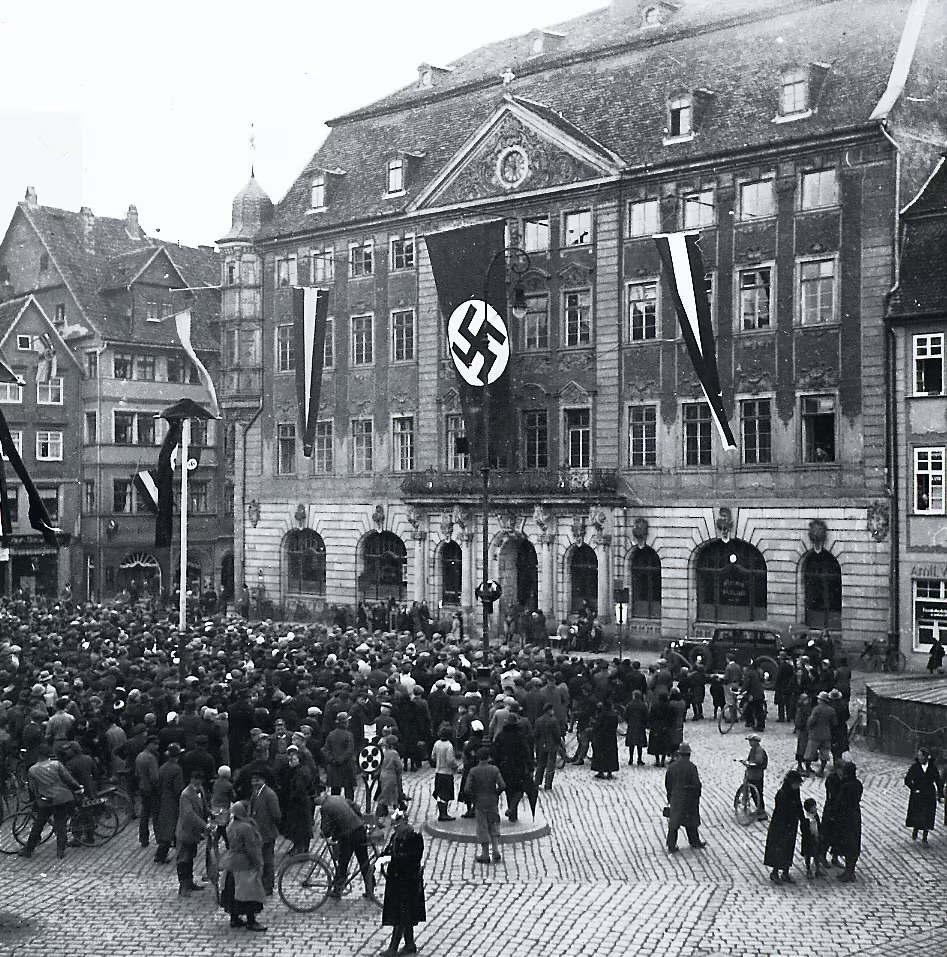
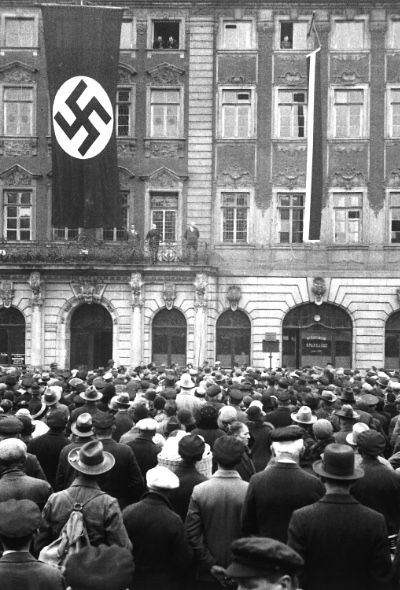
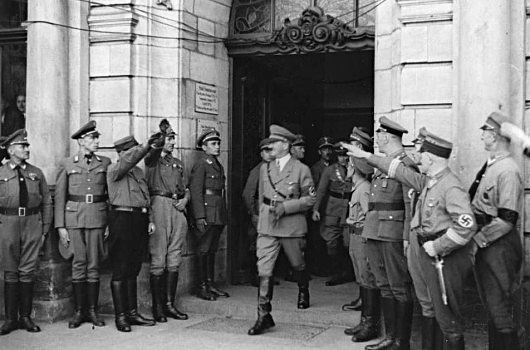
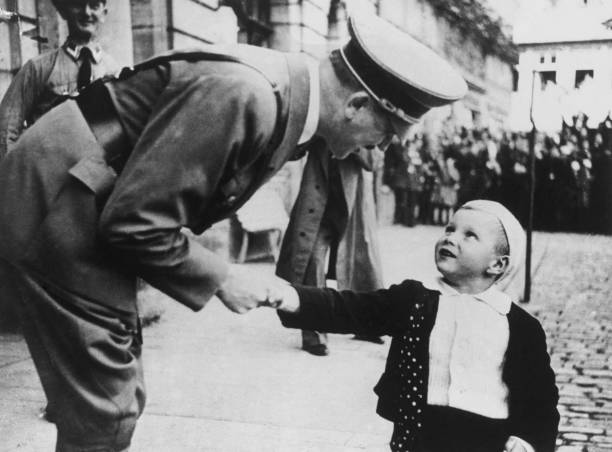
15th Anniversary 1937
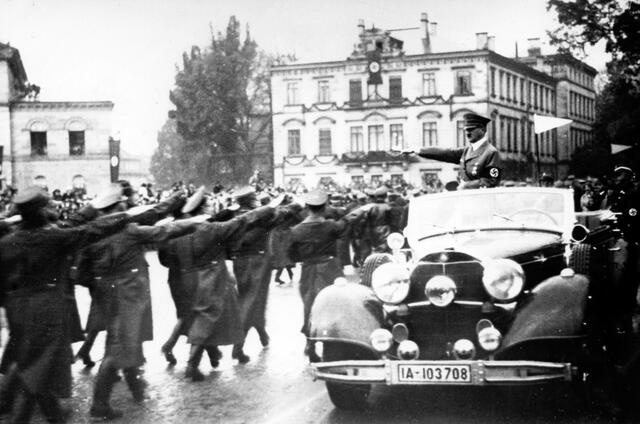
On 15 October 1937, Adolf Hitler and Nazi Party veterans celebrated the 15th anniversary of the “capture of Coburg” in Coburg, Germany. The anniversary event marked the violent street clashes that occurred on October 14–15, 1922, when Hitler led roughly 800 SA (Sturmabteilung) stormtroopers into Coburg, fighting communist and leftist counter-demonstrators in the streets on the Deutscher Tag.
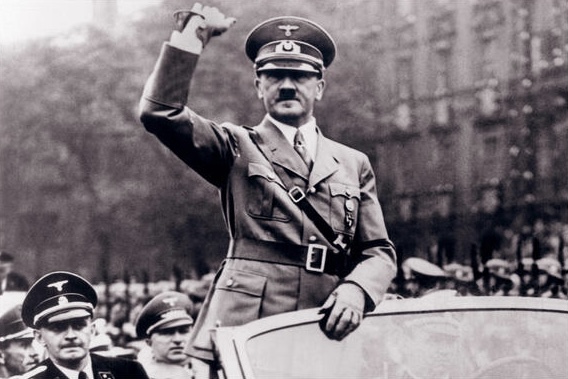
Adolf Hitler traveled to Coburg to review a victory pageant and address the crowds. He greeted 100 original holders of the prestigious Coburg Badge (including Charles Edward, Duke of Saxe-Coburg and Gotha) alongside about 1,300 members of the Nazi “old guard”. He then delivered a speech at the Coburg Rathaus (town hall), celebrating the early street fights as the spark that allowed National Socialism to spread across Germany. Special items, such as porcelain commemorative plates inscribed with “Mit Hitler In Coburg,” were produced to mark the 1937 anniversary.
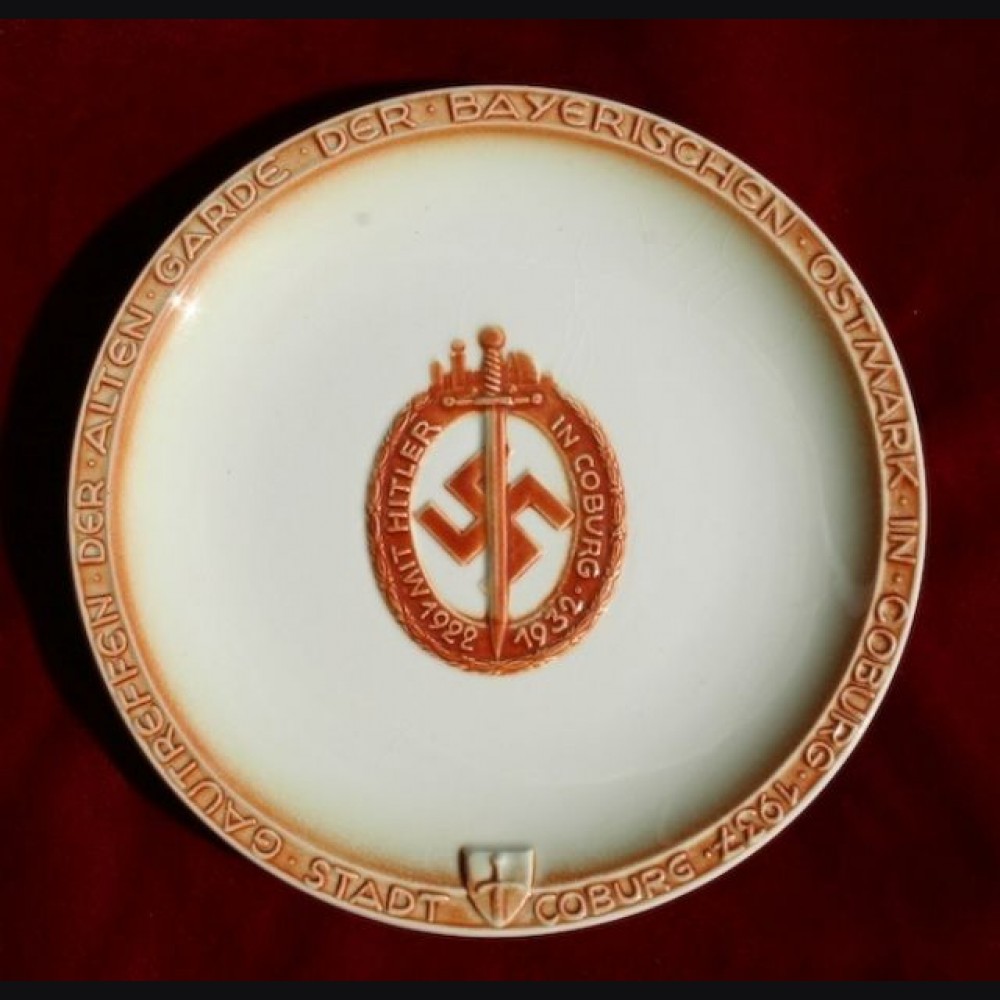
The center of the 1937 commemorative plate depicts the Coburger Abzeichen, which features a downward sword intersecting a swastika, surrounded by an oval laurel wreath inscribed with the motto “MIT HITLER IN COBURG 1922-1932” and a silhouette of the city of Coburg.
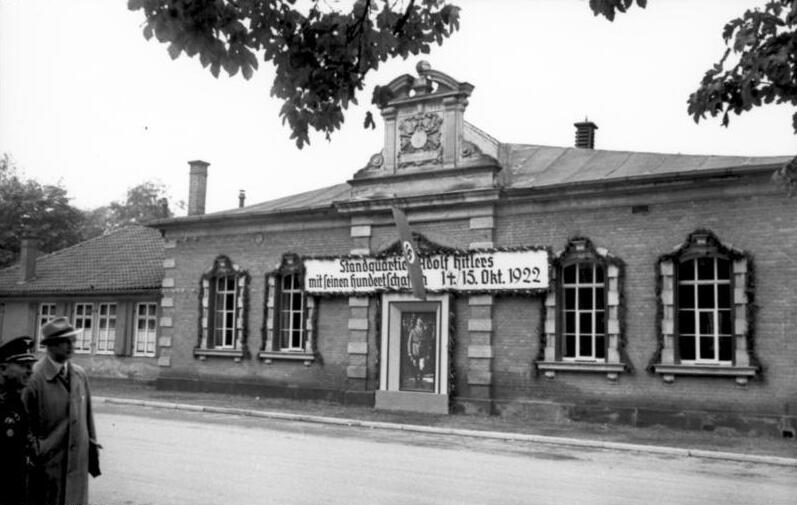
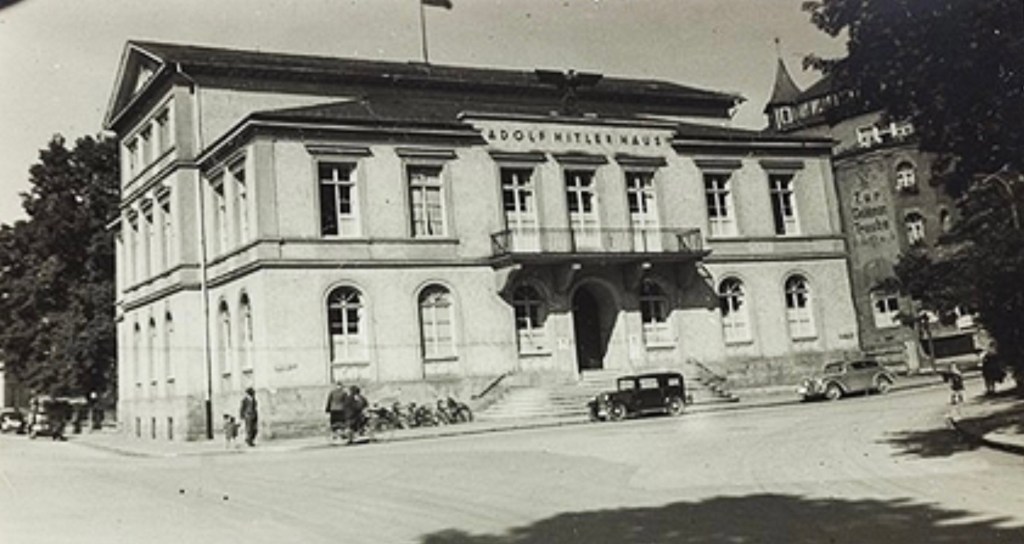
Below was the Adolf-Hitler-Haus of Coburg, a designation used across various German cities during the Nazi era for public buildings converted into the local headquarters for the NSDAP. After 1933, regional NSDAP party branches took over the buildings of existing civic or club structures (such as former association houses or town halls) and renamed them as local party administrative hubs. They housed the NSDAP district leadership (Kreisleitung), the Hitler Youth, and the National Socialist Women’s Organization.