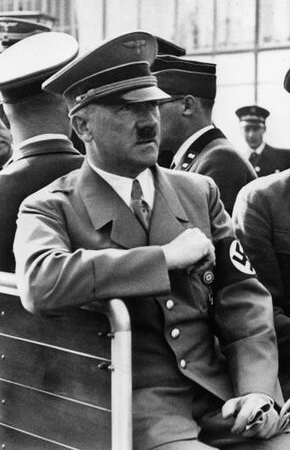
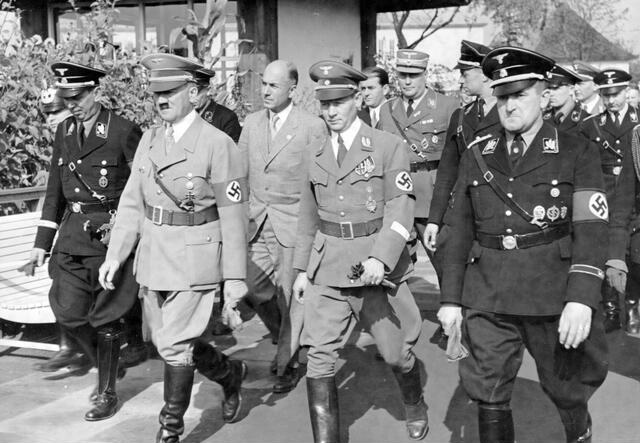
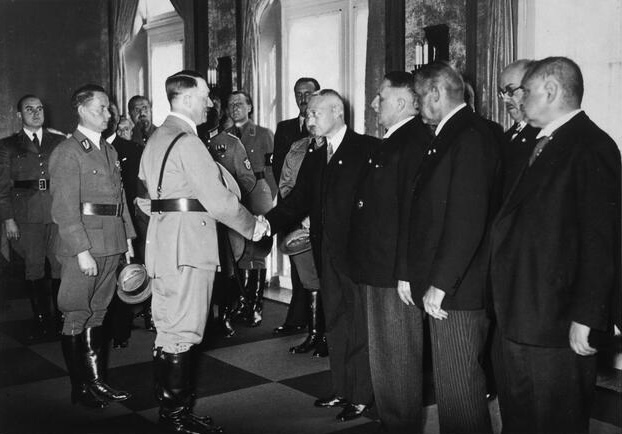
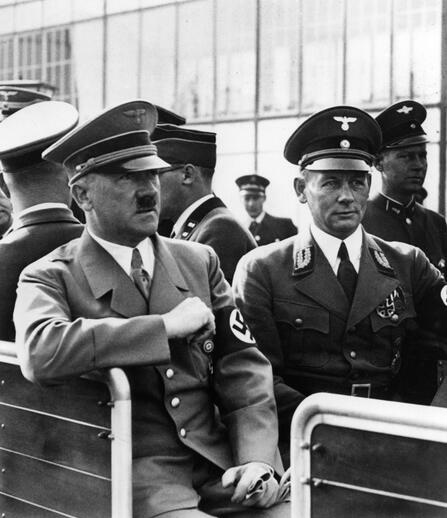
On the 2nd of October 1937 Hitler attended the exhibition “Reichsausstellung Schaffendes Volk” (The Reich’s Exhibition of a Productive People) in Düsseldorf. The national expo showcased German progress in many areas of society and celebrated German labor and economic output. Originally planned by the Deutsche Werkbund (German Association of Craftsmen) before it was Nazified, the exhibition was repurposed by the state to promote Adolf Hitler’s Four-Year Plan – an economic initiative aimed at making Germany self-sufficient in raw materials.
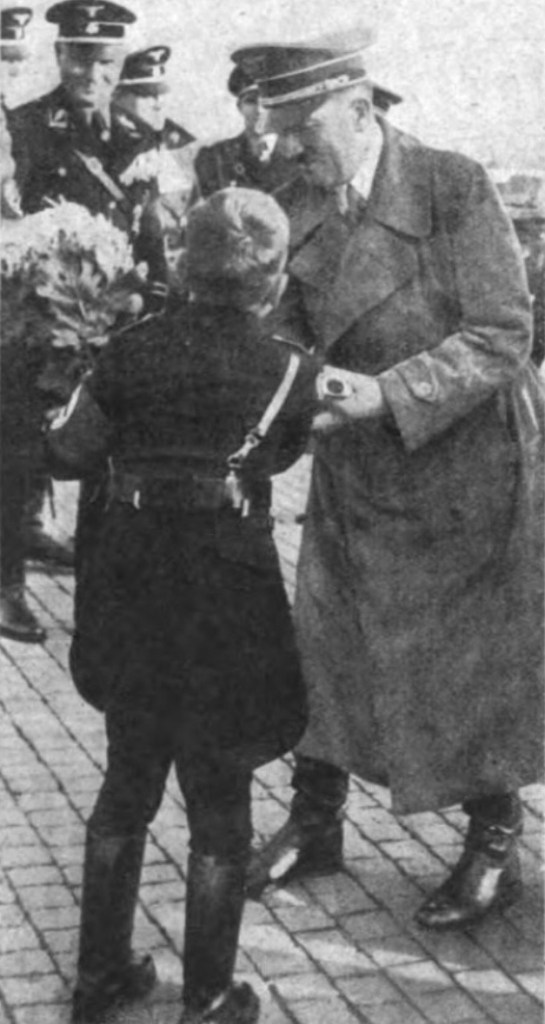
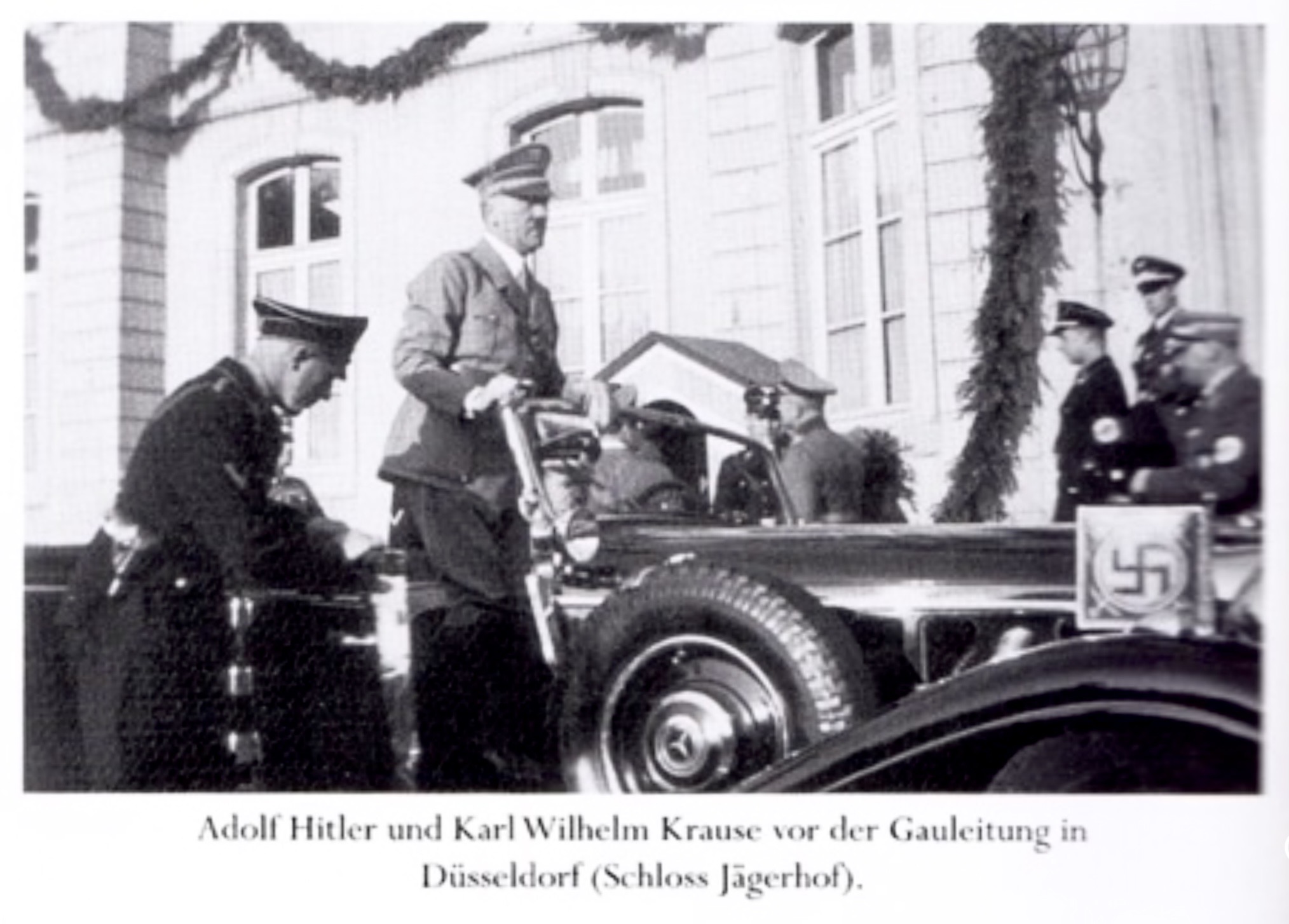
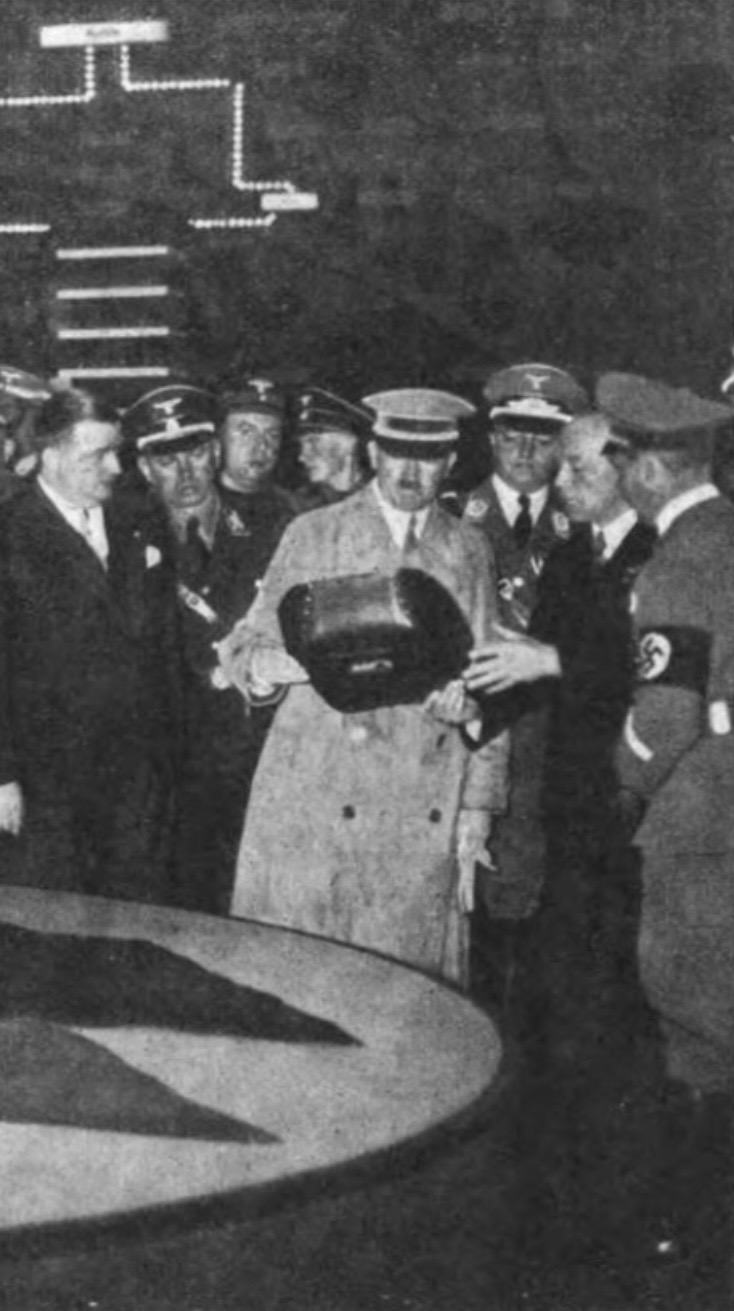
Hitler’s arrival in Düsseldorf. The most beautiful floral arrangement is offered for the Führer. This was the first time that Hitler has been in Düsseldorf since he came to power over 4 years earlier.
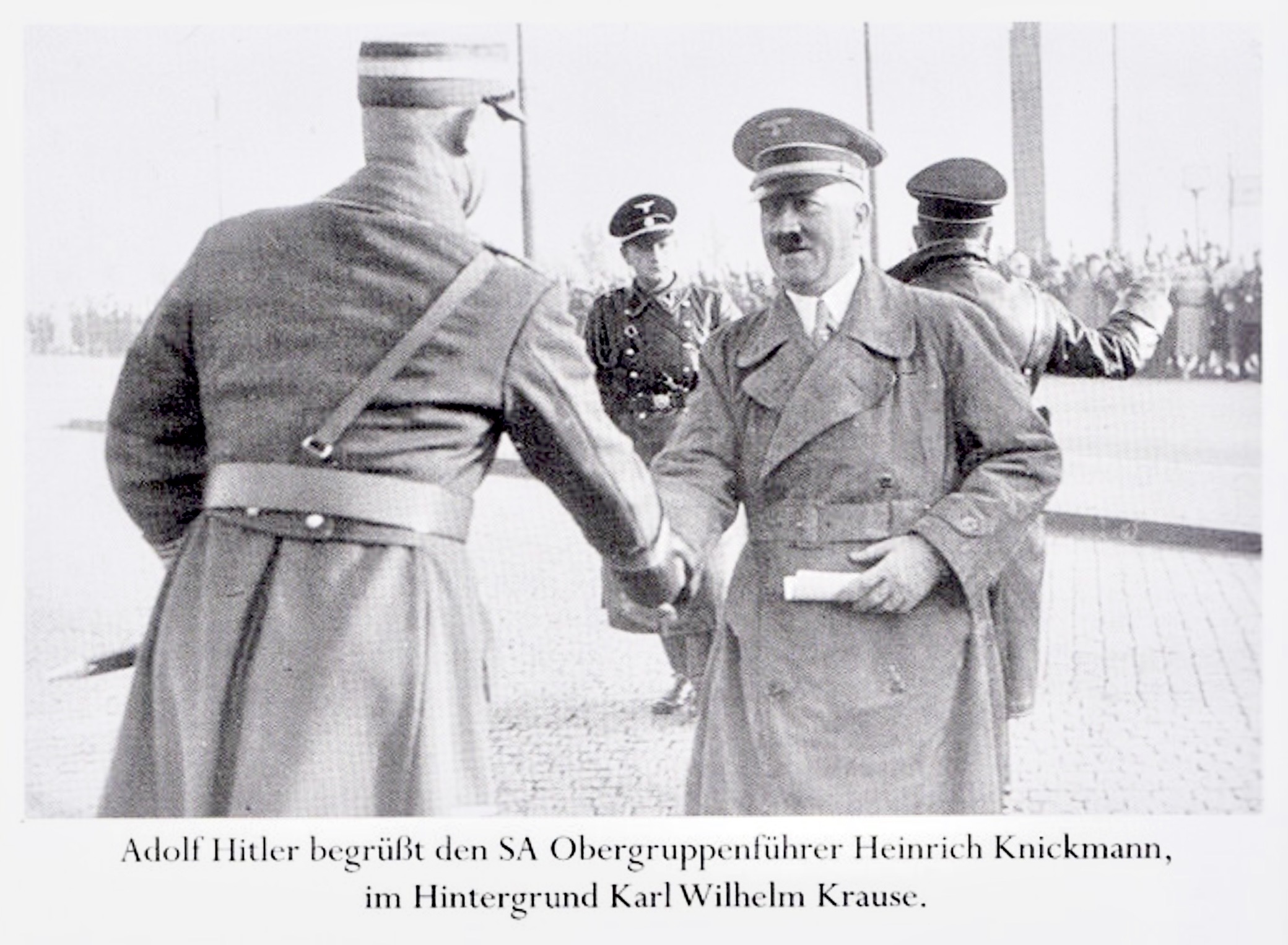
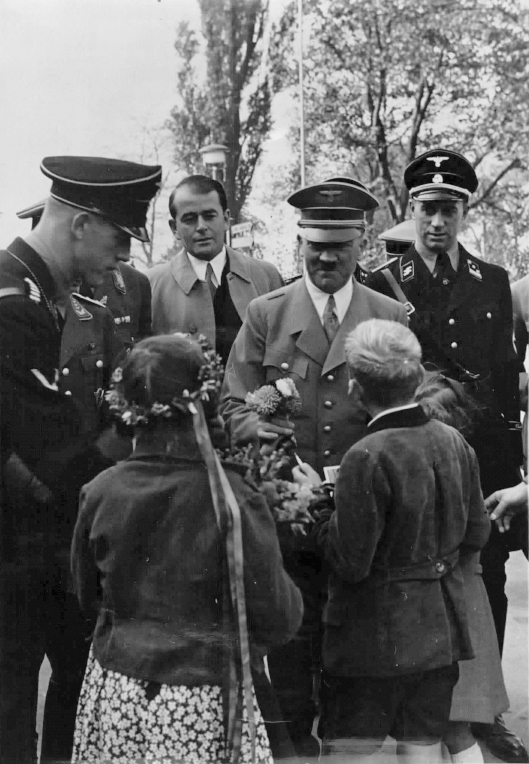
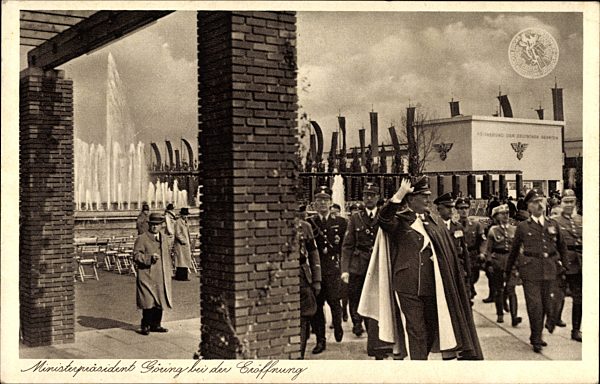
Hitler arrived in Duesseldorf rather unexpectedly and was greeted by the customary enthusiastic crowds, some 100,000 were lining the streets to the “Creative Folk” exposition held on the banks of the Rhine. The roofs of houses along the way as well as the sidewalks were occupied by a shouting multitude. Six million people had already visited the exposition, or about one-third the number having visited the concurrent Paris International Exposition. The attendance numbers, nevertheless, were regarded as exceptional as the German exposition was not international and much smaller than the one in Paris.
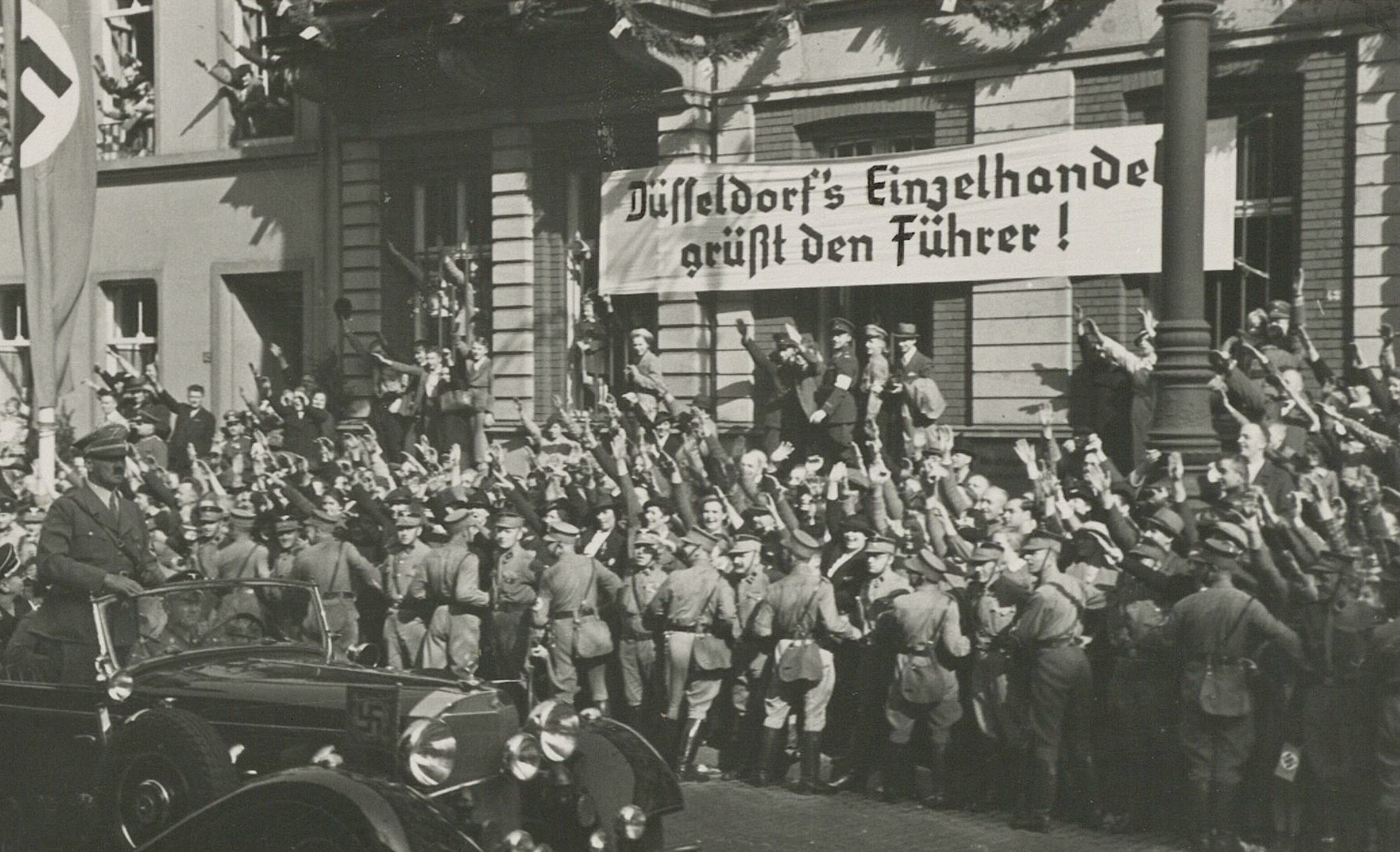
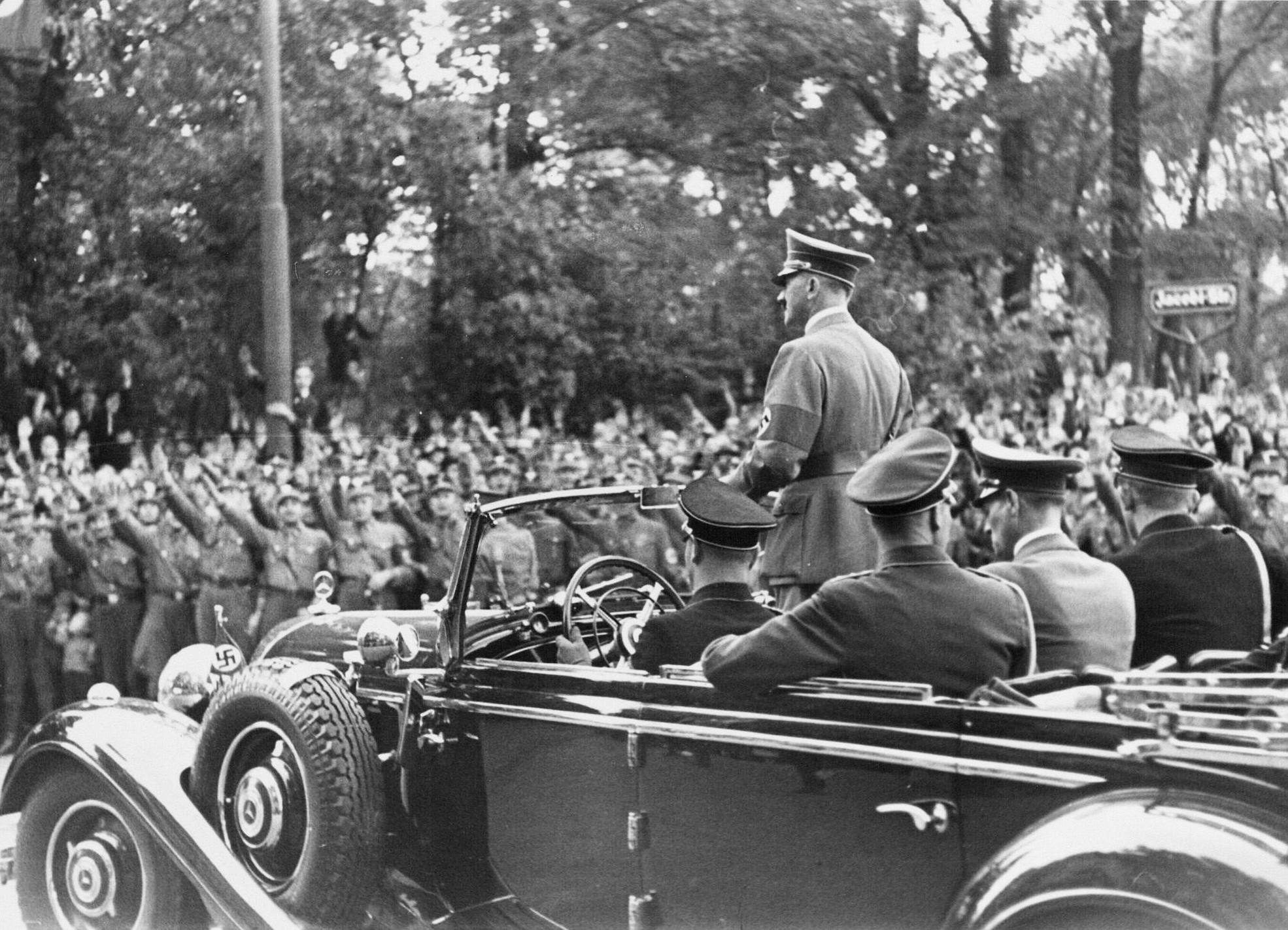
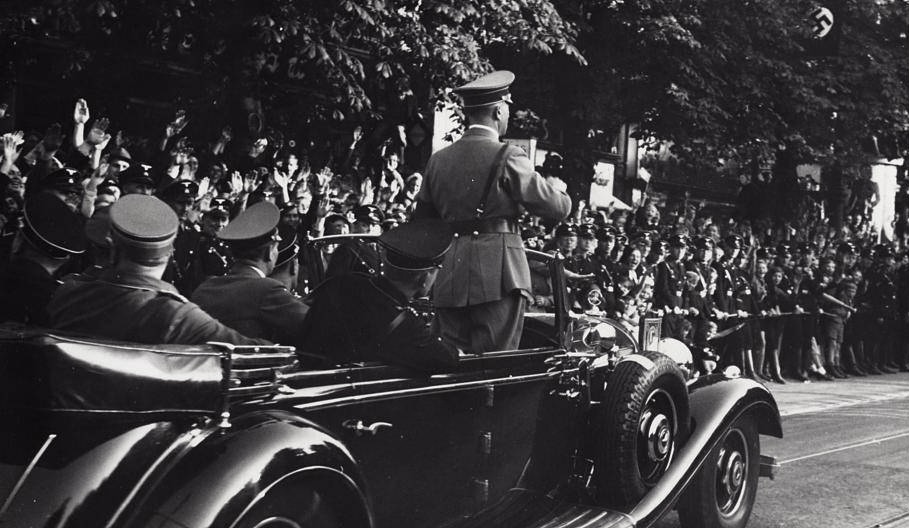
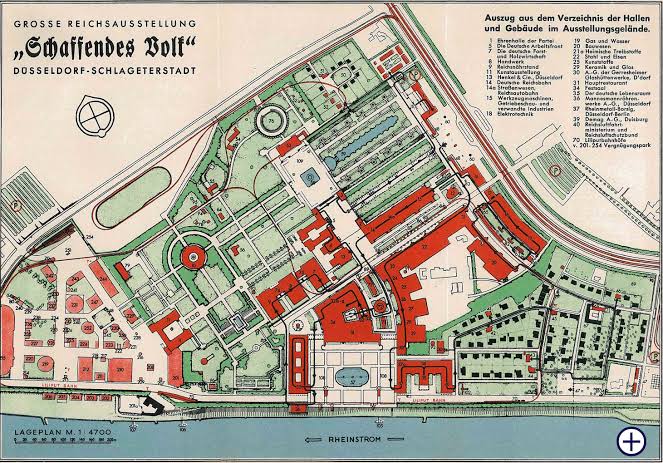
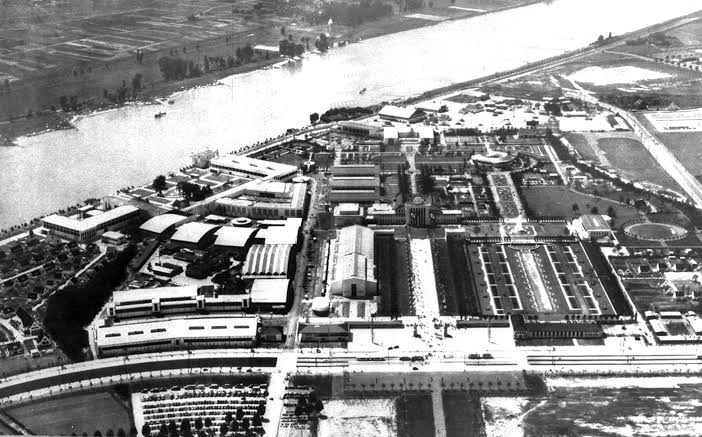
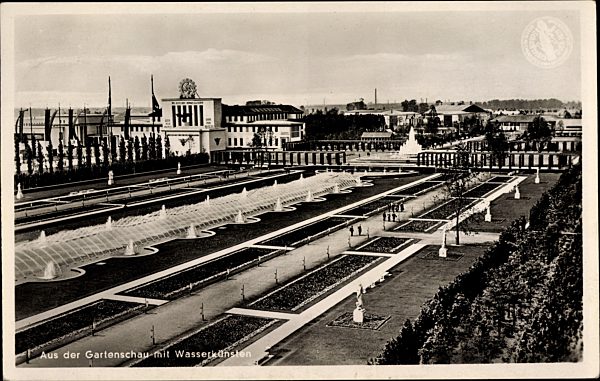
The Schaffendes Volk (Productive People) exhibition was a massive Nazi propaganda showcase held in Düsseldorf from May to October 1937. The expo promoted idealized German housing, community design, and model worker settlements, which included the newly constructed Schlageterstadtresidential development named after Nazi martyr Albert Leo Schlageter. The exhibit featured officially sanctioned National Socialist art, architecture, and landscaping that including elaborate gardens and water features. The commercial exhibits included a functioning Coca-Cola bottling plant and a demonstration smelting and foundry plant.
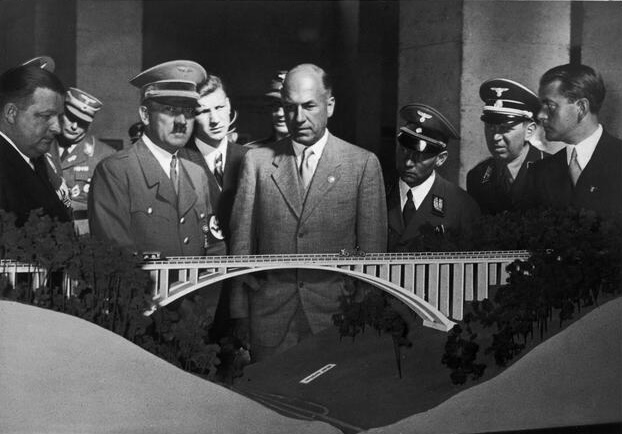
“In four years, Germany must be completely independent from foreign countries in all those materials that can in any way be procured by German capabilities, by our chemical and machine industries, as well as by our mining industry.”
–Adolf Hitler at the Reich Party Congress of 1930
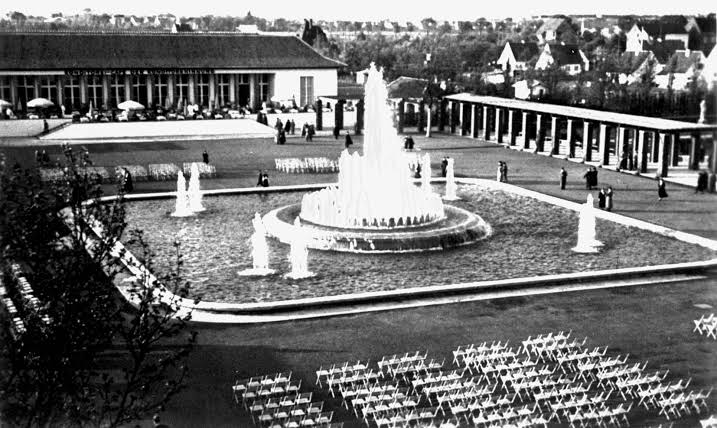
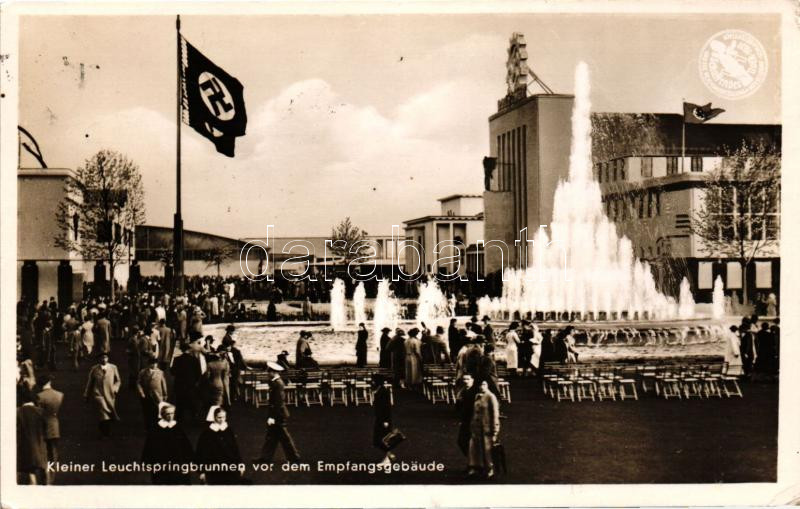
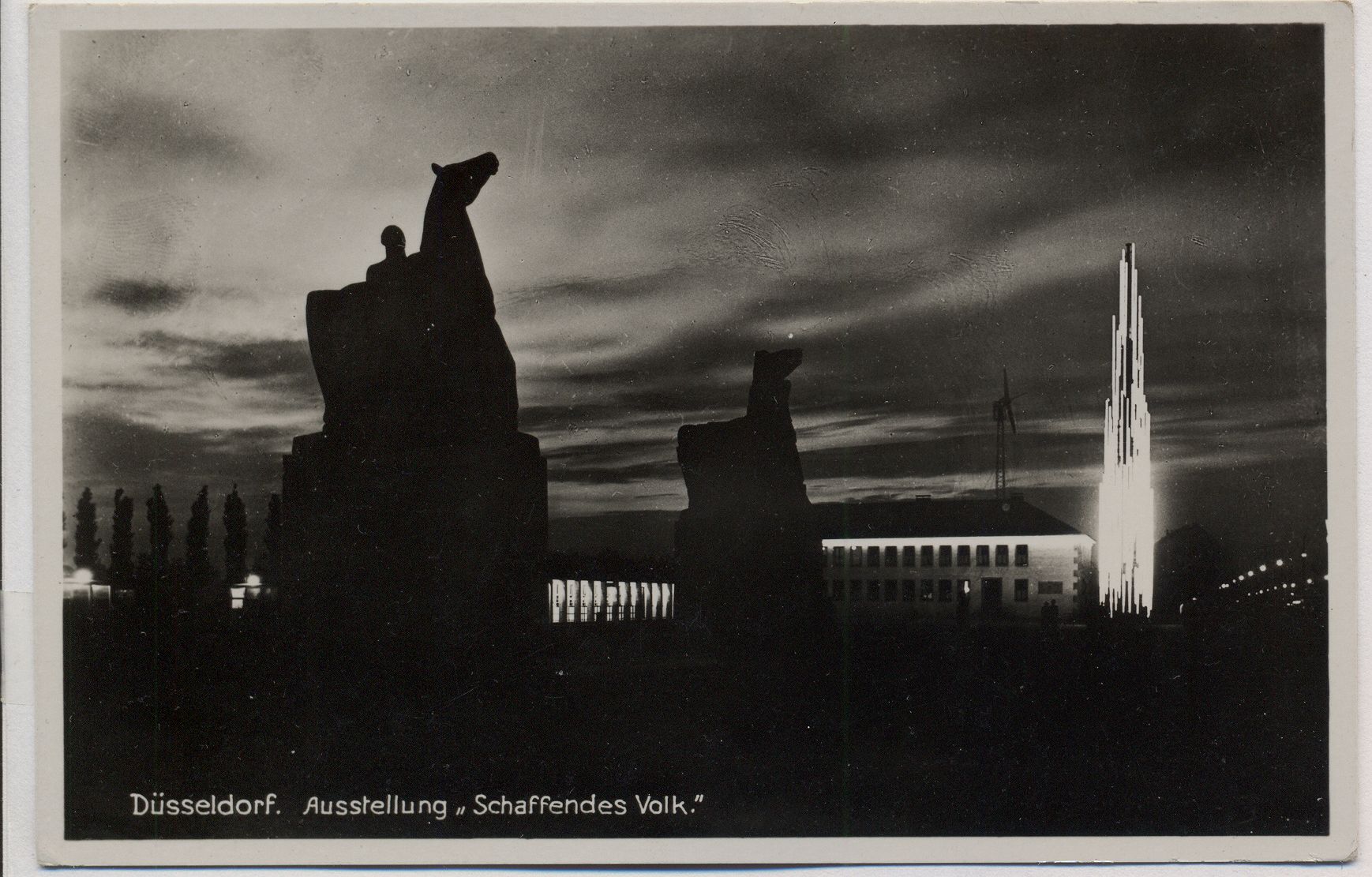
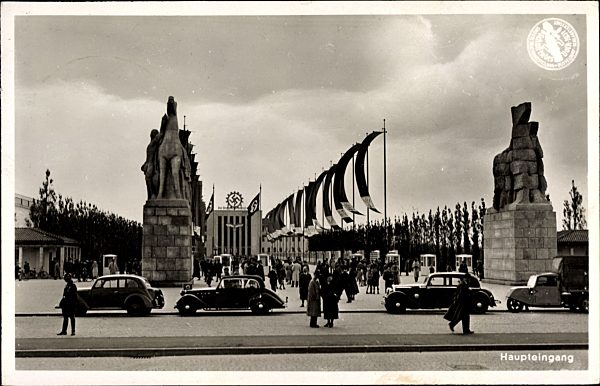
Companies like Henkel, Siemens and AEG were represented at the exhibition. Millions of people came to see the expo. The newly constructed Nordpark featured a large fountain, the house of the Deutsche Arbeitsfront and several large exhibition halls. The art in the Nordpark later caused a scandal when a picture of the Rossebändiger (Horse Tamers) the two large statues at the entrance by artist Edwin Scharff turned up at an exhibition called ‘Entartete Kunst’ (degenerate art). Hitler had new ideas about art in 1937 and the statues created by Scharff were deemed not heroic enough. Other statues inside the park (made by other artists) were also taken away, but the large statues at the entrance remained simply because they were too heavy to remove. In 1941 four of the statues were placed back in the park. Flowers were placed on the spots where the other statues had been. In 2006, two more of the statues called ‘Fisher’ and ‘Schäferin’ also returned to the park.
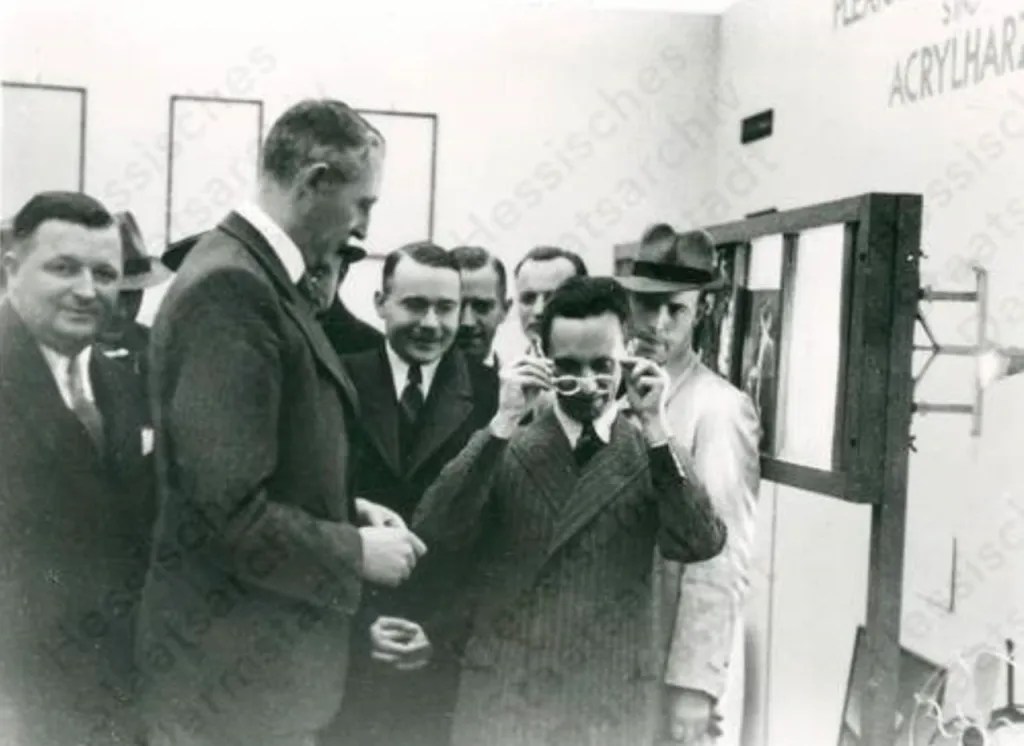
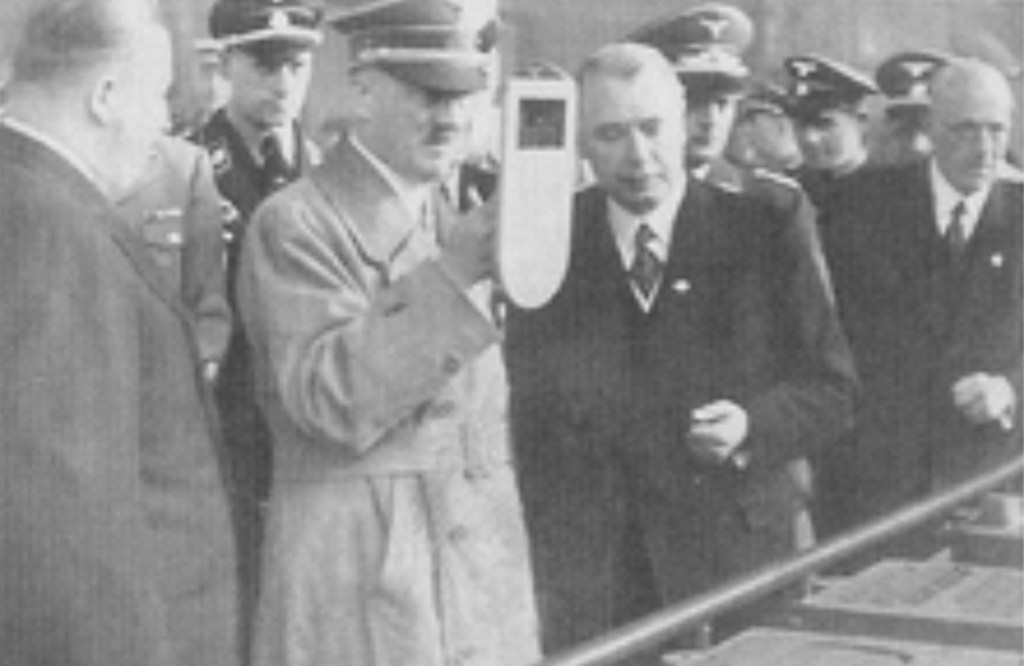
Joseph Goebbels trying on glasses at the Plexiglas/ Acrylharz exhibition at the ‘Schaffendes Volk’ (Creative People) Expo in Düsseldorf.
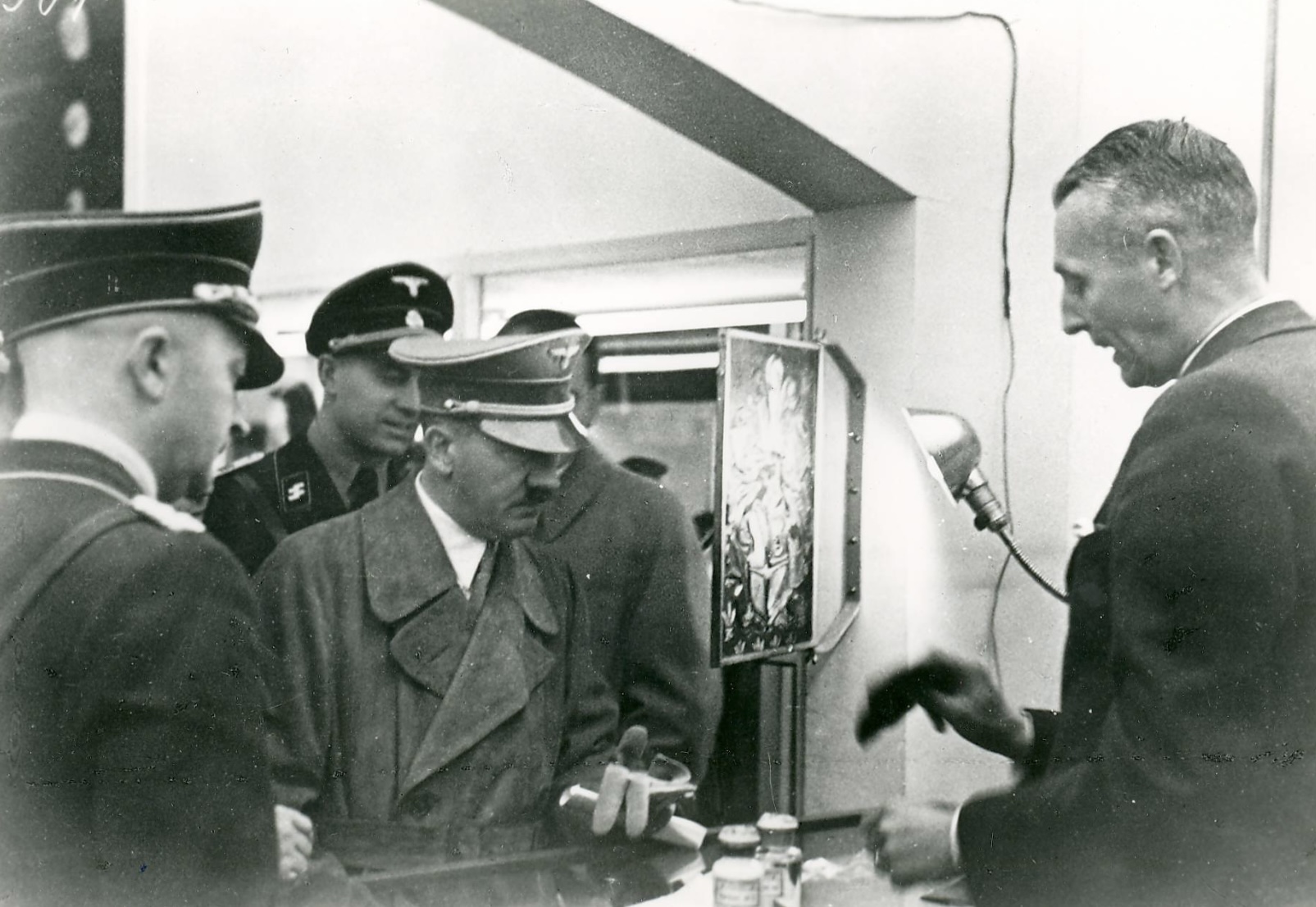
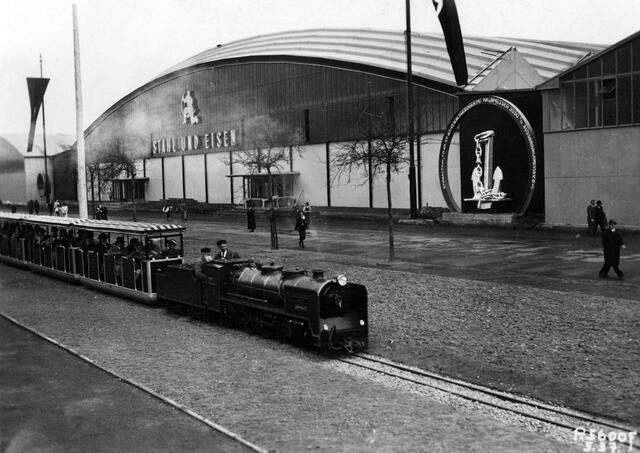
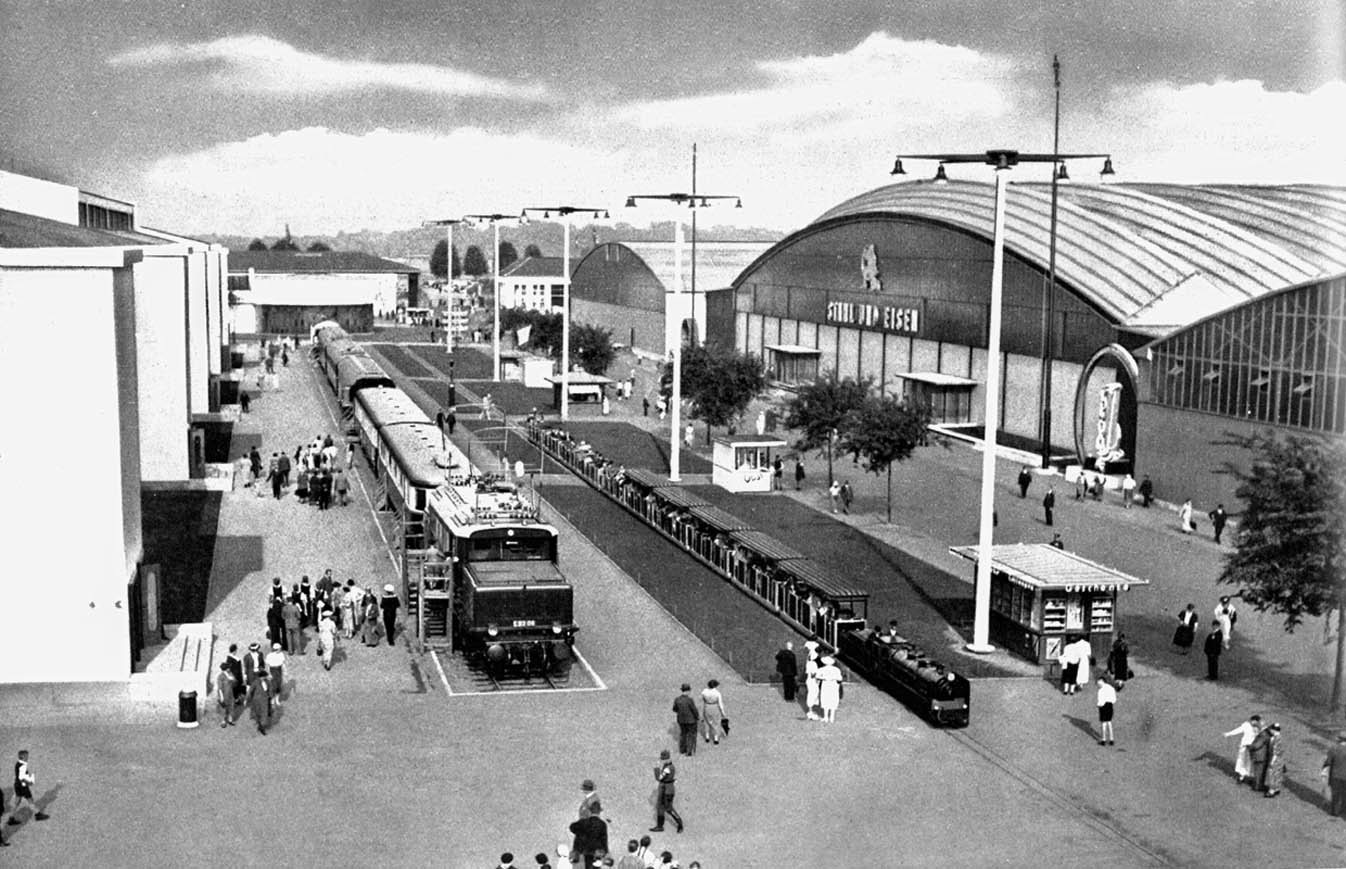
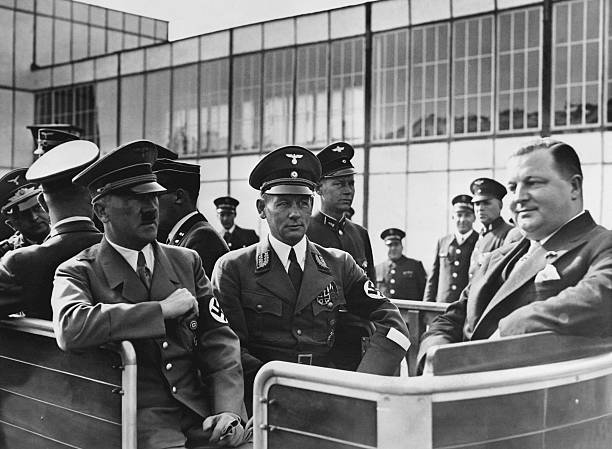
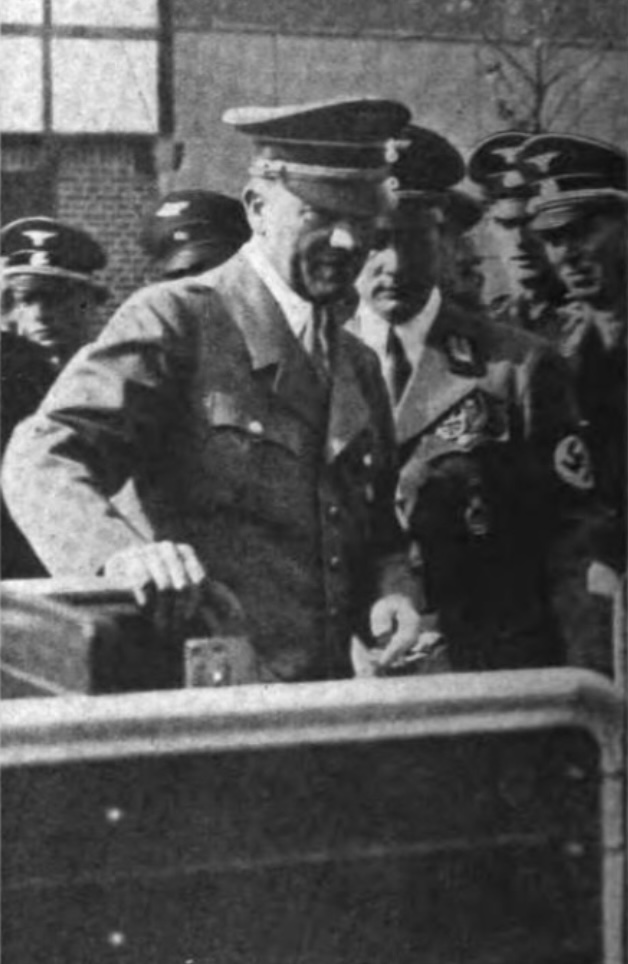
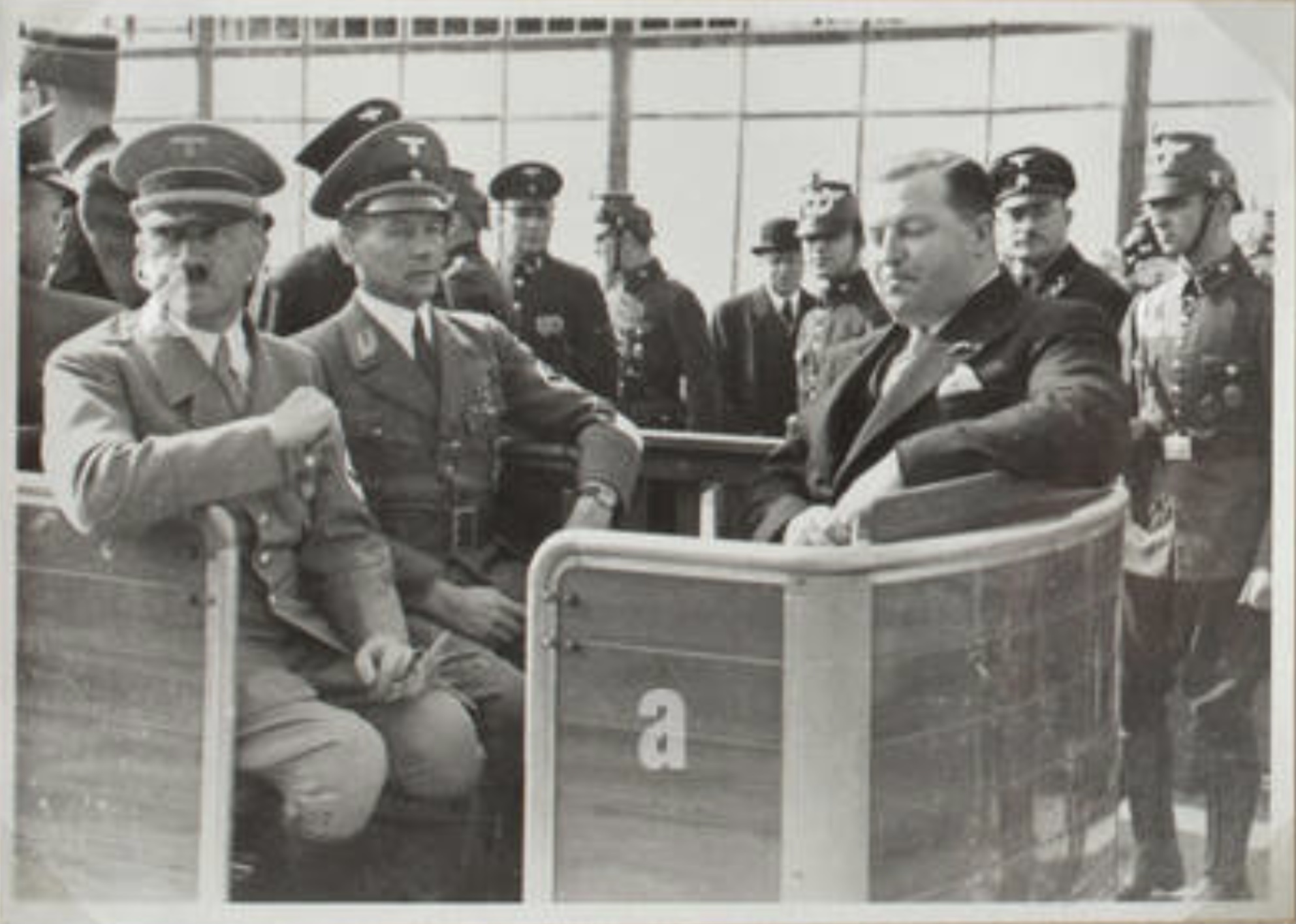
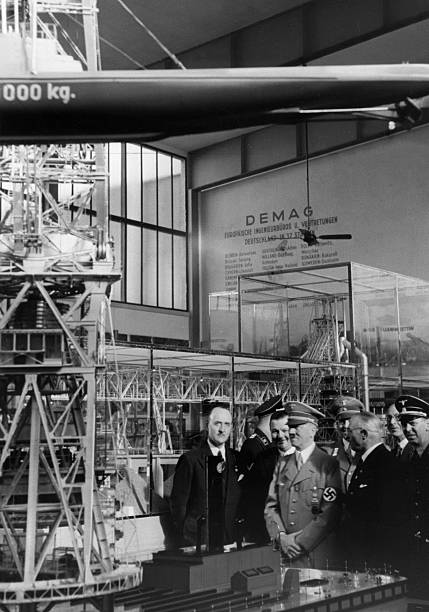
Hitler at the exhibition hall “Stahl und Eisen” (Steel and Iron). The Stahl und Eisen hall (Hall 22) featured a fully operational, miniature demonstration smelting and foundry plant inside the building, emphasizing Germany’s industrial self-sufficiency.
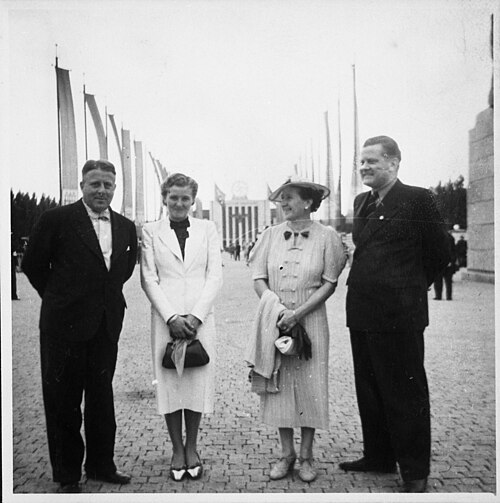
Eva Braun and her mother, Franziska “Fanny” Braun stand at the main entrance of the Schaffendes Volk Exhibition. The expo building for the German Labour Front (Die Deutsche Arbeitsfront) is directly behind them.
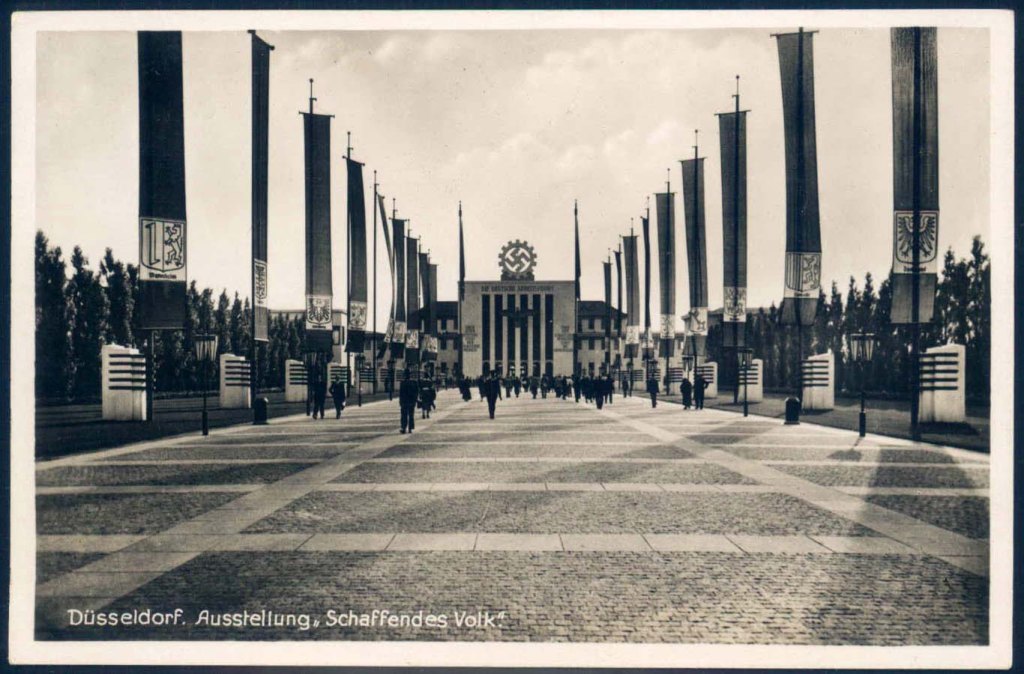
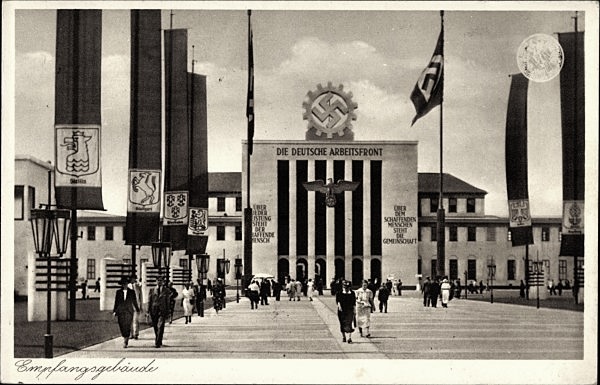
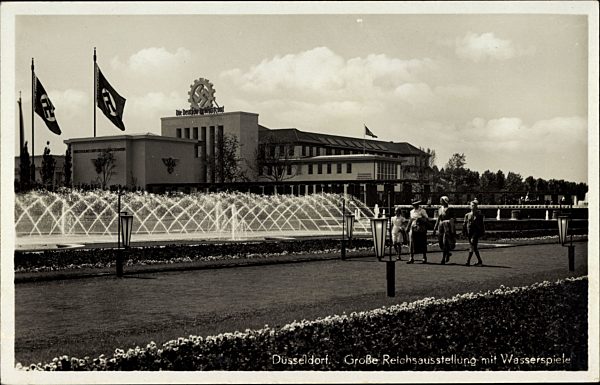
The Reichsausstellung Schaffendes Volk 1937 in Düsseldorf was the most important propaganda show held in Germany during National Socialism. With the exhibition, a new district was created in Düsseldorf, which was named after Albert Leo Schlageter – Schlageterstadt – and of which today only the Nordpark as well as the subsequent settlement of Golzheim, with the Künstlersiedlung and the Nordparksiedlung in Düsseldorf-Stockdum, are preserved.
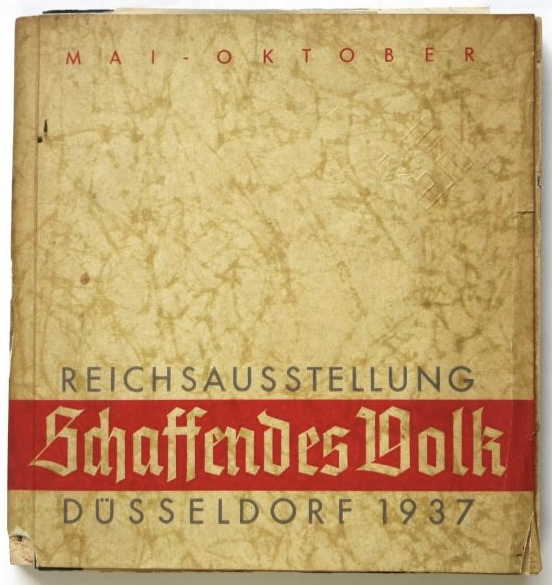
The visitor’s guide to the Reichsausstellung “Schaffendes Volk”, showcasing the domestic accomplishments of the National Socialist Party.