
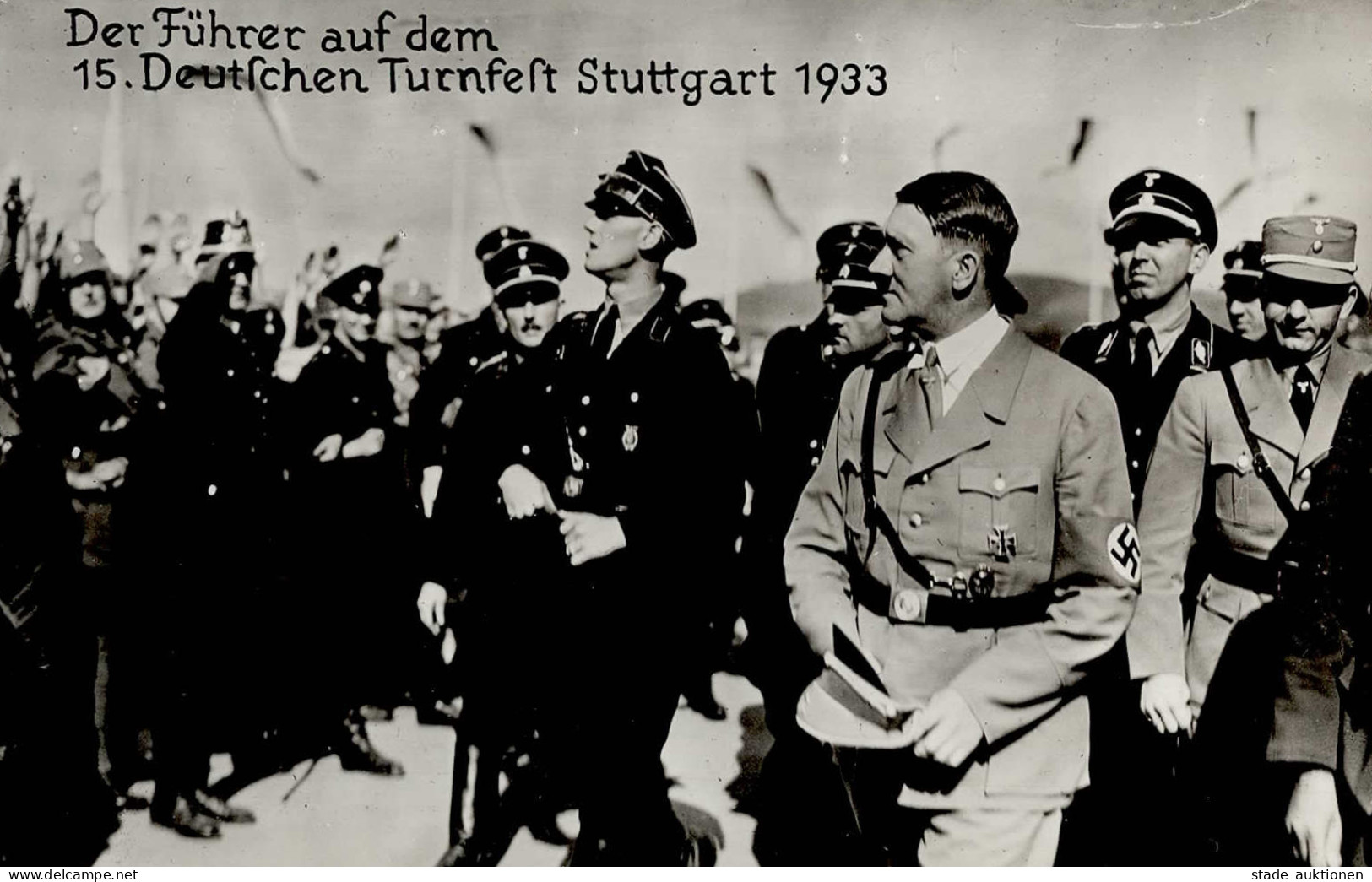
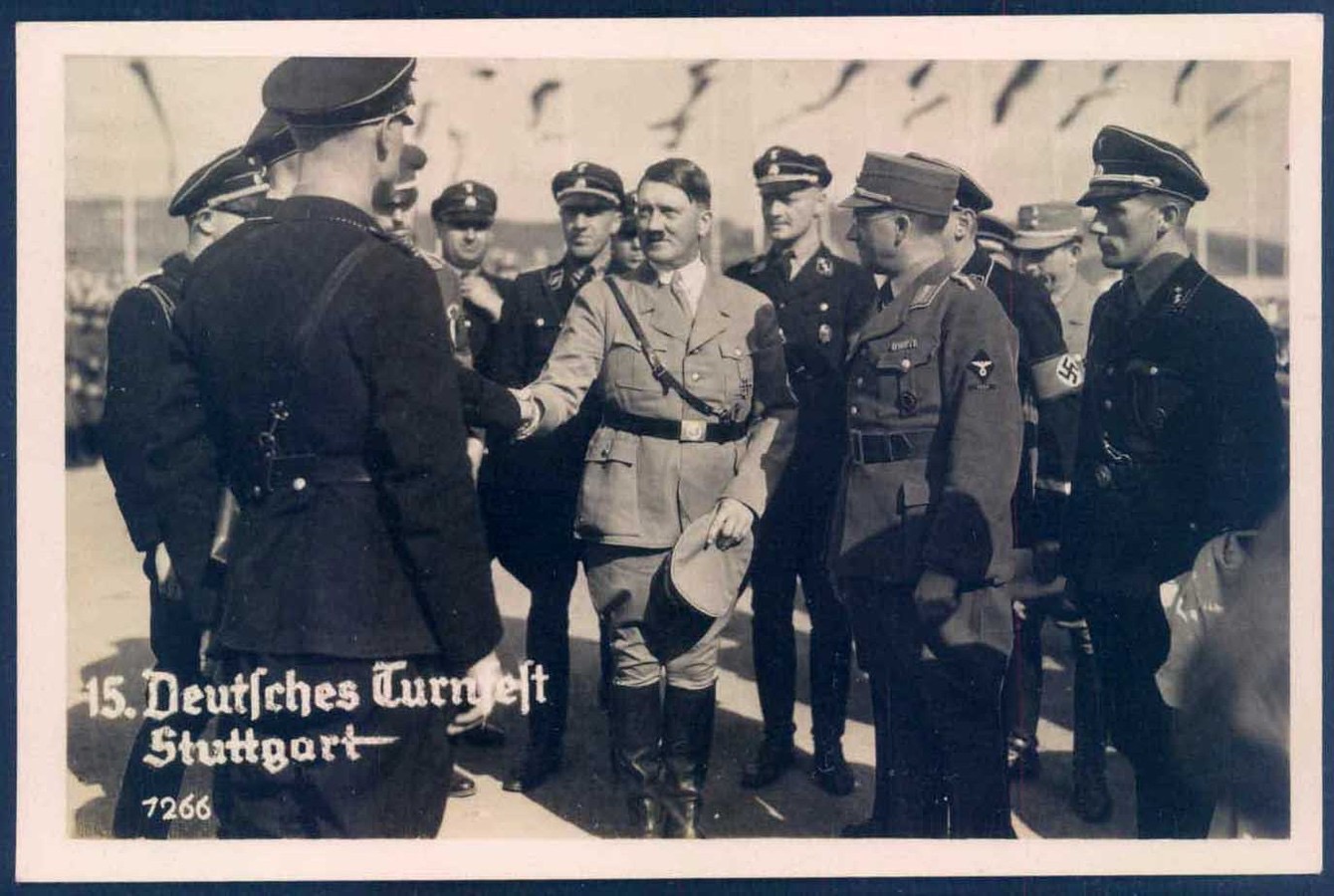
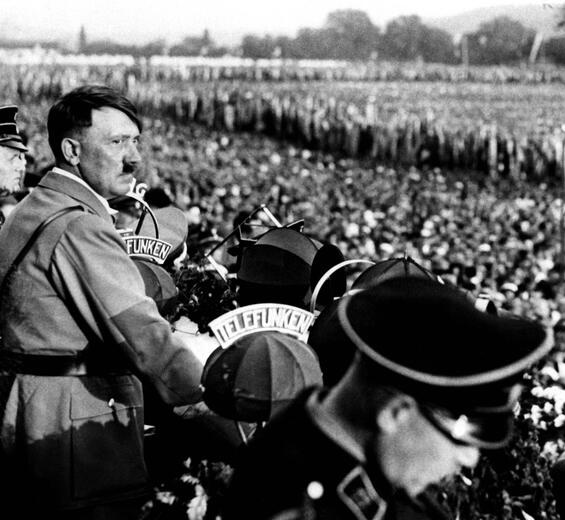
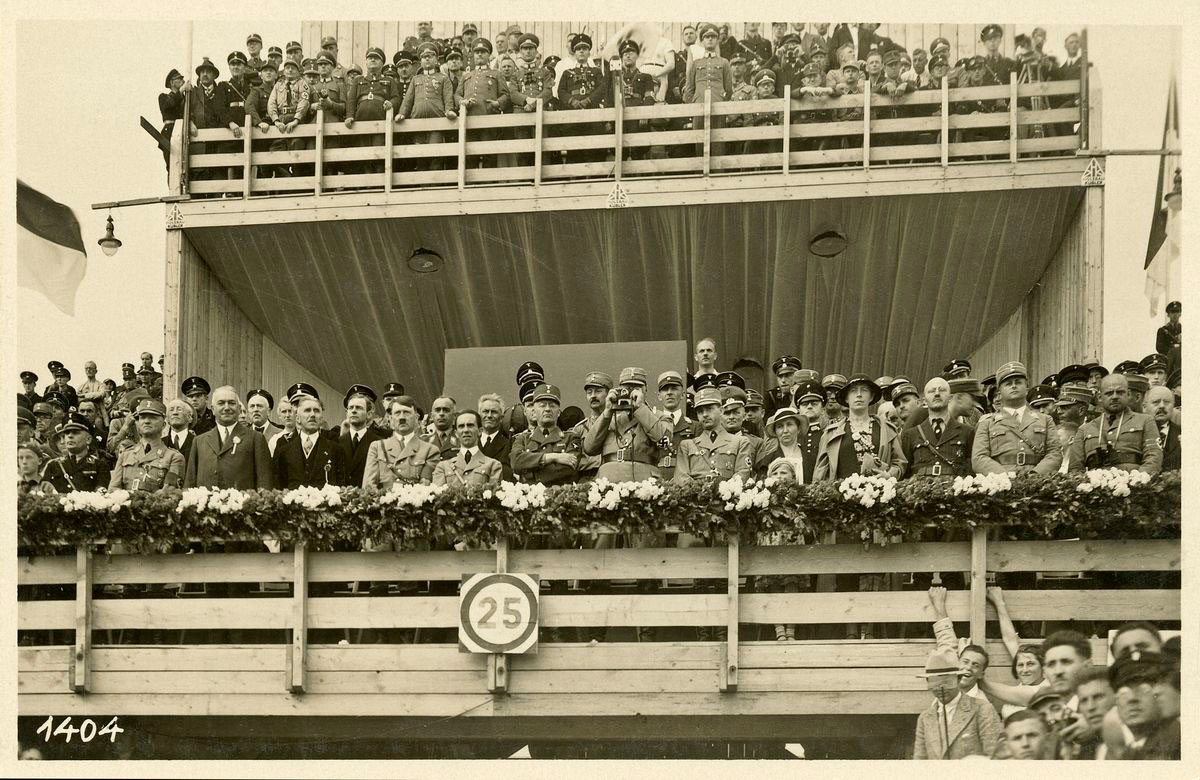
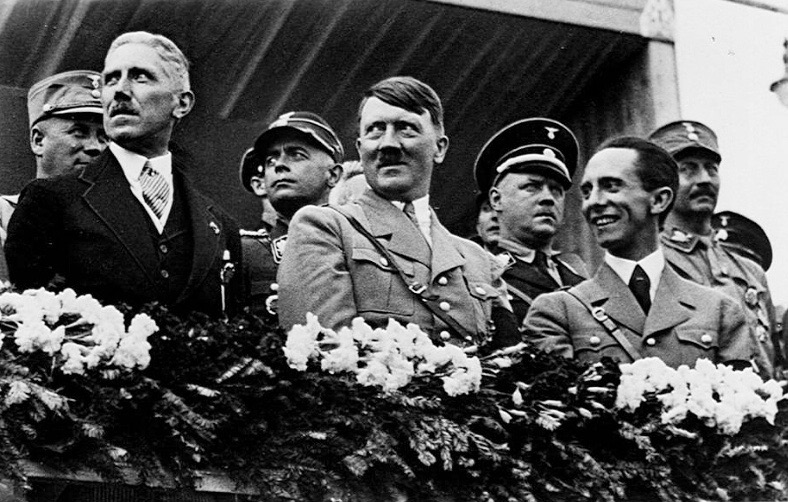
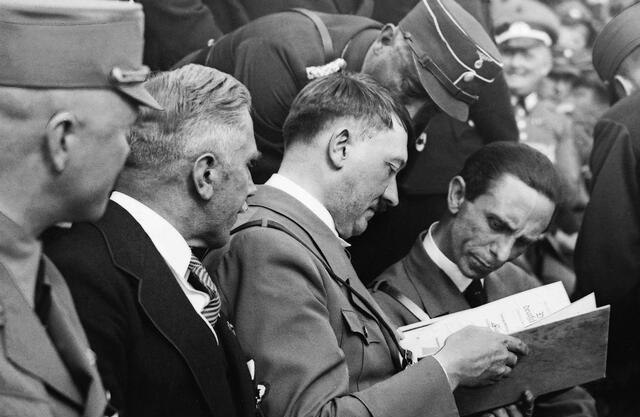
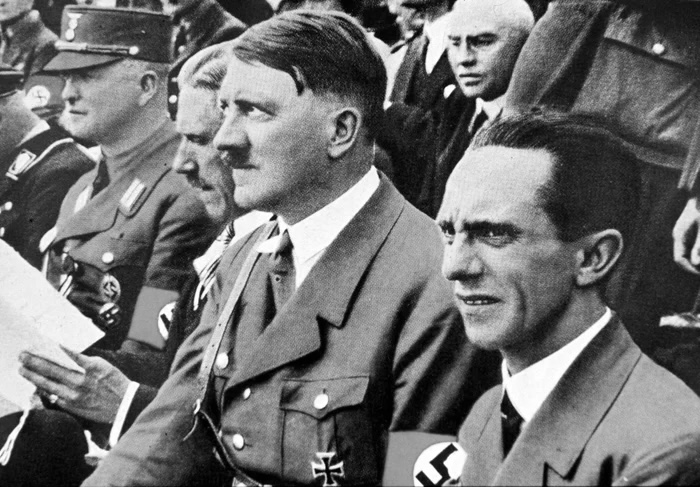
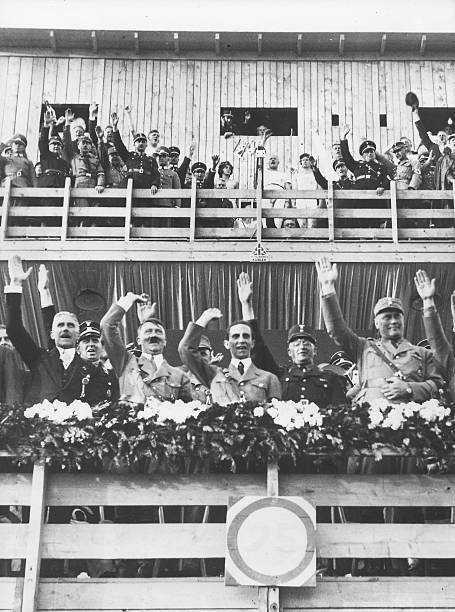
The 15th German Turnfest (Deutsches Turnfest) took place in Stuttgart from July 21 to 30, 1933, serving as a massive sports festival and an early Nazi propaganda showcase. It drew 600,000 visitors and 120,000 active participants. Hitler arrived with his entourage to attend the closing ceremony held on 30 July 1933.
The German Gymnastics Festival in Stuttgart held in July 1933 was used by the National Socialists for one of their very first propaganda mass events after Adolf Hitler’s appointment as Reich Chancellor. Hitler was to receive a special “honor”: The stadium, planned long before 1933, was now opened as the “Adolf Hitler Arena.”
Since its founding in the 19th century, the German Gymnastics Federation (DT) saw itself as a national movement. Therefore, after the end of the German Empire, it maintained a rather distant stance towards the Weimar Republic and sympathized with the national-conservative camp. For example, the DT offered a platform for the völkisch-minded ex-General Erich Ludendorff, a symbolic figure of the right wing, to make appearances.
Stuttgart was originally slated to host the gymnastics festival, held every five years, as early as 1918. However, this date was not met due to the First World War. Ten years later, at the gymnastics festival in Cologne in 1928, Stuttgart was awarded the 1933 festival. The political orientation of the German Gymnastics Federation (DT), which even at this time showed strong connections to National Socialism, is documented in the statements made by the representatives of the Swabian Gymnastics Association regarding the application: They emphasized the “national significance” of Stuttgart, which, in a “serious situation,” would have to stand up to the threat from the south and west, especially from the “arch-enemy France.”
Nevertheless, until 1933, the German Gymnastics Federation (DT) was led by Alexander Dominicus, a self-proclaimed democrat. It was only after Dr. Edmund Neuendorff, an avowed National Socialist and anti-Semite, forced Dominicus’s resignation in April 1933 and assumed leadership of the DT that the organization was brought into line with National Socialist ideology. Under Neuendorff’s pressure, the DT immediately made military training the primary goal of gymnastics, introduced the so-called Aryan Paragraph, which excluded all Jews from the association, and abolished the democratic structures within the federation. Social Democrats and Communists were only permitted to be members if they distanced themselves in writing from their former political convictions. Furthermore, the traditional gymnasts’ greeting “Gut Heil” was replaced by “Gut Heil Hitler.”
Neuendorff put all his ambition into persuading the new government to participate in the gymnastics festival and invited Hitler several times. In one invitation, he asked the “Führer” to have control over the gymnasts and to place them “in the same front as the SA and Stahlhelm.” Neuendorff also hoped that his policy of accommodation would ensure the continued independence of the German Gymnastics Federation (DT) from other Nazi organizations such as the SA. However, Hitler, mindful of the consolidation of power, which to a large extent still relied on the strength of the SA, avoided taking sides and responded noncommittally. He merely expressed vague hope that the gymnastics federation would enter into “the closest and most vibrant working partnership possible” with the SA and Stahlhelm 1933.
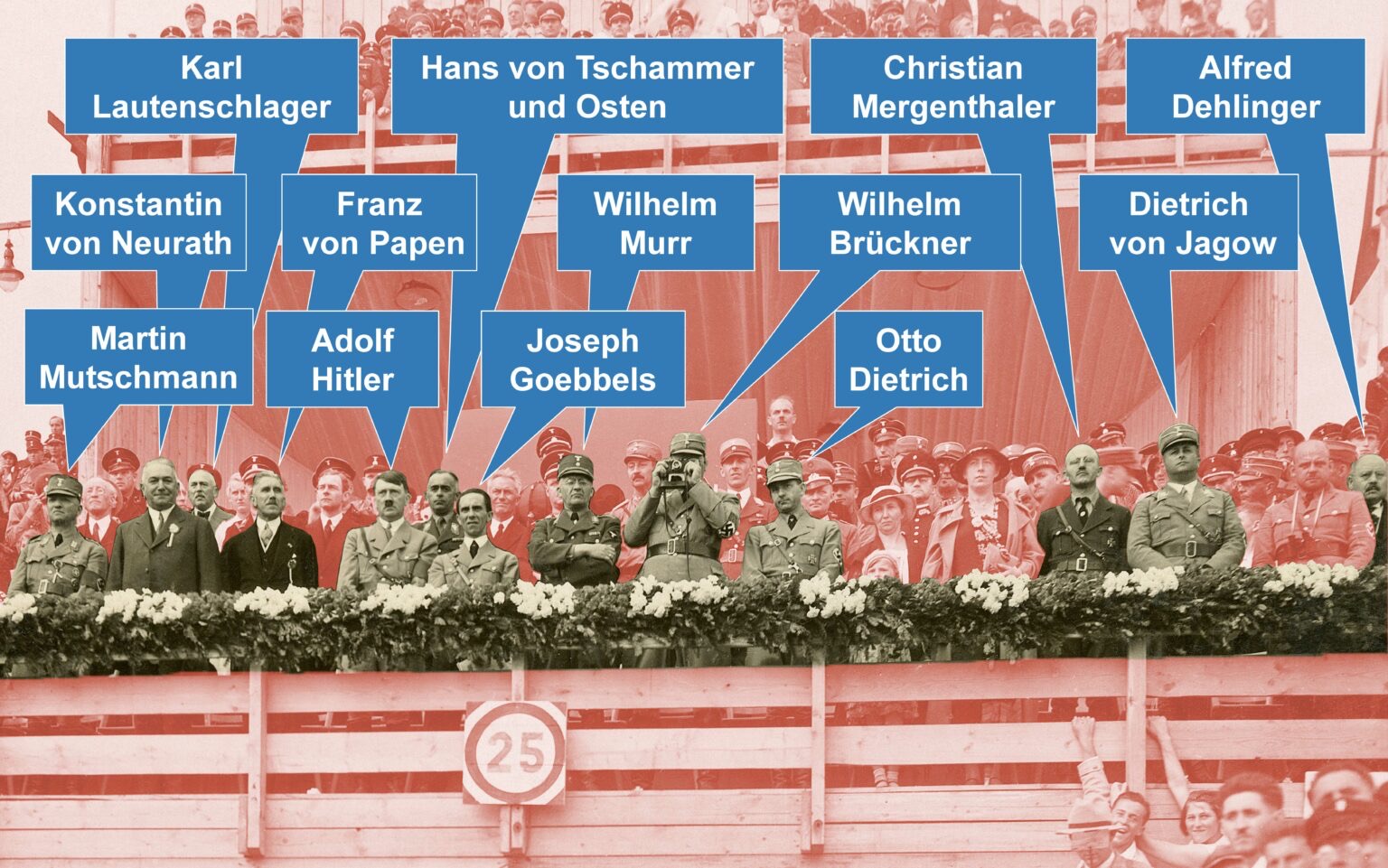
Parallel to Neuendorff, the Württemberg Reich Governor and NSDAP Gauleiter Wilhelm Murr, as well as Minister-President and Minister of Culture Christian Mergenthaler, also sought to persuade Hitler to attend. Murr even appealed to the Reich Chancellor, arguing that his attendance would primarily boost the numerous Germans living abroad who were now being admitted as participants and were expected at the gymnastics festival. All these efforts, however, initially proved futile. Finally, on the last day of the festival, Hitler appeared together with Vice-Chancellor Franz von Papen, Foreign Minister Konstantin von Neurath, and Propaganda Minister Joseph Goebbels. What considerations ultimately motivated Hitler to visit the festival remains unclear. The Nazi leadership likely recognized that the mass event, with its approximately 200,000 participants, represented an excellent opportunity to impressively showcase themselves and the national community they propagated.
Neuendorff’s demonstrative support for the Nazi regime did not pay off. On July 19, 1933, even before the start of the German Gymnastics Festival, Hitler appointed Hans von Tschammer und Osten, an SA group leader with no experience in any sport, as Reich Sports Commissioner (later: Reich Sports Leader). His duties included reorganizing German sport in accordance with the Nazi state and, above all, centrally controlling it. Neuendorff’s hope of securing the organizational independence of the German Gymnastics Federation was thus dashed.
Since the regional Nazi bigwigs in Stuttgart and Württemberg also wanted to present themselves and the party they represented in a fitting manner, protests and acts of resistance by political opponents had to be avoided at all costs. Although the workers’ sports movement had already been banned since March and numerous functionaries had been imprisoned, the police intensified their raids and arrests of politically undesirable individuals in the run-up to the gymnastics festival. On July 26, exactly halfway through the festival, the official gazette reported that around 200 people had been taken into “protective custody” and banned writings had been confiscated. Nevertheless, a communist cell managed to distribute leaflets in the city, as well – with the help of rafts – during the rowing competitions on the Neckar River.
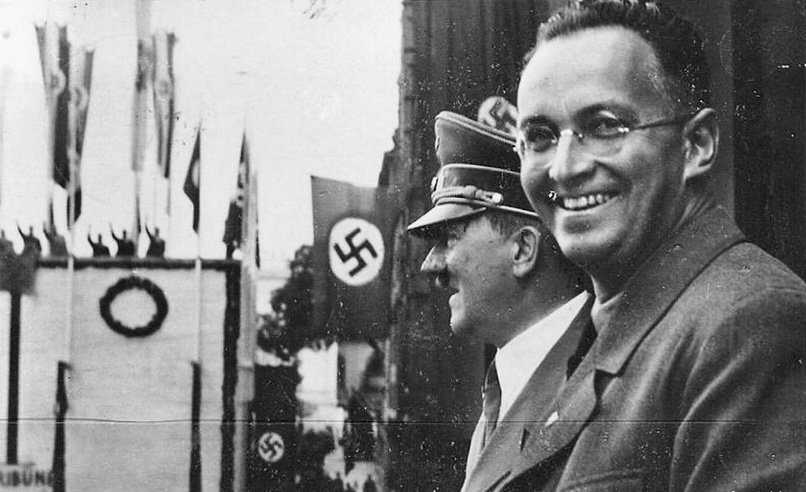
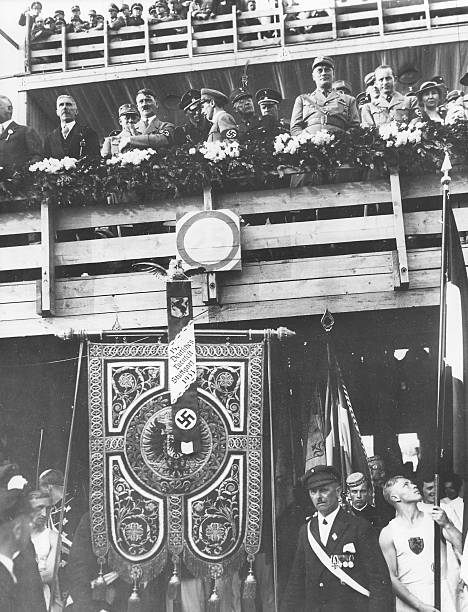
The gymnastics festival kicked off on July 21 with an exhibition of gymnastics by 11,000 Stuttgart schoolgirls on the festival grounds in front of 70,000 spectators, followed by another exhibition of gymnastics by around 13,000 schoolboys the next day. The first highlight was the inauguration of the new stadium on July 23, which was preceded by an event organized by Stuttgart’s gymnastics clubs. The modern new building on the former parade ground in Bad Cannstatt was designed by the architects Paul Bonatz and Eugen Scholer, who also designed the new main train station The sports field featured a reinforced concrete grandstand as well as a festival meadow surrounded by wooden stands, complete with open spaces, tents, and a flag tower. Mayor Dr. Karl Strölin, who appeared at the opening ceremony in SA uniform, named the large sports complex the “Adolf Hitler Arena.” Reich Governor Murr thanked the gymnastics club, which, through physical training, had created the conditions for the liberation of the nation.
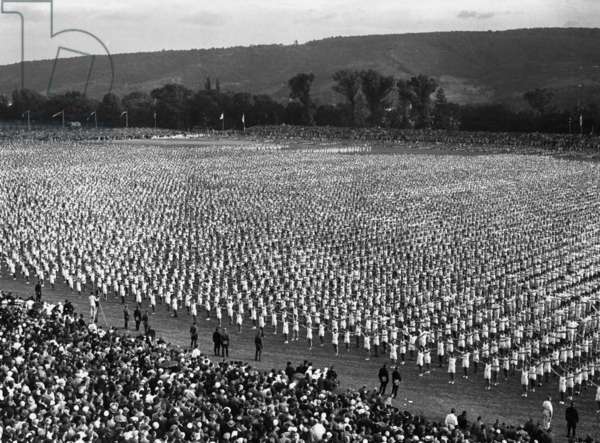
Following the police gymnastics championships and student competitions the next day, the official opening ceremony of the gymnastics festival took place in the courtyard of the New Palace on the afternoon of July 26, 1933. The sports and competition program in 1933 was more extensive than at previous festivals. Reflecting the new direction of the gymnastics association were paramilitary sports competitions, which had never been held before. Members of the Academic Gymnastics Federation competed in SA uniforms and completed disciplines with a distinctly military background, such as crawling under barbed wire obstacles and club throwing, modeled on hand grenade throwing. Small-bore rifle shooting was also included in the program for the first time.
At the evening rallies at the end of each competition day, politics took center stage. The evening of July 28th was dedicated to a “German Consecration Ceremony” and a rally for the Saarland, which at that time was not yet under German administration. Among the political functionaries attending the Saarland rally were Foreign Minister von Neurath, the chairman of the Association for German Culture Abroad, Hans Steinacher, and Richard Csaki, the director of the German Foreign Institute in Stuttgart, whom he had appointed. The following day, after a morning ceremony for the youth in the castle courtyard and the final competitions with a closing exhibition in the evening, a “National Celebration” was held with Goebbels as the keynote speaker, in which he described the gymnastics festival as an expression of “the reawakened will to live after the decline in Weimar.”
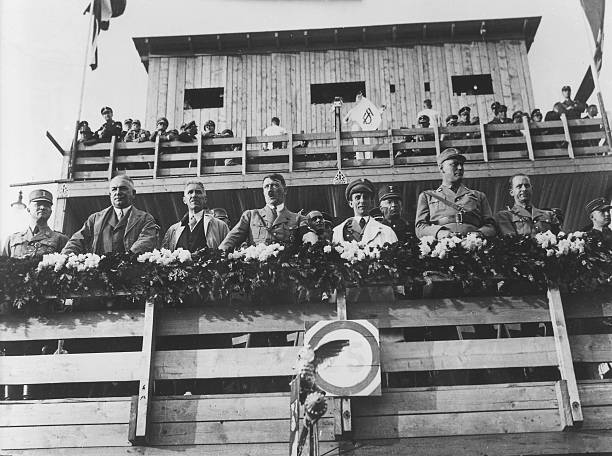
The 1933 German Gymnastics Festival also served the National Socialists as a platform for the blatant presentation of their ideology. While Goebbels had already called the gymnasts “representatives of racial vitality” in his speech, Hitler reinforced this idea in his closing address. The gymnastics association, according to the “Führer,” was an institution for managing a people’s most precious asset: the flesh and blood of its members.
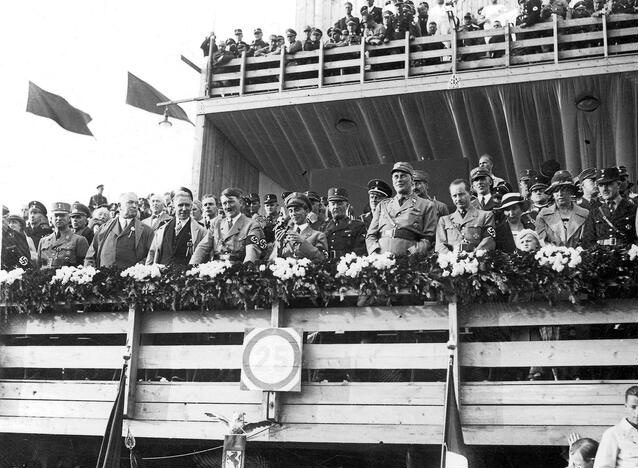
The closing ceremony, in particular, made it clear how well major sporting events suited the new national community, generating the same emotional sense of shared experience as the NSDAP rallies. On the final day of the festival, July 30, the traditional procession moved to the palace square in three columns, consisting of athletes and Nazi organizations. Each column was led by so-called SA honor guards, intended to demonstrate how closely intertwined the Nazi movement, the people, and sport now were.


 Heinrich Hoffmann Photo Gallery