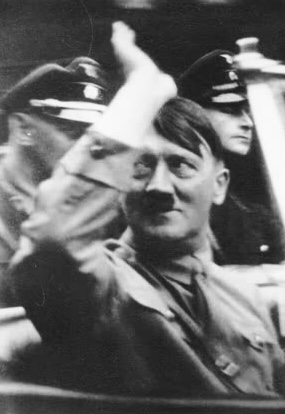
On the weekend of 17-18 June 1933, the new Nazi state power displayed a massive presence at the Thuringian SA district meeting held in Erfurt. The “Führer” and Reich Chancellor Adolf Hitler landed at the airport on the Roter Berg (Red Mountain) to greet 60,000 marching SA men in the city and to receive homage from the people of Erfurt. At the Mitteldeutsche Kampfbahn (Central German Combat Arena), today’s Steigerwald Stadium, he gave a speech to 120,000 listeners. According to the TAZ (Thüringer Allgemeine Zeitung) newspaper, around 300,000 people were present at the event, which was more than double the population of Erfurt at the time.
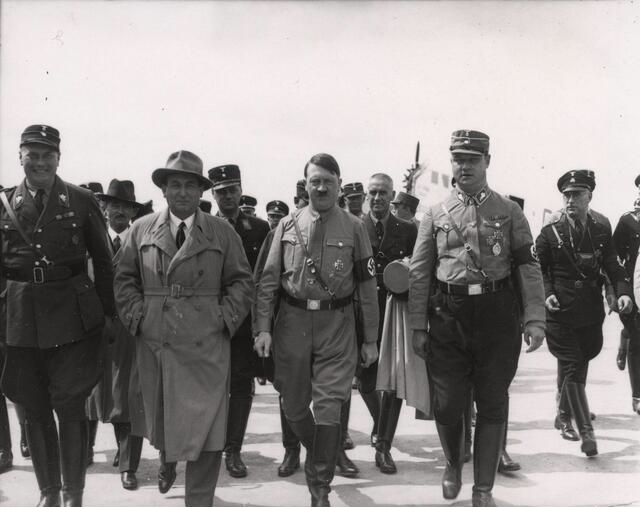
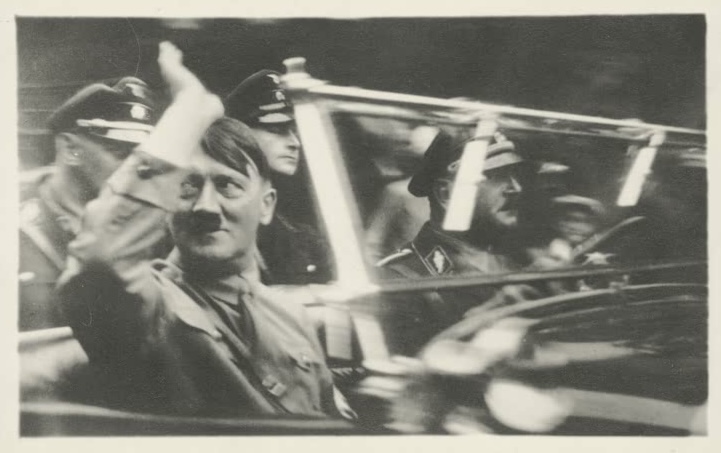
Chancellor Hitler arriving at Erfurt. Photo (Marckow, Erfurt).
The nearby city of Weimar, the capital of Gau Thuringia, was where most major NSDAP events and rallies took place. Adolf Hitler had developed a particular fondness for Weimar, the classical city on the Ilm River, beginning in the 1920s. Occasionally, the Reich Governor and Gauleiter Fritz Sauckel allowed the much-maligned Erfurt to host events, as was the case with the Thuringian SA district meeting in June of 1933. It was likely the size of the anticipated crowds that led to favoring the considerably larger Thuringian metropolis of Erfurt to host the Gaupartietag. The TAZ newspaper proudly reported that it was “the largest SA rally to have taken place in all of Germany since the victory of the national uprising.”
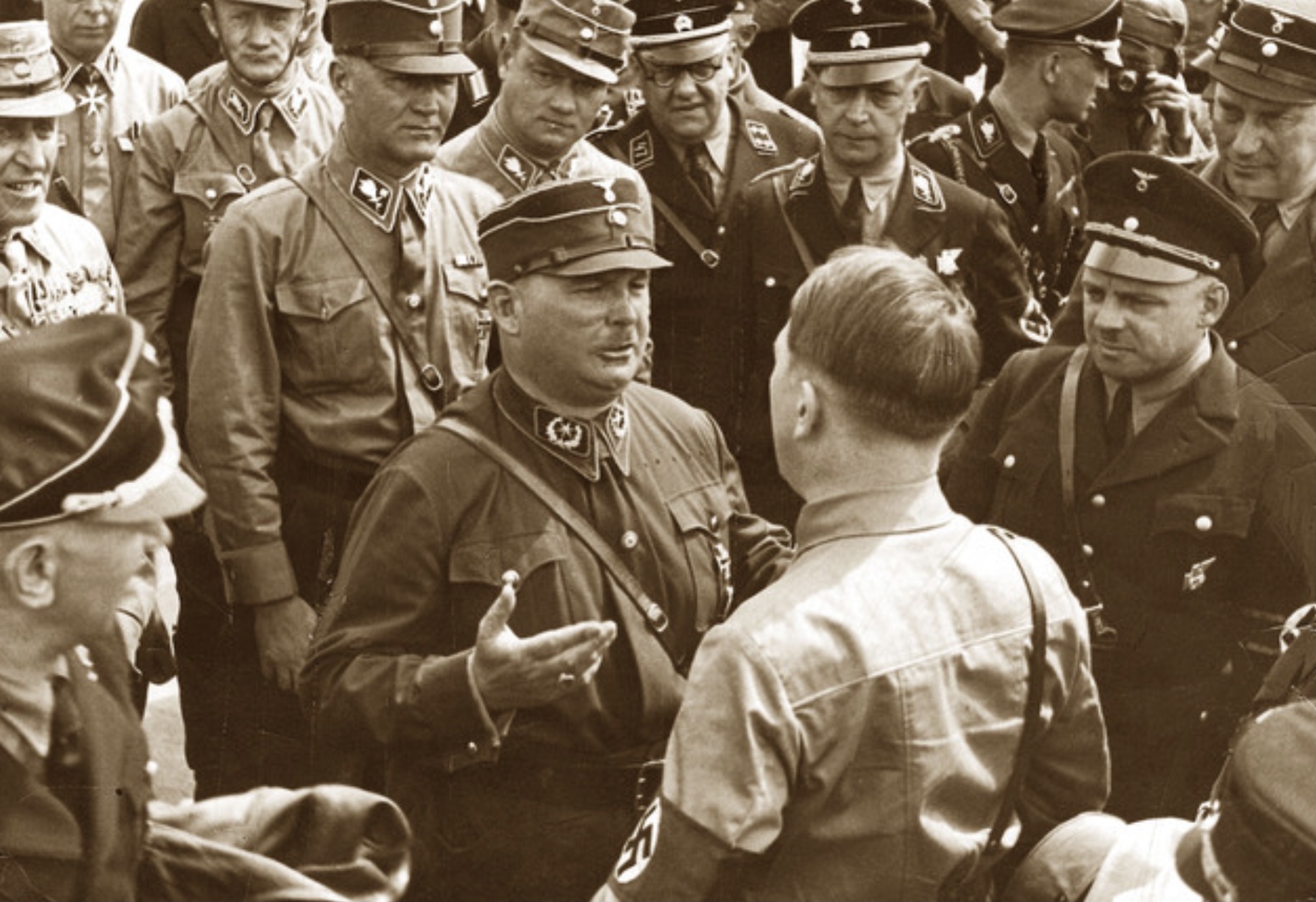
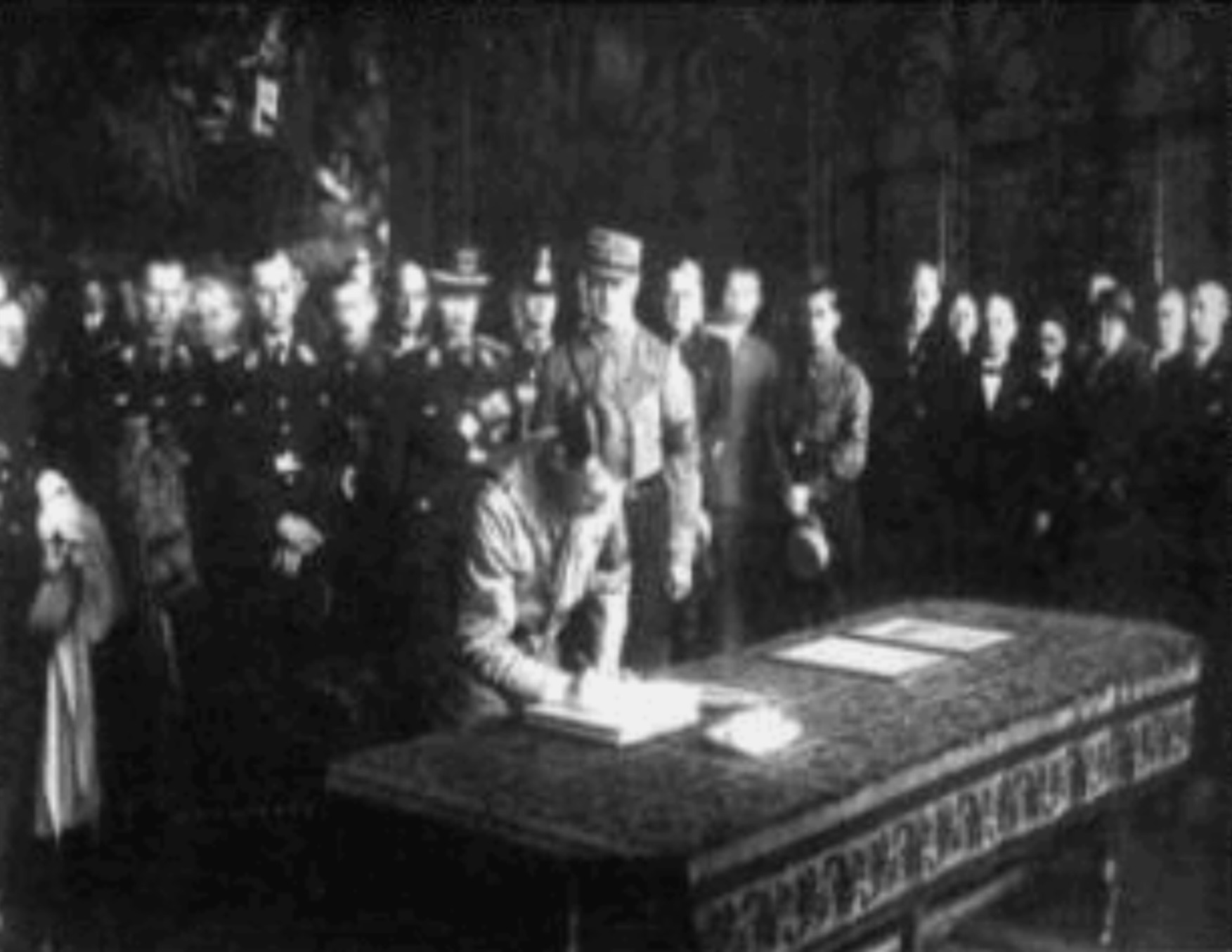
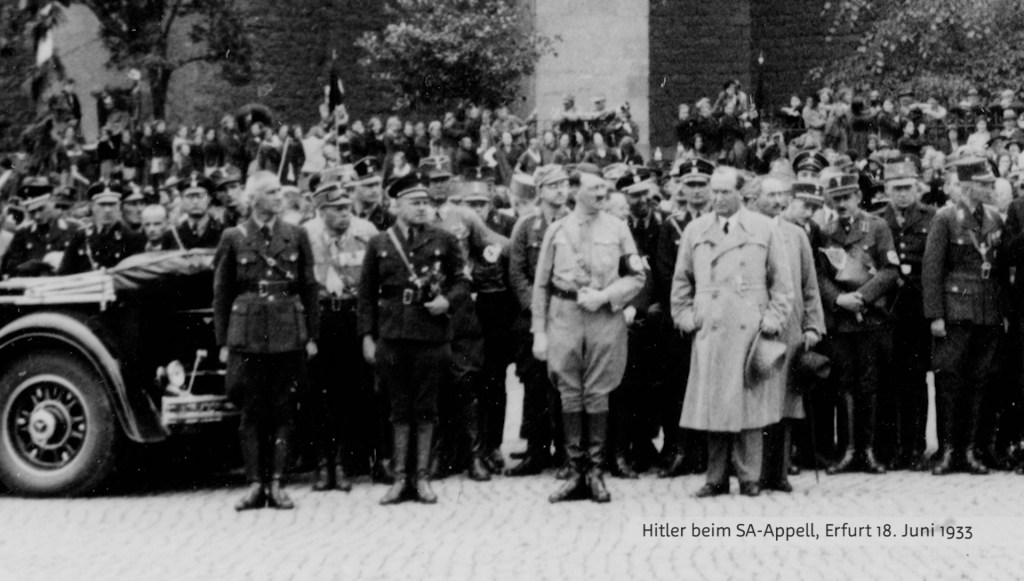
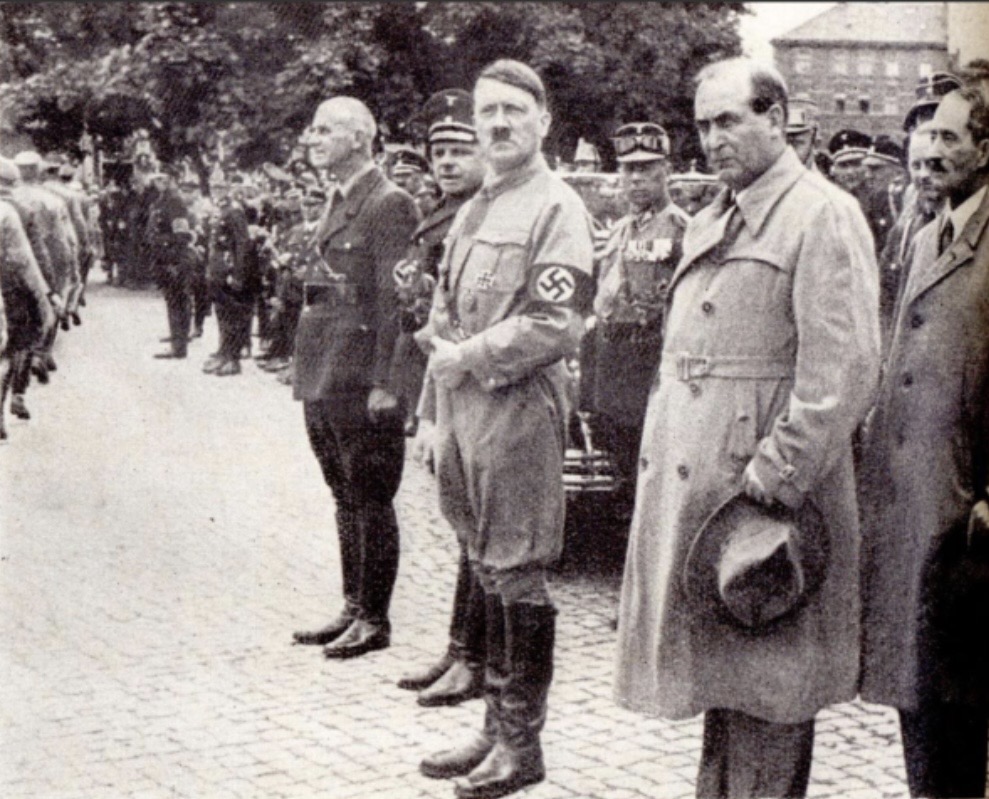
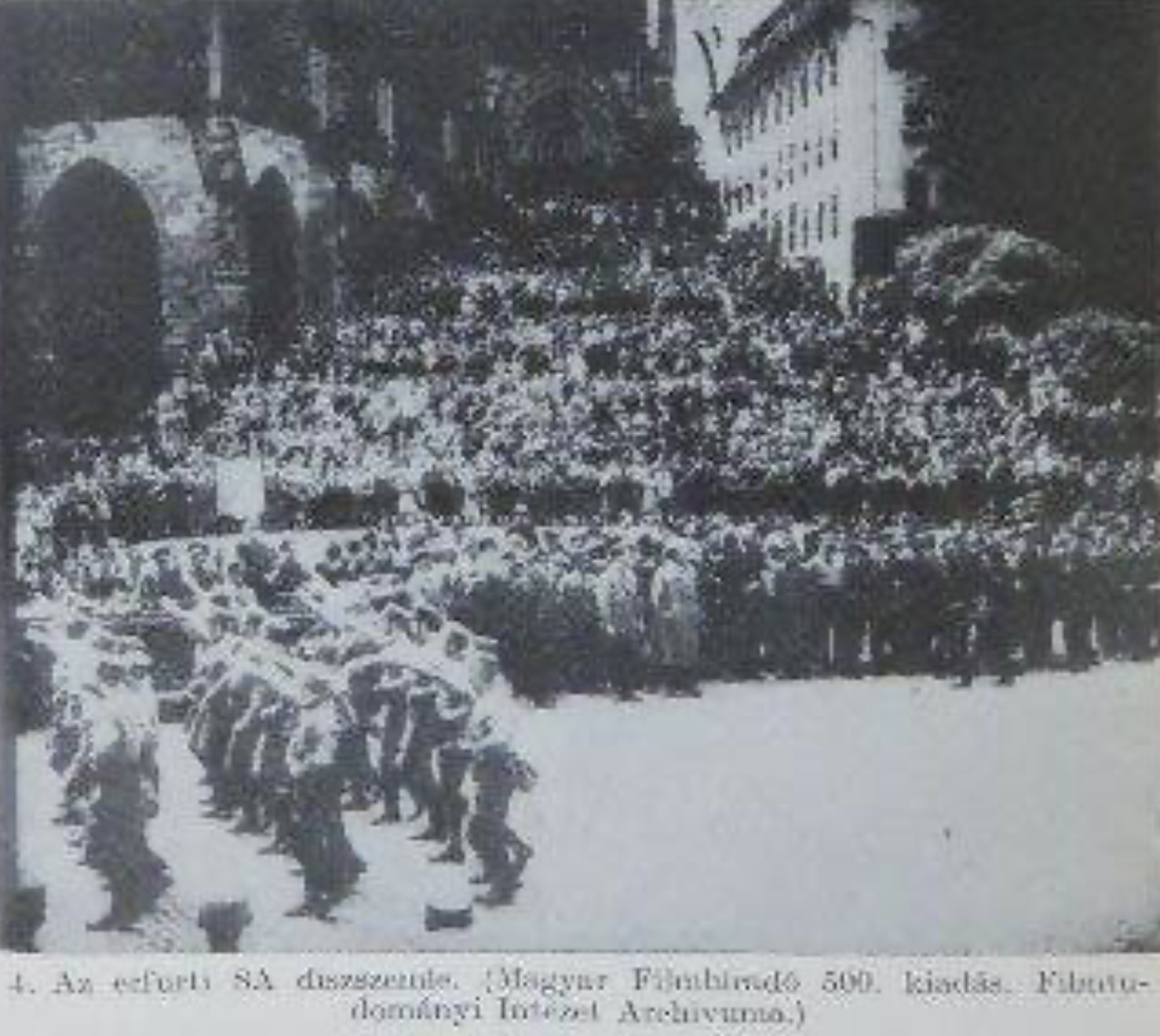
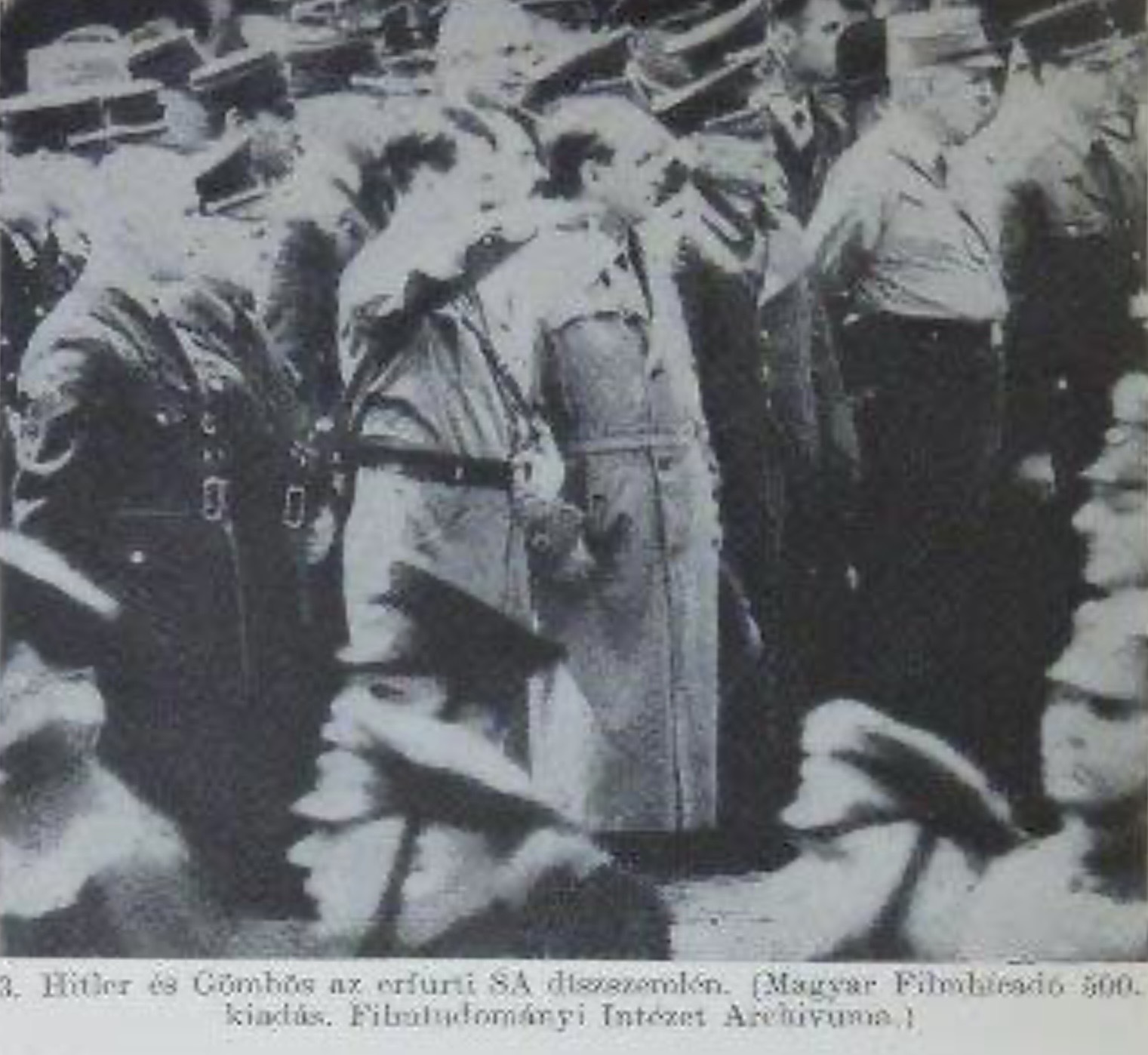
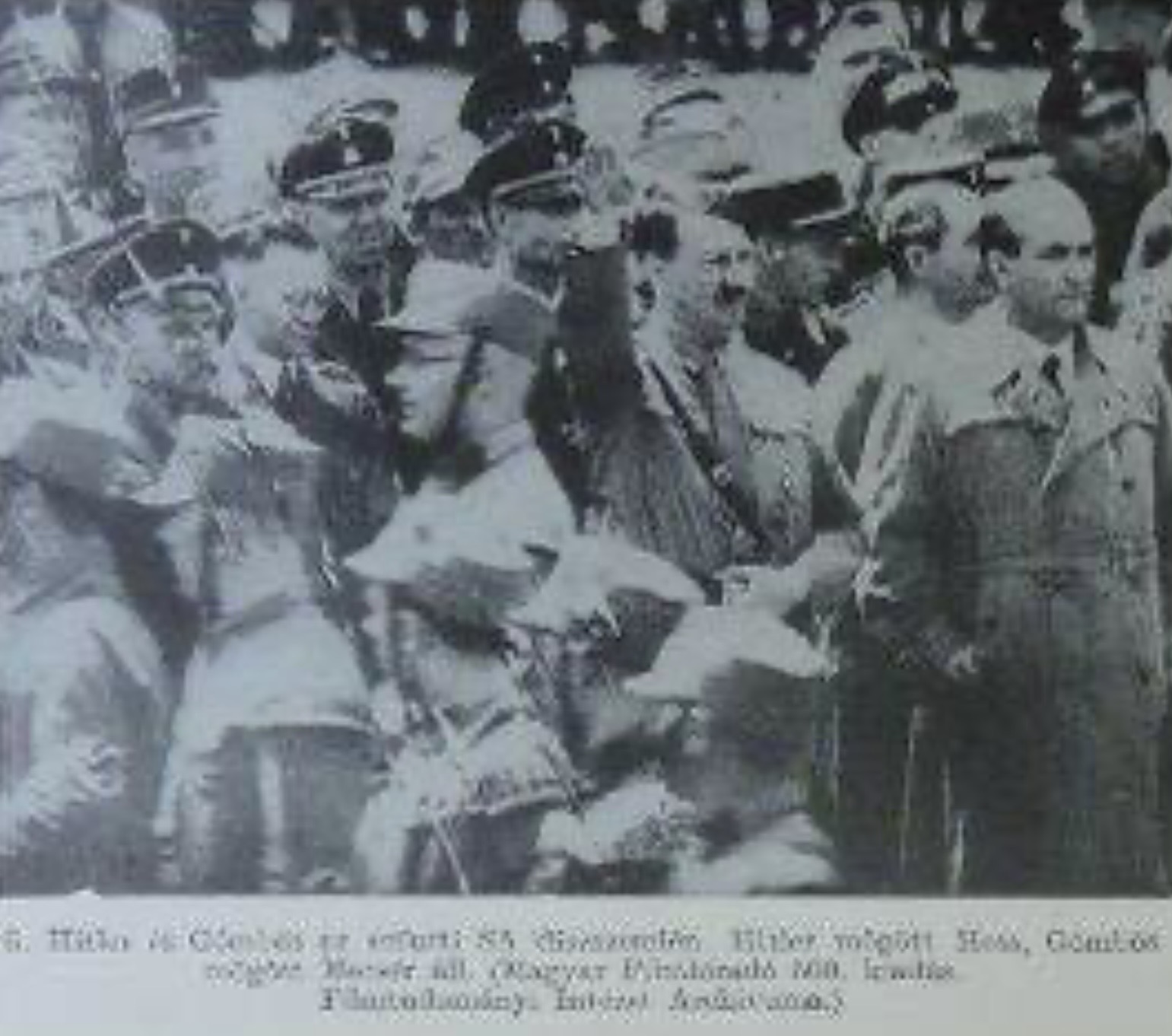
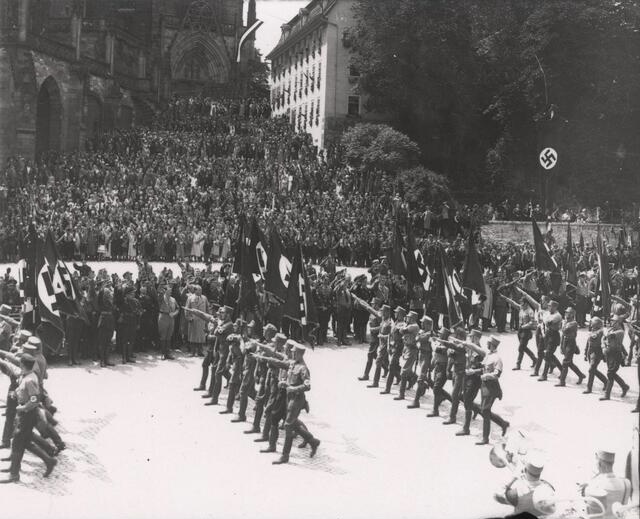
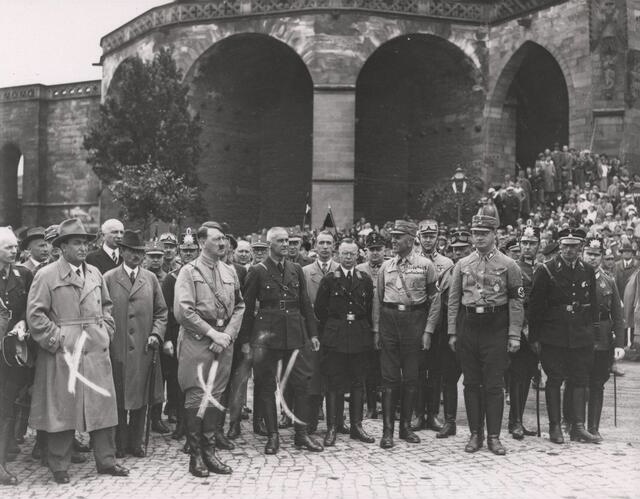
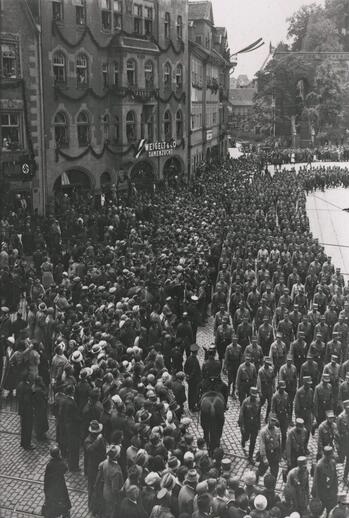
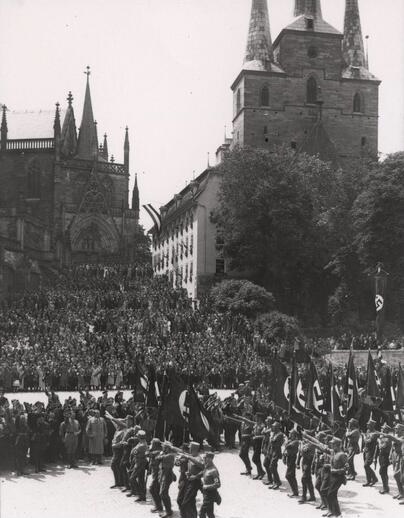
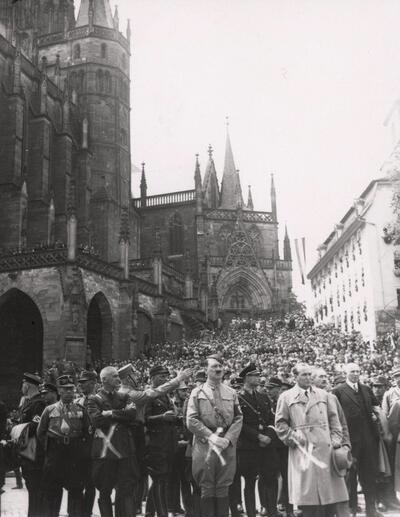
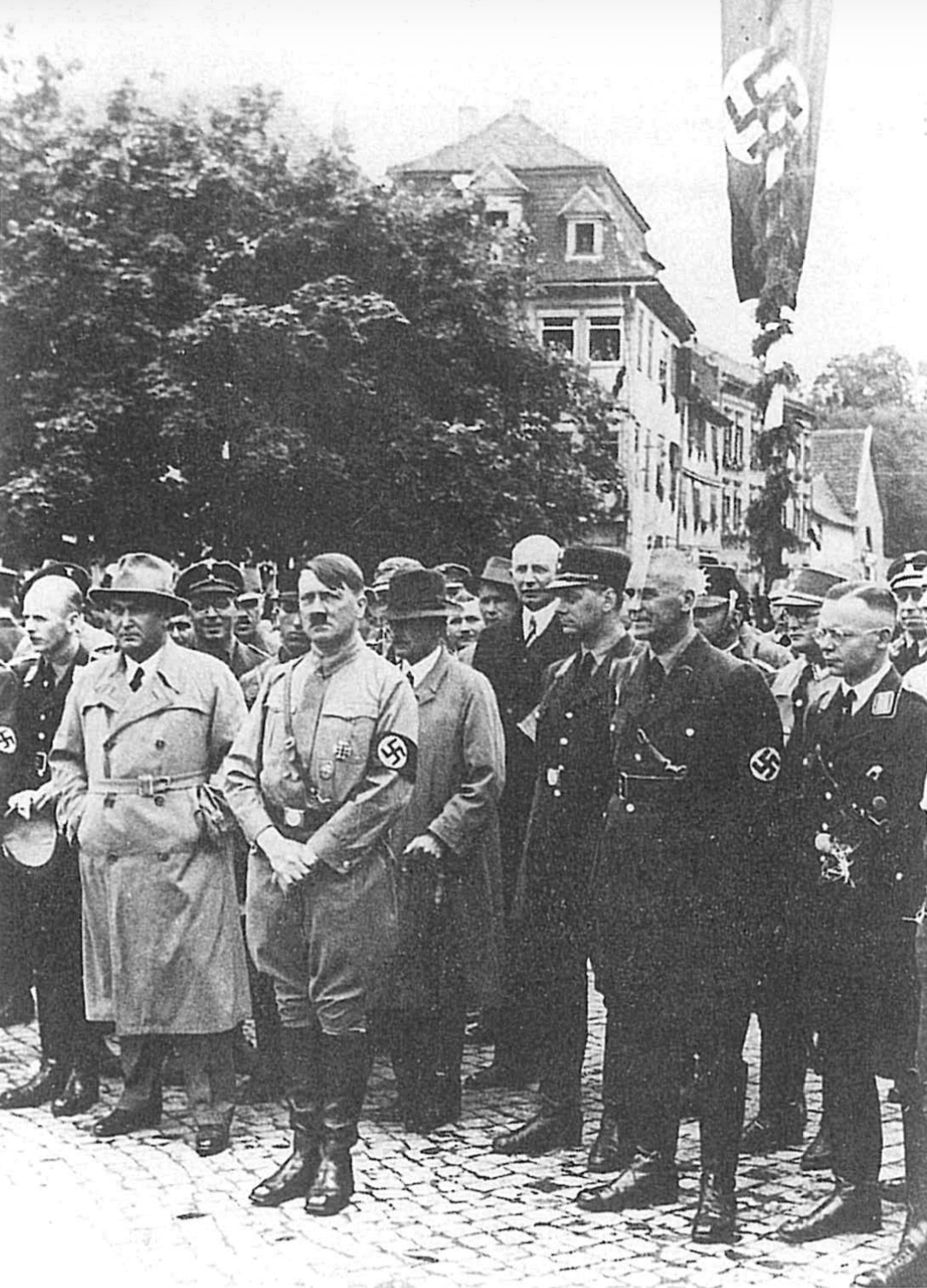
Hitler delivered a speech on the appeal of the SA in the Mitteldeutschen Kampfbahn stadium in front of 120,000 listeners in Erfurt on 18 June 1933. After his entry in the Golden Book in the Town Hall in the presence of the Prime Minister of Hungary Gyula Gömbös, he took his acceptance of a march of 60,000 of the SA of Gau Thüringen on the Friedrich-Wilhelm-Platz in front of 70,000 spectators.
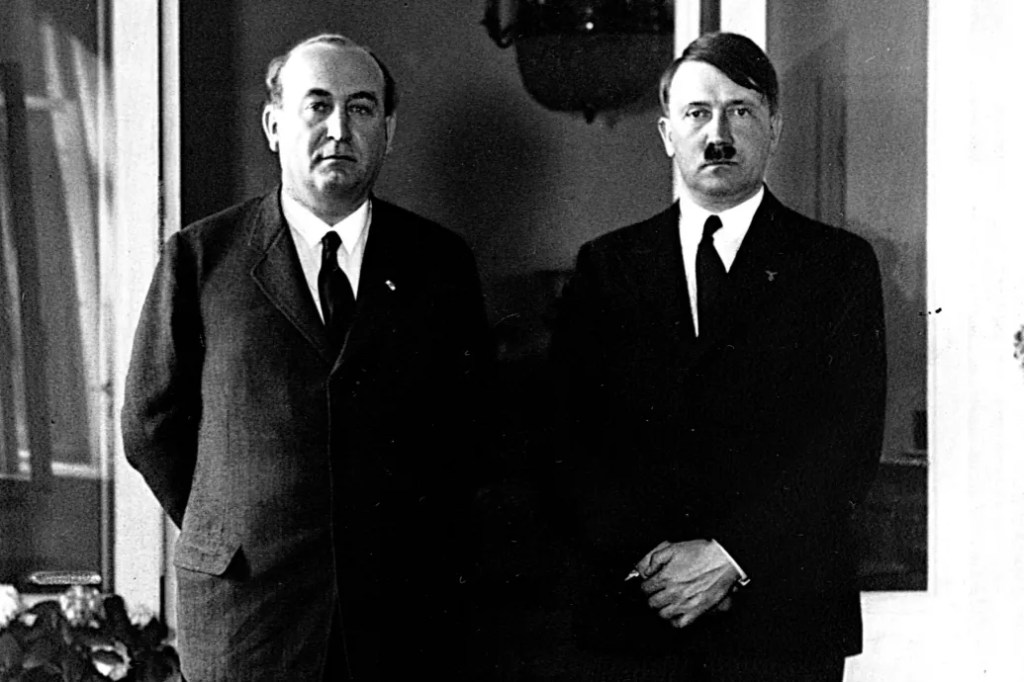
Gyula Gömbös was the very first European head of government to pay Hitler an official visit after he took office. Gömbös was the Hungarian Prime Minister and an extreme right-wing politician who greatly admired the Nazi movement, and wanted to cement ties with Hitler primarily to break Hungary’s post-World War I diplomatic isolation. Their relationship was often strained over the years due to several ideological differences, but the initial visit did manage to cement a crucial political and economic alliance between Hungary and Nazi Germany. Gömbös reaped the rewards of Hitler’s gratitude in the form of an addition to the German-Hungarian trade agreement. His subsequent visit to the Reich Chancellery in June of 1934 drew immense European attention, and brought Hungary into the Axis orbit.
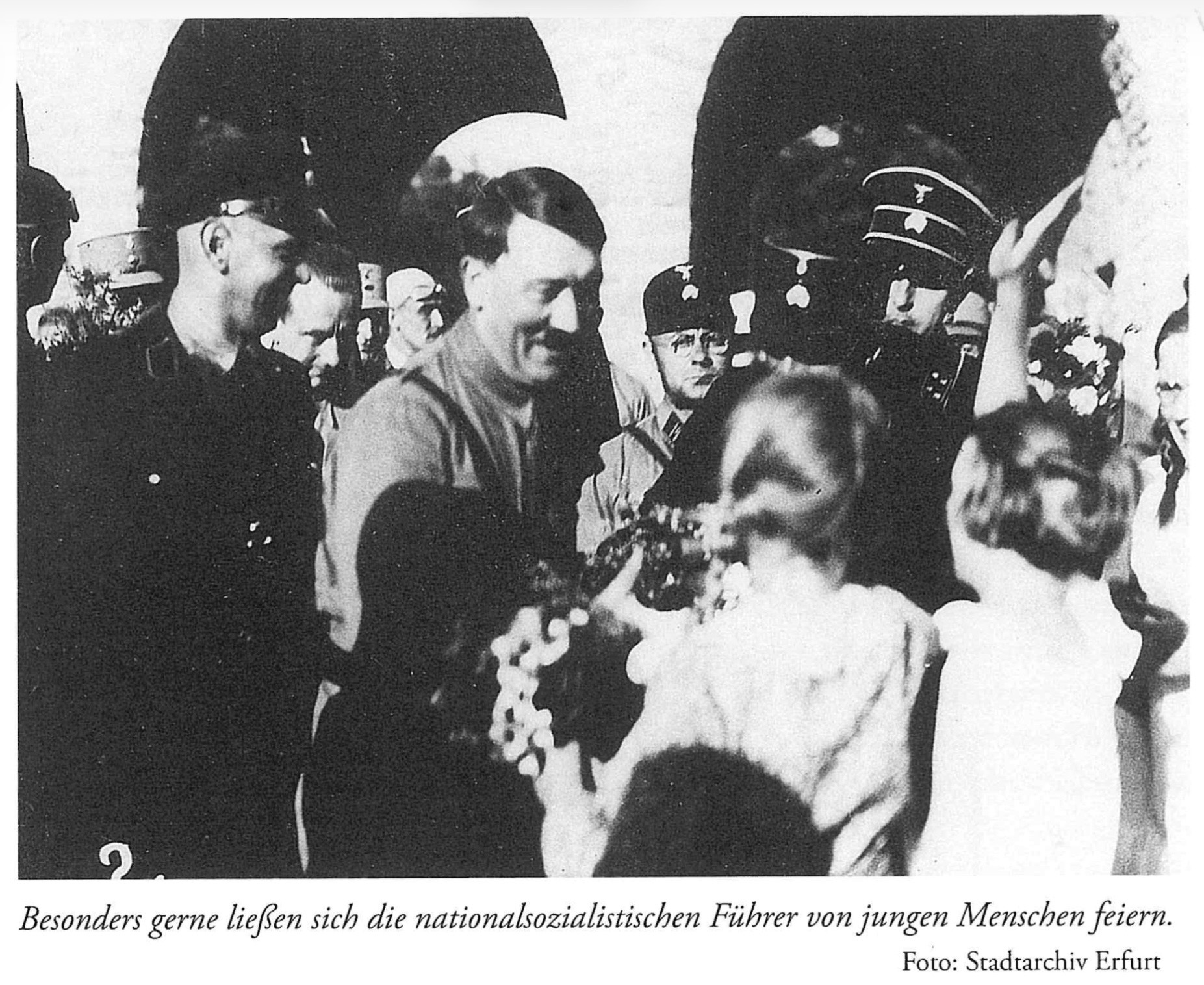
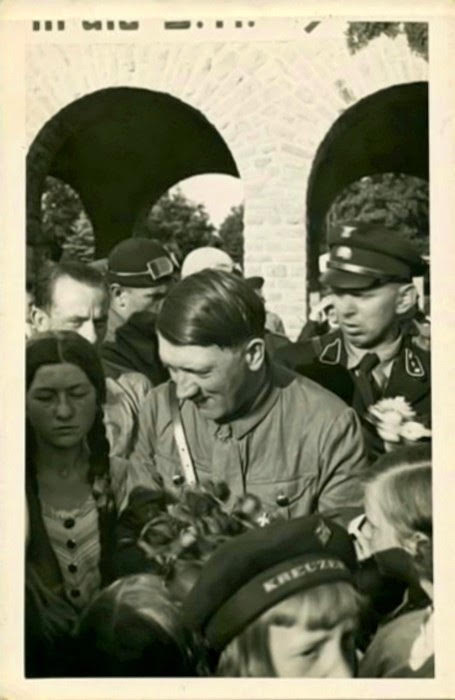
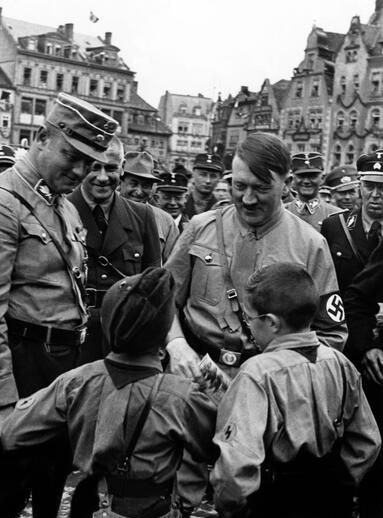
This event was to become the absolute pinnacle of National Socialist power demonstrations and mass mobilization in Erfurt. Starting with the more than doubled population on the weekend of June 17/18, 1933 – “300,000 pay homage to Hitler in Erfurt,” as the TAZ headline proclaimed – which represented a considerable organizational feat, almost all the obligatory elements are present: the spectacular arrival of the “Führer” at the airfield on the Roter Berg, opened in 1925; the smooth march of around 60,000 SA men through the city and into the stadium inaugurated two years earlier; the parade being reviewed by Justice Minister Frick, Gauleiter Fritz Sauckel, Hitler, and Hungary’s Prime Minister Gömbös in front of the cathedral; everywhere jubilant, enthusiastic crowds; a torchlight procession and fireworks at night; and the honoring of the Führer with honorary citizenship and an entry in the city’s Golden Book.
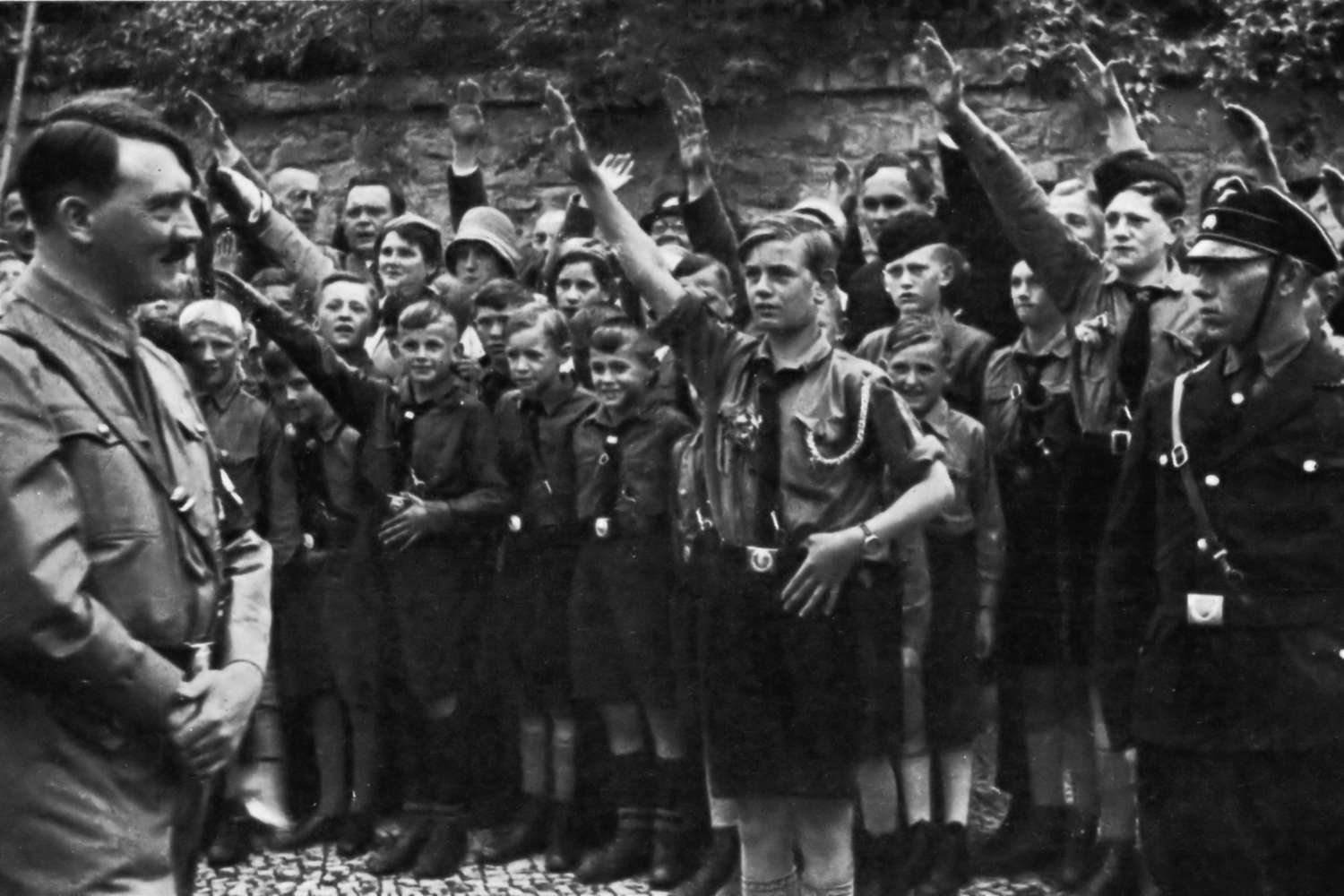
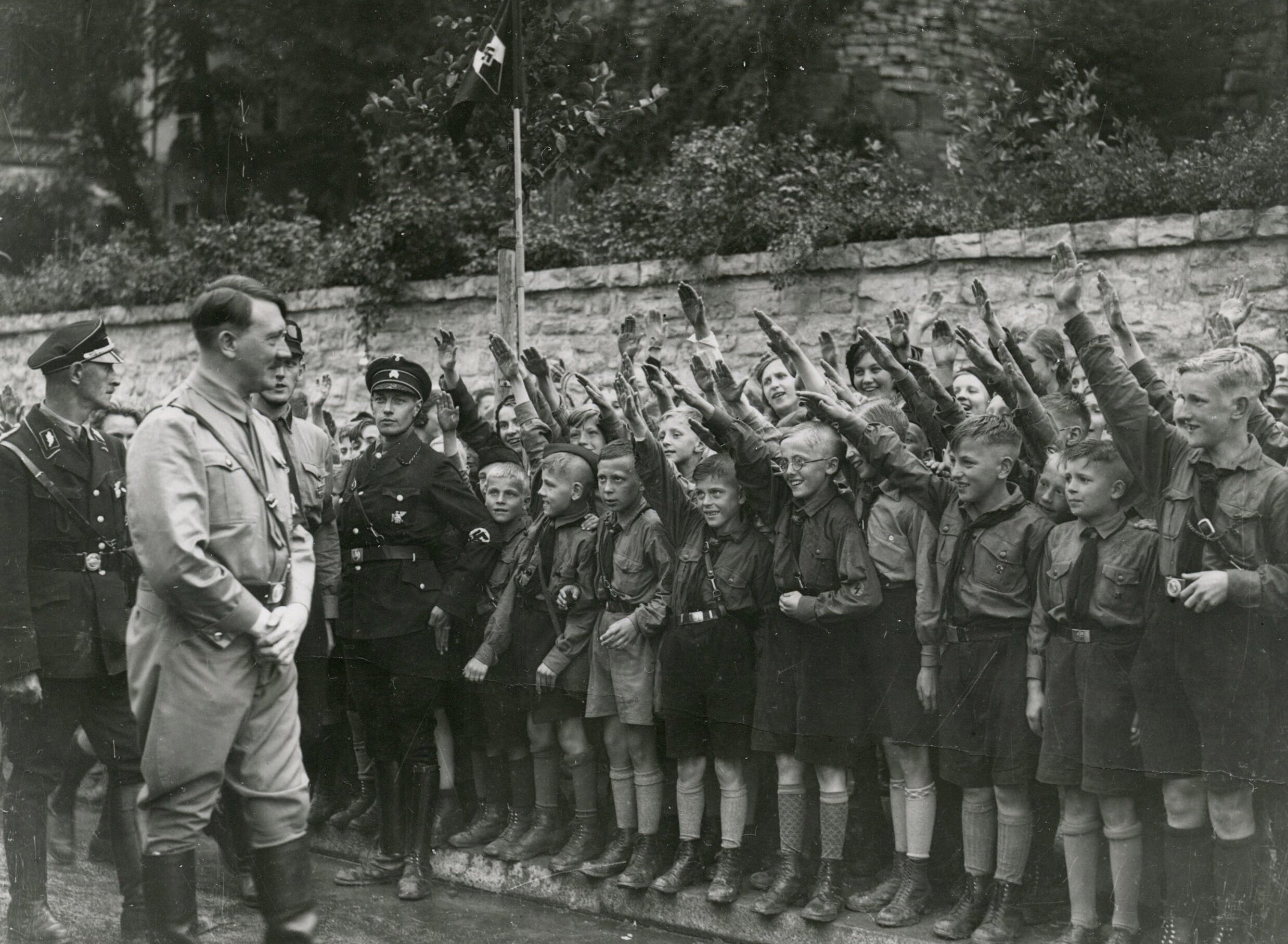
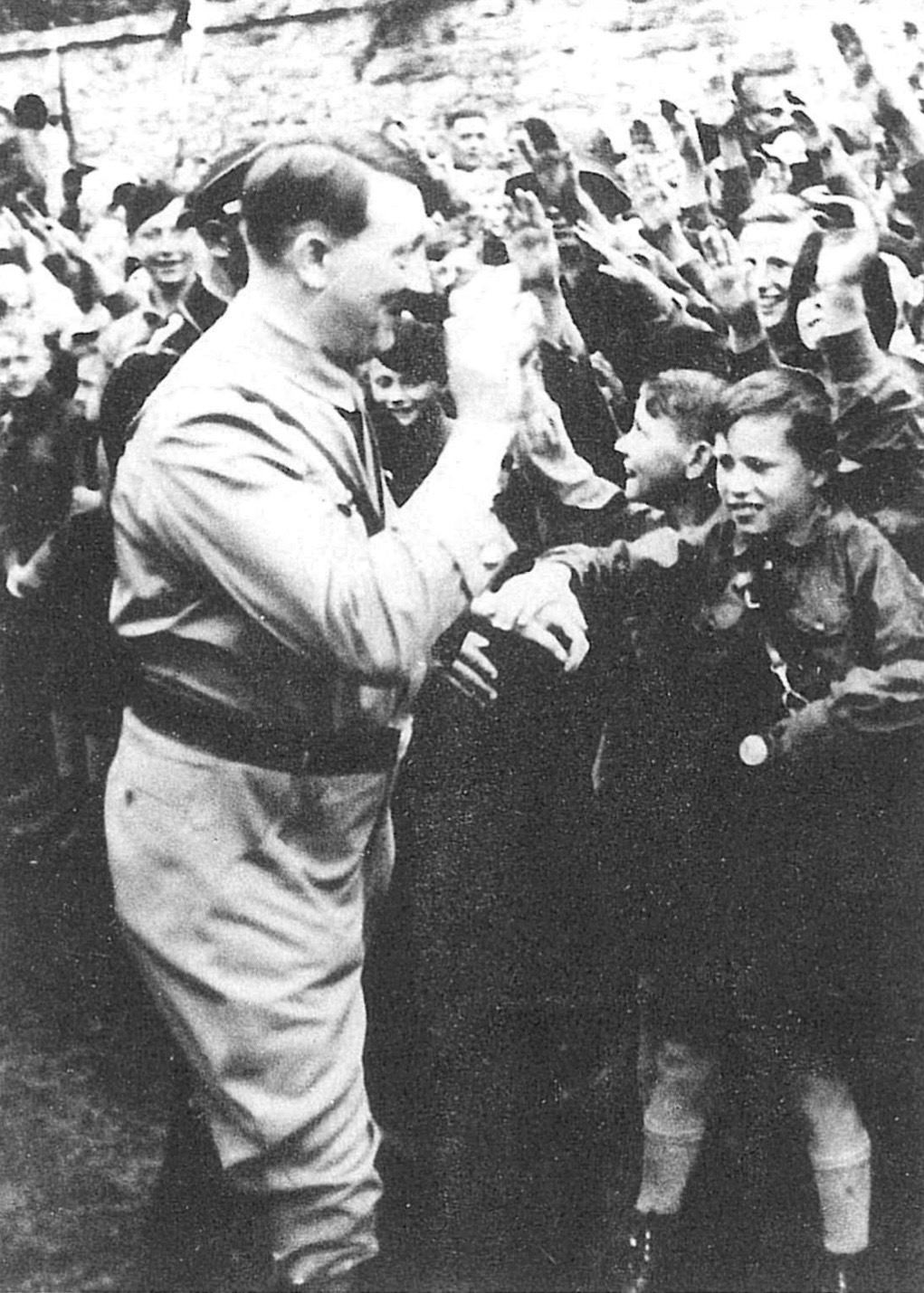
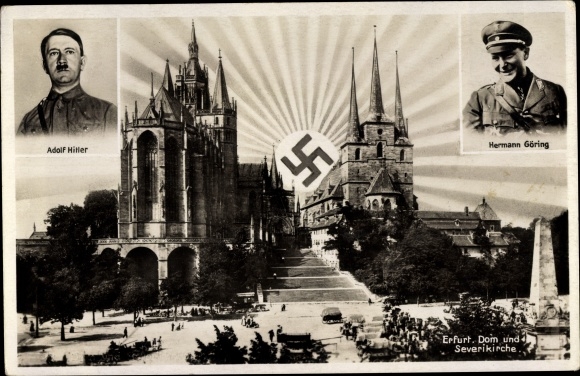
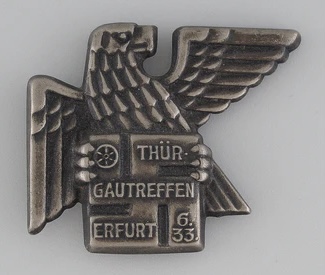
Erfurt Treffen Abzeichen June 1933 – The design of this Erfurt meeting commemorative badge was also used as the model for the Gau Honor Thüringen Traditions Badge. The honor badge was created in 1933 by Gauleiter Fritz Sauckel and awarded to the first 1,000 party members in Thuringia for early services to the Third Reich.
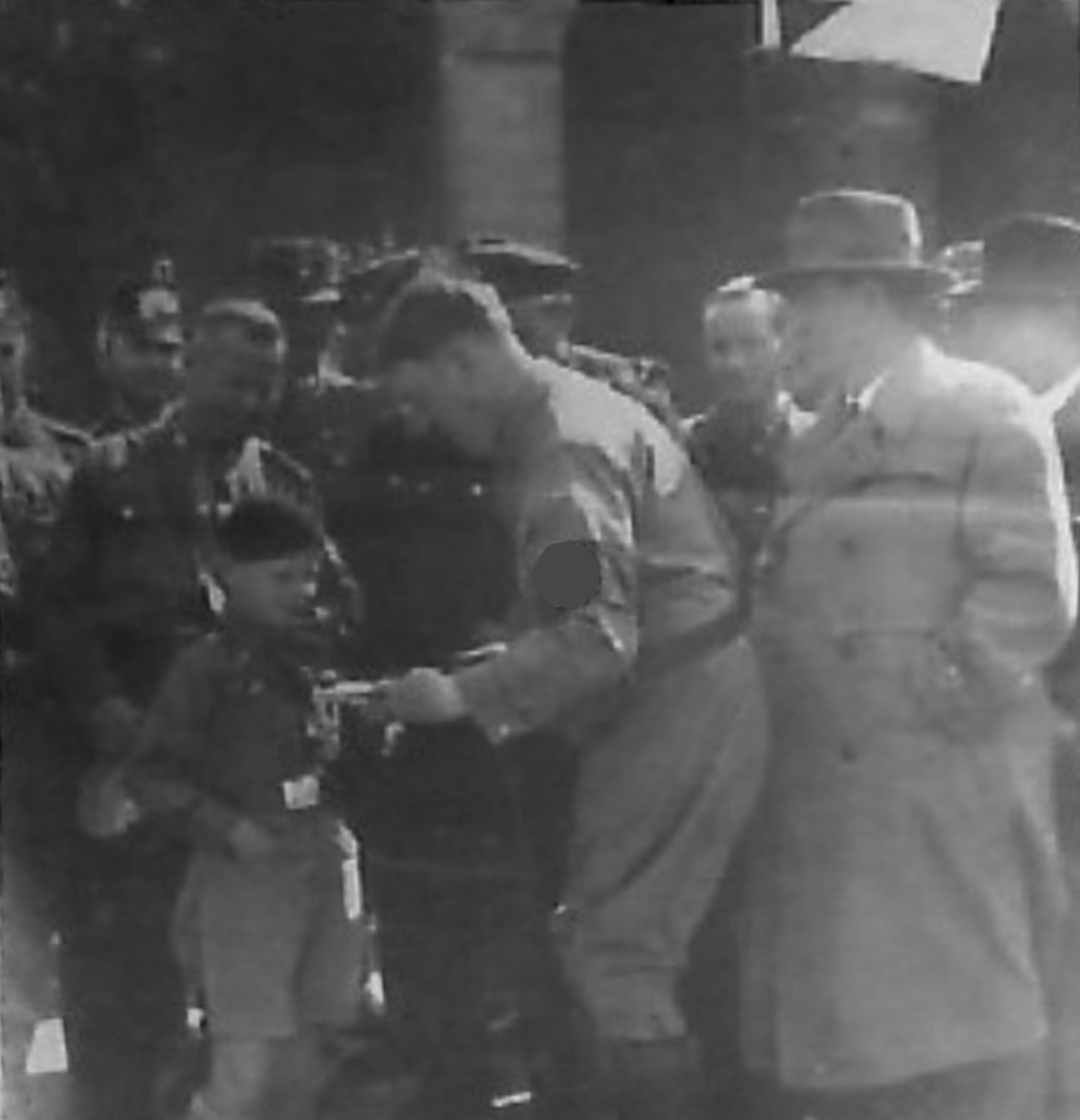
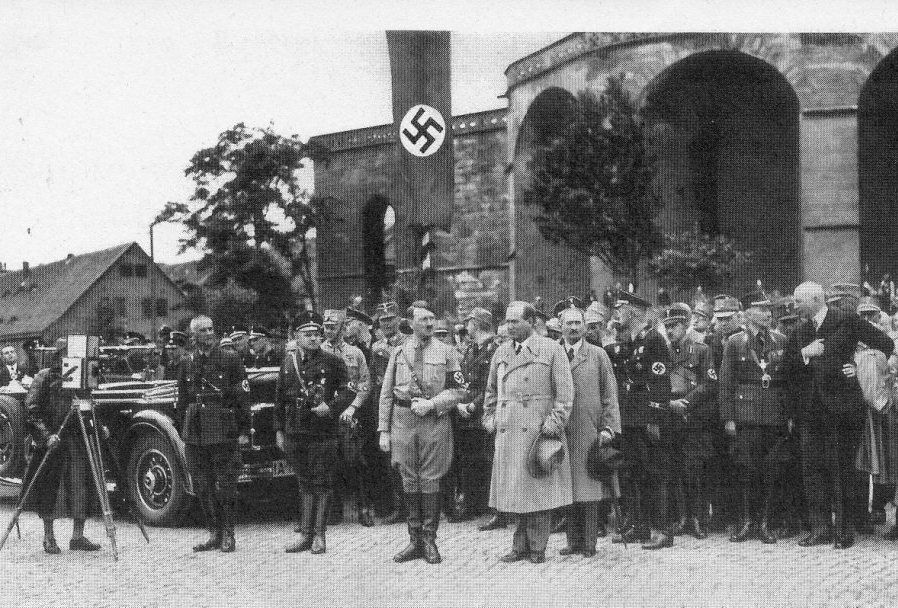
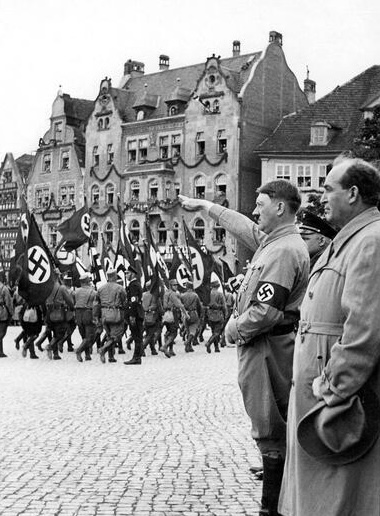
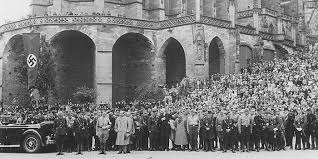
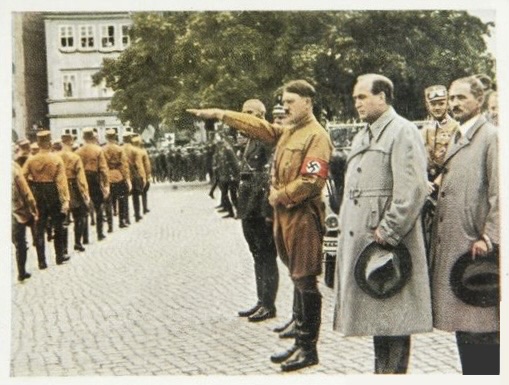
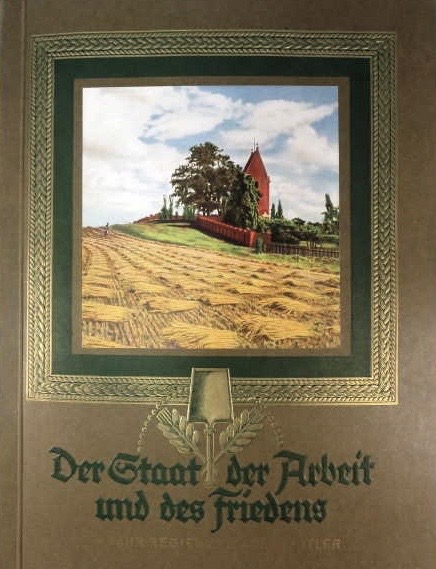
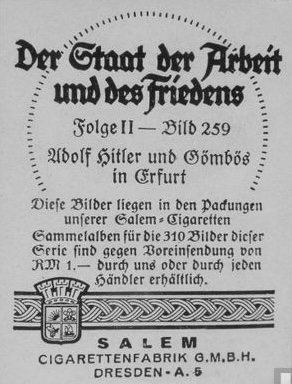
“Adolf Hitler und Gömbös in Erfurt” was a colorized photograph featured in the 100 page collector cigarette card album Der Staat der Arbeit und des Friedens – Ein Jahr Regierung Adolf Hitler (The Land of Labor and Peace – One Year of Hitler Government) published by Cigaretten Bilderdienst of Altona-Bahrenfeld late in 1934. “Der Staat der Arbeit und des Friedens” is Part II of the Nazi Party’s first cigarette card propaganda album “Kampf um’s Dritte Reich”. The book and its 320 color pictures document all the successes of the Hitler regime in its first year of rule in Germany.


 Heinrich Hoffmann Photo Gallery