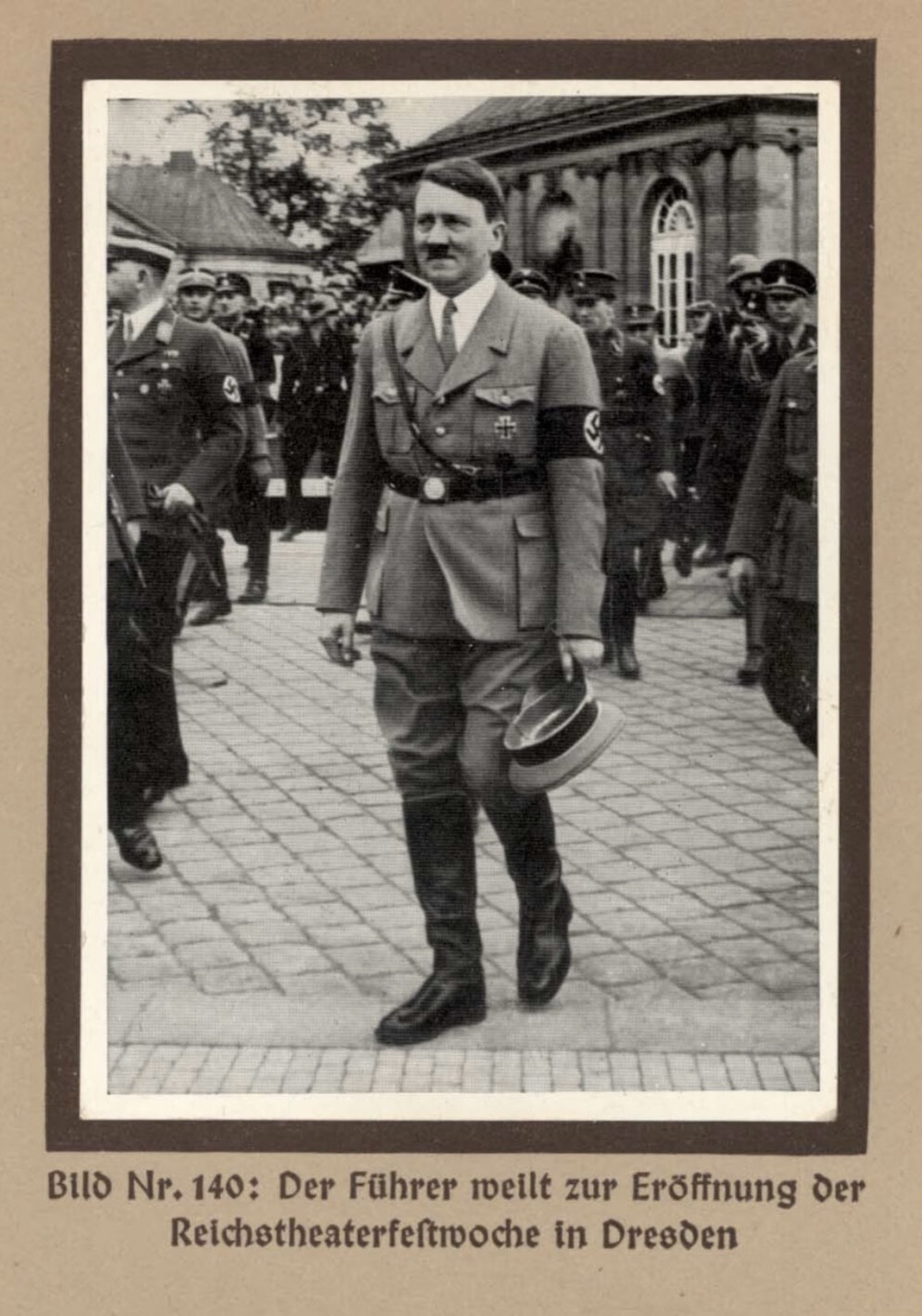
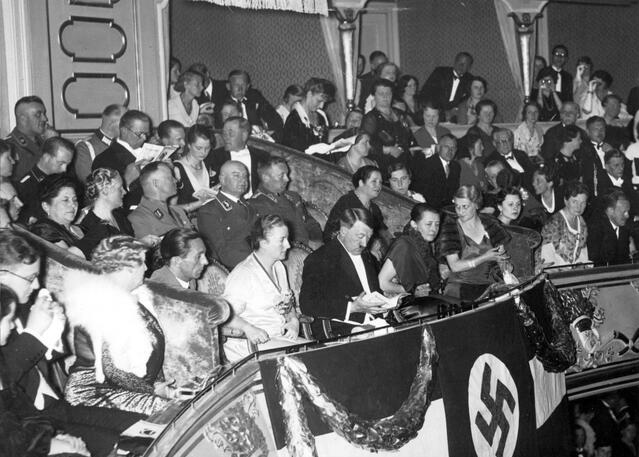
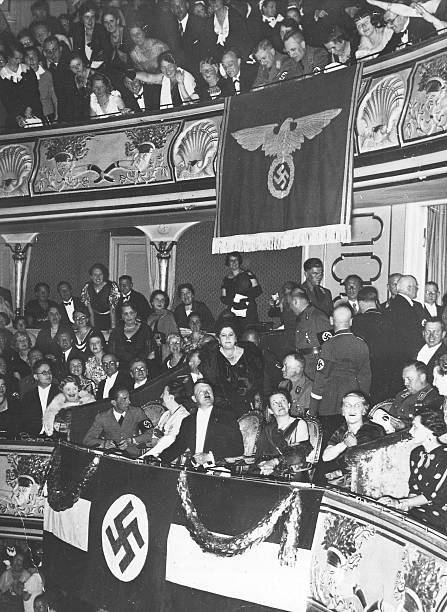
On 27 May 1934, Adolf Hitler travelled to Dresden for the occasion of the Reich Theater Festival Week, held through 3 June 1934. Among the representative theatrical events of the Nazi era, the “Reichstheater-Festwoche” held annually in various cities from 1934 until the outbreak of war in 1939, occupied a prominent position. Its purpose was to demonstrate the capabilities of the nation’s stages. Its objective was to place the theaters in the service of Nazi propaganda and to permanently eradicate any lingering vestiges of republican and liberal attitudes dating back to the Weimar Republic.
Reichstheater Festwoche
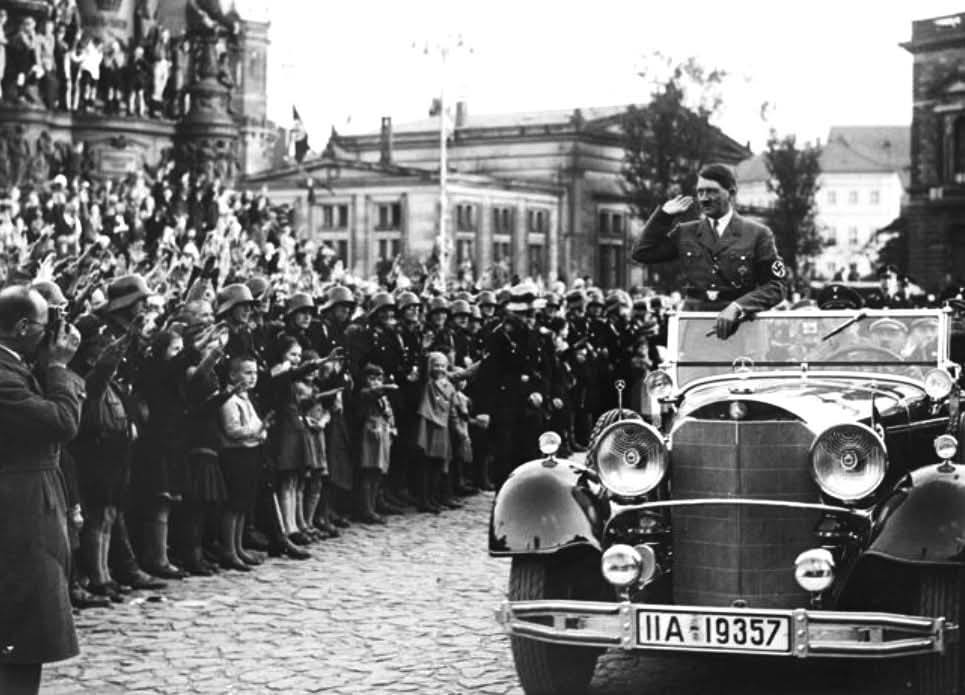
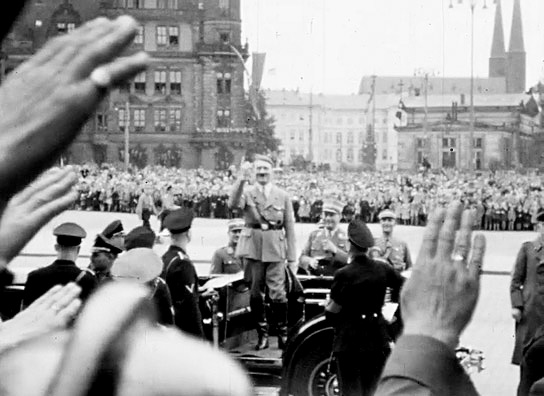
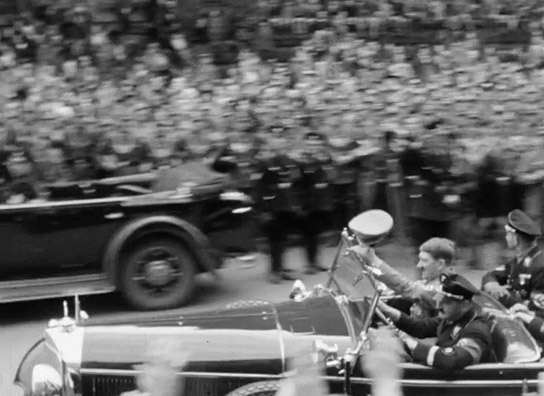
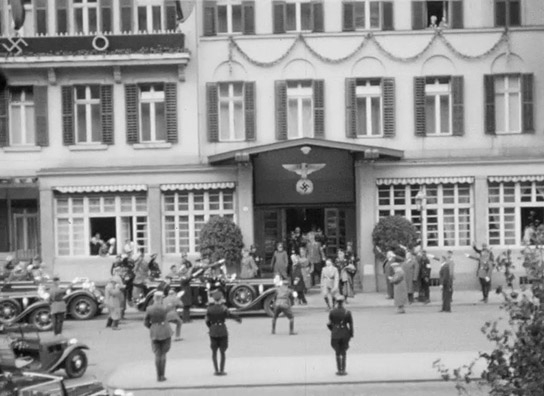
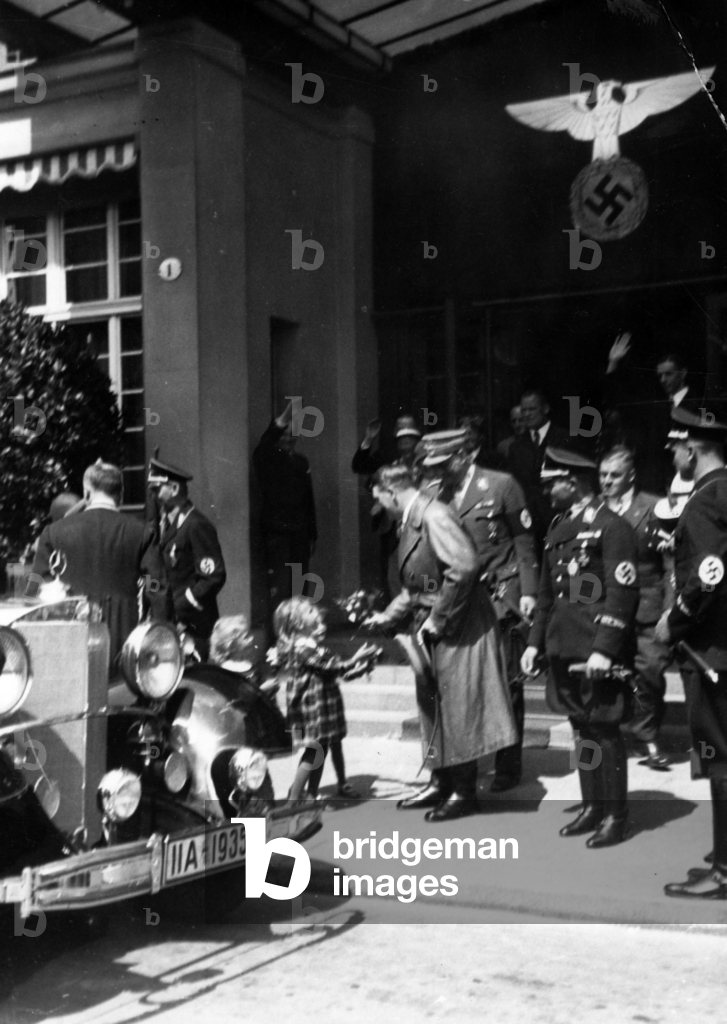
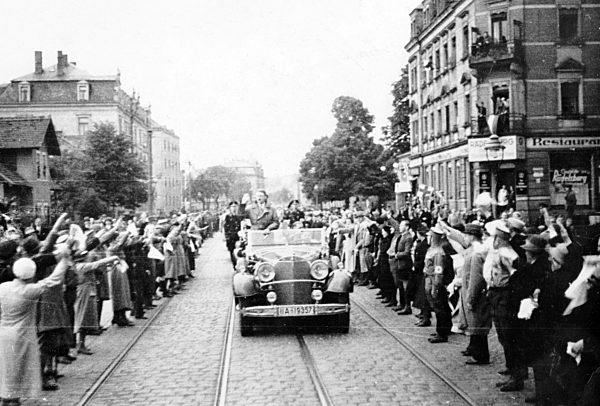
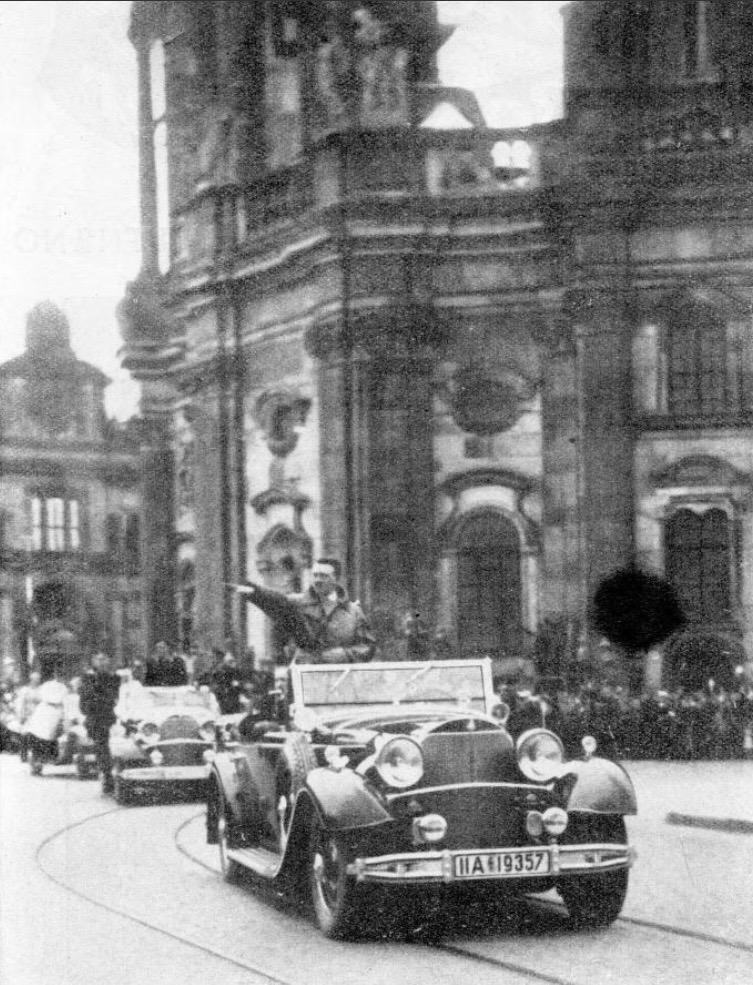
The festival week commenced with the hoisting of the swastika flag in front of the General Directorate of the State Theaters on the Taschenberg Palais on 27 May 1934. On that same day, Adolf Hitler arrived in Dresden. He was welcomed at the city limits by the “Reichsstatthalter” (Reich Governor) Martin Mutschmann. From that point all the way to the Hotel Bellevue where Hitler was to be accommodated (a distance of approximately six kilometers) an estimated 38,000 SA men and 20,000 SS men reportedly lined the route.
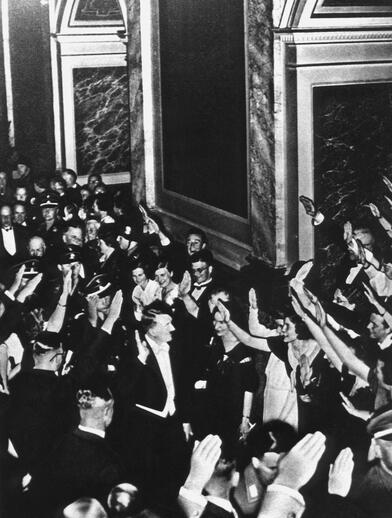
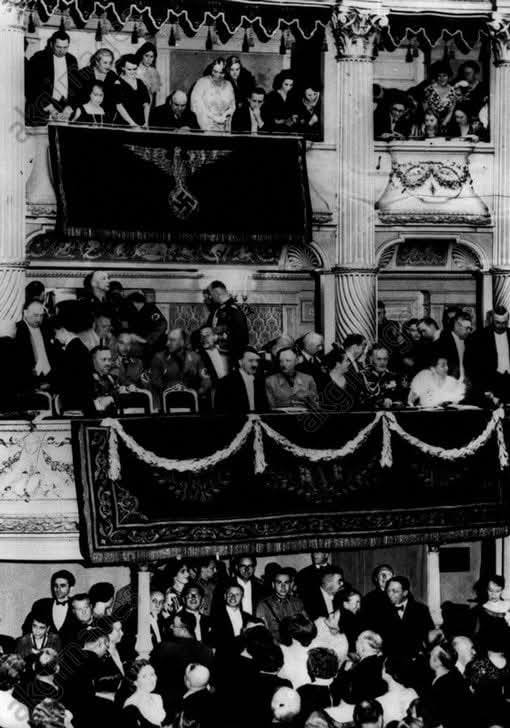
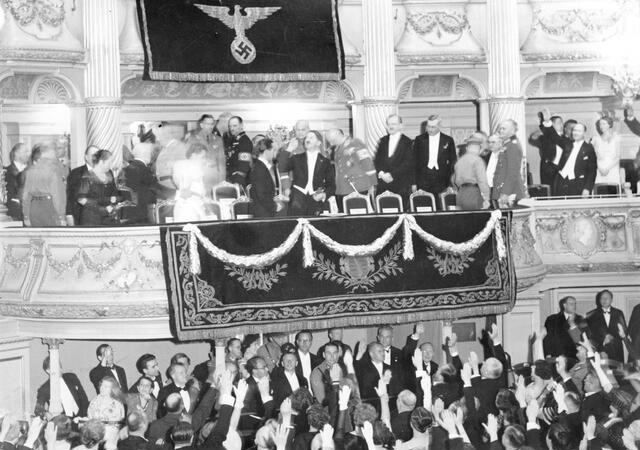
The organization of the festival week was overseen by the Ministry of Propaganda under Joseph Goebbels and the Reich Chamber of Culture. Dresden was selected as the venue due to its national and international reputation as a metropolis of the arts. Preparations for the festival week began in the autumn of 1933. For the opera program, works by German composers were selected exclusively; the same applied to the theater program, although authors such as Shakespeare and Ibsen were regarded by Nazi ideology as “Nordic poets.” The speech of the Propaganda Minister was given particular prominence during the theater week.
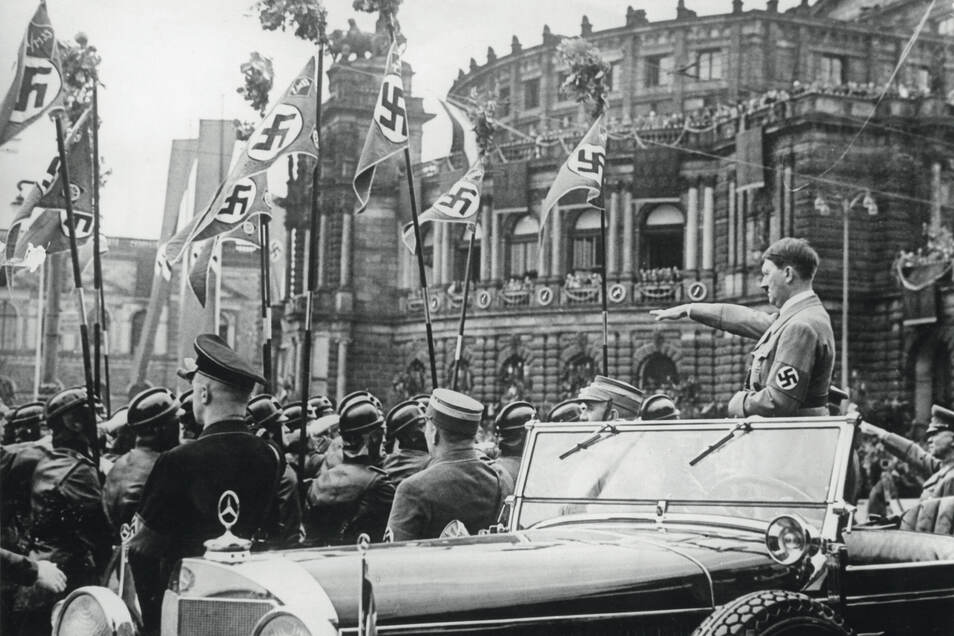
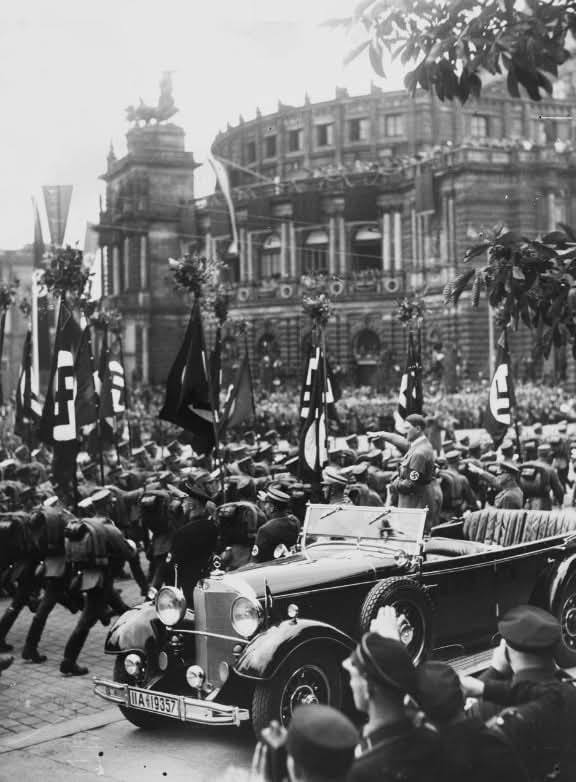
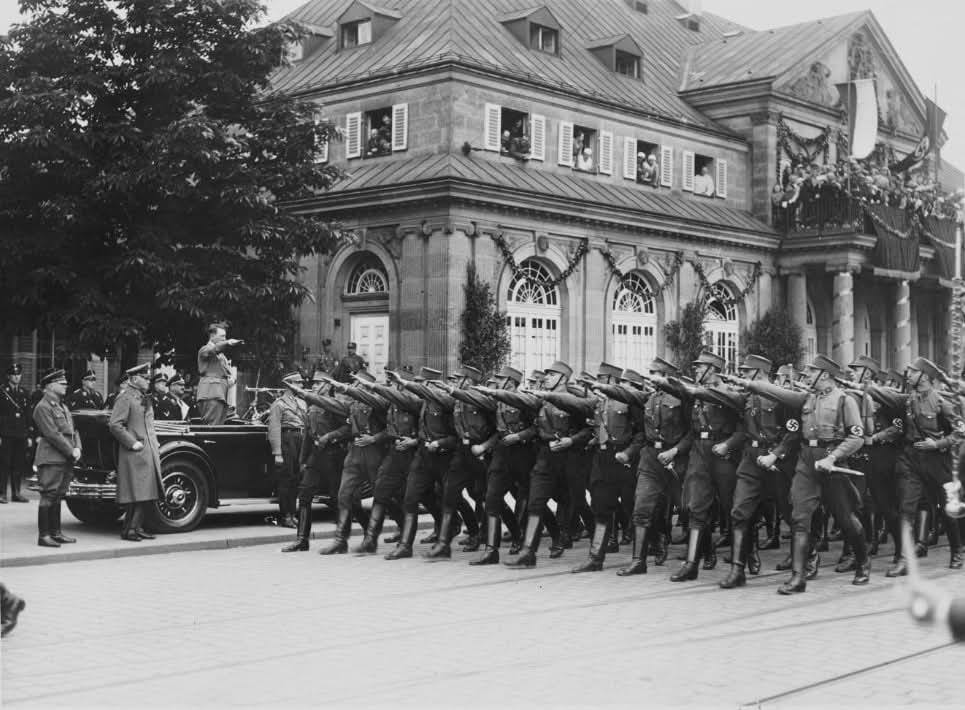
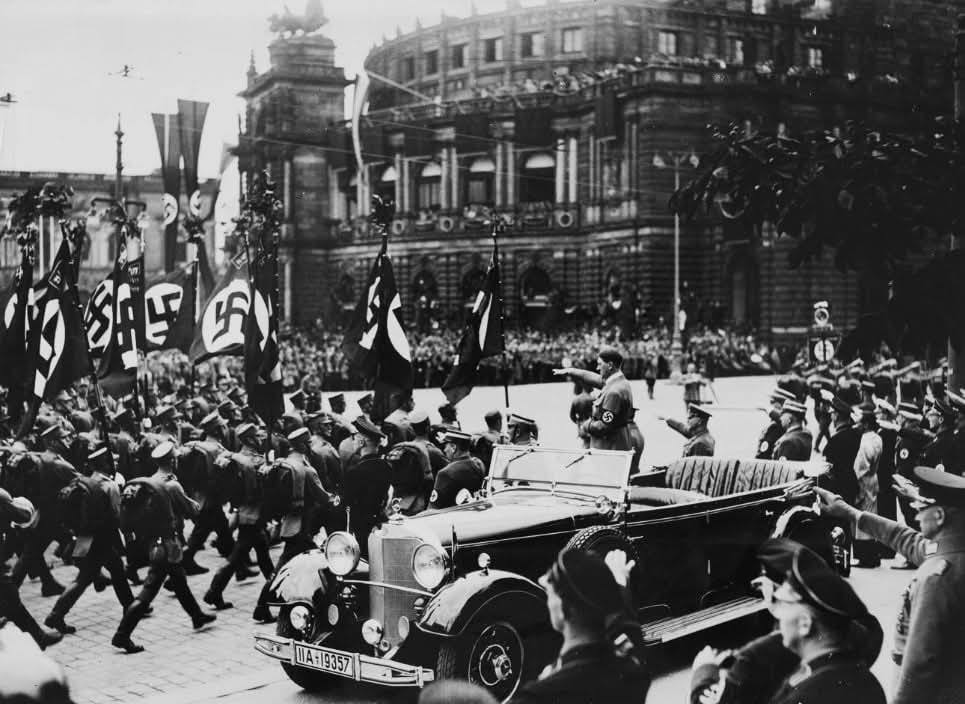
It is said that Hitler disliked the city of Dresden. Some attribute this to the Baroque architecture, for which the “Führer” had little regard. He much preferred Munich’s Classicism. Hitler could also identify more strongly with the buildings of Gottfried Semper in Vienna. In any case, Dresden only came into his focus relatively late, especially since the Gau leadership of the Saxon NSDAP had been located in Plauen until March 1933. Hitler had first visited the Saxon capital on 18 September 1928. Further visits had also taken place on 11 April and 21 June 1930, as well as on 3 April and 11 December 1932.
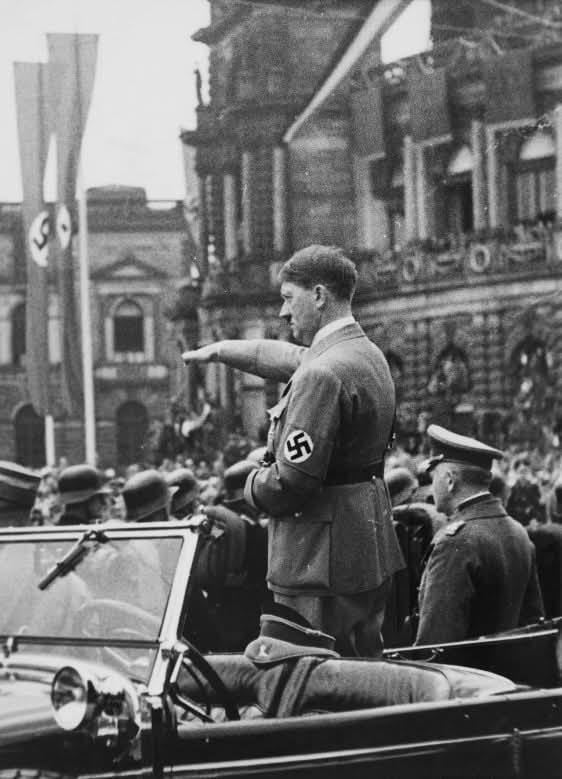
On 28 May 1934, Hitler visited the infantry school in Albertstadt and in the evening attended the SA’s Grand Tattoo in front of Mutschmann’s villa on Comeniusstrasse. Goebbels describes the almost hysterical enthusiasm of the Dresdeners:
“All of Dresden is in a frenzy. It’s starting to get uncomfortable. […] Tuesday: SA march-past. Magnificent. An hour of marching. The people are going wild.”
A short film of Hitler’s visit still exists, showing him in Theaterplatz and giving a good impression of this event.
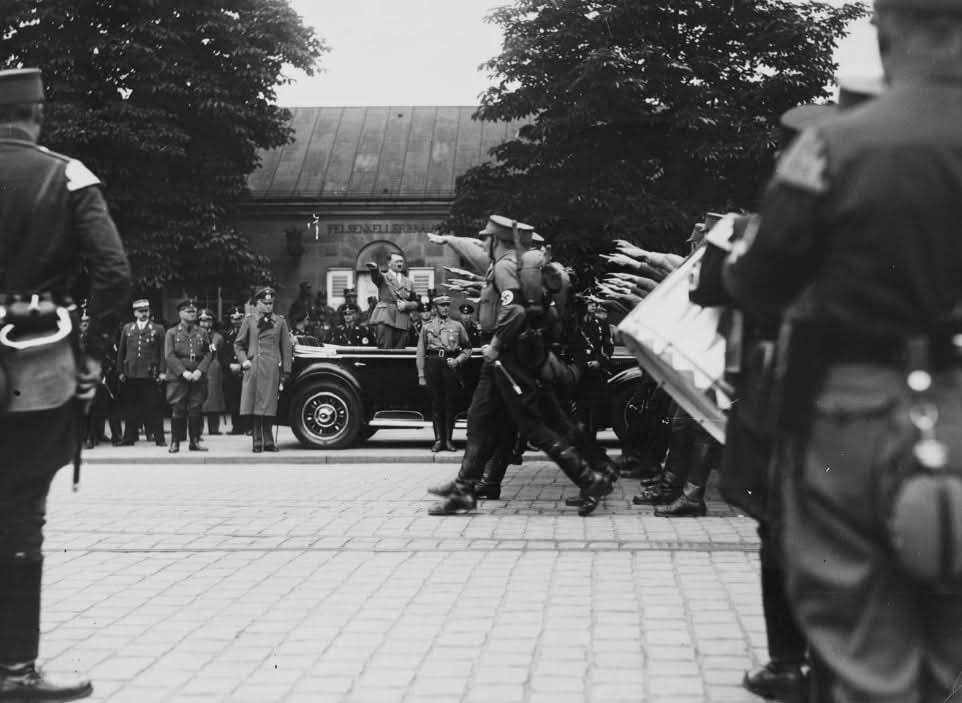
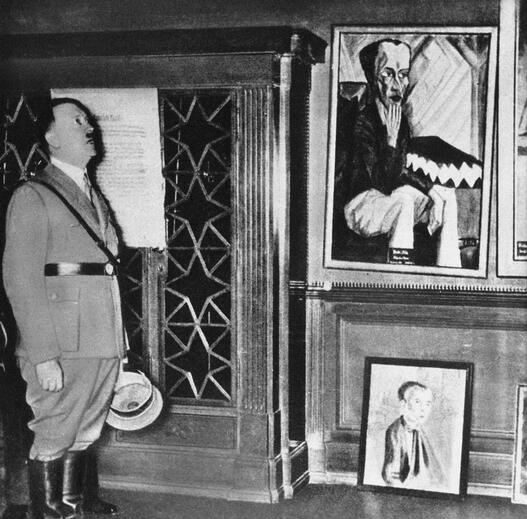
On 29 May Hitler opened the German War Graves Commission’s exhibition in the atrium of the New Town Hall. He also viewed modern works of art in the “chamber of horrors” in the New Town Hall, probably in a room of the city archives. In another one of the rooms, he was also shown the models for the Königsufer development, and Mayor Ernst Zörner presented Hitler with four different versions of the redesign of the square located in front of the Hygiene Museum.
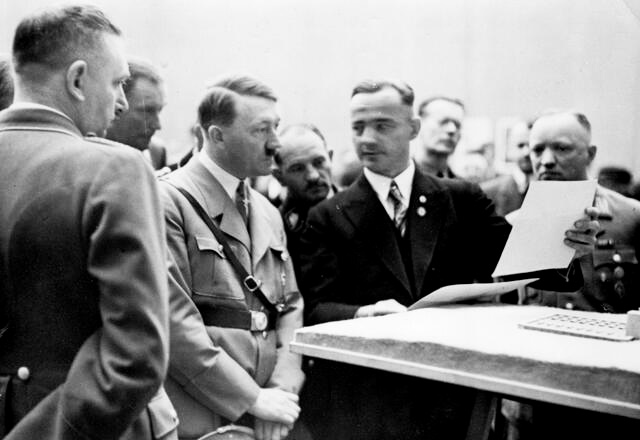
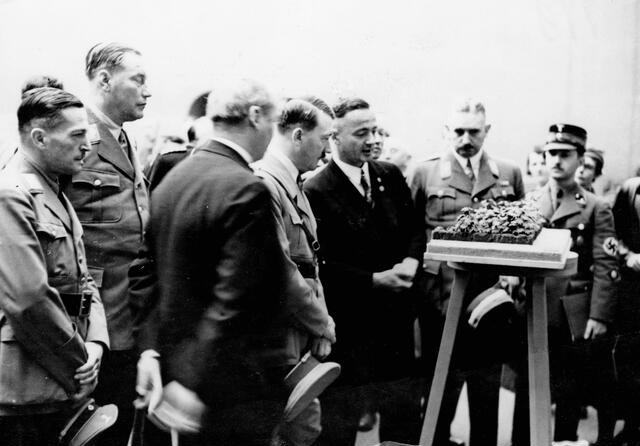
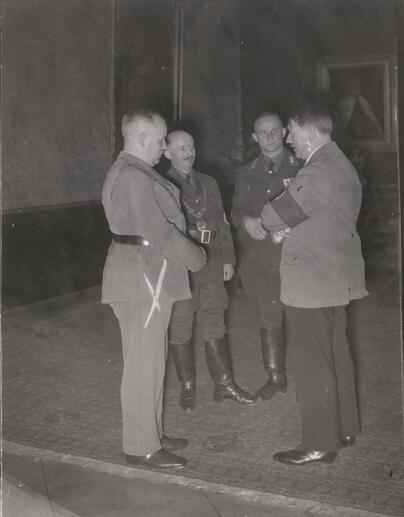
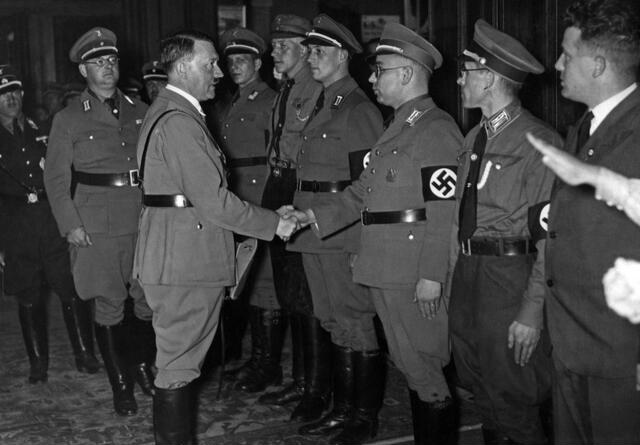
In the New Town Hall, the Chancellor signed the Golden Book of the City of Dresden. Processions arrived, bringing votive gifts to the Führer. The mayor of Altenberg, party member Hielscher, presented Hitler with a bread plate in the “Gothic style with Germanic runic symbols” made from the first tin from the newly opened mine, produced by the Altenberg tin foundry at Mühlen. Other program items included a reception for political leaders from Saxony, a visit to the Gemäldegalerie (Old Masters Picture Gallery) and the Zwinger Palace, and a meeting with war veterans.
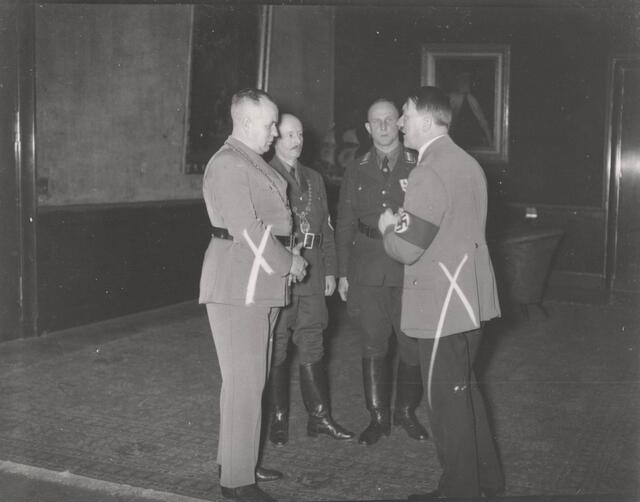
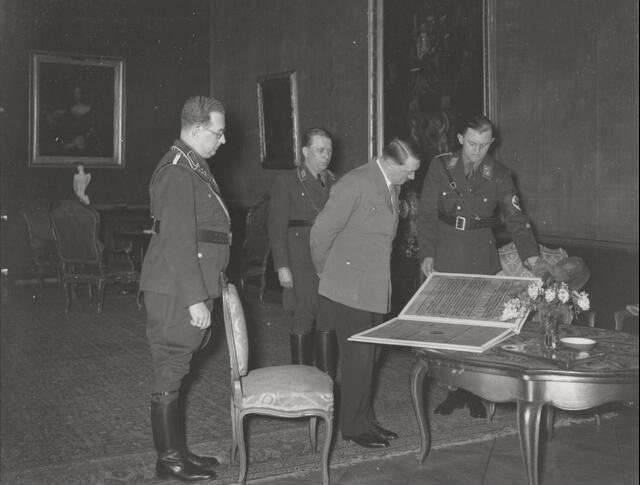
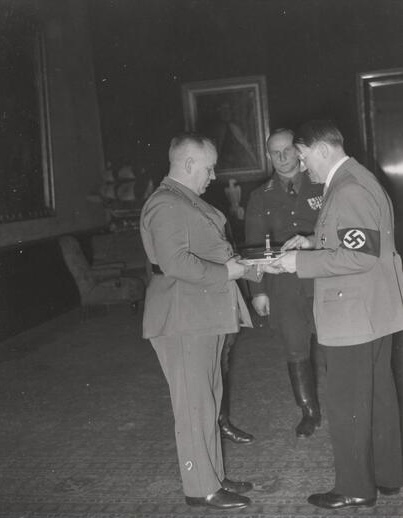
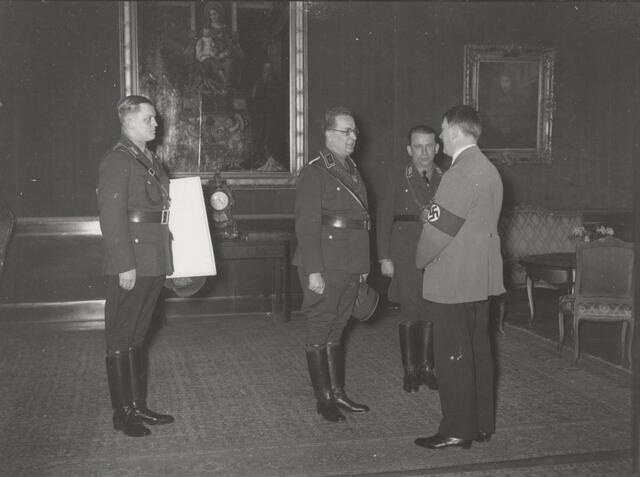
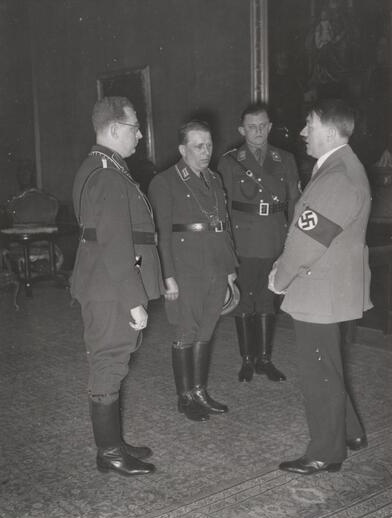
Known as “Florence on the Elbe,” Dresden was a strikingly beautiful place. Before World War II people had flocked to the city see the 18th-century Frauenkirche and The Zwinger, the impressive palace complex commissioned by Augustus the Strong, Elector of Saxony and King of Poland. Lovers of art could devote days to seeing collections of Renaissance and Baroque paintings in the Semper Gallery, and it’s Gemäldegalerie Alte Meister (Old Masters Gallery) which included works by Raphael, Titian, Rembrandt, and Van Dyck. During the 19th century the presence of composers Carl Maria von Weber and Richard Wagner had established Dresden as a force in the Romantic movement.
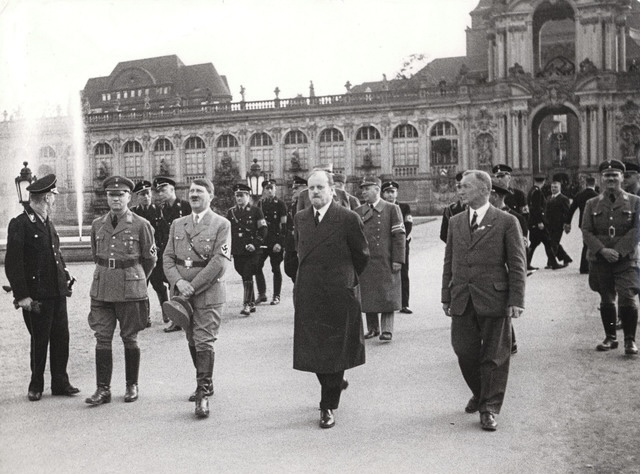
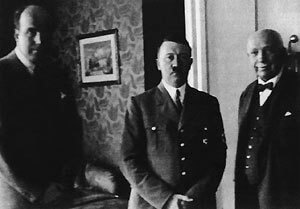
Hitler’s last day in Dresden on 30 May began with a reception of the composer Richard Strauss, followed by a reception of members of the League of German girls. He then delivered an address before the Saxon district leaders. Hitler also attended a passing march of the S.A. on the Adolf-Hitler-Platz. Before departing the festival, he paid a visit to the Saxon Prime Minister Manfred Freiherr von Killinger at his apartment on Comeniusstraße before air travel back to Berlin-Tempelhof.
Hotel Bellevue
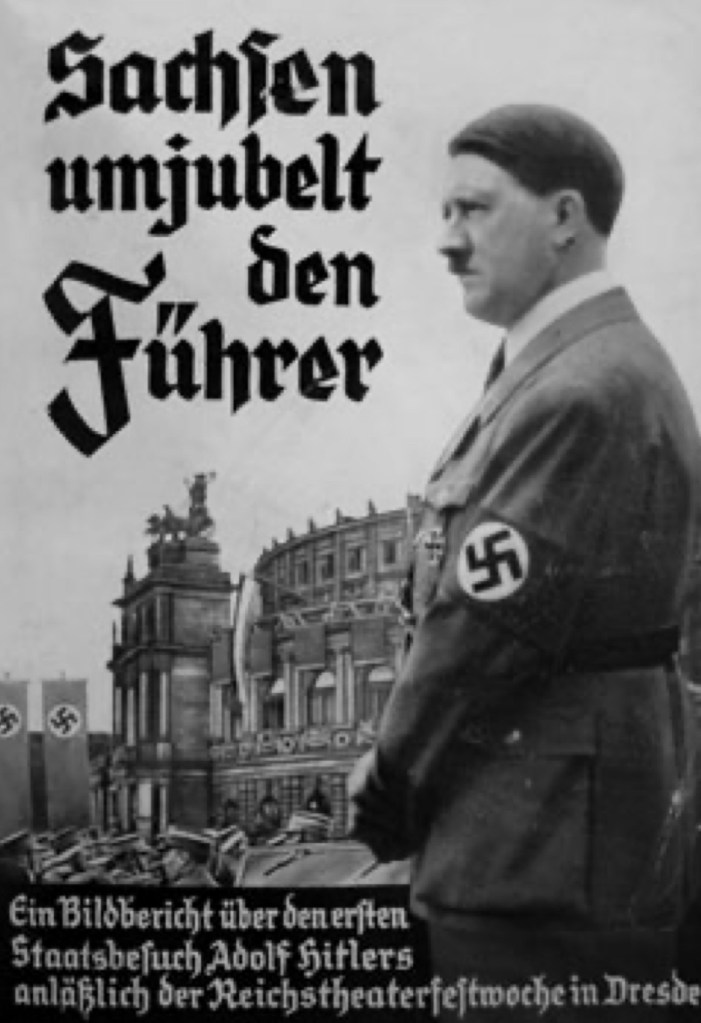
This would not be Adolf Hitler’s last visit to Saxony’s Gau capital. On 18 June 1938, he visited the Gemäldegalerie art gallery, managed by Hans Posse, and inquired about the possibilities of establishing an art gallery away from the Reich capital, one be envisioned for his childhood home of Linz.
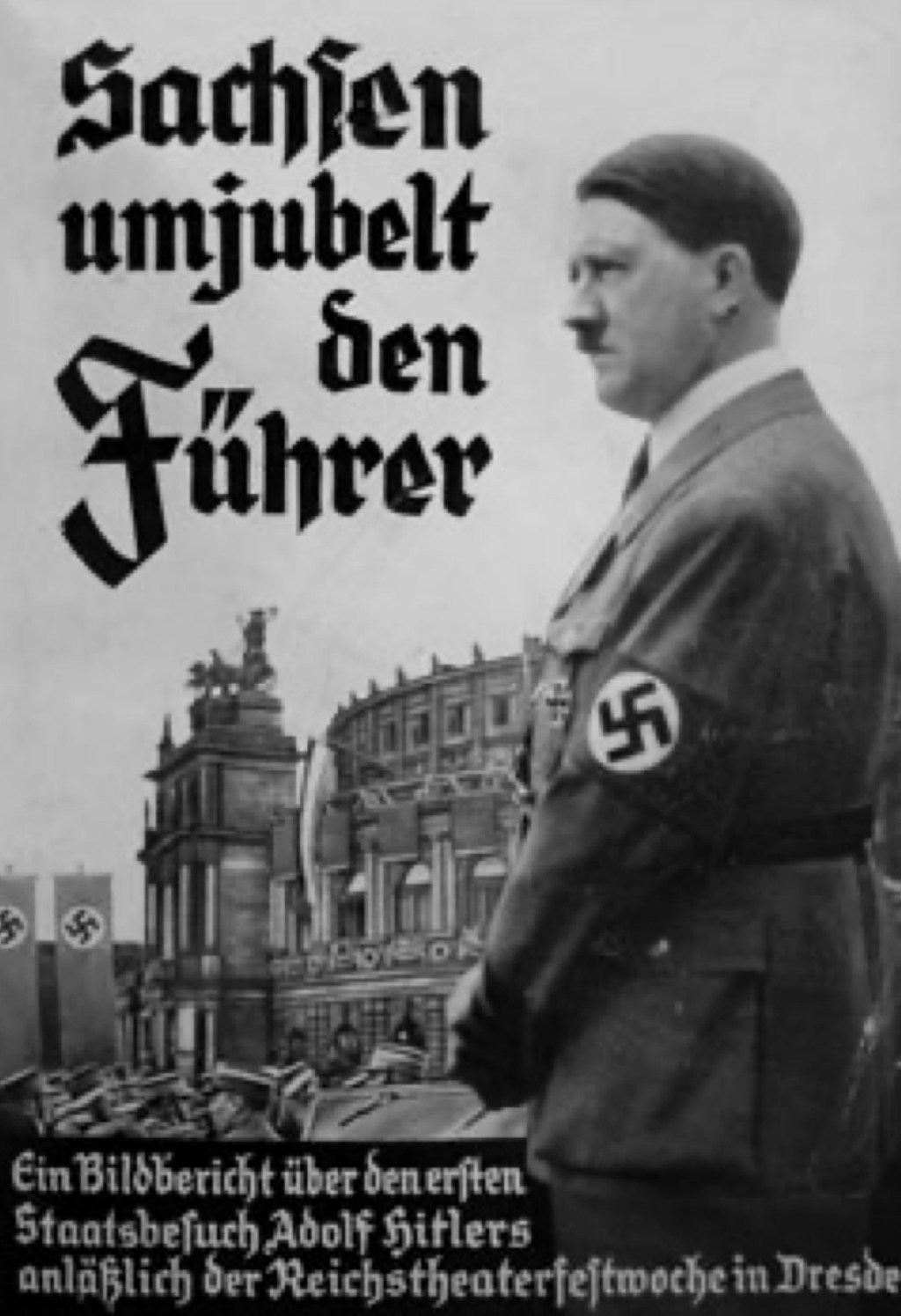
Cover from the book “Sachsen umjubelt den Führer” which translates to “Saxony cheers the Führer”. This was a photo report on Adolf Hitler’s first state visit on the occasion of the Reich Theatre Festival Week in Dresden published in 1934.
Deutschlandflug Dresden
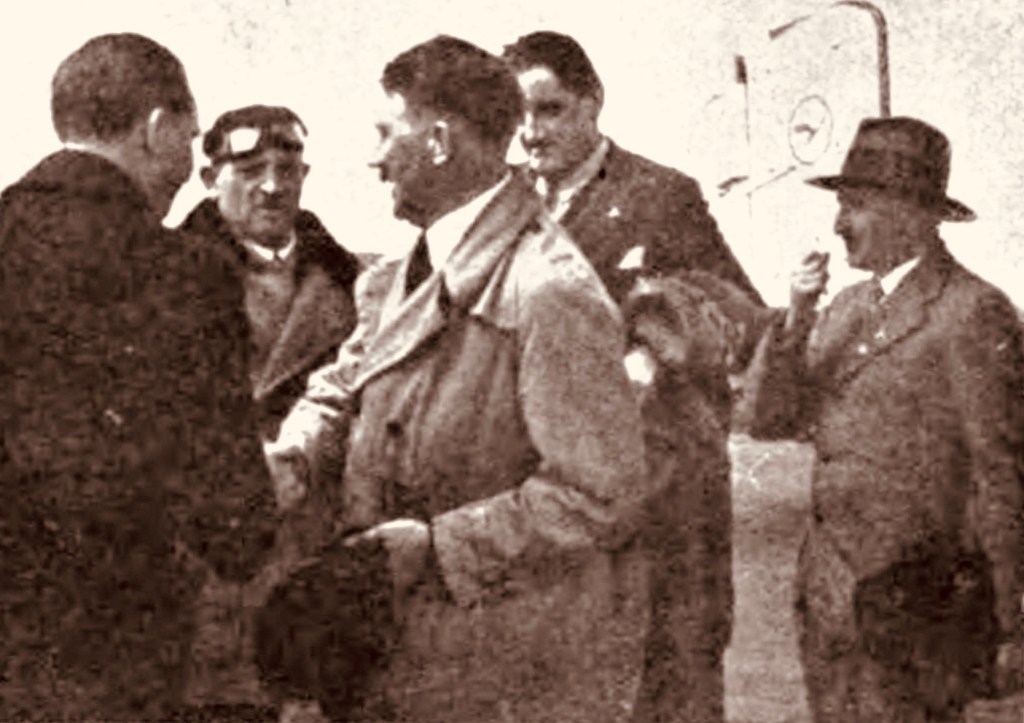
Hitler’s first Deutschlandflug electoral campaign tour kicked of on 3 April 1932 with a flight to Dresden to give his first speech. It was his first time flying with pilot Hans Baur at the helm, and the tour lasted three weeks. Hitler was so pleased with his pilot that he gave him a large bouquet of roses at the conclusion of the tour. Hitler always loved to give gifts to his staff. Hitler’s behavior with those close to him was almost always familial. In fact, Hitler always took better care of his domestic employees, chauffeurs, pilots and doctors than he did of his own military. With them he felt very comfortable and always preferred a conversation with a secretary than with a leader of another country.
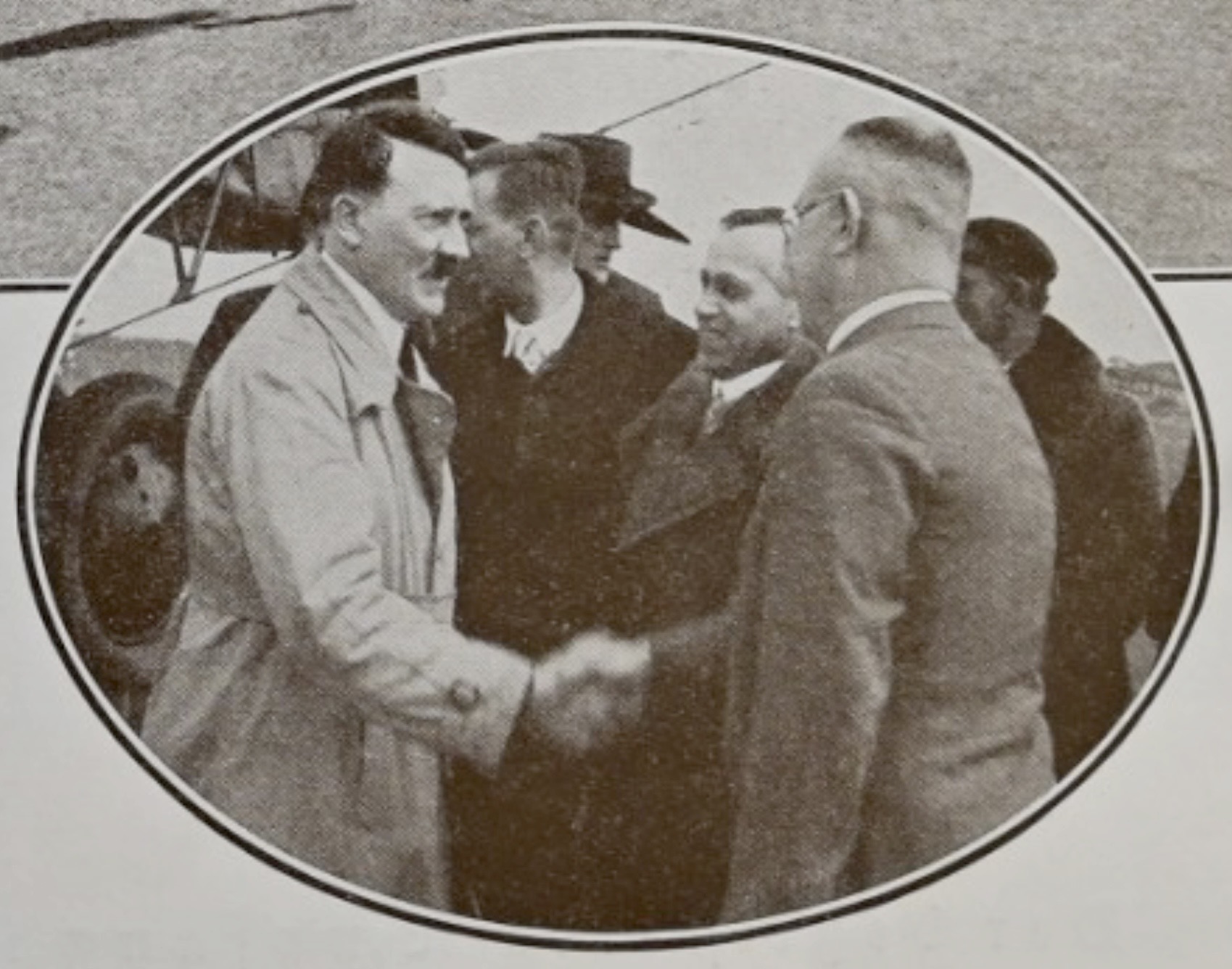
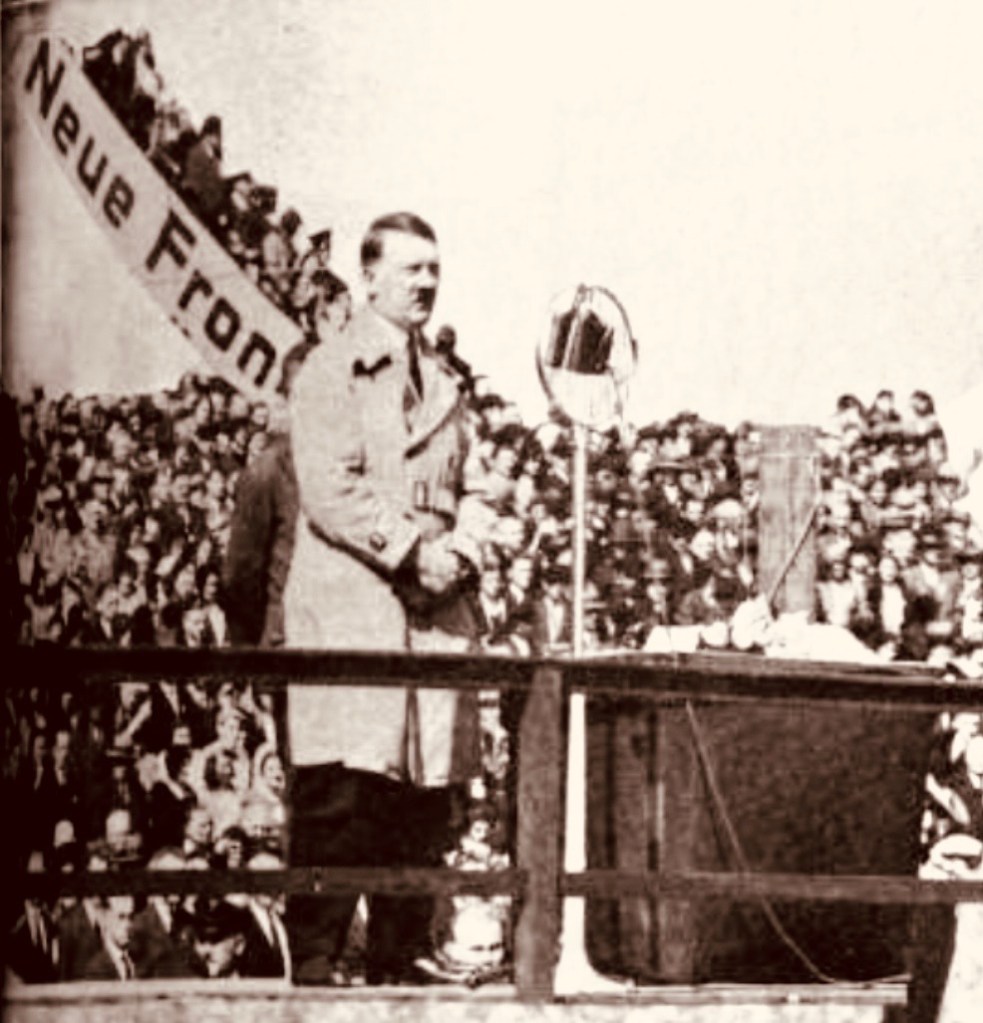

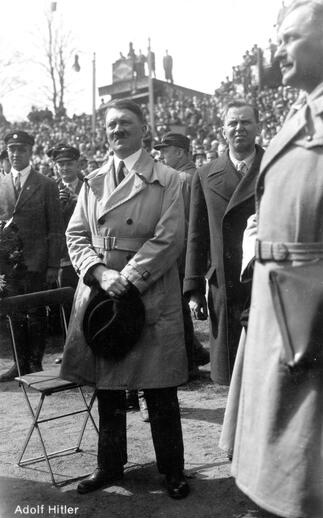
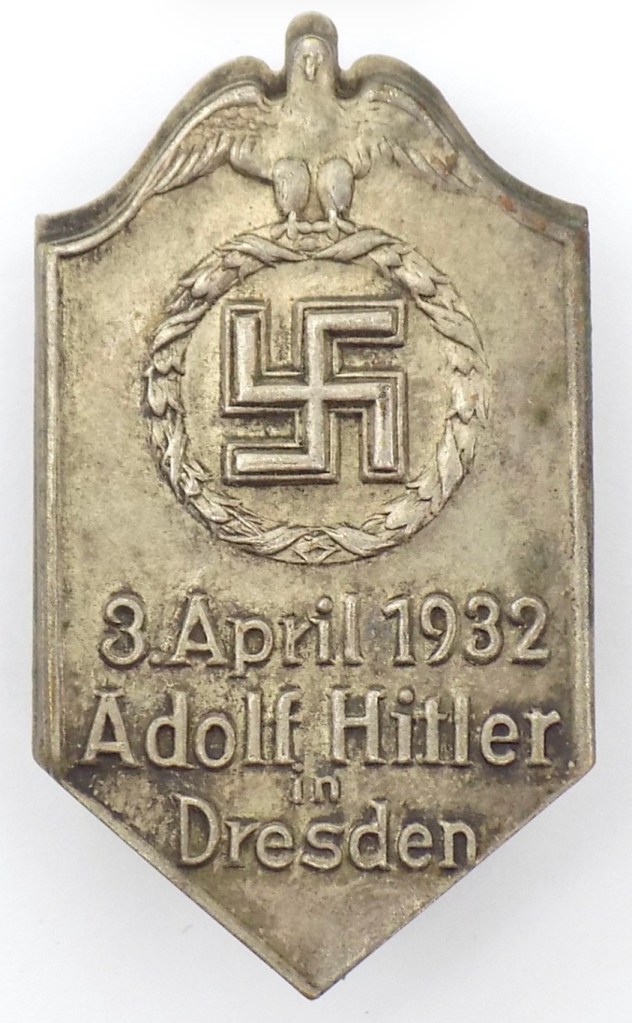
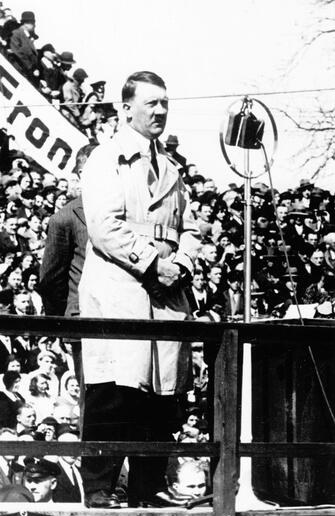
Tinnie issued during Hitler’s election campaign speech in Dresden in 1932. The speech in Dresden at the Radrennbahn Reick was the first electoral speech for the second ballot of the presidential elections. Hitler had hired a plane in order to make as many speeches as possible during the legal electoral period between 3 and 9 April (the elections would take place on 10 April).
Cruise on the Elbe
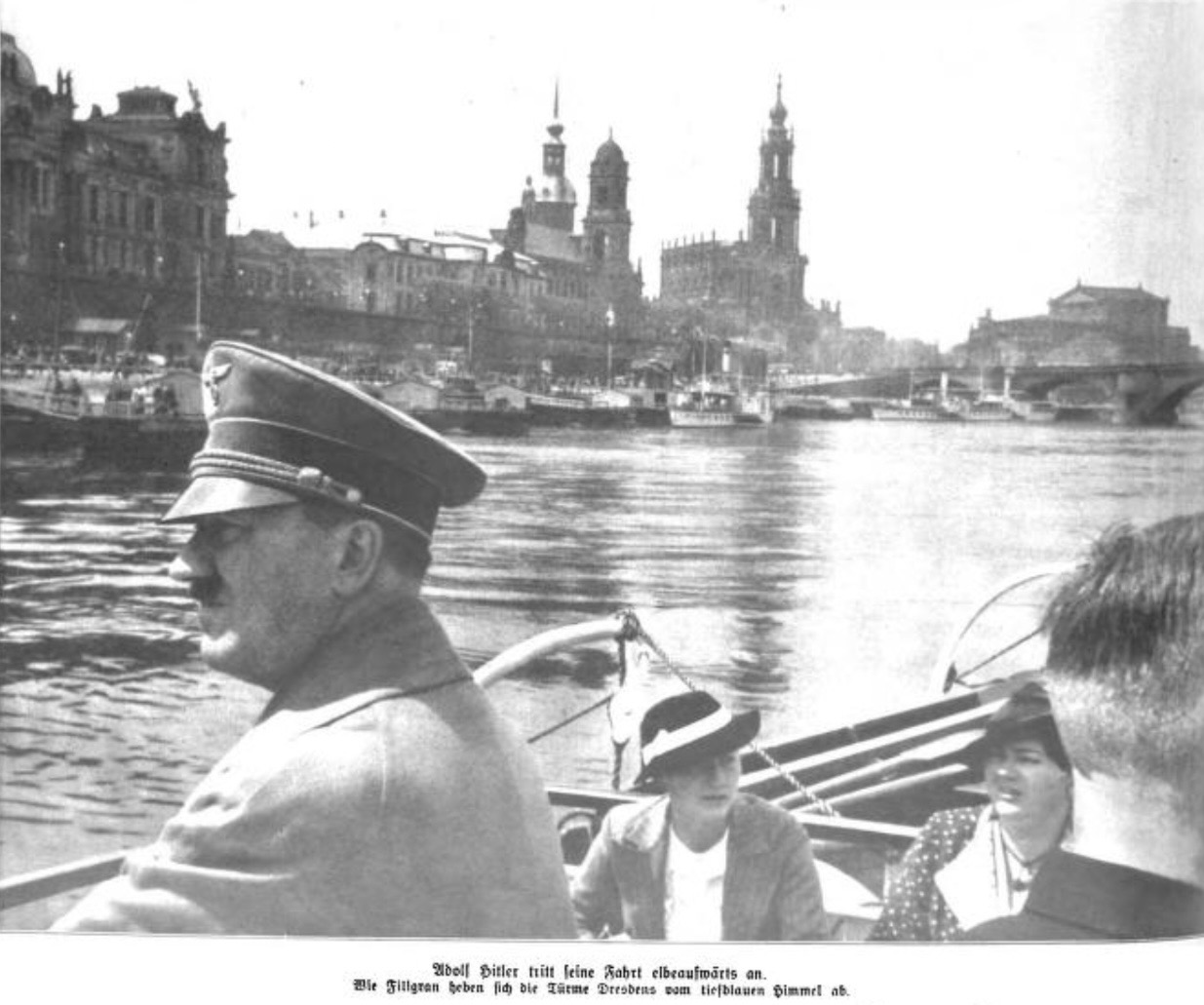
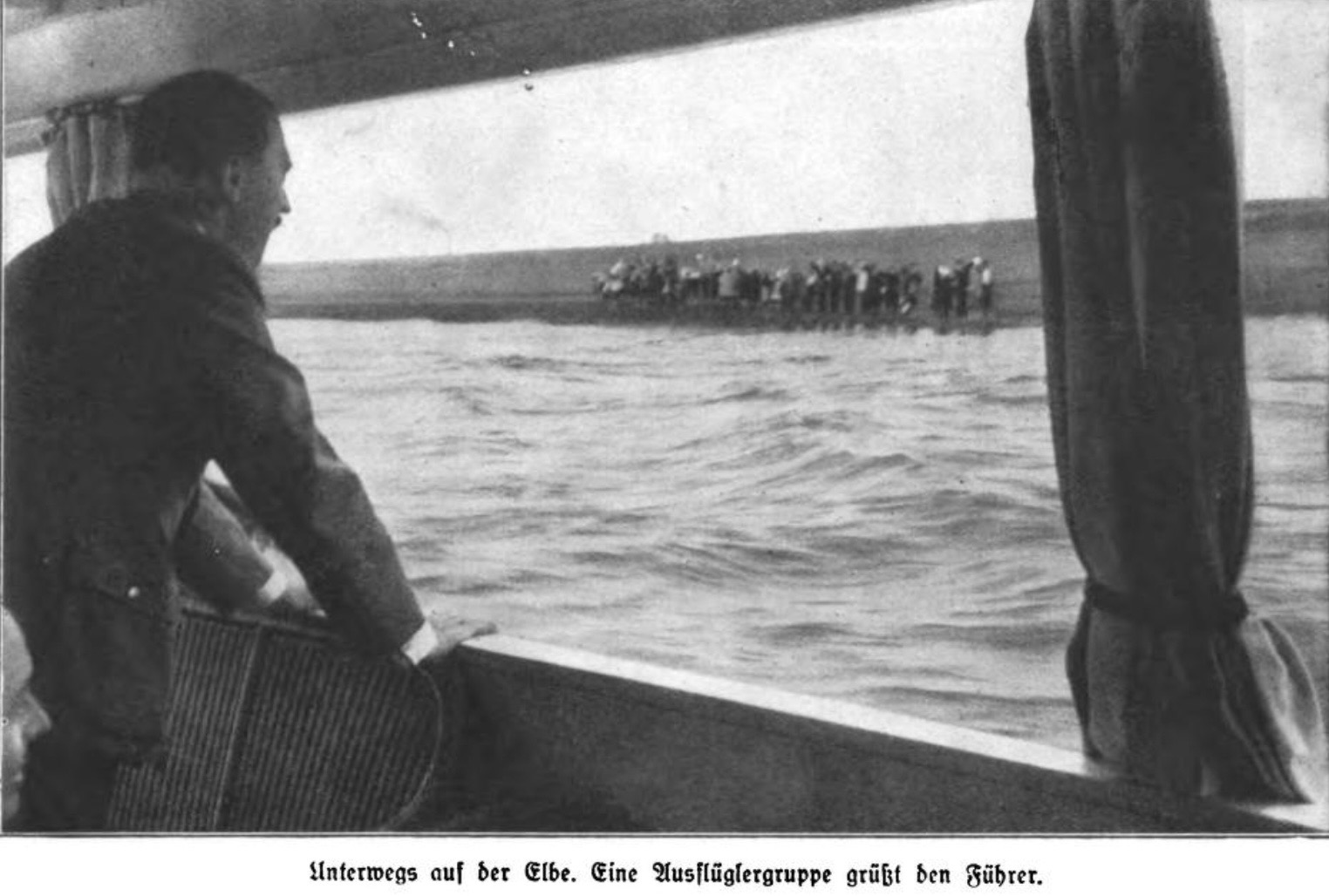
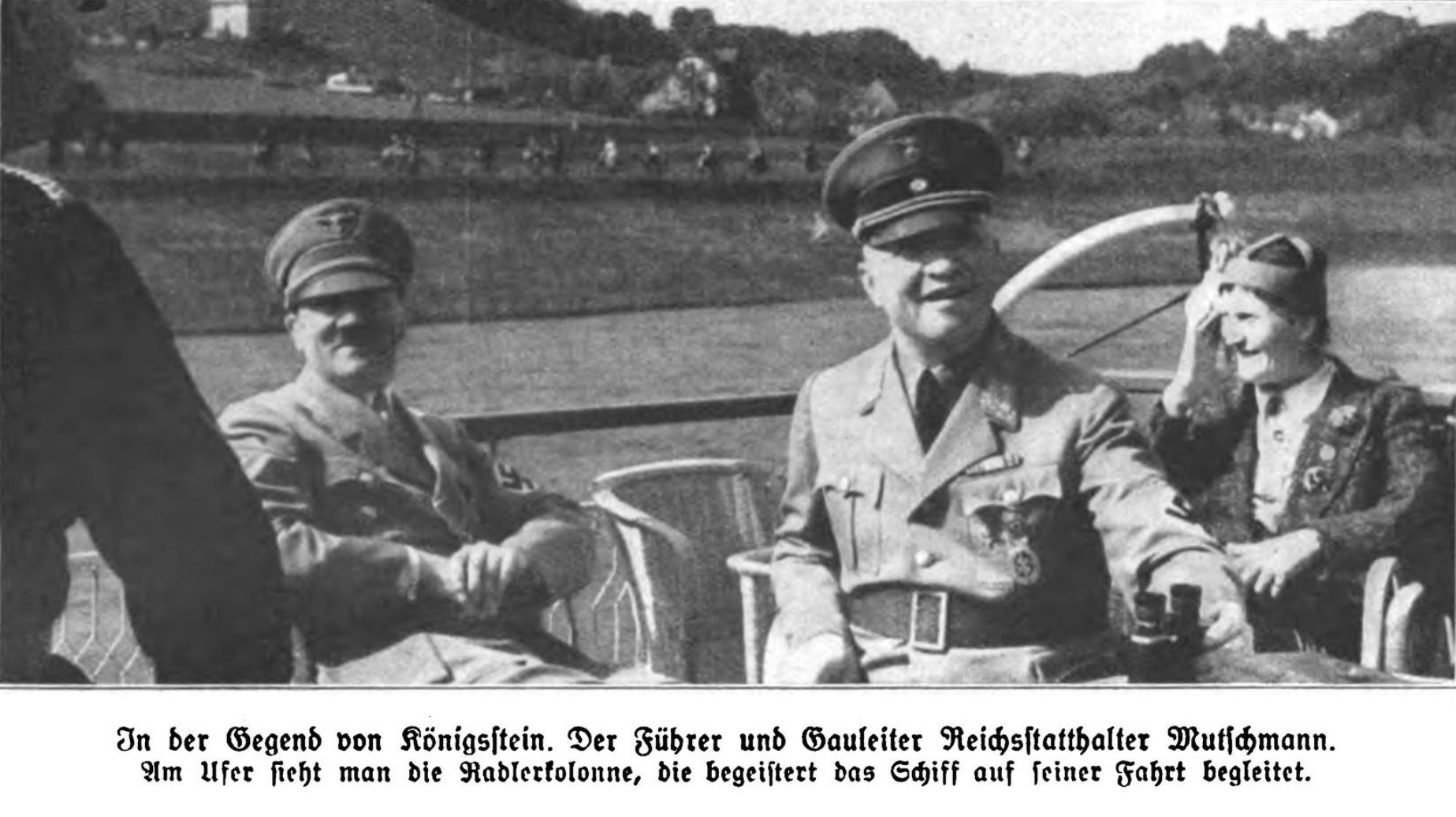
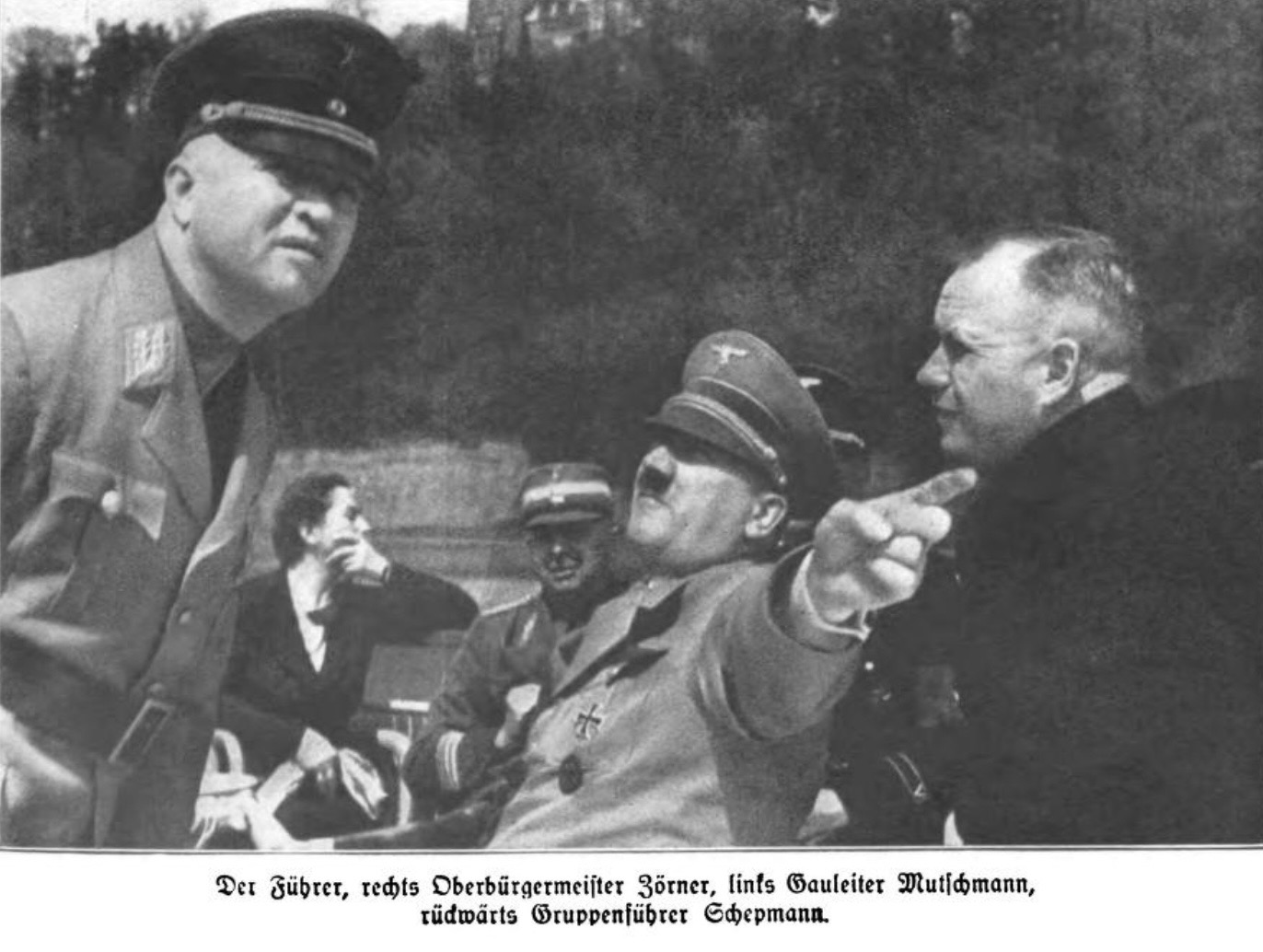
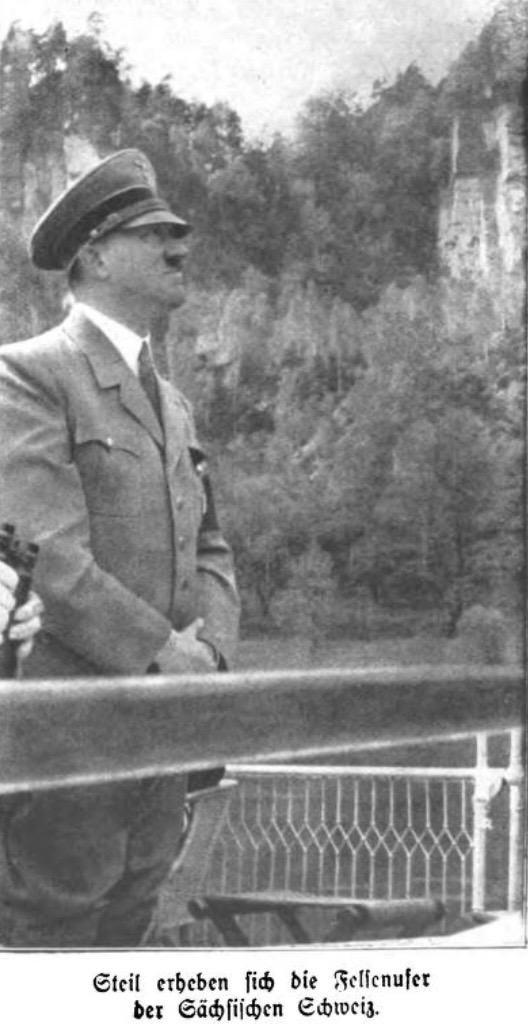
Hitler was in Dresden on holiday from 7 to 9 May 1936. The Wagner children came to visit him at his hotel and took a cruise on the river Elbe with him to Bad Schandau and back to Dresden. The next morning Winifred Wagner arrived at the hotel where they had breakfast together, and after that Hitler and the Wagners drove home to Bayreuth. Hitler enjoyed a walk in their garden and an evening spent with the family by the fireplace, before staying overnight at the Hotel Bube in Bad Berneck and returning to Munich.
The Gemäldegalerie
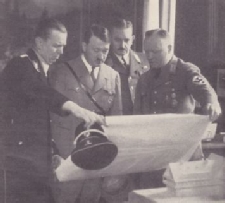
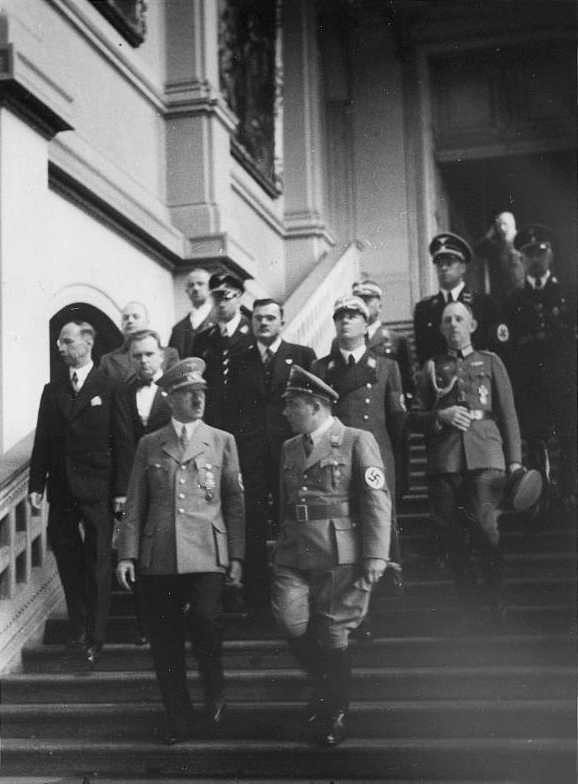
Adolf Hitler visited Dresden’s famous Gemäldegalerie (Old Masters Picture Gallery) on 18 June 1938. The visit is historically significant because Hitler personally intervened to reinstate the gallery’s director, Hans Posse, who had been fired by Nazi authorities for exhibiting modernist works. Hitler recognized Posse’s expertise and later appointed him to lead the Sonderauftrag Linz, the agency responsible for curating art for Hitler’s planned Führermuseum. Posse used his position to acquire and amass looted art.


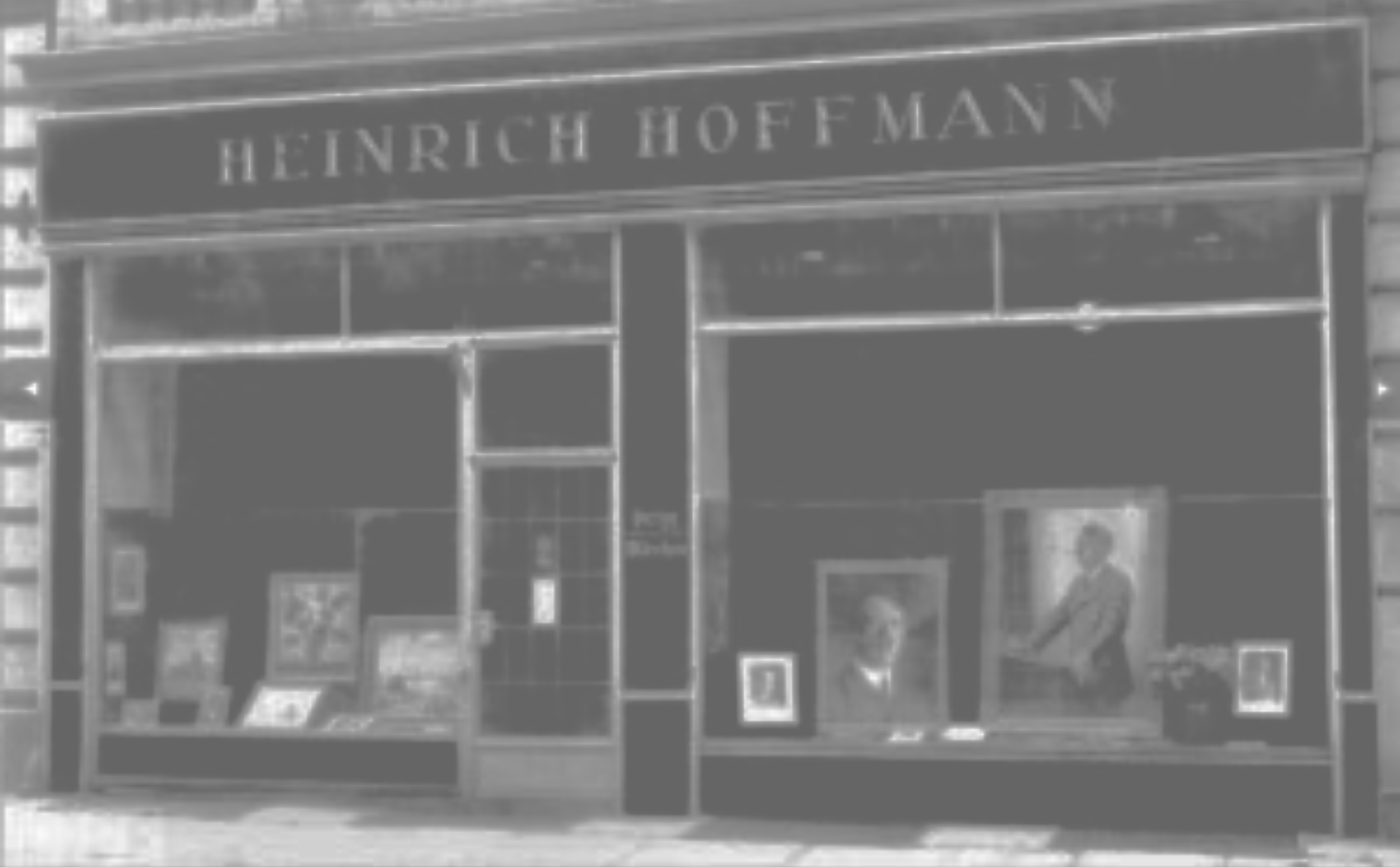
 Heinrich Hoffmann Photo Gallery