
The “Congress of the Thuringian NSDAP” took place 95 years ago on 12 October 1930, in Weimar, where the National Socialist German Workers’ Party (NSDAP) already had considerable influence in Thuringia, having formed a coalition with other right-wing parties and providing the state’s Minister-President. The event, which was promoted by the NSDAP as the “Defiance Congress,” was an important step in consolidating its power in Thuringia and contributed to the party’s rapid rise.
As early as 1929, the NSDAP had achieved a significant increase in votes in the state elections in Thuringia and was able to form a coalition with the German National People’s Party (DNVP) and the Thuringian Landbund, which produced a Nazi Minister-President. The event served as Demonstration of the strength of the NSDAP in Thuringia and the consolidation of National Socialist rule, which was intended to transform the country into a “National Socialist model province” before seizing power in Germany.
The Gautag Thuringia was advertised as a “Defiance Congress”, which was a clear signal from the NSDAP that it was still on the rise despite the resistance of the democratic forces. The Congress was a demonstration of power by the NSDAP and a confirmation of the National Socialist rule in Thuringia, and also created a “model” for the other states of Germany to follow. A variety of events drew in heavy attendance, such as speeches by leading National Socialists and marches by the SA.

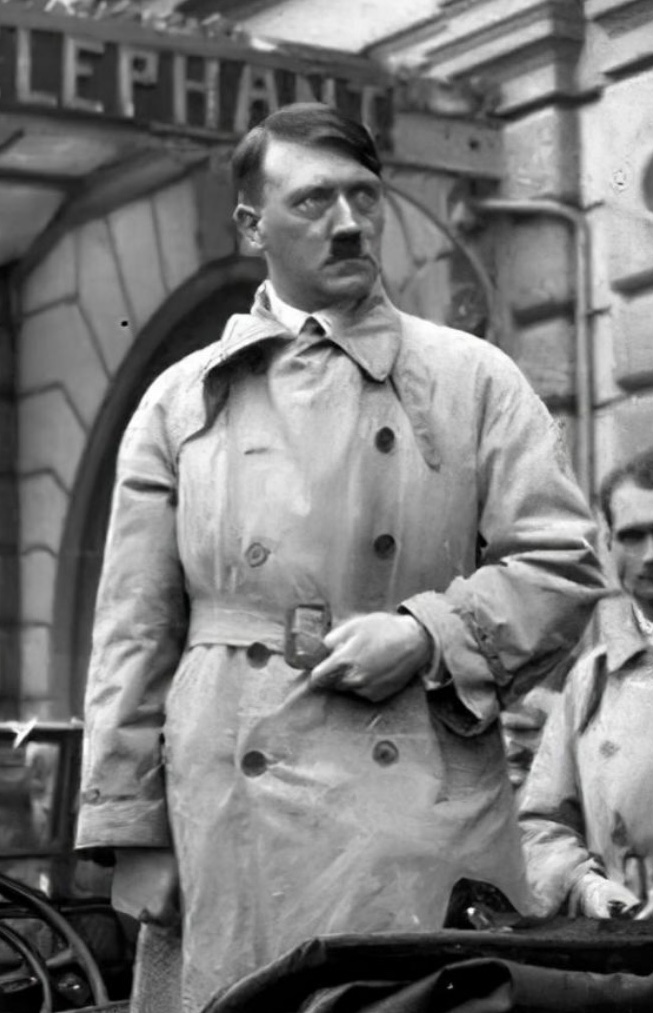
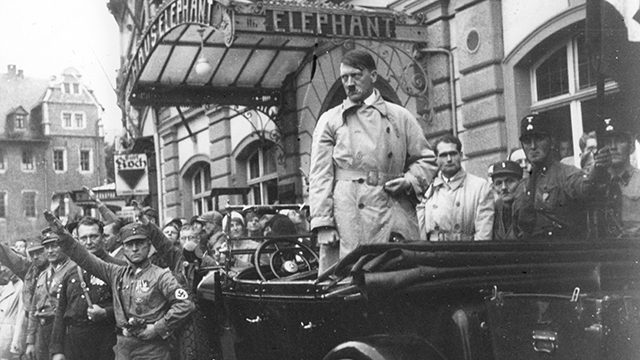
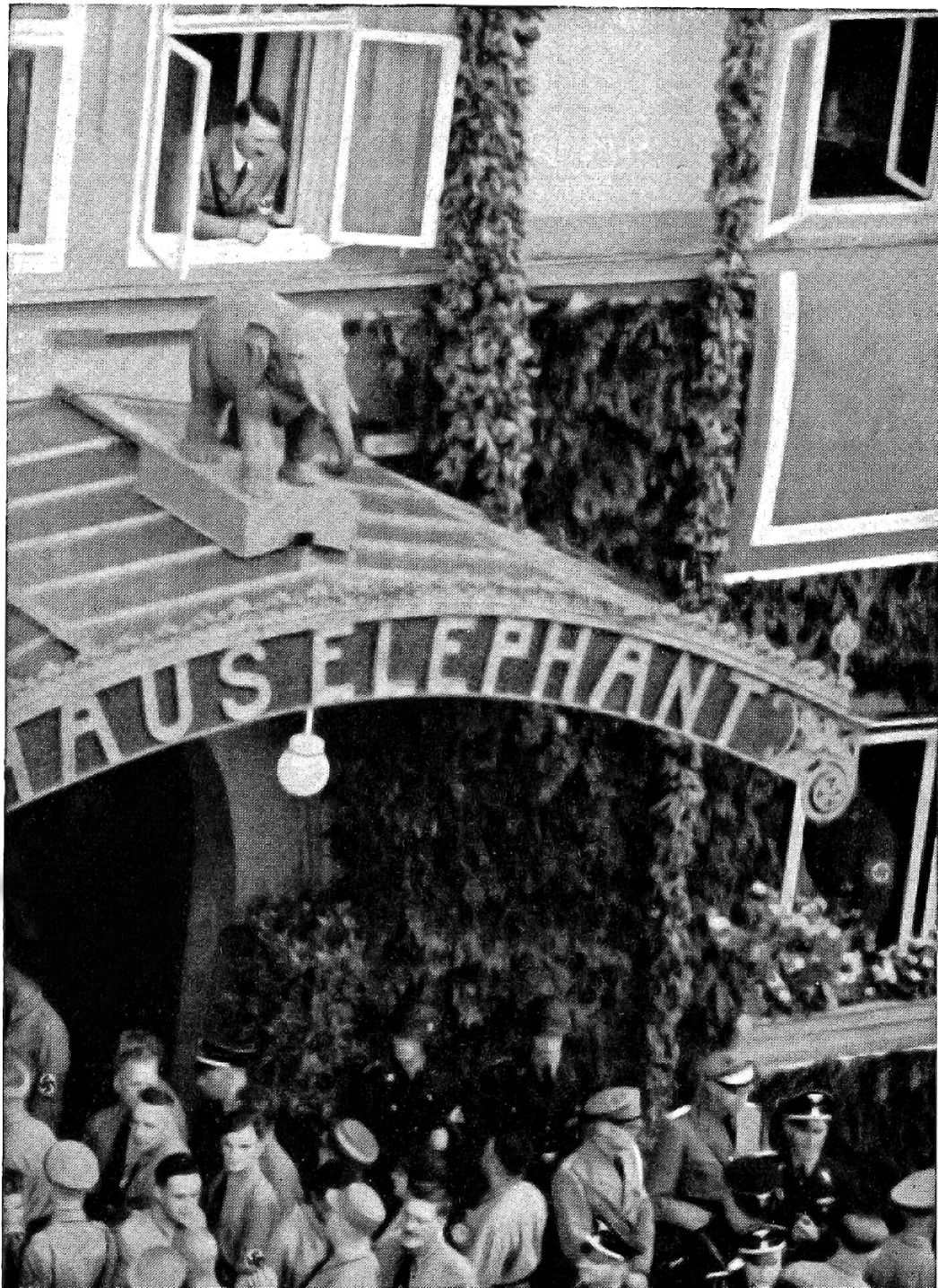
Since his first visit in March 1925, Hitler became a regular visitor to Weimar. The Hotel Elephant am Markt became his headquarters. Thanks to his friendship with the owner, he conducts undisturbed strategy talks here, which he calls “Tafelrunden” (Round tables) in reference to Duchess Anna Amalia of Brunswick-Wolfenbüttel, the German princess and composer. But while the Princess Mother gathered poets, composers and philosophers, it’s strictly Nazis that meet in the Hotel Elephant.

Adolf Hitler always felt very well received in Weimar; the election results of his party were consistently well above the National average. He had even considered moving the party headquarters from Munich to Thuringia. He compared the city of Weimar to Linz, Austria, where he had spent his youth. “I love Weimar,” Hitler would fondly say. The fact that Friedrich Nietzsche had spent his last three years of life in Weimar is a special coincidence for Hitler. The philosopher’s sister, Elisabeth Förster, and the widow of the anti-Semite Bernhard Förster, had overseen the Nietzsche Archive. The National Socialists systematically took over the national cultural heritage. For example, during the 100th anniversary of Goethe’s death in March 1932, Gauleiter Sauckel insists that the NSDAP party badge must be worn by everyone attending Goethe Week. Thomas Mann, who delivered the speech at the official event, shows himself as “particularly touched”. Weimar is “a headquarters of Hitlerism”, he declared as he proceeded to describe the atmosphere:
“Everywhere, you could see pictures of Hitler and others displayed in National Socialist newspapers. The type of young man who strode through the streets with vague determination and greeted each other with the Roman salute dominated the city.”
The speech ban on Hitler was lifted in Thuringia earlier than anywhere else in 1924, as was the ban on the NSDAP. Therefore Thuringia became a hotbed of Nazis. However, the party was still quite small, as it received only ended up 2.6 percent of the vote in the 1928 Reichstag elections.
The Nazi Party gained an early foothold in Thuringia and participated in a state government for the first time in 1930. On January 23, 1930, Wilhelm Frick became the first Nazi to be elected minister of a German state government, responsible for the Interior and Public Education. Thuringia became the “model district” for the Nazis in Germany, three years before they seized power in the Reich.

After two National Socialists, Wilhelm Frick and Willy Marschler, had taken over government responsibility in 1930, the Thuringian state election in July 1932 brought Gauleiter Sauckel to the head of a new government. Sauckel was assertive and organizationally gifted, and rapidly changed the face of Thuringia in a few months, transforming the state into a “Muster” and “Trutzgau” (model state of resistance). The dictatorial political style of the new rulers, the increasing control and exclusion of so-called “community aliens” (e.g. Socialists, Jews, “non-Germans”, “foreigners”) and the public silencing of any opposition met with great approval and a growing willingness to adapt among the majority of the population.



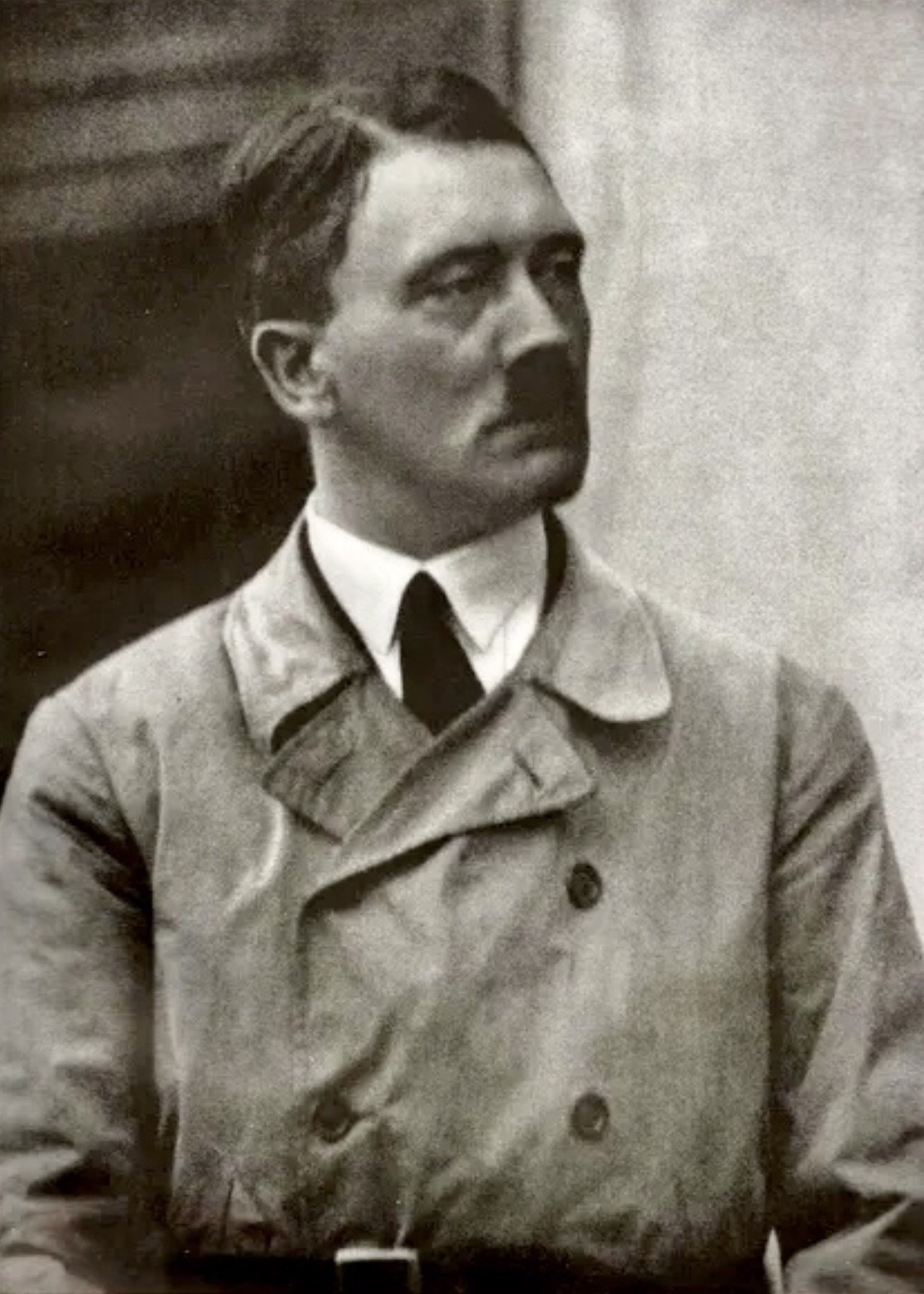
In Weimar, the young Baldur von Schirach, a son of the last Grand-Ducal Theater Intendant Carl von Schirach, found his way to Hitler, who would later appoint him Reichsjugendführer of the NSDAP in October 1931. In addition to the völkisch literary historian Adolf Bartels, and his student Hans Severus Ziegler (the deputy Gauleiter beginning in 1925), it was Schirach who gave Hitler access to the conservative bourgeois circles in Weimar. “I love Weimar,” remarked Hitler in 1928. “I need Weimar, as I need Bayreuth. And the day will come when I will give this city and its theater some more support. I still have a lot to do with Weimar and Bayreuth.”

Weimar Party Congress 1926
In July 1926, the first Reich Party Congress of the NSDAP took place in Weimar after the lifting of a two year ban on the party. More than 7,000 members attended. Hitler, who was still banned from public speaking almost everywhere else in Germany, gave several speeches. The party held their meeting in the theater, which had been called the German National Theatre since the adoption of the Reich Constitution. Artur Dinter, head of the NSDAP-Gaus Thüringen, invoked the “general appeal” of the SA and SS as “the beginning of a new era”. He announced: “In the place where Ebert sat, Adolf Hitler sits and stands today!” The choice of Weimar was significant because it was the symbolic heart of the democratic republic that the Nazis despised.

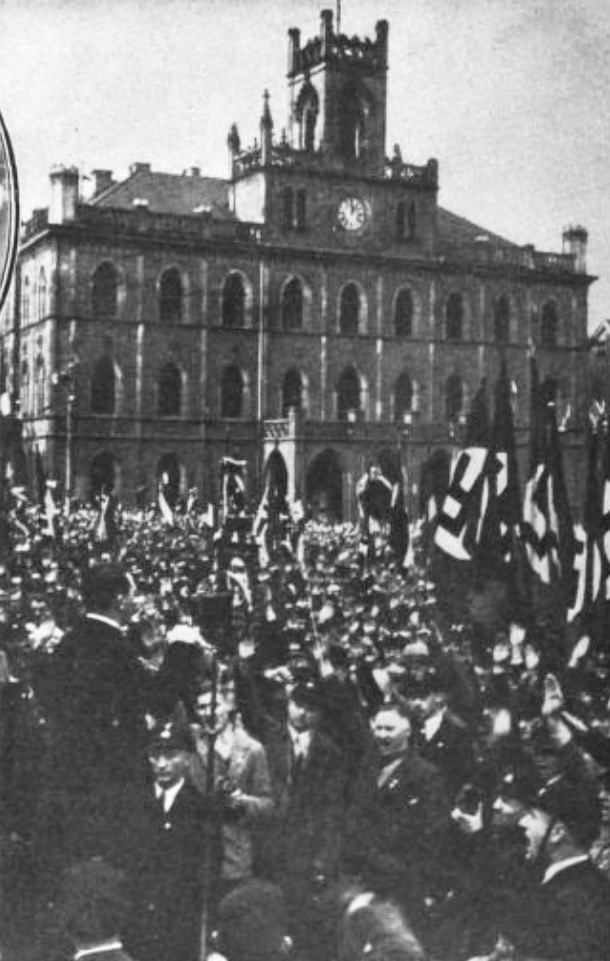
In his diary, Joseph Goebbels greatly exaggerated the number of participants attending the NSDAP rally, but deftly captured the ecstatic mood of the event: “Amid endless cheers from the densely packed crowds. The procession arrives. At the front. The entire leadership, Hitler first, marches forward. Through all of Weimar. Fifteen thousand SA march past us on the market square. The Third Reich is coming.”

Weimar – the traditional, world-famous city of classics, with its museums, poets’ houses, and monuments, became the ideal stage for the proclamation of anti-socialist, anti-democratic, and anti-Semitic positions. In 1920, Germany’s most important ethnic organizations met for a “German Day” in Weimar for the first time. Four years later, the “National Socialist Freedom Movement of Greater Germany,” a sponsoring organization for the then-banned Nazi Party (NSDAP), held a “Reich Party Congress” followed by a “German Cultural Declaration” in the city’s squares.

As part of its renewed focus on propaganda, the Nazis used elaborate staging during the two-day congress, including a general parade and a flag consecration ceremony. At the rally, Hitler declared the Schutzstaffel (SS) as his elite personal protection unit. He also symbolically entrusted them with the Blutfahne (Blood Flag), a banner from the failed 1923 putsch.

Adolf Hitler first visited Weimar in March of 1925 soon after his release from Landsberg prison, enjoying the city of classics as a private citizen. In the summer of 1926, he returned to the city on the Ilm River as the undisputed “Führer” of the reinstated Nazi Party (NSDAP) for its Reich Party Congress. Hitler’s Weimar followers, especially Fritz Sauckel (Gauleiter from 1927), and Hans Severus Ziegler, the editor of the Nazi militant newspaper “Der Nationalsozialist”, gathered more and more followers around themselves.

Thuringia was extremely popular with Adolf Hitler and his associates. Weimar was chosen as the site for the 1926 Reich Party Rally, where the Nazis also founded the Hitler Youth. At one point, Hitler considered moving the party leadership from Munich to his “favorite city” of Weimar. He was allowed to speak at the German National Theater, a deeply symbolic location as it was the very place where the German National Assembly had met in 1919 and adopted the Weimar Constitution.

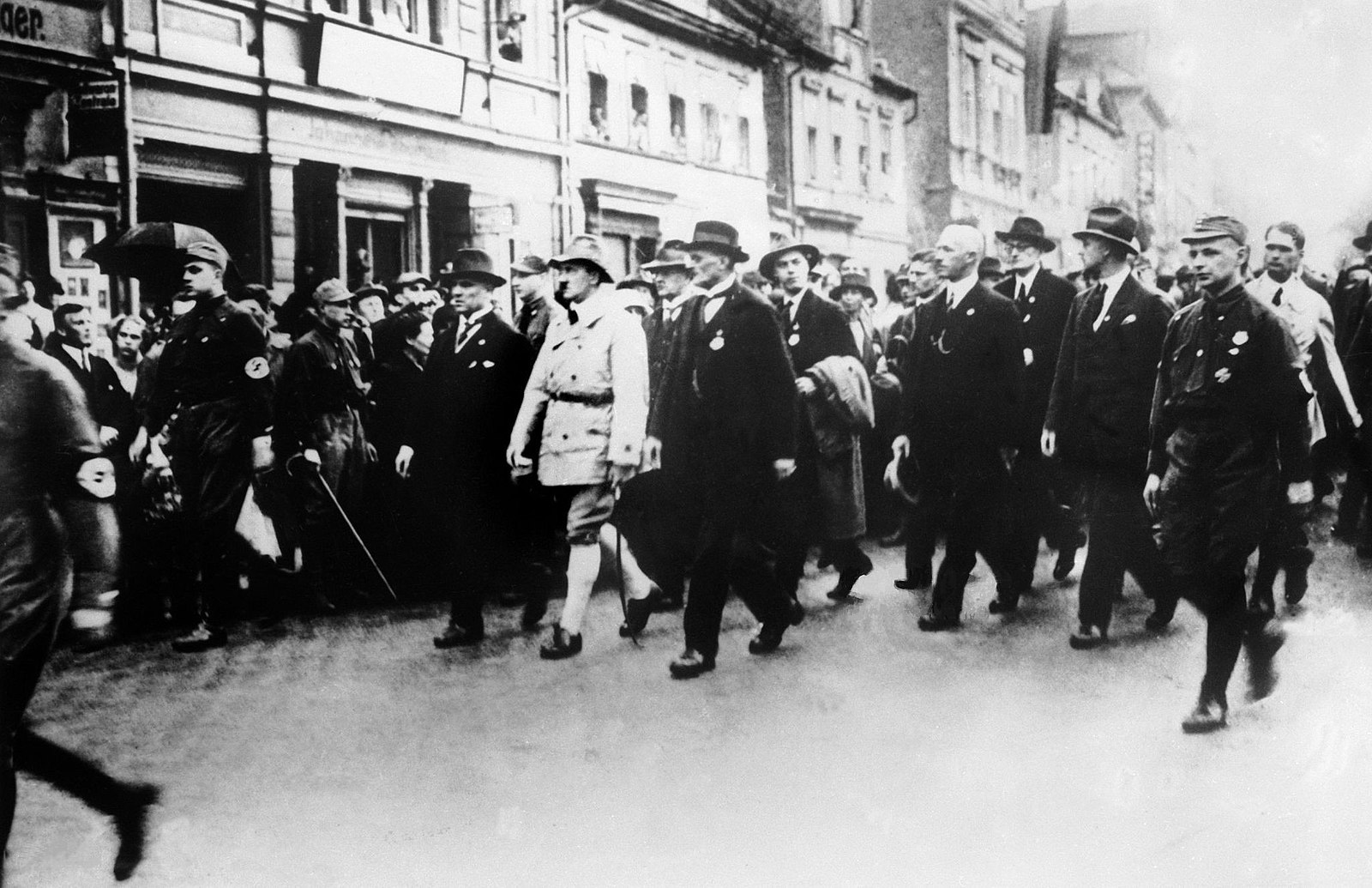
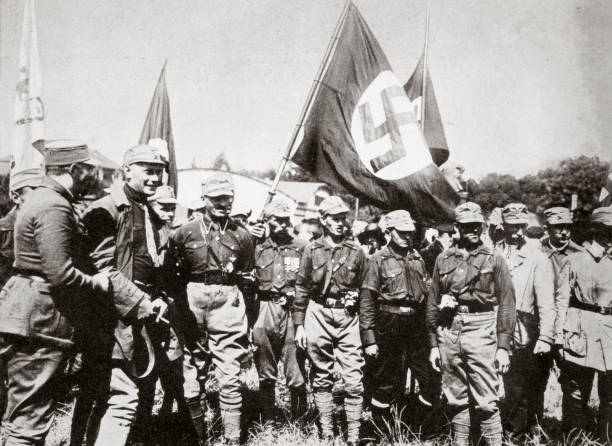
At the July 1926 Weimar rally, 116 members of the Schutzstaffel SS were present alongside 3,600 members of the larger Sturmabteilung (SA). This event was significant because it was there that the “Blutfahne” (Blood Flag), a key Nazi symbol from the failed 1923 Beer Hall Putsch, was handed over to the SS, symbolizing Hitler’s blessing and the group’s growing importance and elite status. Initially, the SS was a small, specialized bodyguard unit subordinate to the SA, dedicated to protecting Hitler and other high-ranking Nazi officials at party events. The Hitler Youth (HJ) was also formally founded on 4 July 1926.
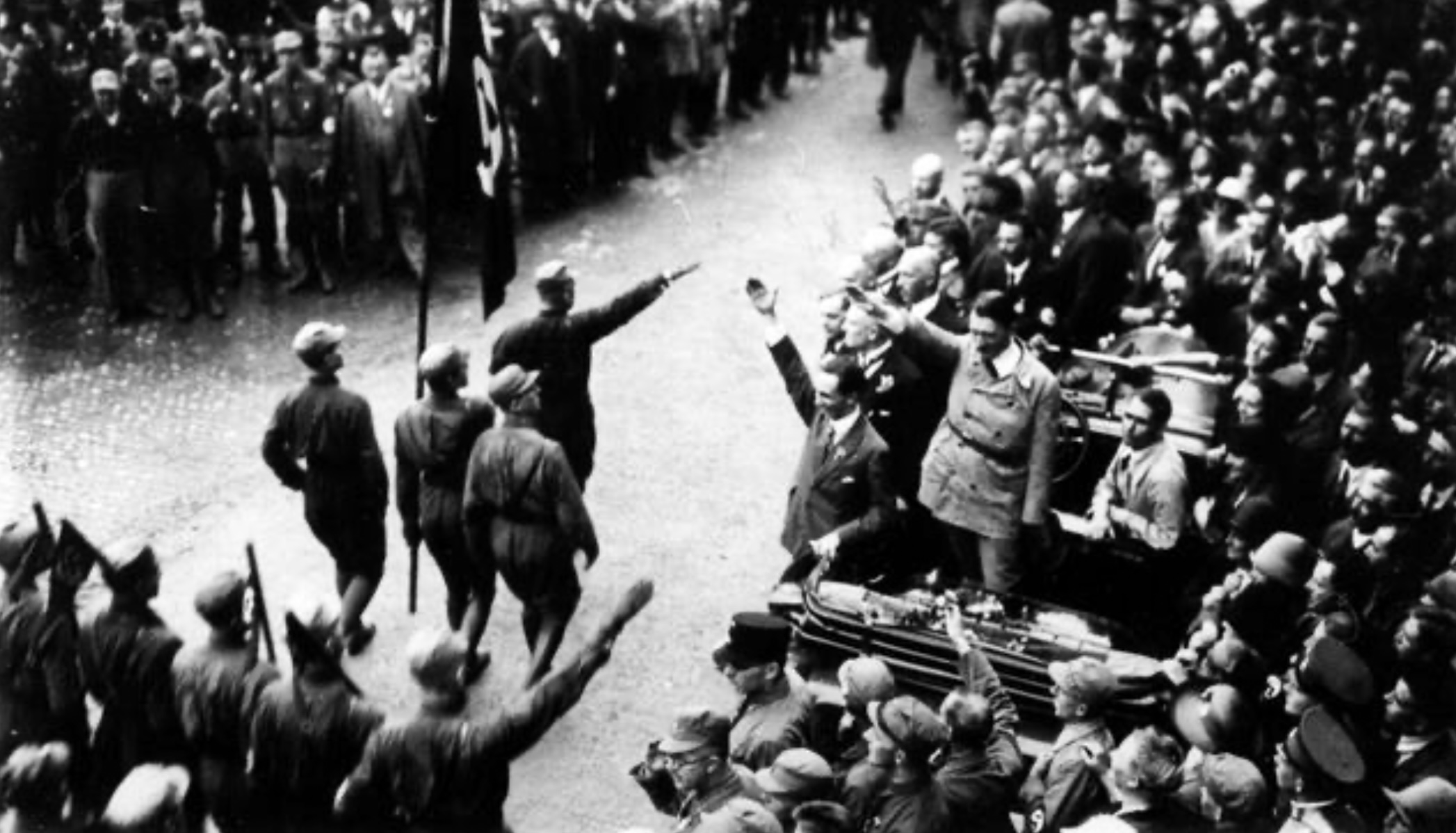
The Weimar rally followed the Bamberg Conference held in February 1926, where Hitler had suppressed a growing split within the party and consolidated his power over factions like the one led by Gregor Strasser. While the event successfully cemented Hitler’s authority within the party, the Nazis remained a marginal political force in the mid-1920s. It was not until the onset of the Great Depression in 1929 that the Nazi Party would begin to gain significant voter support.
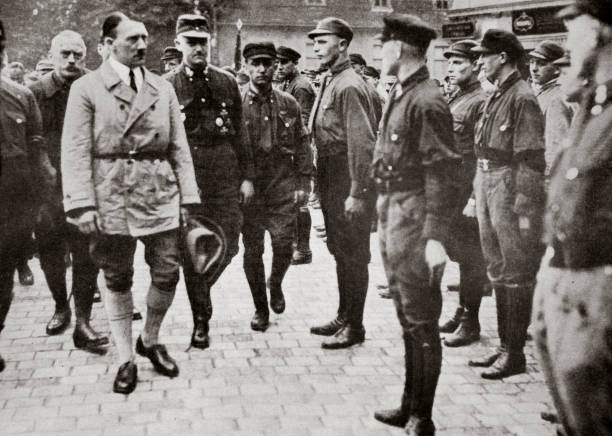

Deutscher Tag der NSDAP
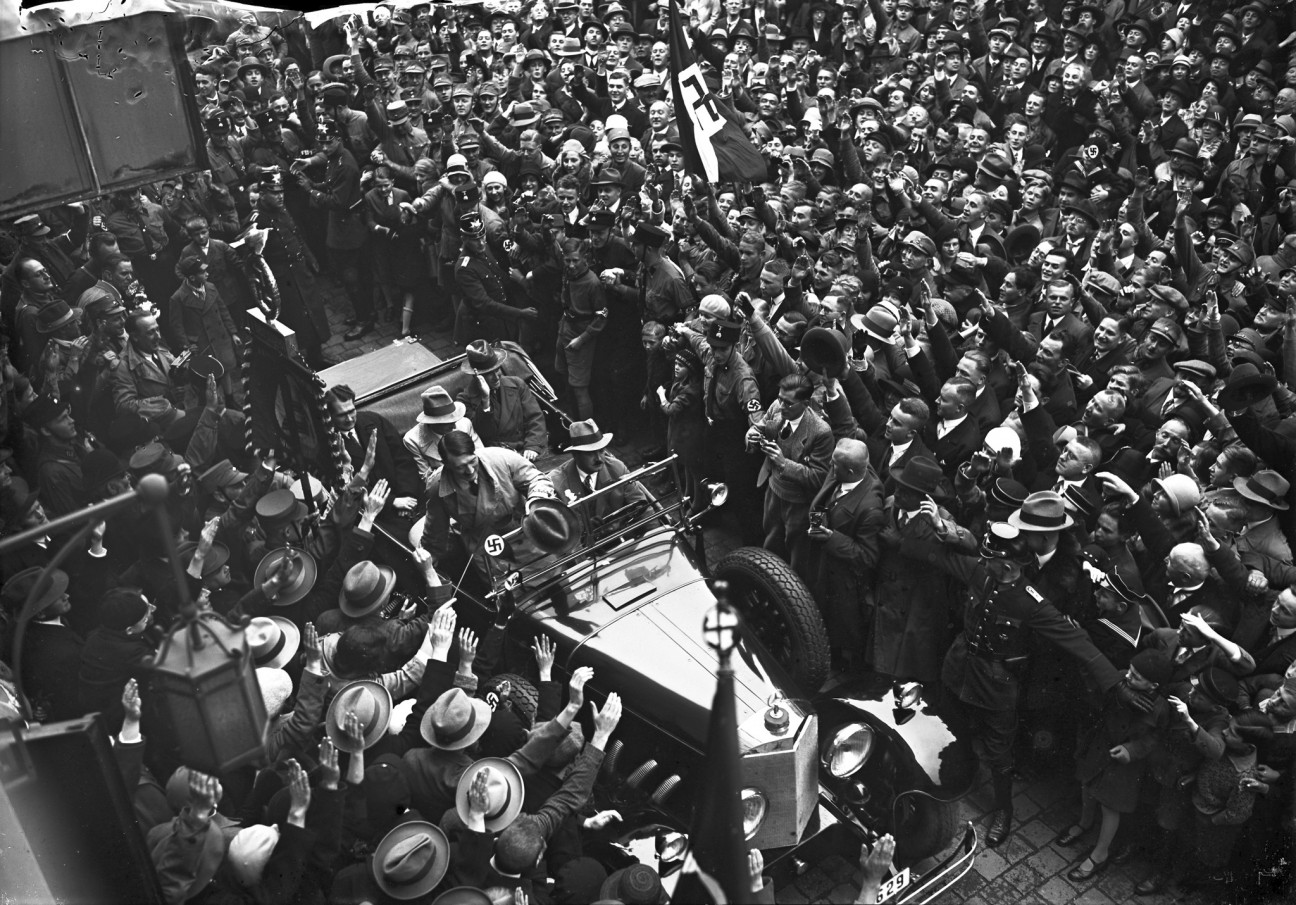
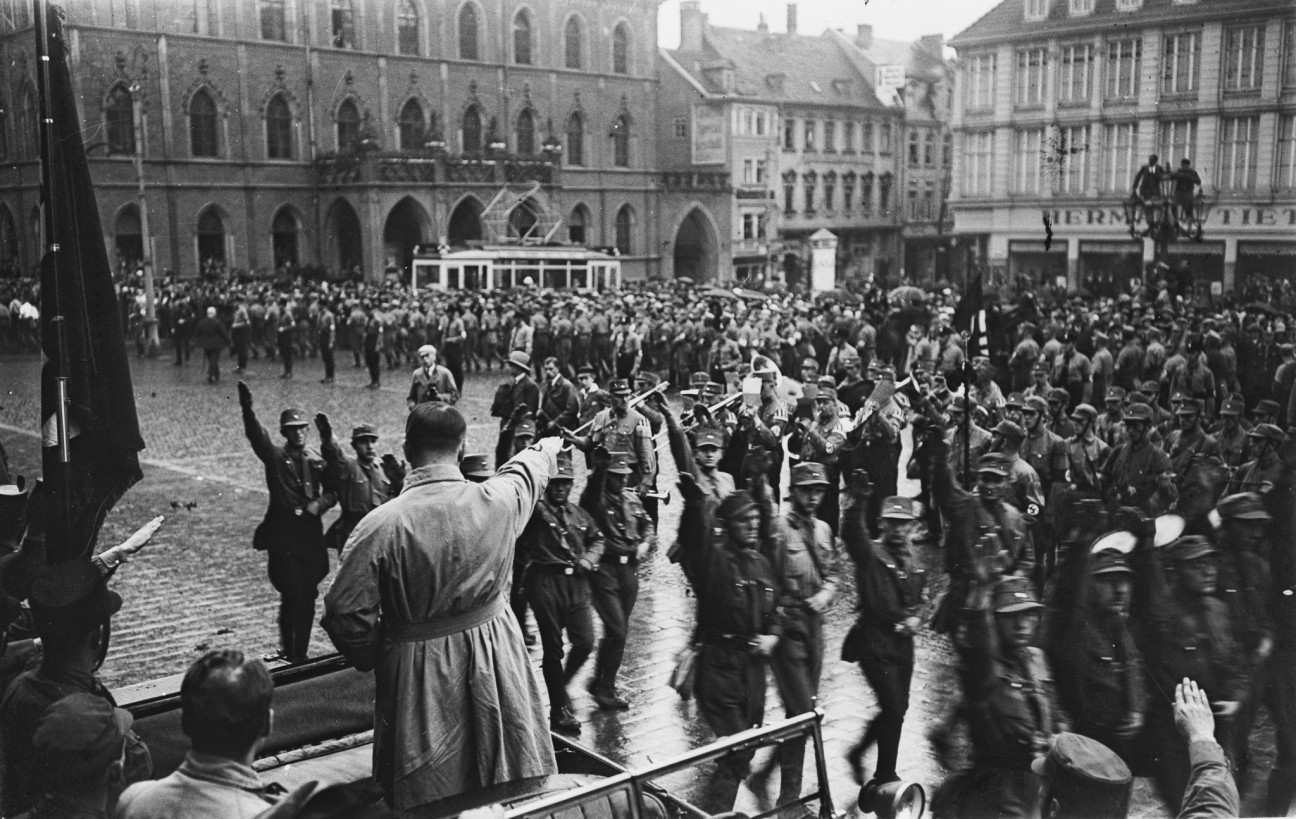
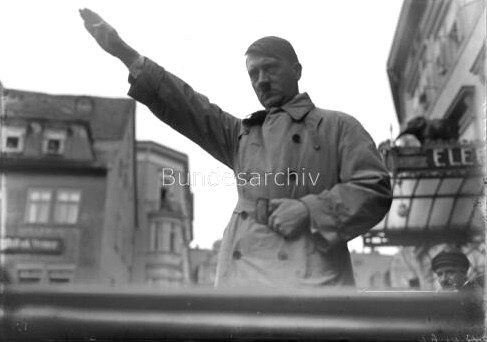
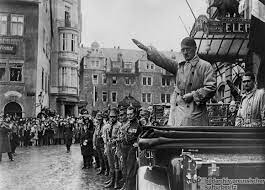
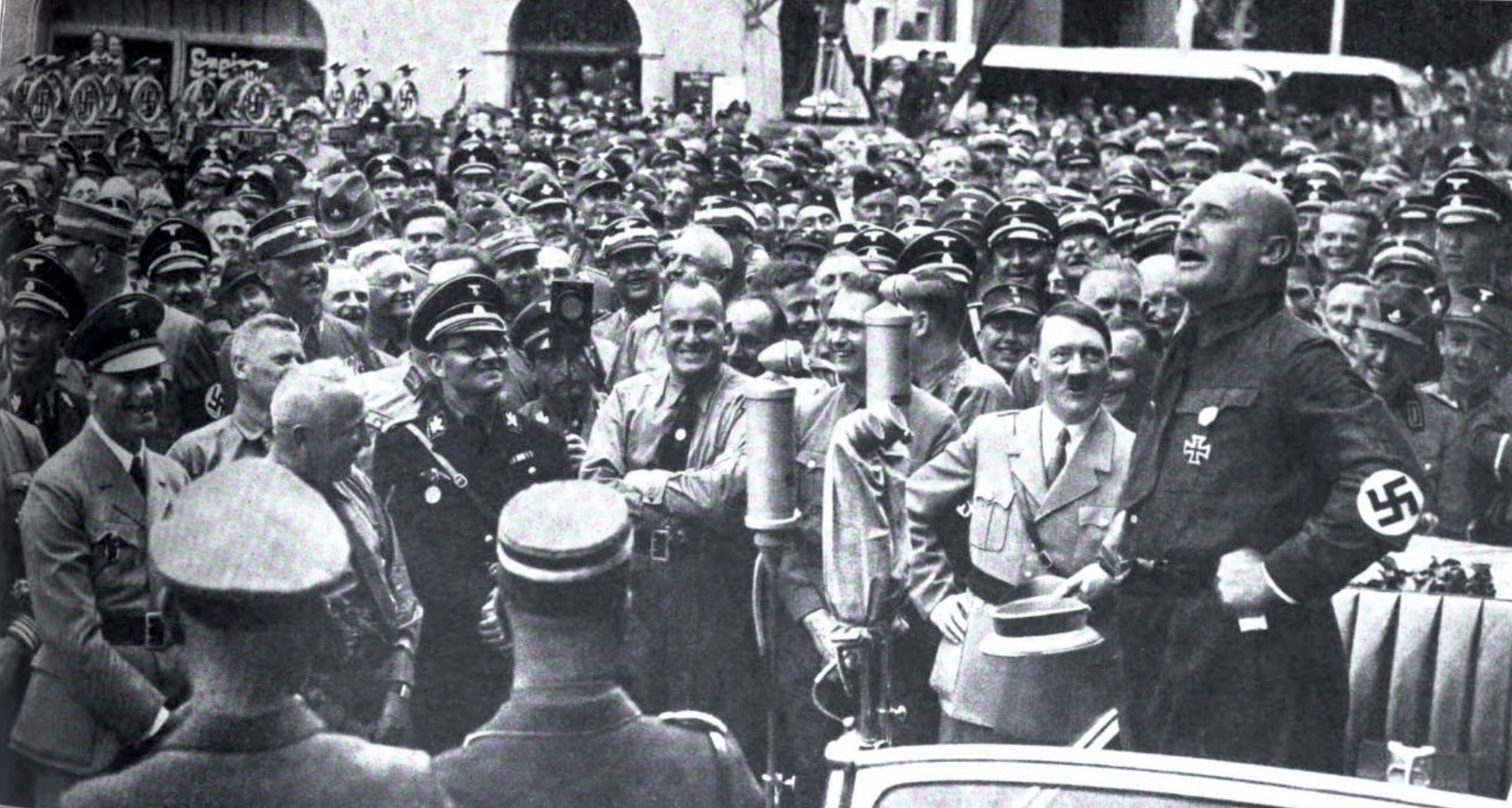
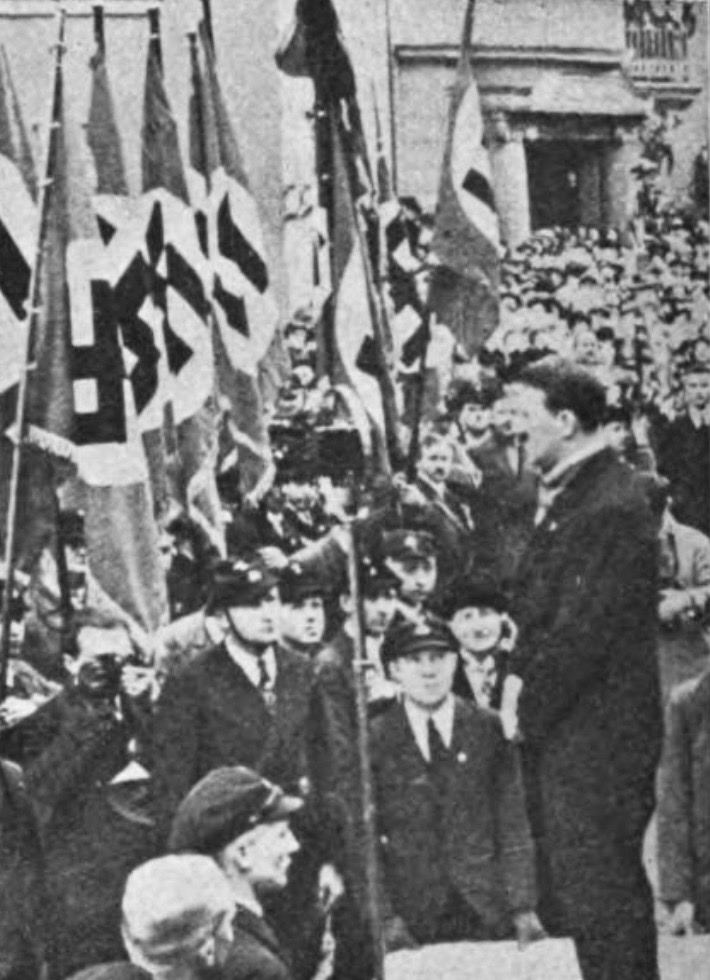
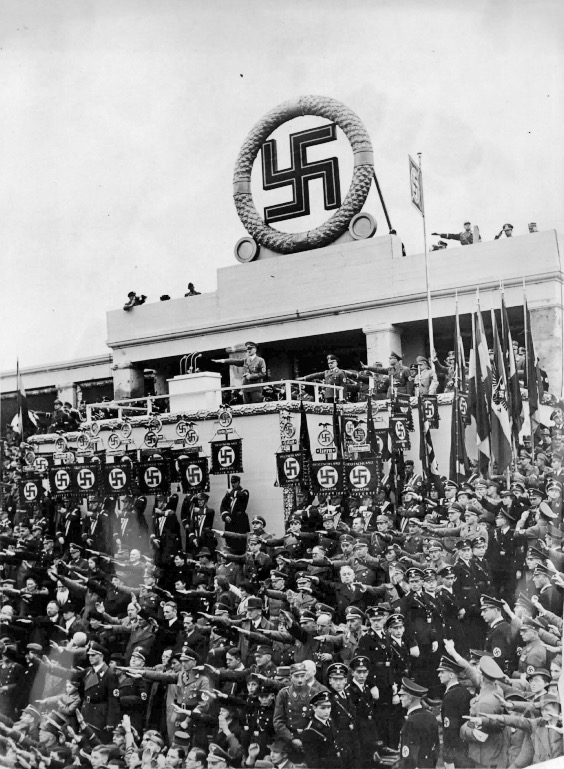
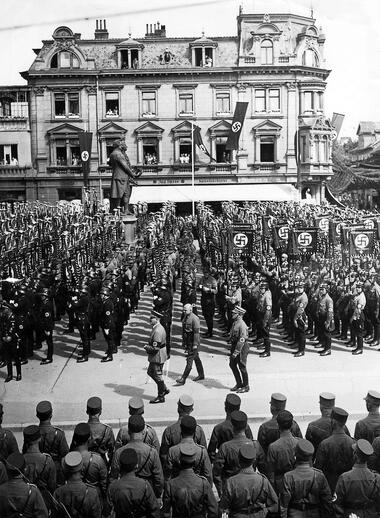
The Weimar Deutscher Tag of 12 April 1931 began with a speech delivered by Hitler at a protest rally assembled on the Schießhauswiese. The protest was in response to the overthrow and withdrawal from the government of the State Minister of the Interior in Thuringia (23. January 1930 – 1. April 1931) Wilhelm Frick, by a successful motion of no confidence of the SPD. A speech was also delivered in front of 8000 listeners at the Gauführertung of the NSDAP in the German National Theater in Weimar. The day concluded with an acceptance of a passing march of the SA and the SS taking place on the marketplace with 12,000 participants. Göring also spoke to the huge crowd gathered out in front of the Hotel Elephant. It’s fascinating to see Hitler as part of Göring’s audience and looking quite chuffed.


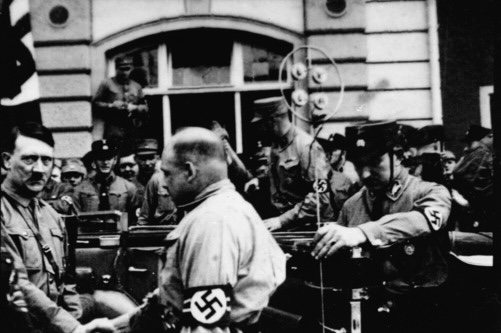
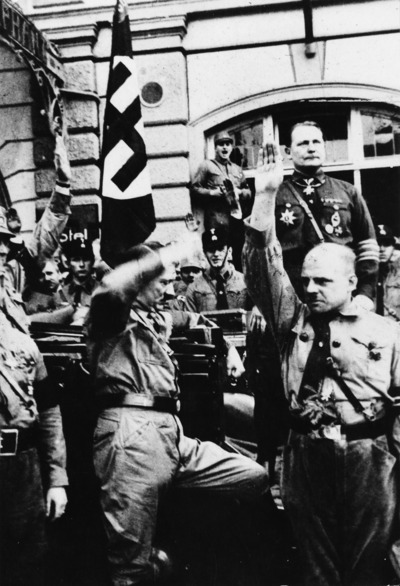

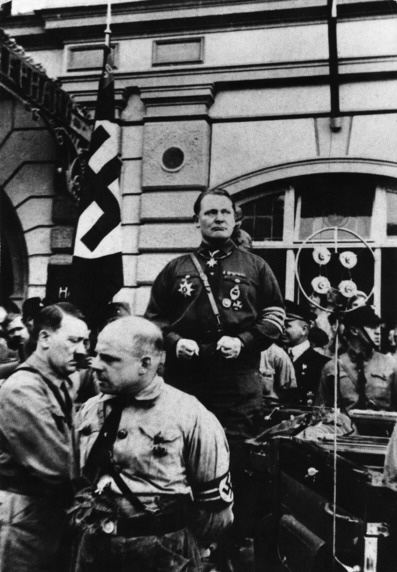
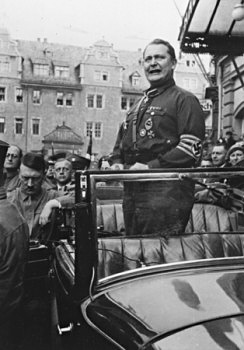
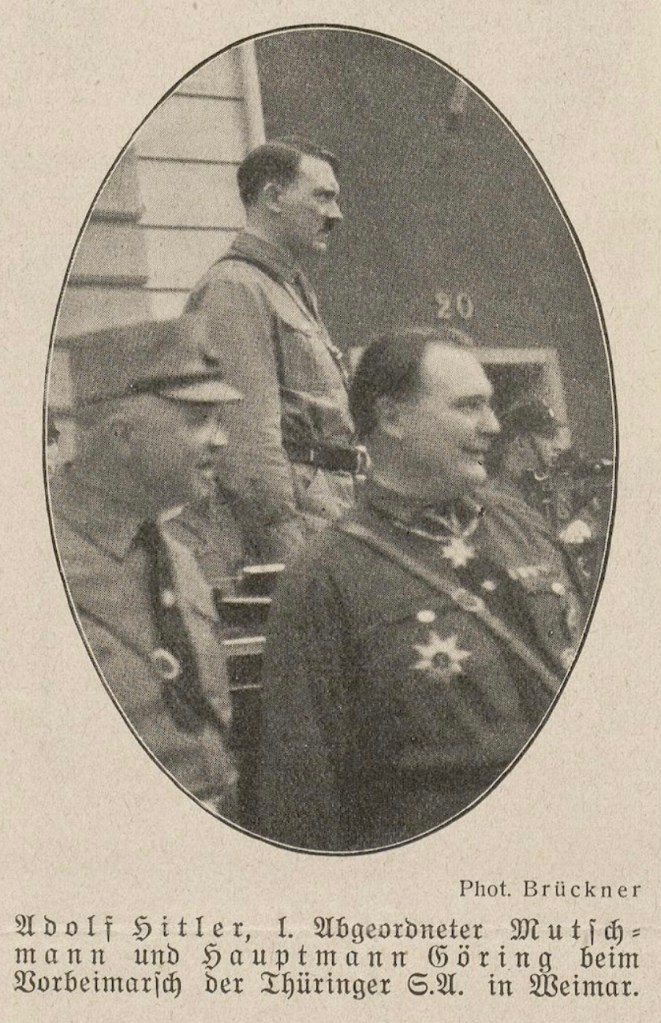
Adolf Hitler, 1st Deputy Mutschmann, and Captain Göring during a march-past of the Thuringian SA in Weimar.

Weimar Reichsparteitag 1936
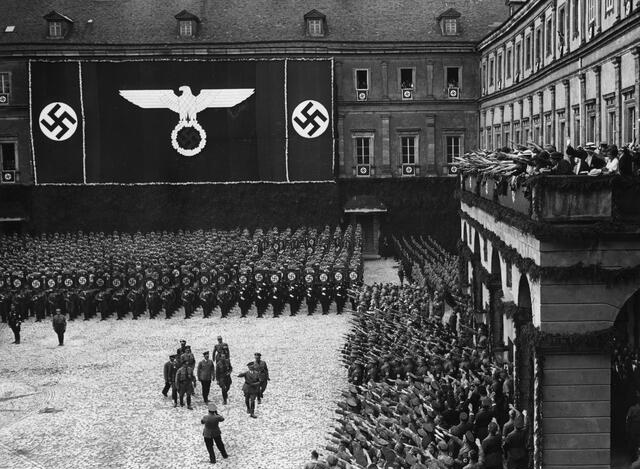
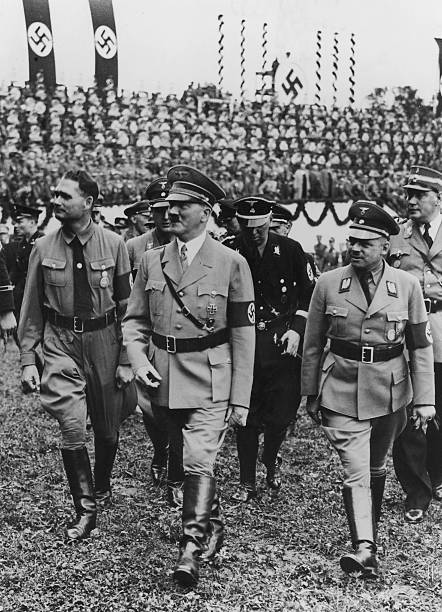
From 3-5 July 1936, Adolf Hitler attended a special Nazi Party gathering in Weimar. The rally marked the tenth anniversary of the Nazi Party Congress in Weimar that was held in July of 1926. Before the Nazi Party had come to national power in 1933, it had held annual congresses such as the one in Weimar. The Weimar anniversary event also celebrated the victory of National Socialism over the Weimar Republic. While speaking at the Weimar National Theater, the same hall where the constitution of the Weimar Republic had been drafted, Hitler recalled how it had been a “peculiar triumph” to celebrate the Nazi movement’s “resurrection” there. Hitler also vowed that the Nazi party and its successors would retain eternal rule and “unlimited authority” over Germany for all time.
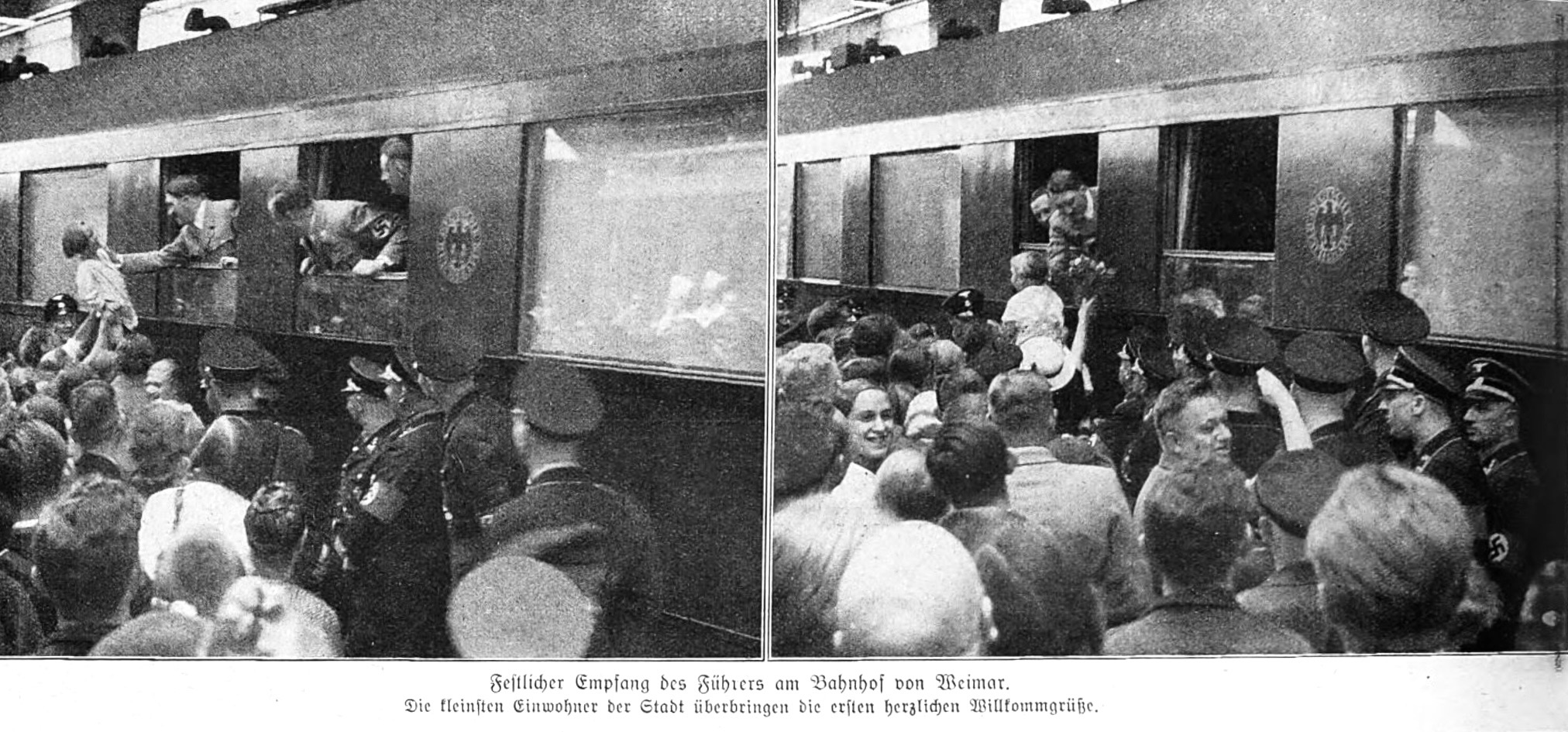
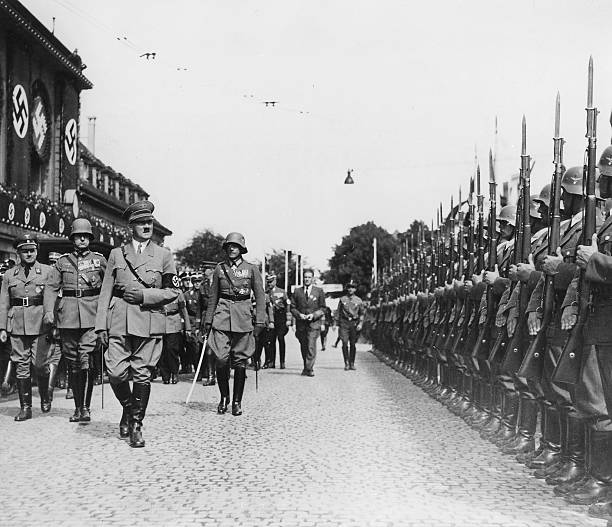


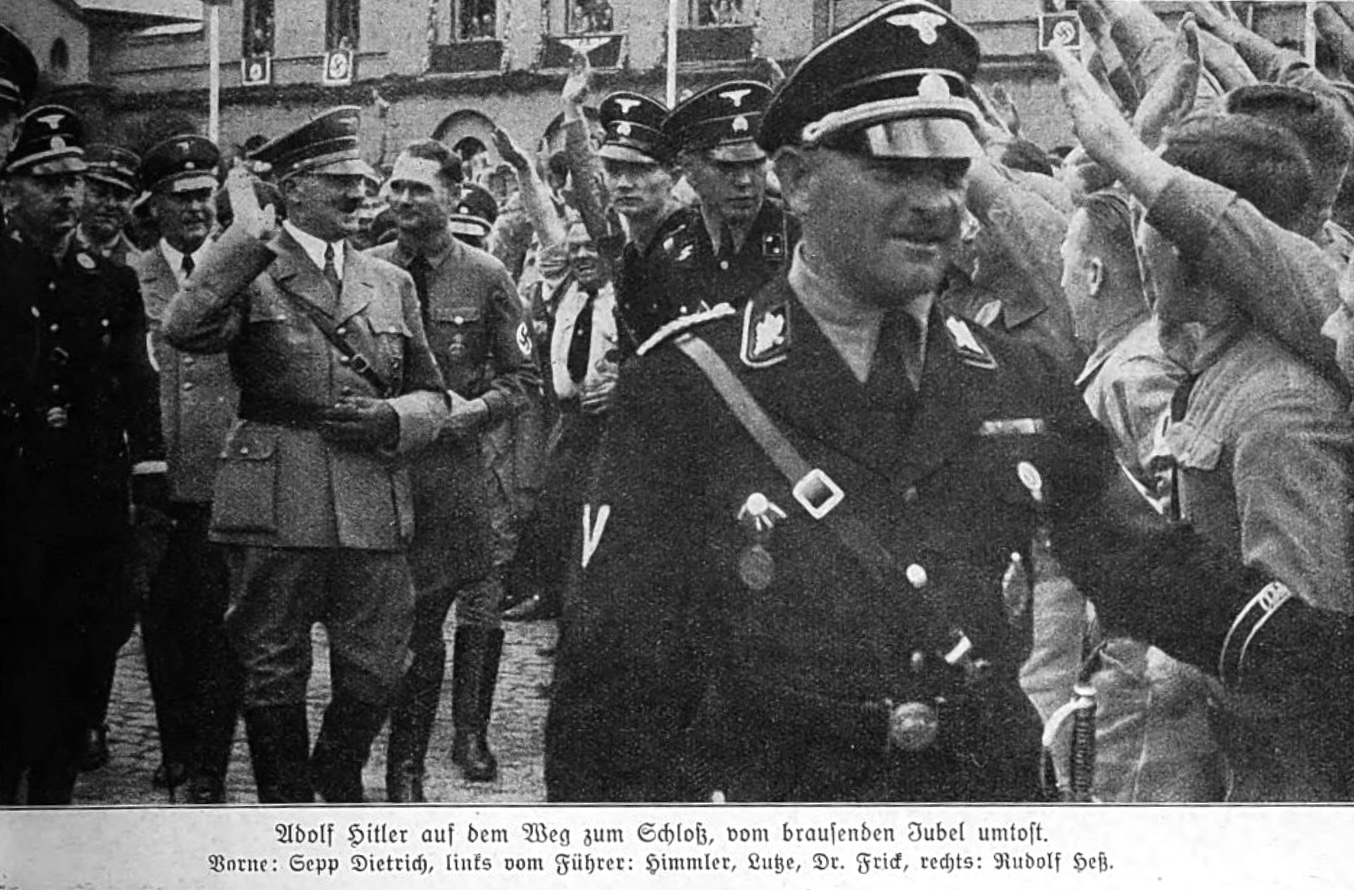
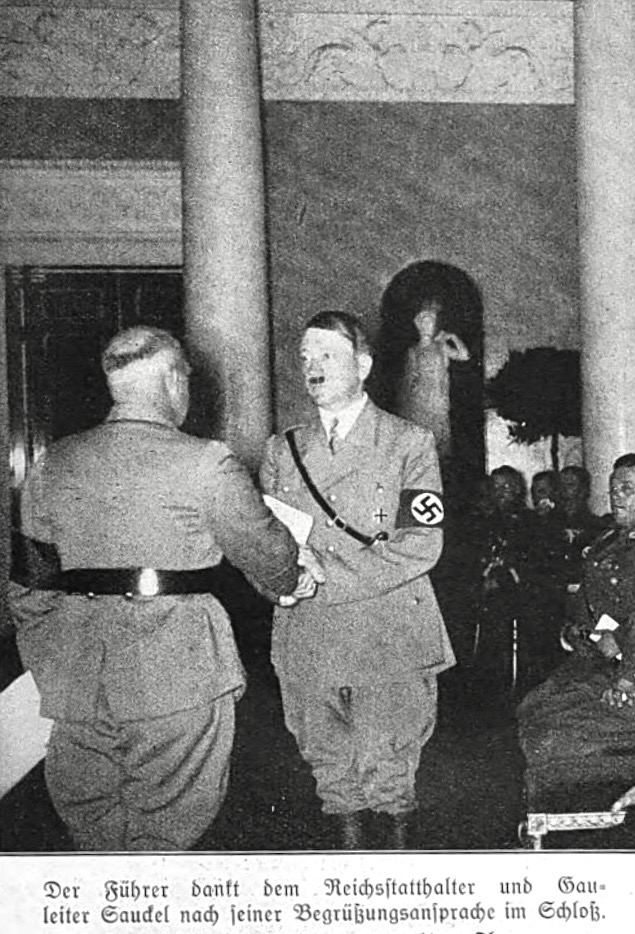
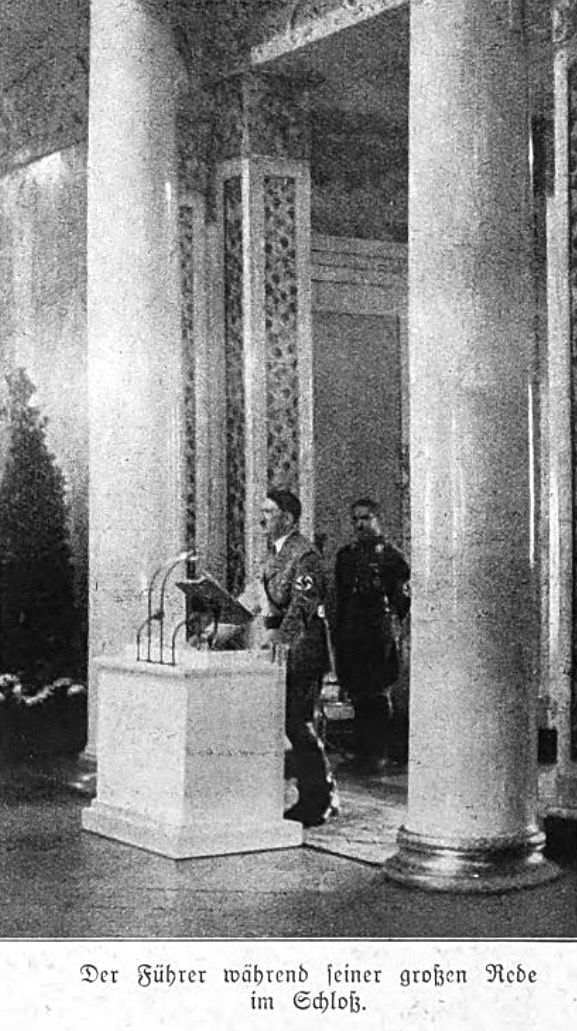
The Führer thanked the Reich Governor and Gauleiter Sauckel after his welcoming address in the castle. Hitler then delivered a speech for the tenth anniversary of the Reich Party Congress at a state reception in the Weimar City Palace. Afterward he attended the opera “Tannhäuser” at the National Theatre.
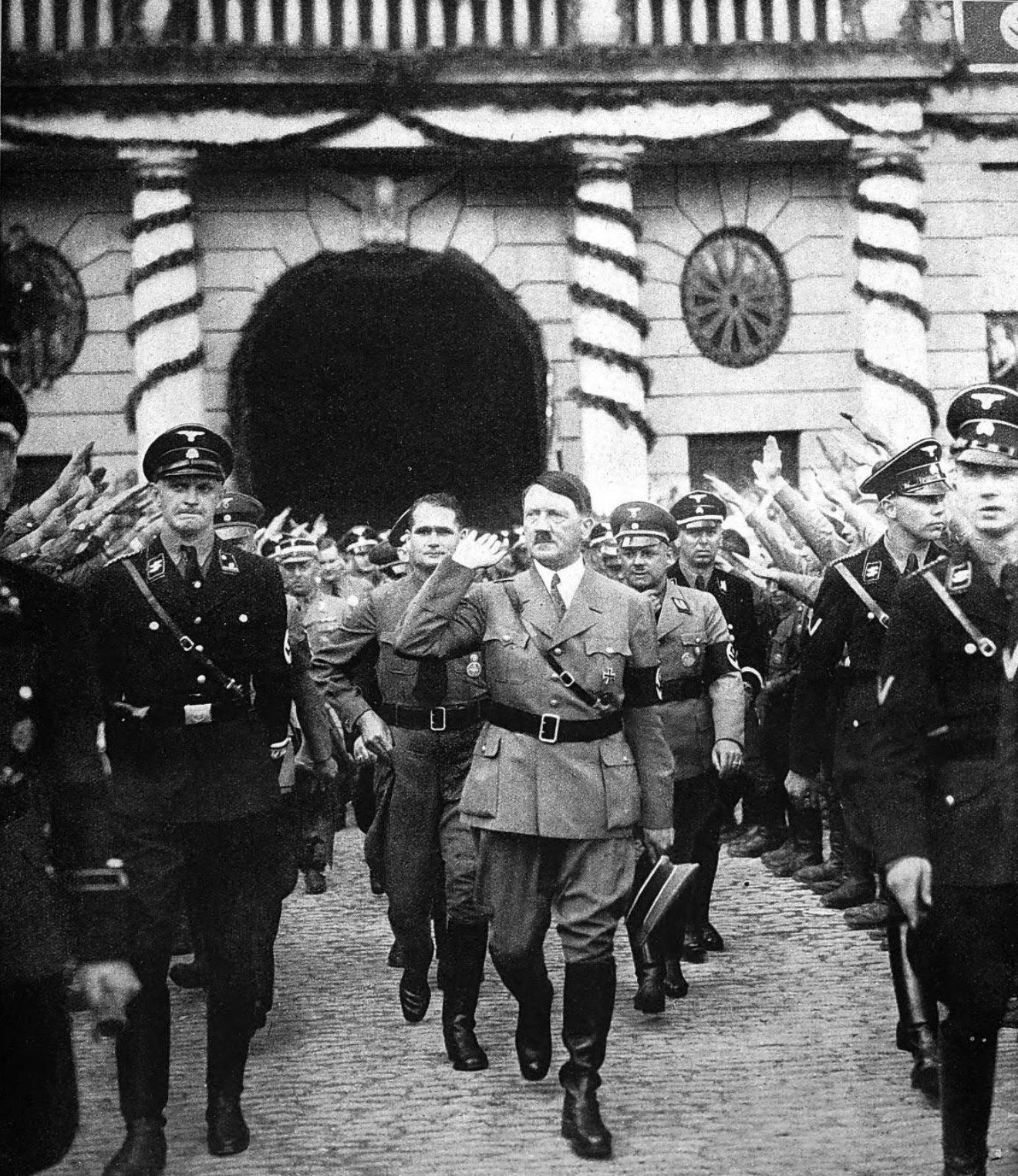
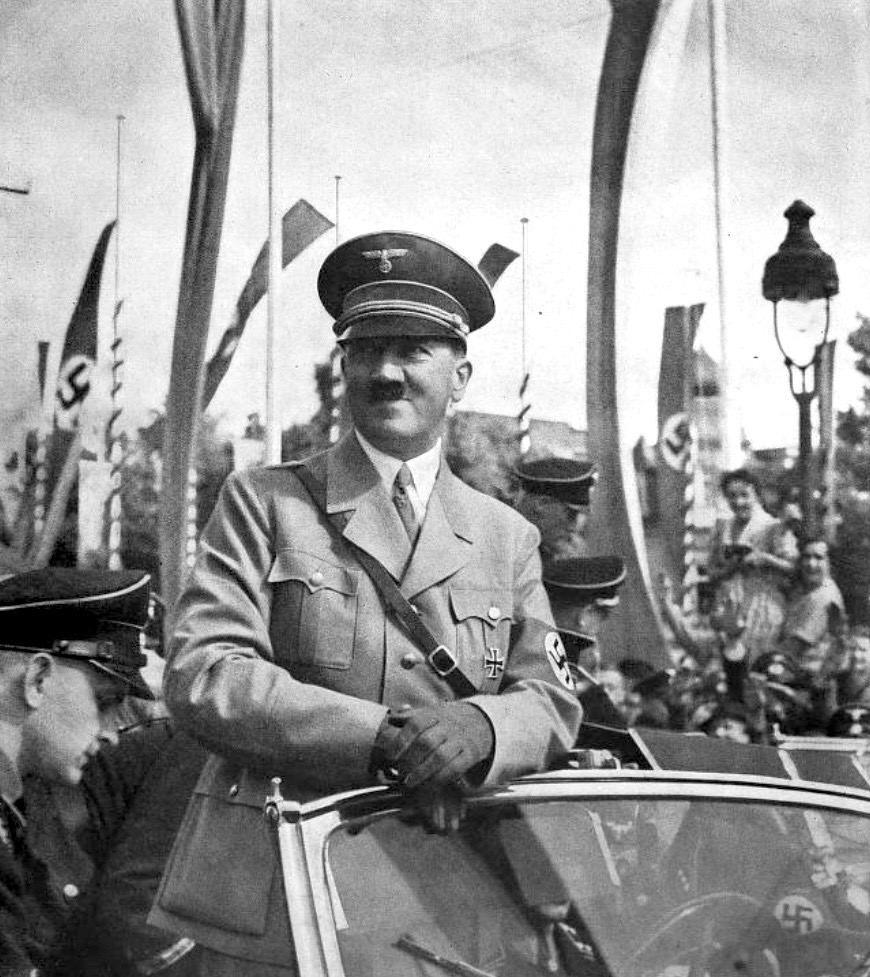

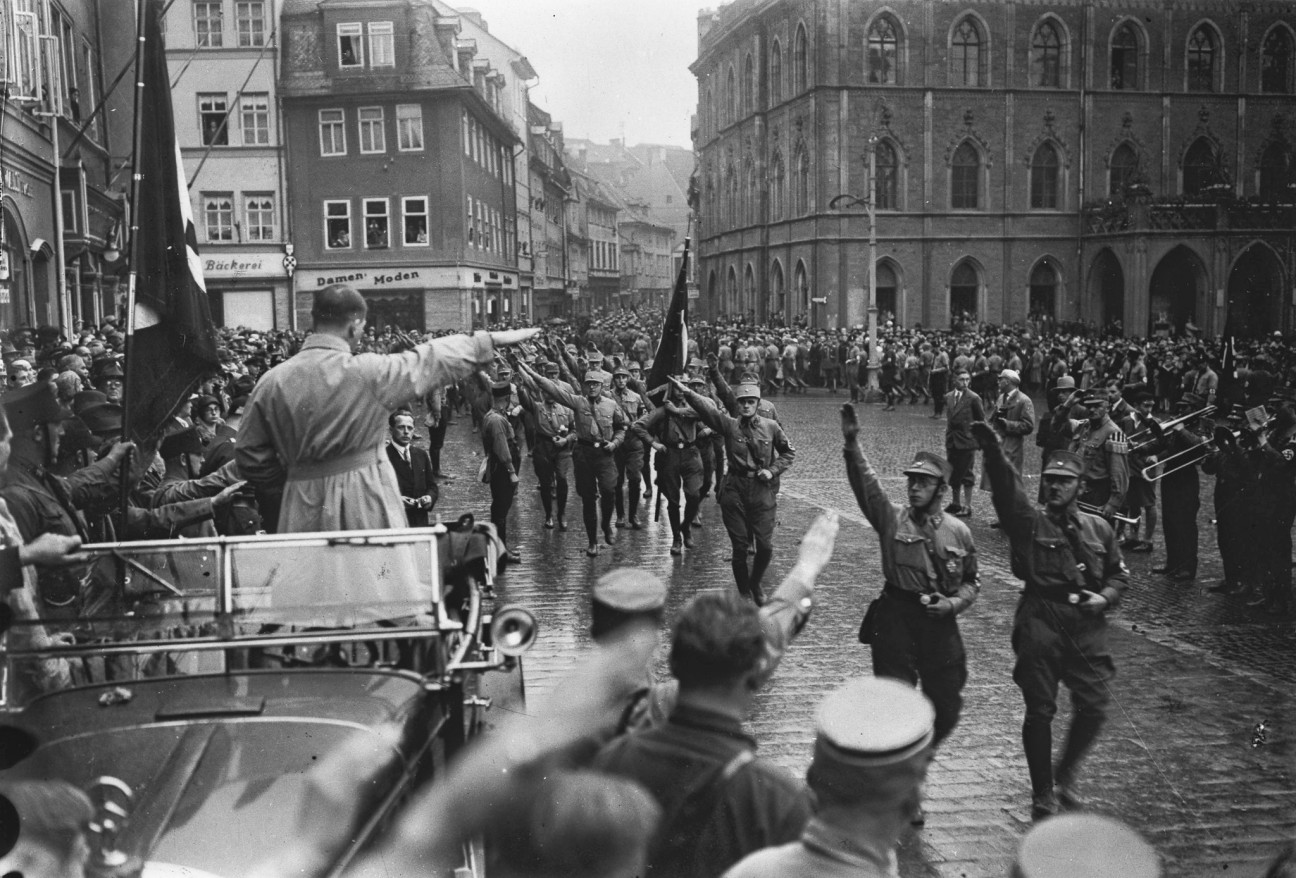
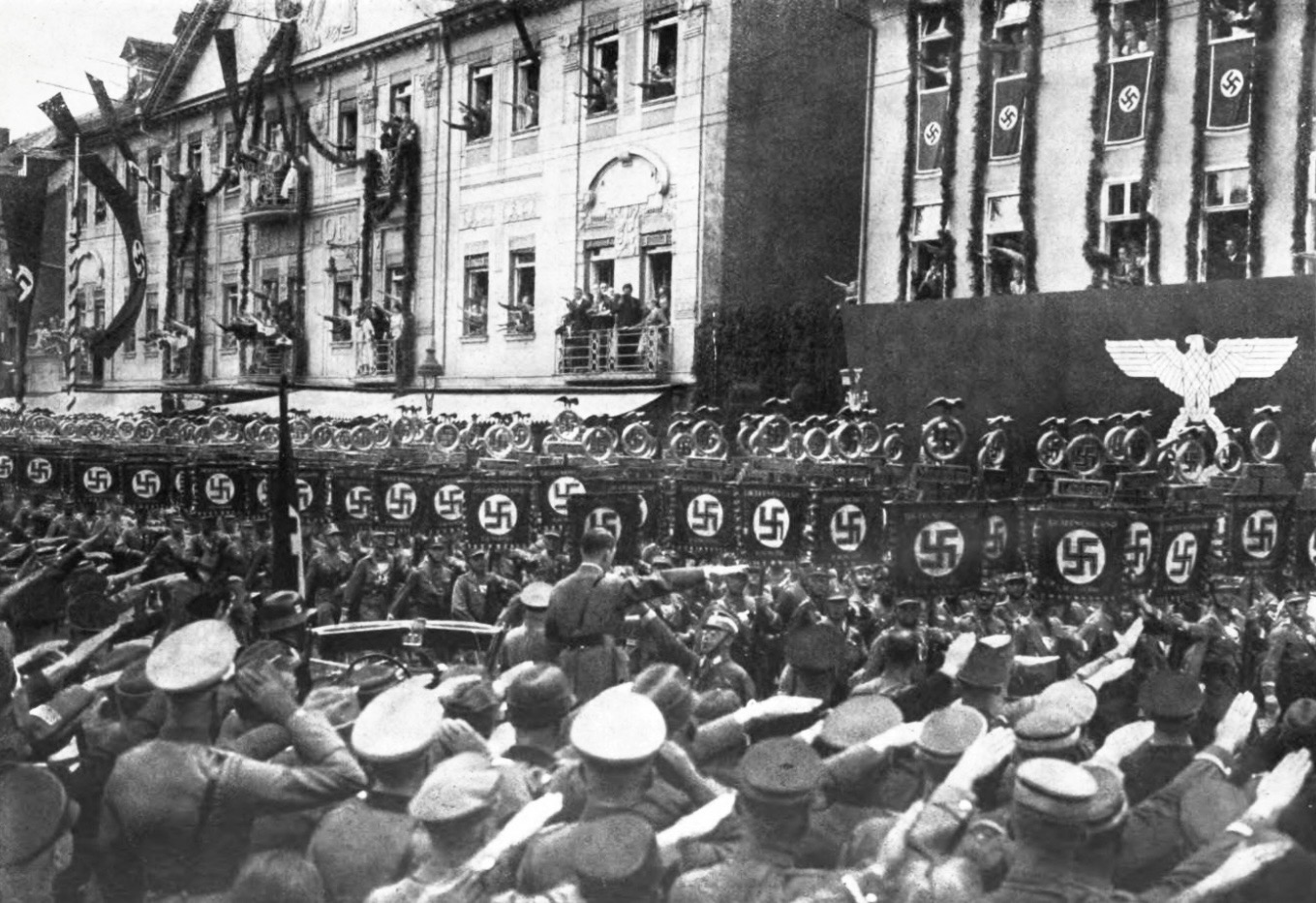
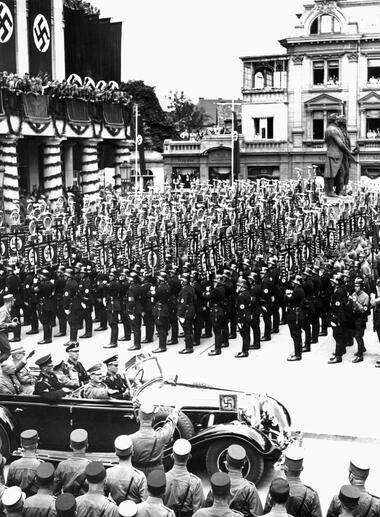
The second day In Weimar began with a meeting of the “Old Fighters” in the National Theatre. Hitler made the statement “We have raised Weimar back to its importance”. He returned to the Hotel Elephant to watch a parade and rally on the market square.
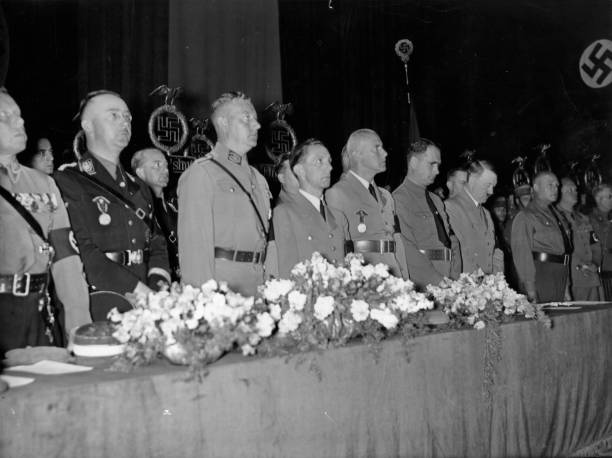

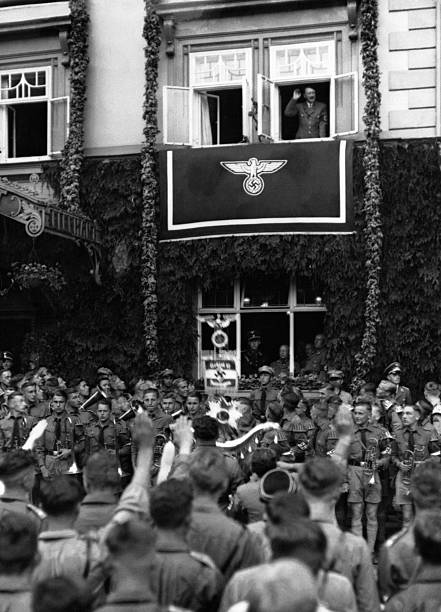


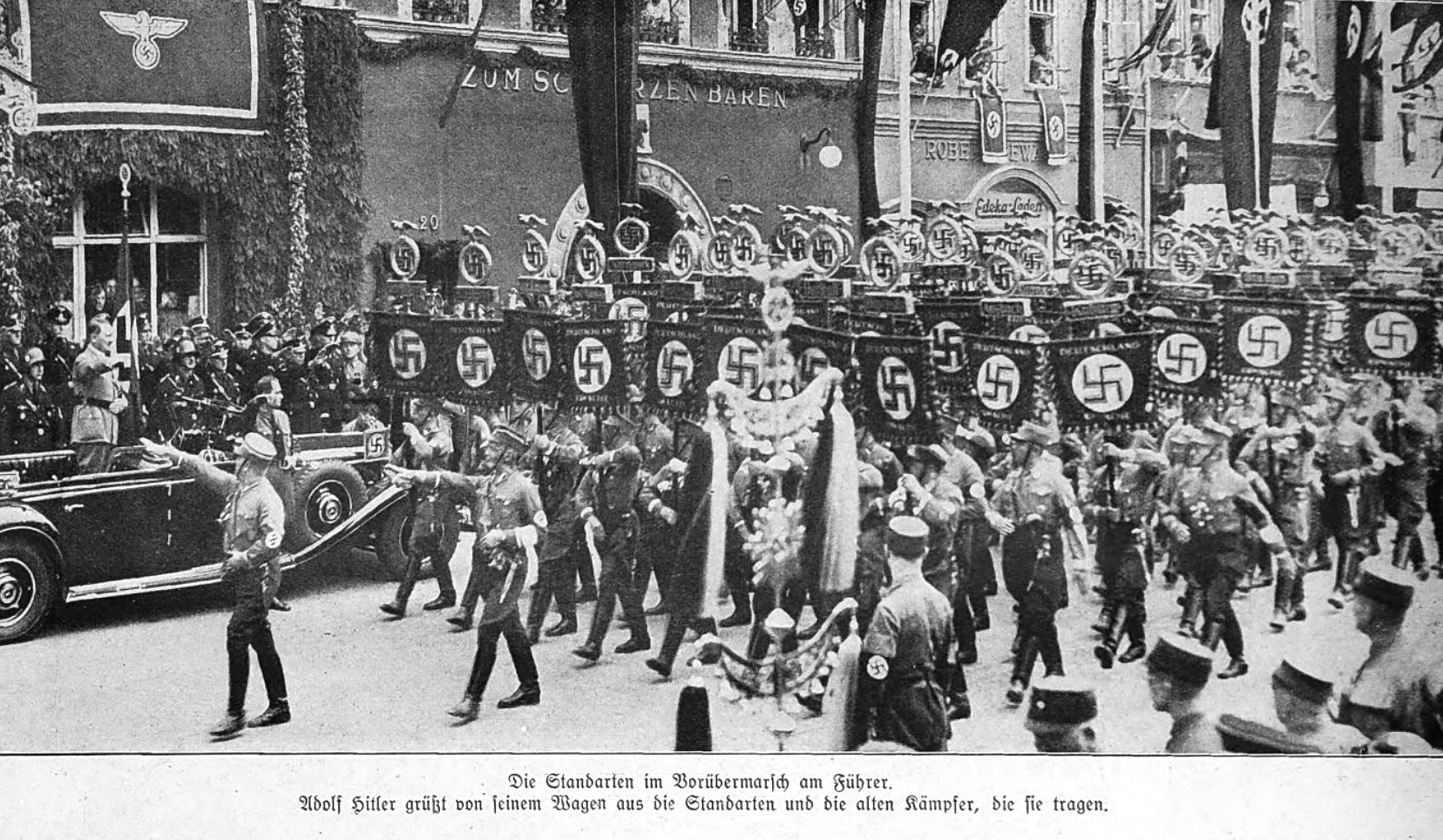
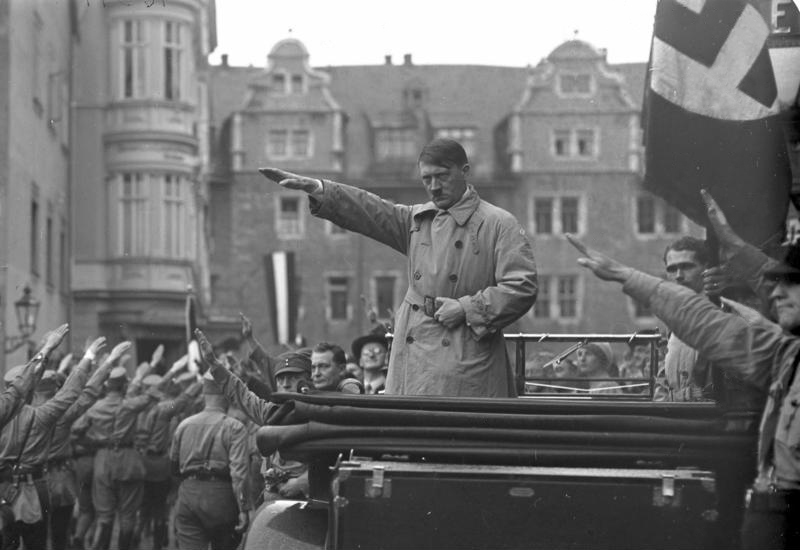
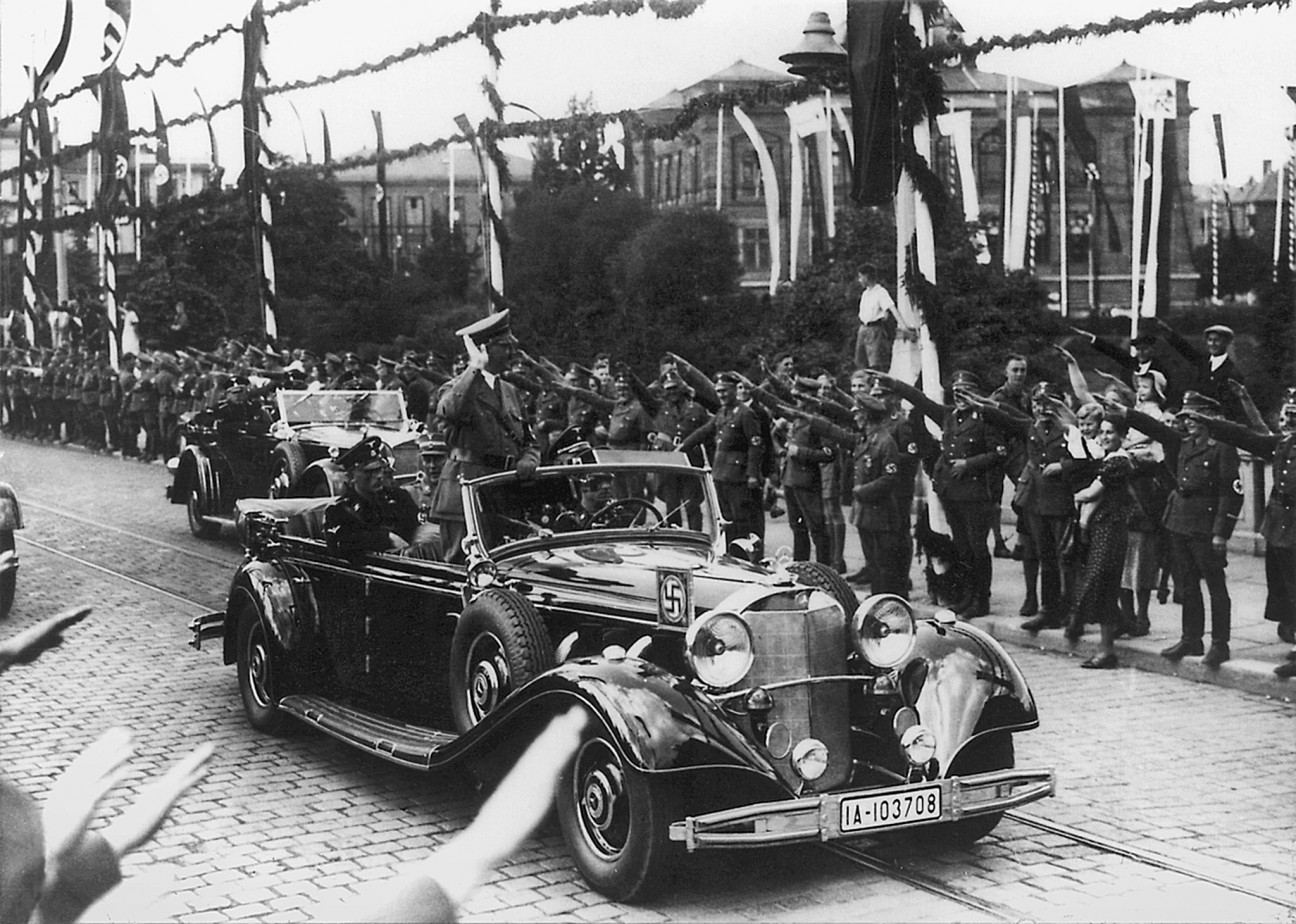
Adolf Hitler salutes the standards and the veterans carrying them from his car

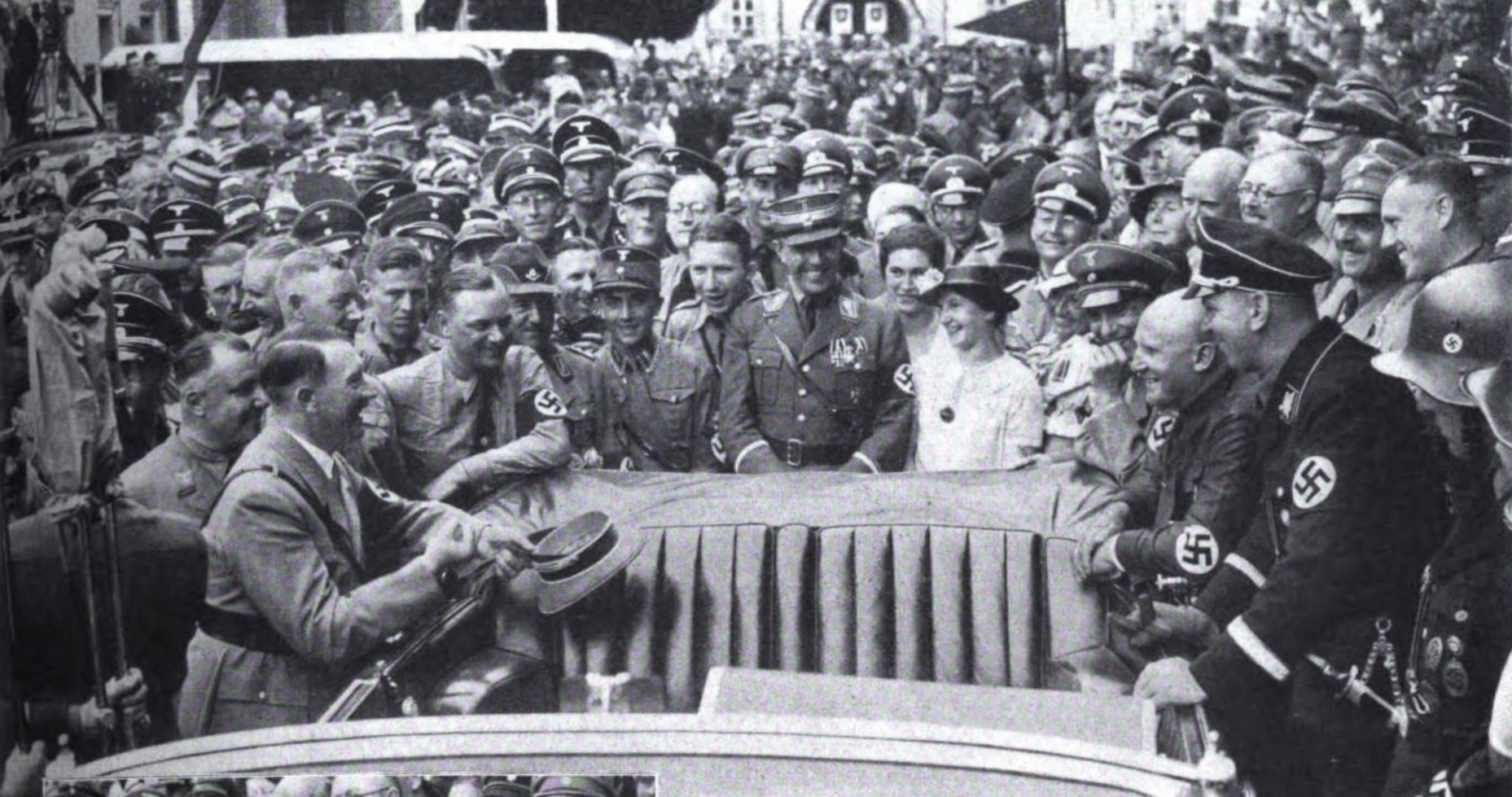


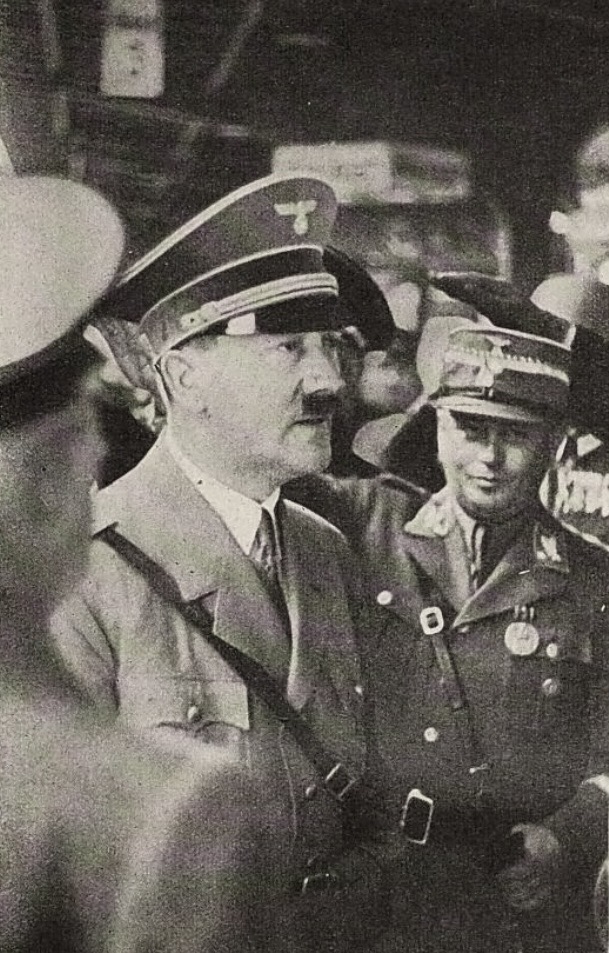
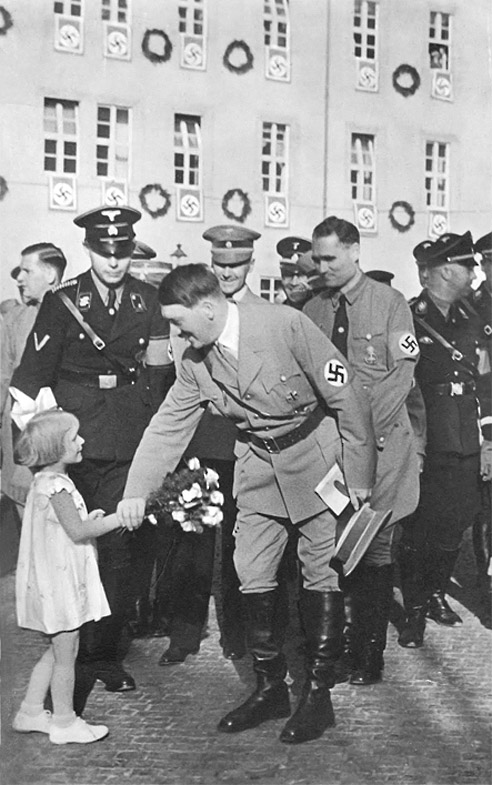
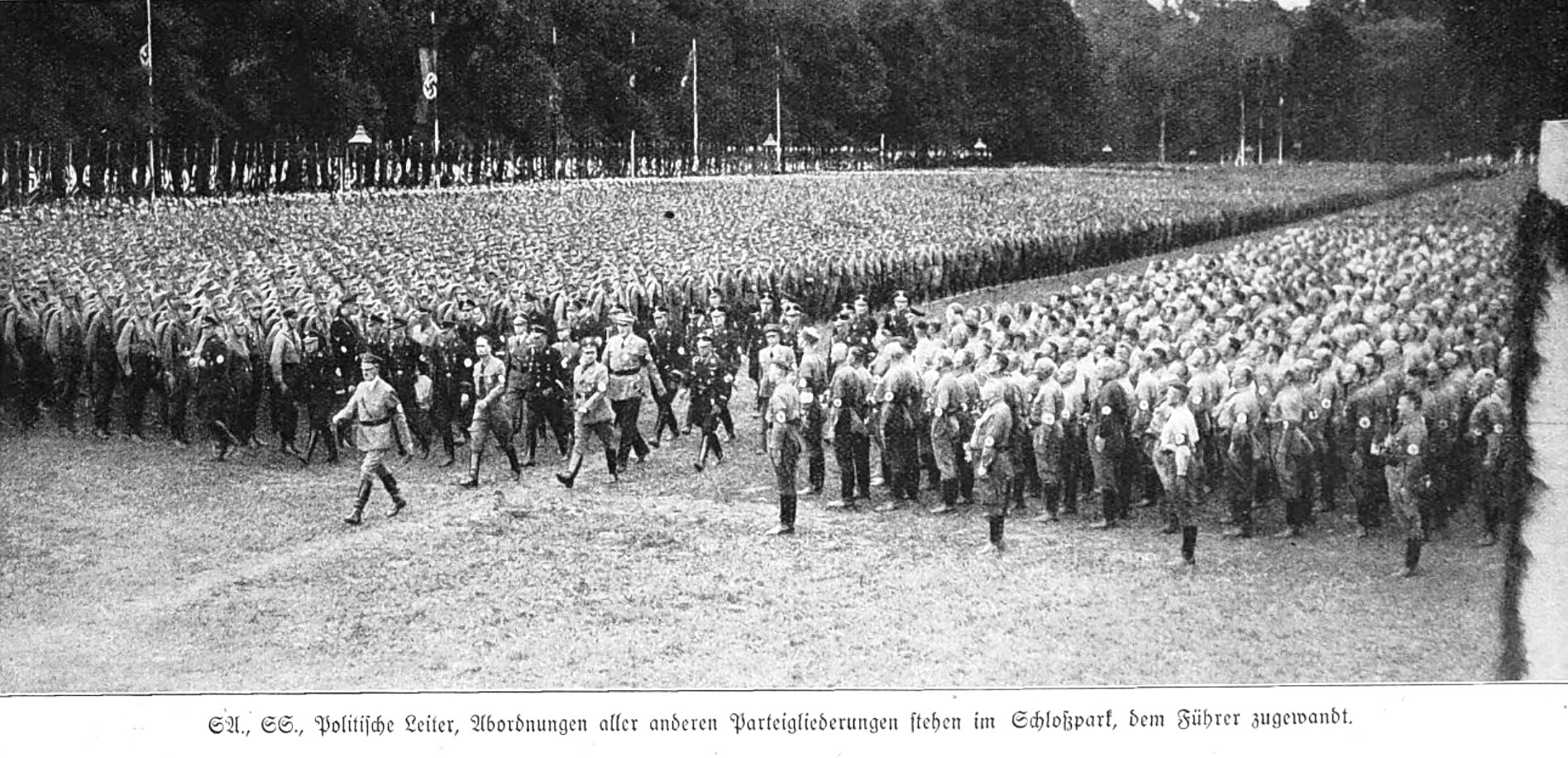
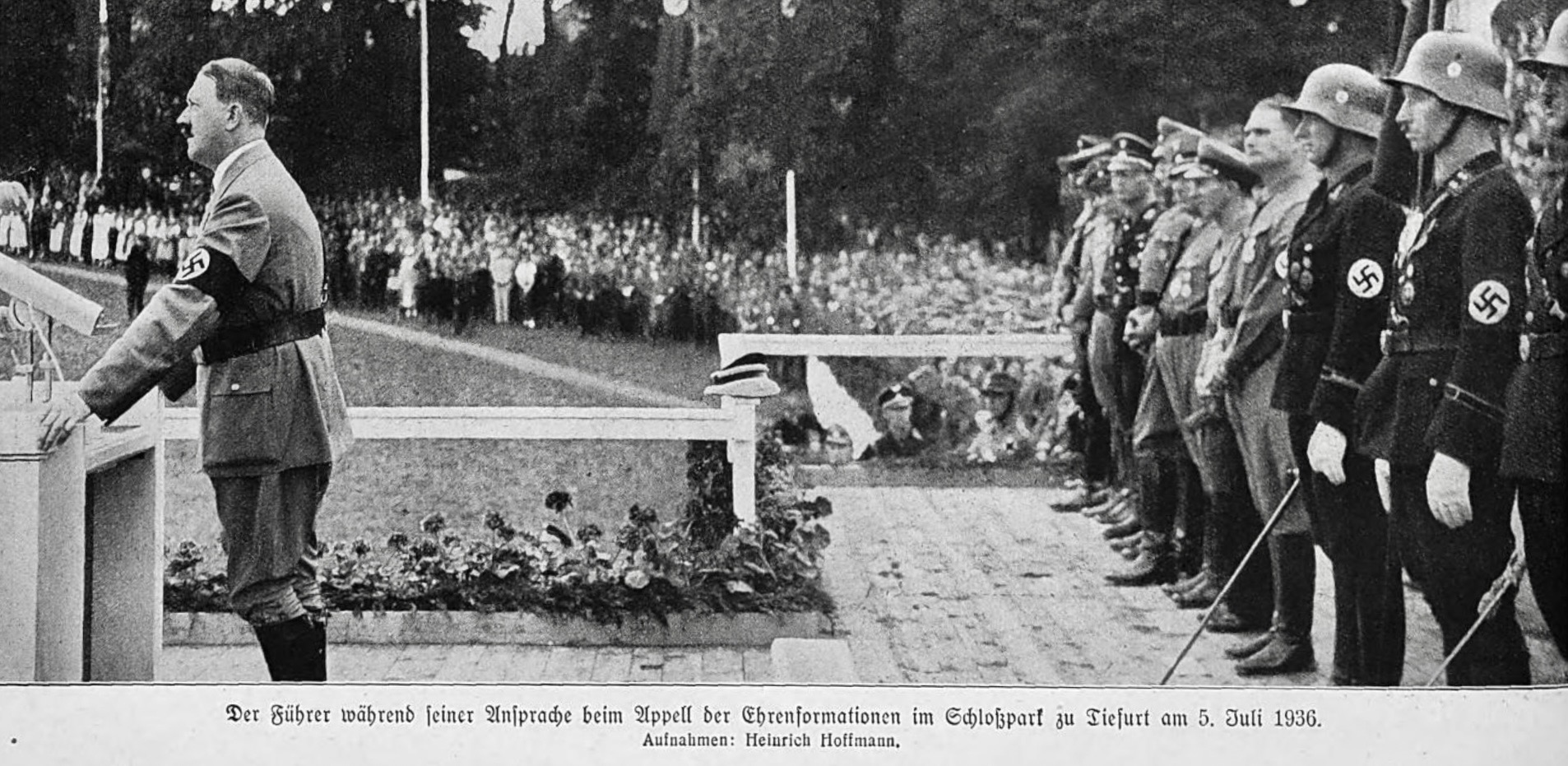
On Sunday, 5 July, the festival concluded with a car ride to Tiefurt and a speech in the castle park in front of 50,000 listeners. Hitler announced that he wants to come back to the appeal in ten years. He returned to Weimar by car for an acceptance of a passing march on Karlsplatz (later Goetheplatz) opposite from the main post office. A final rally was held in the Thüringer Landeskampfbahn (later Wimariastadion) in Fuldaer Straße 113 before he returned to Munich.



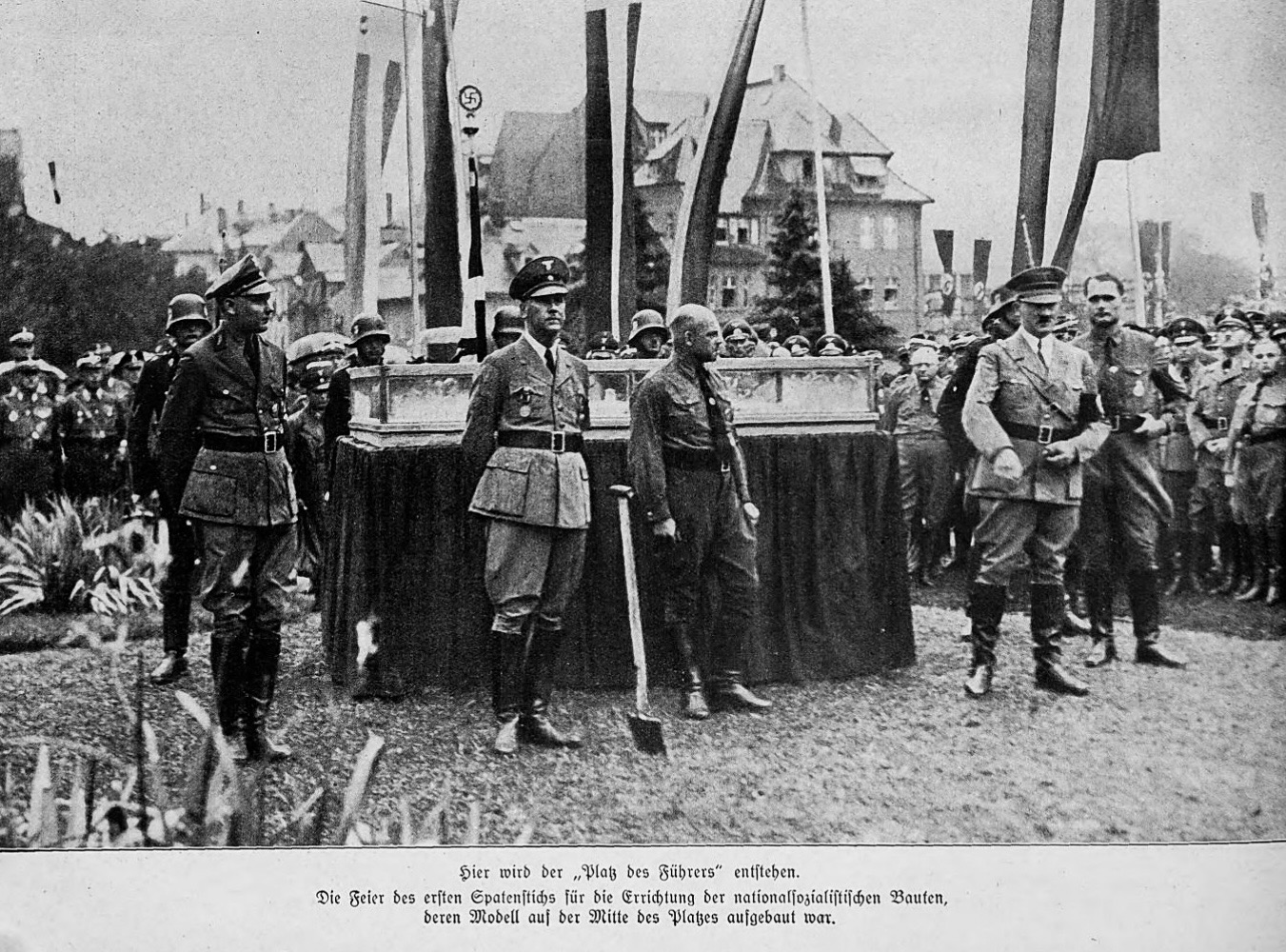
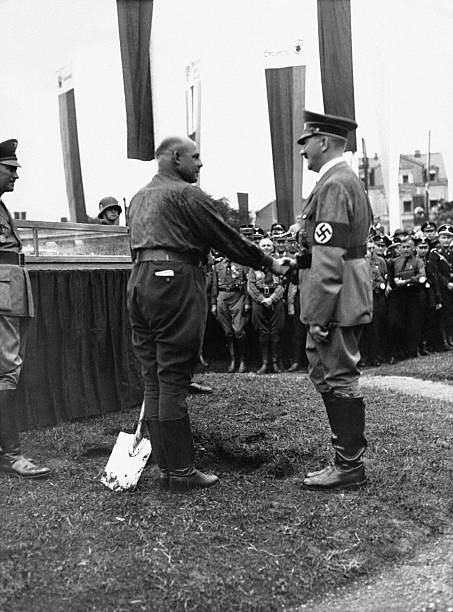
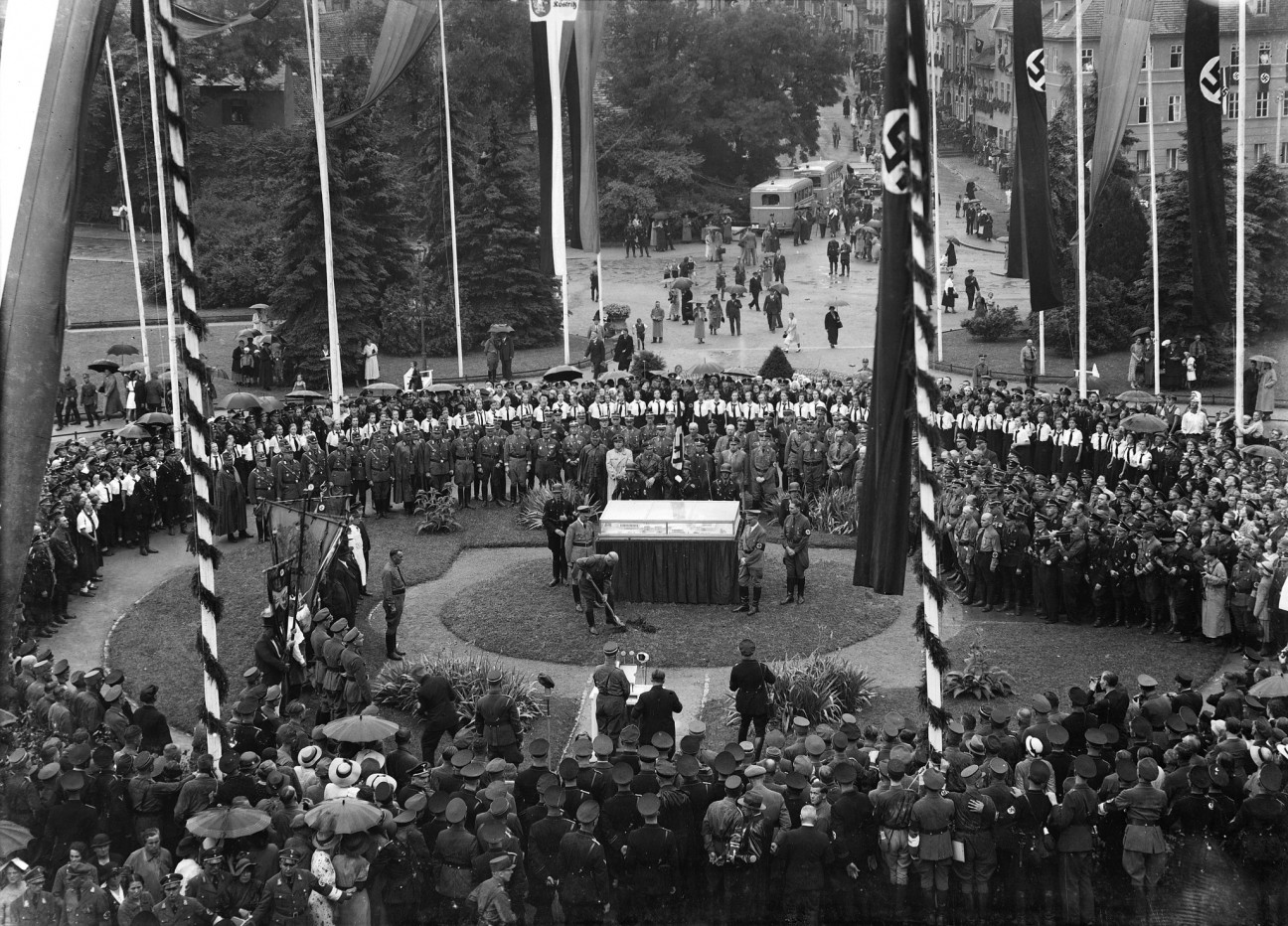
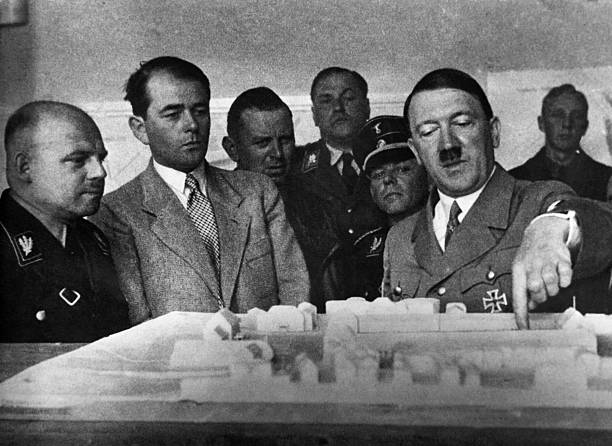
The groundbreaking ceremony for the construction of the National Socialist buildings, a model of which was erected in the center of the square


Other Rallies and Events
Weimar was an important city to the Nazis for two symbolic reasons: first, it was where the hated Weimar Republic was founded, and second, it had been a center of German high culture in recent centuries. Adolf Hitler visited Weimar more than forty times prior to coming to power in 1933. Hitler would return again and again once in power, as Weimar became the home of a new administrative center, known as a Gauforum, to symbolize Nazi authority.


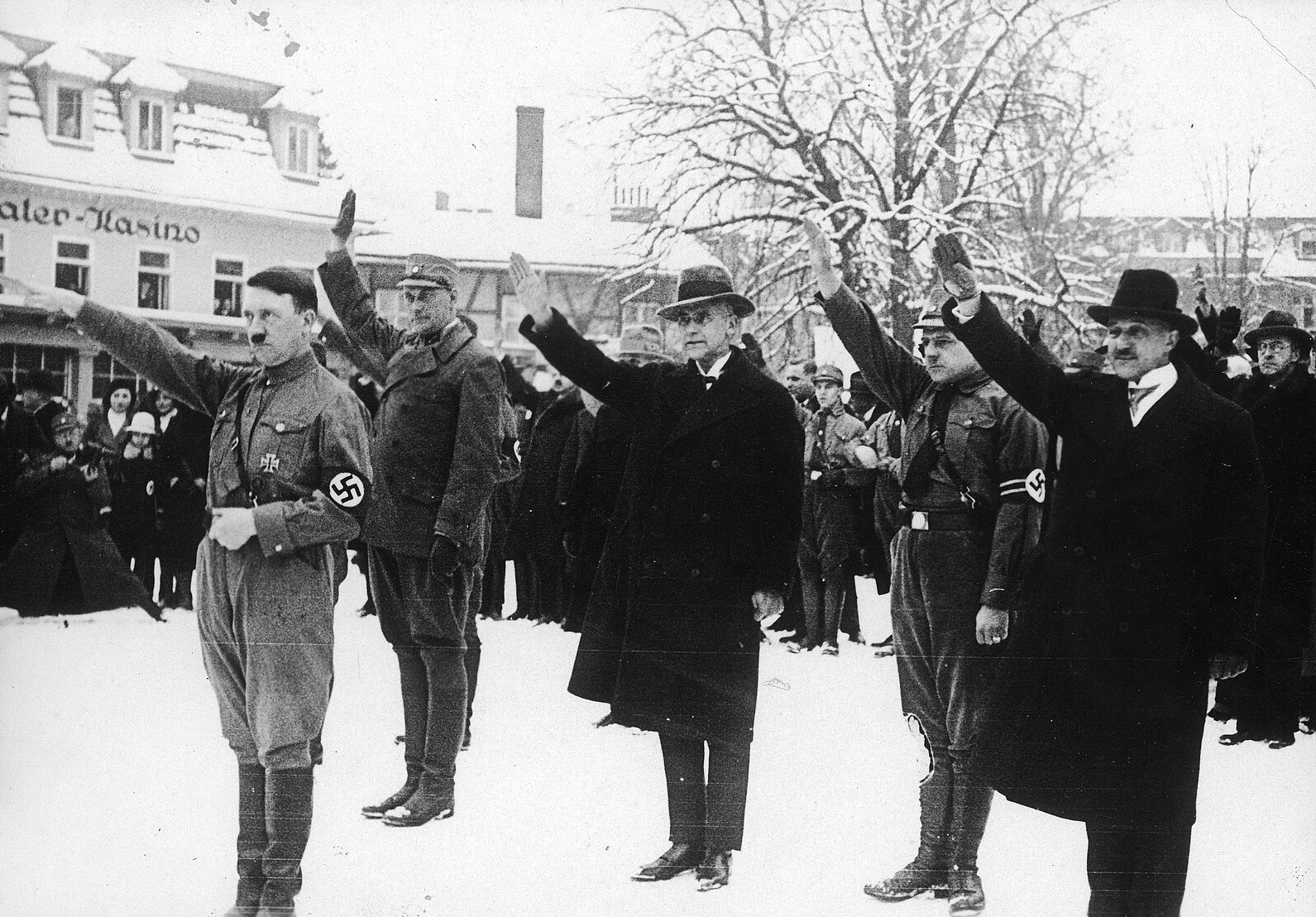
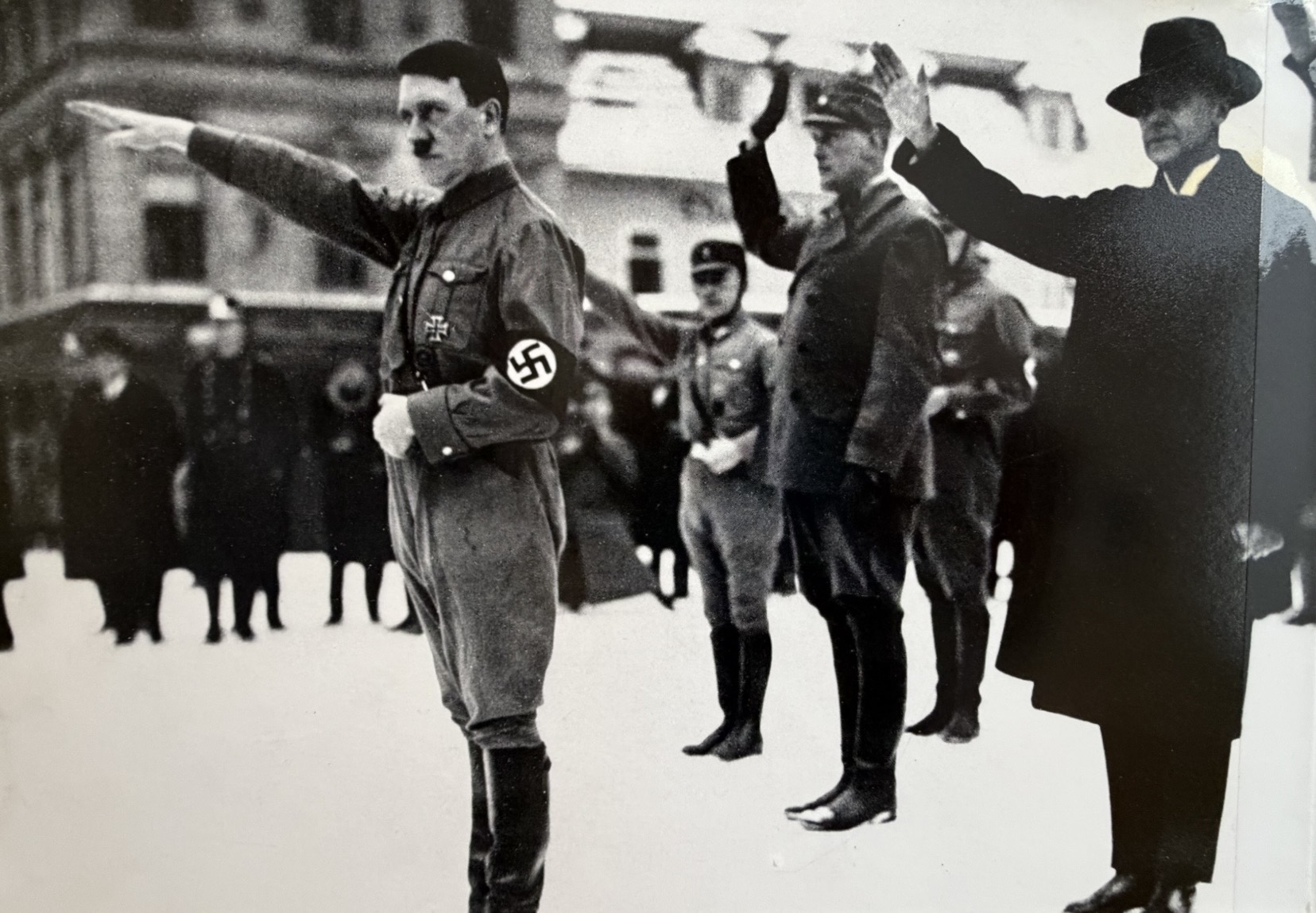
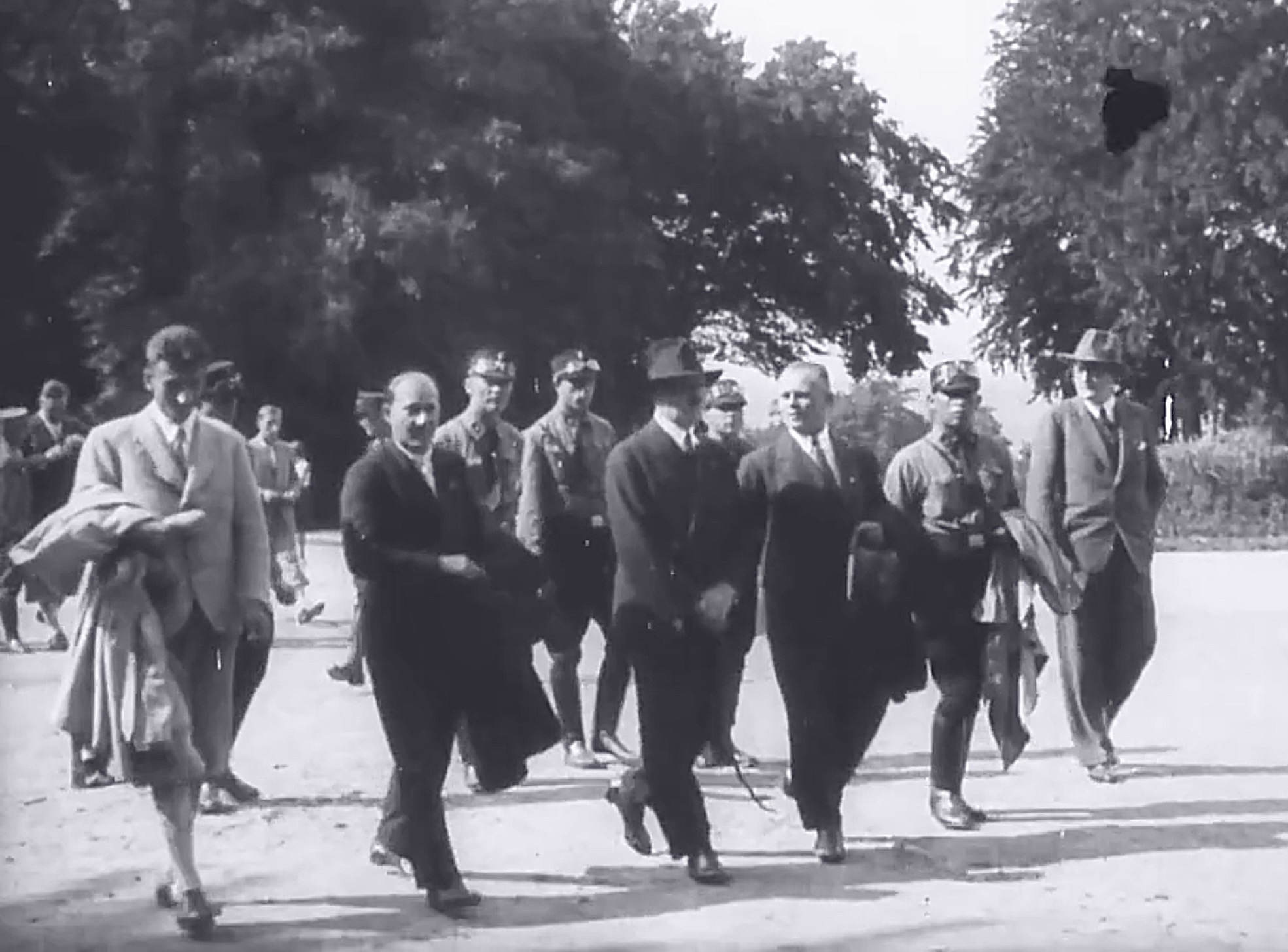
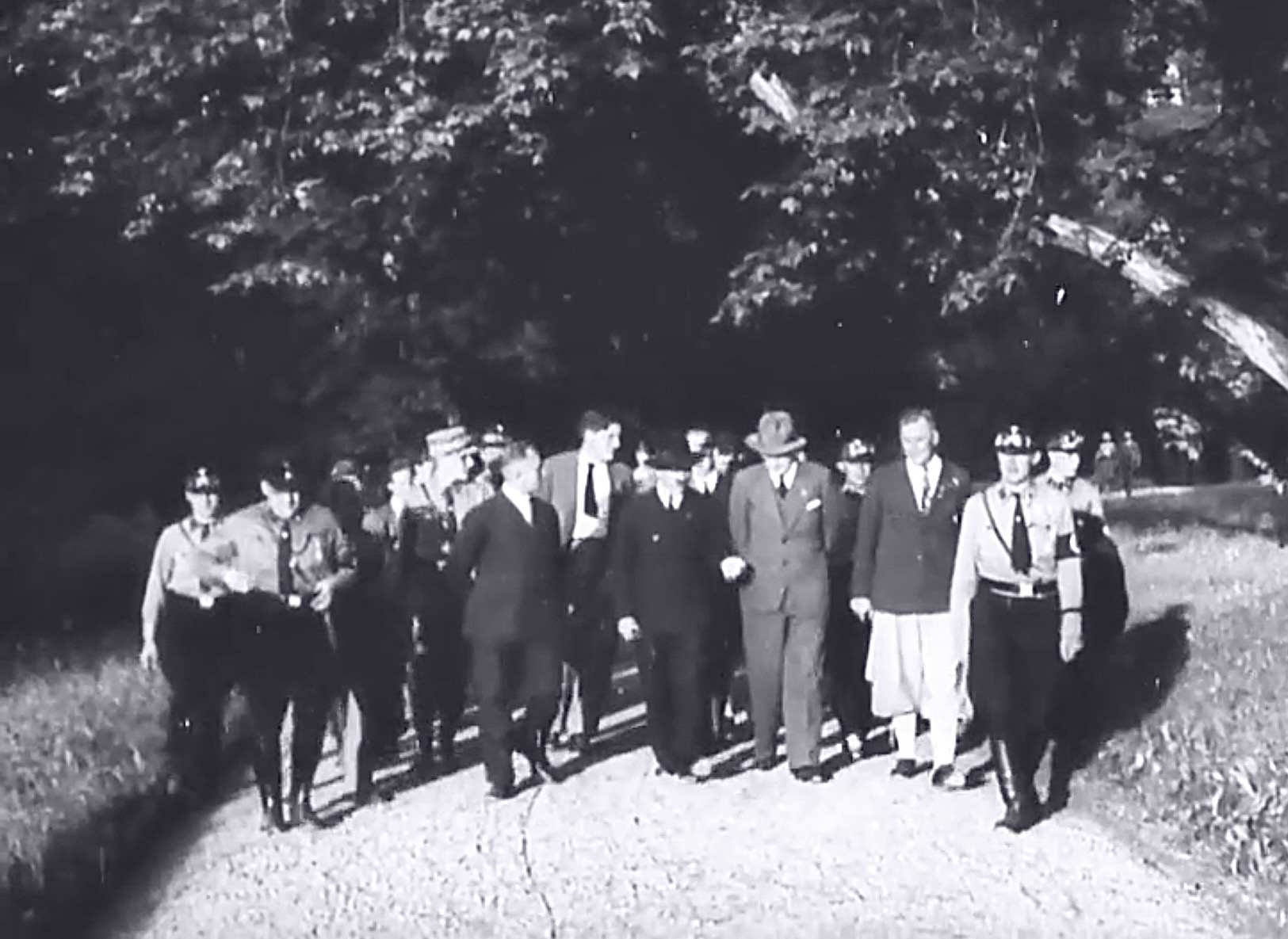
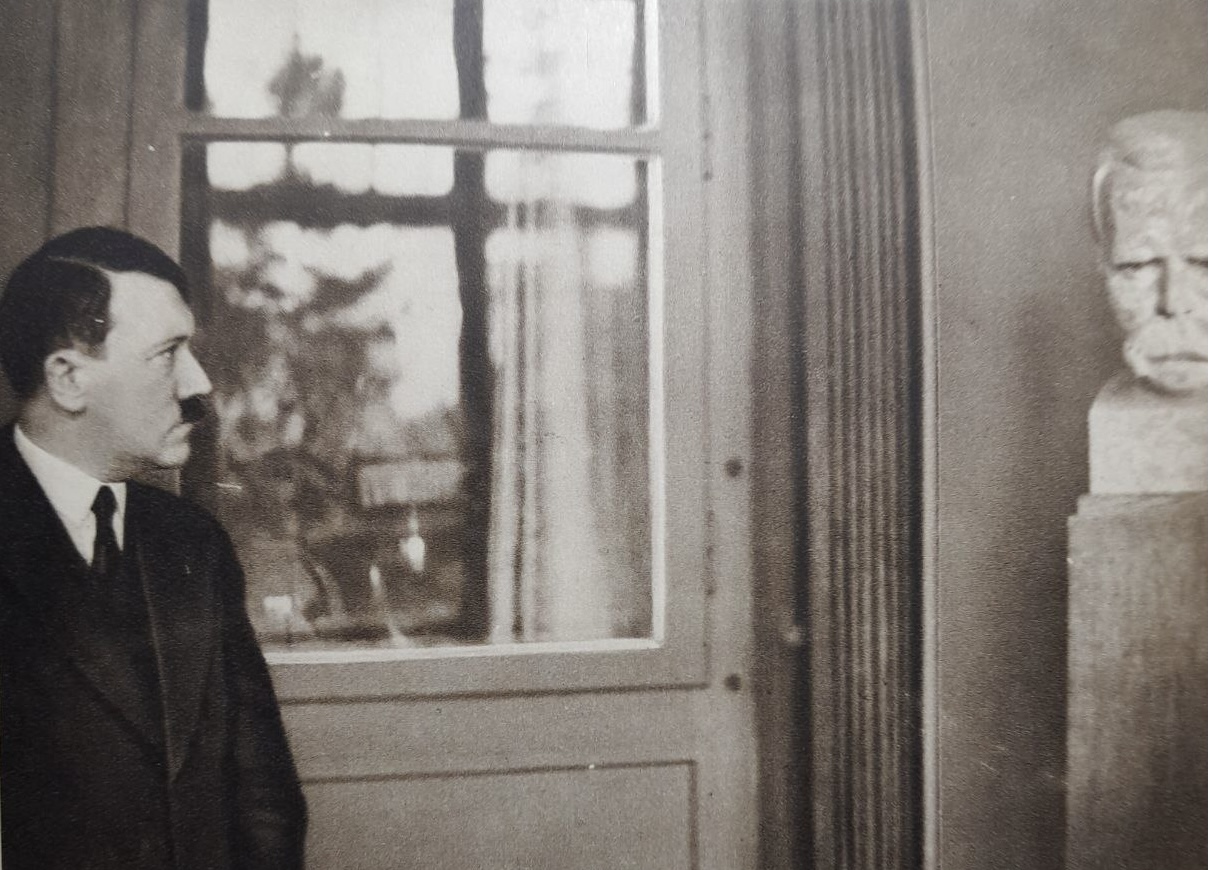
Hitler visited the Schloss Belvedere in Weimar on 25 July 1932, enjoying a day of rest that he took during his intense campaign tour, known as the third Deutschlandflug, where he spoke in as many as five cities a day over the course of two weeks.
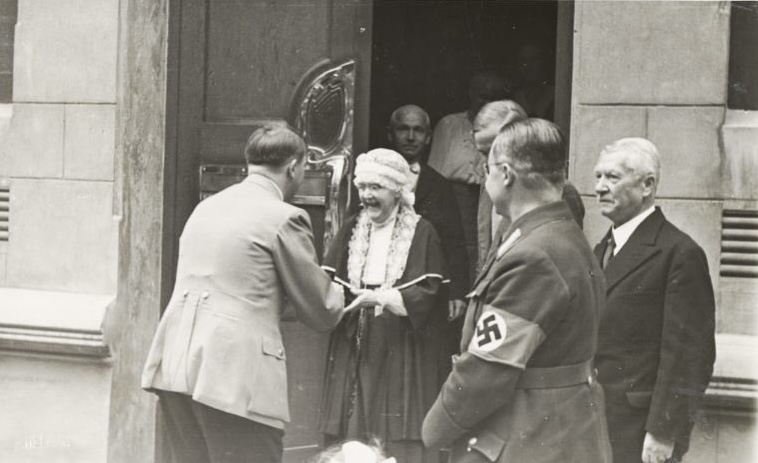
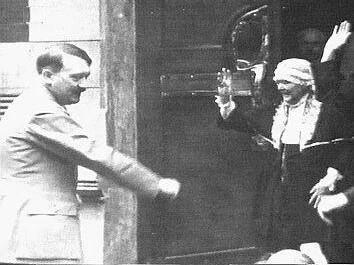
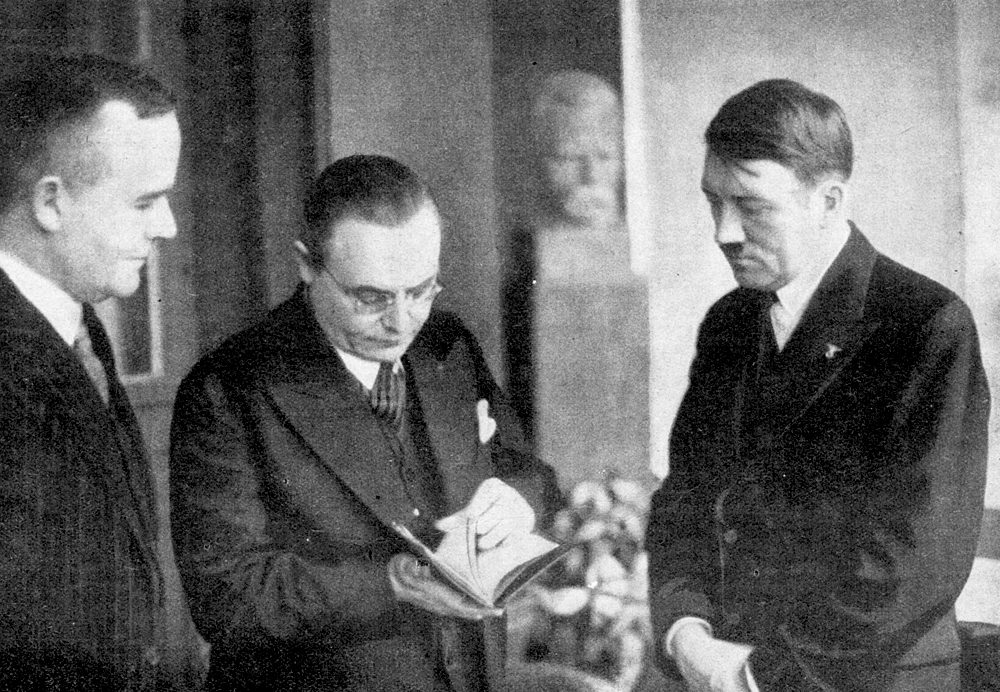
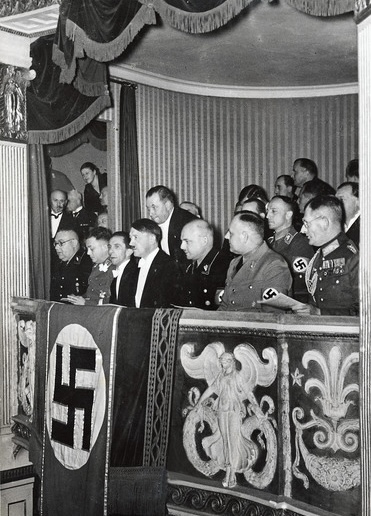
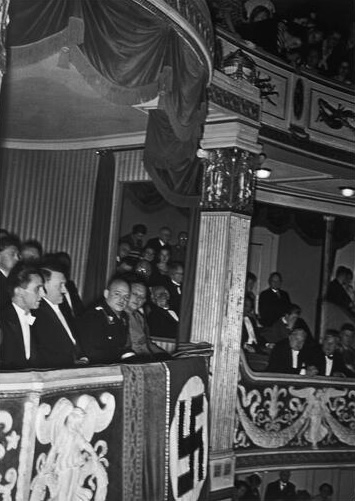

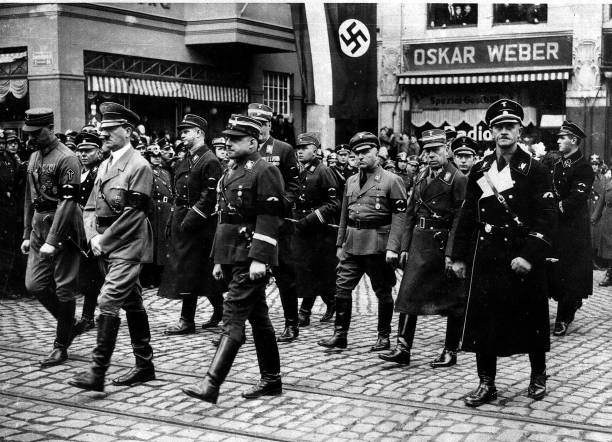
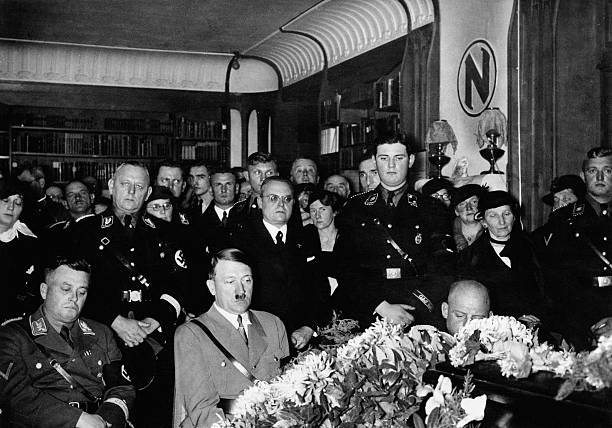
Gautag of Gau Thuringia 1938
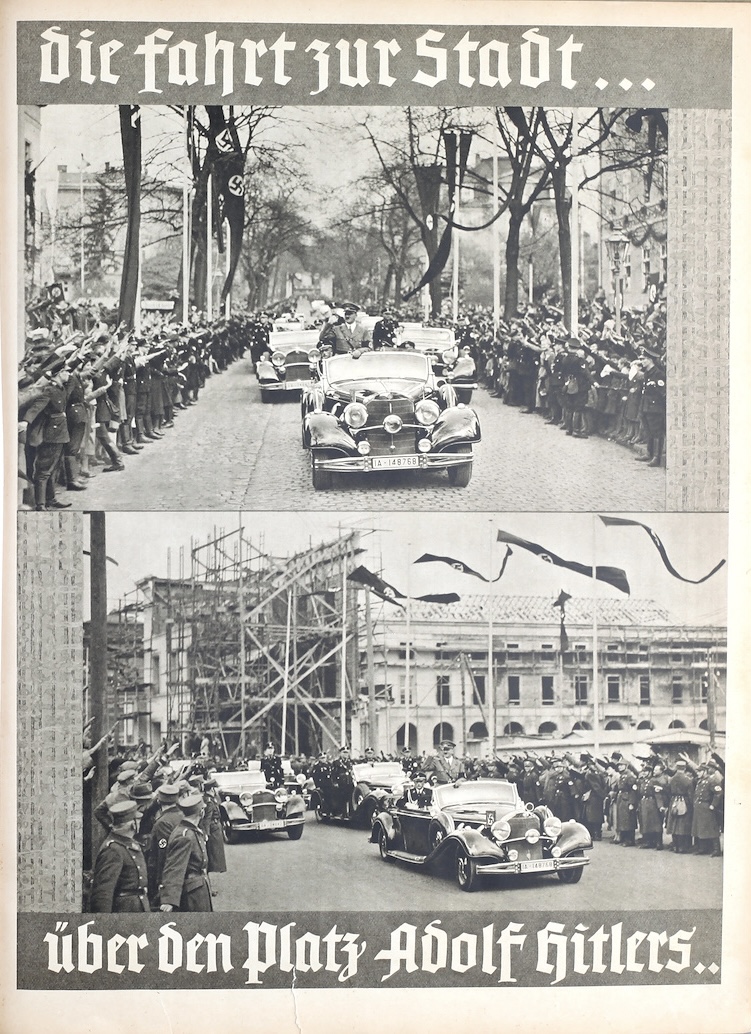
Adolf Hitler arrived at the Gautag around 11 o’clock on Saturday, 5 November 1938, as the sound of tolling bells rang out across the city. He crossed over the Adolf-Hitler-Platz and travelled via Wielandstraße and Schillerstraße to the market square. An inauguration took place of the new Hotel Elephant, whose construction was built according to Hitler’s exact instructions. The most modern hotel in Europe was thoroughly explored in detail by Hitler and his entourage.

Hitler was the first guest of the newly redesigned hotel in November 1938. A special suite facing the garden on the first floor was designed according to Adolf Hitler’s individual wishes and was not used by other hotel guests. The balcony on the market side was created as a speaker’s platform, as the market platz below was used as a parade ground whenever the “Führer” visited Weimar. The people of Weimar would gather and chant:
“Dear Führer, please, please, direct your steps onto the balcony.”
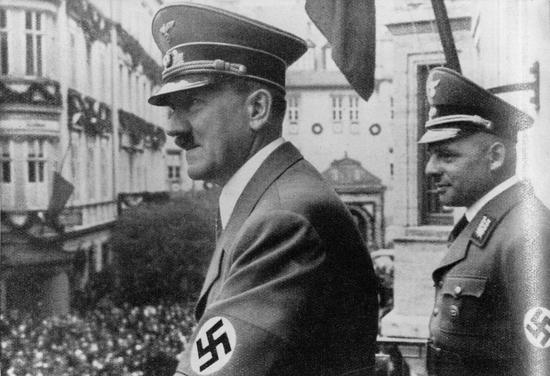
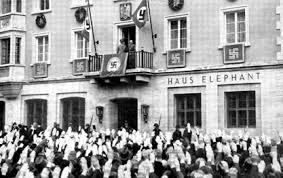
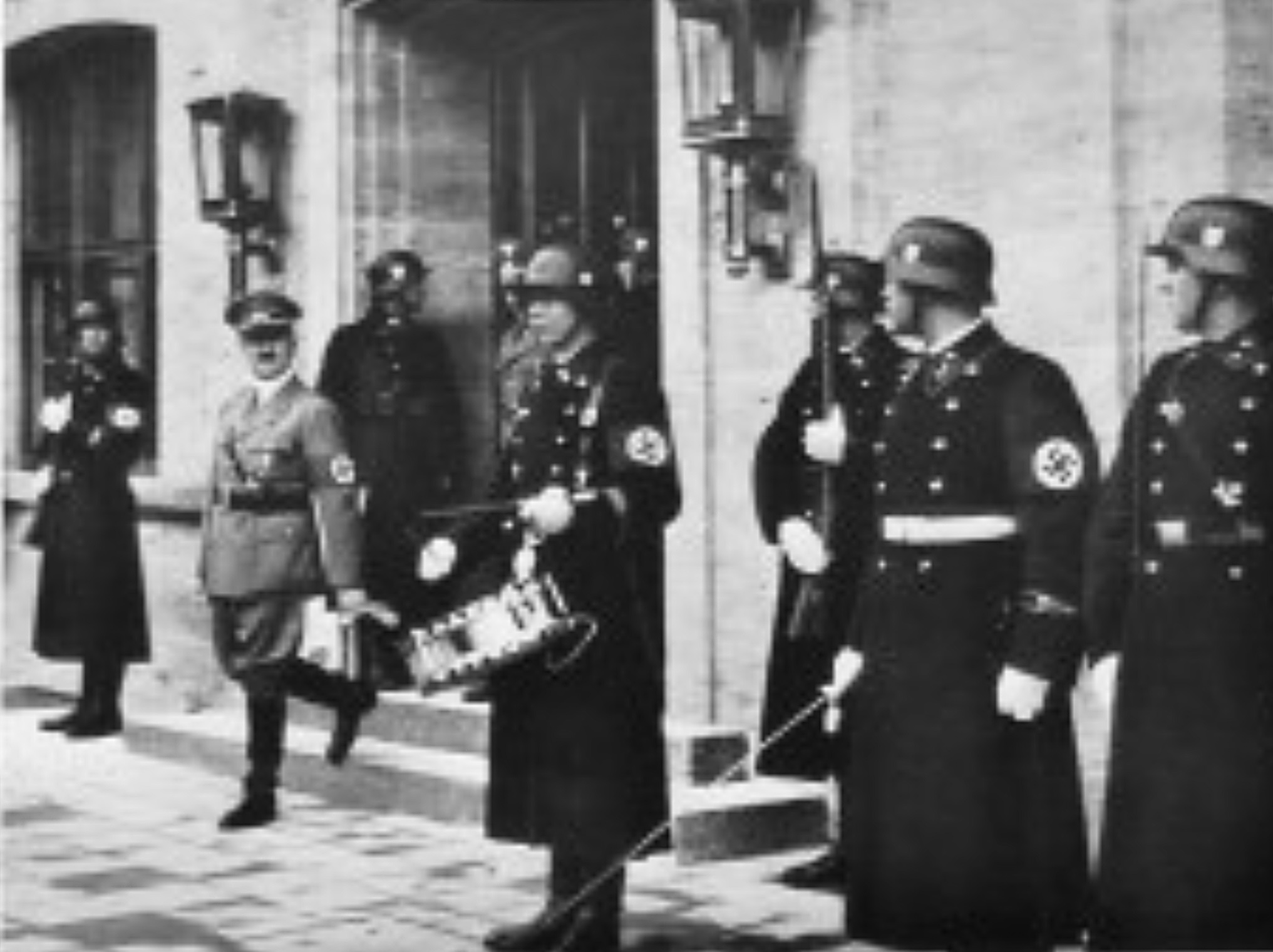

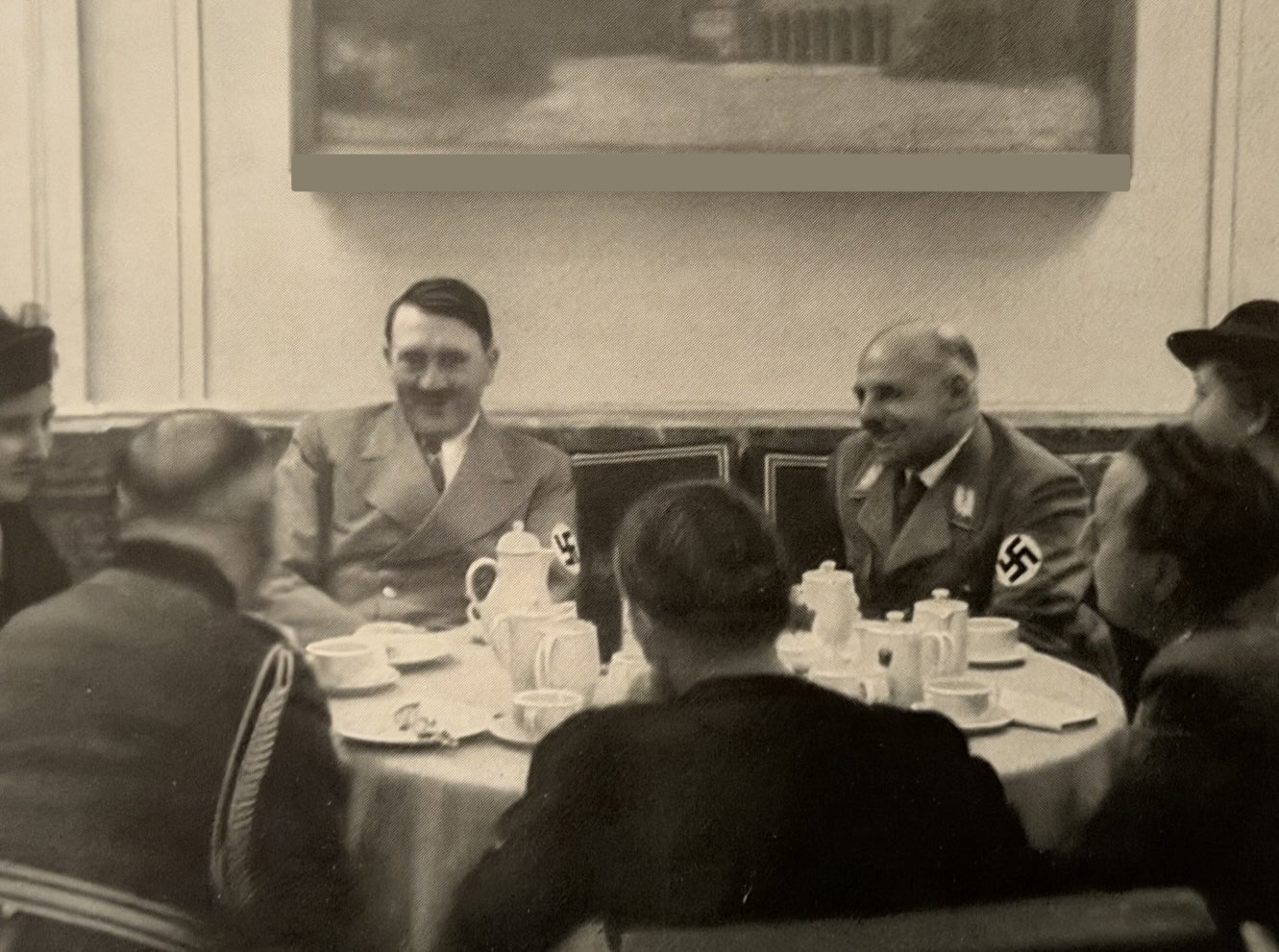

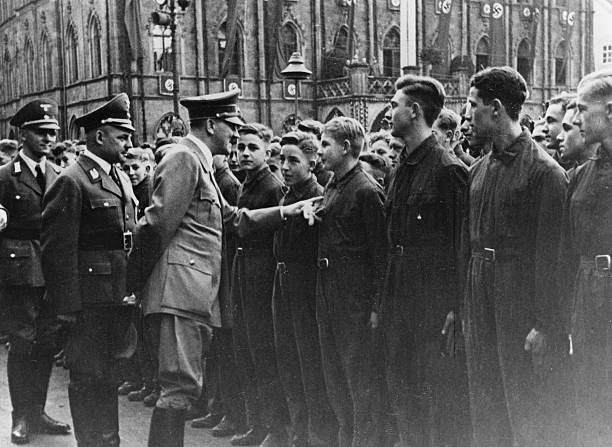
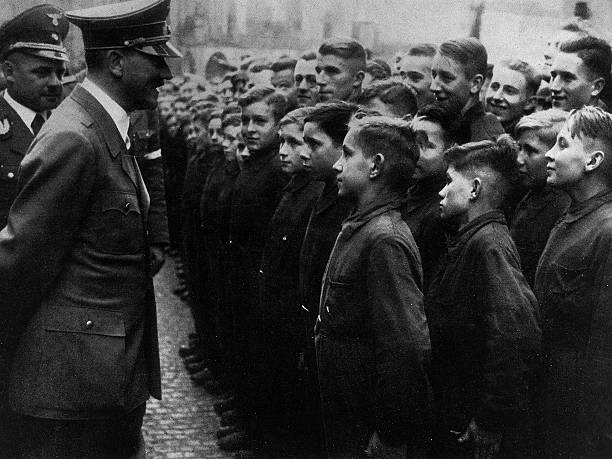
On Sunday, 6 November 1938, Adolf Hitler signs his name in the Golden Book of the City of Weimar. Acceptance of the passing march with 35,000 participants at the Karlsplatz takes place opposite of the main post office. His speech at the closing rally in the Landeskampfbahn is delivered in front of 100,000 listeners.



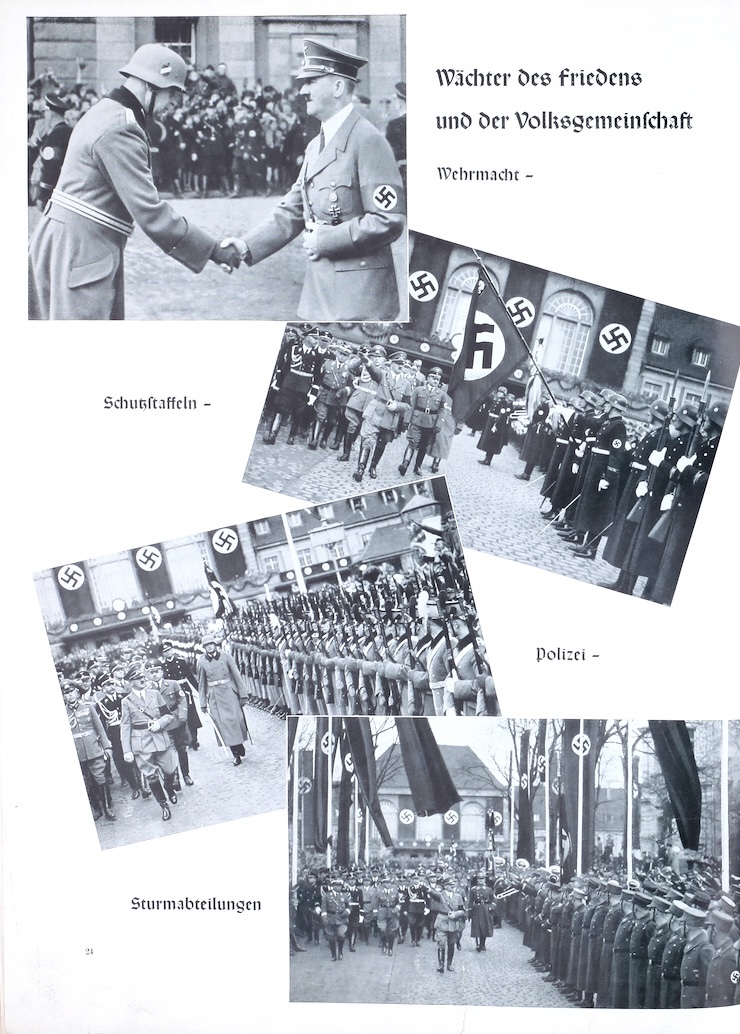
This soft cover book titled “Der Fuhrer in Weimar” (1925-1938) was published in 1938 by Gauleiter Fritz Sauckel to honor and show appreciation for the close relationship of Adolf Hitler with the city of Weimar. 84 pages of photos document Hitler’s drive over to the Adolf-Hitler-Platz, his speech from the balcony of the Haus Elephant, state reception held in the Weimar castle by the Gauleiter, marches of the SA and SS, and a speech in the stadium in front of 100,000.


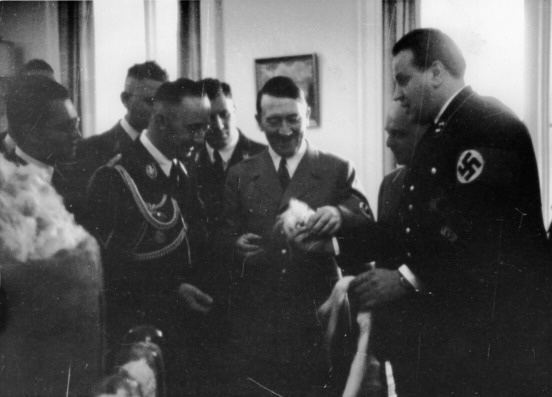
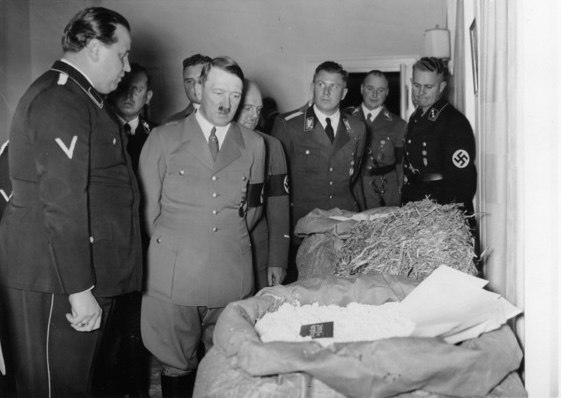
In Weimar, Adolf Hitler visited the fiber exhibition of the Thuringian Zellwolle AG on 7 November 1938. Here he examines special fibers created from potatoes. Potato fibers are said to have similar properties to cotton and polyester, which make them suitable for various textile application.

This is also the same day that a 17 year old Jewish man named Herschel Grynszpan shot German diplomat Ernst Eduard vom Rath in Paris in protest against the anti-Jewish policy of the Germans and in revenge for the fate of his family. The Nazis used this assassination as a pretext to launch Kristallnacht, “The Night of Broken Glass”, the pogrom of 9–10 November 1938.
The Weimar Gauforum
Weimar in Gau Thüringen was chosen for plans for several large Nazi building projects, including a Gauforum and a military headquarters complex. The most ambitious Third Reich building project in Weimar was the Gauforum, directly north of the city center. During the Third Reich this was known as “Adolf Hitler Platz,” under the East Germans as “Karl Marx Platz,” and now as “Platz des Friedens” (Peace). Similar complexes were planned for other German cities, but few were started and even fewer still were completed to the level of the Weimar Gauforum (which was also never totally completed to plan).

The Weimar Gauforum, designed by Hermann Giesler, was the only Nazi governmental building completed outside of Berlin, even though there were plans for all of the German Gau capitals. Today it hosts the Thuringian State Administration. The other Giesler buildings in Weimar include the “Villa Sauckel”, the Governor’s palace and the “Hotel Elephant” in the city center.


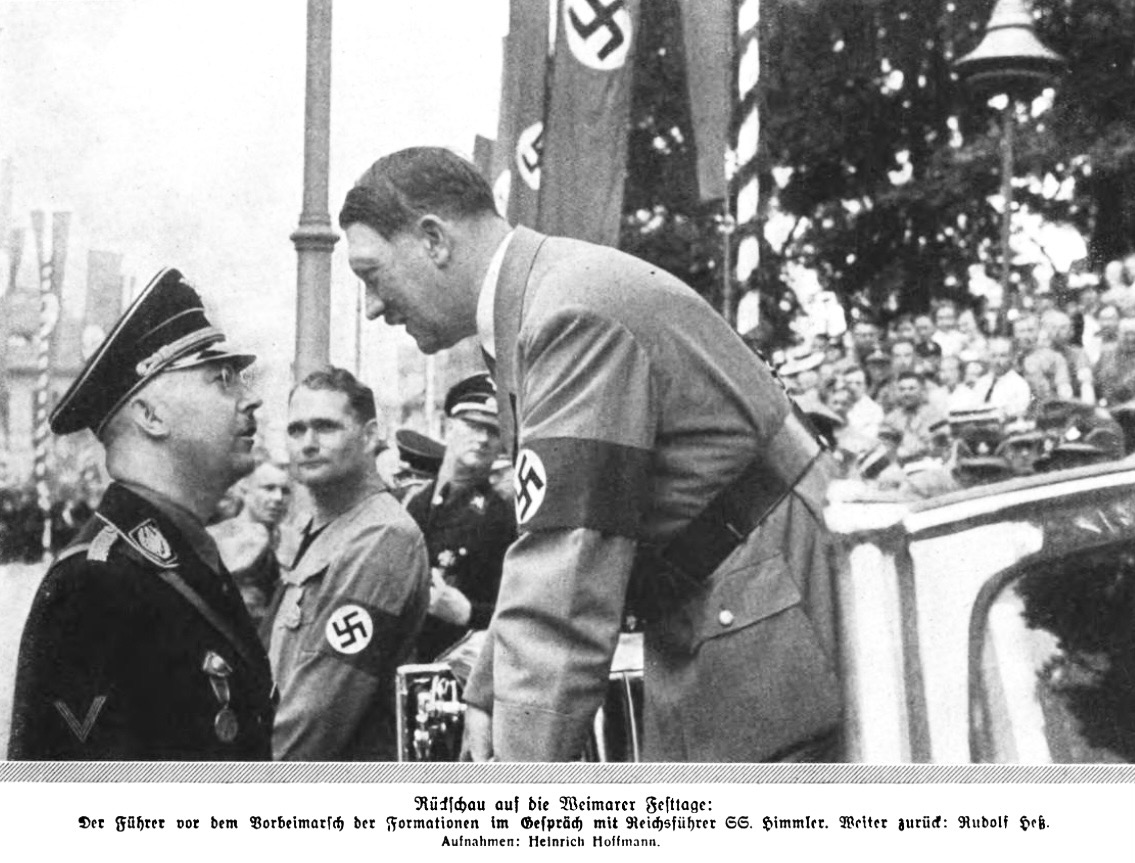
 Heinrich Hoffmann Photo Gallery