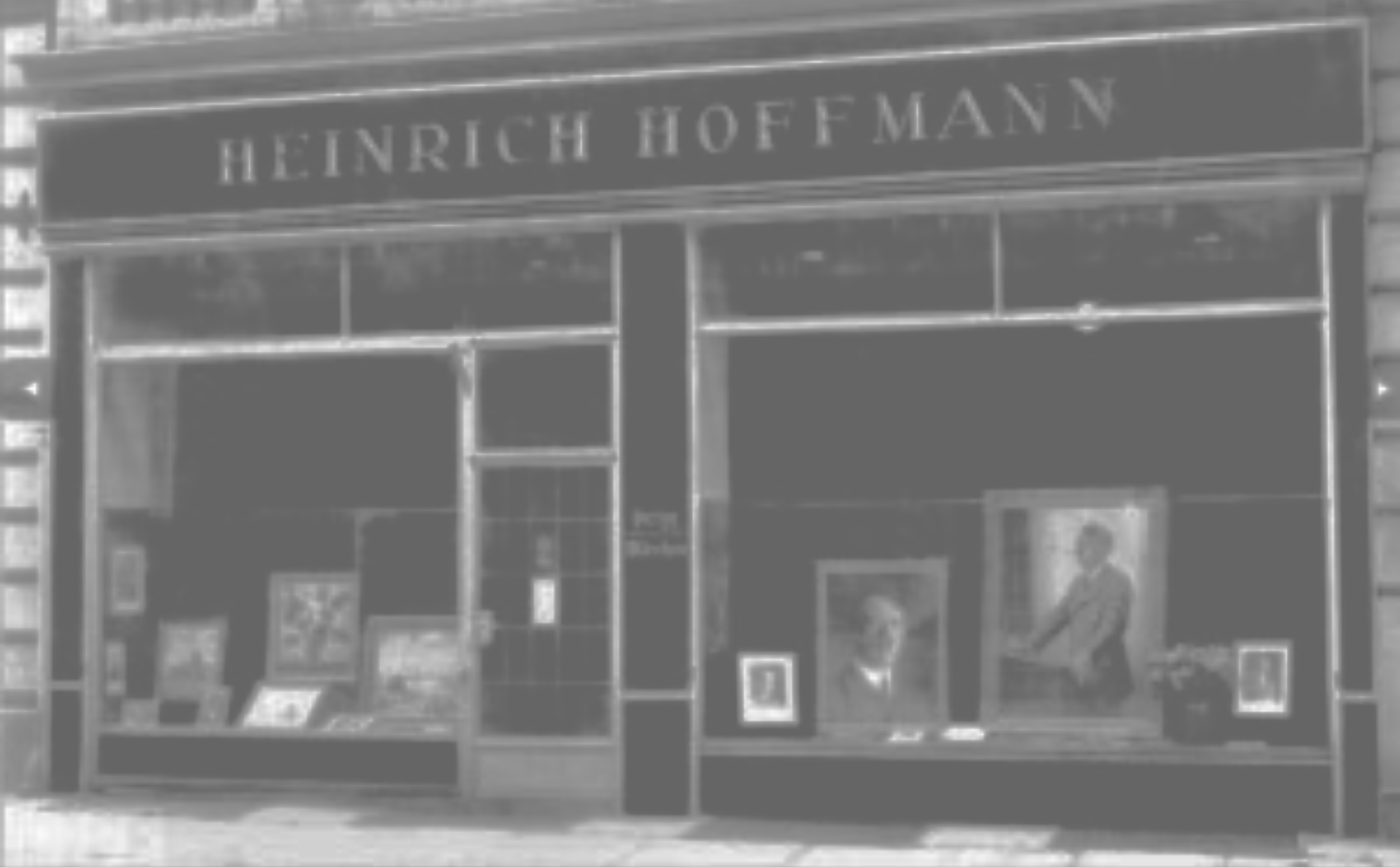
Heinrich Hoffmann (1885 – 1957) served as Adolf Hitler’s official photographer from when Hitler took control of the Nazi party in 1921 until his death in 1945. Hoffmann estimates he took over half a million photographs of Hitler over the course of his career. His portraits were the most significant source of Nazi propaganda materials published over the course of close to 25 years, everything from postcards, posters, magazines, postage stamps and picture books. Click on eachtheme below to see a complete photo albumdevoted to that particular event or topic.
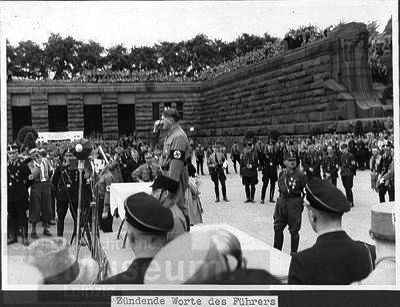
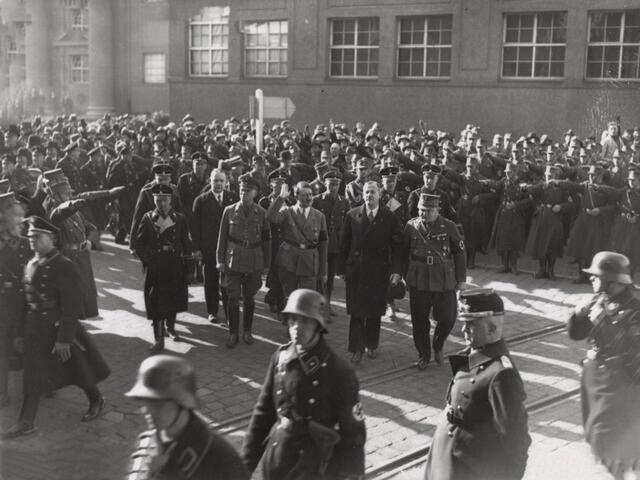
On 16 July 1933, the Sachsentreffen Gauparteitag took place in Leipzig. Hitler delivered two speeches at what was known as the “Saxon Meeting,” the Gau Party Congress of Saxony held in Leipzig. At the imposing Völkerschlachtdenkmal monument, constructed to commemorate the Battle of the Nations of 1813, Hitler announced to 140,000 men of the SA, SS and the Stahlhelm that they were to become “soldiers of our Weltanschauung” (Worldview). A massive parade was also held in the main city square, the Augustusplatz, of Leipzig. There Hitler stated before a gathering of 25,000 Amtswalters that “The religions and the Churches will maintain their freedom. But we are in charge of politics.” Just ten days prior to the Party Congress, at a gathering of high-ranking Nazi officials in Berlin, Hitler had declared the success of the National Socialist seizure of power; this was now the time to consolidate its control.
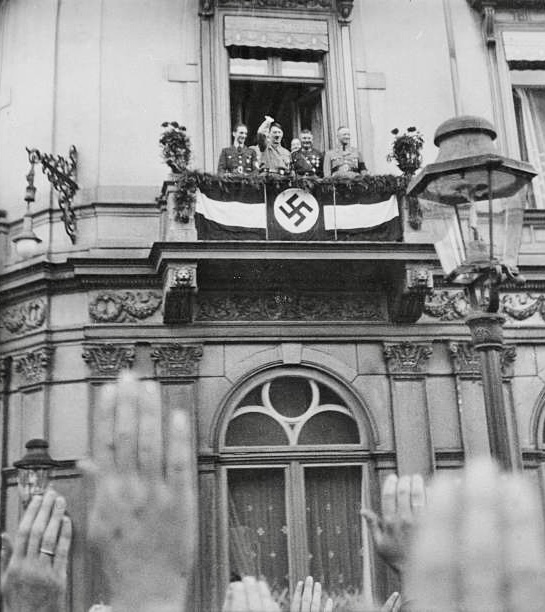
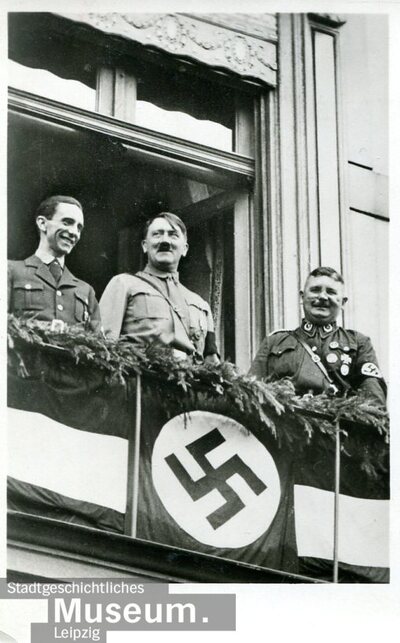
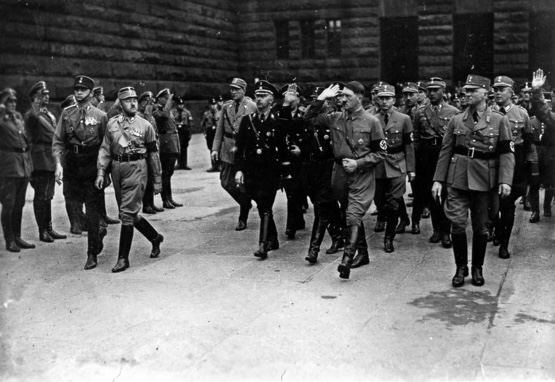
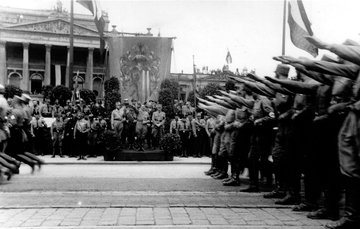
Adolf Hitler arrives at the Sachsentreffen Gauparteitag (regional party congress for Saxony) held in Leipzig on 16 July 1933.Adolf Hitler greets the Leipzig population from the balcony of the Hotel Hauffe during his stay in the city on the occasion of the Gauparteitag, the so-called Saxony meeting; next to Hitler (from left) Joseph Goebbels, SA chief of staff Ernst Röhm and the Reichsstatthalter in Saxony, Martin Mutschmann.Adolf Hitler with Joseph Goebbels and Ernst Röhm on the balcony of the Hotel Hauffe during the Gauparteitag of Saxony.Adolf Hitler with Joseph Goebbels and Ernst Röhm on the balcony of the Hotel Hauffe during the Gauparteitag of Saxony on 16 July 1933.Adolf Hitler arrives at the Sachsentreffen Gauparteitag Leipzig rally at Leipzig’s Monument for the Battle of the Nations on 16 July 1933.Adolf Hitler arrives at the Sachsentreffen Gauparteitag Leipzig rally at Leipzig’s Monument for the Battle of the Nations on 16 July 1933.View of the Monument to the Battle of the Nations in Leipzig on the Gau Day of the Saxon NSDAP during the speech of Adolf Hitler. In the foreground there are SA members.
At the monument commemorating the Battle of the Nations of 1813, Hitler announced to 140,000 men of the SA, SS and the Stahlhelm:
“Today we are not leading a mere thirteen or seventeen million, but the entire Volk, and hence the gigantic task accrues to us of training the millions of people who do not yet inwardly belong to us to become soldiers of this Third Reich, to become soldiers of our Weltanschauung.”
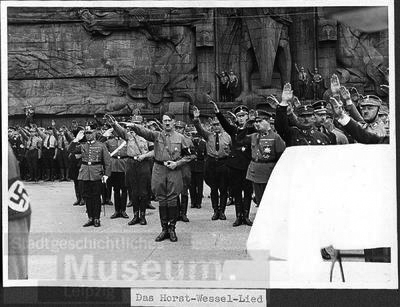
Adolf Hitler gives a speech in front of Leipzig’s Völkerschlachtdenkmal (Monument to the Battle of the Nations)Adolf Hitler in front of Leipzig’s Völkerschlachtdenkmal (Monument to the Battle of the Nations) during the Horst Wessel Lied (anthem of the NSDAP)Adolf Hitler gives a speech in front of Leipzig’s Völkerschlachtdenkmal (Monument to the Battle of the Nations)Adolf Hitler at the Sachsentreffen Gauparteitag Leipzig (regional party congress for Saxony) held in Leipzig on 16 July 1933. Ernst Roehm stands with Hitler in front of saluting soldiers at Leipzig’s Völkerschlachtdenkmal (Monument to the Battle of the Nations) during the Horst Wessel Lied (anthem of the NSDAP). Hitler delivered a speech this day to 140,000 men of the SA and the Stahlhelm.
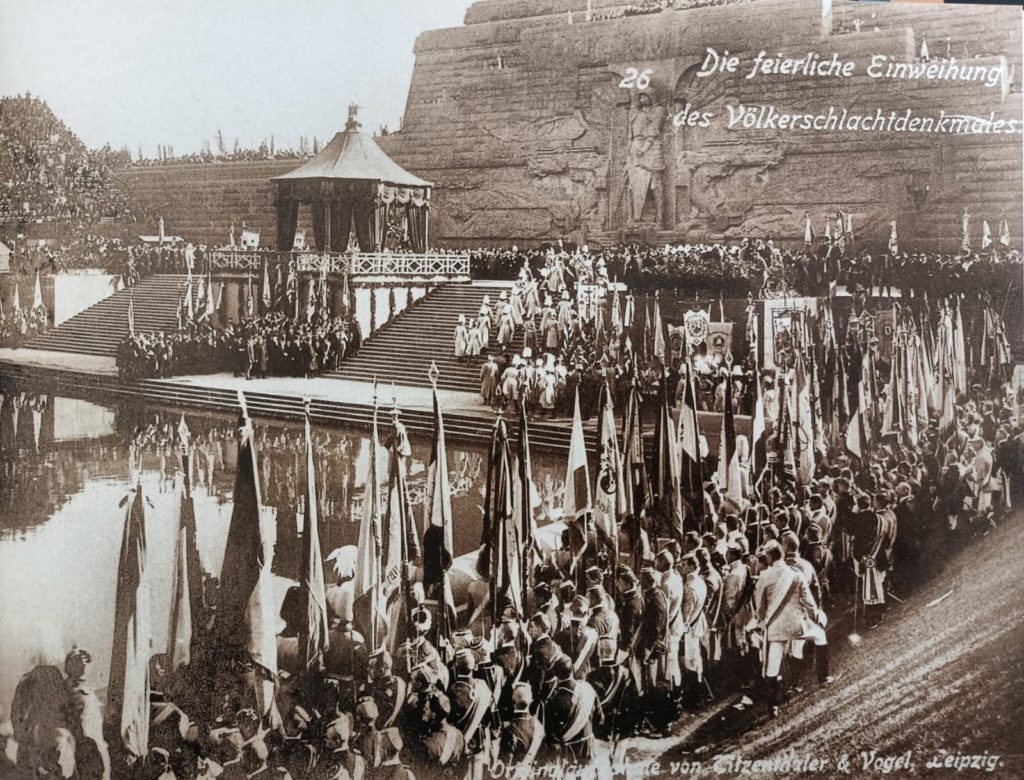
The Monument to the Battle of the Nations (Völkerschlachtdenkmal) in Leipzig commemorates the 1813 Battle of Leipzig, a significant turning point in the Napoleonic Wars where allied armies defeated Napoleon’s forces. Completed in 1913, the monument served as a powerful symbol of German nationalism during the early 20th century.
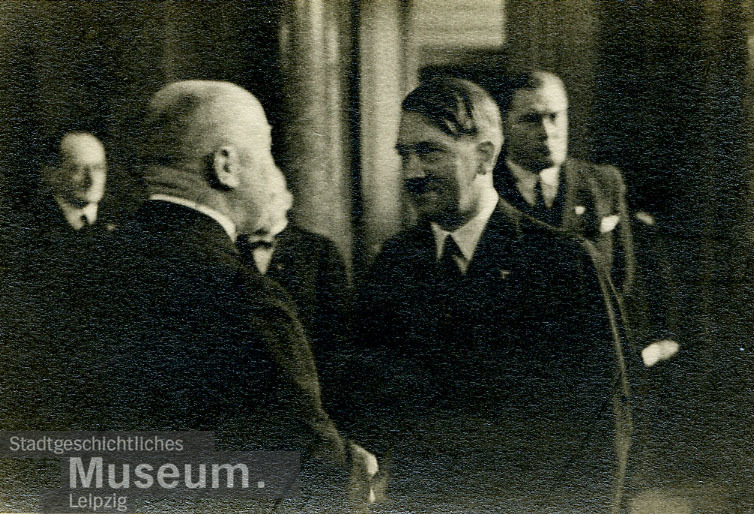
Sachsentreffen Gauparteitag Leipzig 15/16. Juli 1933Gau rally at Leipzig’s Monument for the Battle of the Nations on 16 July 1933.Adolf Hitler delivers a speech to 140,000 men of the SA and the Stahlhelm on 16 July 1933.Adolf Hitler on the occasion of the National Socialists’ Gautag in Leipzig.Adolf Hitler in conversation with Ernst Heinrich Prince of Saxony on the occasion of the Saxon meeting in Leipzig in July 1933. Gruppenbild Himmler in schwarzer Uniform; daneben Hitler in Uniform m.Reithose, Schulterriemen u.Koppel; m.Stiefeln u.”Hitlergruß”; dahinter Dietrich; Mutschmann vorne rechts.View of the Monument to the Battle of the Nations in Leipzig on the Gau Day of the Saxon NSDAP during the speech of Adolf Hitler. In the foreground there are SA members.Gau rally at Leipzig’s Monument for the Battle of the Nations on 16 July 1933.A postcard from 1933 placing the Monument to the Battle of Nations between Chancellor Adolf Hitler and Reich President Paul von Hindenburg.“Augustplatz u. Neues Theater” shows this scene from Leipzig with a portrait of the city’s honorary citizen, Adolf Hitler.Reichskanzler Adolf Hitler beim Sachsentreffen im 16. Juli 1933 in Leipzig.The SA (Sturmabteilung) marches past Adolf Hitler (r.) on Augustusplatz in Leipzig for the Saxony meeting in July 1933. Behind Hitler is the Gauleiter and Reichsstatthalter in Saxony, Martin Mutschmann. The SA (Sturmabteilung) marches past Adolf Hitler (r.) on Augustusplatz in Leipzig for the Saxony meeting in July 1933. Behind Hitler is the Gauleiter and Reichsstatthalter in Saxony, Martin Mutschmann.Adolf Hitler and the Reichsstadthalter of Leipzig, Martin Mutschmann (r), during a parade of the SA in 1933Adolf Hitler during a march past of the Saxon SA during the Gauparteitag in Leipzig; next to Hitler: Gauleiter and Reichsstatthalter Martin Mutschmann.Marching up of the SA (Sturmabteilung) on Augustusplatz in Leipzig for the Saxon meeting on 16 July 1933.
Hitler Serves as a Witness
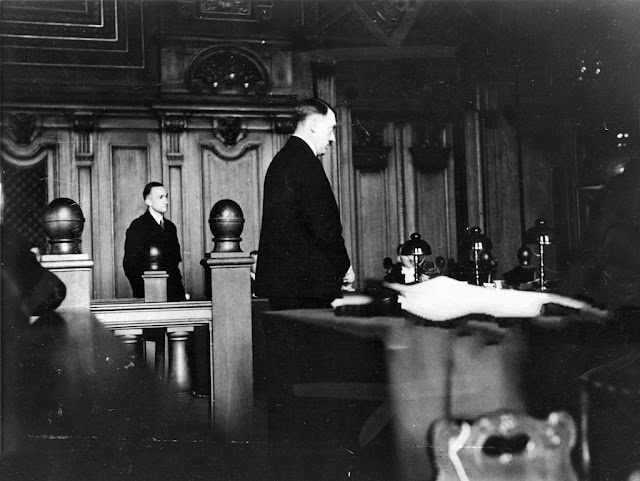
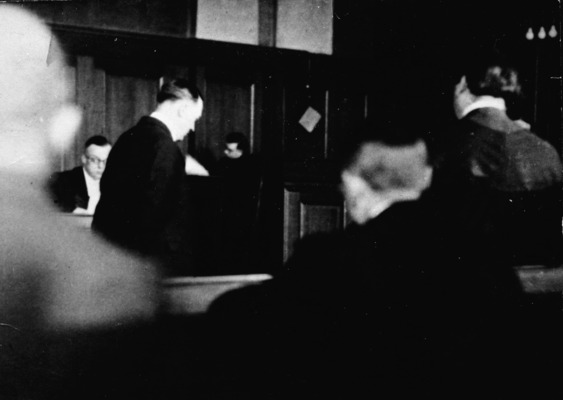
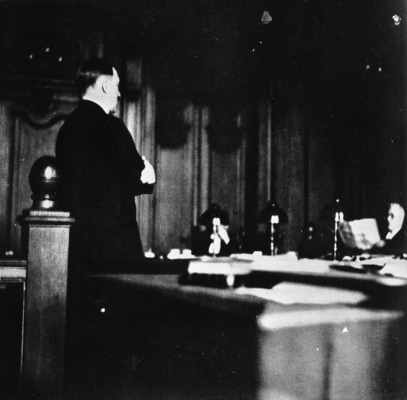
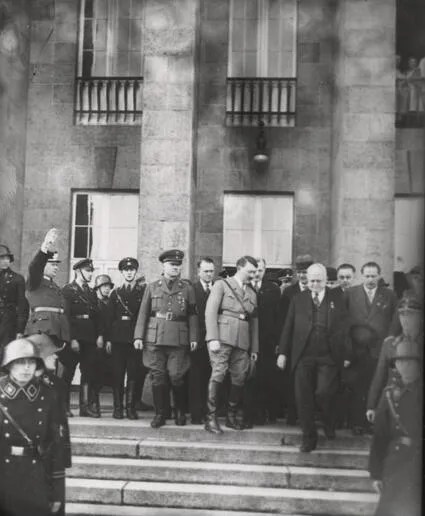
On 25 September 1930, Adolf Hitler testified in Leipzig as a witness before the Reichsgericht, the German Supreme Court, during the trial of three Reichswehr officers accused of treason. He used the platform to bring attention to his movement and promised a violent, authoritarian future for the country under Nazi leadership.
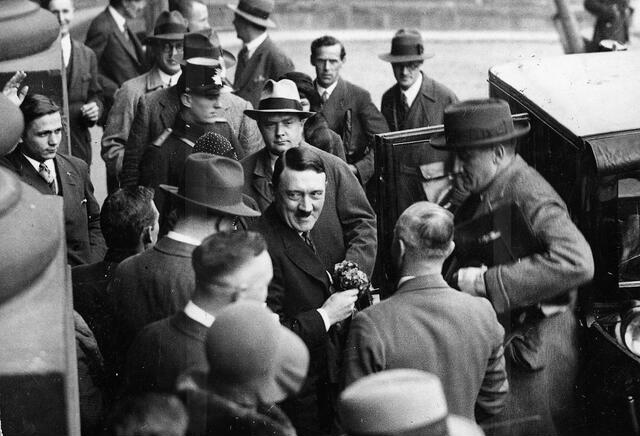
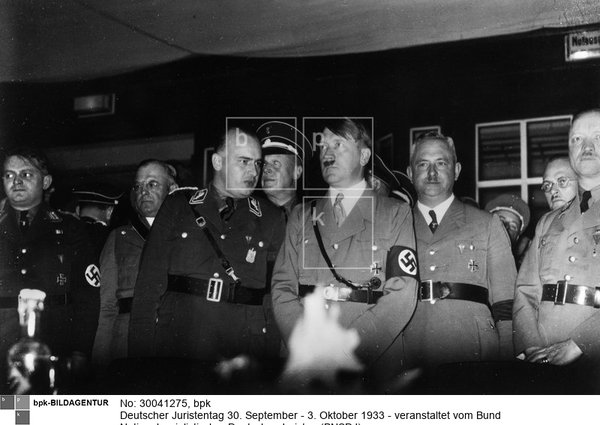
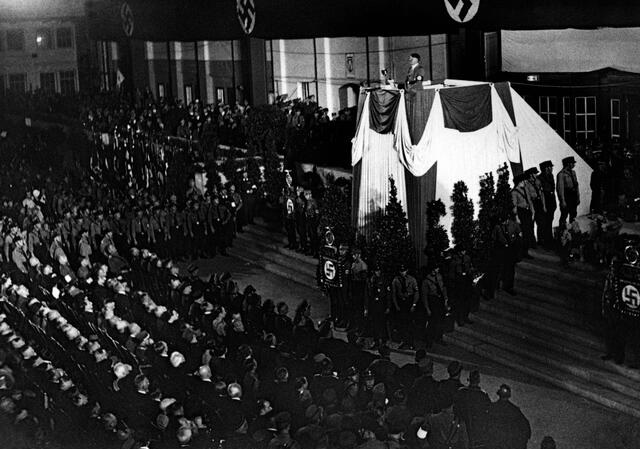
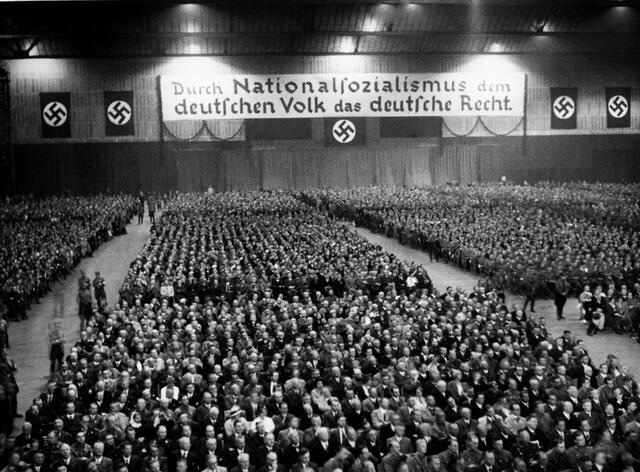
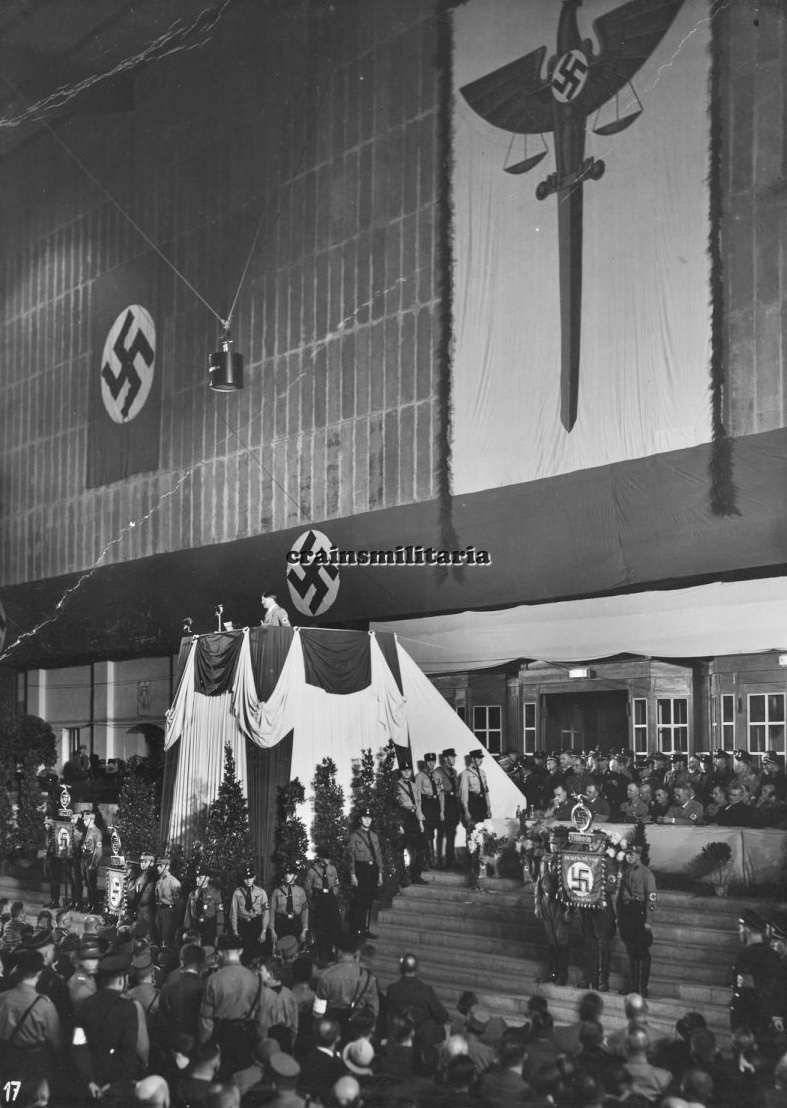
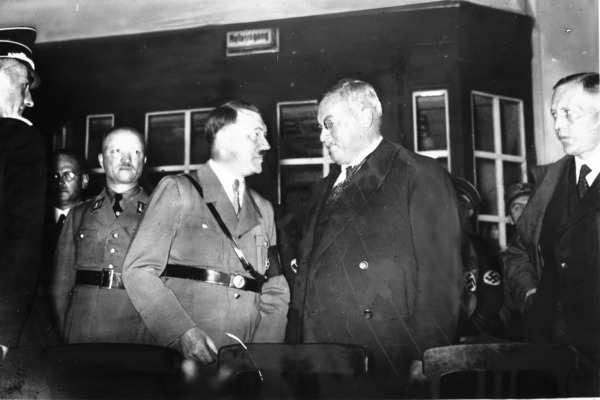
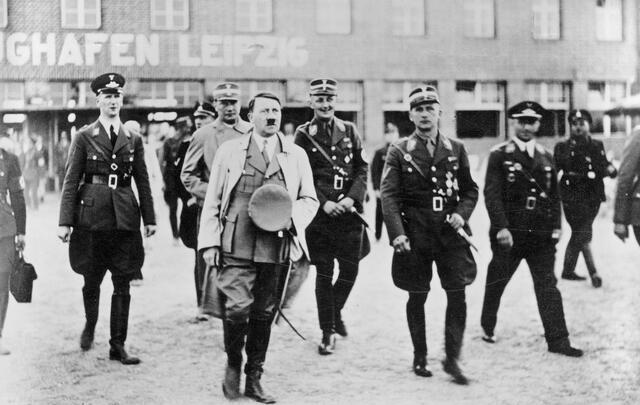
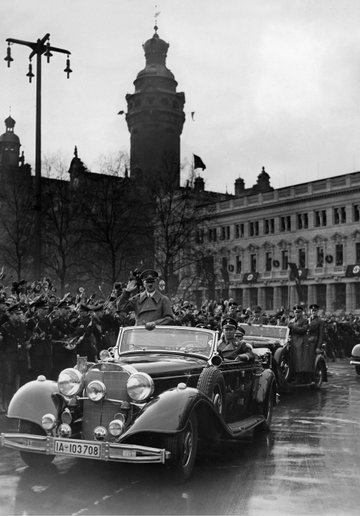
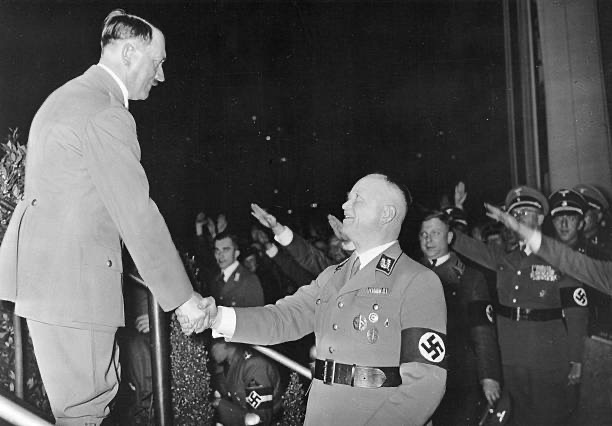
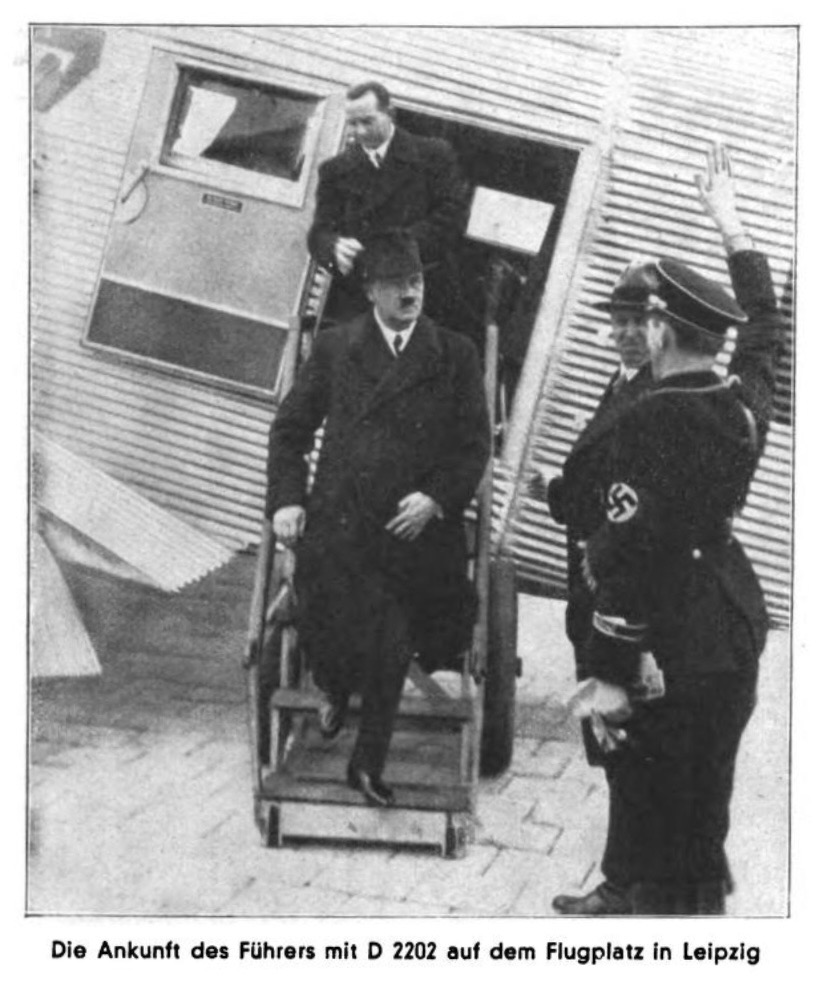
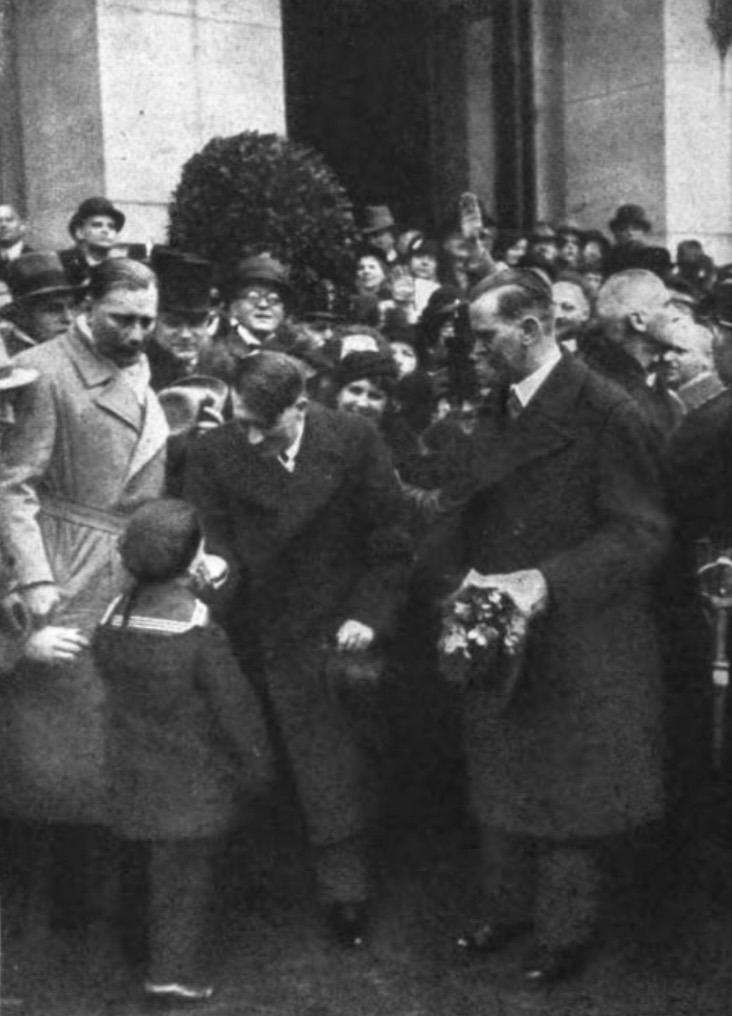
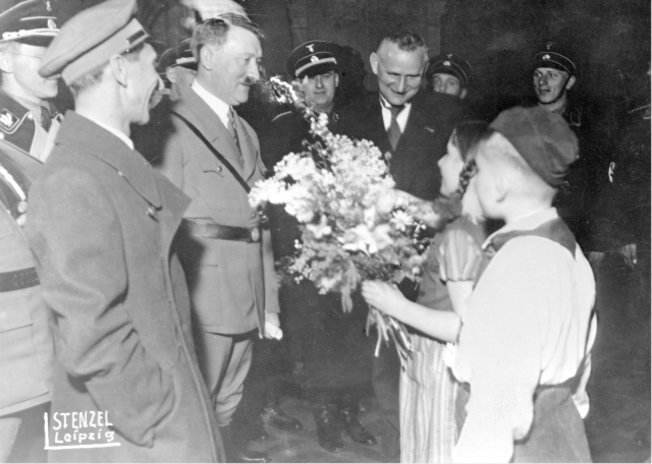
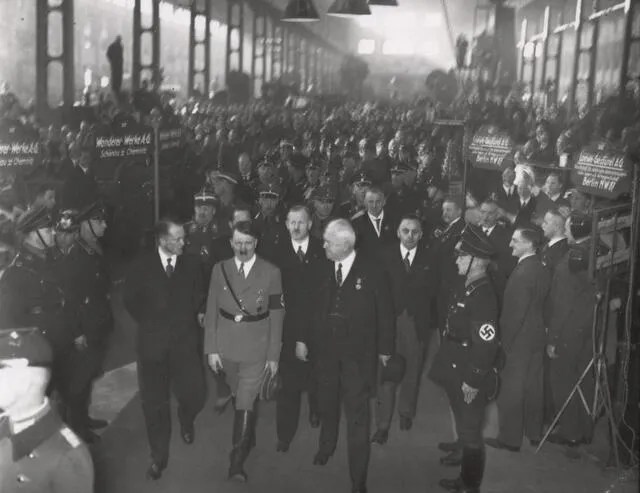
A smiling Adolf Hitler leaves the Leipzig Reich Court, where he served as a witness against the Reichswehr officers Ludin and Scheringer on 25 September 1930.Adolf Hitler testifies as a witness before the Reichsgericht in Leipzig on September 25, 1930.Adolf Hitler at the trial of Scheringer, Wendt and Ludin in 1930 Adolf Hitler testified at the trial in Leipzig of three junior officers, Lieutenant Richard Scheringer, Hans Friedrich Wendt and Hanns Ludin. The three men were charged with membership in the Nazi Party; at that time membership in political parties was forbidden for members of the Reichswehr. Left one of the defendants, Hanns Ludin.Adolf Hitler gives a speech at the German Lawyers’ Day in Leipzig on 4 October 1933; next to Hitler (from left), Reich Labor Minister Franz Seldte, the Bavarian Justice Minister Dr. Hans Frank, (called Frank II), State Secretary, Dr. Hans Heinrich Lammers, the Prussian Minister of Justice Hanns Kerrl.Hans Frank with Adolf Hitler and Hans Heinrich Lammers on 3 October 1933 in Leipzig.Adolf Hitler during his inauguration speech on the “Juristentag” in the Messehalle of Leipzig, 3 October 1933. This was a conference for legal professionals. Hitler is flanked by SA flag bearers; notice the “Döbeln” Standarte on the right. This is the Messehalle 15 located on the grounds of the Old Leipzig Trade Fair (Alte Messe Leipzig), it was extensively damaged by allied bombing in 1943 but partially rebuilt in 2019 and is now home to Zweirad-Center Stadler. Adolf Hitler gives a speech at the German Lawyers’ Day in Leipzig on 3 October 1933.Hitler at Airport in Leipzig; Adolf Hitler upon his arrival at the airport in Leipzig-Mockau in March 1934. (l-r): Airport manager Reinsberg, SA-Obergruppenführer Wilhelm Brückner (Chief executive officer of Hitler), SA-Oberführer Dietze (Manager of the Office for Transportation) and SA-Gruppenführer Ludwig Fichte (Head of the Measurement Office).Adolf Hitler at the Saale-bridge of the new build Autobahn Leipzig-Bayreuth – 1937- Photographer: Presse-Illustrationen Heinrich Hoffmann- Published by: ‘Berliner Illustrirte Zeitung’ 15/1937Prelude to World War II, 24th June 1935, Leipzig, Germany, German leader and Nazi dictator Adolf Hitler is pictured at the Leipzig Bach Festival.Political campaign for the Anschluss of Austria on 26 March 1938. Hitler driving through the streets of Leipzig while his supporters line the way; in the background the city hall can be seen.Gauleiter Martin Mutschmann (r.) welcomes Adolf Hitler at the Leipzig exhibition hall – 26.03.1938 – Photographer: Presse-Illustrationen Heinrich Hoffmann – Published by: ‘Berliner Morgenpost’ 28.03.1938. This is the Messehalle 15 on the grounds of the Alte Messe Leipzig, it was extensively damaged by allied bombing in 1943 but partially rebuilt in 2019 and is now home to Zweirad-Center Stadler.Adolf Hitler smiles while uniformed Saxon youths salute him in Leipzig in 1932.Adolf Hitler smiles while uniformed Saxon youths salute him in Leipzig in 1932.
Wagner Memorial Festival
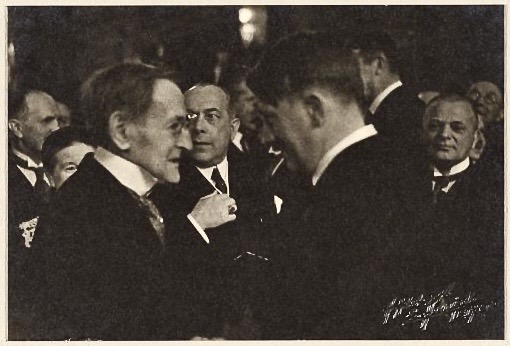
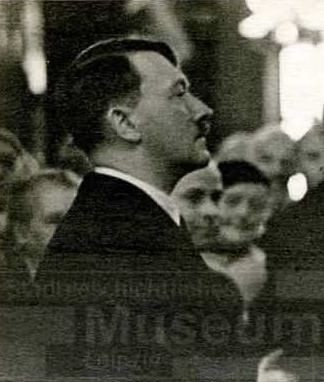
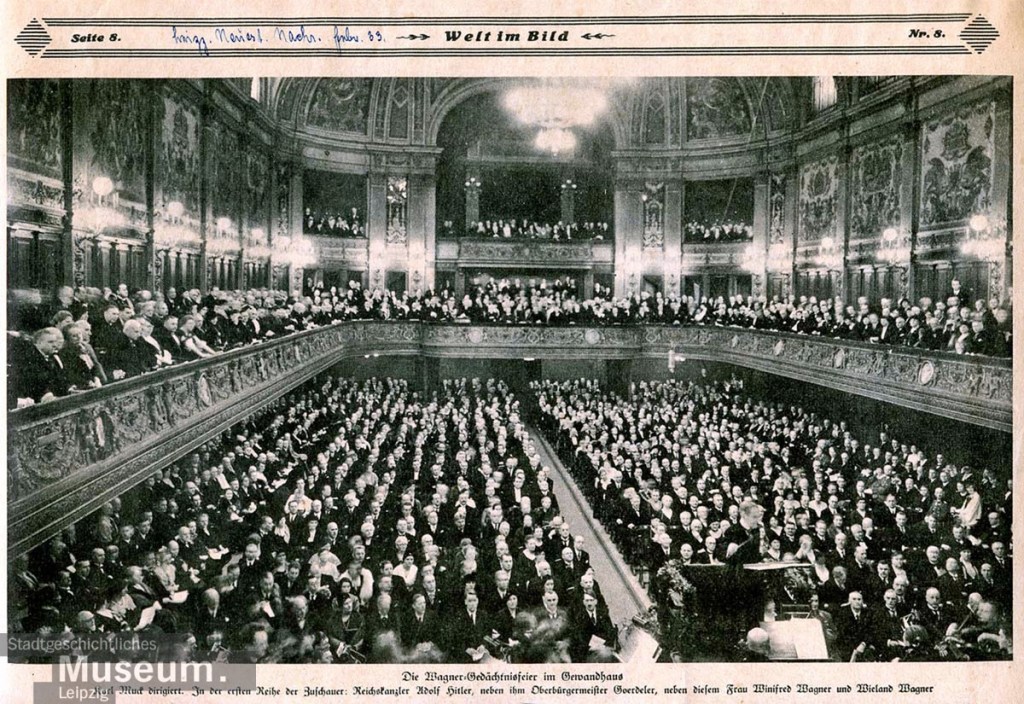
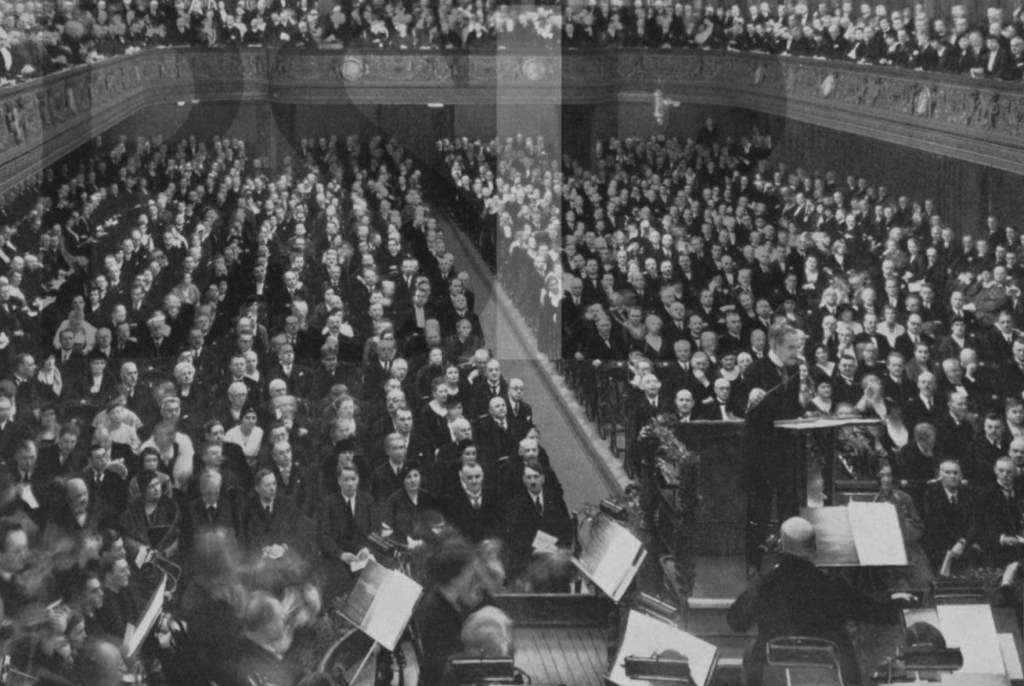
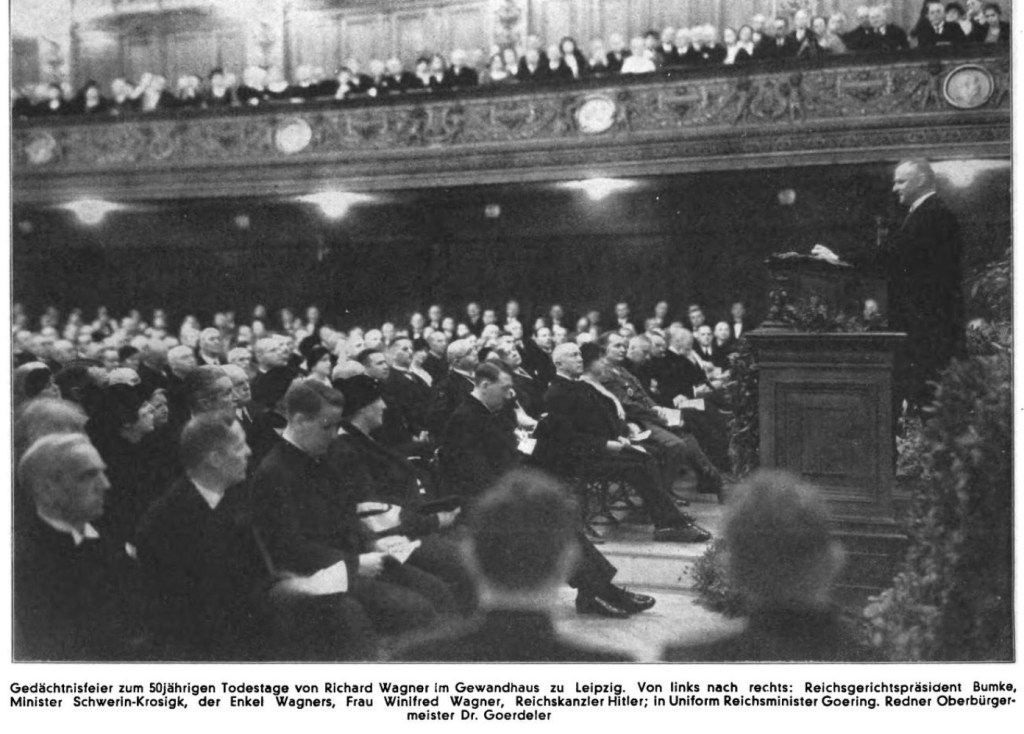
A special commemoration was held in honor of the 50th Anniversary of Richard Wagner’s death on 12 February 1933. World renowned classical music conductor Karl Muck spoke with Adolf Hitler during his visit to the Leipzig Gewandhaus for the concert commemorating the 50th anniversary of the death of Richard Wagner.
Adolf Hitler at the memorial festival for the composer Richard Wagner in Leipzig on 12 February 1933.A photograph of Adolf Hitler at memorial festival for the composer Richard Wagner in Leipzig on 12 February 1933.
Wagner National Memorial
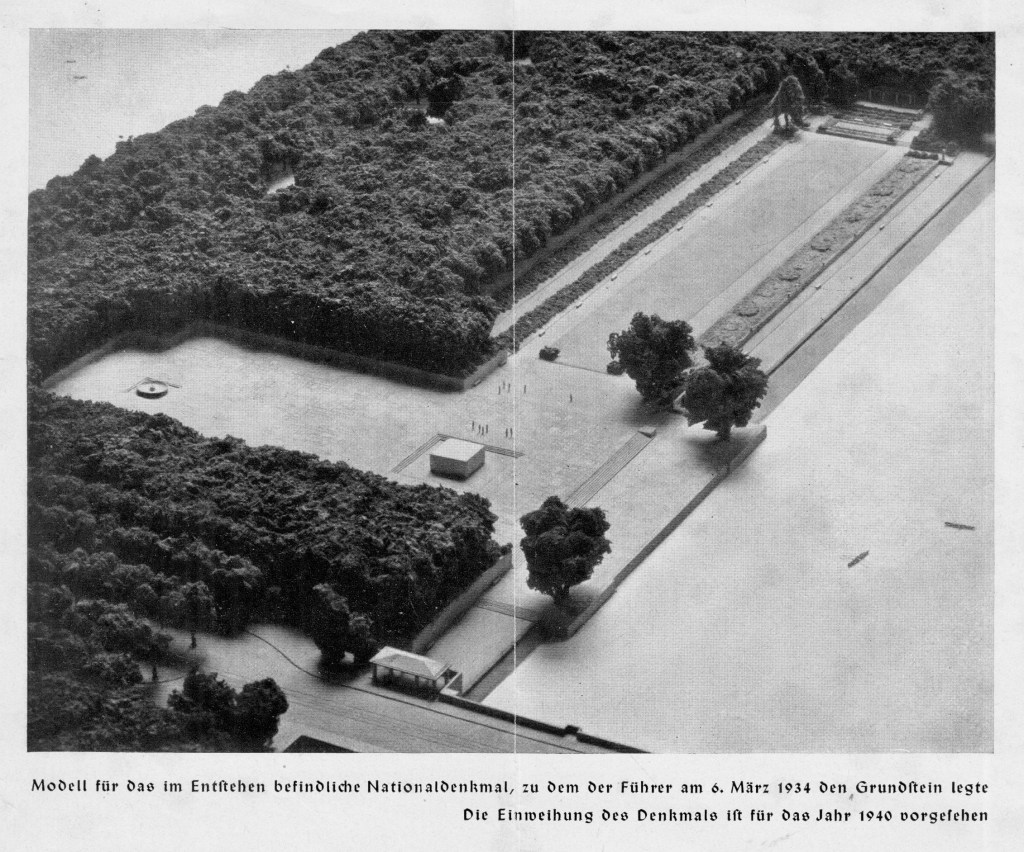
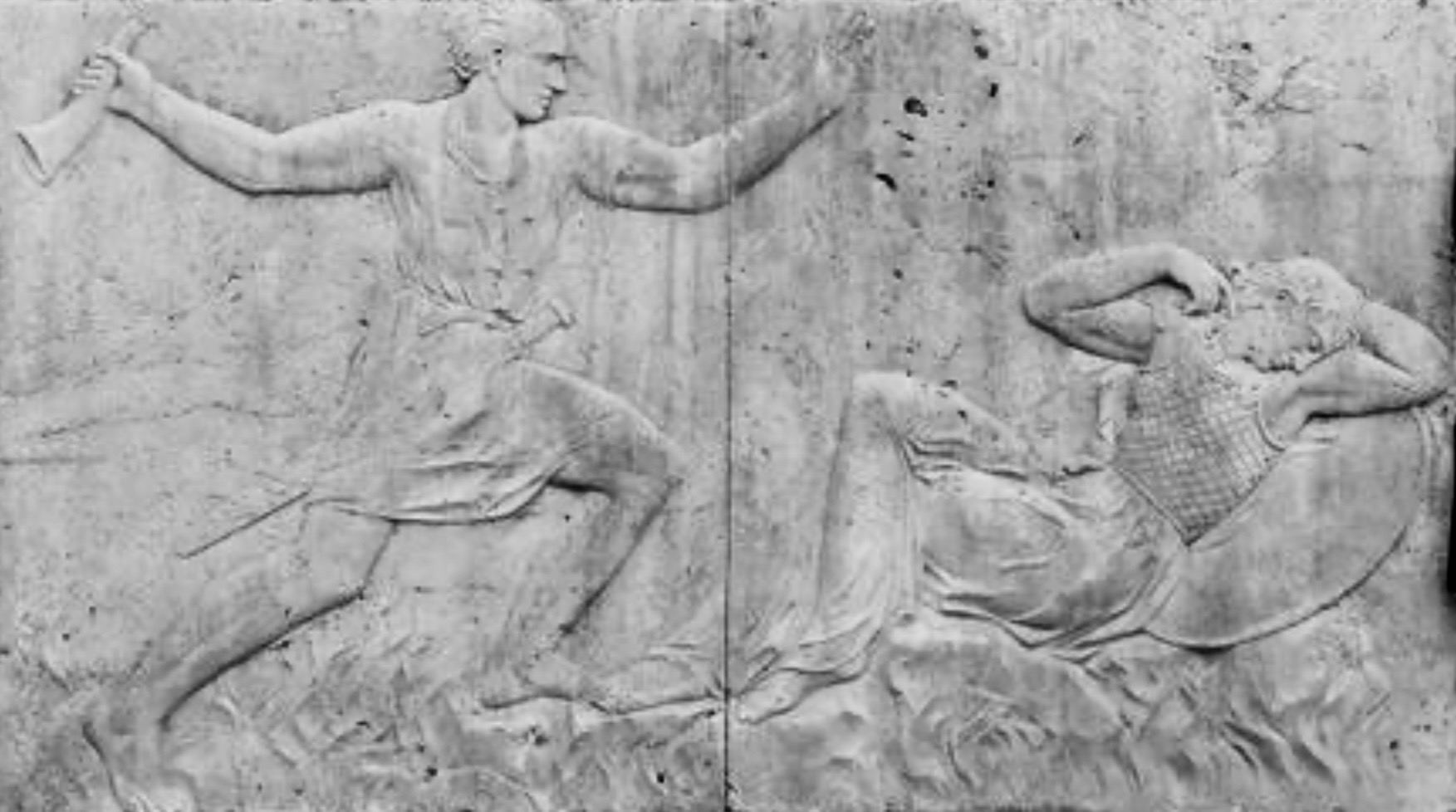
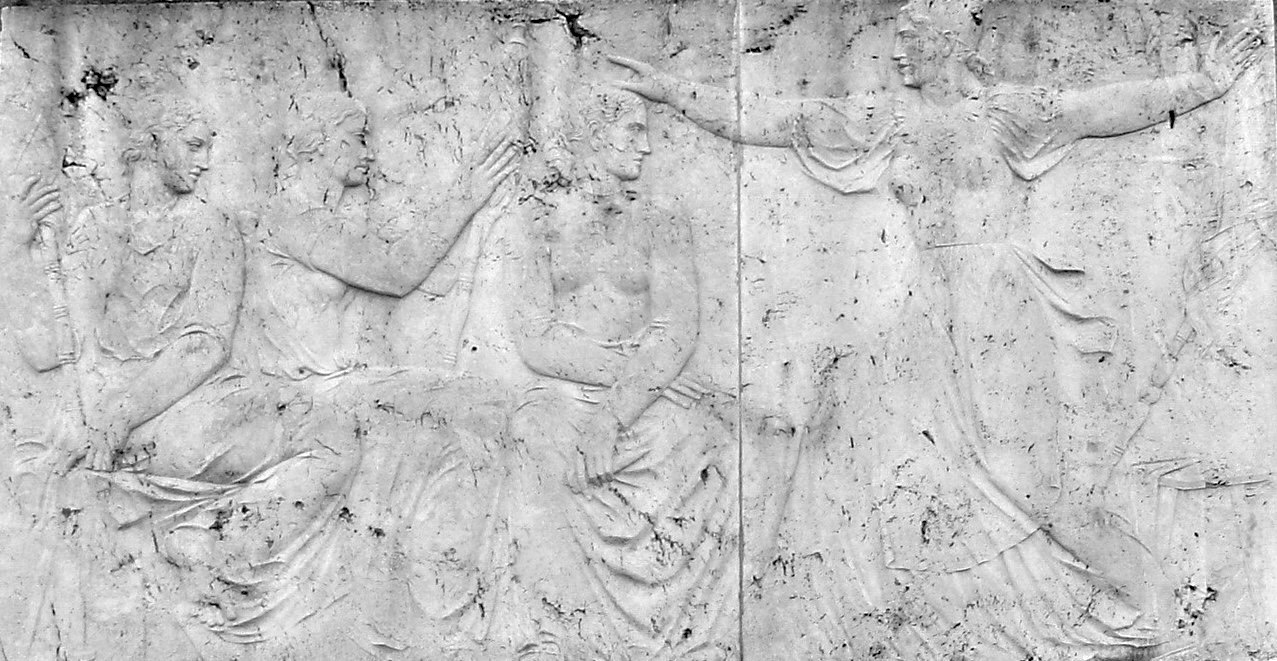
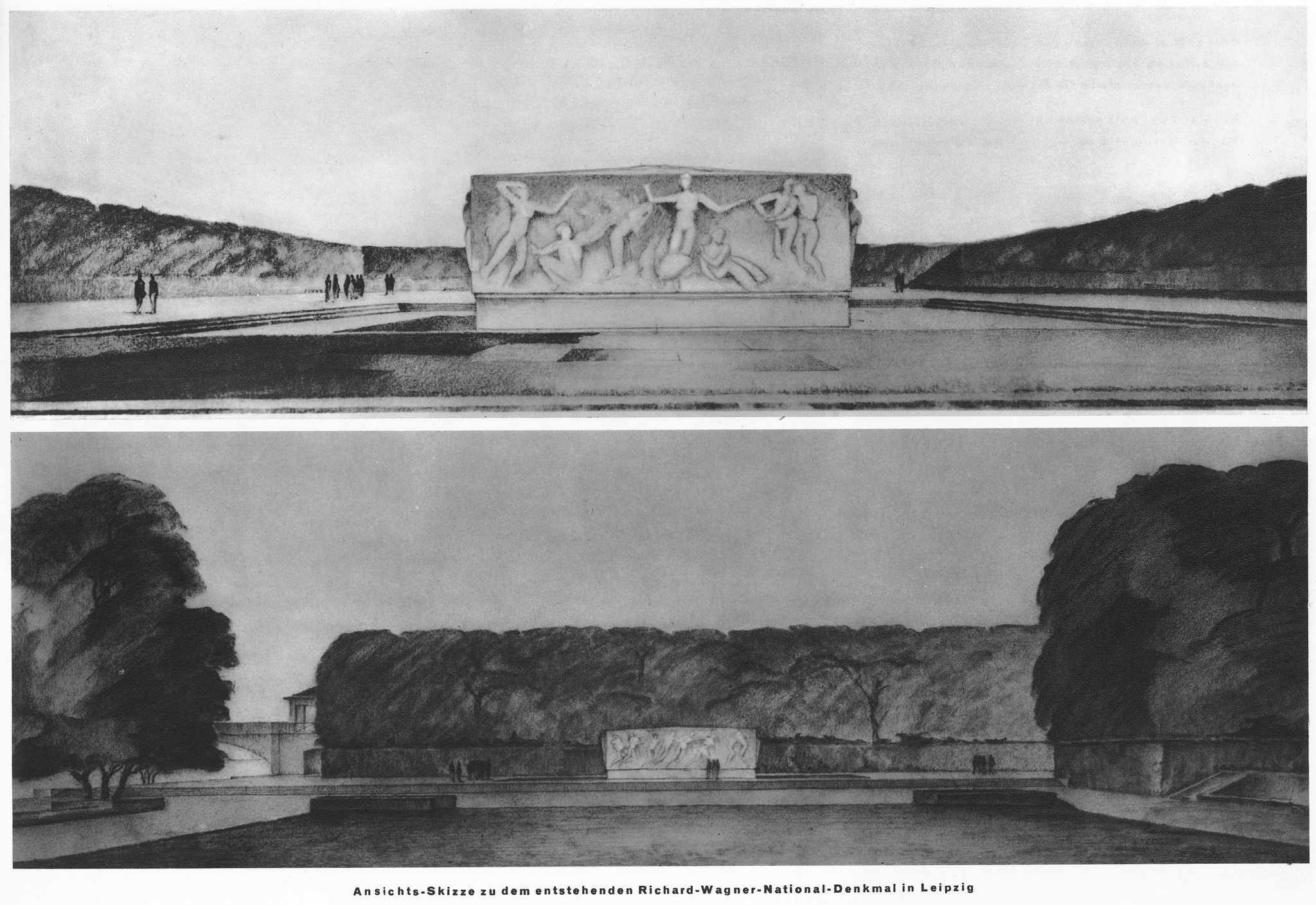
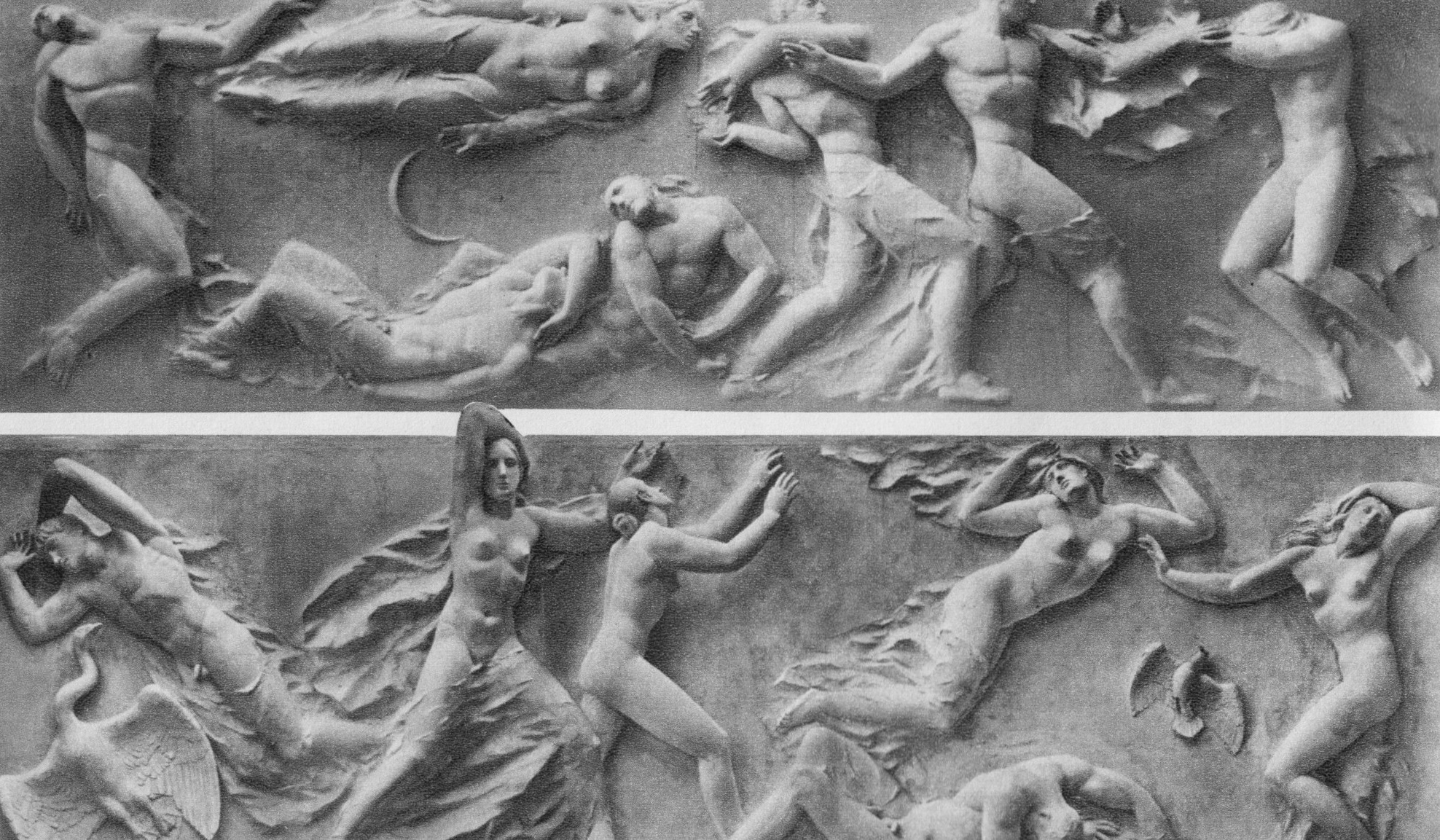
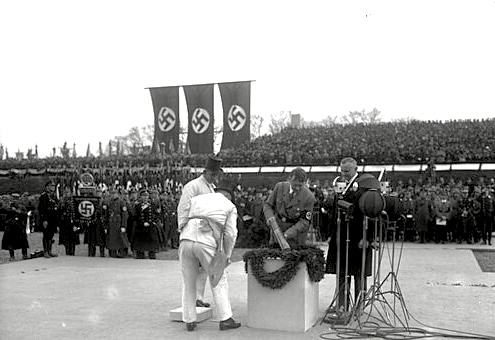
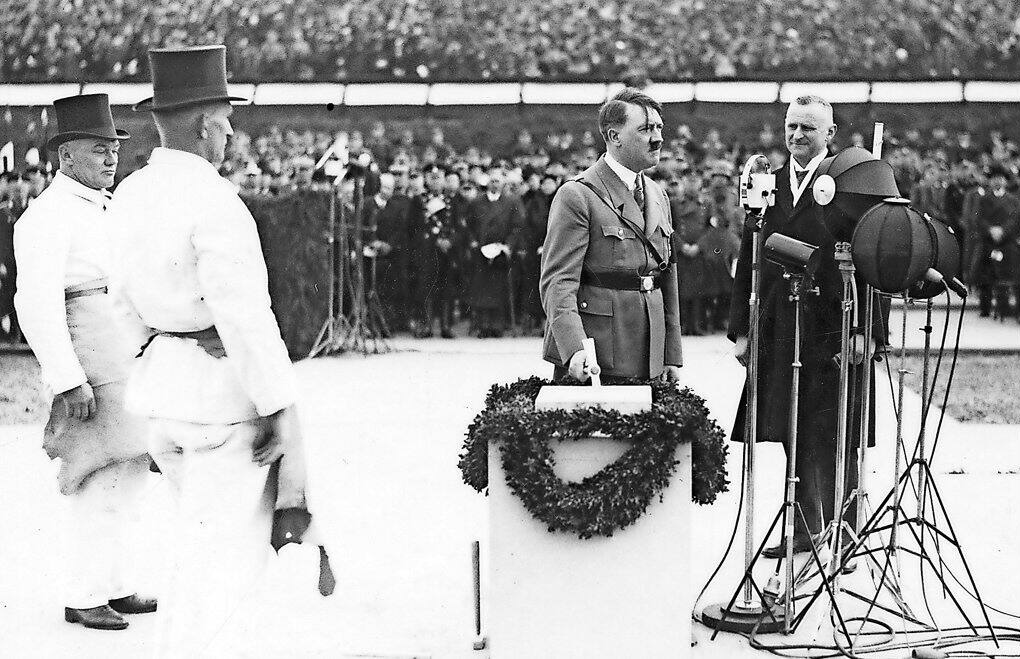
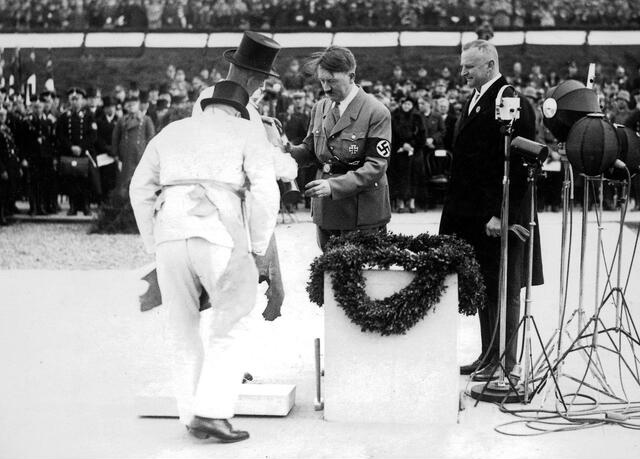
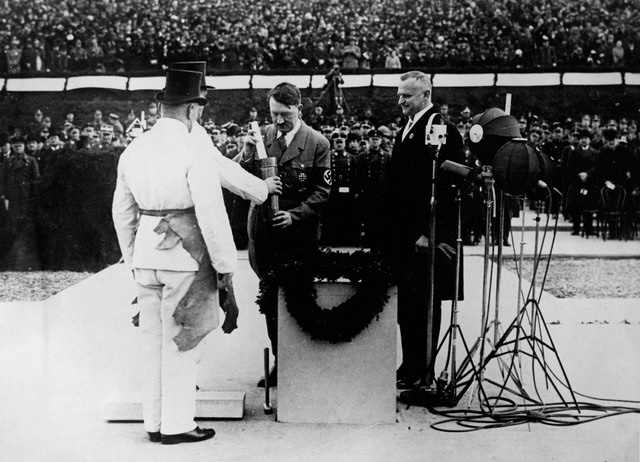
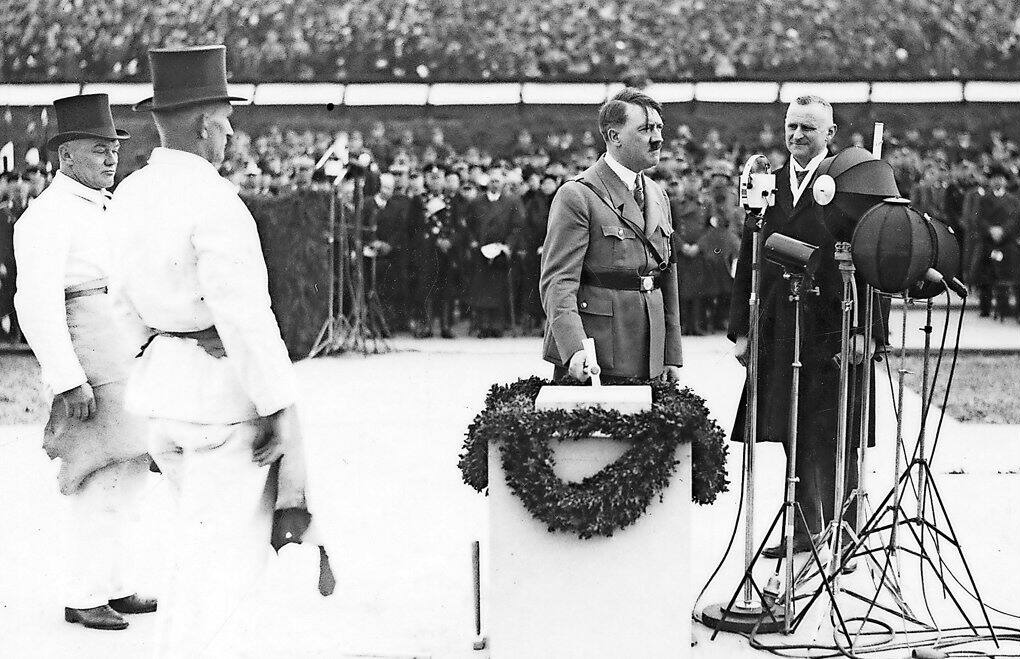
On 6 March 1934, Adolf Hitler laid the foundation stone in Leipzig for the national monument to his favorite composer, Richard Wagner. The location was the Elster flood basin, on the east bank of the river where the Richard-Wagner-Hain is today. By 1944, sculptor Emil Hipp had completed most of his reliefs, modeled on classical designs depicting characters and scenes from Wagner’s operas. It was to be a national monument built entirely to Hitler’s taste and specifications. The Reich Chancellor had made building the largest Wagner monument of all time his top priority. The structure was intended to be roughly the size of a football field. The monument was never completed due to the onset and progression of World War Il. The project was abandoned after the war, and Hipp’s completed reliefs were all lost or dispersed.
At Leipzig, German Chancellor Adolf Hitler lays the foundation stone of the national monument erected in memory of the composer Richard Wagner.
Model for the unbuilt Richard Wagner National Monument (Richard-Wagner-Nationaldenkmal) in Leipzig. Nineteen reliefs depicting themes from Wagner operas were planned for the walls, as well as a Rhine Maidens Fountain.
“In accordance with the wishes and will of the great master, I lay—as an eternal testament and perpetual reminder—the foundation stone of the German National Monument to Richard Wagner.” -Adolf Hitler on 6 March 1934, in Leipzig, the birthplace of Richard Wagner.
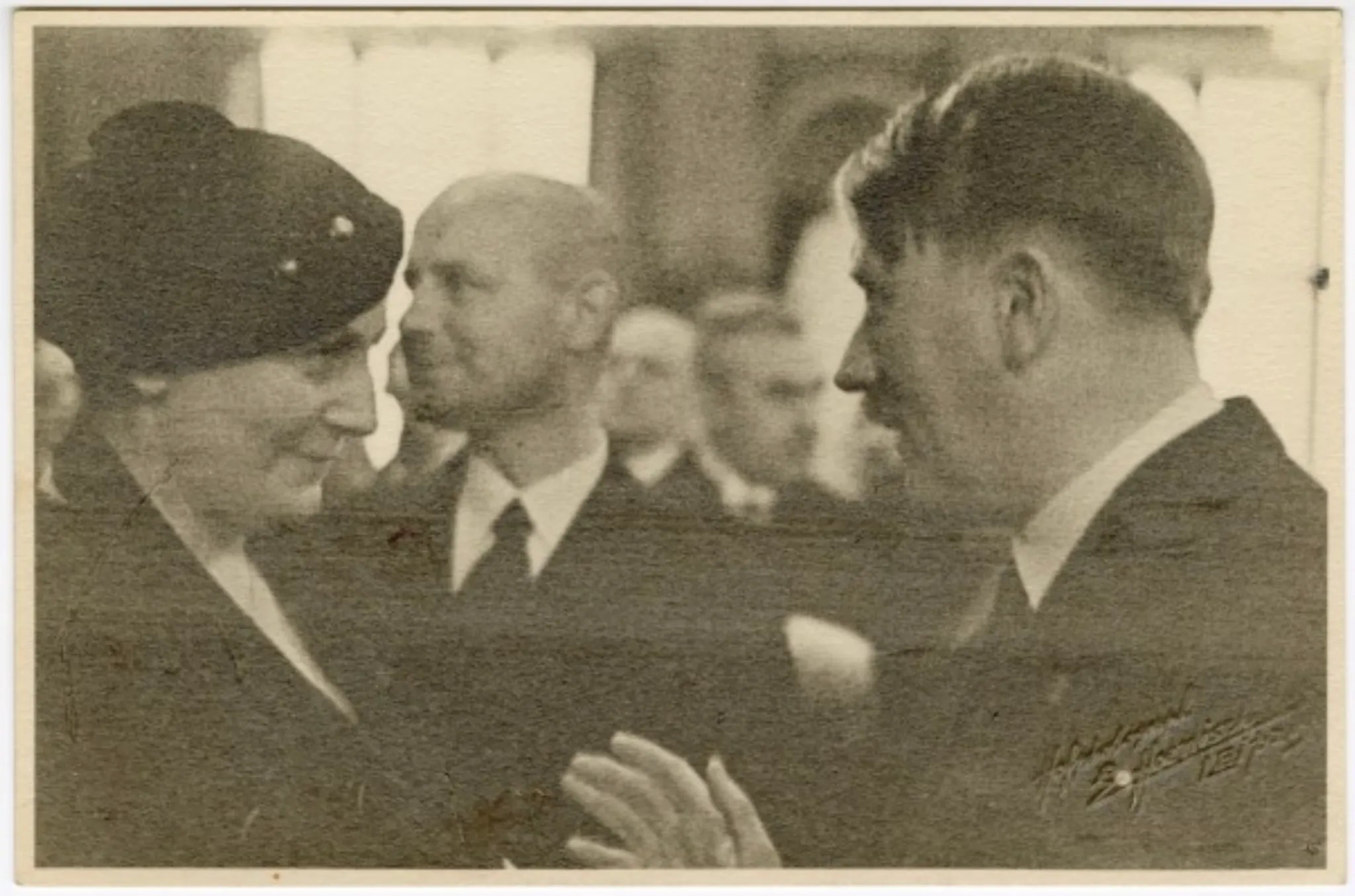
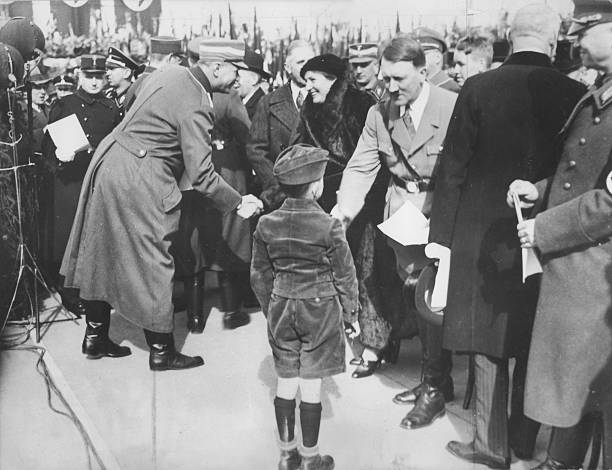
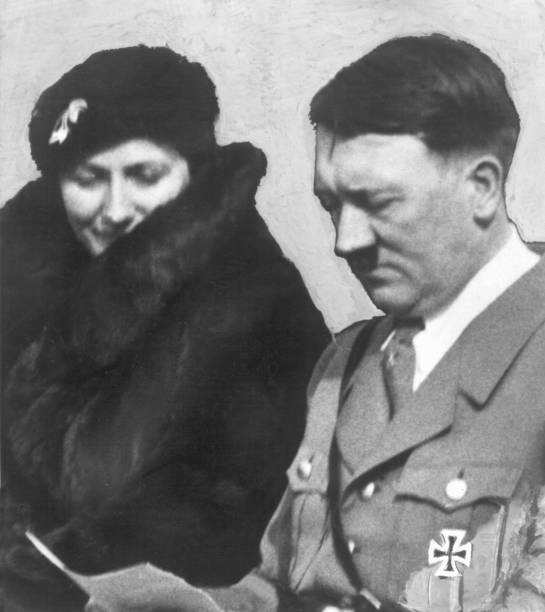
Adolf Hitler gives the hammer blow during the laying of the foundation stone of the Richard Wagner National Monument in Leipzig on 6 March 1934.Adolf Hitler und der später von den Nazis ermordete Leipziger Oberbürgermeister Carl Friedrich Goerdeler bei der Grundsteinlegung zum Wagner-Denkmal 1934 am 6. März 1934. Das Monument wurde nie errichtet, Teile davon wurden jetzt angekauft.Photograph taken by Wieland Wagner, grandson of Richard Wagner of Adolf Hitler, in Leipzig in 1934.Winifred Wagner and Adolf Hitler during the laying of the foundation stone of the Richard Wagner monument in Leipzig.Adolf Hitler being welcomed by mayor Carl Friedrich Goerdeler (r, in suit) in the Neue Rathaus in Leipzig, Germany, in 1934. To the left, Reich Minister for Propaganda Joseph Goebbels.
Leipziger Messe
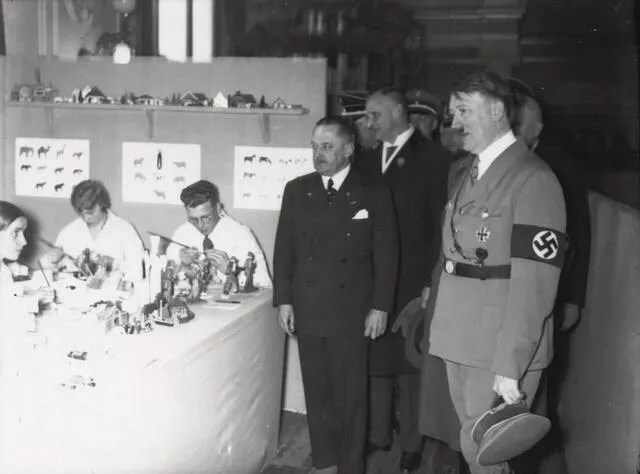
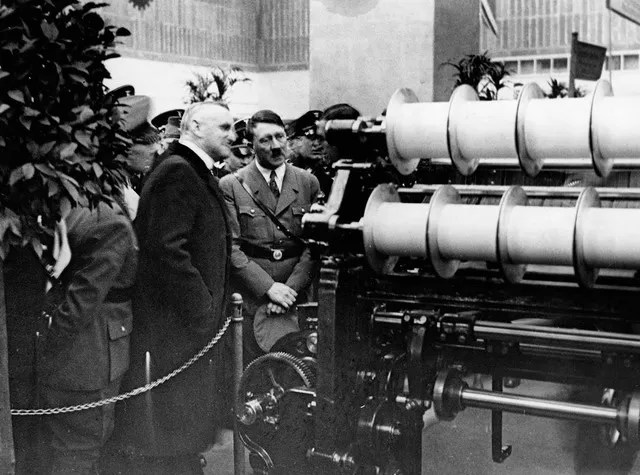
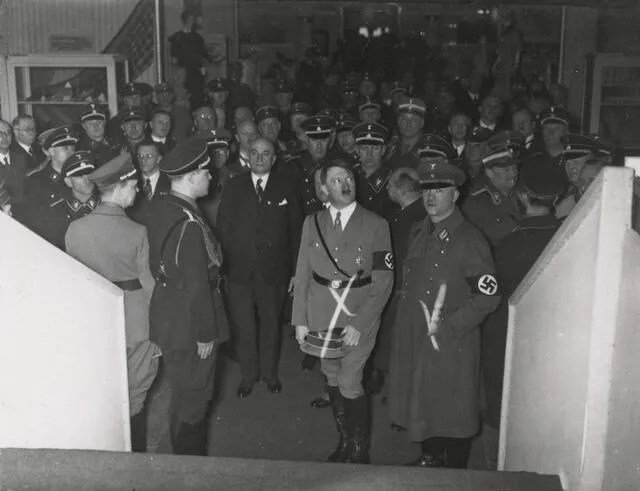
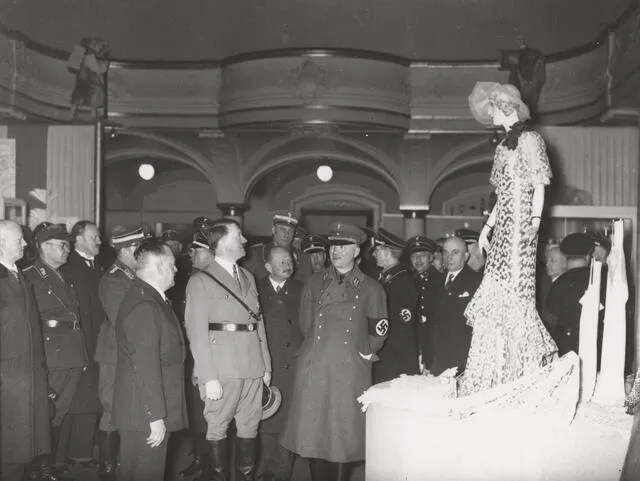
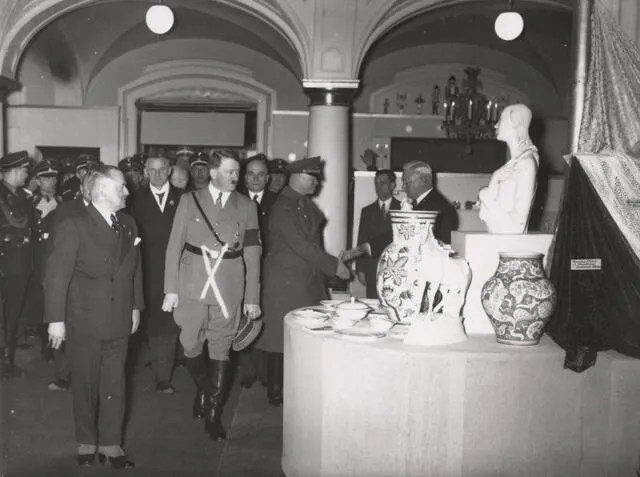
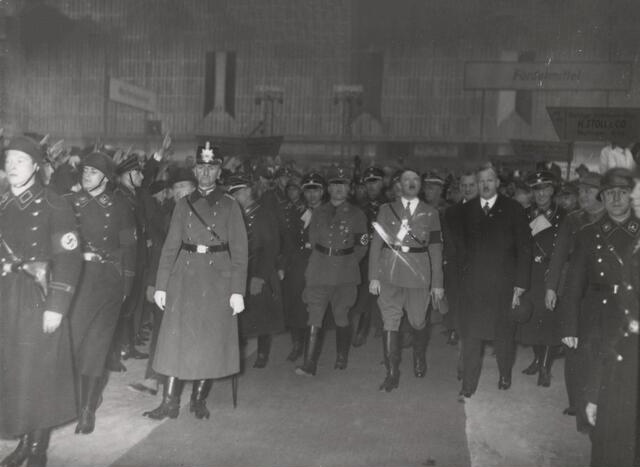
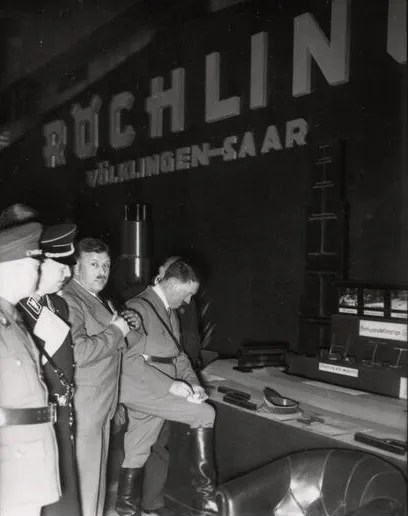
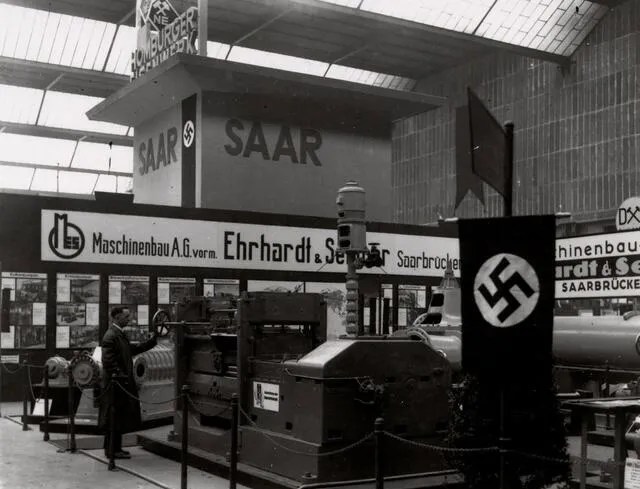
On the morning of 6 March 1934, before laying the Wagner Memorial foundation stone, Hitler had paid a visit the Leipzig Trade Fair (“Leipziger Messe”). He attended several exhibitions including Sachsenfleiß, the technical fair (Technische Messe) and the Saarausstellung. Also in attendance to the massive annual exhibition of the arts, crafts, and industries of Saxony were officials Carl Friedrich Goerdeler, Raimund Köhler, Martin Mutschmann and Max Heinzelmann. Hitler visited the booths of various Saxony manufactures – such as Meissen and Dresden porcelain, Erzgebirge wood and toys, lace, textiles, hats, furs, shoes, watches and timepieces, machinery, musical instruments, measuring instruments, metal and ceramic works. Hitler visited the Technische Messe in Leipzig on the same day with Robert Georg Lenk, economics minister of Saxony.
Adolf Hitler und der Reichsstatthalter von Sachsen Martin Mutschmann bei der Leipziger Messe am 6. März 1934. Here Hitler enters the Messehalle 15 at the old Leipzig fairgrounds to view the Saar exhibit (Saarausstellung) with Martin Mutschmann.Hitler inspects a weaving machine at the Leipzig FairHitler in städtischen Kaufhaus zu LeipzigDer Führer vor dem Stande: Meissner Porzellan.Leipzig Technische Messe Halle 9Messehalle 15, Alte Messe LeipzigAlte Leipzig Messe Halle 15
Mystery Sachsen Meeting
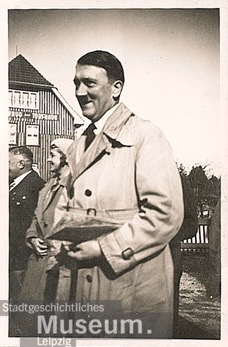
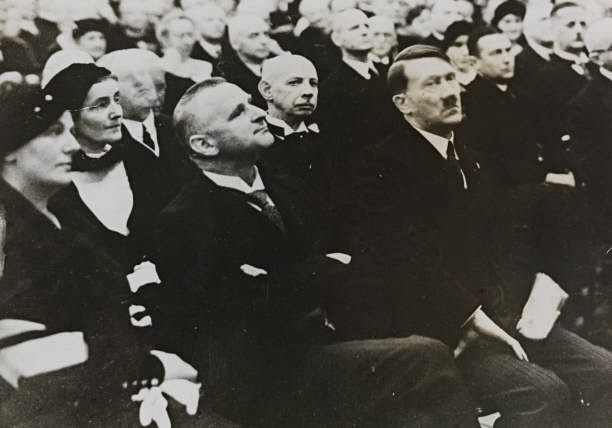
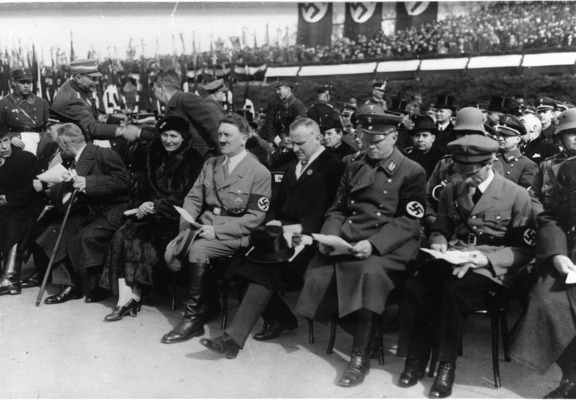
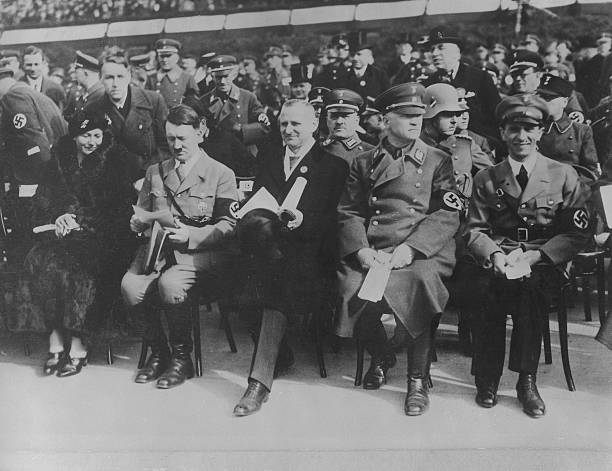
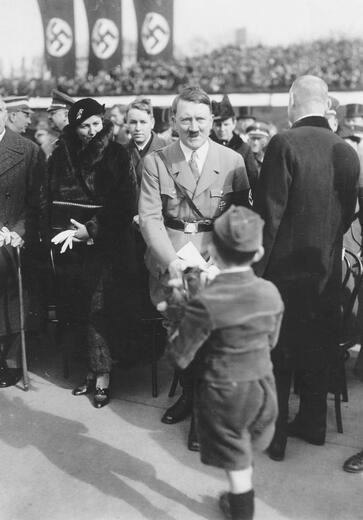
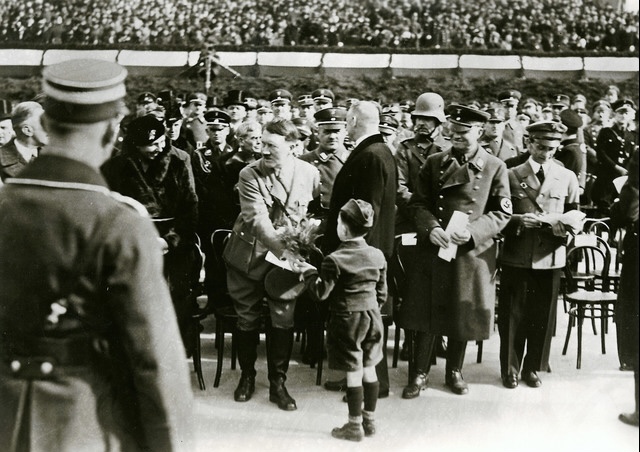
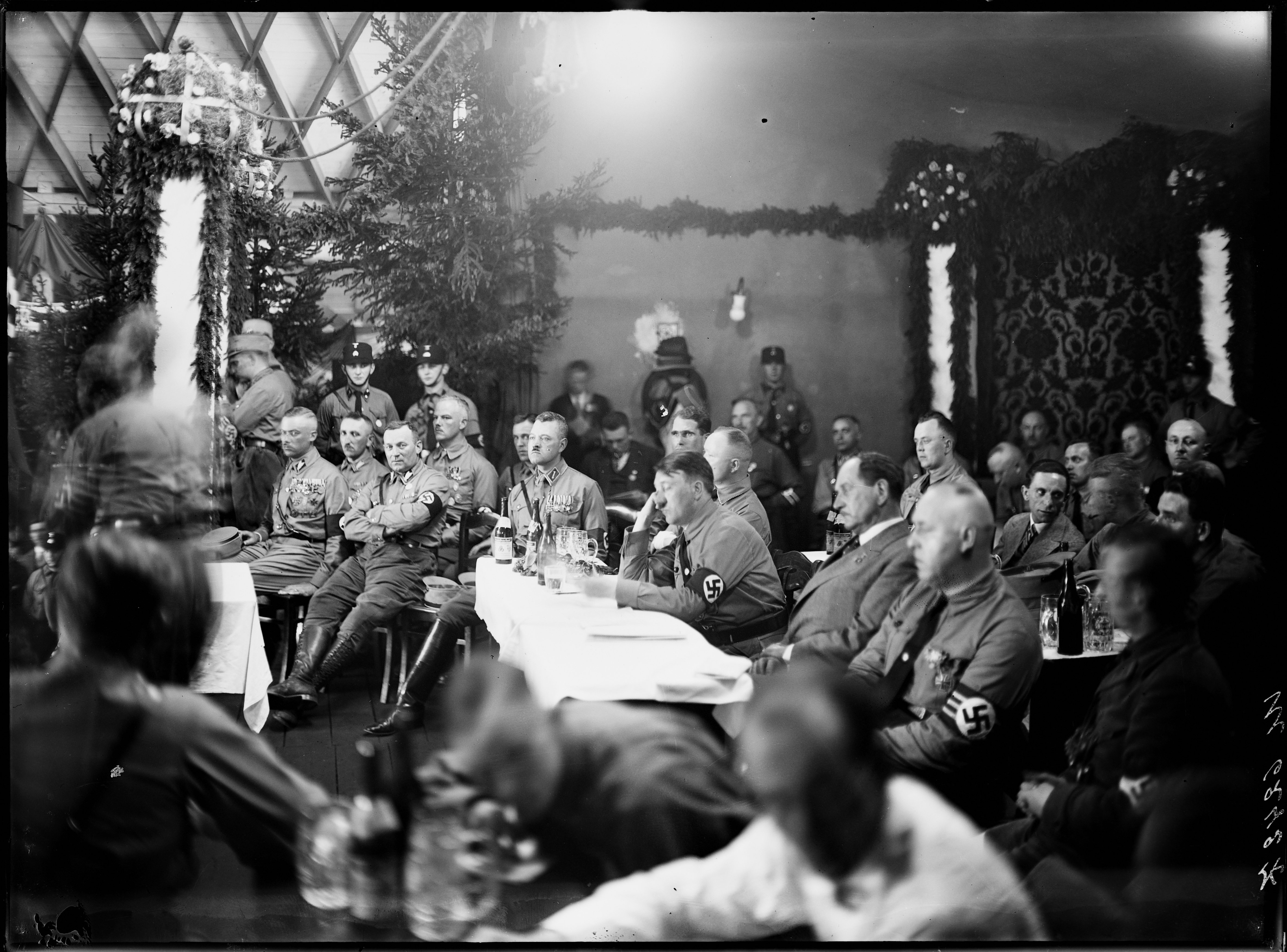
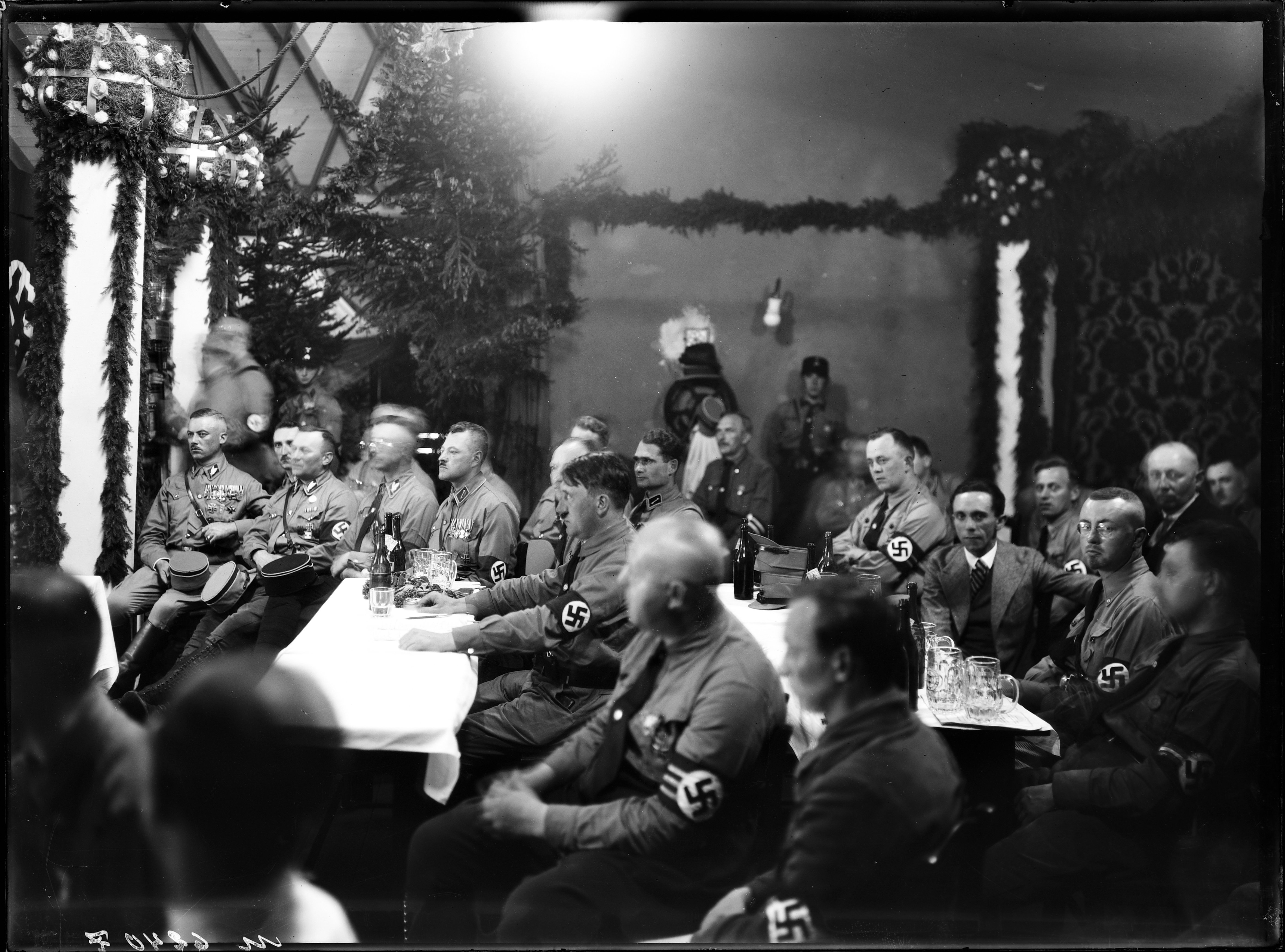
I have discovered three photographs from a Gau Sachsen meeting held circa 1929, I’m working on getting the exact date and place of this meeting, Hitler looks a bit bored and disengaged from the proceedings. On 18 February 1928 Hitler had spoken at a Reichsführer meeting held at the hotel Sachsenhof. This hotel was later destroyed by allied bombing and was located on the Johannisplatz, these three photographs may be from this place and event. Based on Hitler’s uniform this is likely no earlier than this date and no later then very early 1930.
I love history and have always been infatuated with the design and style of the 1920’s. Unfortunately I can’t time travel back to this era, so I live vicariously through books, movies and photos.
Looks like another fine collection of rare photos that we are privileged to see, thanks to your hard work! I’ve never seen the Monument to the Battle of the Nations before, so I learn something new with each article you post. The photo of Hitler at the Saale bridge is fantastic!



























 Heinrich Hoffmann Photo Gallery