
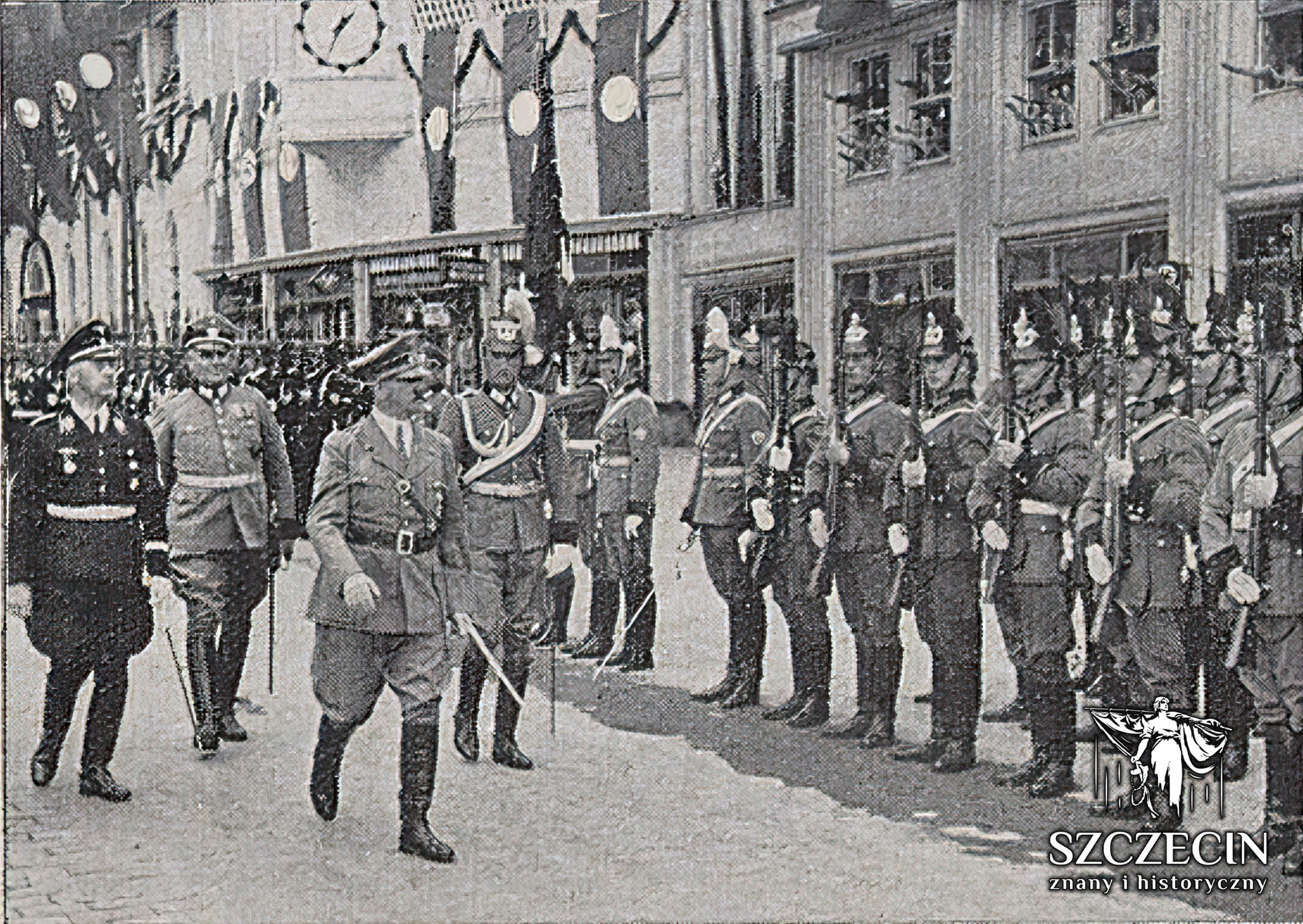
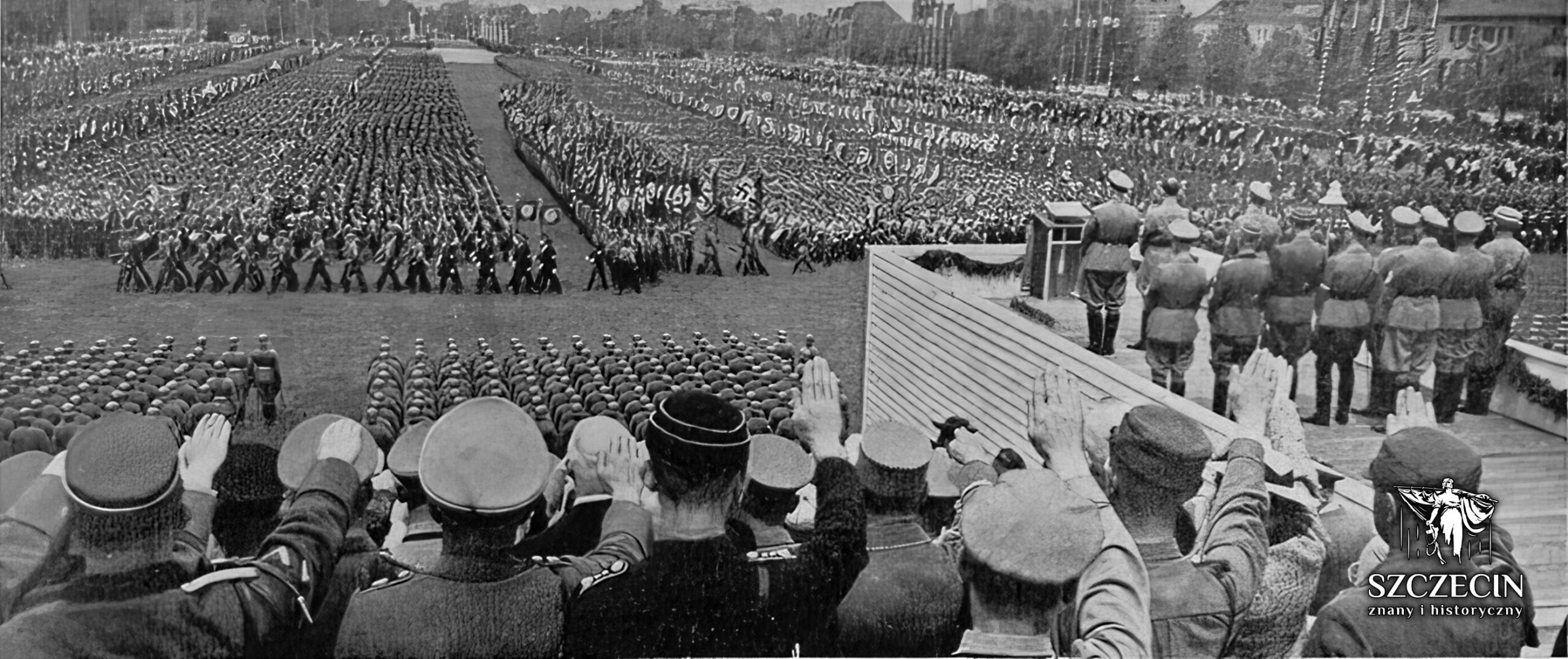
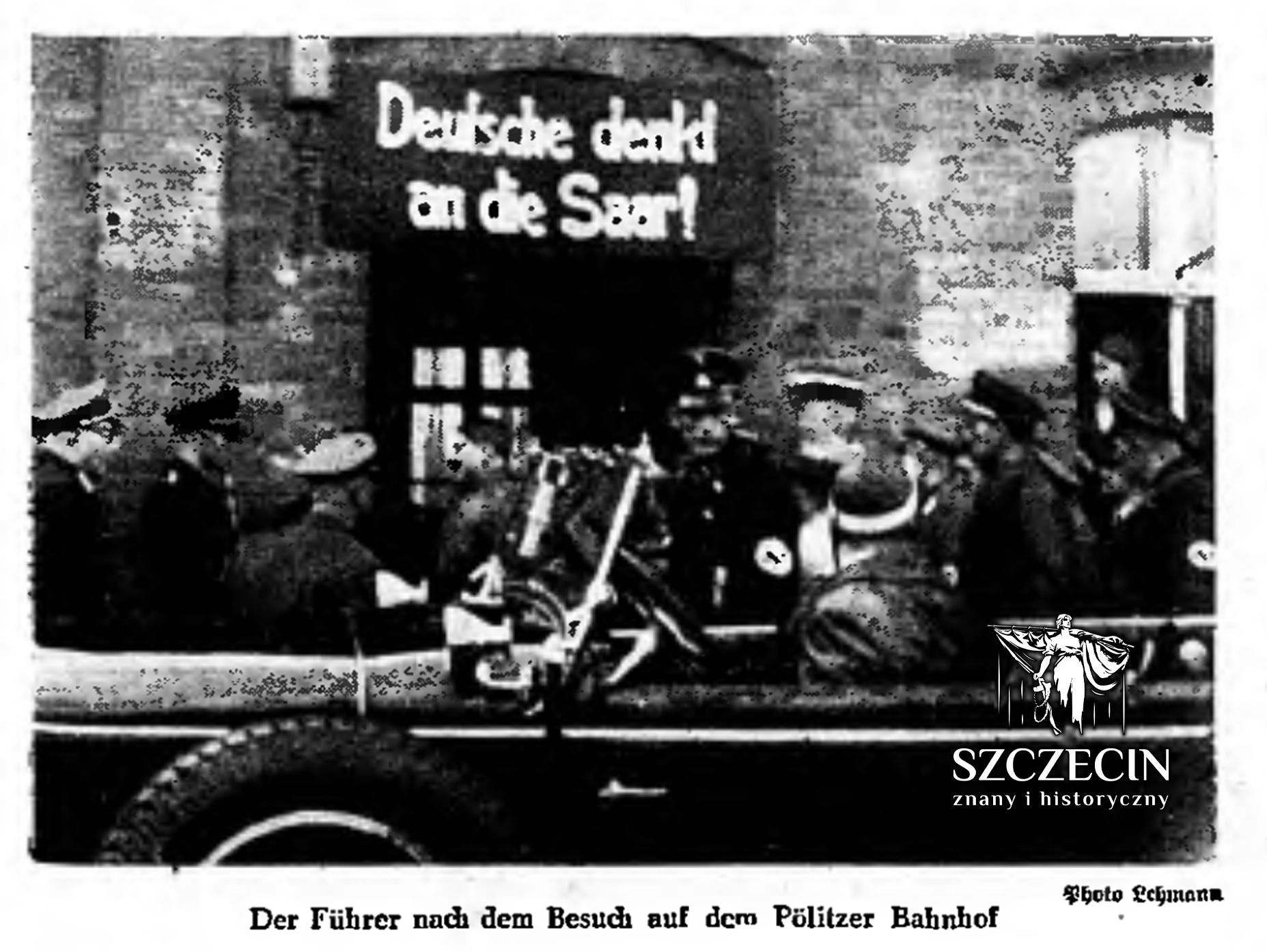
On 12 June 1938, Adolf Hitler attended the Pomeranian Nazi Party Congress in the then-German city of Stettin, the capital city of Pomerania and a major stronghold of the Nazi movement. Now known as Szczecin, the city is a major seaport and the largest city in northwest Poland today. Hitler addressed the masses and observed a massive parade from the Hakenterrasse on the embankment of the Oder River. An estimated 100,000 spectators swelled the streets of Stettin eager to catch a glimpse of the Führer. This is not a well documented event compared to Hitler’s other mass rallies, so these photographs were all new to my collection, and likewise a very exciting discovery once I realized what a massive event the Pomeranian Congress was in 1938.
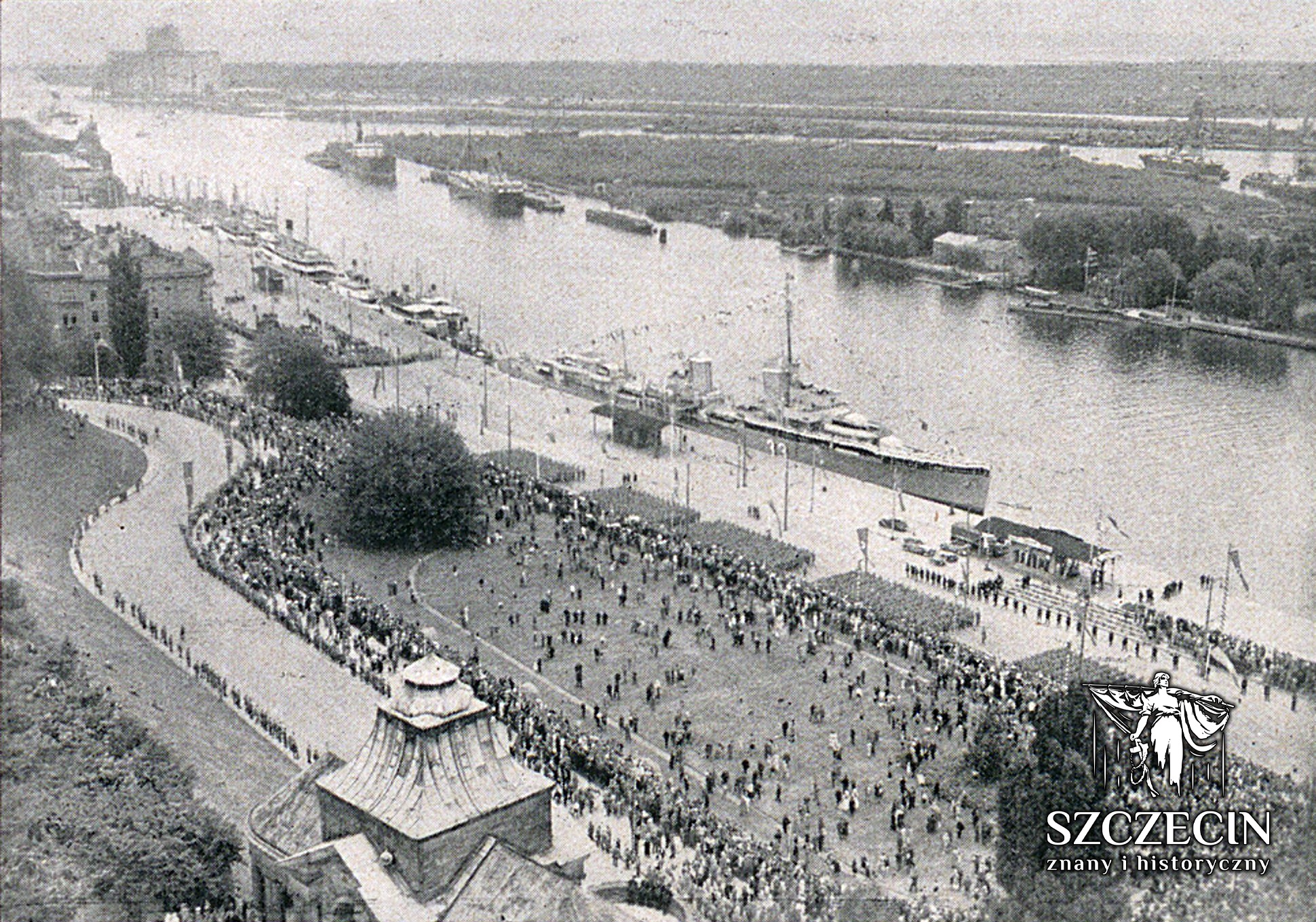
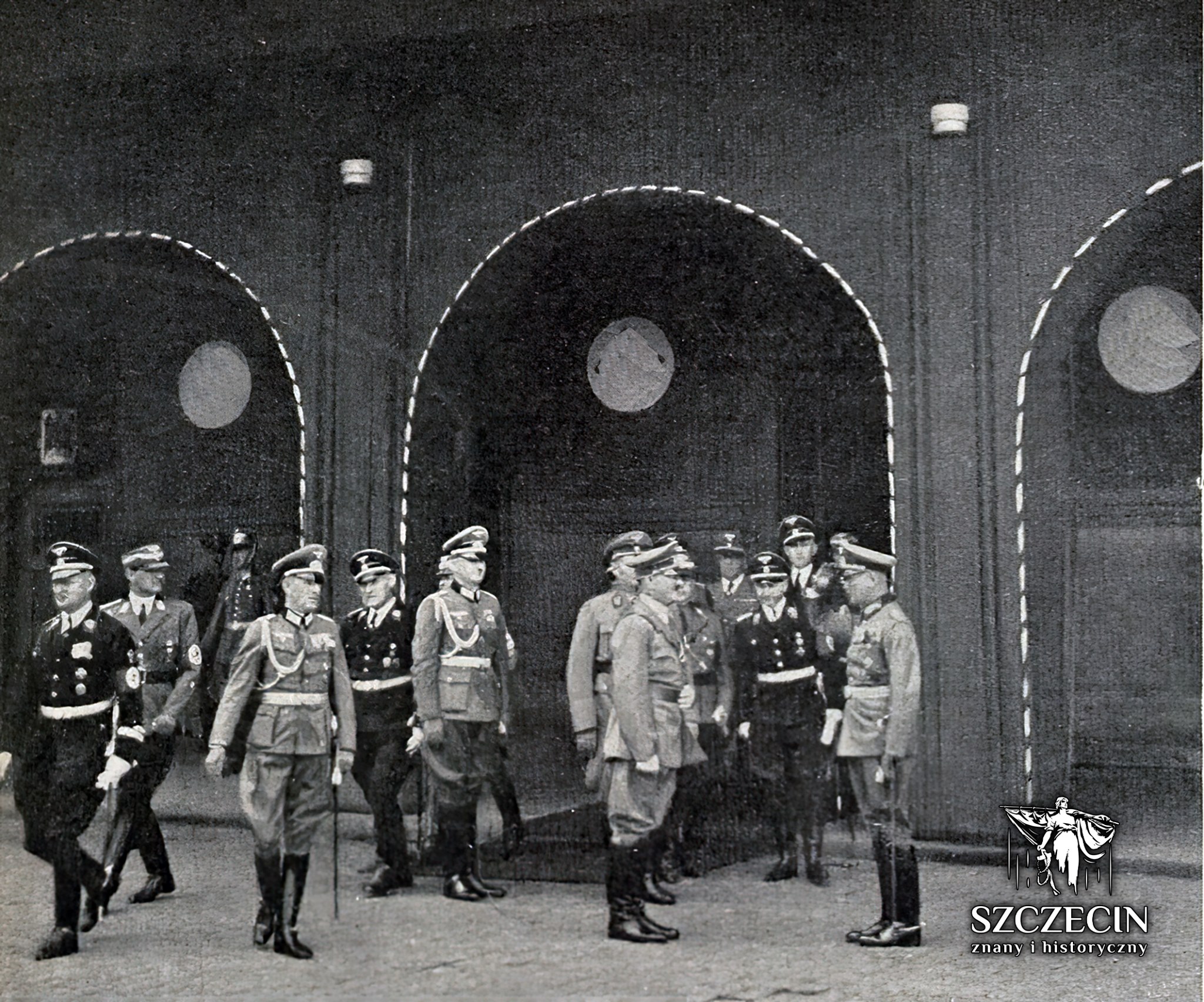
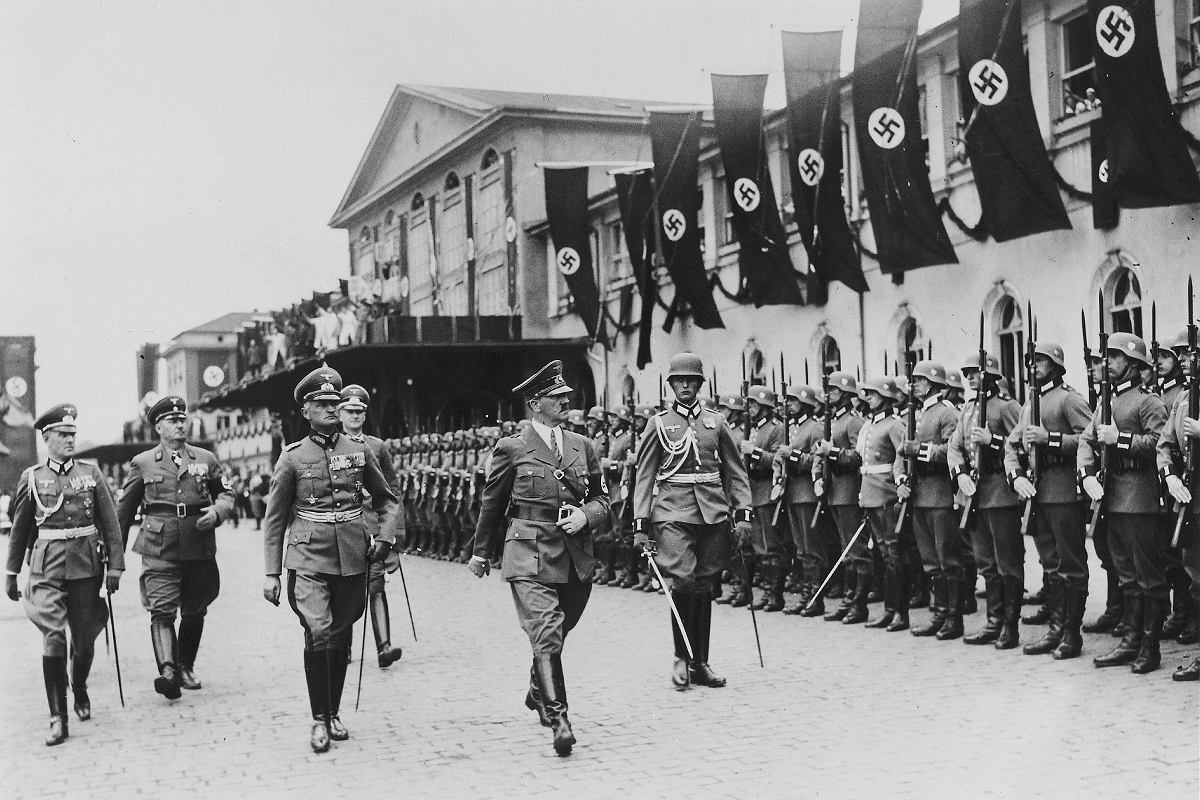
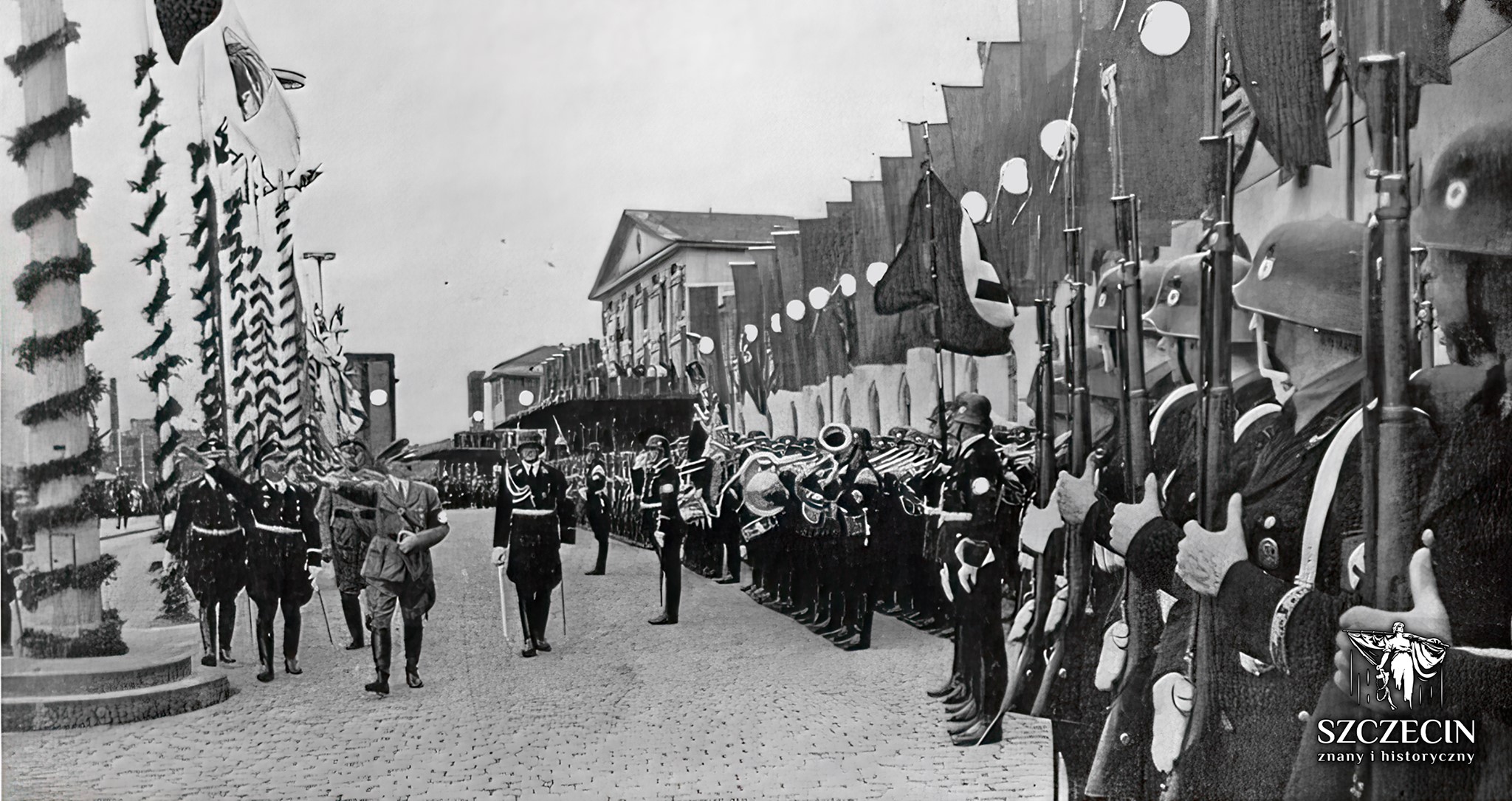
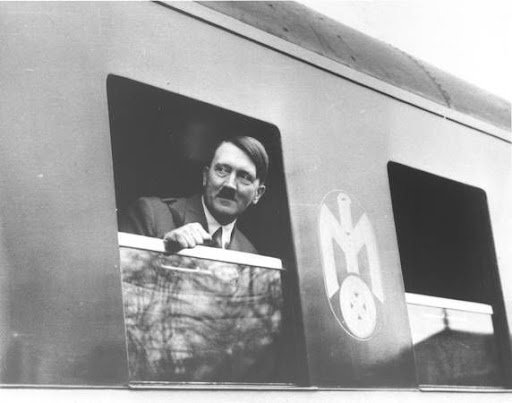
Hitler’s private train arrived from Berlin at 1:30 p.m., at which time he was greeted by his deputy, Rudolf Hess, SS Chief Heinrich Himmler, and Gauleiter Franz Schwede. Then Hitler took his place in a government Mercedes, where he would remain standing and giving the Nazi salute to the ecstatic crowd. The Führer also reviewed military formations against a backdrop of festively decorated ships on the Oder, which were part of the welcoming ceremony.
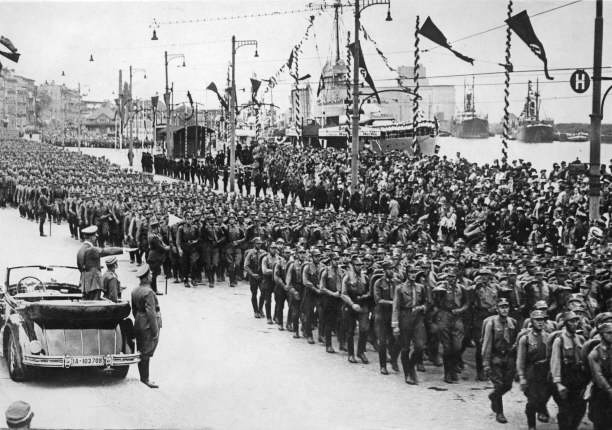
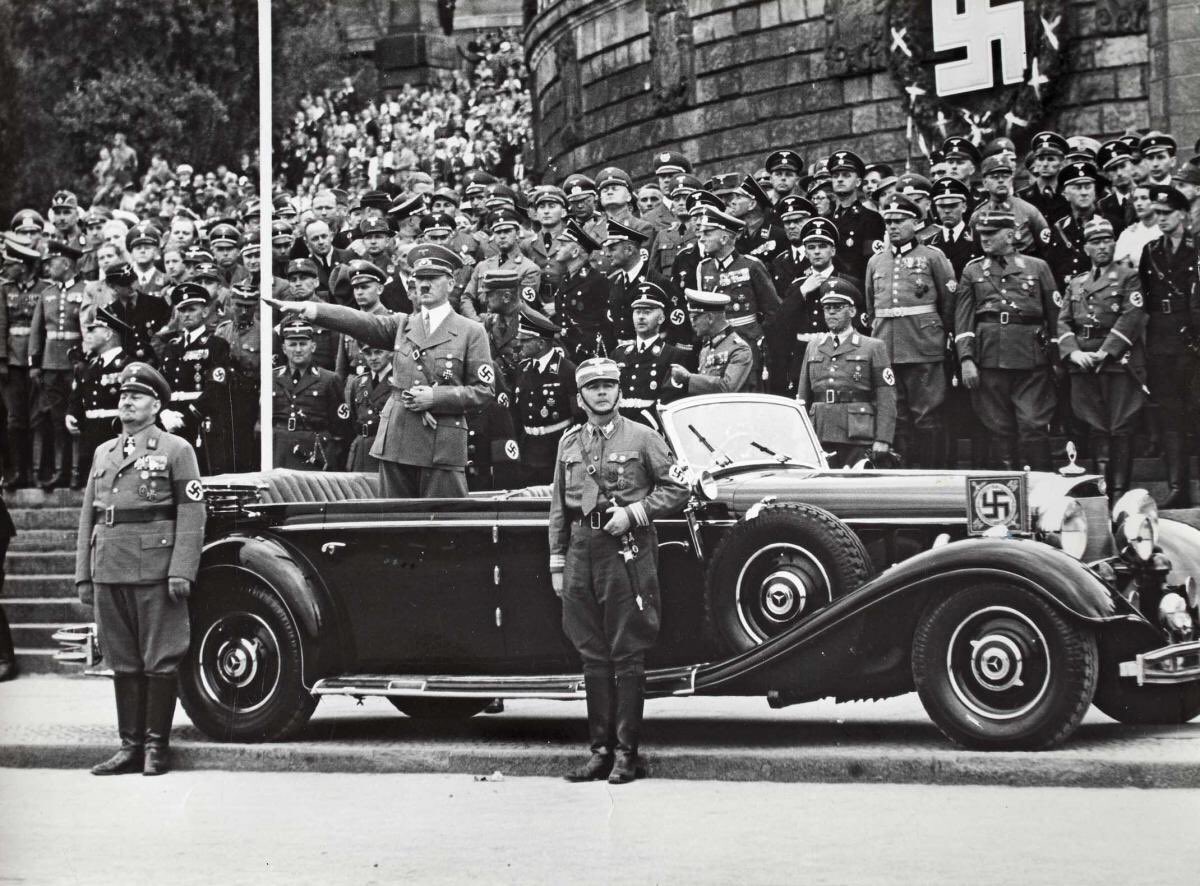
Adolf Hitler took the salute at the march-past of storm troopers in Szczecin during the meeting of the Pomeranian section of the Nazi Party on 12 June 1938. A reception was held by Gauleiter Franz Schwede-Coburg followed by a special speech delivered by Hitler in the Landhaus for the leaders attending the Gauparteitag of Pomerania. A laying of the foundation stone for 578 homes for the Hitler Youth also took place. Planned for months in advance, the Führer’s visit was reported in an extremely lively manner by the Pommersche Zeitung. On the big day, close to 100,000 spectators flooded the streets of Stettin, all eager to see the Führer and participate in the festivities.
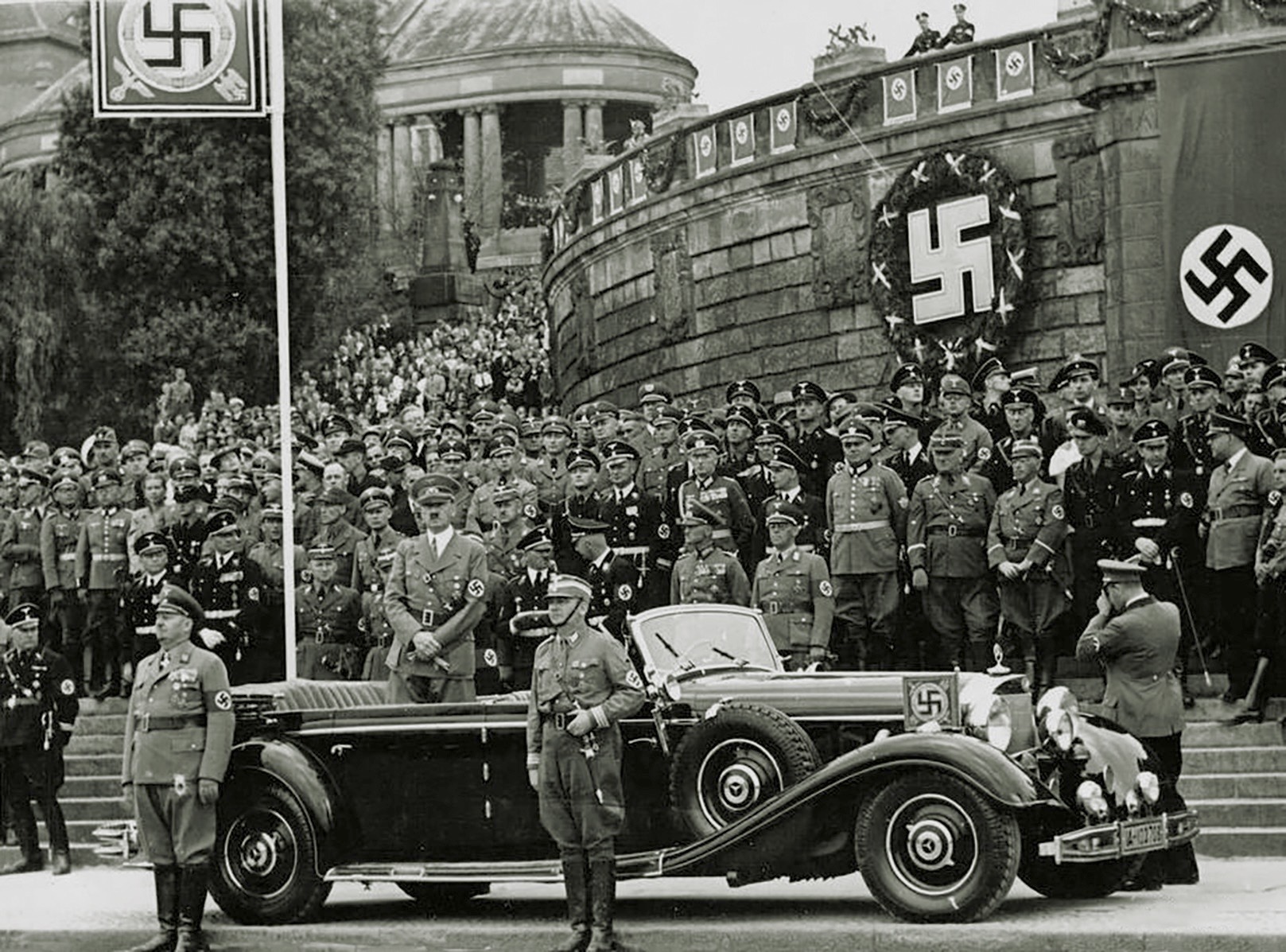
From the rail terminal, Hitler’s entourage drove northwest on the Grüne Schanze (now Dworcowa Street) passing by the gorgeous redbrick Old City Hall from the 19th century along the way and then north through the busy Paradeplatz (now Niepodległości) thoroughfare and up the grand avenue Kaiser-Wilhelm-Strasse (now Papieża Jana Pawła II) to arrive at the Landeshaus, the seat of the Pomeranian provincial government and the present-day city hall. After another ritual review of military formations, the Führer addressed a Nazi Party Congress and met with Stettin’s mayor, Werner Faber, who presented him with an honorary citizenship of the city.
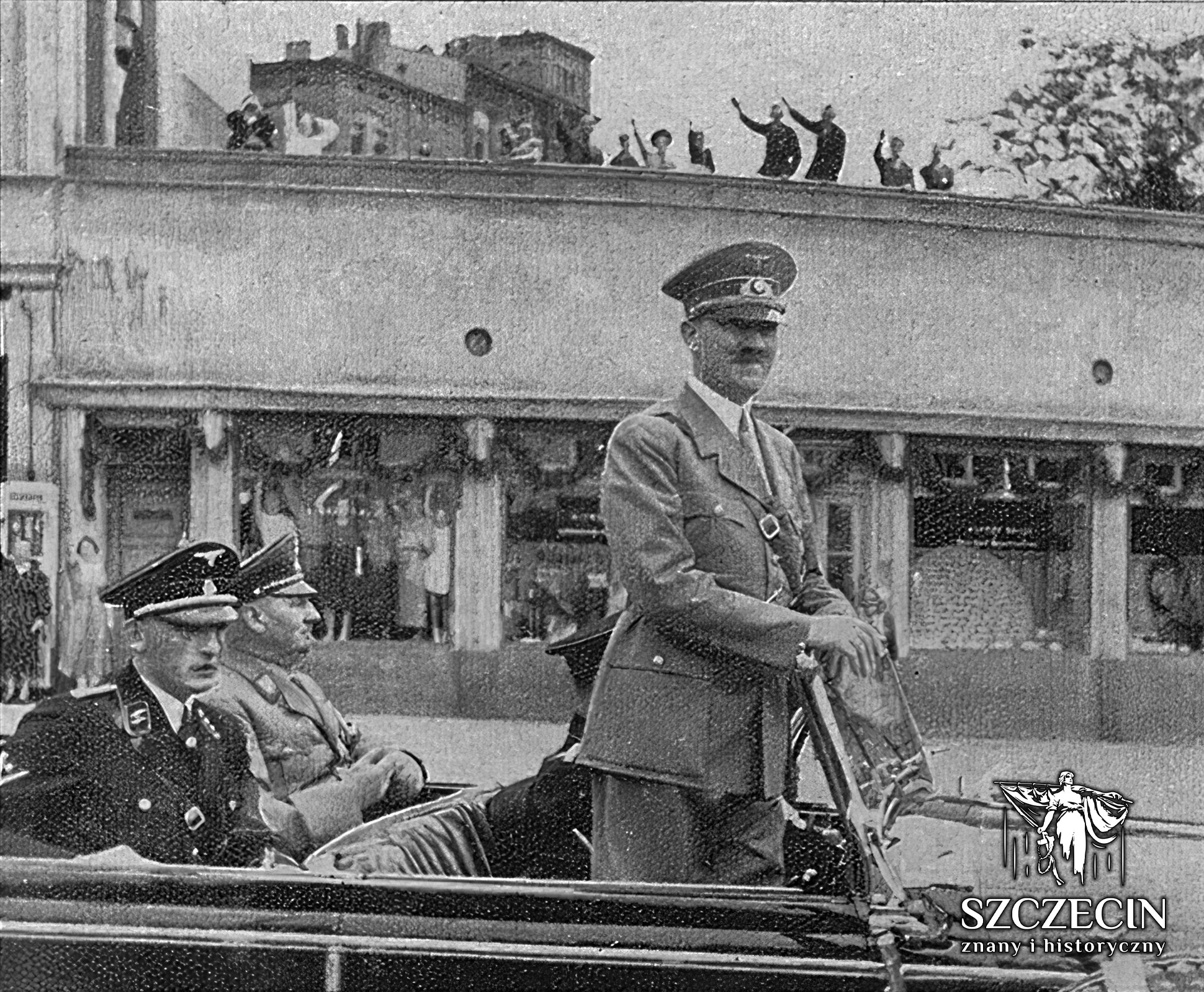
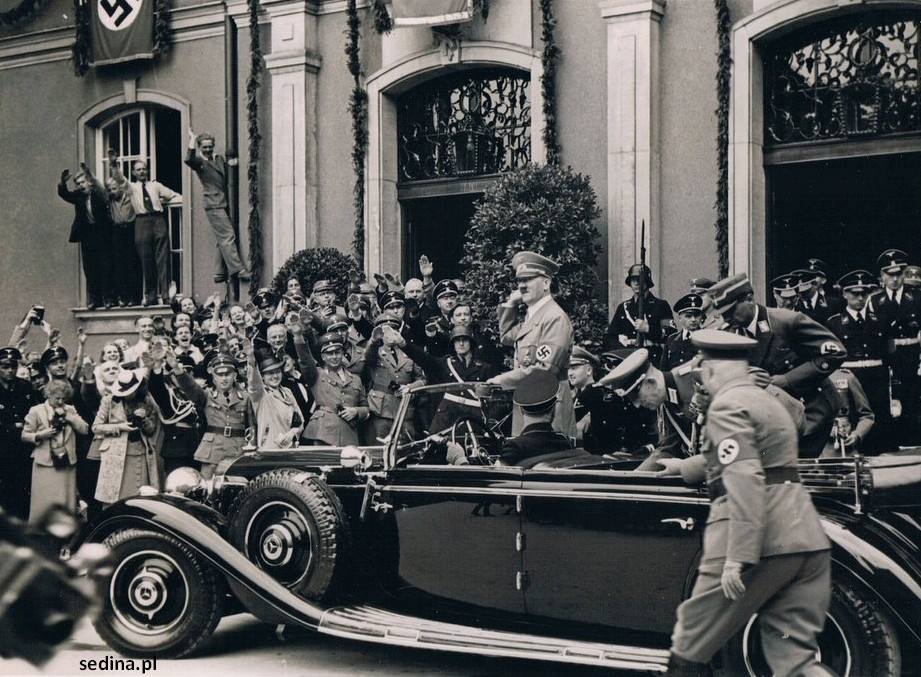
Ordinary citizens of Szczecin wanted to participate en masse in the events related to Hitler’s visit. They decorated the streets and houses in festive attire. During the party congress, the city’s residents were allowed to use cultural institutions for free. The City Museum on Hakenterrasse (today Wały Chrobrego) opened its doors to the residents of Szczecin, advertising a gallery of works by painters created after Hitler came to power in 1933.
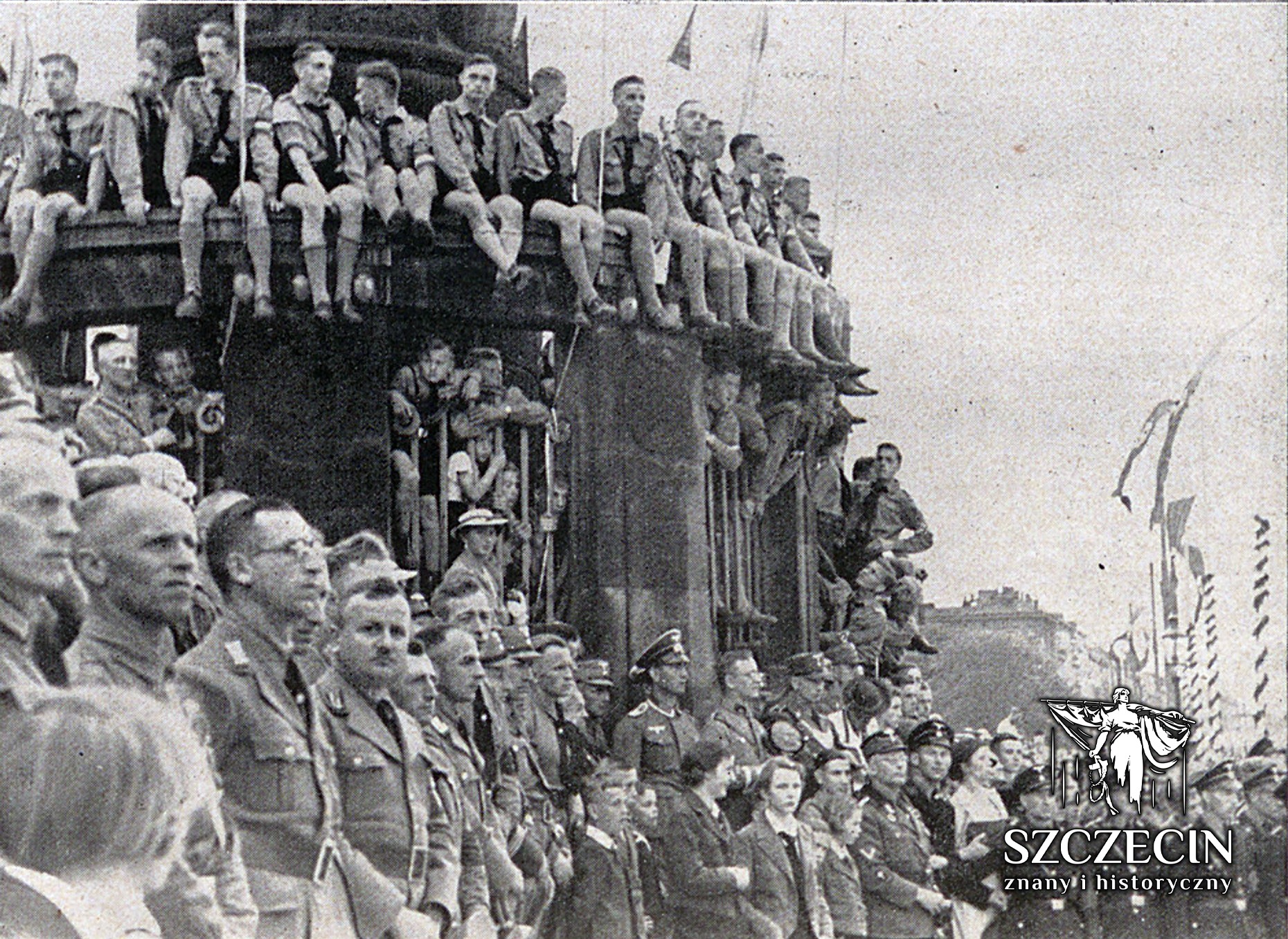
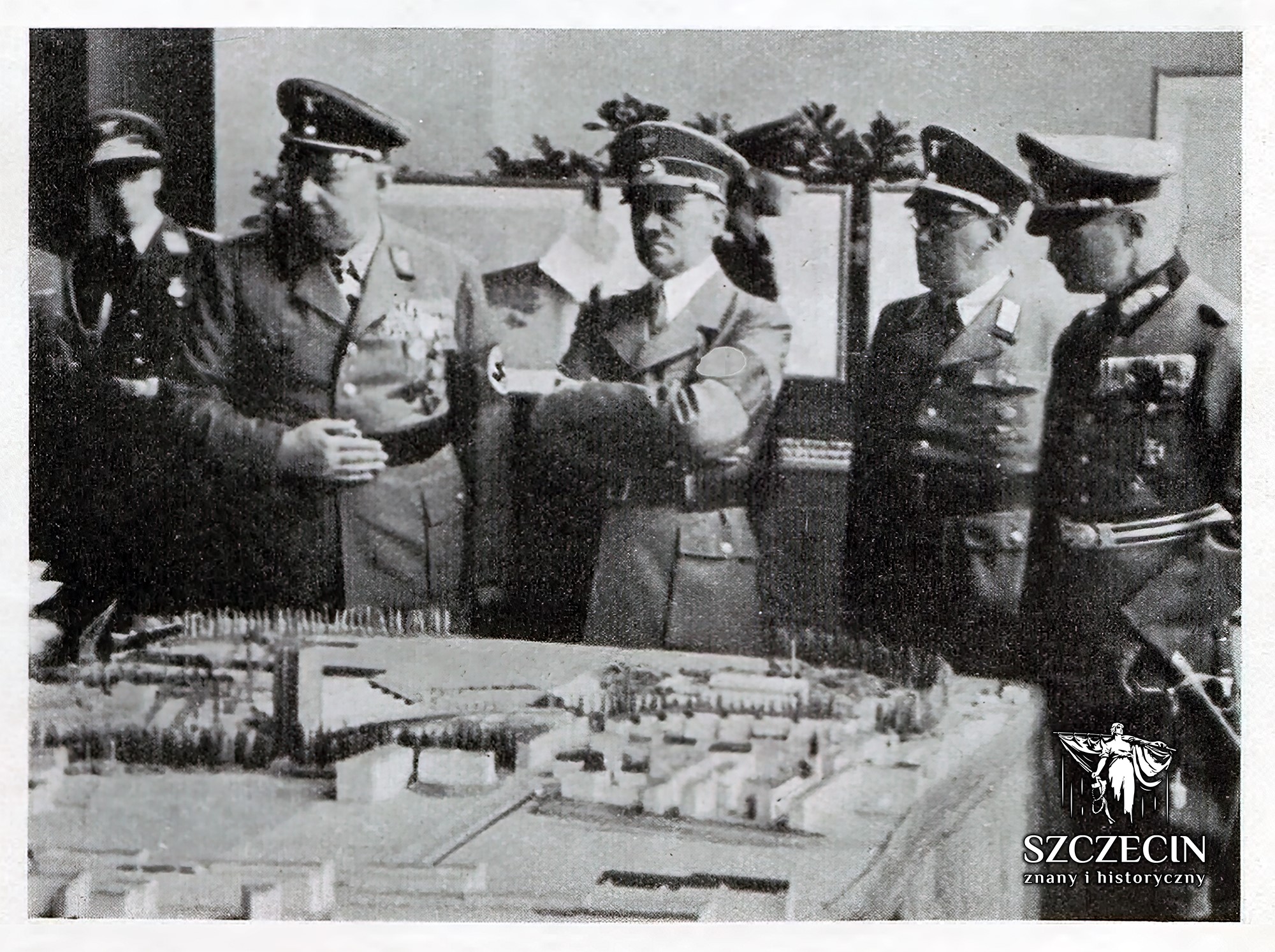
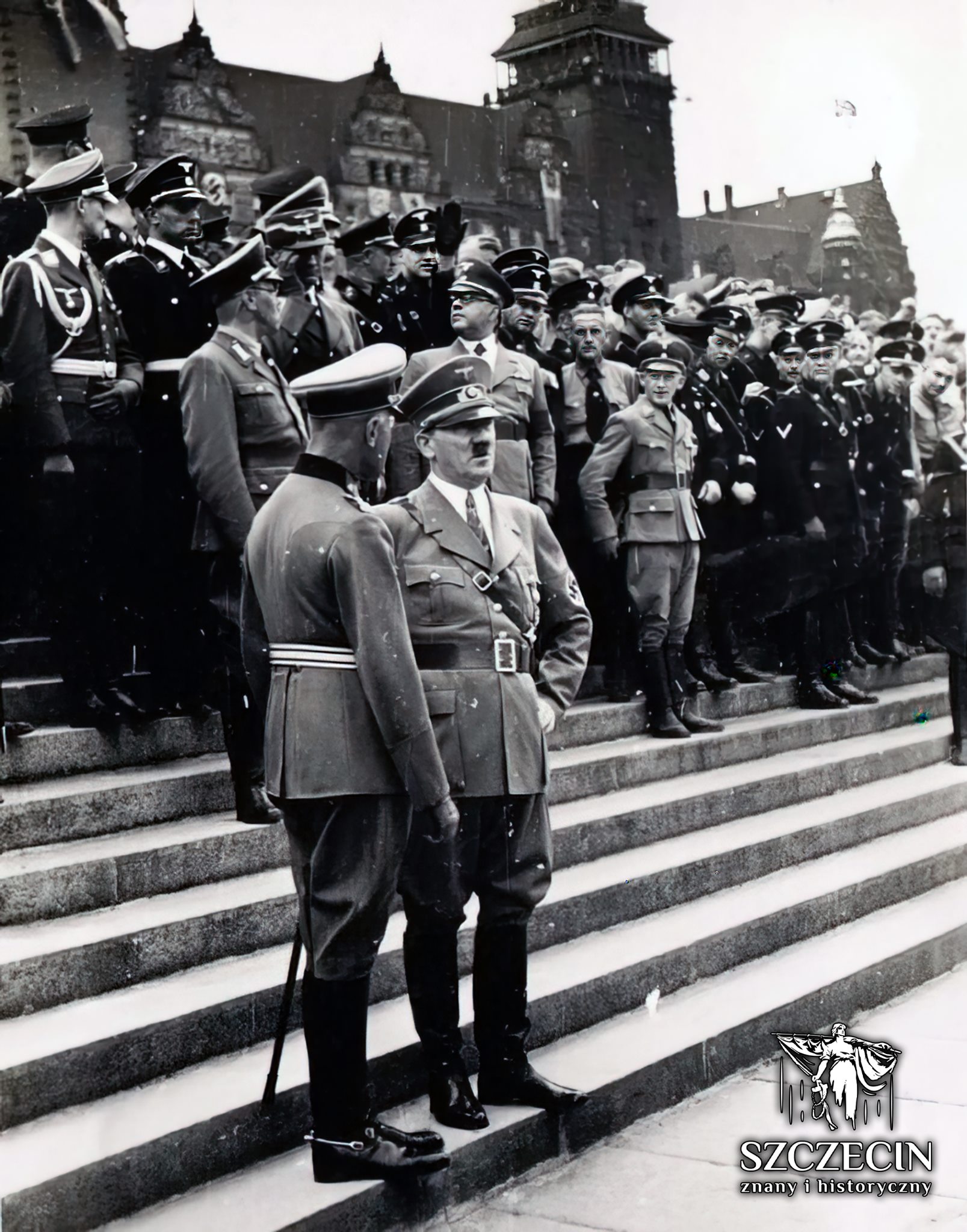
After reaching today’s City Hall, (the former Landeshaus, a large part of which had been occupied by the Nazi party after 1933), Adolf Hitler received the title of honorary citizen of the German city of Stettin from Werner Faber (the mayor of the city). During the talks and debates, Hitler also discussed plans to redevelop the shipyard area. The Führer left the hall to the rhythm of Horst Wessel’s song. He and his entourage made a short tour of the provincial government. When he left the Landeshaus, he was greeted by a warm welcome from the crowd anxiously waiting for him in front of the building.
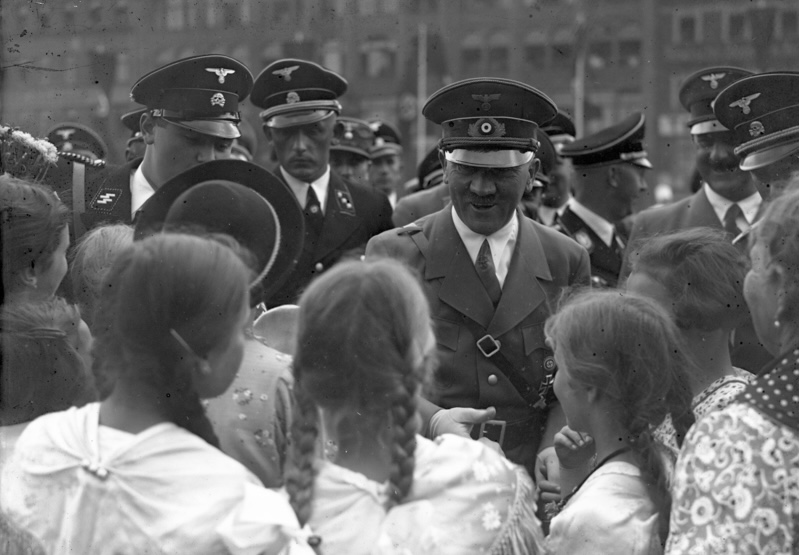
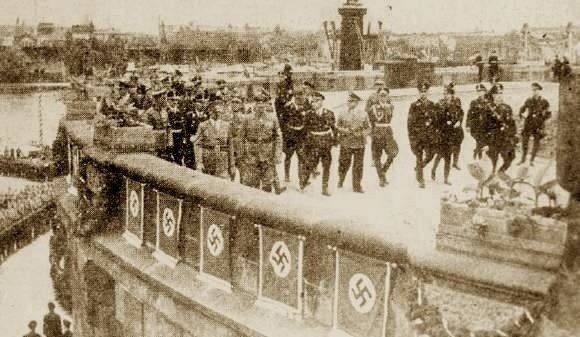

At 2:30 p.m. Adolf Hitler went to the then Hakenterrasse, today’s Waty Chrobrego, where a parade began at 3:00 p.m. with the participation of the destroyer Friedrich Ihn. Hitler then thanked the city for its honorary citizenship. He also spoke about the “merits and valuable features” of the Pomeranian district, whose capital he predicted a great and happy future. As soon as the first notes of the German national anthem had been played, the audience at the Landeshaus gave the leader a “spontaneous and heartfelt” standing ovation. Hitler then made his way back to the train station past jubilant crowds, where his special train departed from the main station slightly after 6 p.m., but the city’s festivities continued well into the night.

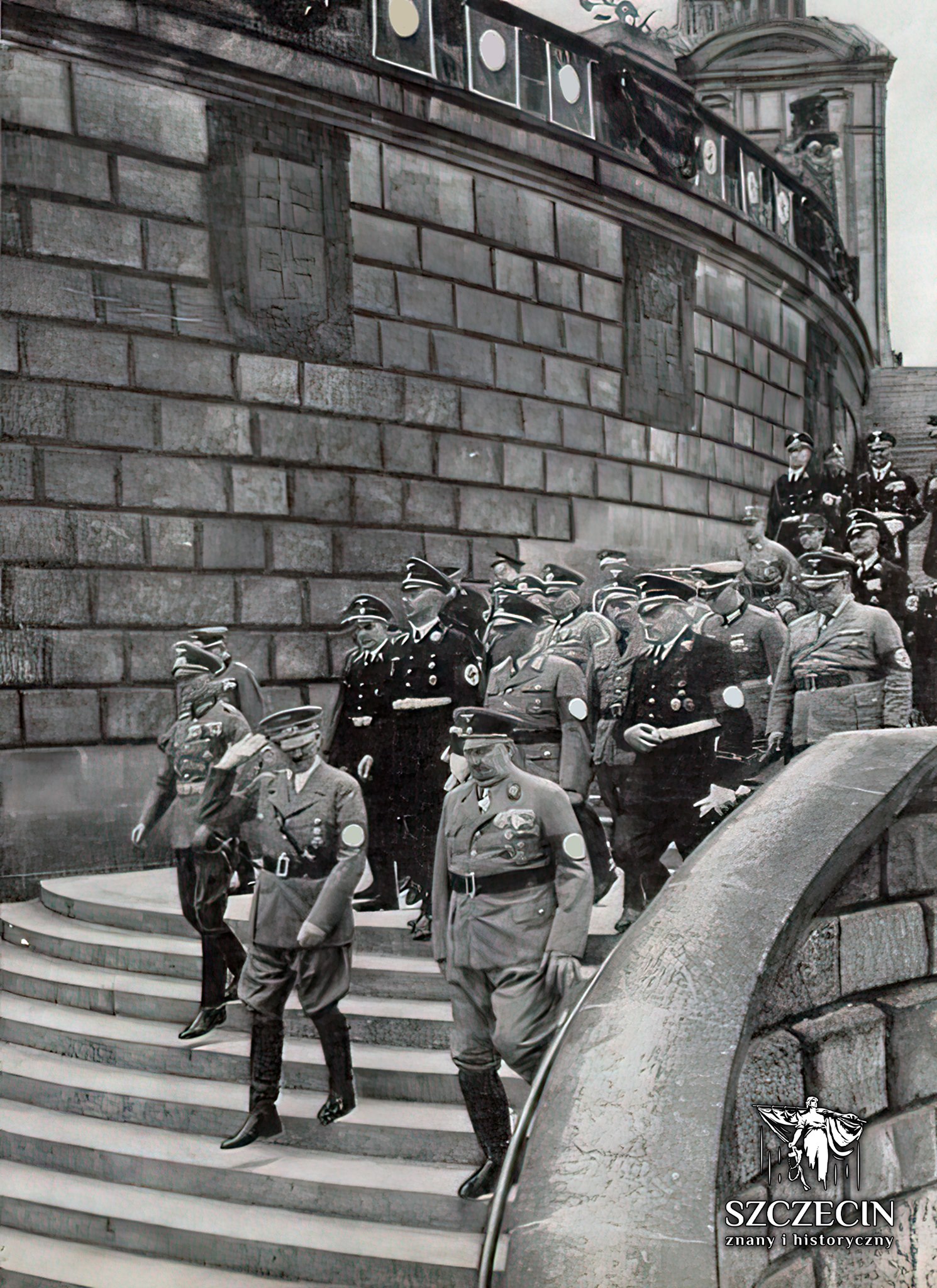
The entire city had prepared for the Führer’s visit. The authorities of Szczecin and the province issued successive directives regarding the organization of residents’ lives during these festive days. Shops could only be open during designated hours. On Saturday, food, stationery and tobacco stores were allowed to trade from 7:00 p.m. to 9:00 p.m., and on Sunday from 8:00 a.m. to 10:00 a.m. and from 4:00 p.m. to 9:00 p.m. The police lifted the curfew on the night of June 11-12.
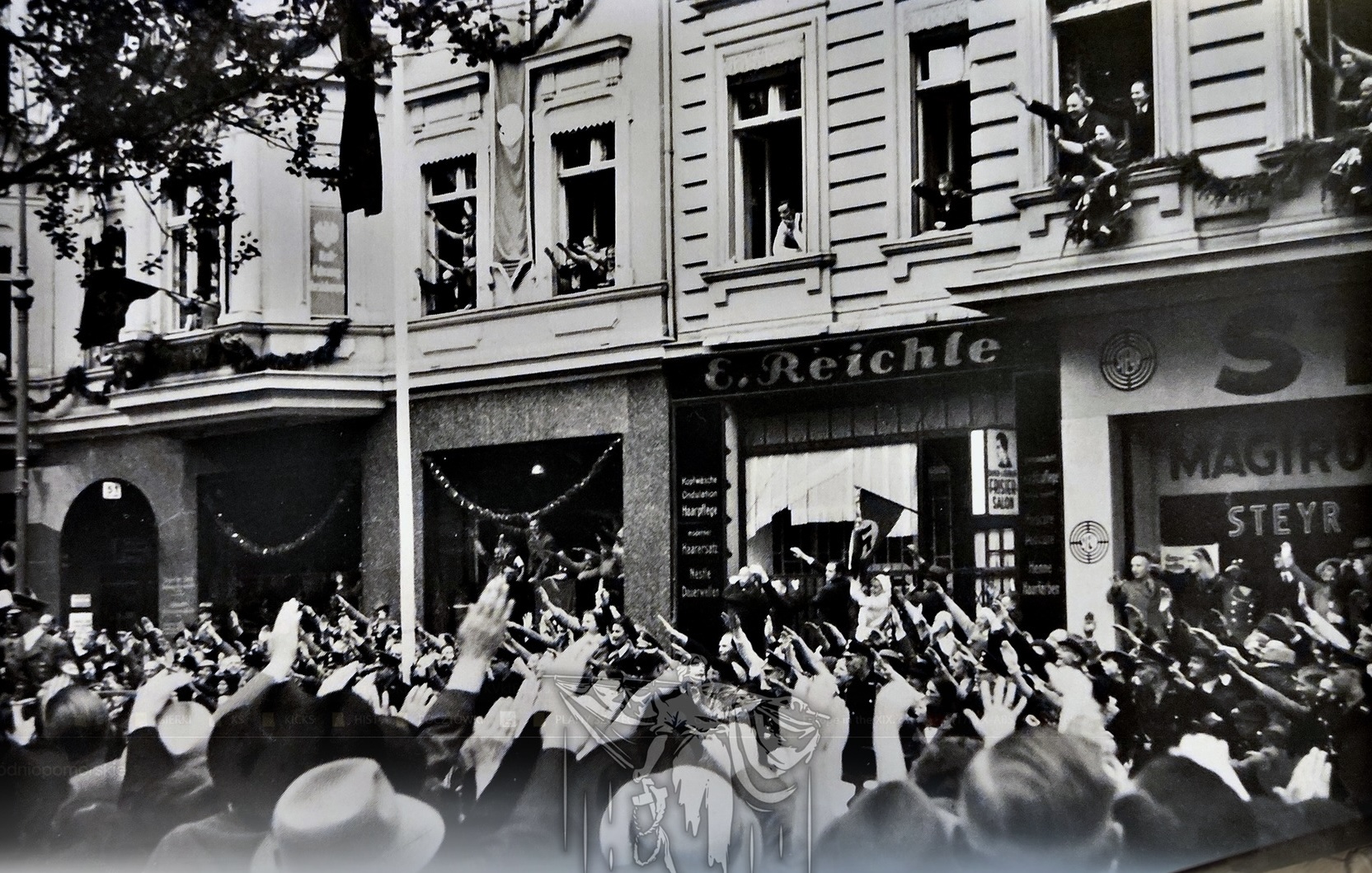
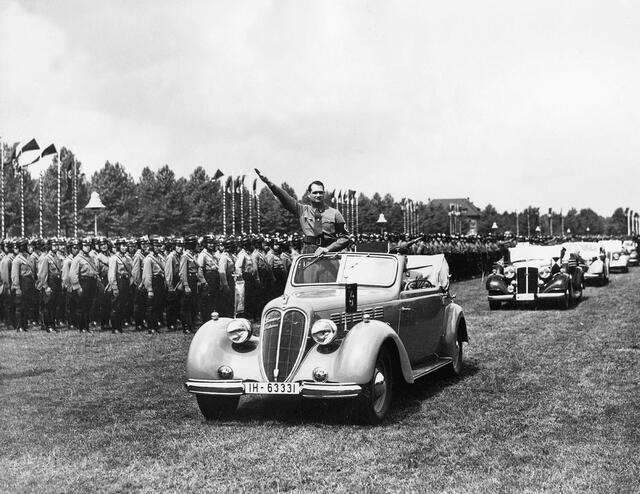
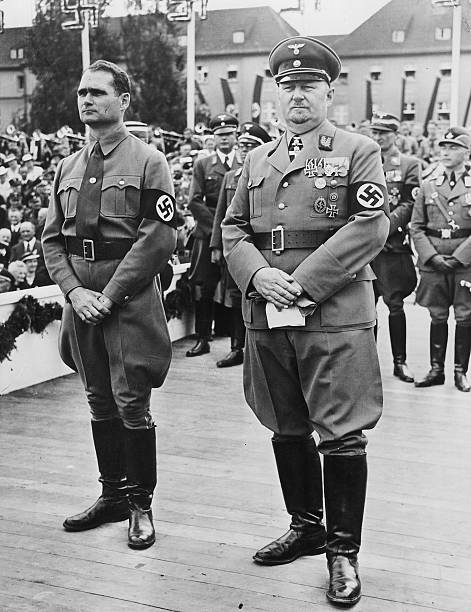
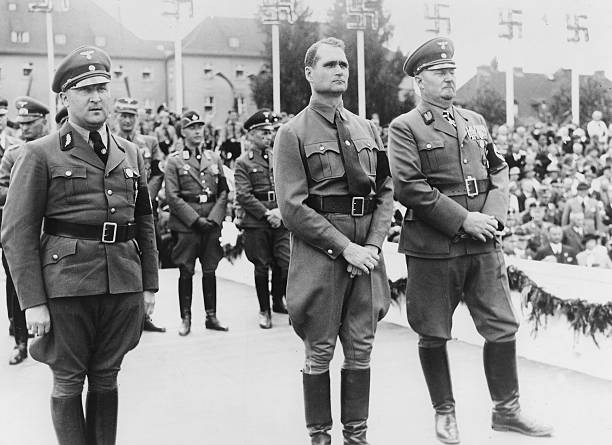
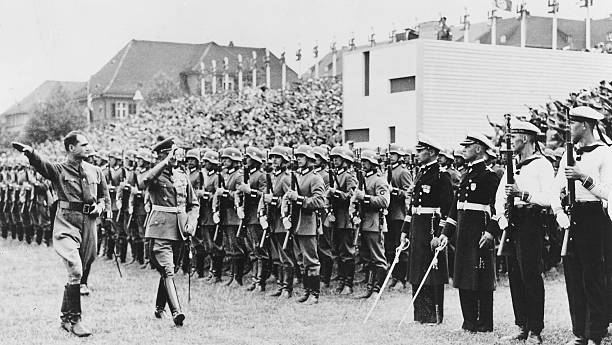
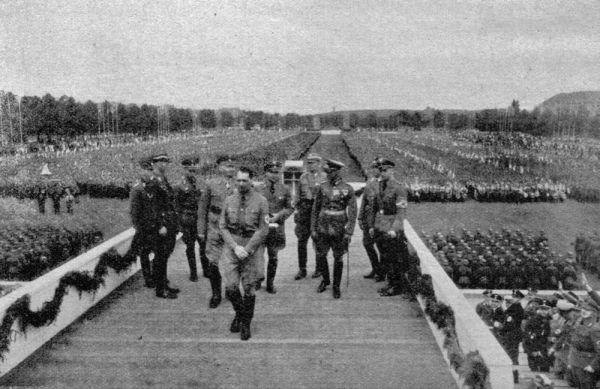
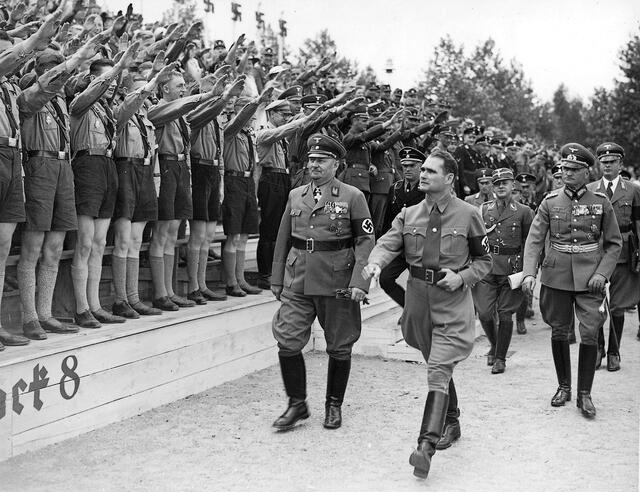
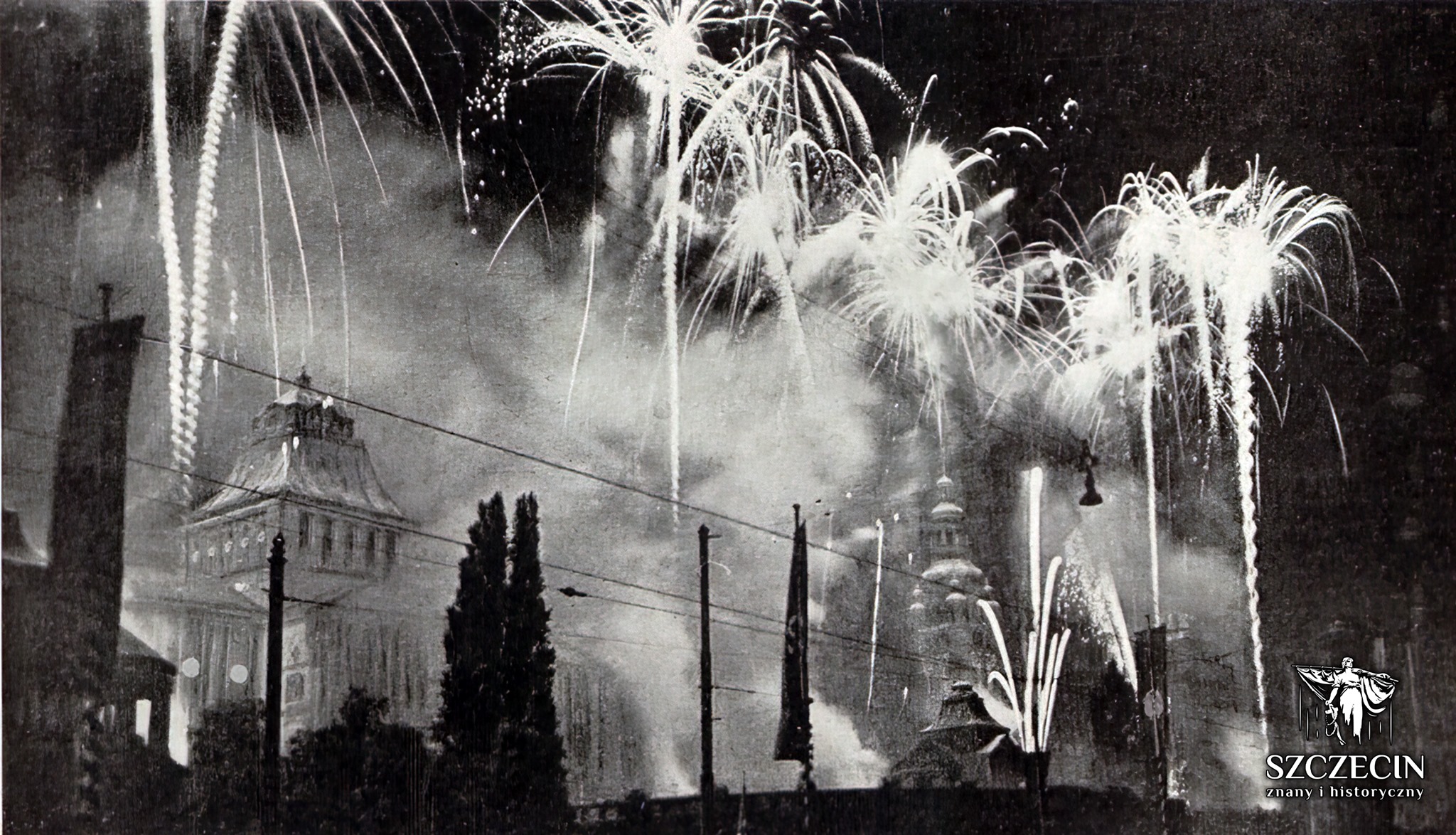
Hitler’s visit to Szczecin was accompanied by an ostentatious display. The musical part of the ceremony featured Richard Wagner’s compositions. Residents watched a fireworks show on the Hakenterrasse, and participated in sports and shooting competitions. “The hearts of all Pomeranians beat faster with pride and joy at this news (of Hitler’s arrival)” read the pages of “Pommersche Zeitung”. During his speech in Szczecin, Hitler assured that Germany would continue to move in the direction that he had set – towards “strengthening the peasantry and the economy, and above all towards building an authentic national community of social Germany”.
Field Marshal Mackensen
August Von Mackensen was a German field marshal who commanded Army Group Mackensen during World War I and became one of the German Empire’s most prominent and competent military leaders. After Hitler gained power in January 1933, Mackensen became a visible, if largely symbolic, supporter of the Nazi regime. That same year Hermann Göring made him a Prussian state councillor. As a striking visual icon of the Prussian traditions, he appeared in his black uniform and death’s-head busby at public events organized by the German government or the Nazi Party. Hitler visited Mackensen on his 85th birthday on 6 December 1934, as well as his 90th birthday on 6 December 1939, where he passed through Stettin on his way to his estate in Falkenwalde.
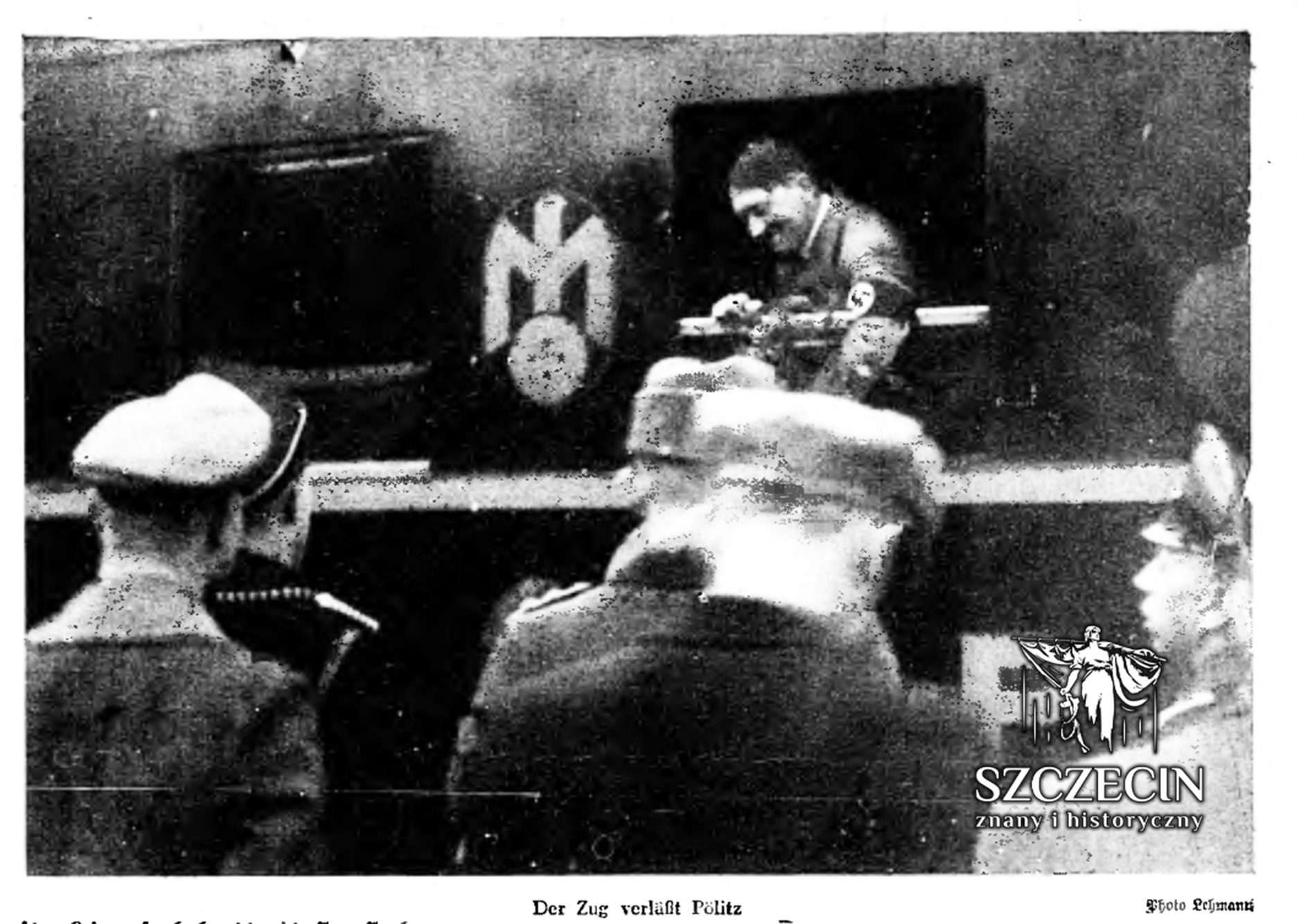
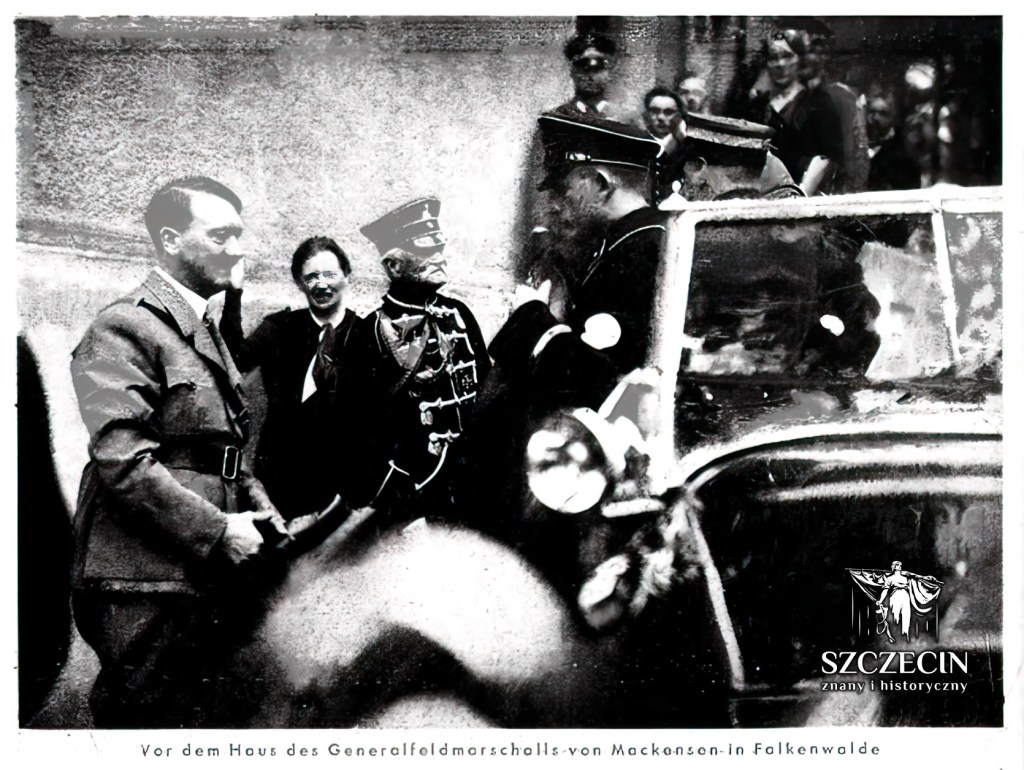
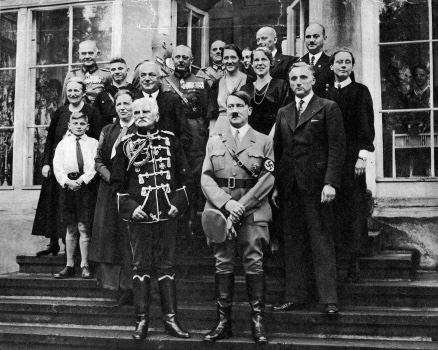
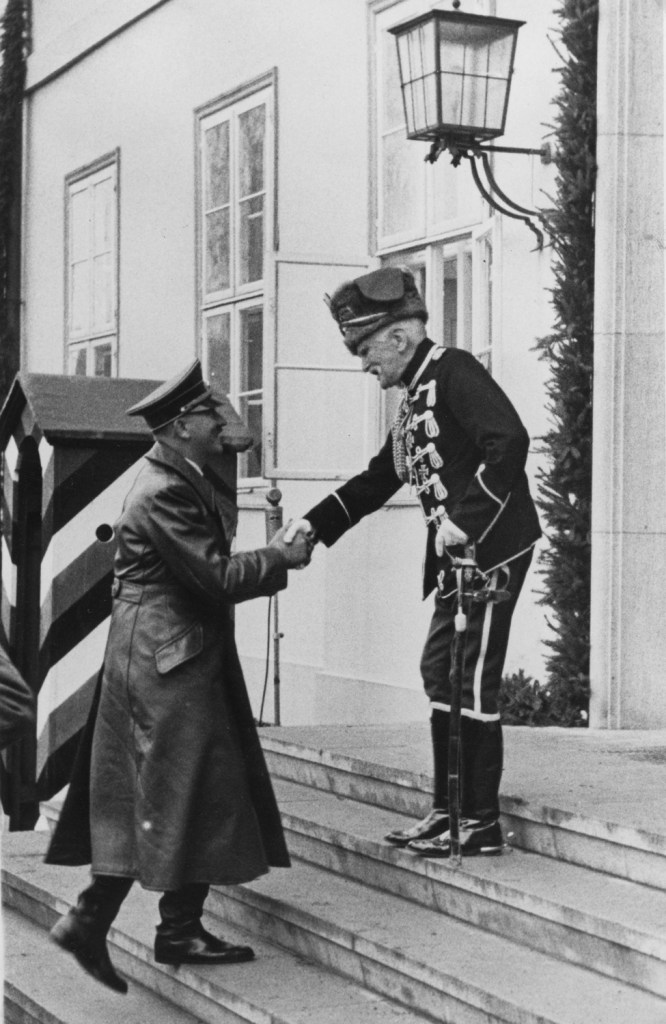
Adolf Hitler greets August von Mackensen for his 90th birthday on 6 December 1939 near Stettin.



 Heinrich Hoffmann Photo Gallery