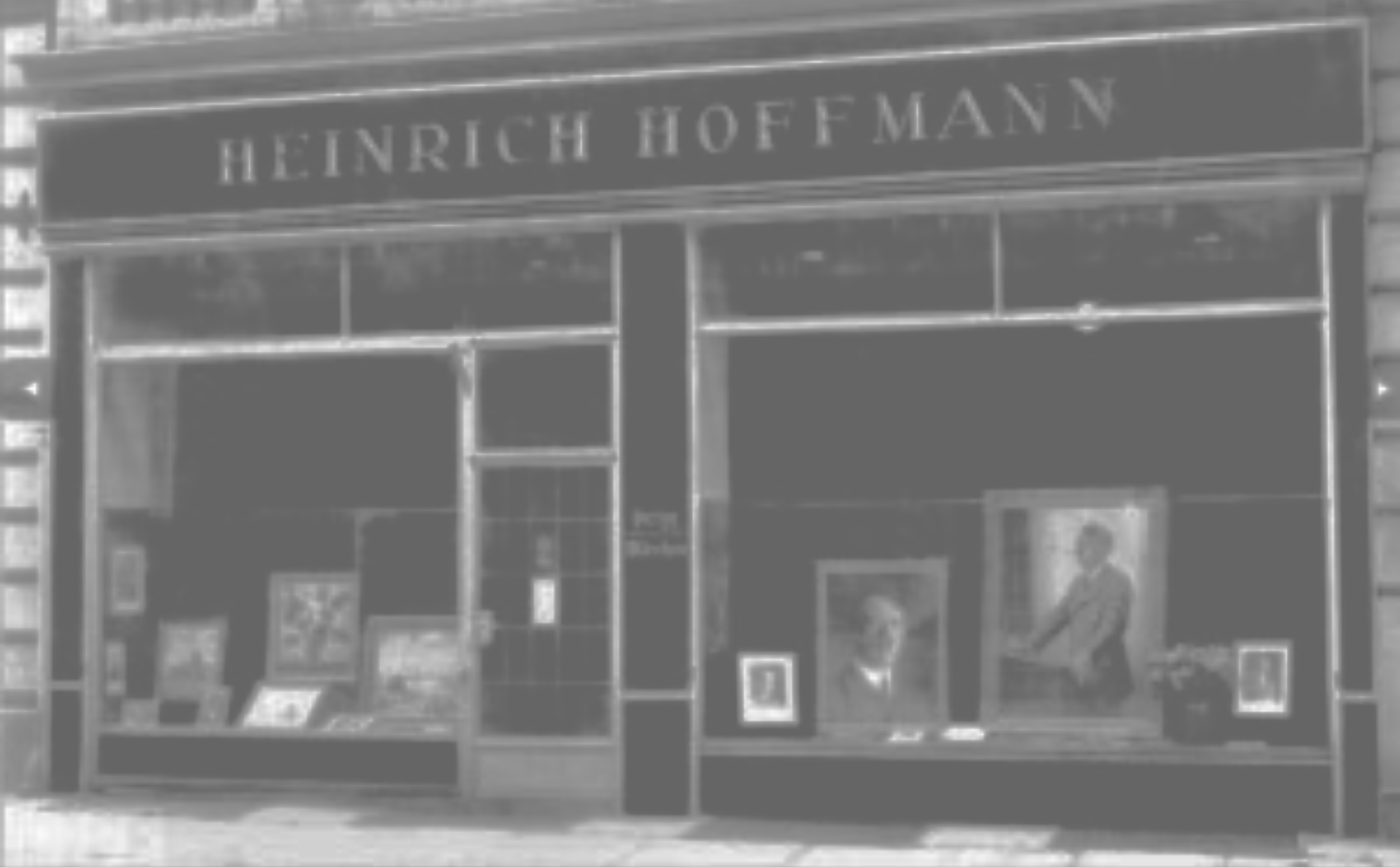
Heinrich Hoffmann (1885 – 1957) served as Adolf Hitler’s official photographer from when Hitler took control of the Nazi party in 1921 until his death in 1945. Hoffmann estimates he took over half a million photographs of Hitler over the course of his career. His portraits were the most significant source of Nazi propaganda materials published over the course of close to 25 years, everything from postcards, posters, magazines, postage stamps and picture books. Click on each theme below to see a complete photo album devoted to that particular event or topic.

“I’m not interested in the intellectual, I’m interested in the German people….”

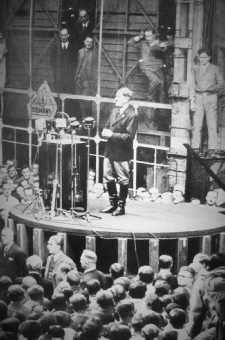
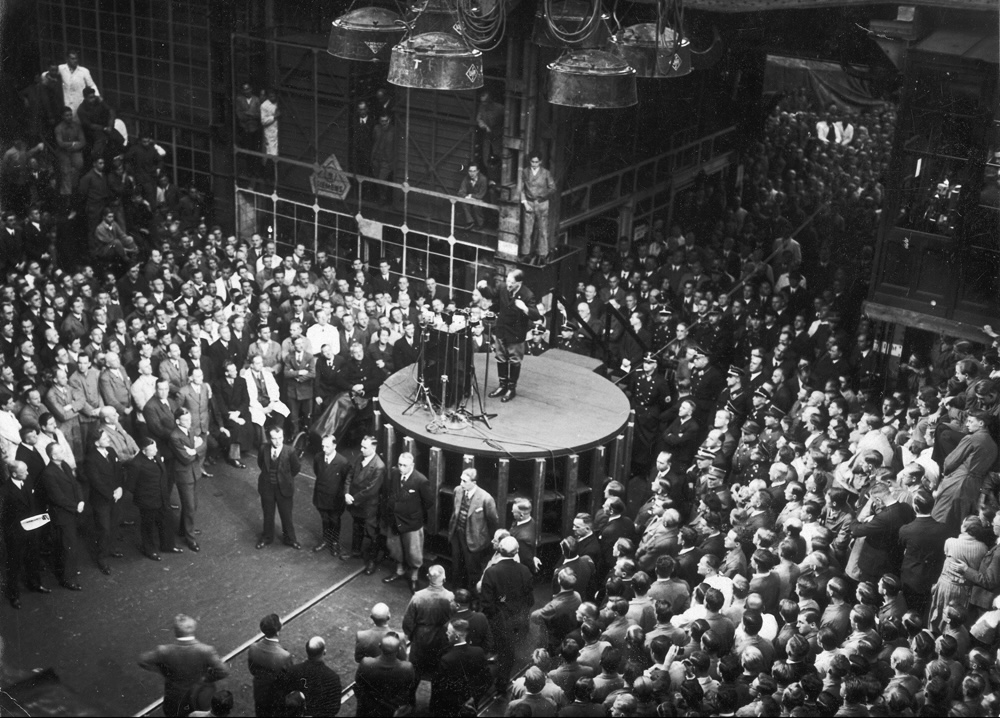
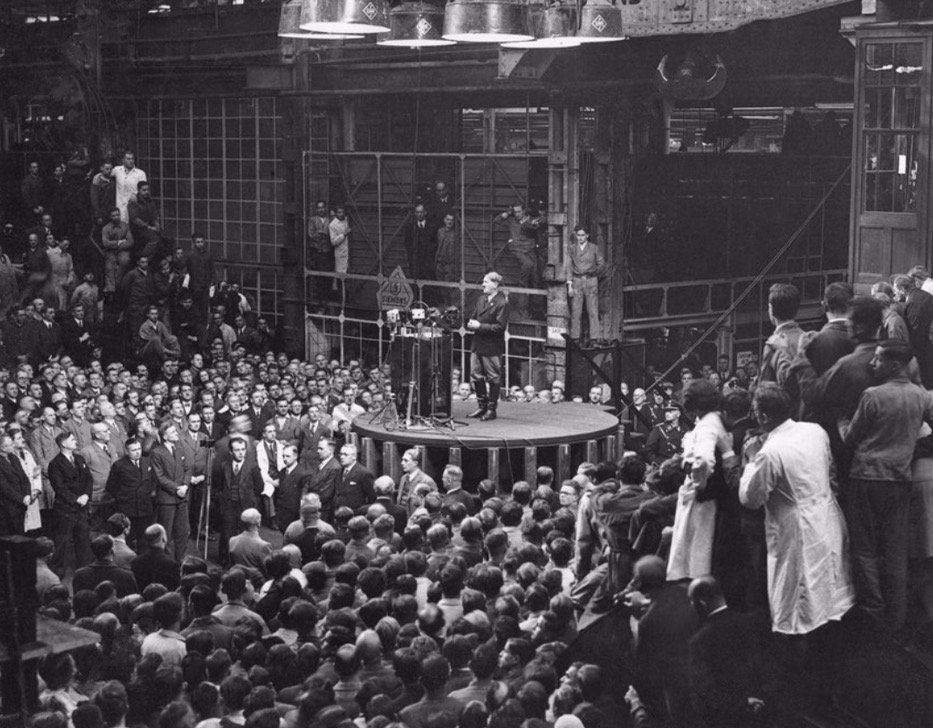
On 10 November 1933, Adolf Hitler delivered a speech at the Siemens Dynamo factory in Berlin at the Siemensstadt locality. Joseph Goebbels, Reich Minister of Propaganda, delivered an opening address before he introduced Hitler’s speech that extolled the virtues of German workers that was broadcast to millions over the radio. The occasion for the speech was an opportunity to address the German public before the 1933 Reichstag elections scheduled to be held two days later.

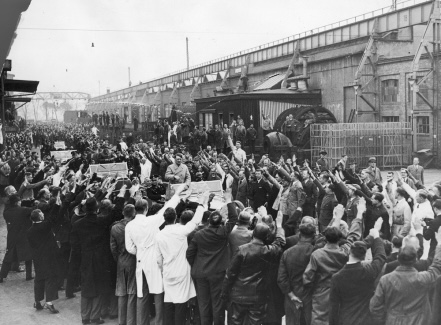
Adolf Hitler greeted by crowds outside the Siemens-Schuckertwerke factory in Berlin on 10 November 1933. Hitler’s speech at the factory, part of his campaign for the 12th November Reichstag election, was broadcast on German national radio. 

On November 10th, ten thousand Siemens employees were able to see and hear the Führer in the Dynamowerk during his last great appeal to the German people for a unanimous commitment to world peace with “honor and equality.” The German electrical industry, like the rest of the country’s economy, profited from the upswing that began soon after the National Socialists took power in 1933. The German economy grew noticeably from the mid-1930s until World War II. This growth was based significantly on government armament contracts.
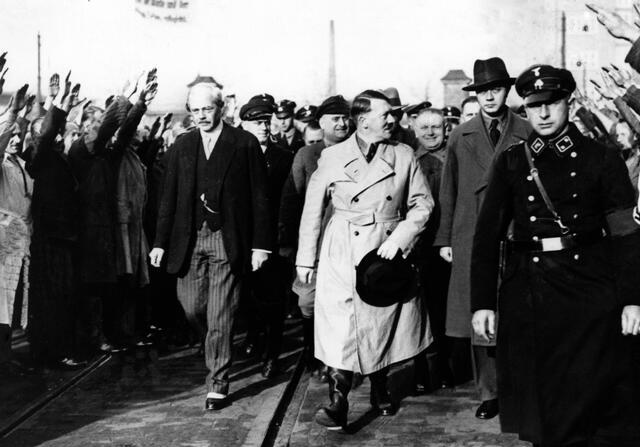
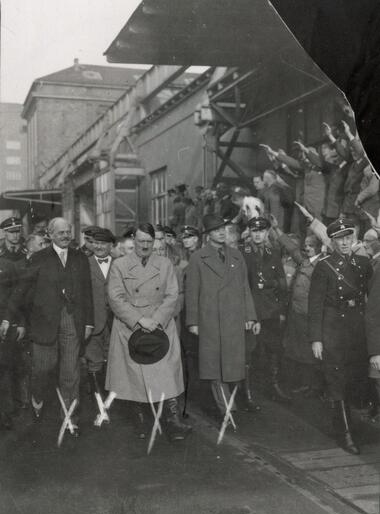
Adolf Hitler attends a meeting of Siemens workers with Karl Friedrich von Siemens. The occasion is a speech before the 1933 Reichstag elections at Siemens’ dynamo plant in Nonnenallee.

As the leader of the German electrical industry, Siemens revenue increased continuously from 1934 and reached its peak during the war years. Carl Friedrich von Siemens was head of the company from 1933 to 1941. Personally, von Siemens is reputed to have detested the National Socialists. However, he was responsible for ensuring the company’s well-being and formed a close cooperation with Hitler’s government. From the end of 1943 to the end of the war, Siemens primarily manufactured for the German armed forces. Today Siemens is Europe’s largest industrial manufacturer with over 311,000 employees. 

Engel, Hitler, and Rosenberg at Siemens.
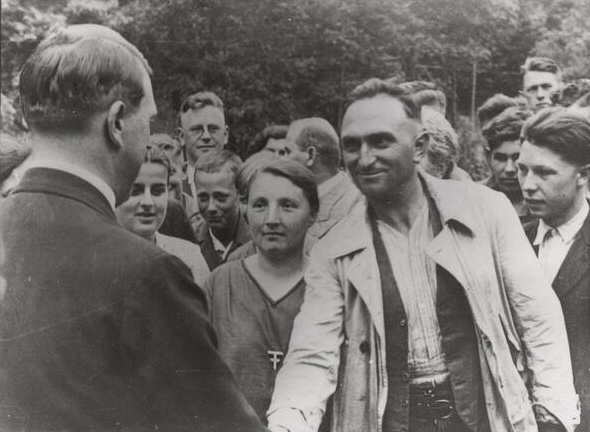
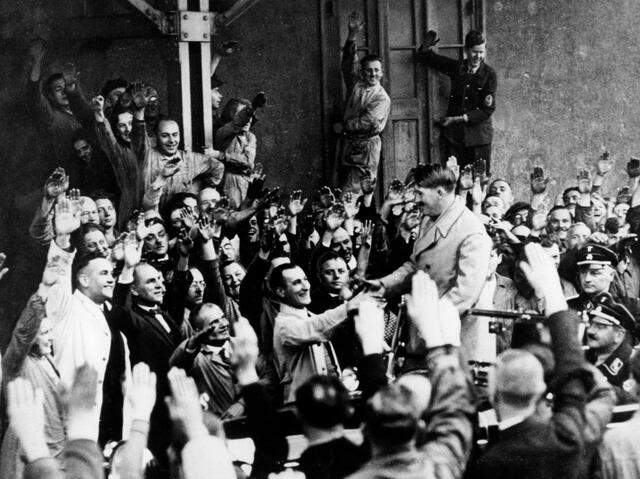
Adolf Hitler is greeted by workers at the Siemens plant before delivering his election campaign address as he walks with Alfred Rosenberg.

Parliamentary elections took place in Germany on 12 November 1933. They were the first to be held since the Nazi Party seized complete power with the Enabling Act in March. All opposition parties had been banned and voters were presented with a single list containing Nazis and 22 non-party “guests” (Gäste) of the Nazi Party. These “guests”, who included the likes of Alfred Hugenberg, fully supported the regime of Adolf Hitler. This election set the tone for all further elections and referendums held in the Nazi era.

NSDAP election banner displayed on the “Adolf Hitler House” on Voßstrasse for the Reichstag elections held on 12 November 1933, reading ‘One people, one leader, one ‘yes’’ [‘Ein Volk, ein Führer, ein Ja’].

Official results showed 92 percent of the voters approved the Nazi list, on a turnout of 96 percent. The vote was held in far-from secret circumstances and many voters feared that anyone who voted “no” would be detected and punished for doing so. In some communities, voters were threatened with reprisals if they dared to vote “no” or if they simply failed to vote at all. The new Reichstag, exclusively composed of NSDAP members and sympathizers, convened on 12 December to elect a Presidium headed by President of the Reichstag Hermann Göring.

Postcard Reichkanzler Hitler bei Siemens – Adolf Hitler is depicted visiting the workers in Siemensstadt, an industrial area significant for its large workforce and production capacity. This visit is a portrayal of Hitler’s direct engagement with the working class, a key demographic in the Nazi regime’s broader social and economic policies.

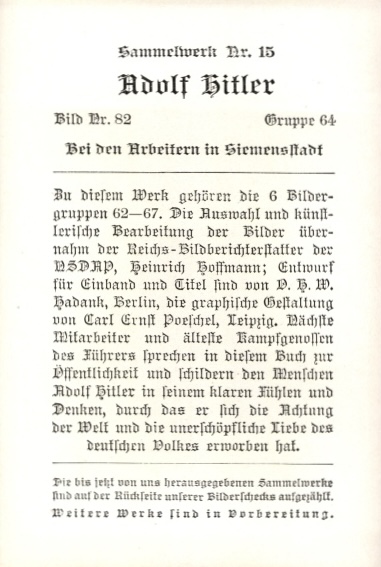
Sammelbild “Adolf Hitler” Nr. 82 “Bei den Arbeitern in Siemensstadt”

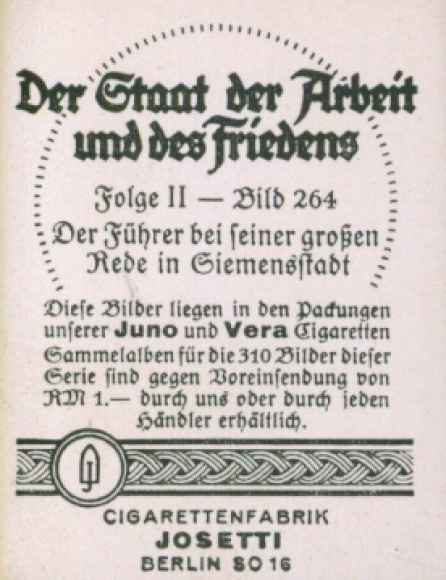
Sammelbild Der Staat der Arbeit und des Friedens, Führer Adolf Hitler, Rede in Siemensstadt – Cigarettenfabrik Josetti Berlin, Folge II Bild 264

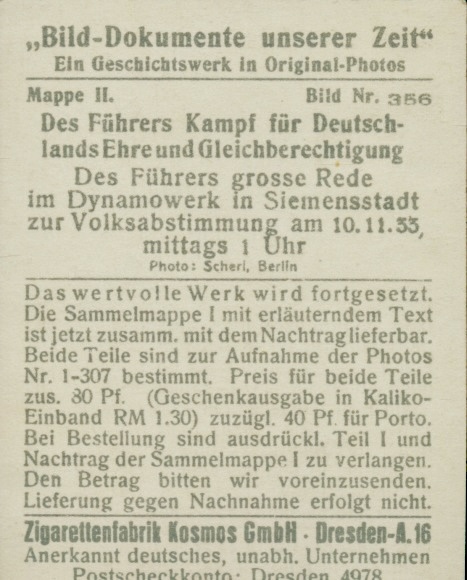
Collector’s picture Image Documents of our Time No. 356 Speech of the Führer in the Siemensstadt Dynamo Plant 1933 – The Führer’s fight for Germany’s honor and equality, Kosmos cigarette factory

Adolf Hitler is depicted visiting the workers in Siemensstadt, an industrial area significant for its large workforce and production capacity. This visit is a portrayal of Hitler’s direct engagement with the working class, a key demographic in the Nazi regime’s broader social and economic policies.
Hitler vor Arbeitern der Siemenswerke

Adolf Hitler’s choice of attire during the Siemen’s speech is the only time that I have seen him wear his party uniform in combination with a formal suit jacket, definitely an interesting and unusual combination.

Reich Chancellor Adolf Hitler during a speech at the Siemens factory in Berlin.
Adolf Hitler leaving the Siemens works, after making his final speech prior to the German election.
Adolf Hitler leaving the Siemens works, after making his final speech prior to the German election on 10 November 1933.

4 responses to “Hitler at Siemens 🏭”

  1. Barbara Underwood Avatar
    Barbara Underwood

    This is another great article showing Hitler meeting and addressing the working class in their own environment, namely the Siemens factory. These photos of the large factory where he addressed the workers are of special interest because my father worked at Siemensstadt in later years as an electrical engineer. The photos are intriguing in themselves, as it shows industry and ordinary working people of that time. Great variety of photos and background information, as always – thank you!

    Liked by 1 person

    1. Verboten Love Avatar

      I realized tonight that I have been saving up these photographs since our discussion early last May, and I found 2 new ones just this week! The interior shots are so fun to zoom in on and see all of the workers climbing on equipment and girders for a better view, some placing themselves in quite precarious positions! Hopefully I continue to find even more pics and I’ll keep you posted as I add new ones! 🤗

      Like

  2. John Dunn Avatar
    John Dunn

    These are amazing photos! However, we must remember what a catastrophic disaster this turned out to be for Germany, the German working class and the world. Following fools and demagogues usually ends in disaster.

    Liked by 1 person

    1. Verboten Love Avatar

      Unfortunately I am seeing a very similar scenario unfolding here in the U.S. and gravely fear the long term consequences. Most people do not know history, and that is why they are doomed to fall into the same traps and repeat the same mistakes. I think it’s very important to share this material so that those of us who are blessed enough to live in a democracy can protect ourselves from losing it to tyrants.

      Like

Leave a reply to Verboten Love Cancel reply