Heinrich Hoffmann (1885 – 1957) served as Adolf Hitler’s official photographer from when Hitler took control of the Nazi party in 1921 until his death in 1945. Hoffmann estimates he took over half a million photographs of Hitler over the course of his career. His portraits were the most significant source of Nazi propaganda materials published over the course of close to 25 years, everything from postcards, posters, magazines, postage stamps and picture books. Click on eachtheme below to see a complete photo albumdevoted to that particular event or topic.
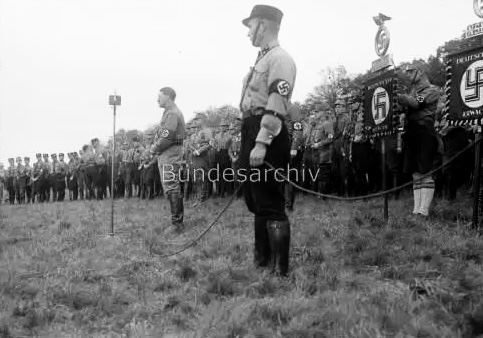
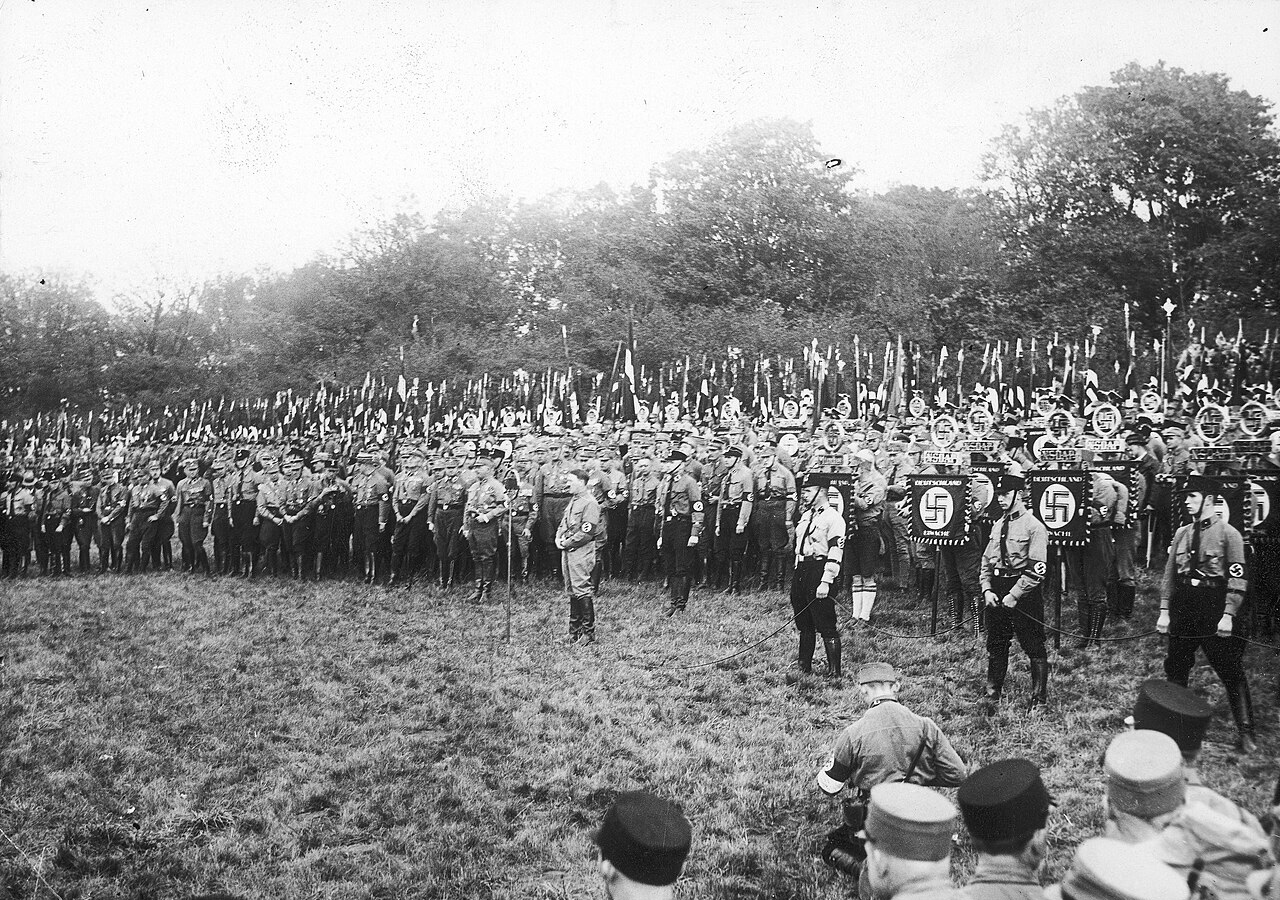
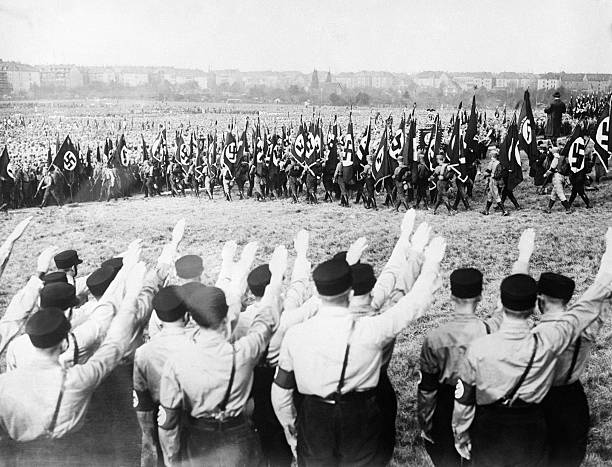
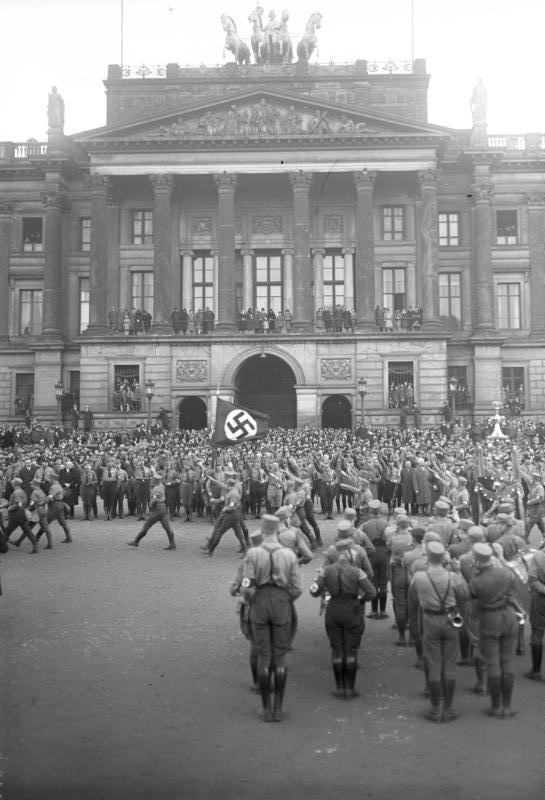
On 18 October 1931, exactly one week after the conclusion of the Harzburg Front conference, Hitler staged his own rally in Braunschweig (Brunswick). Thirty-eight special trains and over five-thousand trucks brought a total of 104,000 Sturmabteilung (SA) and Schutzstaffel (SS) men from all over Germany. They participated in a massive six-hour march-past in review before Hitler followed by a huge torchlight parade, the likes of which the other nationalist organizations or the government could match. This was the largest parade of paramilitary units seen during the Weimar Republic. The rally was intended to demonstrate both National Socialist power as well as loyalty to their leader. The SA Treffen in Braunschweig was one of the more important meetings in the history of the NSDAP, as it was at this rally that the SA swore complete loyalty and allegiance to Hitler.
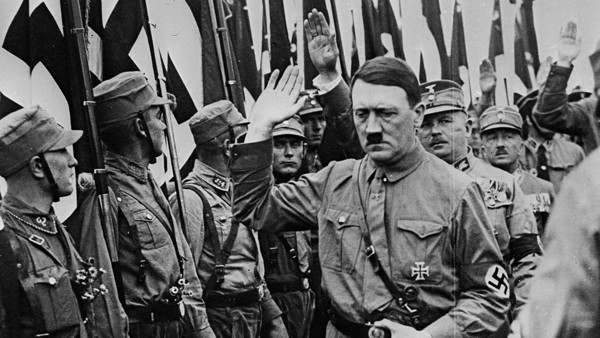
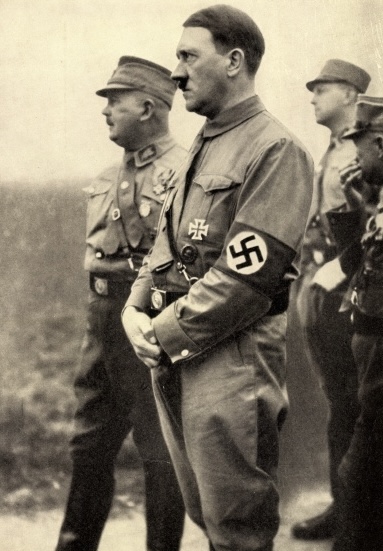
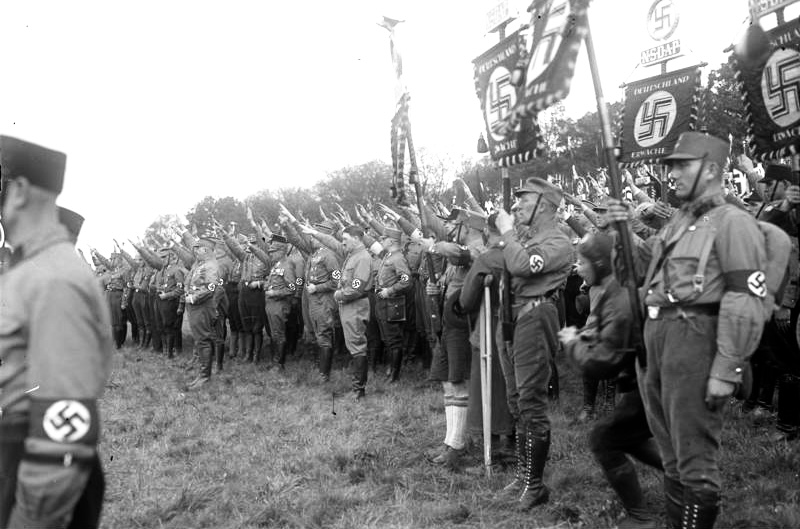
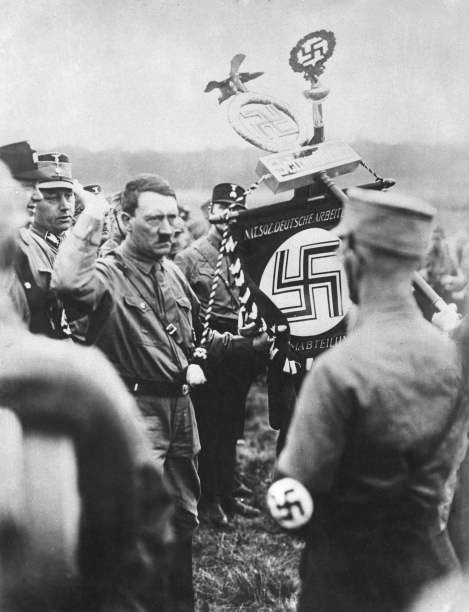
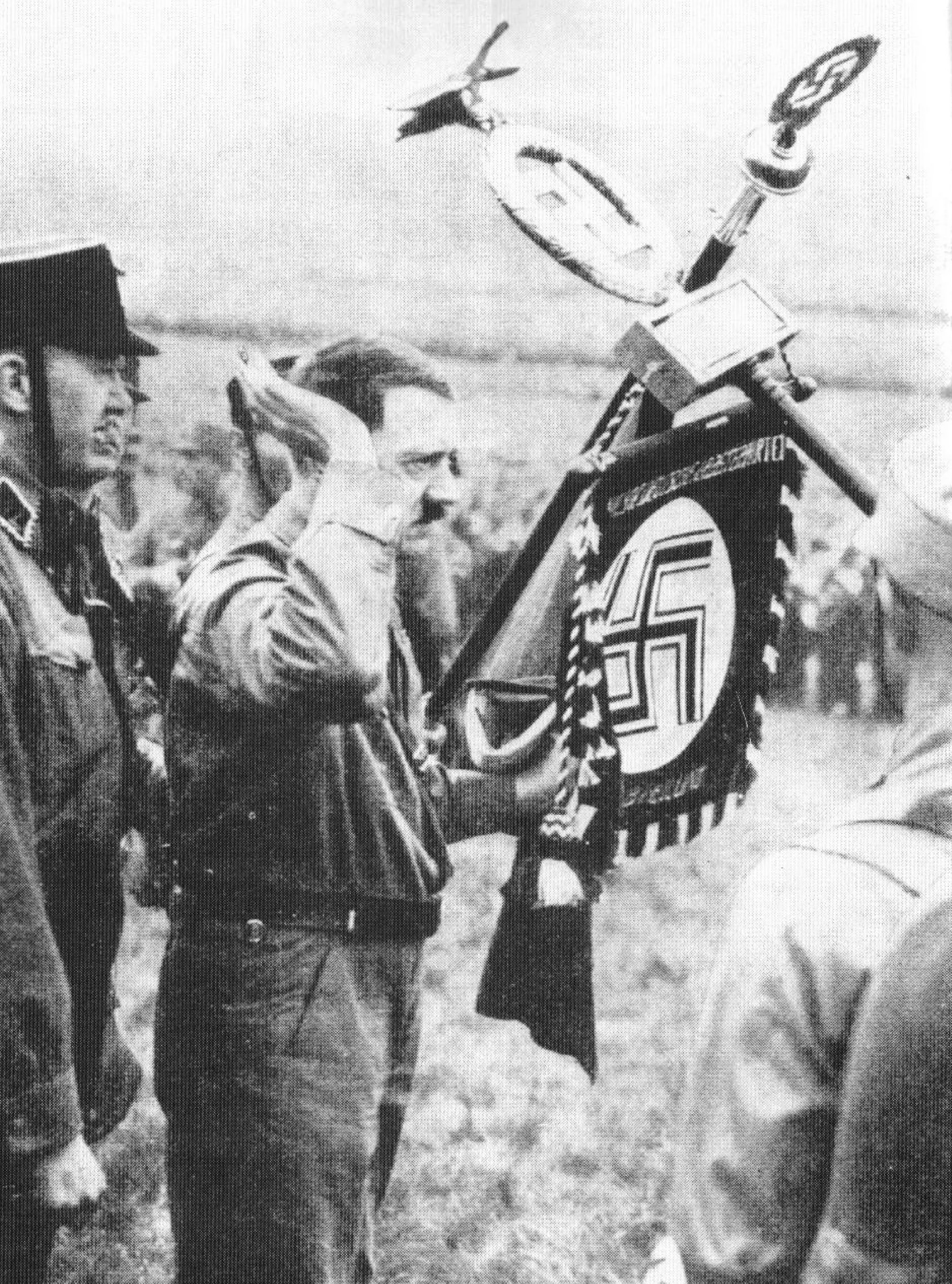
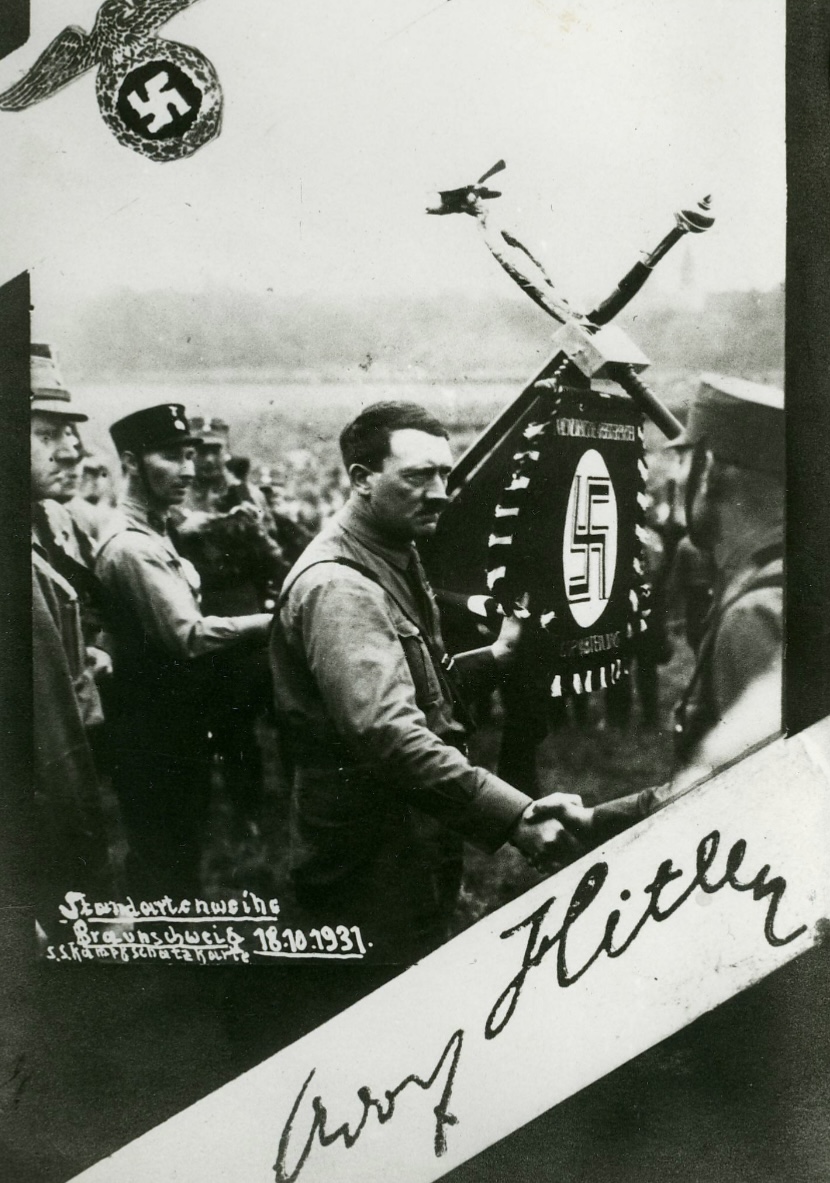
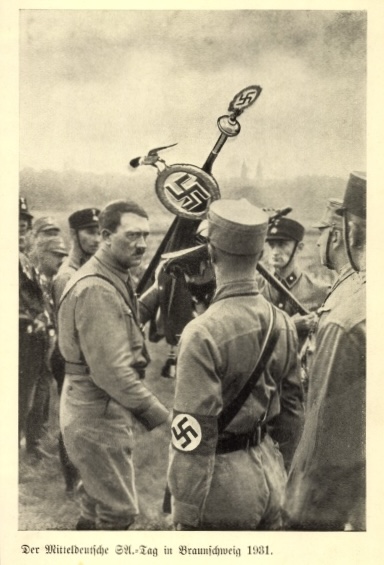
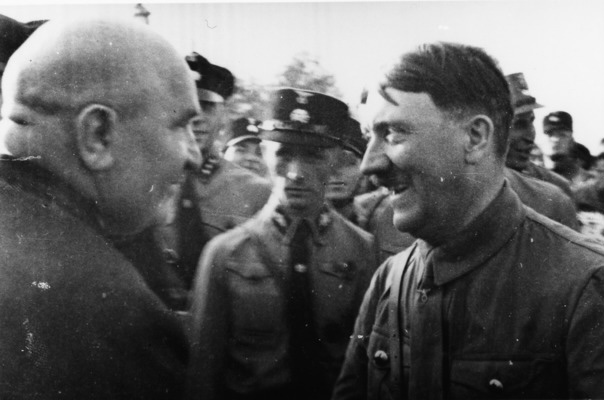
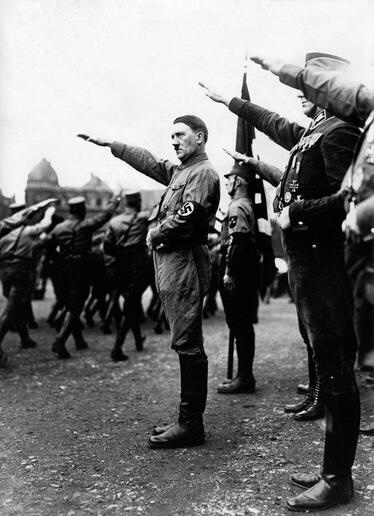
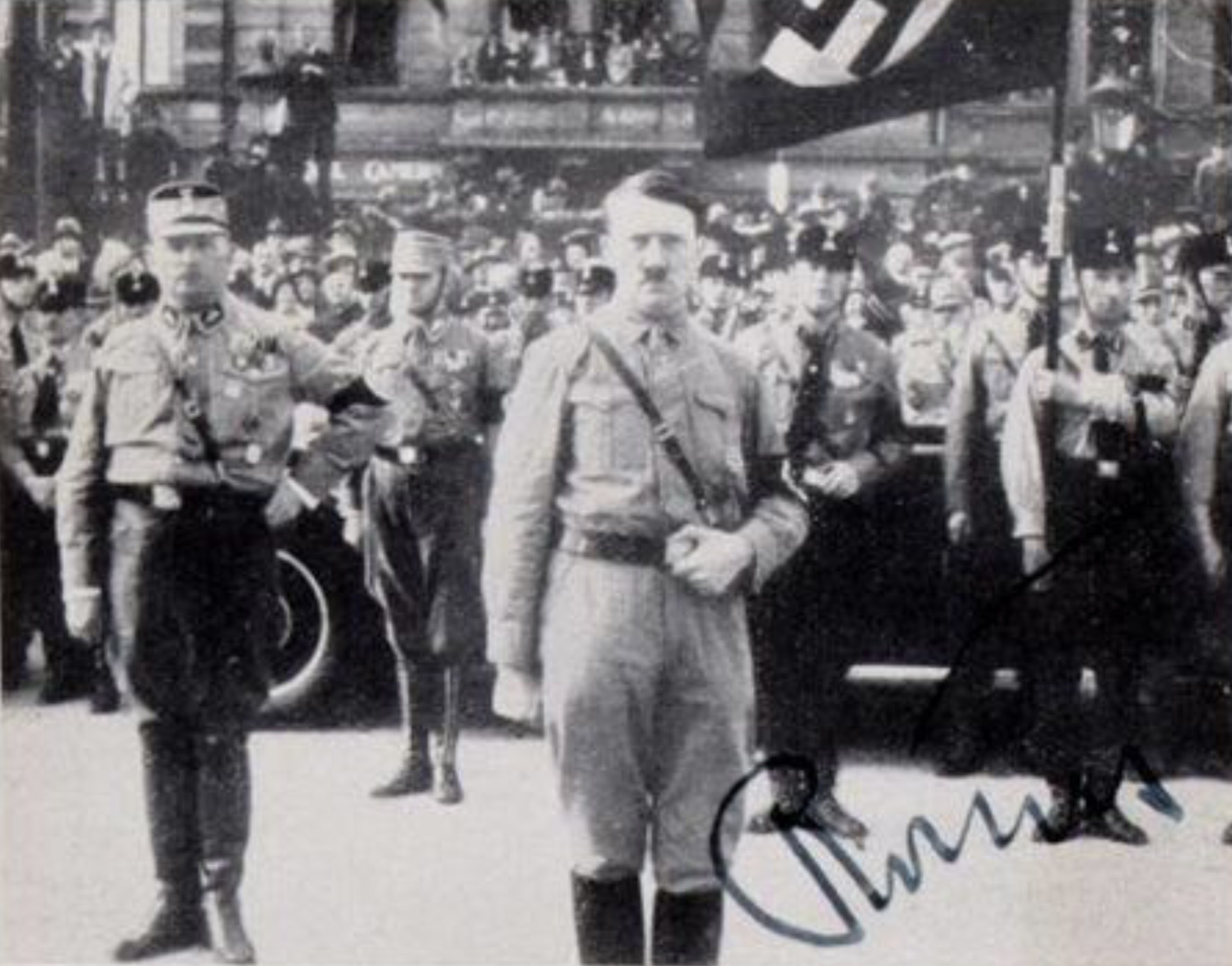
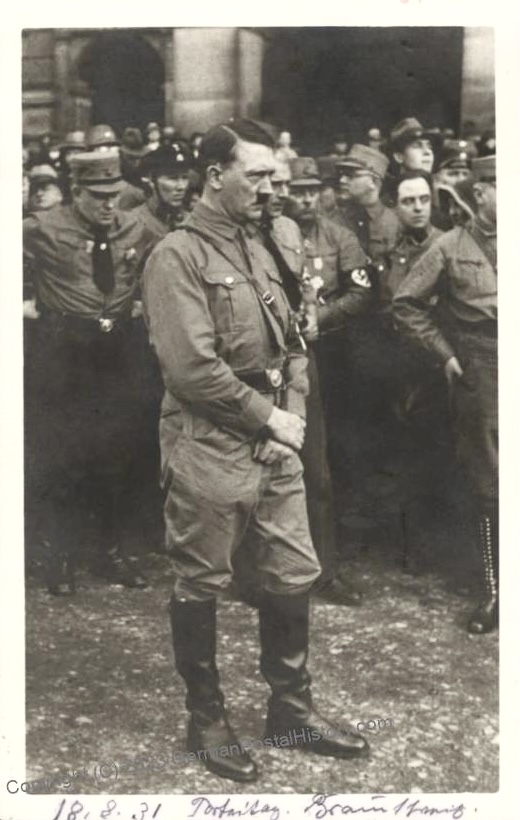
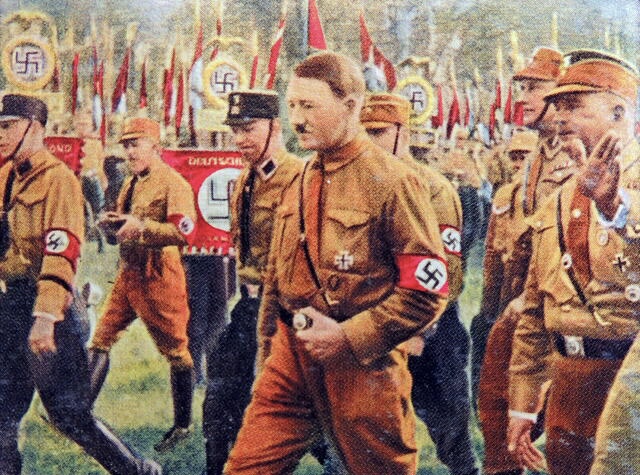
Adolf Hitler and Ernst Röhm greeting the SA formations assembled on the Franzsches Feld in Prinz Albrecht Park in Brunswick on 18 October 1931.Adolf Hitler and Ernst Röhm walking through a formation of flags in Braunschweig on the Franzsches Feld.Adolf Hitler, with Ernst Röhm immediately behind him, passes the ranks of the flag companies on the Franzsches Feld at Brunswick.Adolf Hiter marching with the Brownshirts. On his left is Ernst Rohm, Commander of the Brownshirts. Ernst Röhm wears the SA Treffen Braunschweig Rally Badge on his left pocket. The SA Treffen Braunschweig was a Nazi Party rally that took place in Braunschweig, Germany on October 17–18, 1931. The event was commemorated by a special tinnie, the Brunswick Rally Badge, which was awarded to those who attended the event.Hitler auf der Tagung der Nationalsozialisten in Braunschweig, Okt. 1931Adolf Hitler auf der Tagung der Nationalsozialisten in BraunschweigAdolf Hitler gives a speech to over 100,000 assembled SA stormtroopers in Braunschweig for the Tagung der Nationalsozialisten.Appell der SA Franzsches Feld Hitler bei einer Ansprache Tagung der Nationalsozialisten Leiter SA-Aufmarsch.Parade of standards during the imposing Hitler demonstration in Brunswick, Germany on 18 October 1931.Hitler hands over the Sturmabteilung emblem to one of his leaders during a mass rally at Brunswick on 18 October 1931.
The Brunswick rally was hosted by SA-Gruppe Nord under the leadership of then SA-Gruppenführer Viktor Lutze. At the rally, the SA assured Hitler of their loyalty and Hitler in turn increased the size of the SA with the creation of 24 new Standarten (regiments comprised of 300–500 personnel). Three years later in 1934, Hitler rewarded Lutze’s loyalty by appointing him as the SA-Stabschef, succeeding Ernst Röhm who was murdered during the Night of the Long Knives.
Hitler bei der Weihe von Standarten anl. des nationalsozialistischen Aufmarsches in Braunschweig am 18.10.1931. Hitler consecrating standards at the National Socialist march in Braunschweig on October 18, 1931.Standartenweihe Braunschweig 18.10.1931 SS Kampfschutzkarte
The banking crisis and financial collapse in Germany in the summer of 1931 heralded a disastrous new phase of the world depression. It was also integral to the collapse of the Weimar Republic and led to the eventual Nazi seizure of power.
Postcard Braunschweig in Niedersachsen, titled ‘Der Führer in Braunschweig 1931’. Accompanying Hitler are Leopold Gutterer, propaganda leader of Gau Southern Hanover-Brunswick; Ernst Hanfstaengl, Hitler’s foreign press secretary; Gerret Korsemann, SA leader of the southern Hanover Province; and Viktor Lutze, Reichstag deputy for electoral constituency 16, South Hanover–Braunschweig. 18 October 1931
Brunswick was the only state in Germany at the time in which the Nazis held control in political office. It was also the only state in which the SA uniform was permitted to be worn in public, and in which they were allowed to hold military parades and other public functions. The meeting of the National Opposition at Bad Harzburg held on the 11th of October was followed up the very next weekend by a National Socialist rally on an enormous scale in the city of Brunswick itself.
Adolf Hitler reviews the SA columns in Brunswick on 18 October 1931.Adolf Hitler bei einer SA-Parade in Braunschweig am 18. Oktober 1931. Adolf Hitler watches an SA parade on the Schlossplatz in Brunswick and greets with the Hitler salute. Portrait of Adolf Hitler watching the SA-parade on the Schlossplatz in Brunswick on 18 October 1931.
Over 100,000 Nazis entered Brunswick on Saturday and remained through Sunday. The program included numerous parades, a torchlight tattoo, a march past, and several speeches by the leader of the movement, Adolf Hitler himself. At the parade held on Sunday morning, Herr Hitler, in presenting colors to various Nazi storm battalions, said he thought that these would be the last banners to be presented before the final victory of the movement. If they did not lose their nerve at the last moment, no power on earth could prevent them from achieving total victory. Hitler insisted on the necessity for calmness on the part of his followers, but as might have been expected, celebrations were marred by clashes between the National Socialists and their political opponents, in which two people were killed and over sixty injured.
Postcard Braunschweig, Führer Adolf Hitler, Besuch 1931
Another large NSDAP event had taken place just eight months prior in February of 1931, a special “Gautag” or regional party day for Gau Südhannover–Braunschweig. The NSDAP Gautag for the state of South Hanover-Brunswick took place on February 21-22, 1931. The Gautagung kicked off in the Konzerthaus with a speech by Hitler, followed up by a march past in front of the Friedrich Wilhelm Monument in front of Braunschweig Castle. Hitler stayed overnight in the Börsenhotel, and the next day gave another speech at the Gauparteitag in the municipal concert hall and had an acceptance of a parade of the SA on the Schlossplatz.
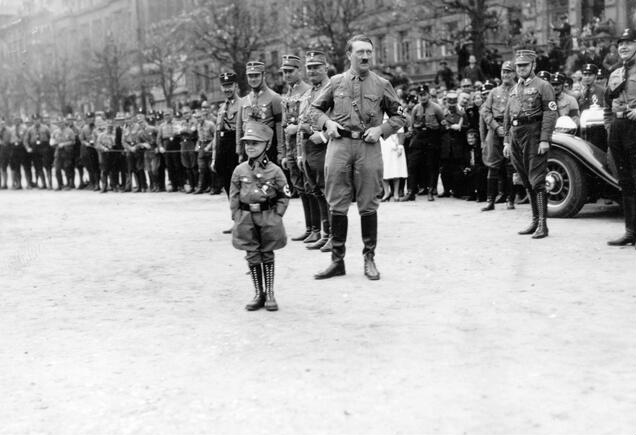
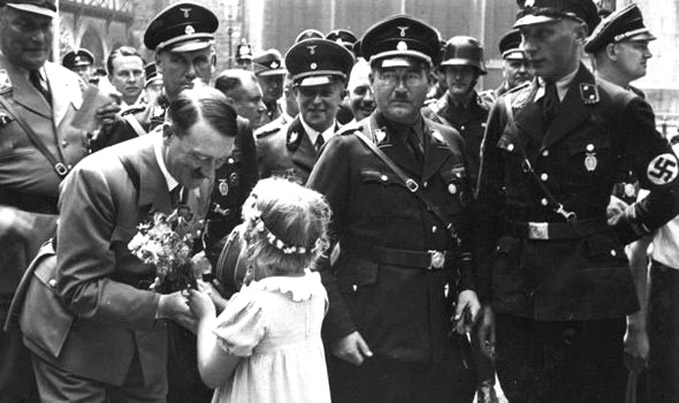
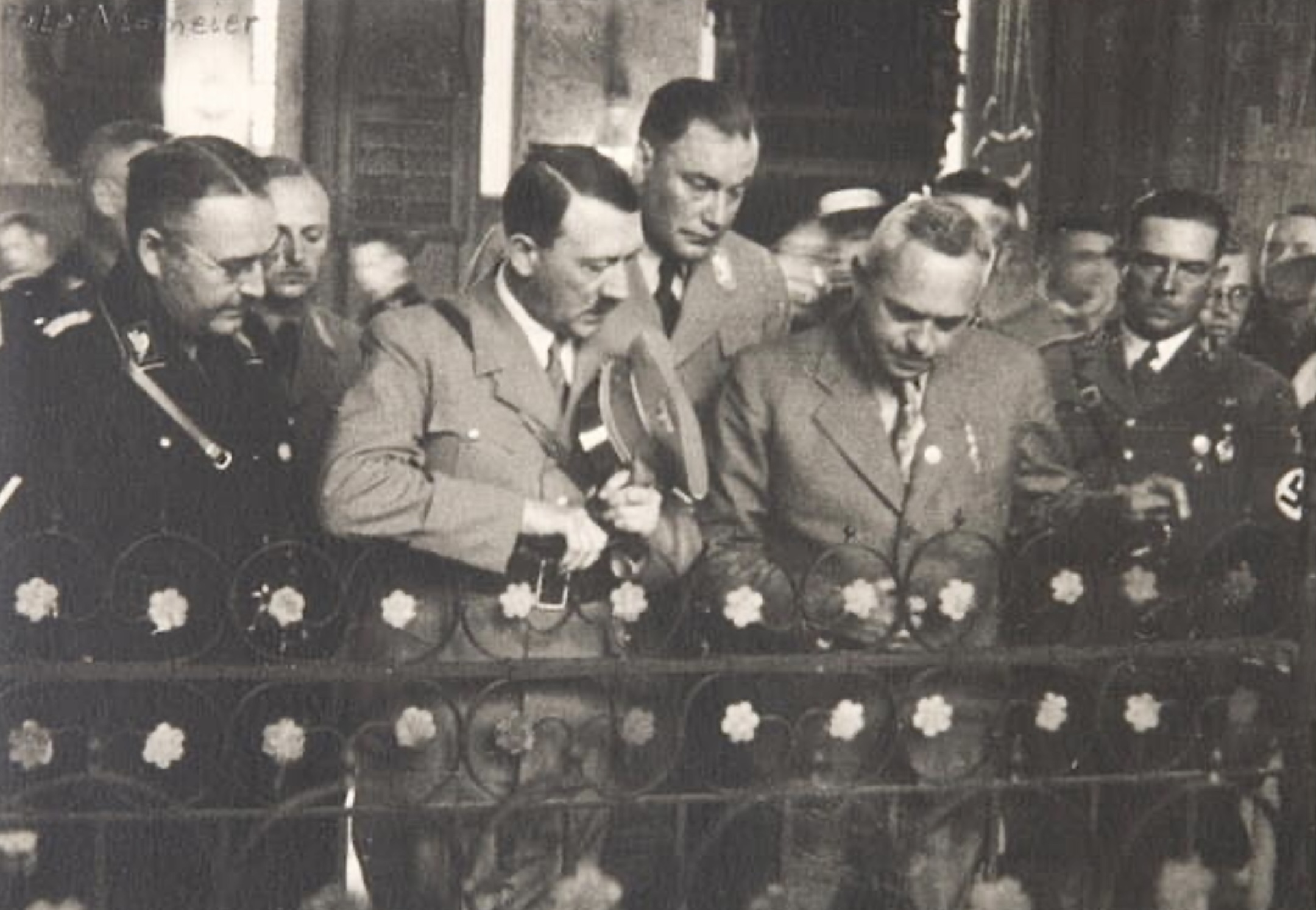
Gauparteitag der NSDAP in Braunschweig 22 February 1931 Gau Party conference in the municipal concert hall.In Braunschweig Rede auf dem Gauparteitag in dem städtischen Konzerthaus und Abnahme einer Parade der SA auf dem Schlossplatz.Collective picture from “Germany awakens No. 85, Adolf Hitler at a rally in Braunschweig in 1931“. Adolf Hitler in front of the statue of Friedrich Wilhelm in the courtyard of Braunschweig’s castle during the gautag 21 February 1931.Dietrich Klagges (right) with Adolf Hitler and Anton Franzen at the NSDAP regional meeting in Braunschweig in February 1931. Klagges replaced Franzen as Minister of the Interior and Education in Braunschweig in September, and was Minister President of Braunschweig from 1933 to 1945.The great Gau meeting of the National Socialists before their leader Adolf Hitler in Braunschweig. Adolf Hitler and his staff in Braunschweig February 1931 on the Schlossplatz. NSDAP Gau meeting. Adolf Hitler, Anton Franzen, Karl Fiehler, and Hans Schemm among others.Postcard showing Adolf Hitler and Anton Franzen in front of Braunschweiger castle on 21 February 1931.Adolf Hitler during the march of the SA in Braunschweig, Germany, on 17/18 October 1931.A small boy in SA uniform is pictured with Adolf Hitler during the march of the SA in Braunschweig, Germany, on 17/18 October 1931.A small boy in SA uniform is pictured with Adolf Hitler during the march of the SA in Braunschweig, Germany, on 18 October 1931.A small boy in SA uniform is pictured with Adolf Hitler during the march of the SA in Braunschweig, Germany, on 17/18 October 1931.Adolf Hitler poses with Ernst Röhm in this photograph taken by French photographer Albert Harlingue on 18 October 1931.BRUNSWICK, ALLEMAGNE – Adolf Hitler passe en revue les troupes allemandes le 18 octobre 1931 a Brunswick, Allemagne. Adolf Hitler, surrounded by SA stormtroopers, greets girls during a Nazi Party congress in Braunschweig, Germany. Also pictured are (back, left to right) Wilhelm Frick (behind young woman with braids), Georg Von Detten, Manfred von Killinger, Adolf Hühnlein, and Rudolf Hess.Postcard Adolf Hitler in Braunschweig Parteitag RPPC on 18 October 1931.Postcard: Adolf Hitler in Brunswick in 1931.Hitlers Einbürgerung in das Deutsche Reich erfolgte 1935 durch den Freistaat Braunschweig. Das Foto zeigt ihn vier Jahre vorher in Braunschweig. Hitler’s naturalization into the German Reich took place in 1935 through the Free State of Braunschweig. The photo shows him four years earlier in Braunschweig.Adolf Hitler and Anton Franzen in front of Braunschweiger castle on 18 October 1931.
Special collectible cigarette card commemorating the Brunswick Rally. Sammelbild Kampf um´s Dritte Reich Bild 44, Aufmarsch in Braunschweig 1931, Adolf Hitler – Cigarettenfabrik Constanttin, Dresden
Das grosse Gautreffen der Nationalsozialisten vor ihrem Führer Adolf Hitler in Braunschweig! The big district meeting of the National Socialists in front of their leader Adolf Hitler in BraunschweigDas grosse Gautreffen der Nationalsozialisten vor ihrem F¸hrer Adolf Hitler in Braunschweig! Braunschweig, NS-Gautreffen mit Adolf Hitler
The 17th and 18th of October brought the SA meeting in Brunswick at which 104,000 SA and SS men passed in review before Adolf HItler. Here before these faithful fighters the Führer raised before all the world claim to the total state leadership by National Socialism. The men in attendance returned to their every day affairs with enormous enthusiasm and new courage which could not be dampened by the announcement on December 8 prohibiting civilians from wearing the brownshirt uniform in all regions of the Reich. The Nuremberg Rally had also been cancelled in 1931 due to previous clashes between the Nazi’s and Communists and therefore Nuremberg city had forbade hosting the Rally. The Brunswick Rally offered an opportunity to gather and served as a replacement for the bi-annual party convention.
Adolf Hitler auf der Fahrt zum SA-Treffen in Braunschweig; am Steuer Chauffeur Julius Schreck, im Fond Julius Schaub.
Private photo of Adolf Hitler taken in Braunschweig on 18 October 1931.
Mystery Location Solved!
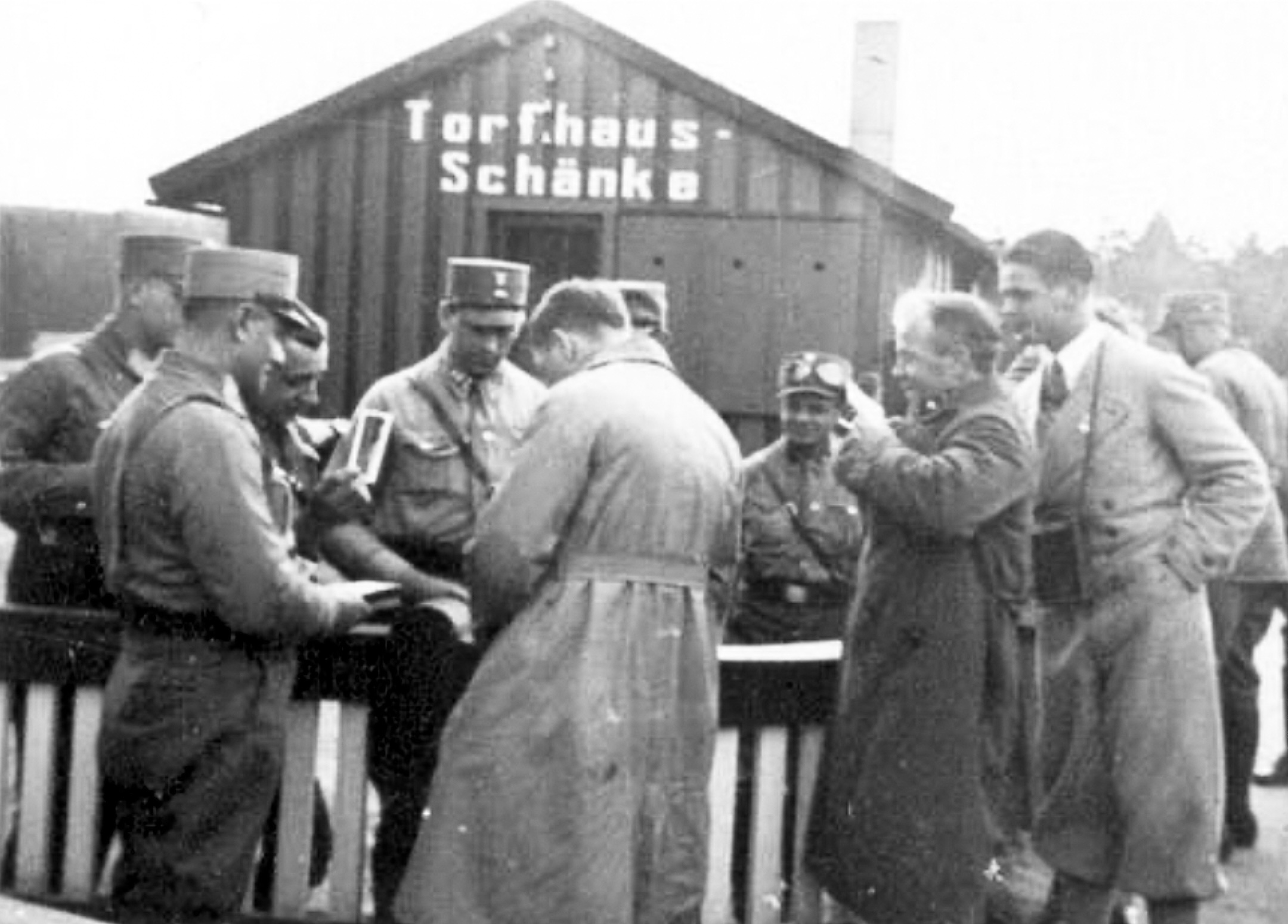
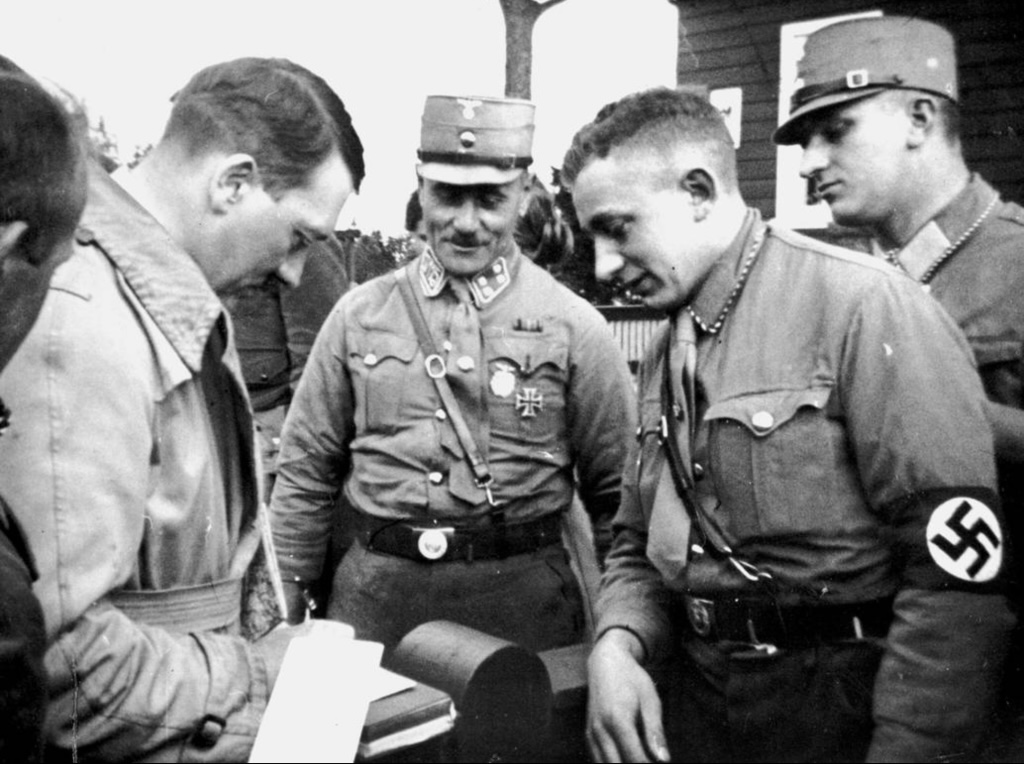
Adolf Hitler stayed overnight at Wulfert’s Hotel Torfhaus on 18-19 October 1931 at the conclusion of the Brunswick Rally. Tracking down this location was very challenging, as it is not well documented and the hotel no longer exists. This was possibly the very first road trip Hitler took with Eva Braun, who took these photographs of him out in front of the hotel. Hitler is also seen signing autographs in front of the Torfhaus Schänke, a tavern that was located adjacent to the Wulfert hotel. Torfhaus was a popular ski resort in the 1930’s in the Harz Mountains just west of Mount Brocken. It still remains a popular tourist destination to this day.
Adolf Hitler signs autographs for his supporters in Torfhaus on 19 October 1931 outside of Wulfert’s Hotel Torfhaus where he stayed overnight in the Harz Mountains before returning to Berlin.
The location of the Wulfert’s Hotel Torfhaus stood approximately where the “Wienerwald” restaurant in Torfhaus im Oberharz is now located on the B4. The small village of Torfhaus has changed drastically from the way it appeared during Hitler’s visit in October of 1931. Almost all of the houses were burned down by American soldiers confronting holdout SS-Troops and Volkssturm on 26 April 1945. The Hotel Wendt (Brockenkrug) next door to the Wulfert, owned by the Spengler family, was also destroyed in the skirmish. All that remains at the site of these two hotels is the memorial stone dedicated to pilot Walter Spengler after his tragic death in an air show in 1930. This stone, known as the Spenglerstein, now stands just south of the Torfhaus Harzresort at the entrance to the popular Goetheweg hiking trail.
Hermann Esser and Wilhelm Bruckner stand in front of the Gasthaus Wendt Brockenkrug TorfhausWilhelm Bruckner, Otto Dietrich, and Julius Schaub departing Torfhaus Hitler and Hoffmann depart the Wulfert Hotel
Postcards showing the Wulfert’s Hotel Torfhaus around the time Hitler and Eva Braun stayed at this location after the Braunschweig Rally, as well as photographs from Eva Braun’s personal albums.
Gasthaus Wendt Brockenkrug Torfhaus Wulfert’s Hotel Torfhaus
Torfhaus is also known as the place where the German writer Johann Wolfgang Goethe began his first ascent of the Brocken on 10 December 1777.
Compelling and intimate photograph of Adolf Hitler taken by Eva Braun after spending the night together at the Wulfert Hotel in Torfhaus, perhaps the consummation of their affair in October 1931.Photo from Eva Braun’s Album #33 and titled “Branshweig” – showing the march of the SA on the Kohlmarkt in Braunschweig on 18 October 1931.
Heinrich der Löwe 🦁
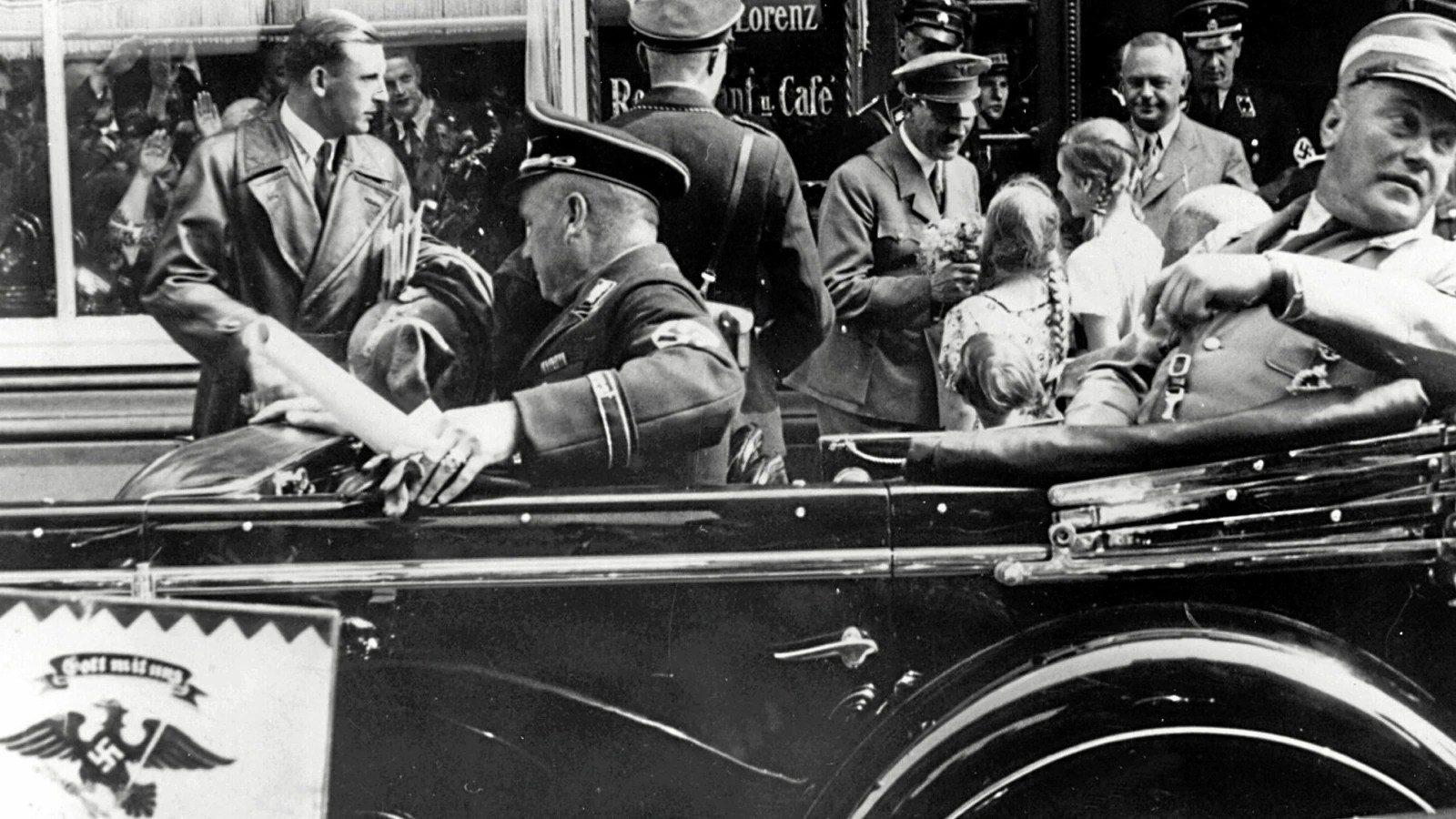
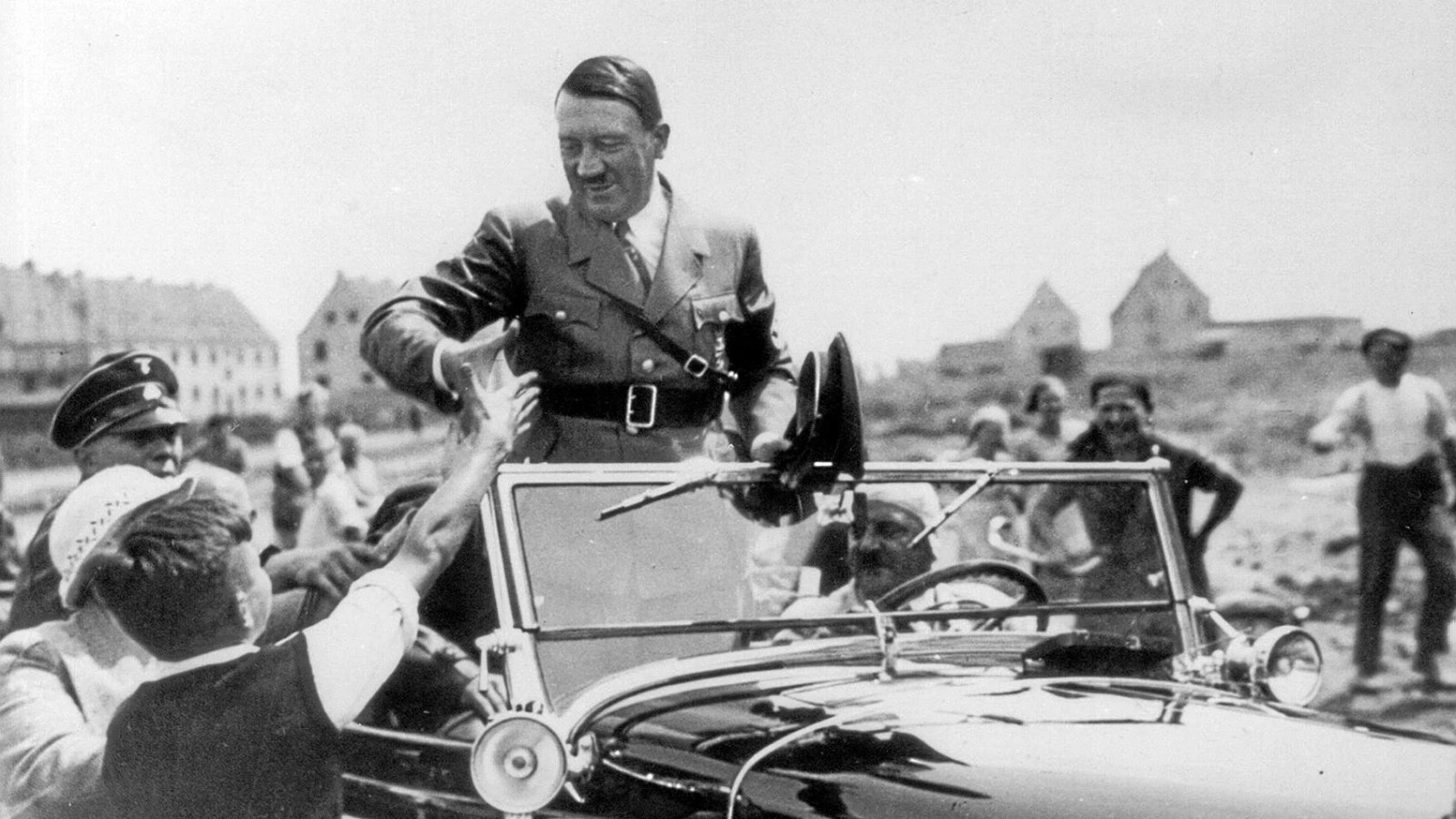
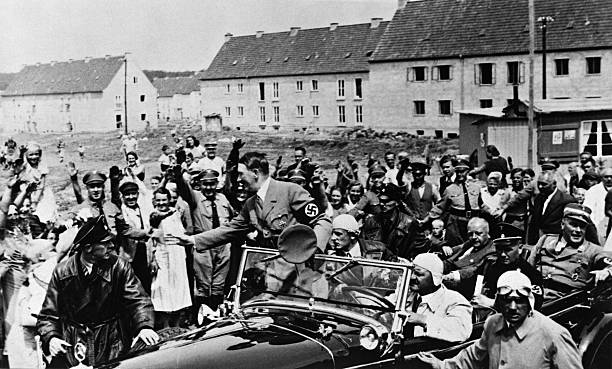
Adolf Hitler returned to Brunswick on 17 July 1935. In Braunschweig-Lehndorf he paid a visit of the Brunswick Cathedral St. Blasii and the open crypt of Duke Henry the Lion, followed by a short tour of the castle Dankwarderode. He also enjoyed a very special picnic outing in the nearby Harz Mountains with his entourage.
Postkarte aus Braunschweig vom 17.7.1935: Hitler, von zwei Mädchen begrüßt, verlässt zusammen mit Reichsminister Hanns Kerrl das Börsenhotel und fährt zum Dom, um die geöffnete Gruft Heinrichs des Löwen zu besichtigen.Adolf Hitler bei seinem überraschenden Besuch in Braunschweig im Juli 1935, hier in Lehndorf.Hitler travels through a new housing estate in Braunschweig on 17 July 1935, greeted by the residents with jubilation; at the wheel of the car Hitler’s chauffeur, SS group leader Julius Schreck; on the far right in the back: his personal adjutant SA-Obergruppenführer Wilhelm Brückner.On the Burgplatz in Braunschweig on 17 July 1935. Hitler visits the open tomb of Henry the Lion in the cathedral. Directly behind Hitler is Braunschweig’s state police chief Friedrich Jeckeln. Ministerpräsident Dietrich Klagges observes the scene suspiciously. On the far right in the background, Minister Friedrich Alpers.Adolf Hitler at the Brunswick Cathedral of St. Blaise viewing the open crypt of Duke Henry the Lion on 17 July 1935.
I love history and have always been infatuated with the design and style of the 1920’s. Unfortunately I can’t time travel back to this era, so I live vicariously through books, movies and photos.
[…] Hitler wasn’t very cooperative towards the leaders of the other participating parties. Wanting power solely to himself, he left the tribune that had been built to watch the parade immediately after the SA had finished marching and didn’t wait for the parades of other participating parties. This poorly assembled photo composite shown below attempts to show Hitler and Hugenberg standing in solidarity at the Harzburg Front parade, but due to Hitler’s early departure his image had to be pulled from a separate event that he had attended in Brunswick. […]
Articles like these about Hitler’s activities before becoming Chancellor add more dimension and depth to both Hitler himself and this historical period. Details such as Braunschweig being the only place they were allowed to wear the SA uniforms in public, as well as clashes which resulted in a couple of deaths also add further depths to these events. The photos tell further stories as well, and the cigarette card is definitely a special item!
I’ve really been fixated recently on the years 1929-1932 in Hitler’s life, seeing the ebb and flow of his victories and setbacks and learning about events that aren’t usually covered much, especially the numerous Gau meetings and rallies and trying to sort out all the photographs that aren’t usually labeled from this time period. Also bringing ones to light that are rarely circulated or put into any context.
[…] the morning of this picnic, held on 17 July 1935, Adolf Hitler and his entourage had been in Brunswick to look at the excavations of Henry the Lion’s tomb in Brunswick Cathedral. Research was […]
That is a great observation, as I have read that he grieved heavily for several months after her death, and many of his closest confidants said that he was never the same again. I always think of Göring’s quote given at the Nuremberg Trials: “Geli’s death had such a devastating effect on Hitler… It changed his relationship to all other people.” Her death ended up really hardening him to cutting himself off from his emotions. 😢






















 Heinrich Hoffmann Photo Gallery