Heinrich Hoffmann (1885 – 1957) served as Adolf Hitler’s official photographer from when Hitler took control of the Nazi party in 1921 until his death in 1945. Hoffmann estimates he took over half a million photographs of Hitler over the course of his career. His portraits were the most significant source of Nazi propaganda materials published over the course of close to 25 years, everything from postcards, posters, magazines, postage stamps and picture books. Click on eachtheme below to see a complete photo albumdevoted to that particular event or topic.
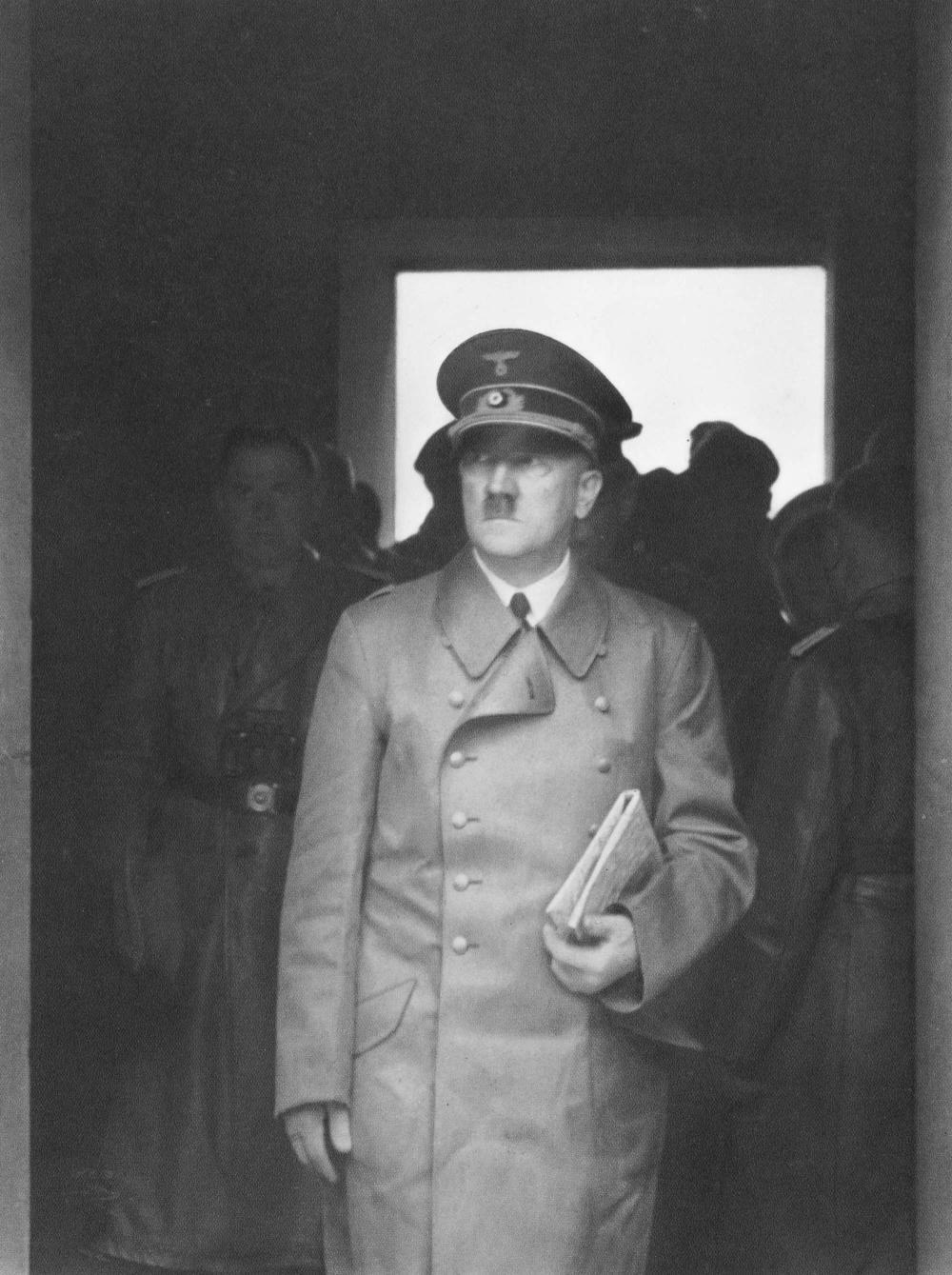
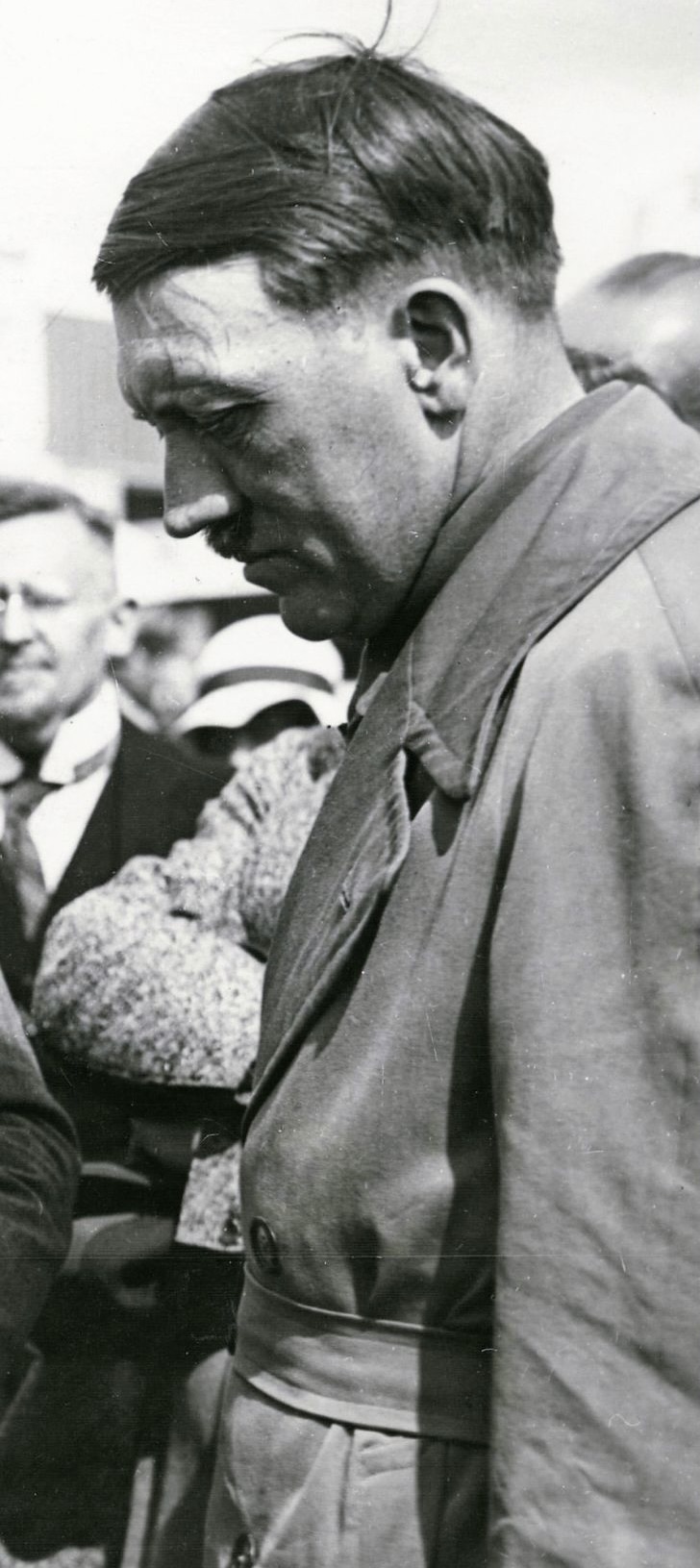
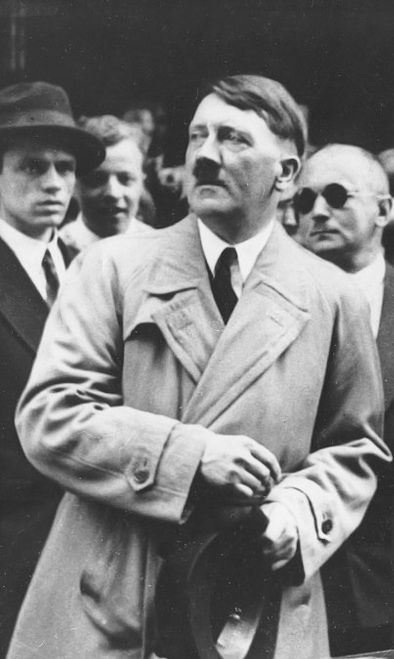
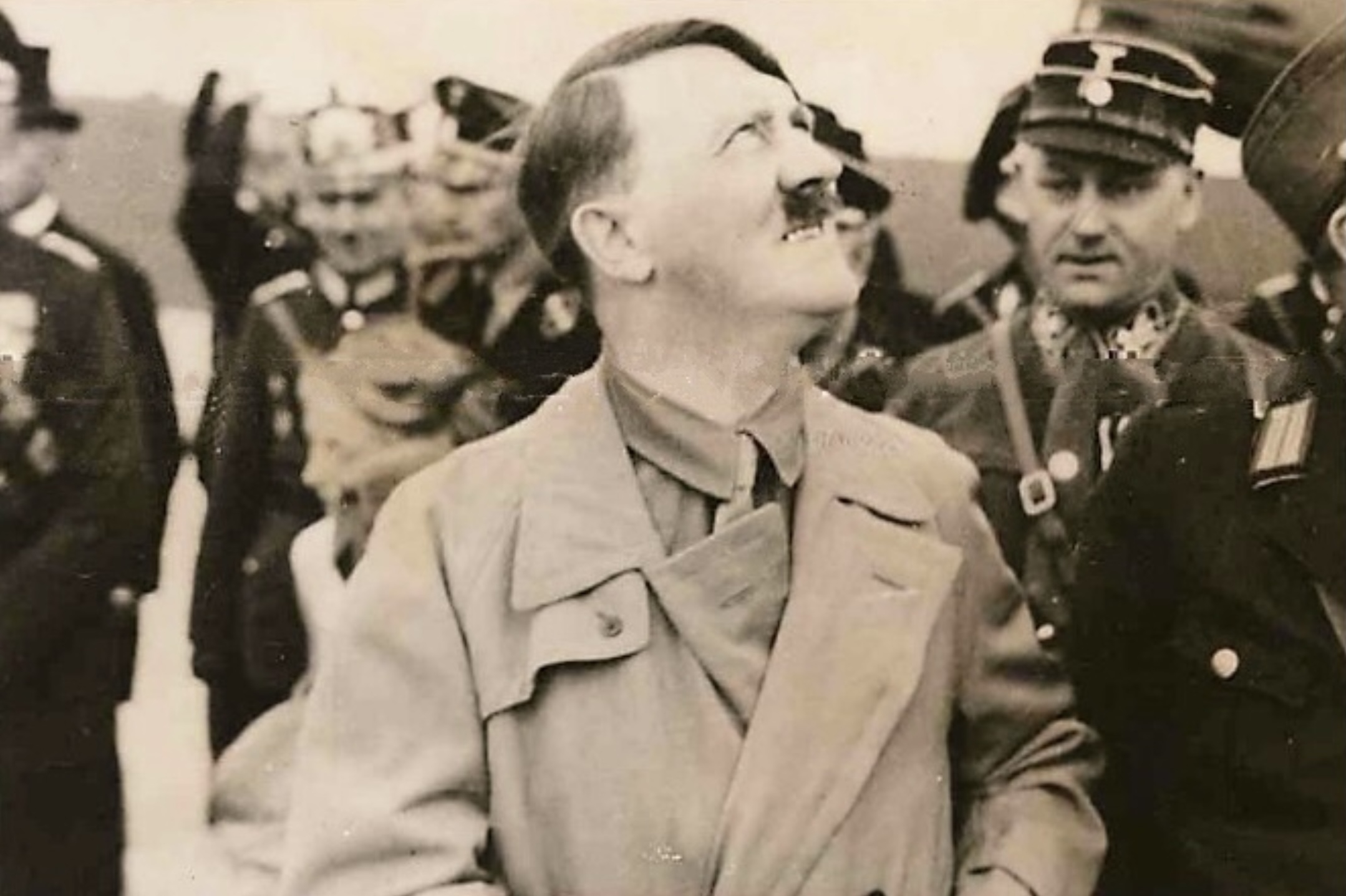
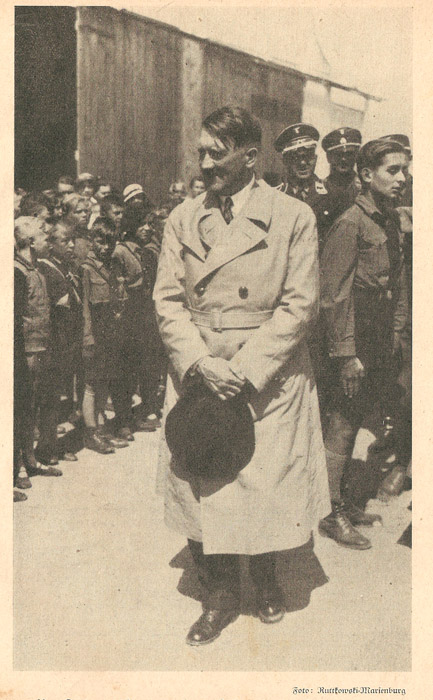
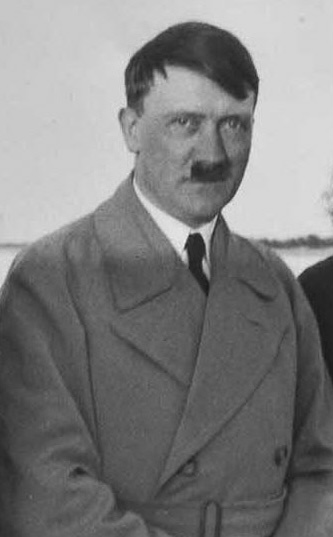
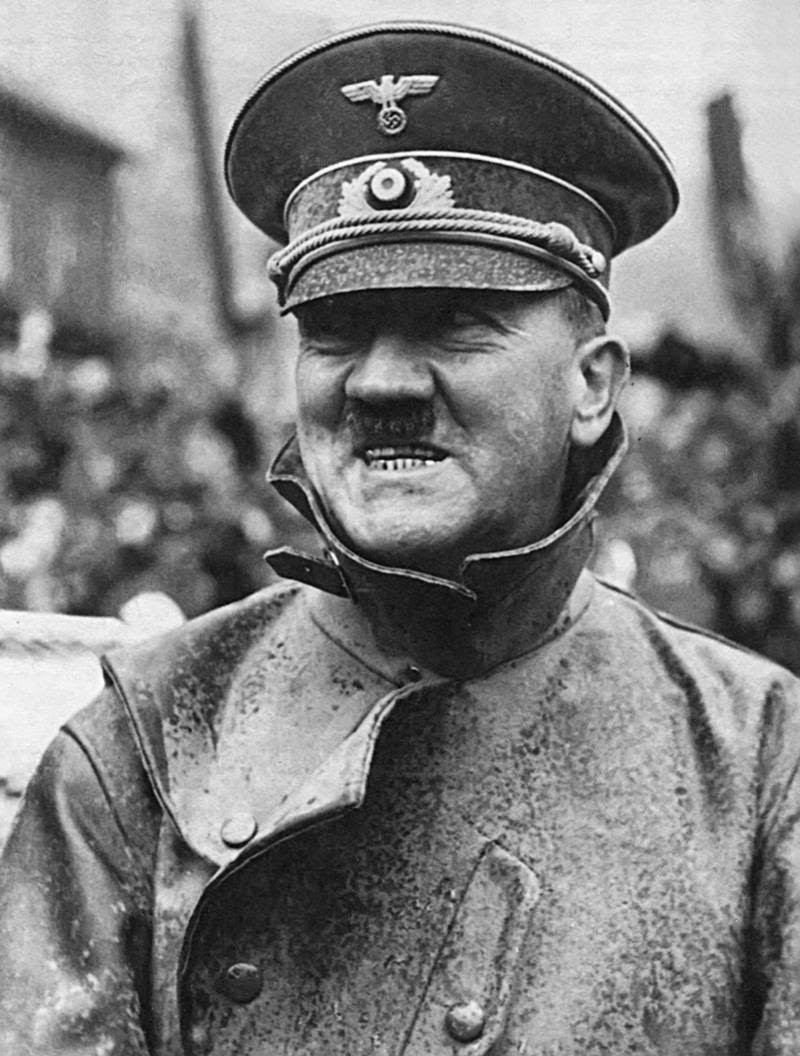
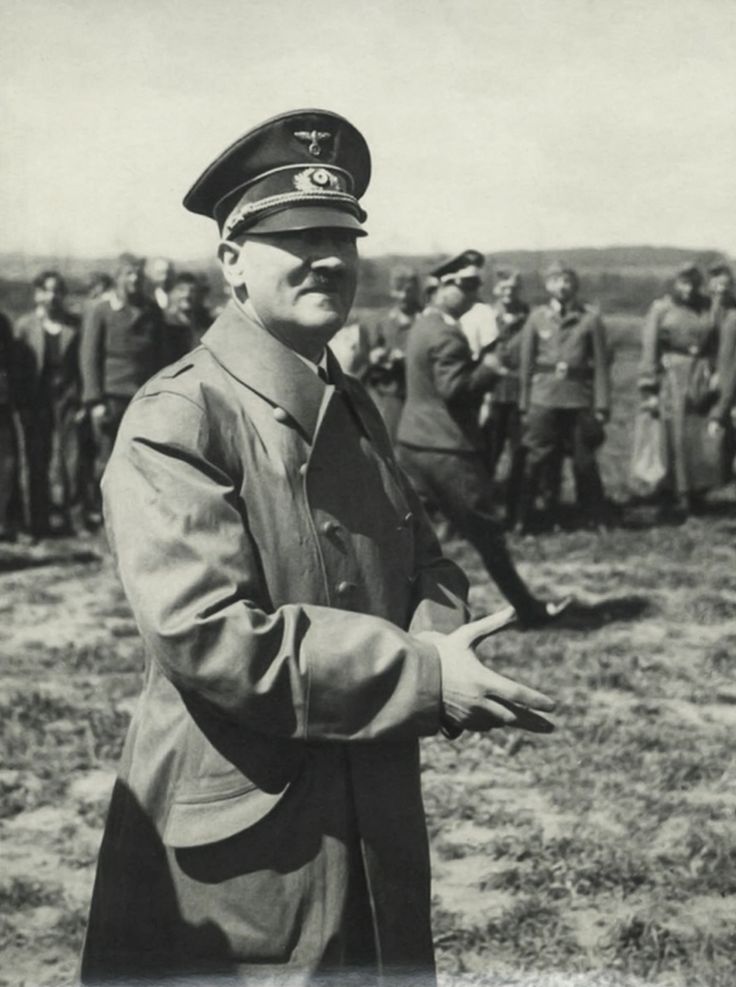
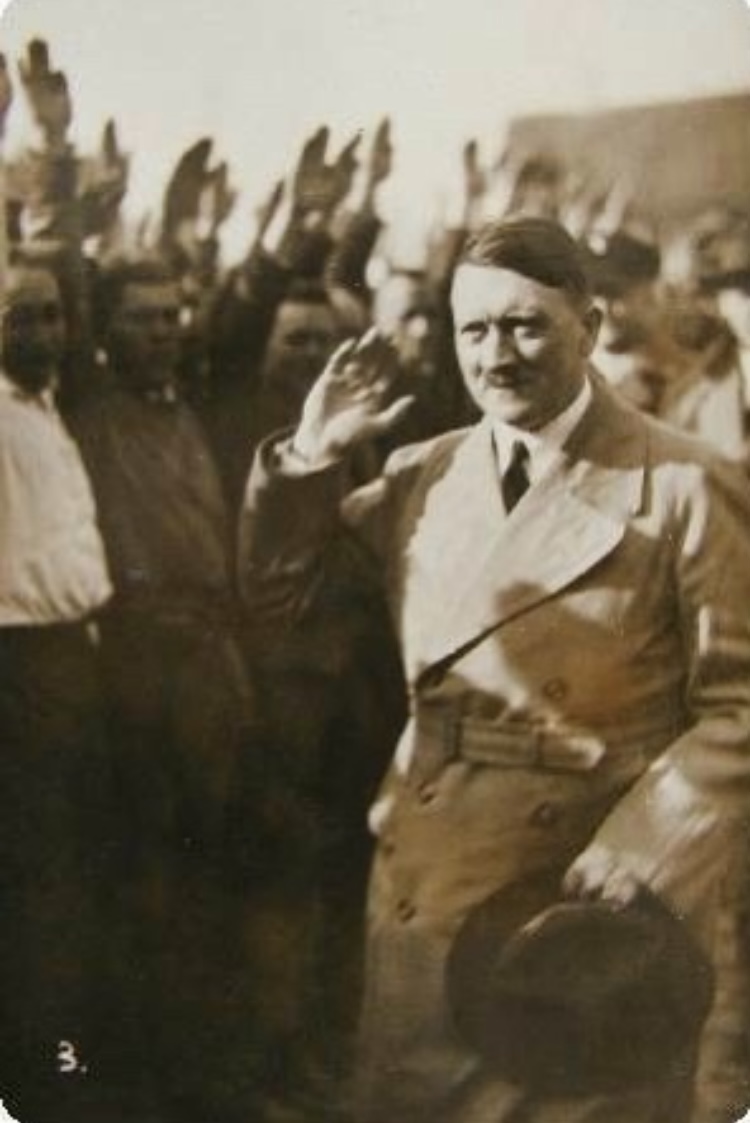
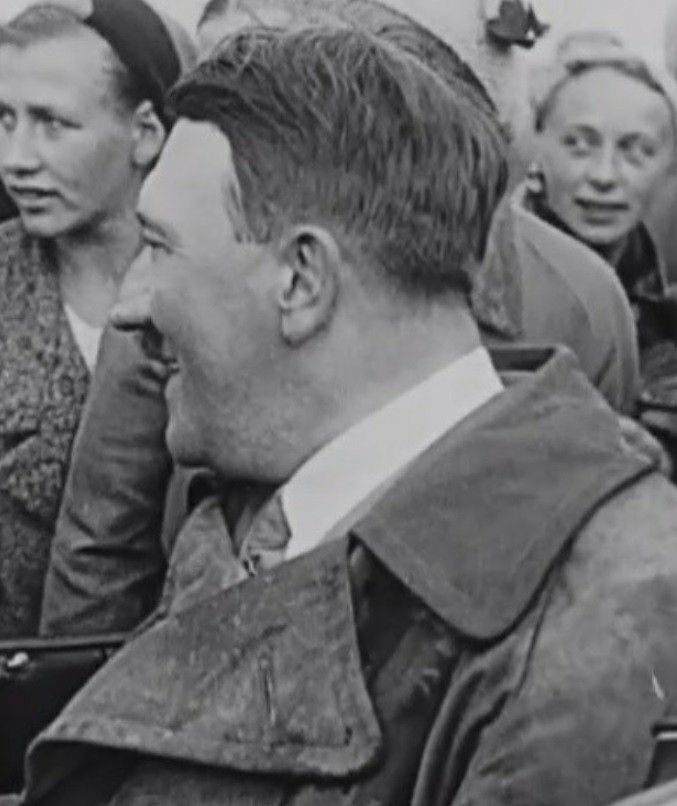
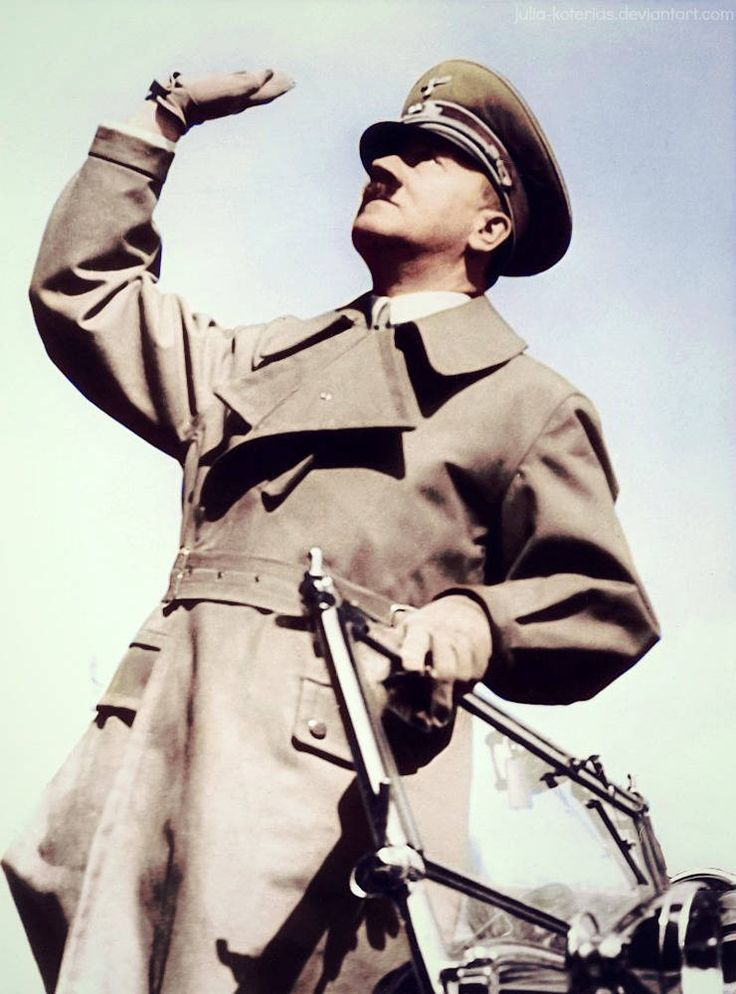
Here it is!!! Yet another HUGE album of photographs to enjoy of Hitler wearing a trench coat (in addition to the Set #1 album). This collection of pictures is a particularly humongous one because, if you really think about it, how often was Hitler NOT in a trench coat? Hitler’s trench coats are as iconic as his toothbrush mustache and are just as inseparable from his public persona. It’s a well known fact that trench coats exude masculinity and project an intense aura of power. They are also extremely functional, offering a light and comfortable alternative to a much heavier and bulkier coat, while holding up just as well to the elements when the weather is dire. Originally developed as a practical garment for soldiers during World War I, the trench coat went on to become one of the most enduring of fashion accessories.
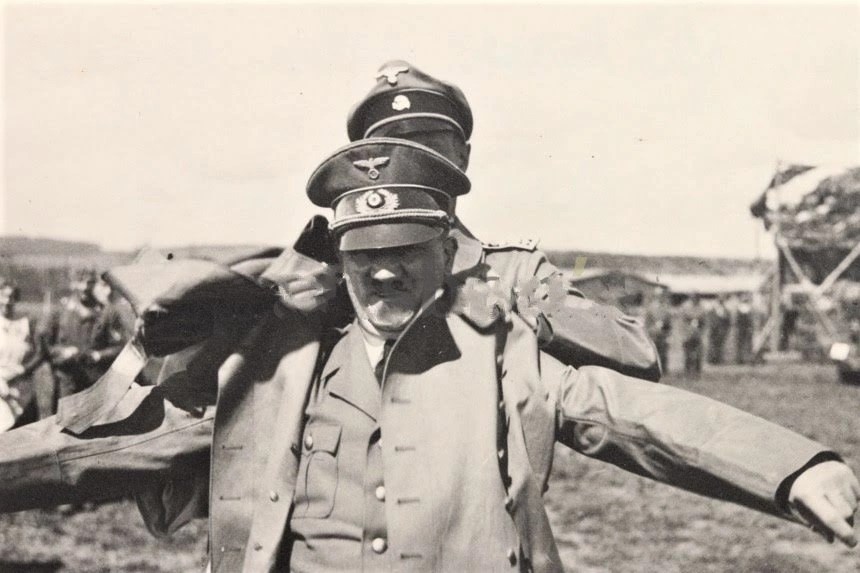
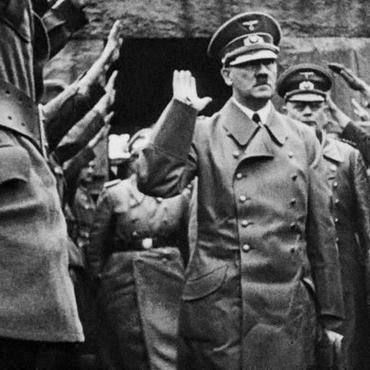
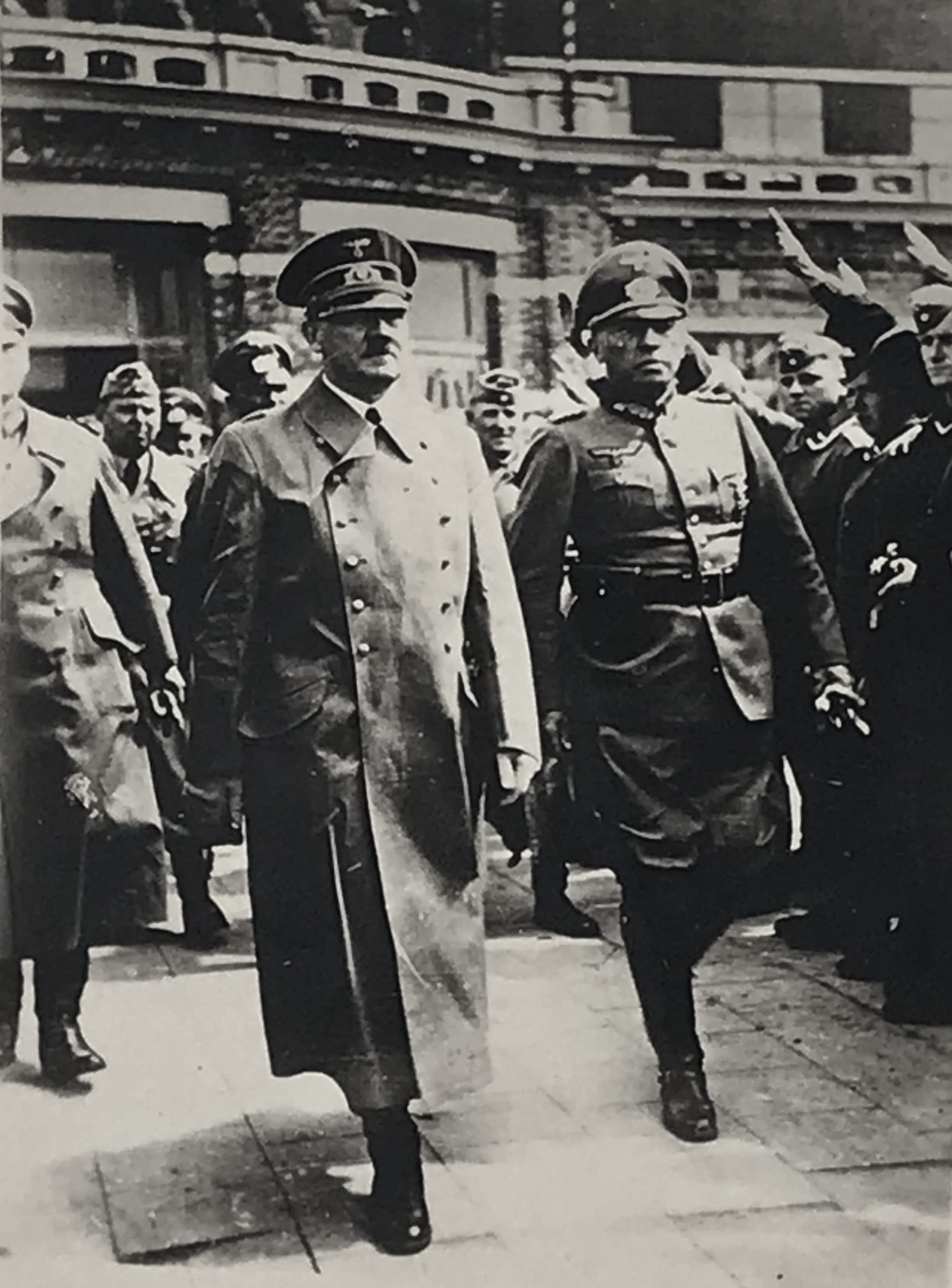
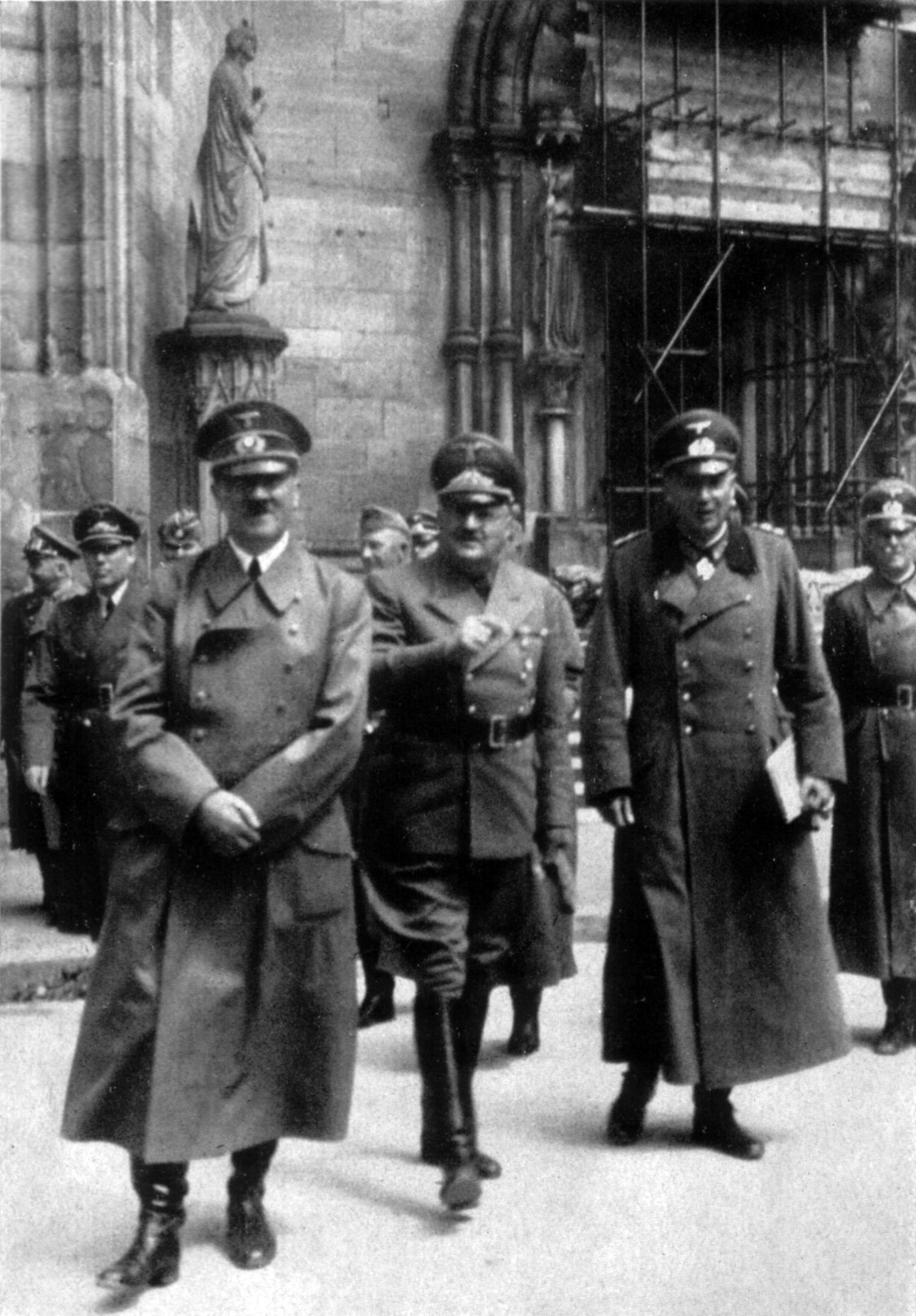
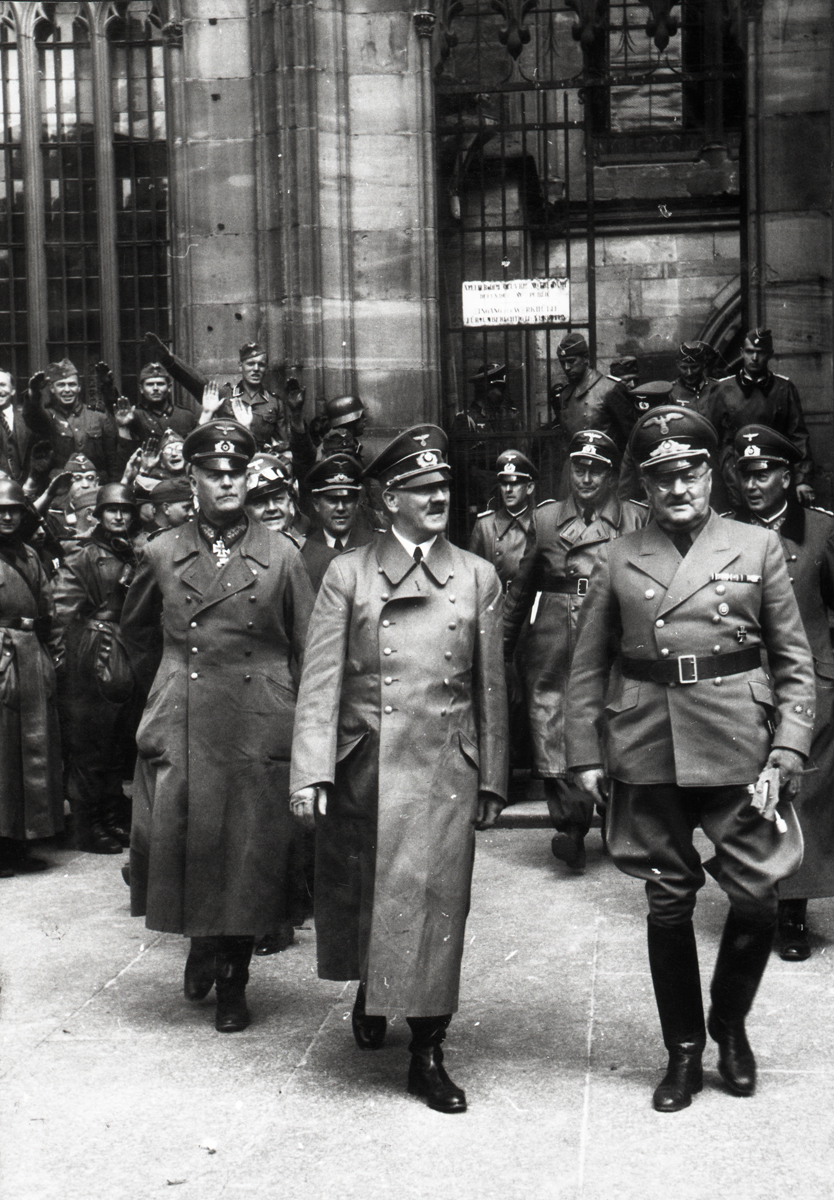
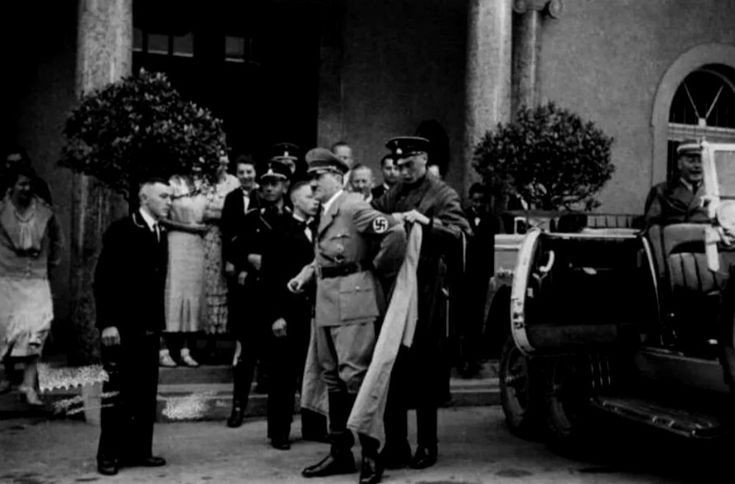
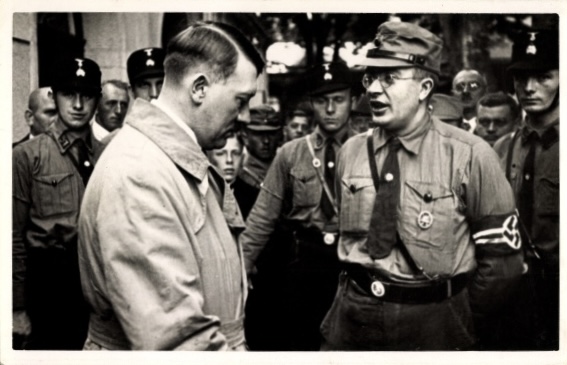
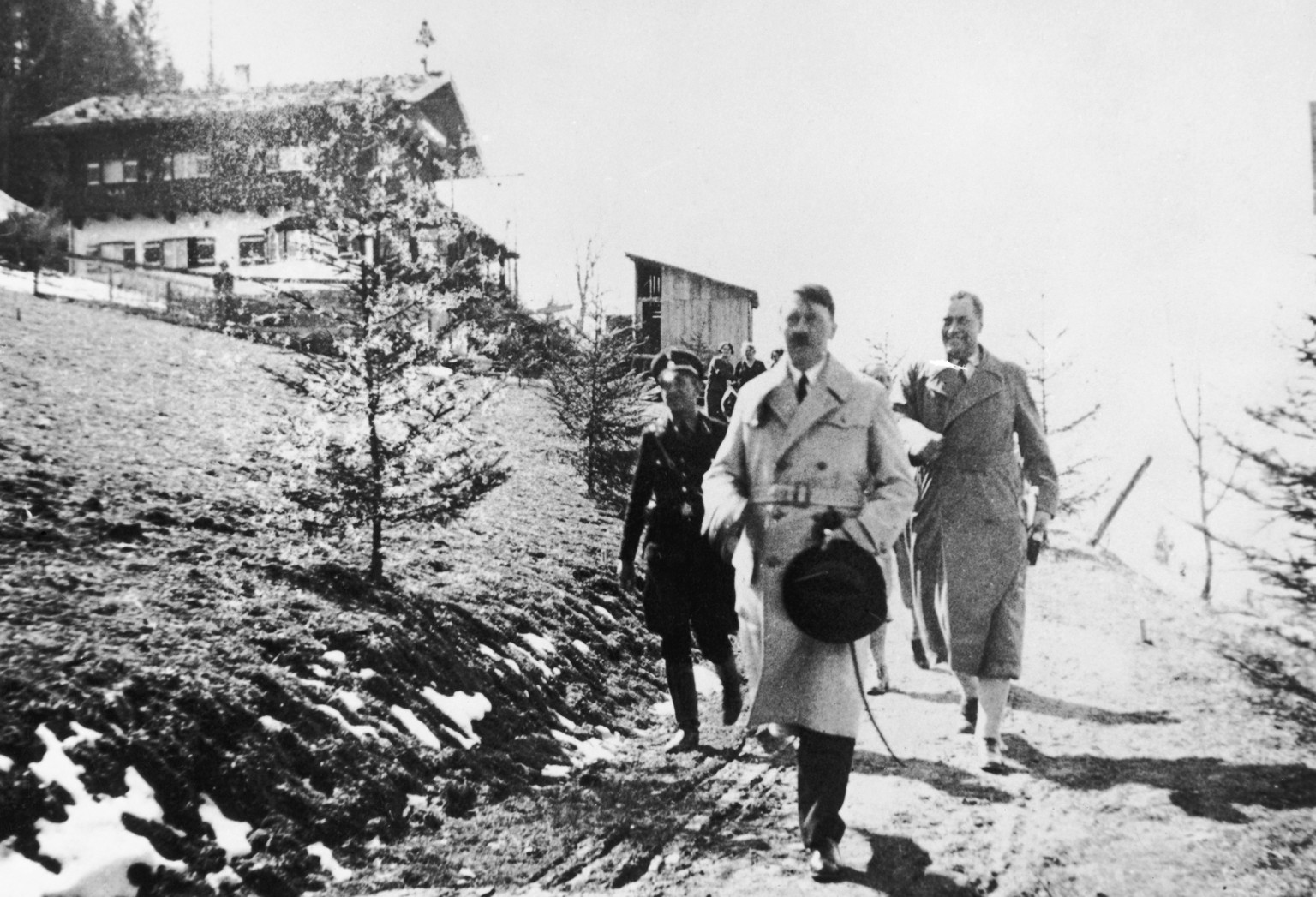
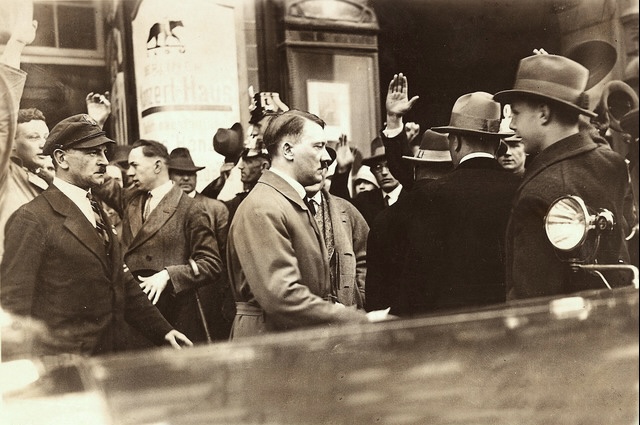
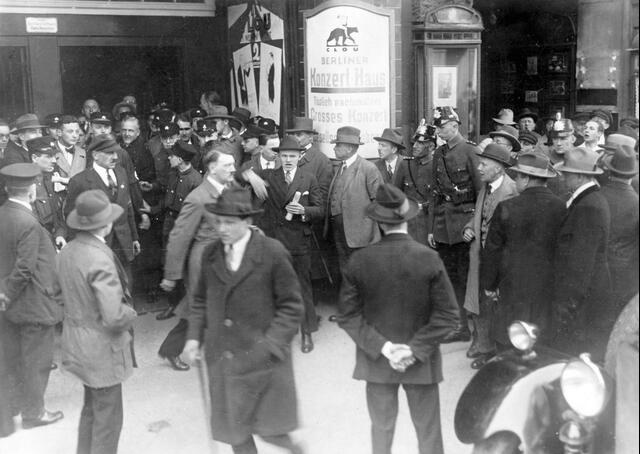
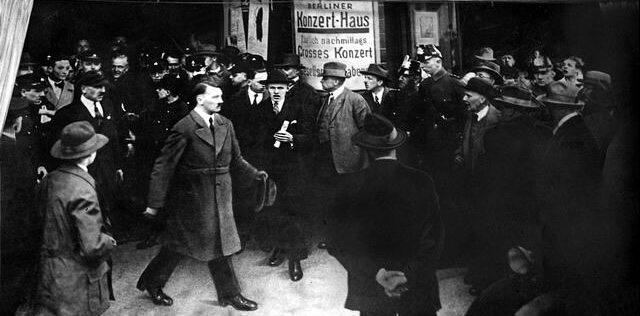
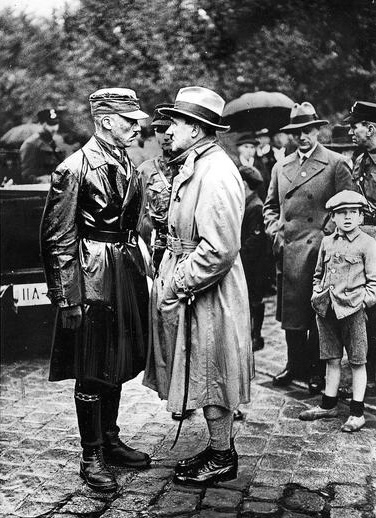
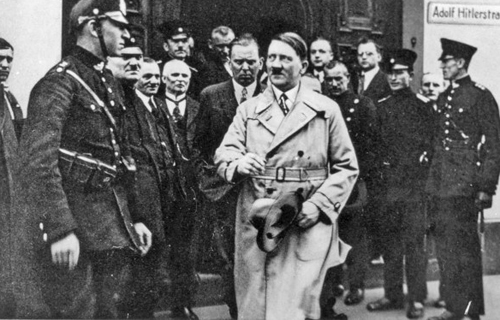
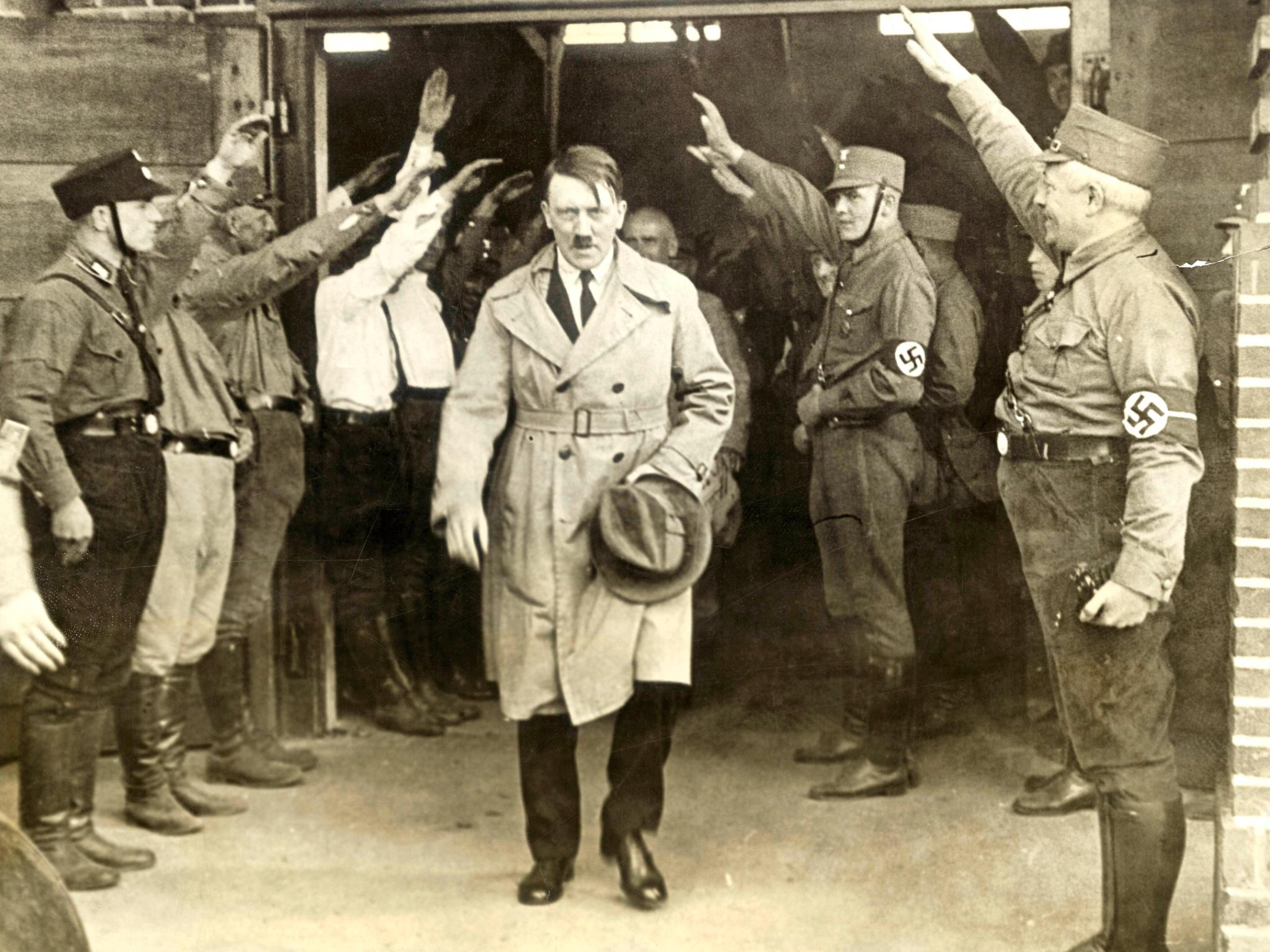
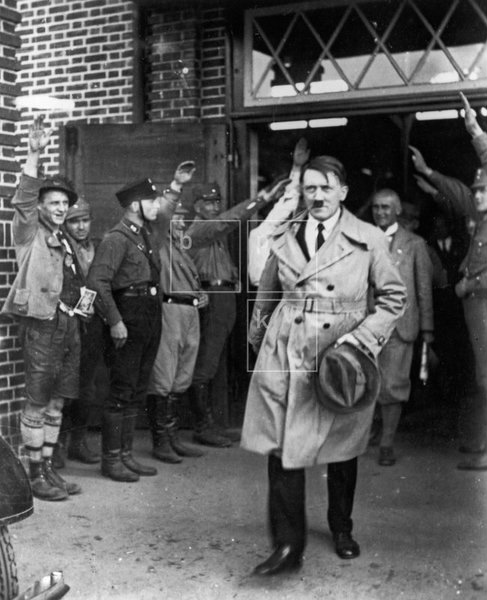
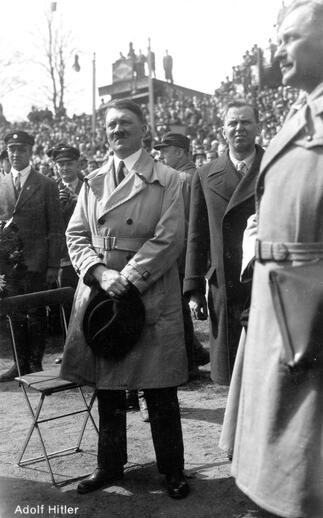
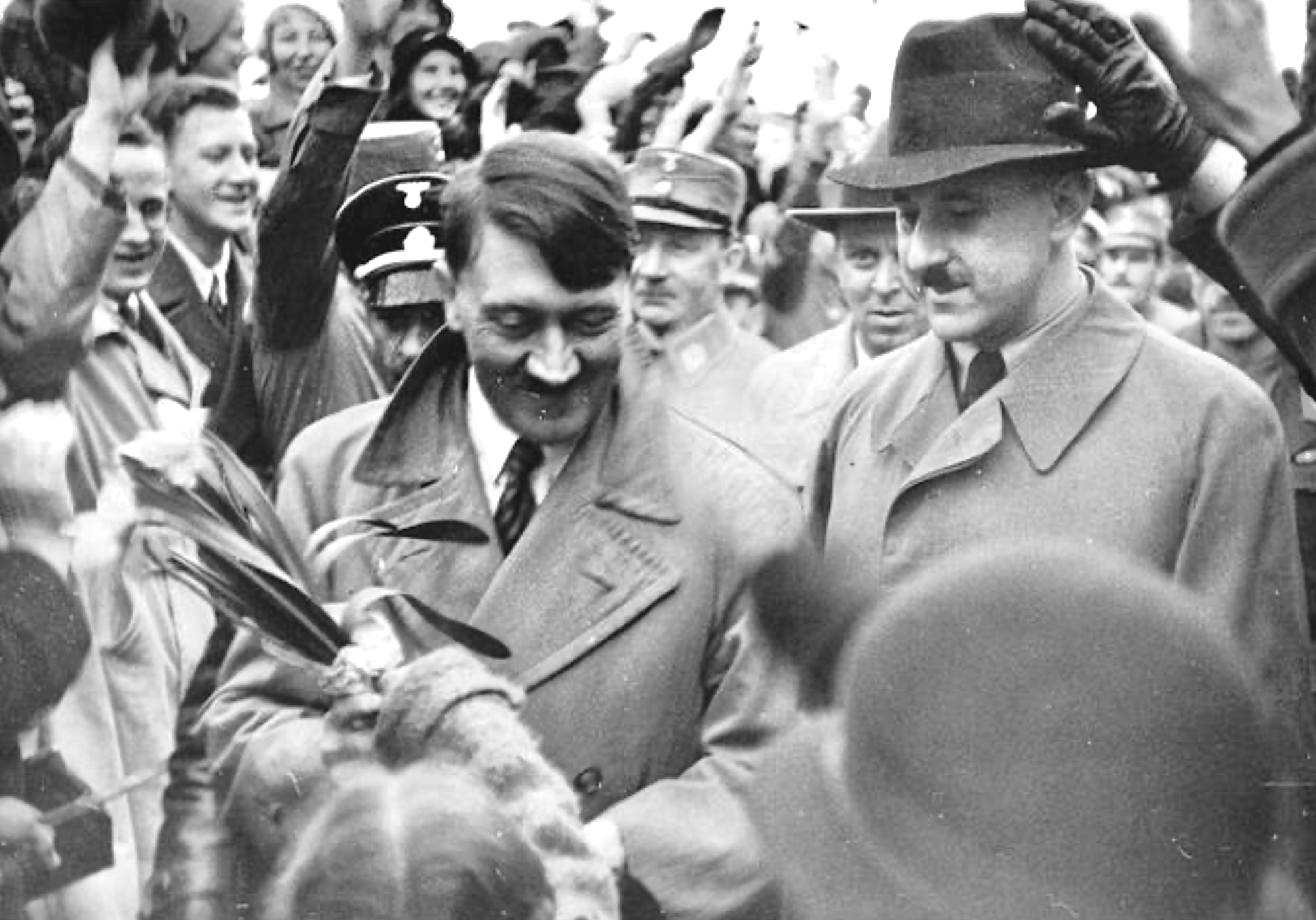
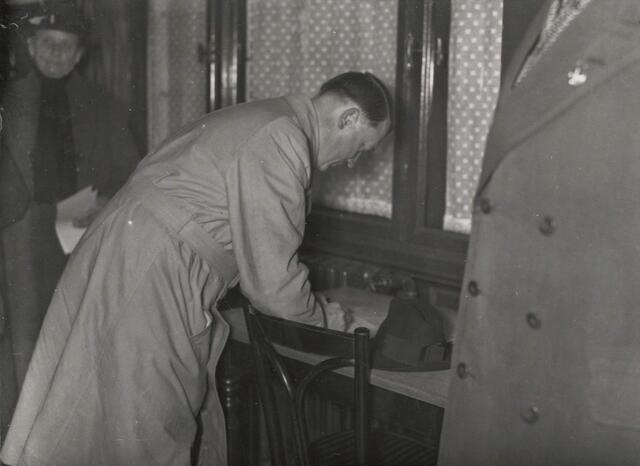
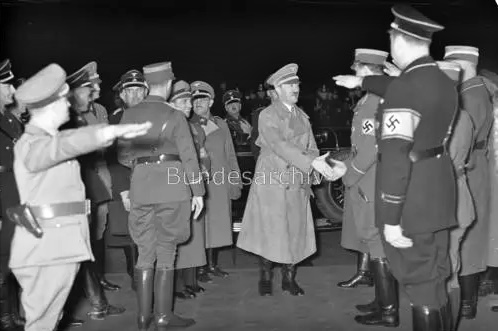
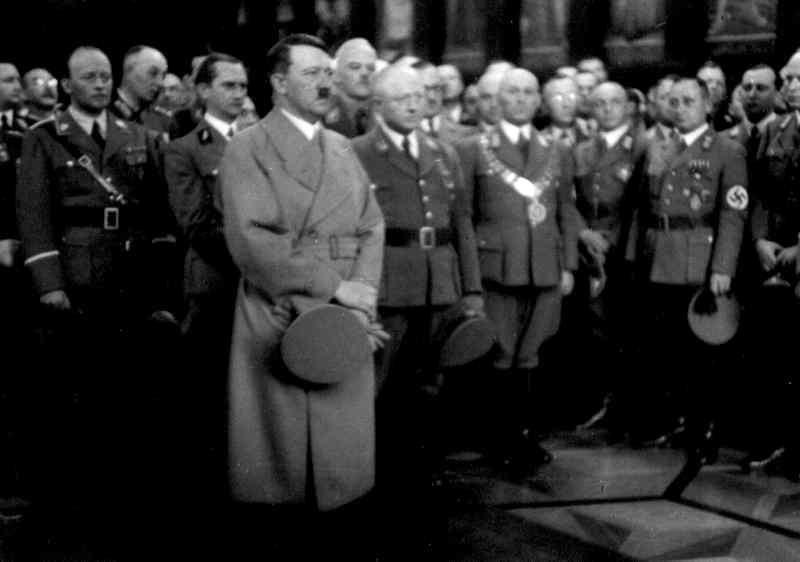
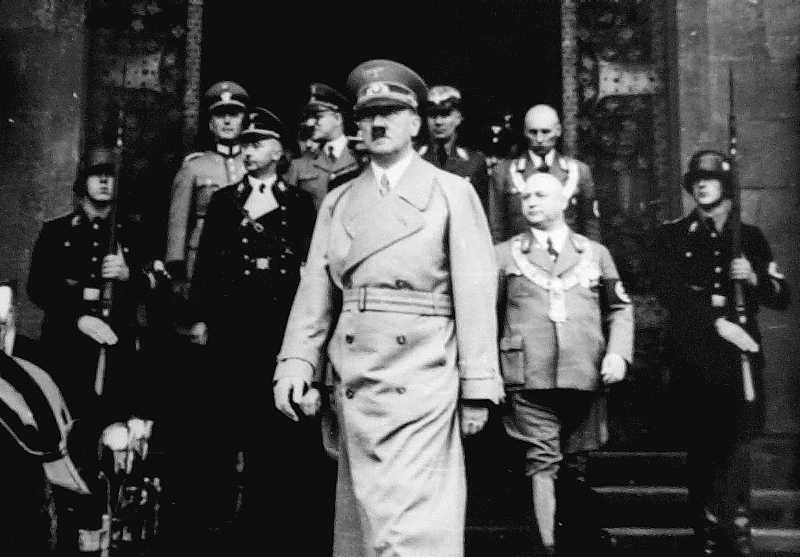
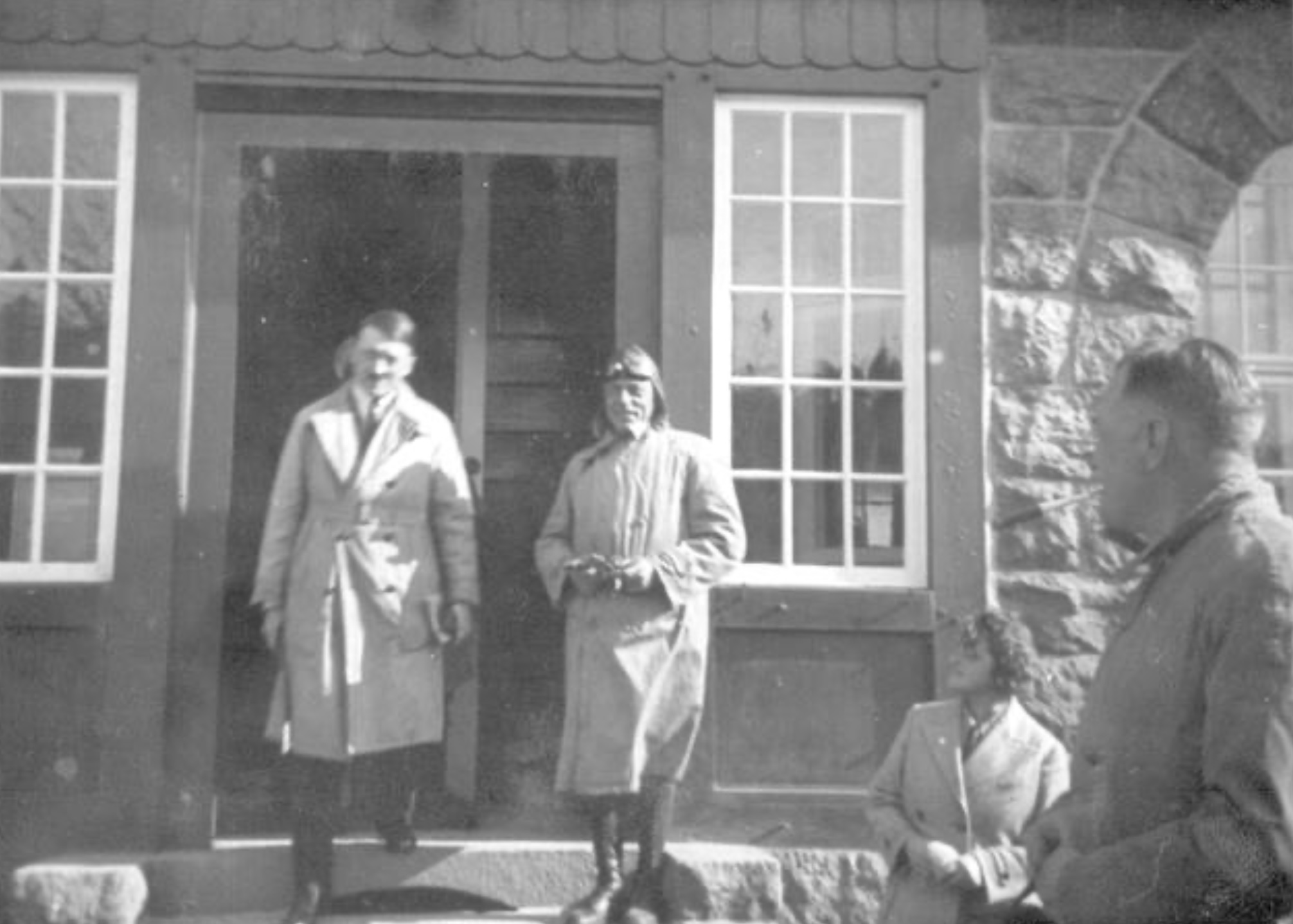
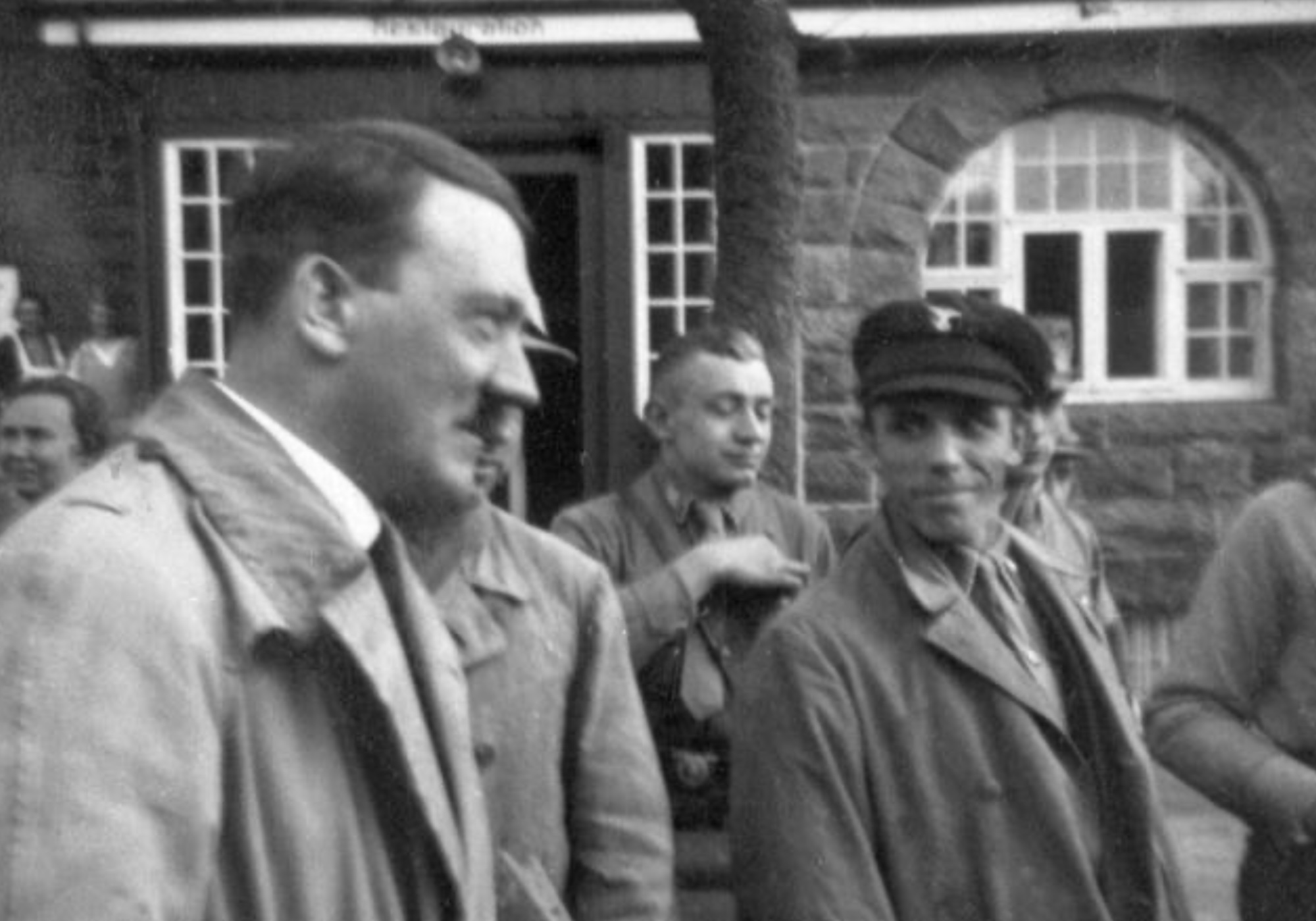
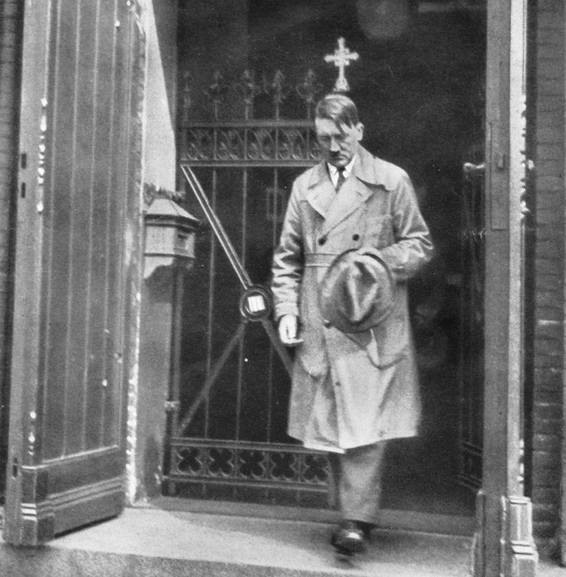
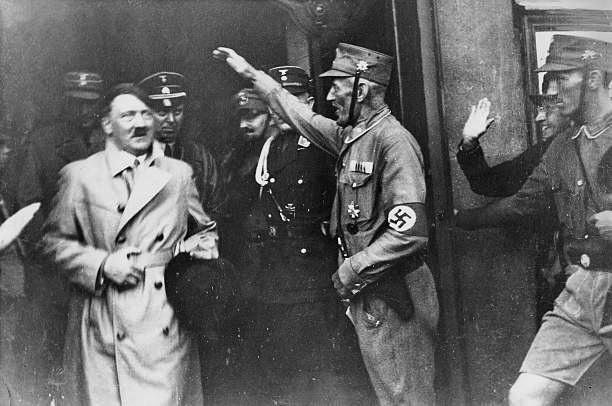
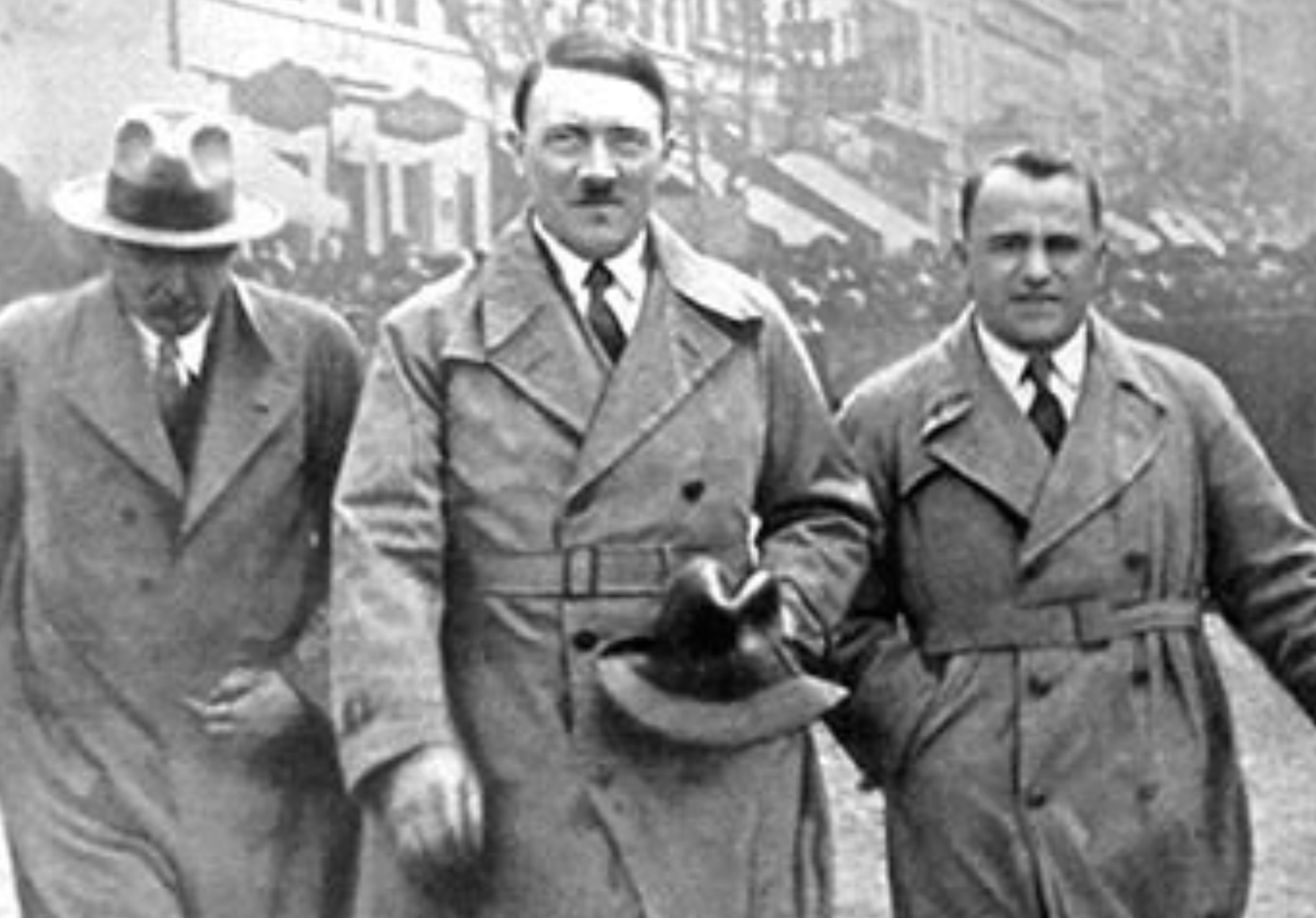
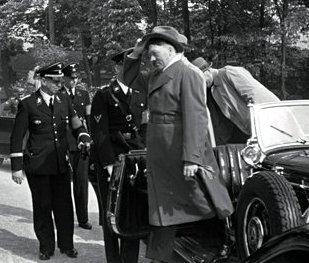
Adolf Hitler receives assistance putting on a trench coat before going to observe military maneuvers in June 1940.Hitler in LangemarckHitler in Brussels 1940Hitler at the Strasbourg cathedralHitler at the Strasbourg cathedralRarely captured on film, this photograph shows Adolf Hitler being assisted putting on his trench coat after departing from his last overnight stay at the Hotel Bube in Bad Berneck on 9 May 1936. Hitler often stayed here on his travels between Berlin and Munich, as the hotel was halfway between the two cities. He stopped here on this day after visiting the Wagner family in Bayreuth, where he had enjoyed a walk in the garden of Villa Wahnfried, before heading back to Munich the following day.When Adolf Hitler spoke on 5 August 1930 during the Reichstag election campaign in the Würzburg Frankenhalle, he was greeted by the Lower Franconian NSDAP Gauleiter and member of the state parliament Otto Hellmuth (right), who also became district president in 1934.Adolf Hitler takes a stroll around the environs of his home, Haus Wachenfeld, with his adjutant Wilhelm Brückner in the Spring of 1931.Adolf Hitler after an event in Berlin, 1927. Adolf Hitler leaving the Clou concert hall in Mauerstrasse in Berlin, after his first appearance as a speaker in Berlin on 31 May 1927.Adolf Hitler and the Supreme SA leader Franz Pfeffer von Salomon meet during a propaganda event of the SA in Munich on 13 May 1928. Between the two can be seen Rudolf Hess. At right, wearing a hat, is the chief editor of the ‘Voelkischen Beobachter,’ Alfred Rosenberg, and Hitler’s personal adjutant, Julius Schaub. (Wahlkampf d.NSDAP für d.Reichstags)Adolf Hitler leaves the regional court in Frankenthal on 22 April 1931. The photograph was later manipulated and an Adolf Hitler Straße plaque was added to create a postcard in 1933.Adolf Hitler emerging from the Münsterlandhalle Markthalle (Viehhalle) in Cloppenburg after a 3 hour speech in front of an audience of close to 10,000 people on 14 May 1931. Adolf Hitler returned to give another speech at this location during a week-long campaigning tour on 26 May 1932.
Adolf Hitler campaigned frequently in Lower Saxony, a vast territory located between the Harz mountains and the untamed North Sea in Northwest Germany. Lower Saxony (Niedersachsen) was especially important for the German Reich because of its harbors.
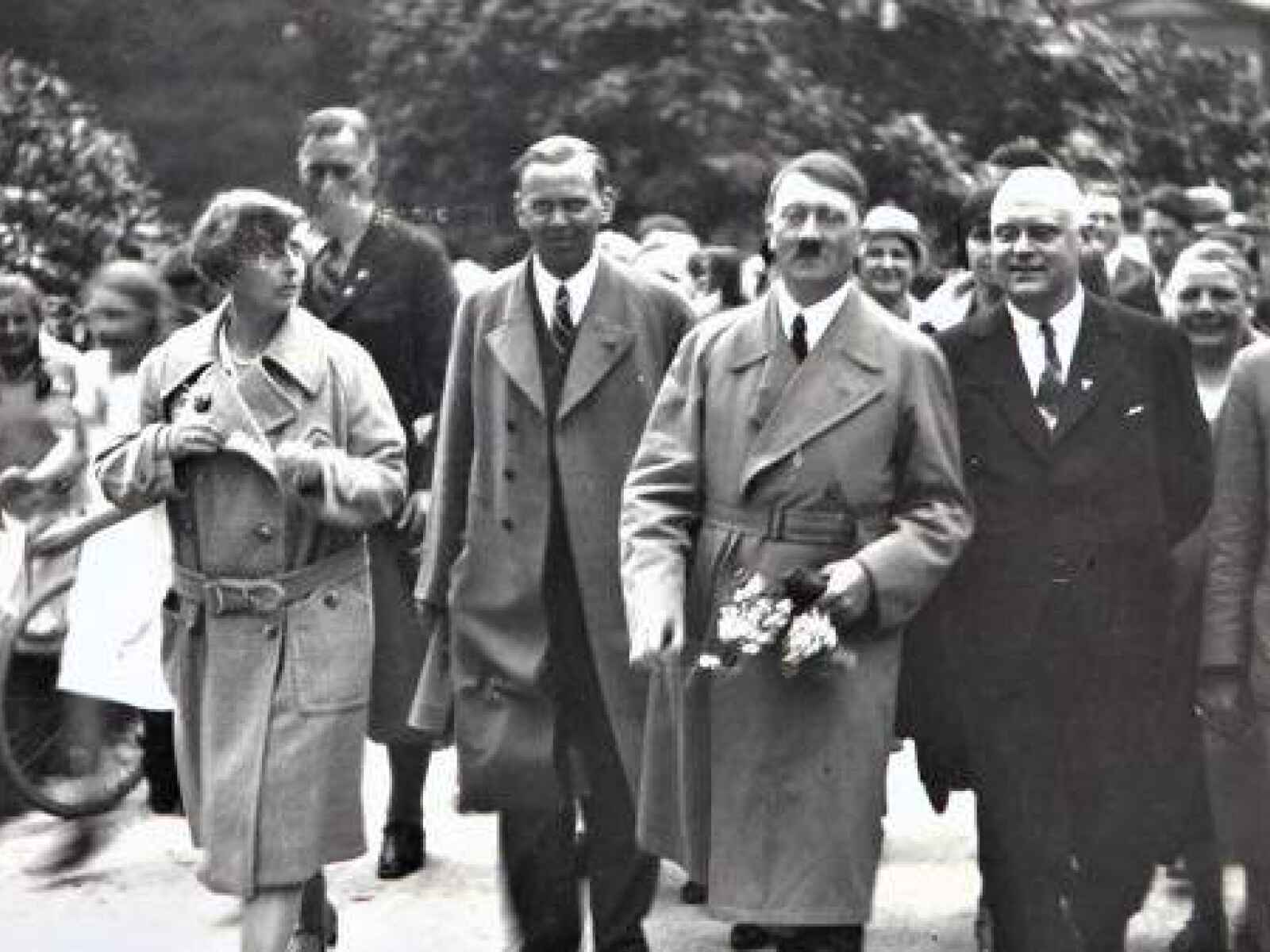
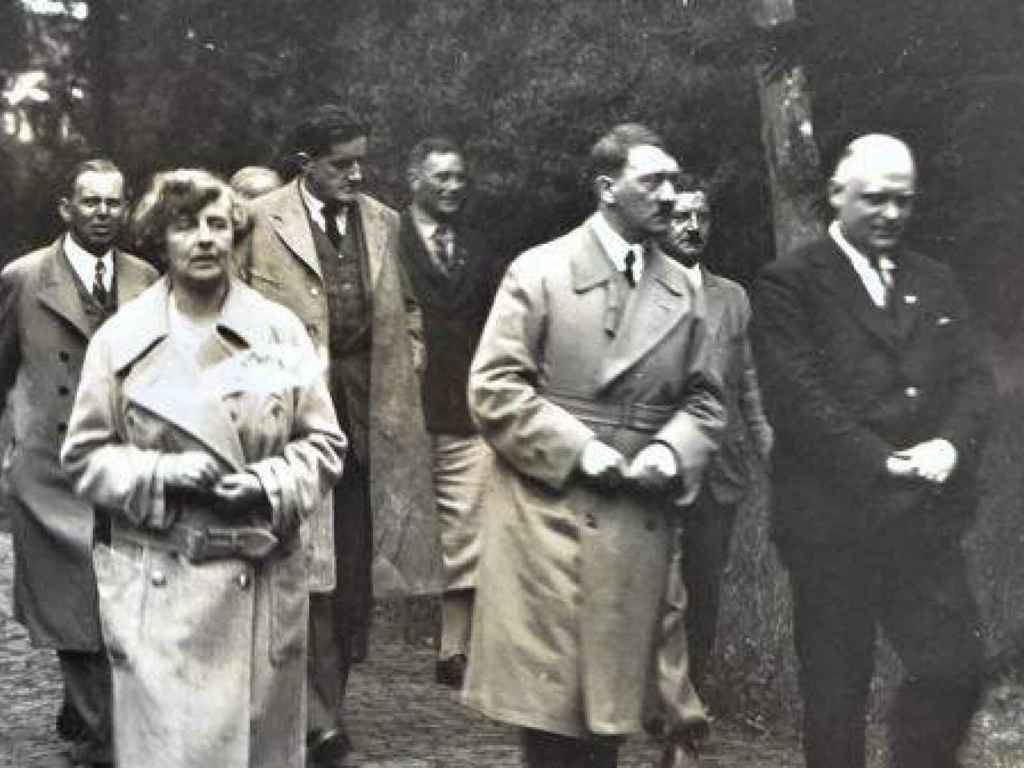
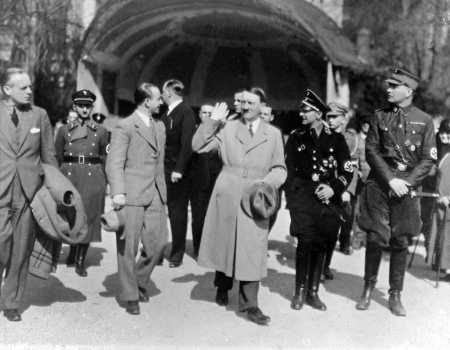
Duchess Sophie Charlotte von Oldenburg, her husband Harald von Hedemann, Adolf Hitler and Gauleiter Carl Röver in the castle park in Rastede on 25 May 1932. A newspaper from 1932 reported that Adolf Hitler was a guest at the Oldenburger Hof with his “good friend” Harald von Hedemann and was received by Sophie Charlotte in the Palais for 3 o’clock tea.
Adolf Hitler had an extensive six-day journey through Oldenburger Land in May of 1932. Here Duchess Sophie Charlotte von Oldenburg walks with Hitler in the castle park in Rastede.
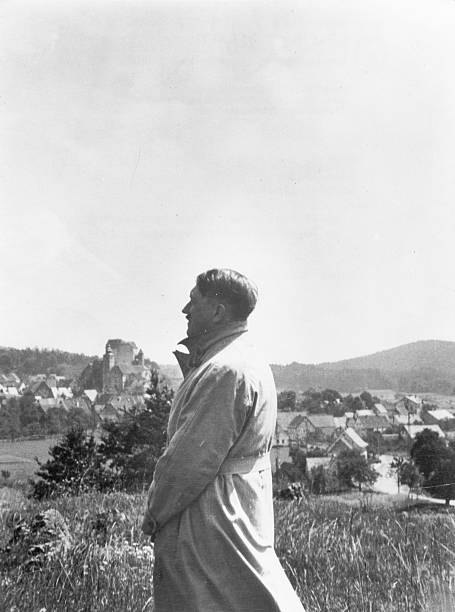
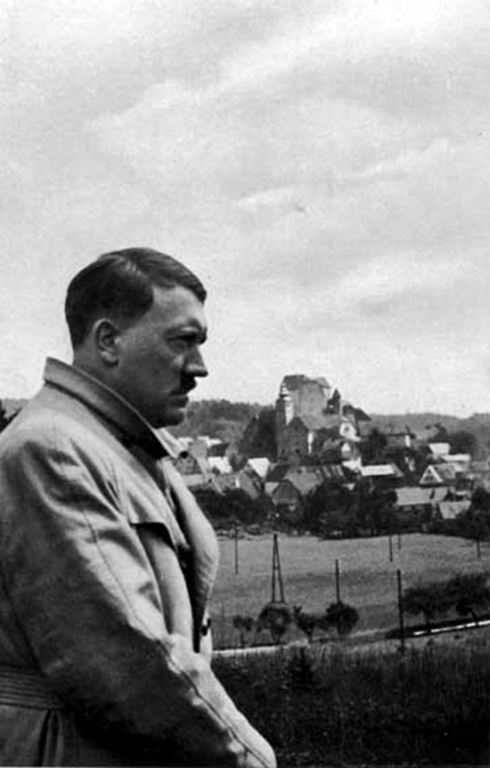
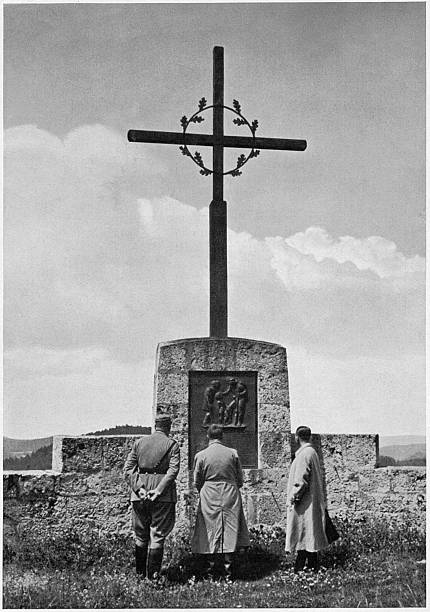
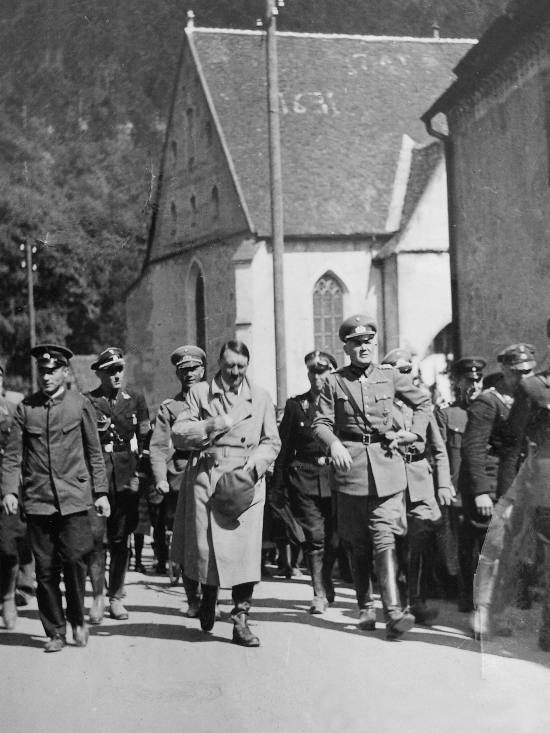
Adolf Hitler eines Spaziergangs bei Hiltpoltstein in der Fränkischen Schweiz, – veröffentlicht 19.08.1934. Adolf Hitler taking a walk near Hiltpoltstein in Franconian Switzerland on 6 June 1931.Der Führer in Franken Am Gefallenendenkmal in Hiltpoltstein (Fränkische Schweiz). Wilhelm Bruckner, Adolf Hitler and Julius Schaub visiting a War Memorial outside Hiltpoltstein, Germany, on 6 June 1931 during a drive to Gößweinstein and Behringersmühle. Participation that evening in a celebration on the occasion of the birthday of the late composer Siegfried Wagner in the garden of the Gasthof zur Behringersmühle. A print from Adolf Hitler. Bilder aus dem Leben des Führers.Wilhelm Bruckner, Adolf Hitler and Julius Schaub observing a War Memorial outside of Hiltpoltstein, Germany on 6 June 1931.
On 3 April 1932 Hitler began his first Deutschlandflug: Hitler über Deutschland. He began his travels across Germany by plane in order to speak at as many people in as many places as possible in a short time during the presidential campaign. He started off in Dresden by speaking at the Radrennbahn Reick.
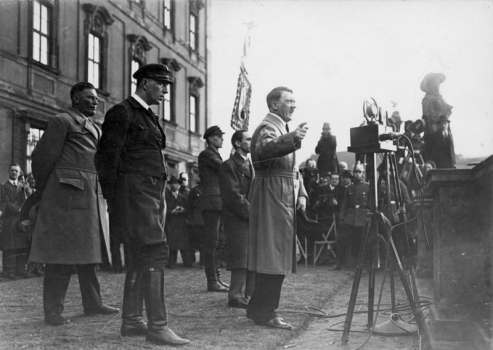
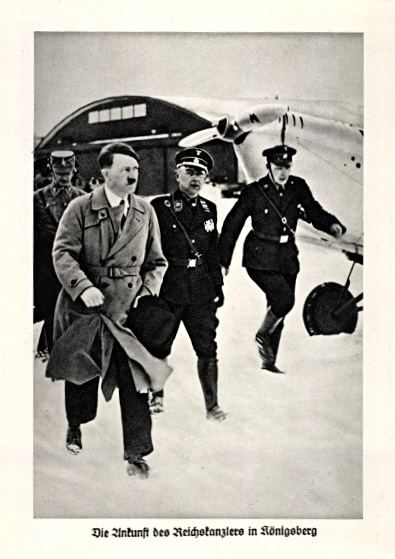
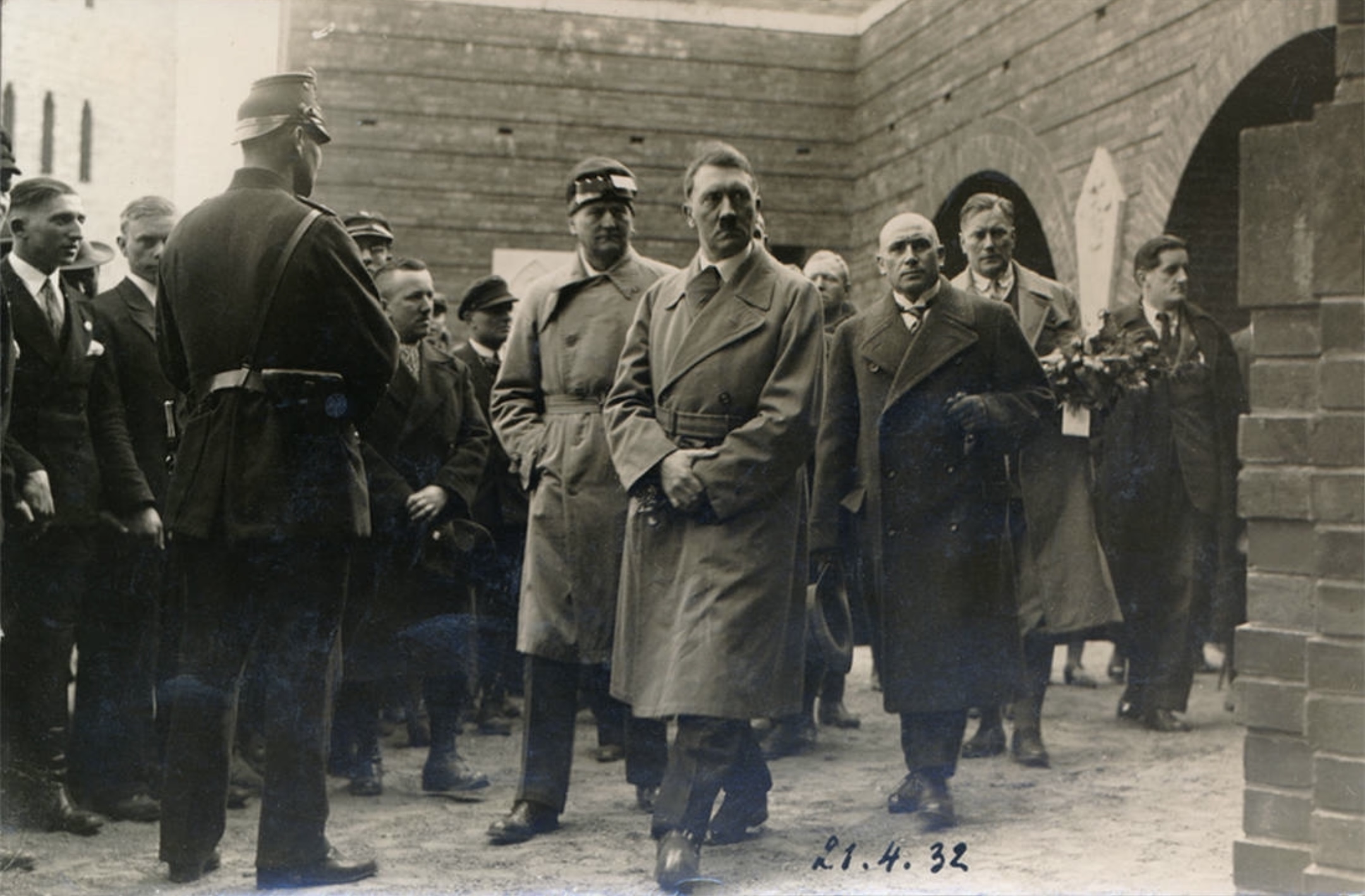
Adolf Hitler on a velodrom in Dresden in 1932. Hitler is now using an airplane to campaign and starts his first flight across Germany. Air travel from Munich-Oberwiesenfeld to Dresden-Auf dem Heller. Speech at the Reick cycling track in Oskar-Röder-Straße 1 in front of 60,000 listeners on 3 April 1932.Berlin, vor Berliner Schloss.- Rede Adolf Hitler vor Mikrofonen; v.l.n.r. Wilhelm Brückner (persönlicher Adjutant Hitlers), Wolf Heinrich Graf Helldorf (SA-Führer), Joseph Goebbels, Adolf Hitler on 4 April 1932. speech in the pleasure garden (in front of the old museum) in front of 200,000 listeners. The arrival of the Reich Chancellor in Königsberg to give a speech on 5 April 1932.Adolf Hitler departs from his visit to the Tannenberg Memorial on 21 April 1932. The monument was dedicated by Hindenburg in 1924, on the tenth anniversary of the Battle of Tannenberg near Hohenstein (now Olsztynek, Poland).
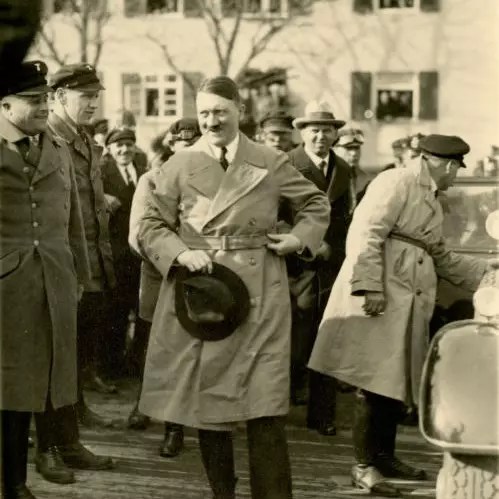
Adolf Hitler back out on the campaign trail, this time by car, donning his trusty trench-coat while carrying his road map and leather driving helmet in hand.
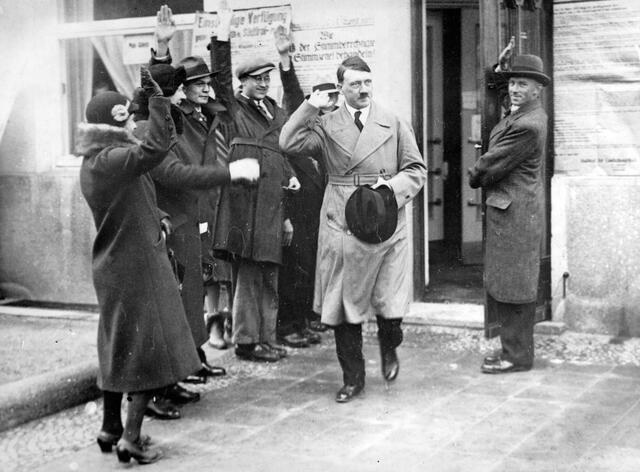
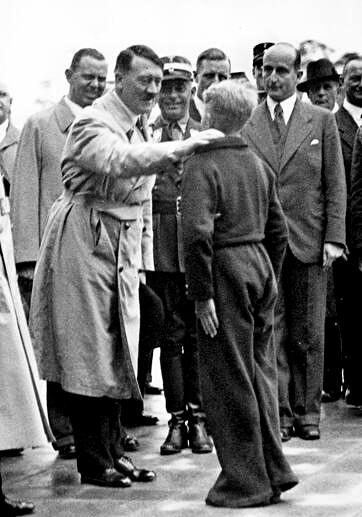
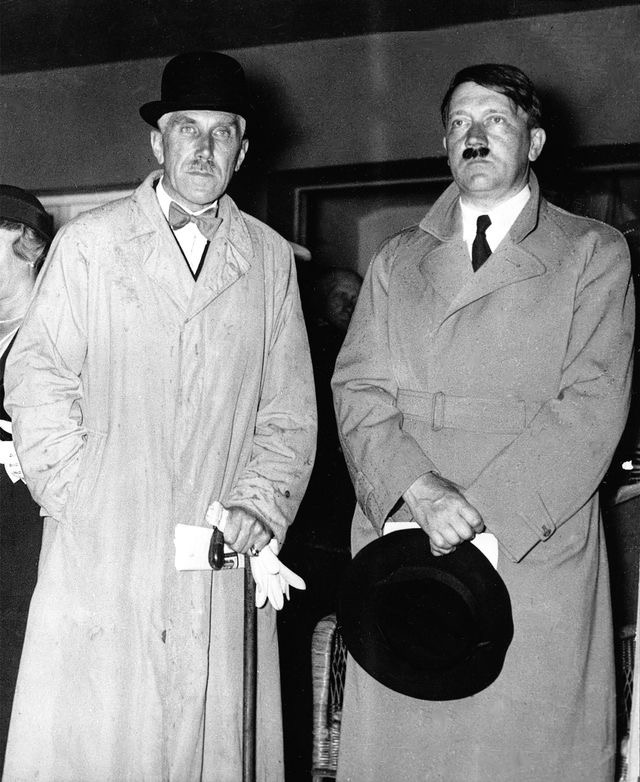
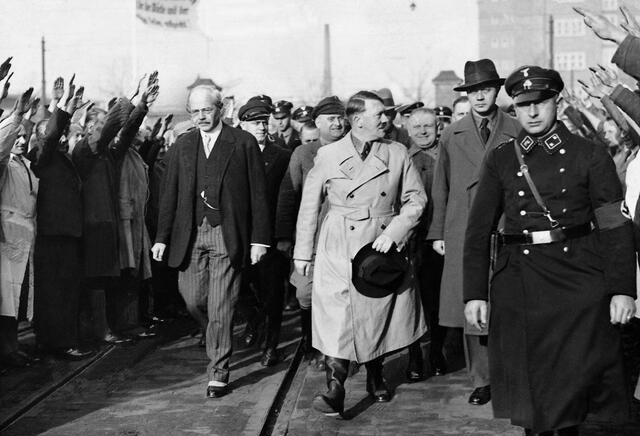
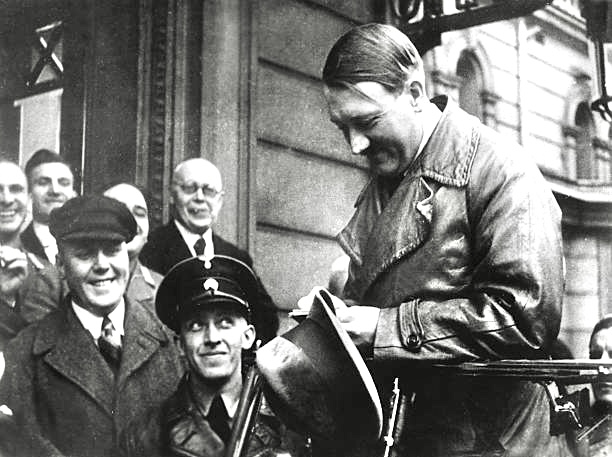
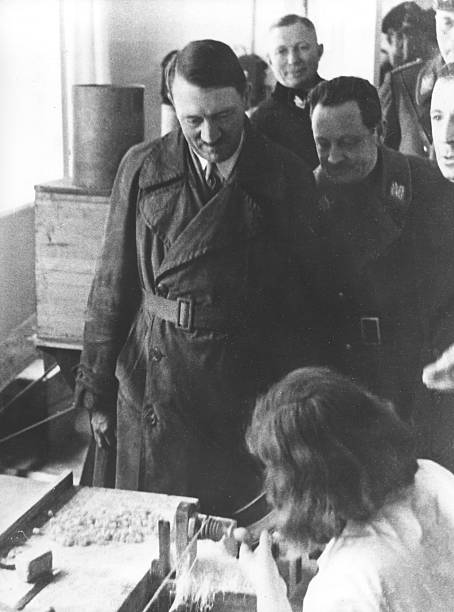
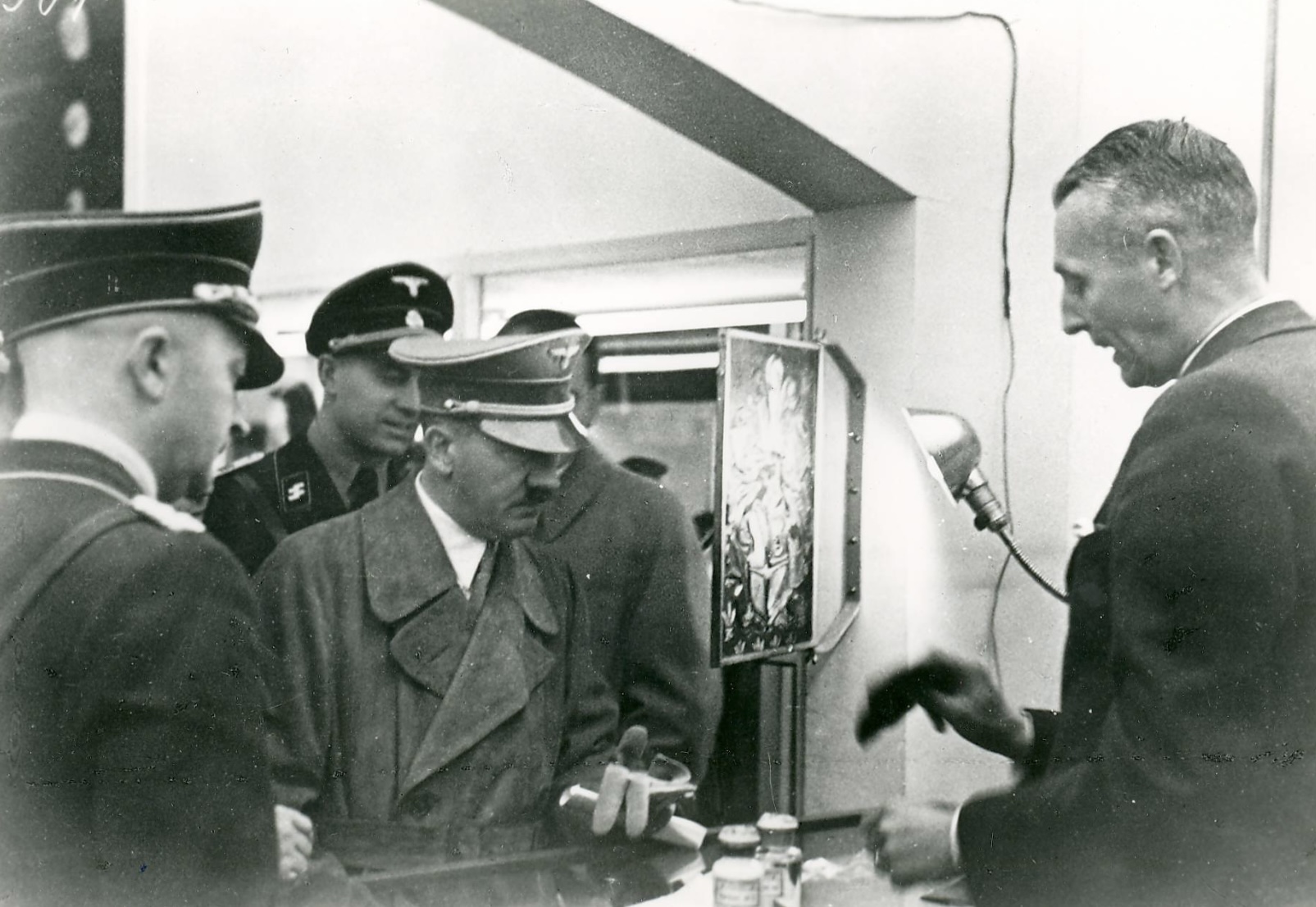
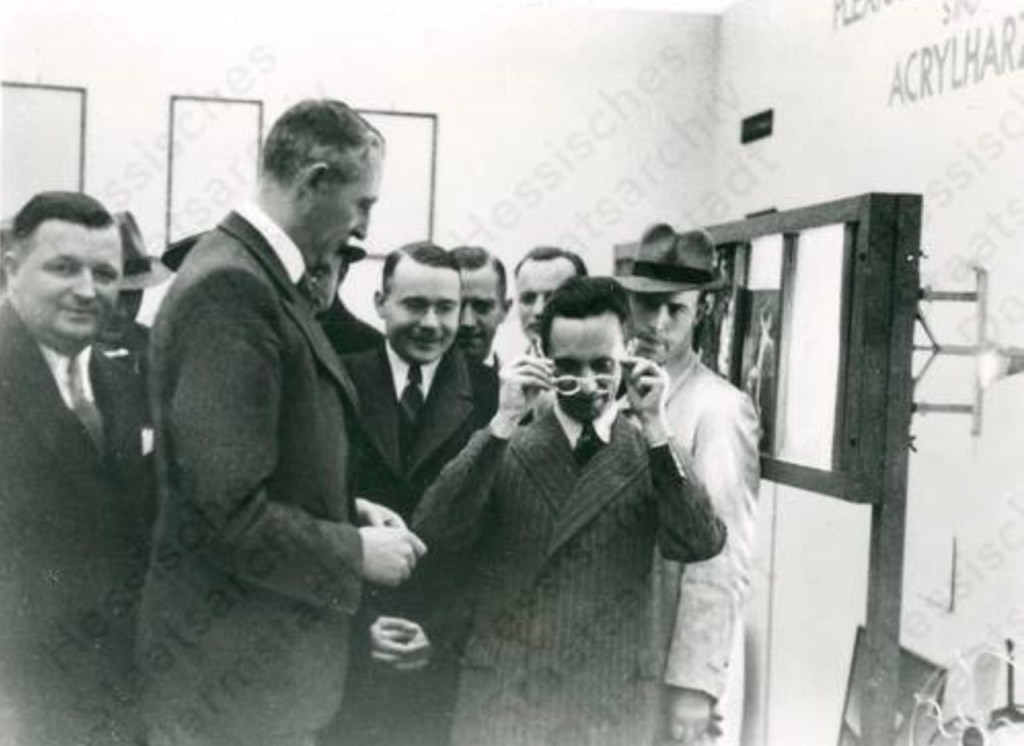
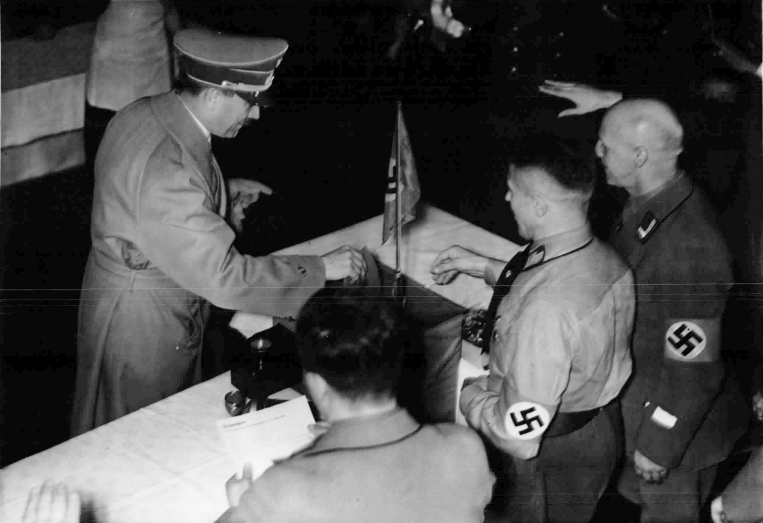
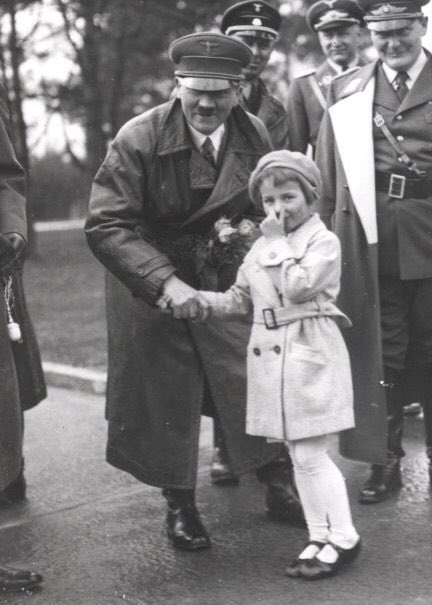
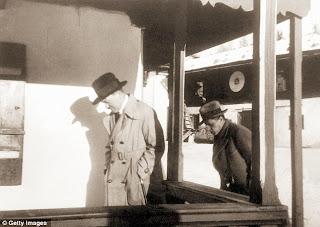
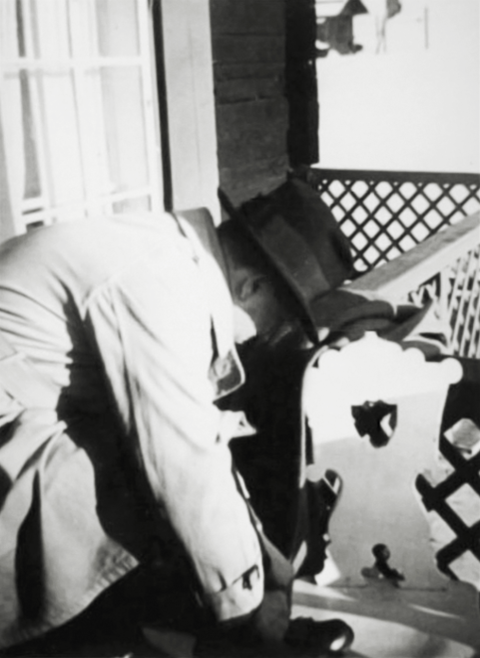
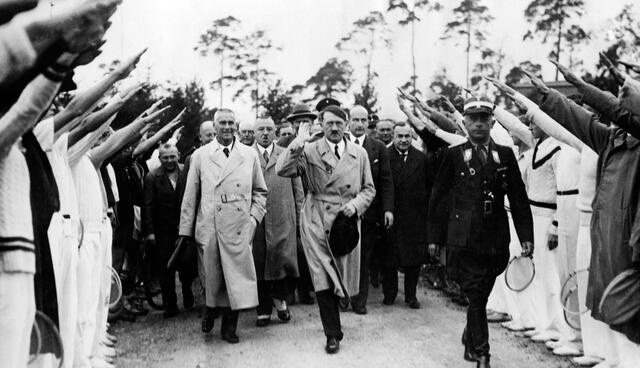
Adolf Hitler leaving a polling station in Munich, Germany, in the context of the election of the state government in Bavaria on 24 April 1932.An evocative photograph of Adolf Hitler taken on the campaign trail in May of 1932.Adolf Hitler leaving after an official meeting on 19 May 1932. Hitler gave a speech with the state parliamentary group of the NSDAP in the Hotel Prinz Albrecht in Niederkirchnerstraße 8-9 in Berlin in front of 162 listeners on 19 May 1932. Hitler distances himself from the faction of the NSDAP in the state parliament of Prussia with regard to coalition plans with the center. Look inside of his hat – you can see the very top of his whip, which is cleverly tucked inside.Adolf Hitler on the campaign trail in 1932.Adolf Hitler and the Bavarian State Minister Hermann Esser (right in the black fedora) in Starnberg, 29 April 1933.Adolf Hitler talks to a boy who participates in Olympic preparations on the Reich sports field in Berlin, Germany, in 1933. Chancellor Adolf Hitler and Reich Minister of the Interior Wilhelm Frick inspect the Sport youth on the occasion of the opening of the Olympic training course, in preparation for the Olympic Summer Games in Berlin in 1936. Hitler greets the youngest participant of 13 years.Adolf Hitler heads to the Kroll Opera, where the Reichstag held its meetings after the fire destroyed the Reichstag building, on 21 March 1933.Vice Chancellor Franz von Papen, left, and Chancellor Adolf Hitler appear at a Reichswehr concert in the Berlin stadium on 17 June 1933. Adolf Hitler and General von Blomberg in Blaubeuren on 5 September 1933, where they stopped to enjoy lunch at the Gasthof Krone.Adolf Hitler attends a meeting of Siemens workers with Karl Friedrich von Siemens. The occasion is a speech before the 1933 Reichstag elections at Siemens’ dynamo plant in Nonnenallee on 10 November 1933.Adolf Hitler votes in the Reichstag election and referendum on 12 November 1933. The NSDAP, as the only eligible party, receives 92.2 percent of the vote. 92 percent of voters approve of Hitler’s policy leading to the withdrawal from the League of Nations. From now on, the Reichstag is only formally official.On 9 May 1934 Albert Forster’s wedding took place in Berlin, with Hitler and Rudolf Hess as witnesses. Forster was the founder and publisher of the Danziger Beobachter (Danzig Observer) newspaper and the Gauleiter of Danzig. The wedding took place here in the Altes Stadthaus with a reception held at the Reich Chancellory.Deutschlandhalle was an arena located in the Westend neighborhood of Berlin, Germany. It was inaugurated on 29 November 1935 by Adolf Hitler. The building was granted landmark status in 1995, but was demolished on 3 December 2011.Adolf Hitler in a leather trench-coat in front of the hotel ‘Kaiserhof’ in Berlin signing autographs in early 1936.Adolf Hitler in Königsberg during a visit to the Staatliche Bernstein-Manufaktur, a state-owned amber processing enterprise, during a trip through East Prussia with Gauleiter Erich Koch on 4 October 1935.Adolf Hitler in a dust jacket visiting the exhibition ‘Schaffendes Volk’ (Creative People) in Duesseldorf on 2 October 1937. His accompanying physician Dr. Karl Brandt stands directly behind him. Albert Speer and Joseph Goebbels also attended the Expo and explored the plexiglass/acrylic and resin exhibition in the plastics pavilion.
Joseph Goebbels trying on glasses at the Plexiglas/Acrylharz exhibition at the ‘Schaffendes Volk’ (Creative People) Expo in Düsseldorf.
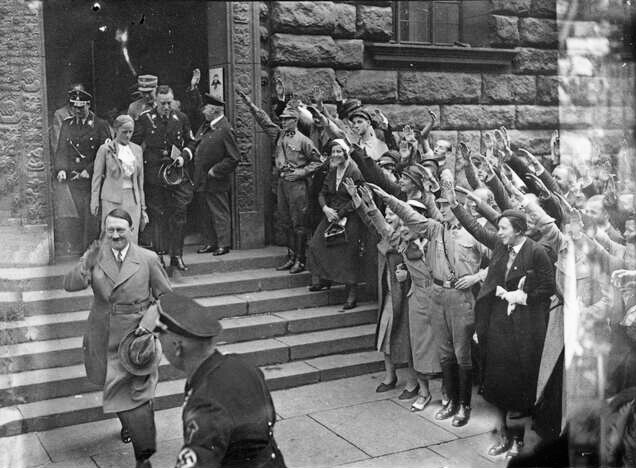
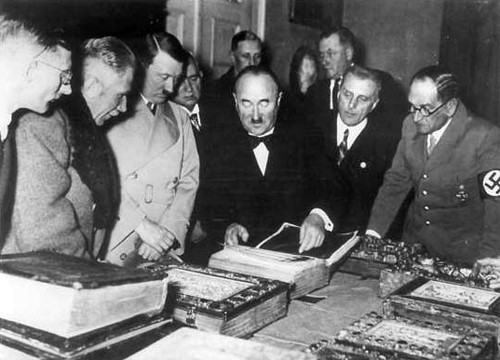
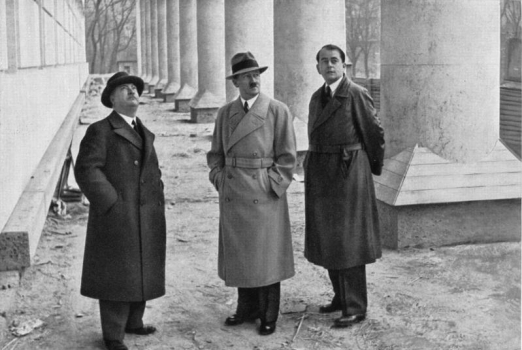
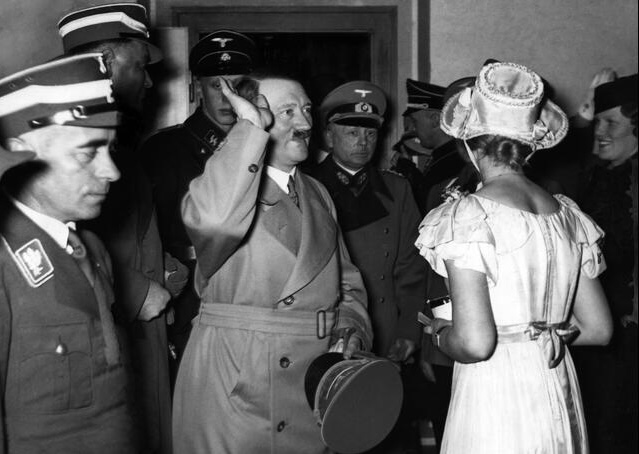
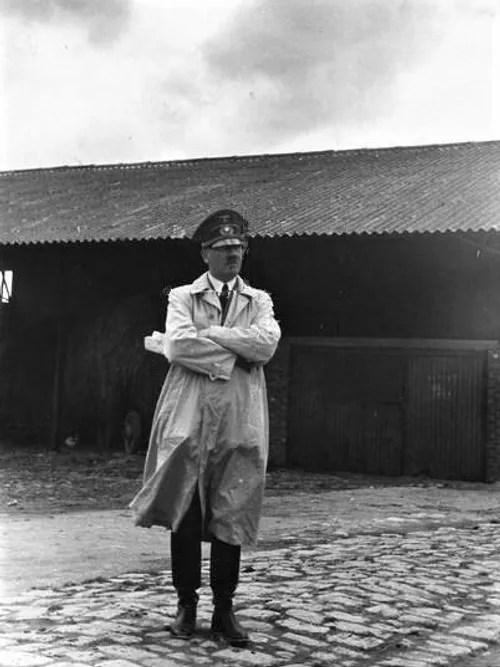
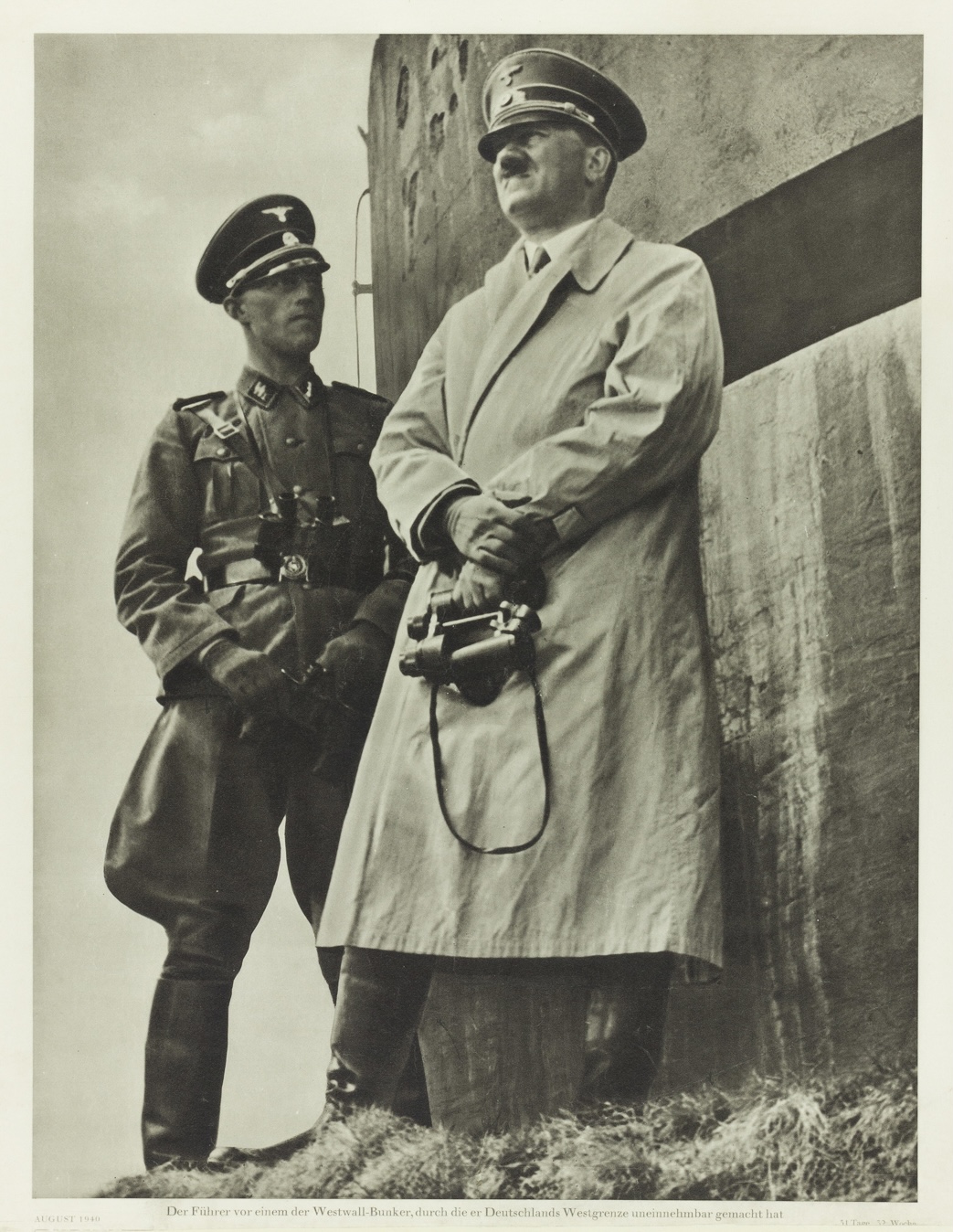
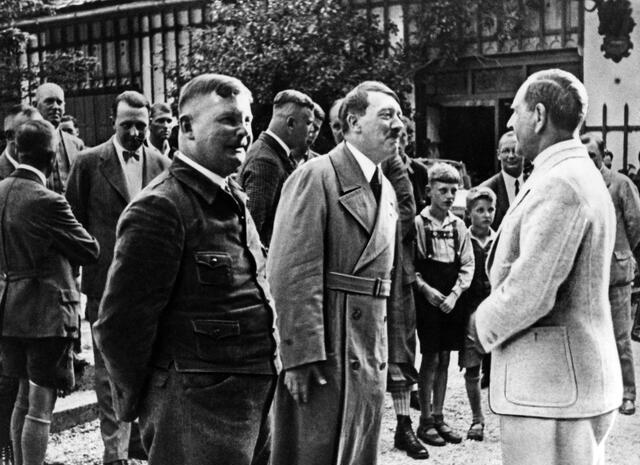
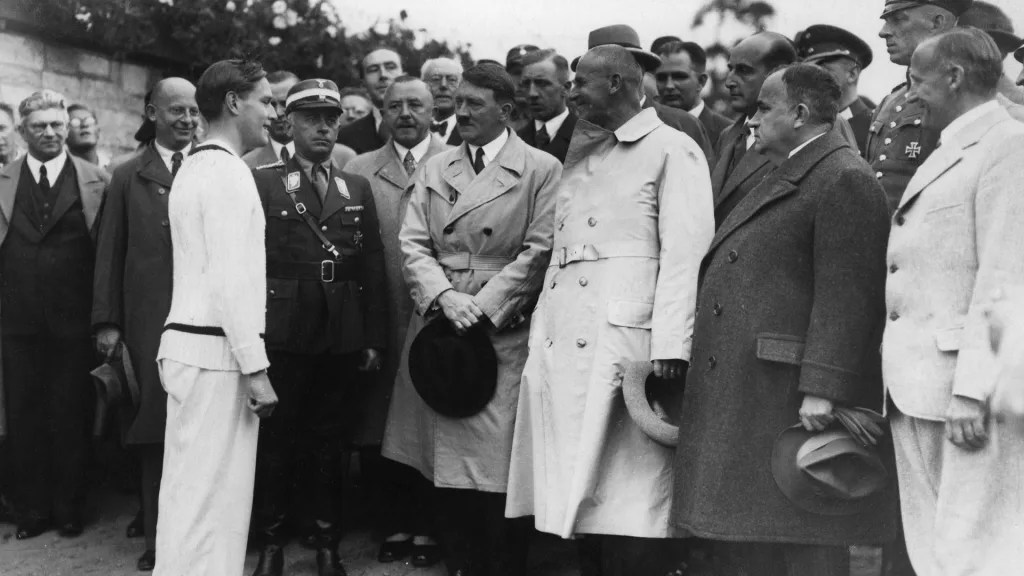
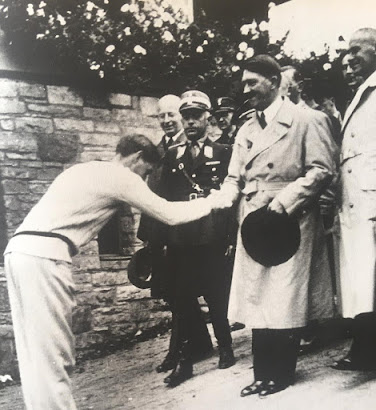
Adolf Hitler and German officials visiting the Bavarian State Library on 7 January 1936.Leonhard Gall, Adolf Hitler, and Albert Speer visit the construction site of the Haus der Deutschen Kunst in Munich on 5 April 1936.Adolf Hitler visits the German participants in the team competition of the Prize of Nations Equestrian Competition 1937. The German team, consisting of Lieutenant Brinckmann, Captain von Barnekow, Rittmeister Kurt Hasse and Rittmeister Momm, won. HItler, accompanied by Gerneraloberst von Fritsch and Reichssportführer von Tschammer and Osten greets here a young girl in white costume.Adolf Hitler and mayor Krebs in Frankfurt’s town hall 31 March 1938.Adolf Hitler leaves Frankfurt’s town hall with mayor Krebs on 31 March 1938.Adolf Hitler visits Frankfurt on 31 March 1938.Adolf Hitler voting for the election to the Grossdeutscher Reich on 10 April 1938.Adolf Hitler visits the farm Louis Equines during his return visit to Flanders and tour of the countryside on 26 June 1940.“The Führer in front of one of the Westwall bunkers, through which he made Germany’s western border impenetrable” dated August 1940.Adolf Hitler and Ernst Röhm in Schornlehen, municipality of Berchtesgaden, in conversation with the first Reich Governor of the NSDAP in Bavaria, Ritter von Epp (right) on 27 June 1932. Speech at a leader’s meeting of the SA in the Haus Schorn in front of 50 listeners and speech at an appeal of the SA in the Strandbad Schorn in Schornstraße 7. Eva Braun’s private portrait of Adolf Hitler taken outside of Wulfert’s Hotel Torfhaus, where they stayed overnight in the Harz Mountains on 19 October 1931. Perhaps their very first road trip together.Photo from one of Eva Braun’s private albums of Adolf Hitler taken in Torfhaus on 19 October 1931, outside of Wulfert’s Hotel Torfhaus with Heinrich Hoffmann, where they stayed overnight in the Harz Mountains after the Brunswick rally.Photo from one of Eva Braun’s private albums of Adolf Hitler taken in Torfhaus on 19 October 1931, outside of Wulfert’s Hotel Torfhaus where they stayed overnight in the Harz Mountains. Photo from one of Eva Braun’s private albums of Adolf Hitler taken in front of the Platterhof Hotel (former Pension Moritz boarding house) in November 1931.Photo from one of Eva Braun’s private albums of Adolf Hitler at the Pension Moritz hotel in November 1931. Gottfried von Cramm, tennis player, is complimented on his success by Adolf Hitler, Wilhelm Frick and Hans Tschammer-Osten. German Chancellor Hitler meeting tennis player Gottfried von Cramm while touring the future Olympic site of the Deutschen Stadions in Grunewald, Berlin. At center is Reich Sports Leader Hans von Tschammer, as well as Secretary of State Hans Pfundtner. Further right is Secretary of the Interior, Dr. Wilhelm Frick, in back is architect Werner March. Photograph taken on 5 October 1933.
Hitler wanted to use von Cramm as a role model, but unfortunately his loss to Budge at Wimbledon and later again at Forest Hills meant that von Cramm was vulnerable to the Nazi regime, and they were swift to act. Accused of homosexuality von Cramm was sent to prison for one year in 1938.
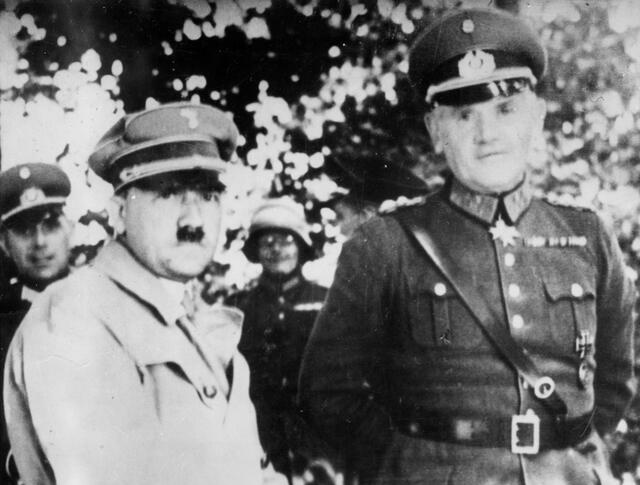
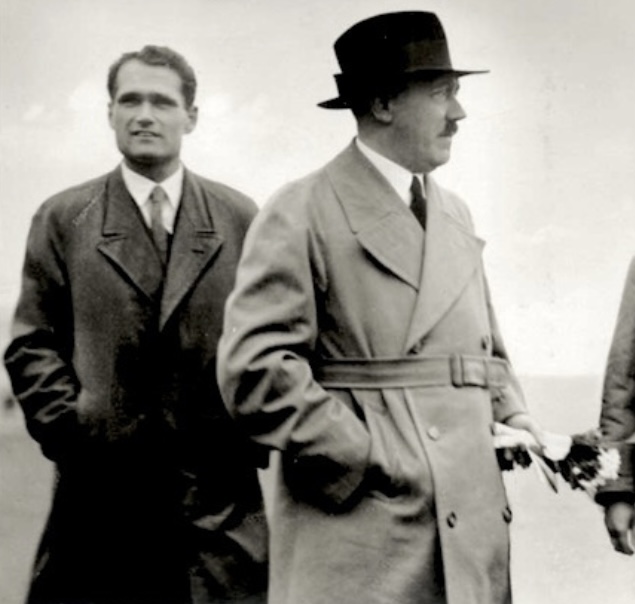
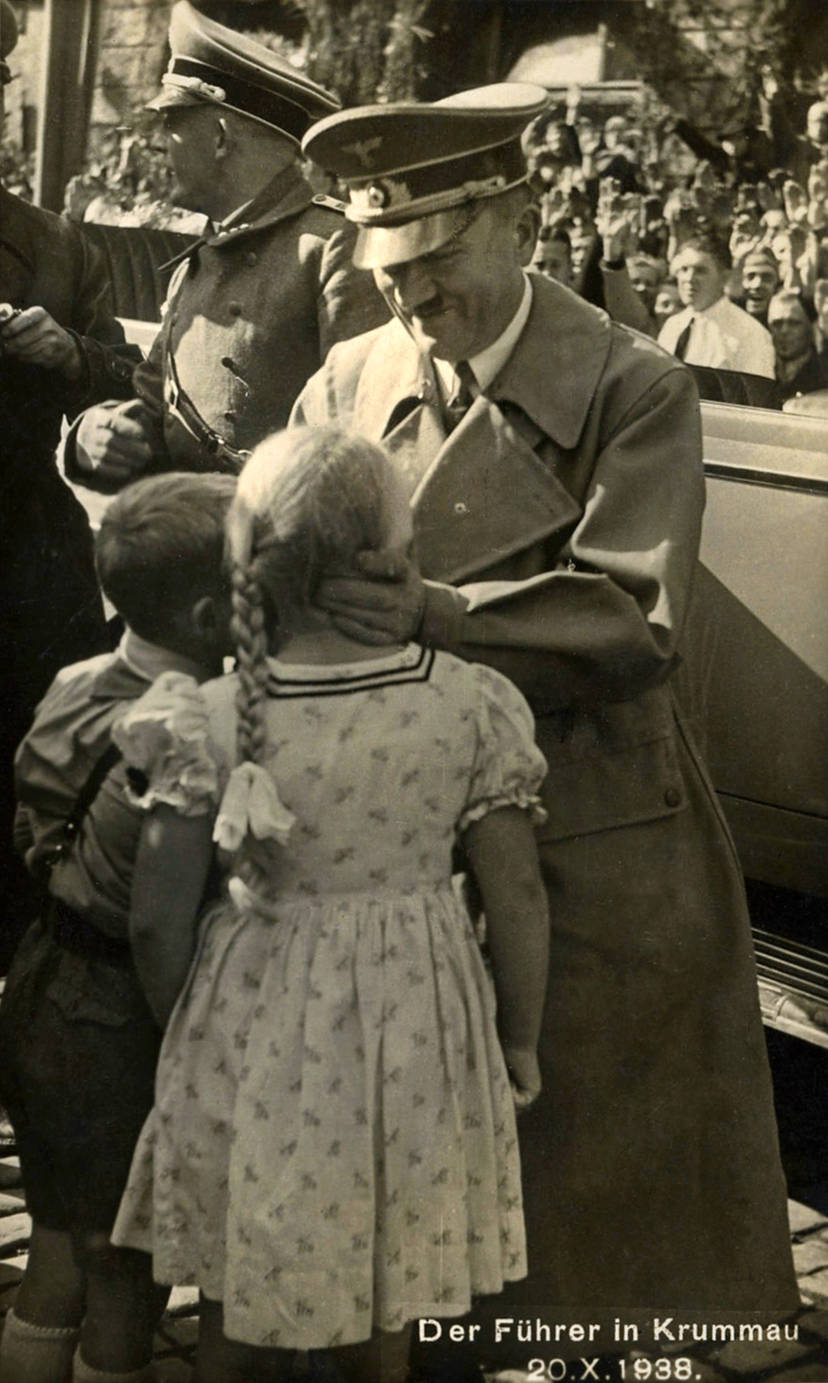
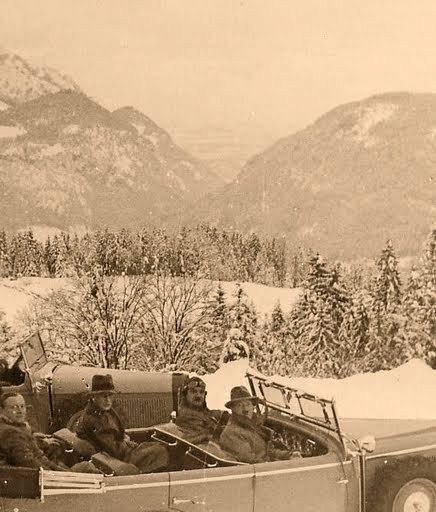
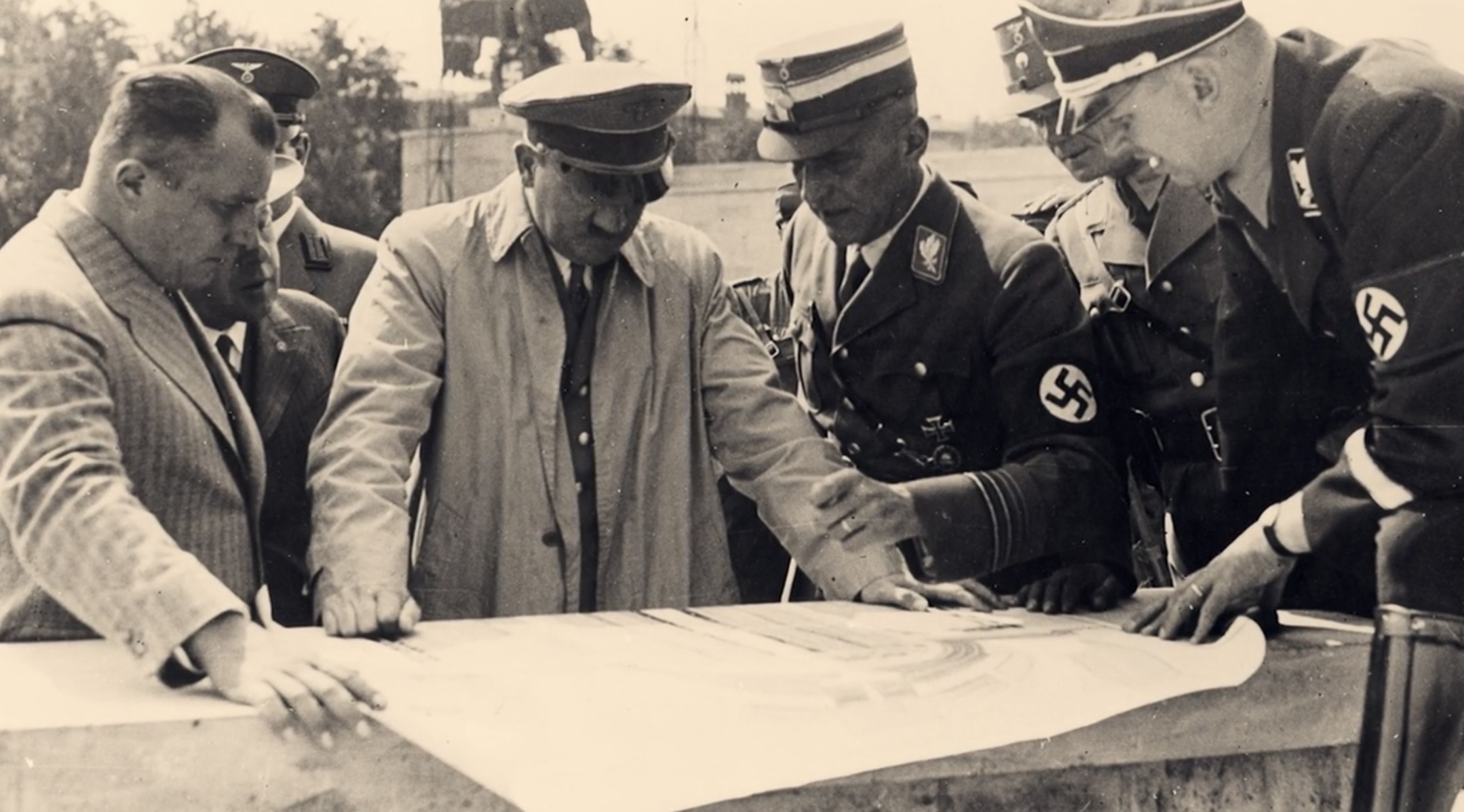
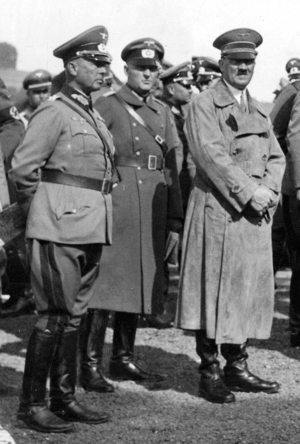
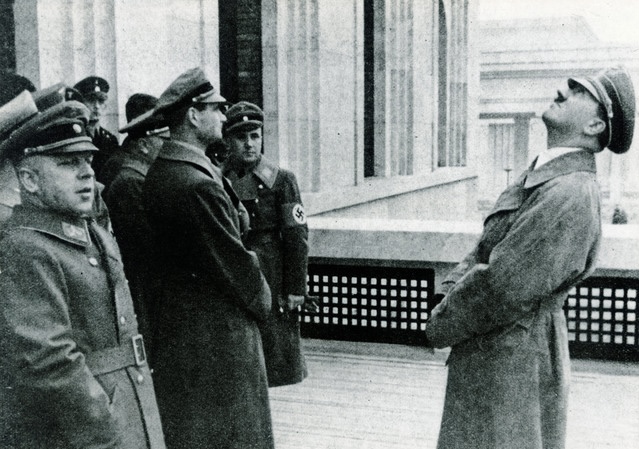
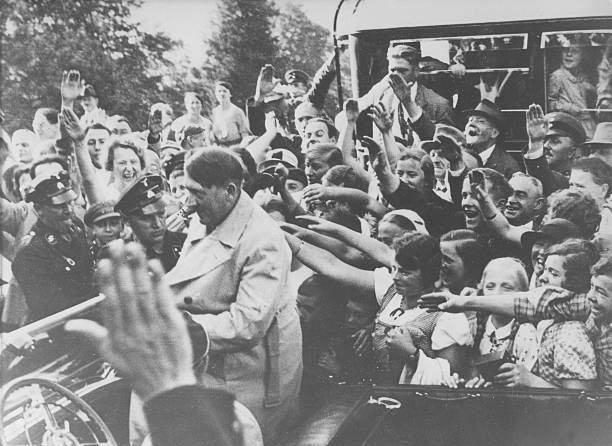
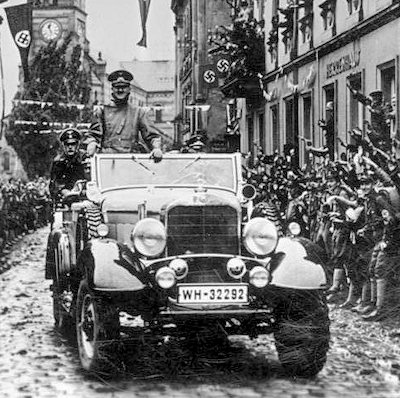
Adolf Hitler visits the Olympic cursus of the German athletes as a preparation for the future 1936 Olympic Games. He is accompanied by the Interior Minister Wilhelm Frick (left) and Reich Sports Leader Hans von Tschammer und Osten (right), on 5 October 1933Adolf Hitler visits Paul von Hindenburg and his grandchildren at his residence in Neudeck on 29 June 1933.Chancellor Adolf Hitler stands with General Werner von Bromberg, the Minister of Defense, on 3 August 1934. Only the day before, Germany’s President, Paul von Hindenburg had died. On August 3, with the support of the army, Hitler became President. At this photographed ceremony, Gen. von Bromberg pledged the Army to Hitler, and von Bomberg [according to this photo’s caption], “Ordered each soldier to pledge his loyalty and life to Hitler.”Photo of Adolf Hitler from his visit to Malbork Castle on 4 July 1934.the day after visiting Neudeck to report with Reich President Paul von Hindenburg on the suppression of the “Röhmputsch”. Rudolf Hess and Adolf Hitler at the Tempelhof airport in Berlin during Hitler’s 1932 campaign travels.On 20 October 1938 Hitler spoke in front of the Rathaus of Krummau. Hitler came from the Obersalzberg through Linz to Krummau (now Český Krumlov) on this day.Adolf Hitler leaving the Reichsmarine Garnisonkirche (Navy Garrison Church) in Wilhelmshaven on 26 May 1932.Adolf Hitler leaving the Kurhaus in Bad Reichenhall after the Reichsführertagung of the SA, SS and ‘Stahlhelm’; behind Hitler is his personal adjutant SS-Führer Julius Schaub on 2 July 1933.Adolf Hitler on a visit in Wiesbaden on 21 March 1935 with Otto Dietrich, Sepp Dietrich and Joachim von Ribbentrop.Hitler departing the Obersalzberg for Berlin in January 1935 with his chauffeur Julius Schreck.Adolf Hitler checking plans of the rally terrain for the Nuremberg Rally 1935. Next to him, on his left, rally organizer Max Juettner, and Hitler’s personal adjutant Julius Schaub on his right: Martin Bormann – 17.08.1935Adolf Hitler attends army maneuvers on 17 September 1936 in Hesse. From left: Colonel-General Werner von Fritsch, commander of the Army, Major Frederick Hoßbach, Hitler’s military chief adjutant, and Hitler.After completion, Adolf Hitler visits the new Führerbau at Königsplatz in Munich, to his left Reichsleiter Amann, Rudolf Hess and Reichsleiter Bormann on 13 June 1937.Adolf Hitler visits the cruiser Köln in Kiel on 28 August 1935.Adolf Hitler and the later representative for Saarland, Joseph Bürckel (right), on the way to the perjury trial against the mayor of Dirmstein, Römer, in Frankenthal on 22 April 1931. Römer had claimed that there had been secret contacts between the Rhine Palatinate separatist leader Heinz-Orbis and Hitler.Adolf Hitler visit to Villingen-Schwenningen to give an electoral campaign speech in Schwenningen on 9 April 1932.Adolf Hitler during a car ride, surrounded by cheering people, in 1932.A young and very dashing Hitler enjoying a visit to the Tegernsee in 1930.
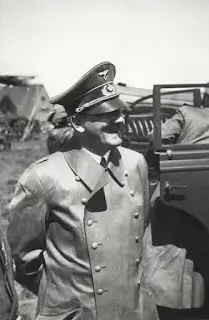
Here’s a really unusual coat – leave it to Hitler to always be setting new fashion trends…
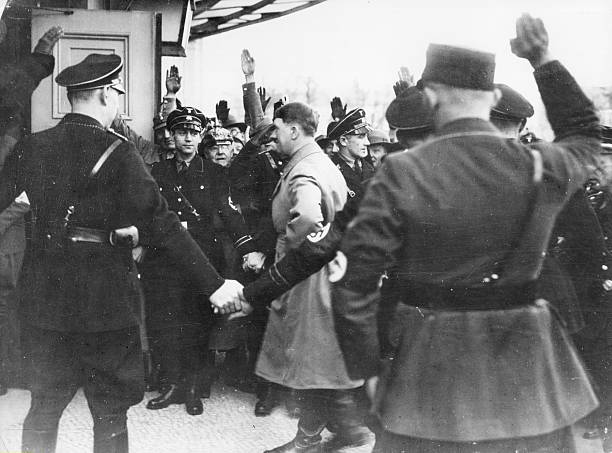
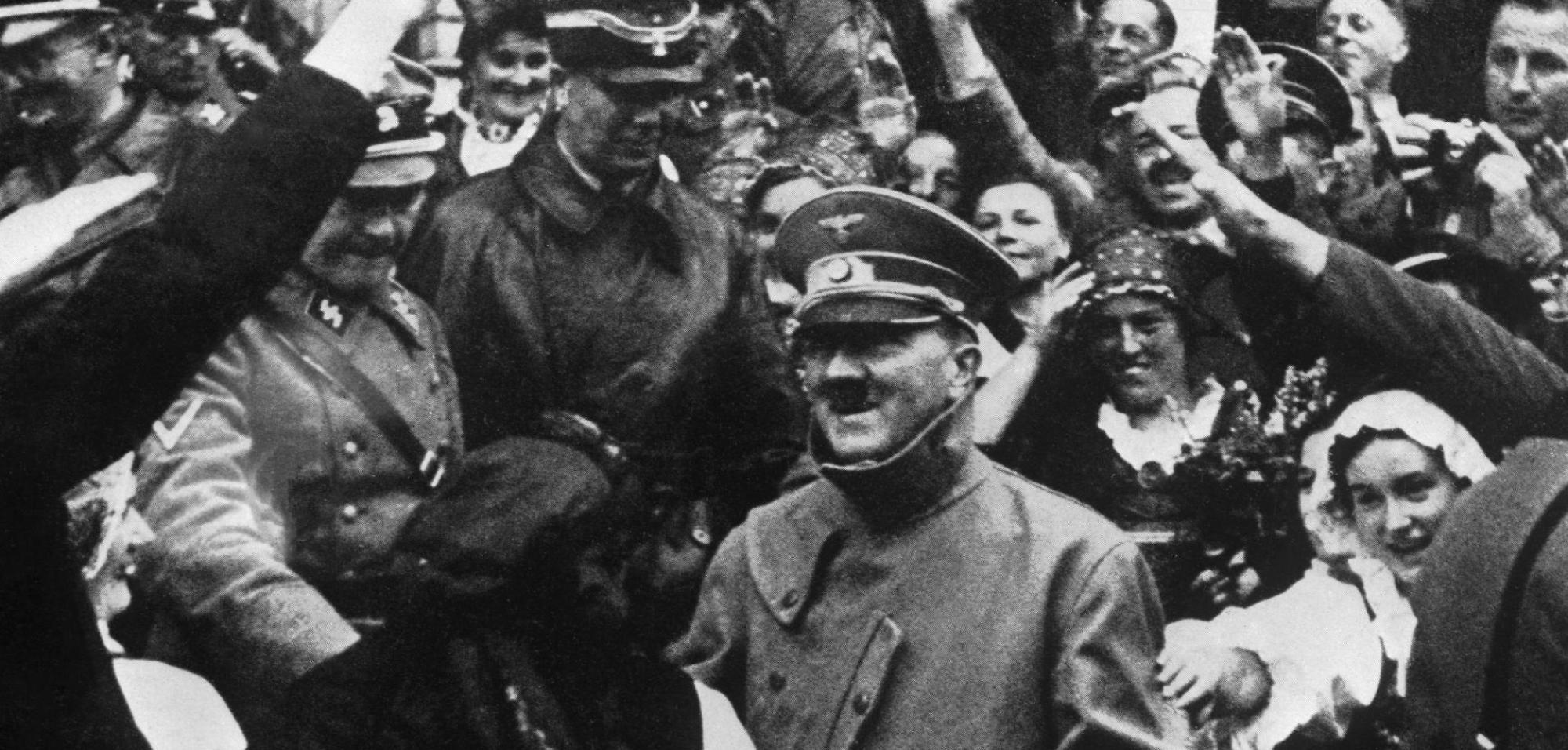
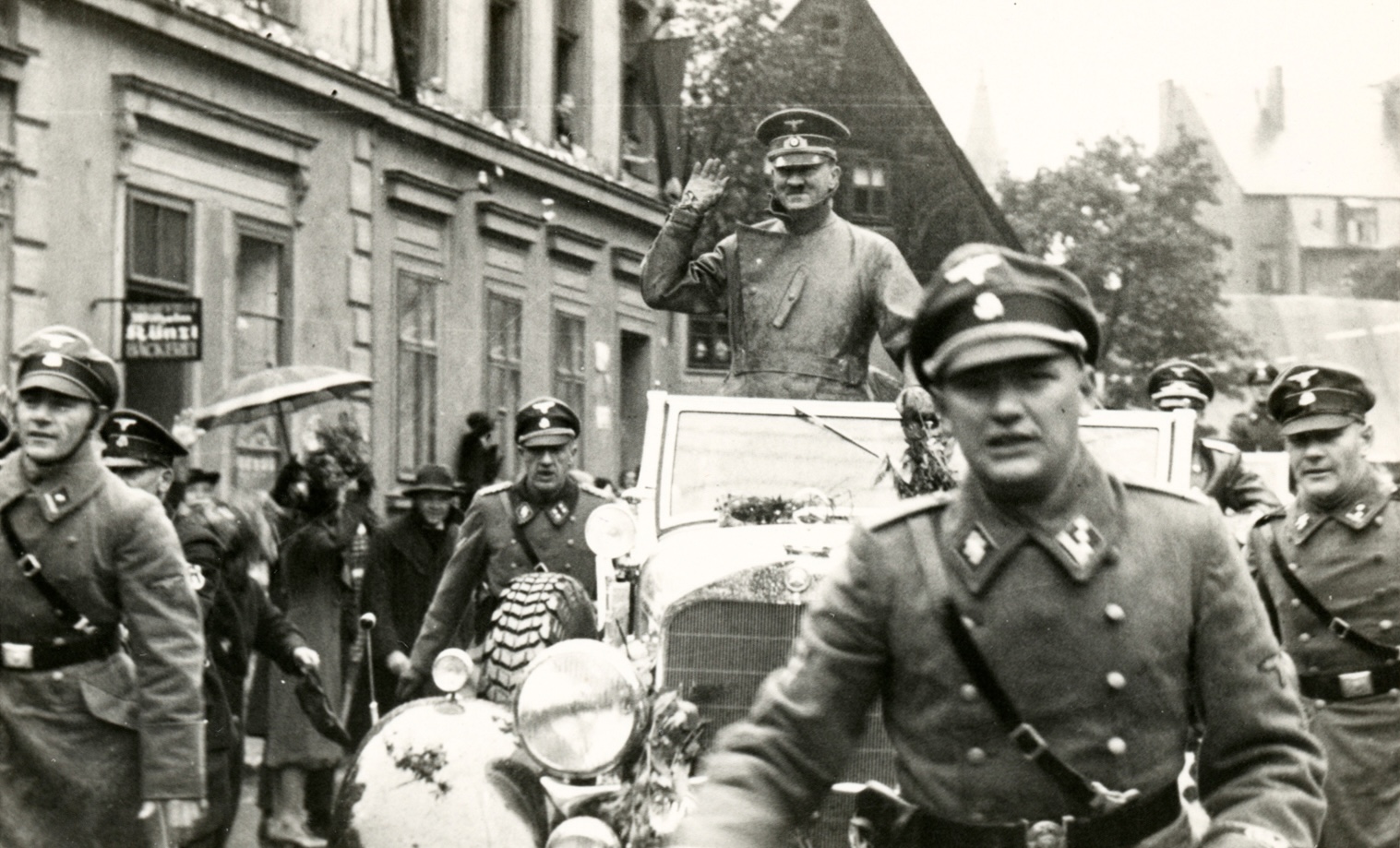
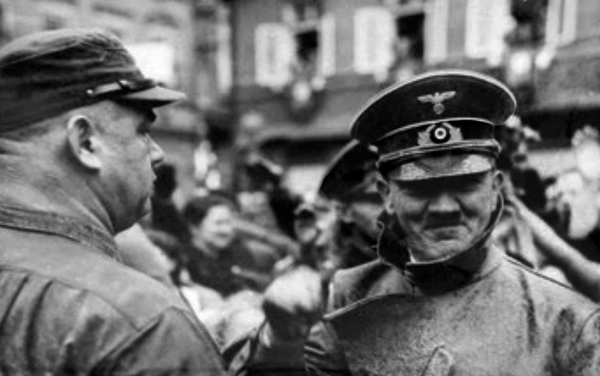
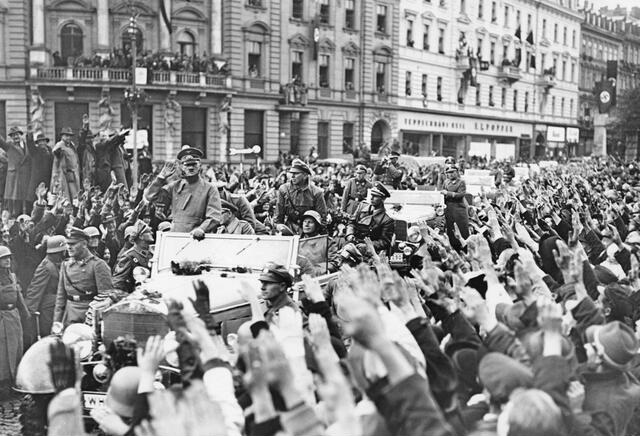
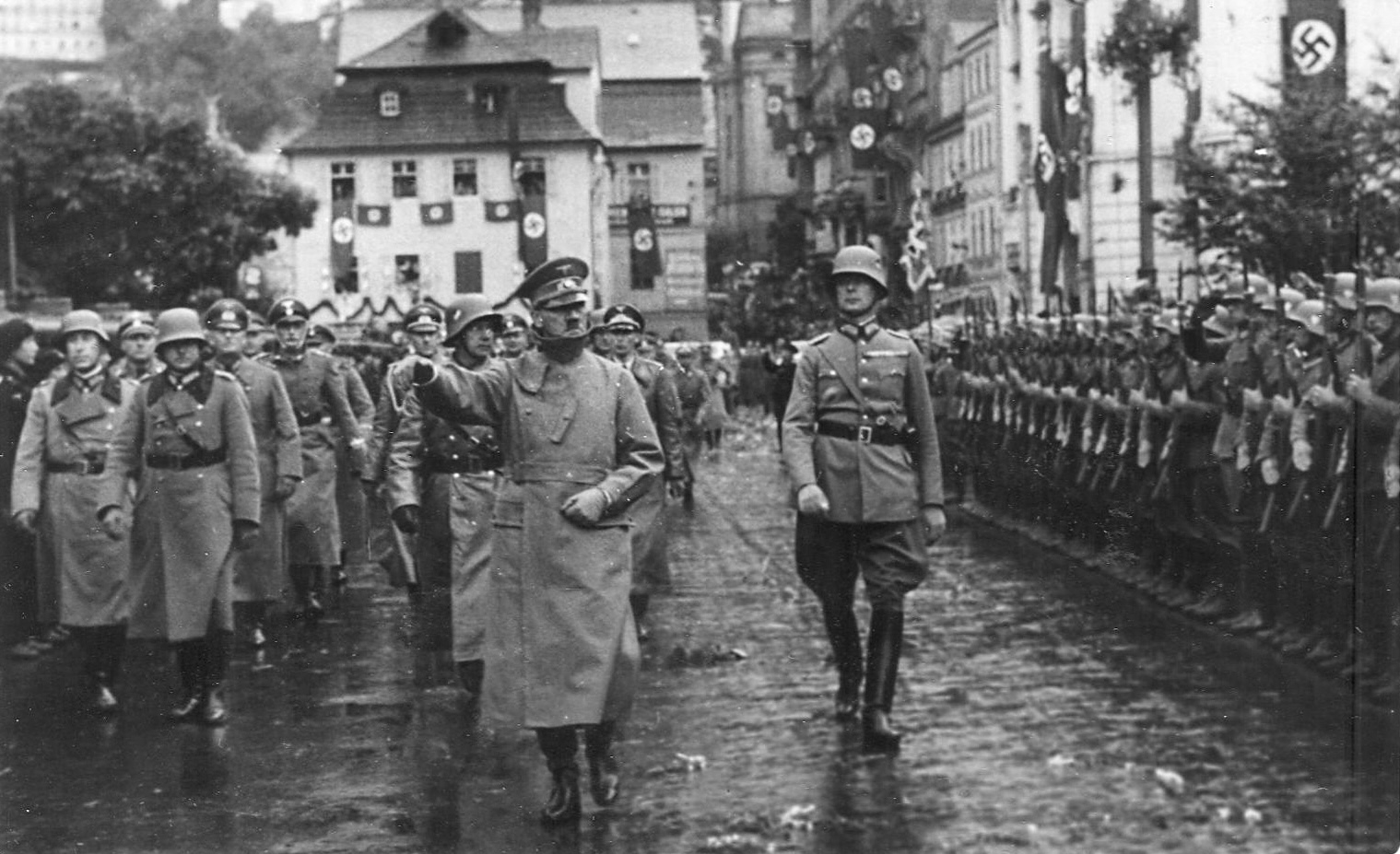
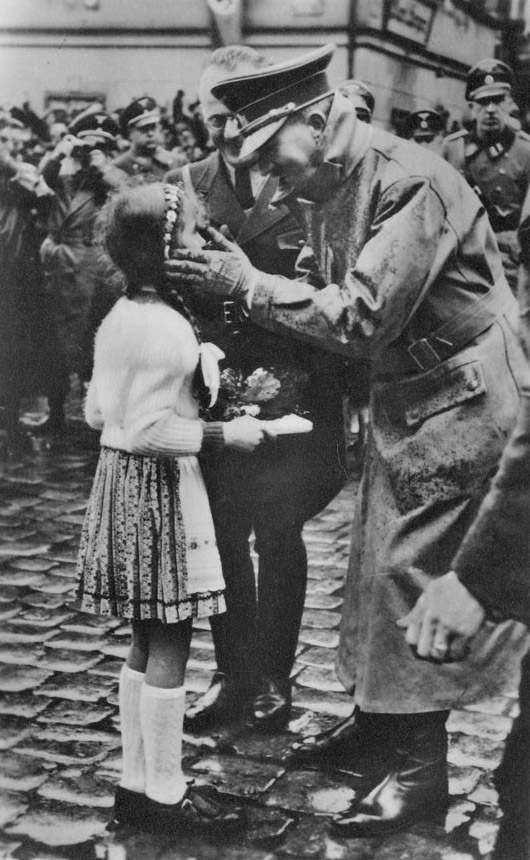
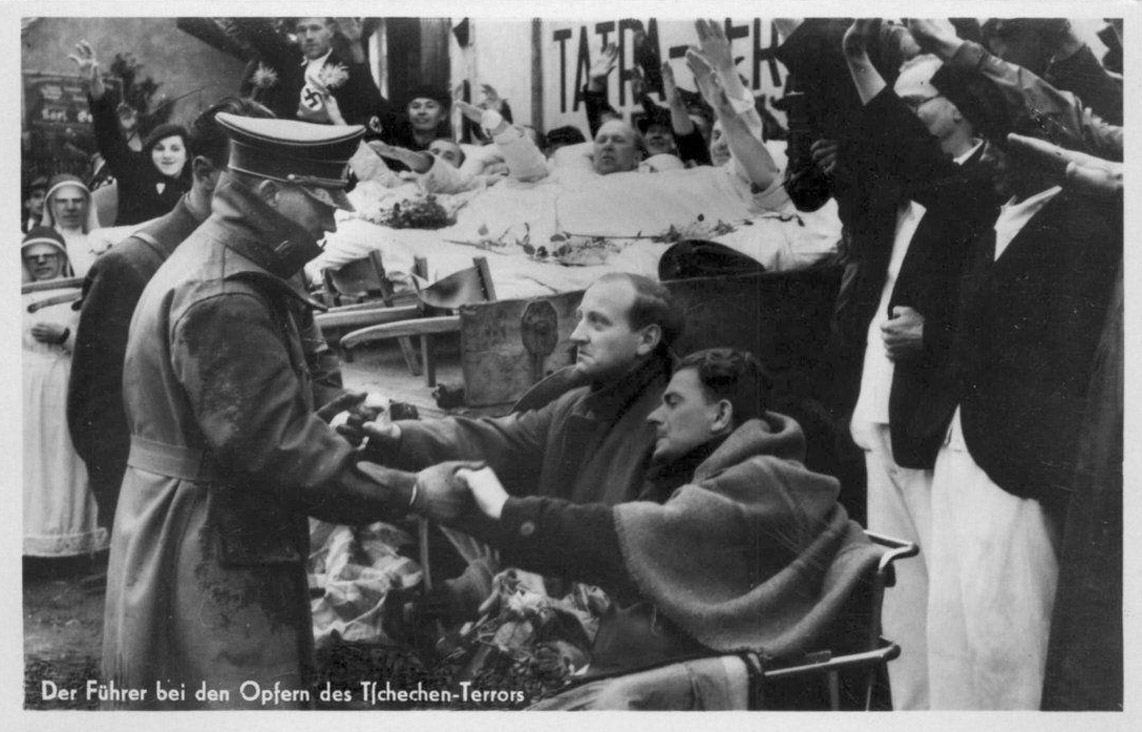
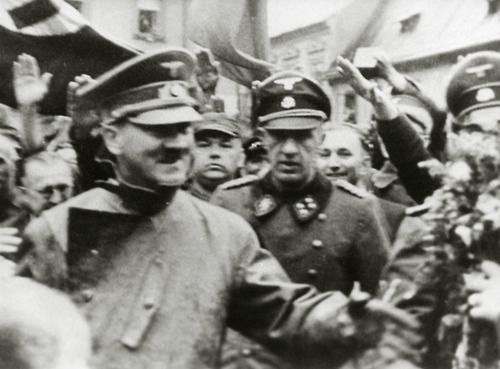
Adolf Hitler on 4 October 1938 at the entry into Graslitz (today: Kraslice in the Czech Republic) after the annexation of the Sudetenland to the German Reich. The caption reads “To the 50th birthday of our Führer on April 20. Among the many great deeds of our Führer was the liberation of the Sudetenland. When he paid a visit to the people of Graslitz, he was enthusiastically received. The joy of this is expressed in his face.”Cheering Sudeten Germans welcome Adolf Hitler in 1938 in Aussig (now Ústí nad Labem) in the Sudetenland (part of Czechoslovakia) that was relegated to Germany between October 1 and October 10, 1938.Adolf Hitler entering Karlsbad (today Karlovy Vary) on October 4, 1938. His motorcade is received cheerfully by the population. They are greeting him the Nazi salute. In his car in the back on the right, Adjutant of the Luftwaffe Nicolaus von Below. Sitting in front of him, General Walter von Reichenau. The bodyguards of the SS follow with other cars.1938 Hitler visit in Karlsbad, (now called Karlovy Vary), atelier Lawitschka“The leader among the victims of the Czech terror” Four wounded men in a car on a street of the village of Falkenau (today Sokolov) during a visit of Adolf Hitler on October 4, 1938, after the occupation of the Sudetenland. The men were wounded in the fight against the Czechs. To the left near the car, nuns.
I love history and have always been infatuated with the design and style of the 1920’s. Unfortunately I can’t time travel back to this era, so I live vicariously through books, movies and photos.
A fabulous variety of photographs! Seems like photographers were constantly busy wherever Hitler went! Some very nice and probably rare ones in this set, and a pleasure to look through.






 Heinrich Hoffmann Photo Gallery