Heinrich Hoffmann (1885 – 1957) served as Adolf Hitler’s official photographer from when Hitler took control of the Nazi party in 1921 until his death in 1945. Hoffmann estimates he took over half a million photographs of Hitler over the course of his career. His portraits were the most significant source of Nazi propaganda materials published over the course of close to 25 years, everything from postcards, posters, magazines, postage stamps and picture books. Click on eachtheme below to see a complete photo albumdevoted to that particular event or topic.
Recently I came to realize that there has been a most glaring void here on my website. Having already thoroughly covered Adolf Hitler’s extensive journeys and exponential travels across Europe on Planes, Trains and Automobiles… somehow I totally skipped ships!!! So here it is! It’s certainly well past time we see Hitler at sea – and trust me it was well worth the wait! Here is a large photo album showing Hitler on board a bountiful bevy of boats, ferries, and battleships, where he certainly appears to be just as at home and in his element as on any other mode of transportation. These photographs range from his most fundamental leisure excursions to much more formal diplomatic functions, such as launching of the famous battleship Bismarck.
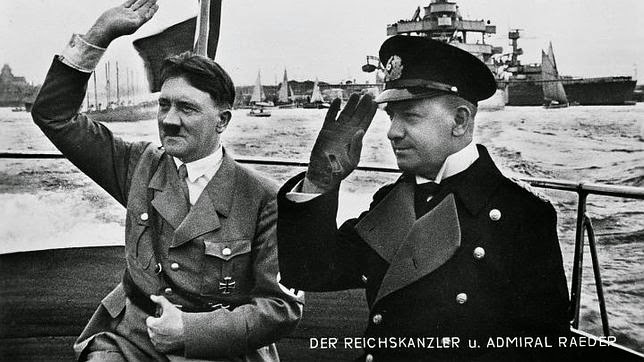
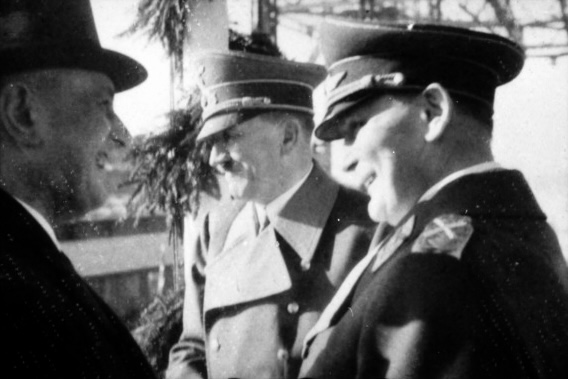
Sammelbild Deutschland erwacht Nr. 145, Hitler und Admiral Raeder bei der dt. Flotte, Kriegsmarine / Collector’s picture Germany awakens No. 145, Chancellor Adolf Hitler and Admiral Erich Raeder reviewing the German Fleet in Kiel on 22 May 1933.
Hitler in Norway
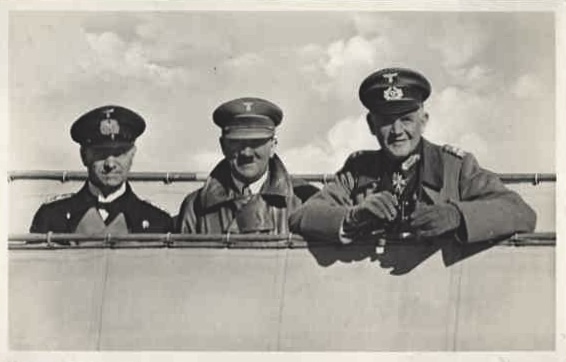
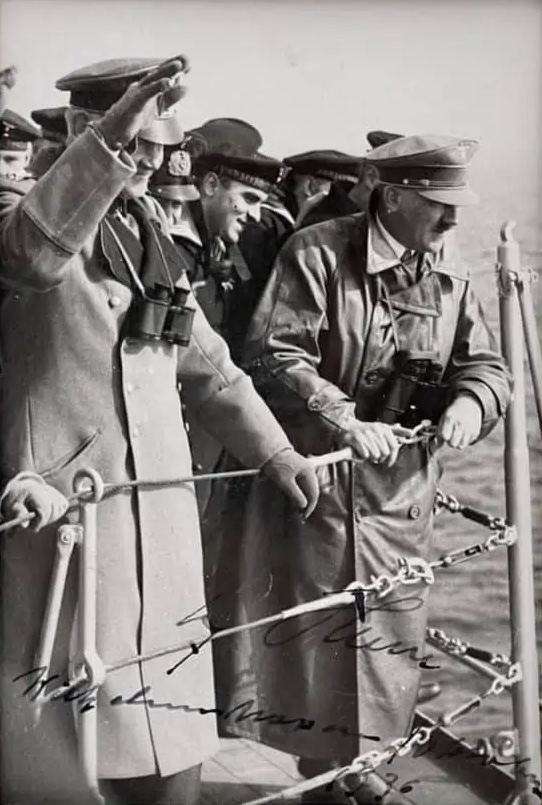
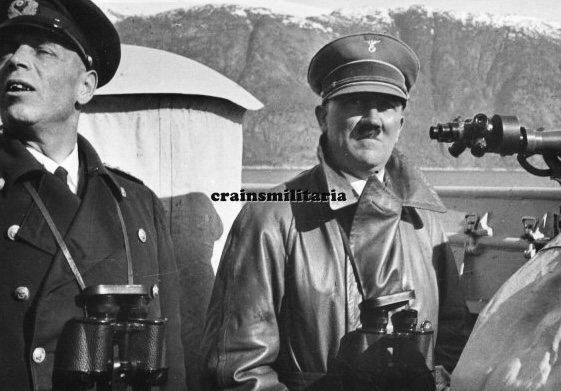
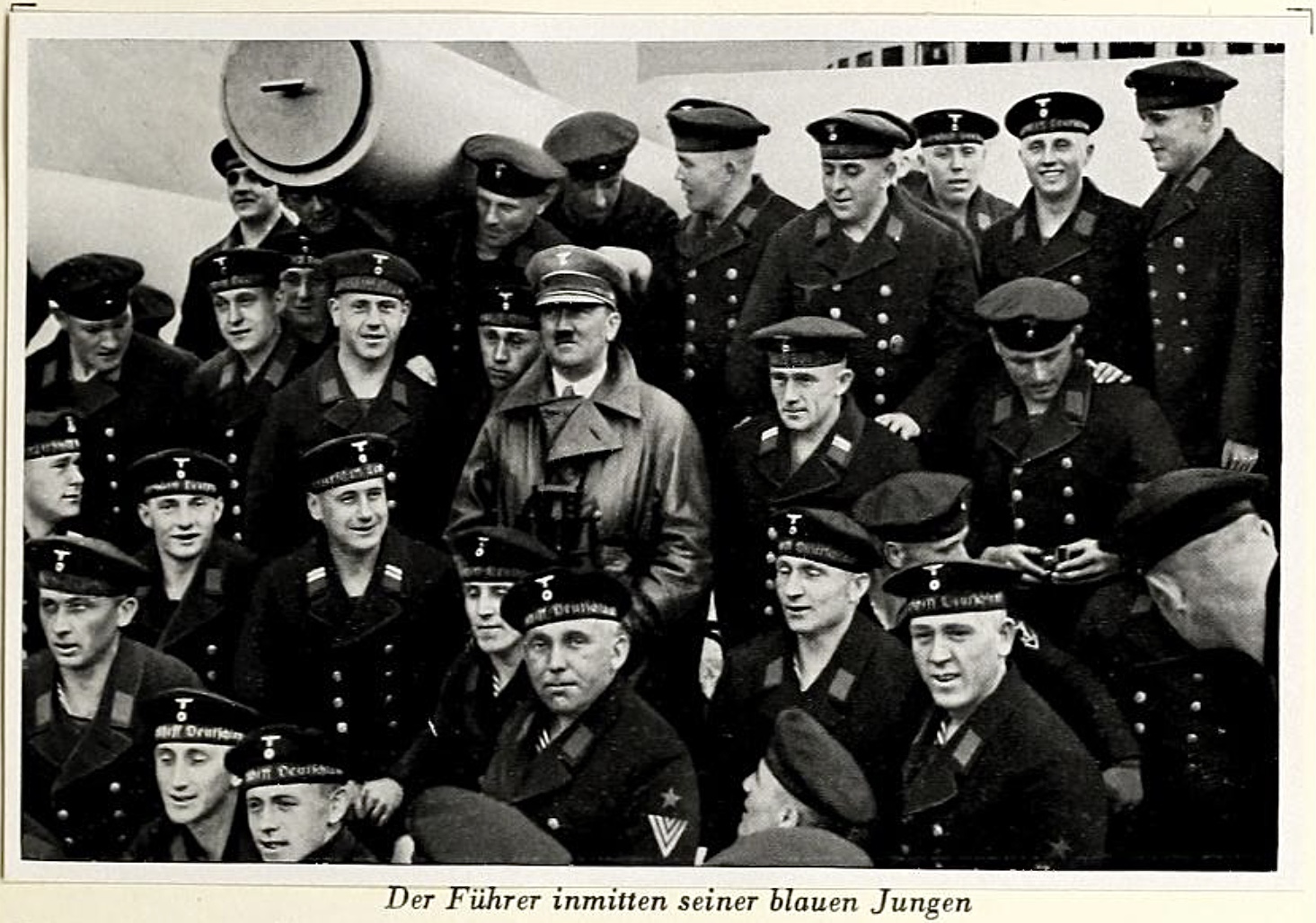
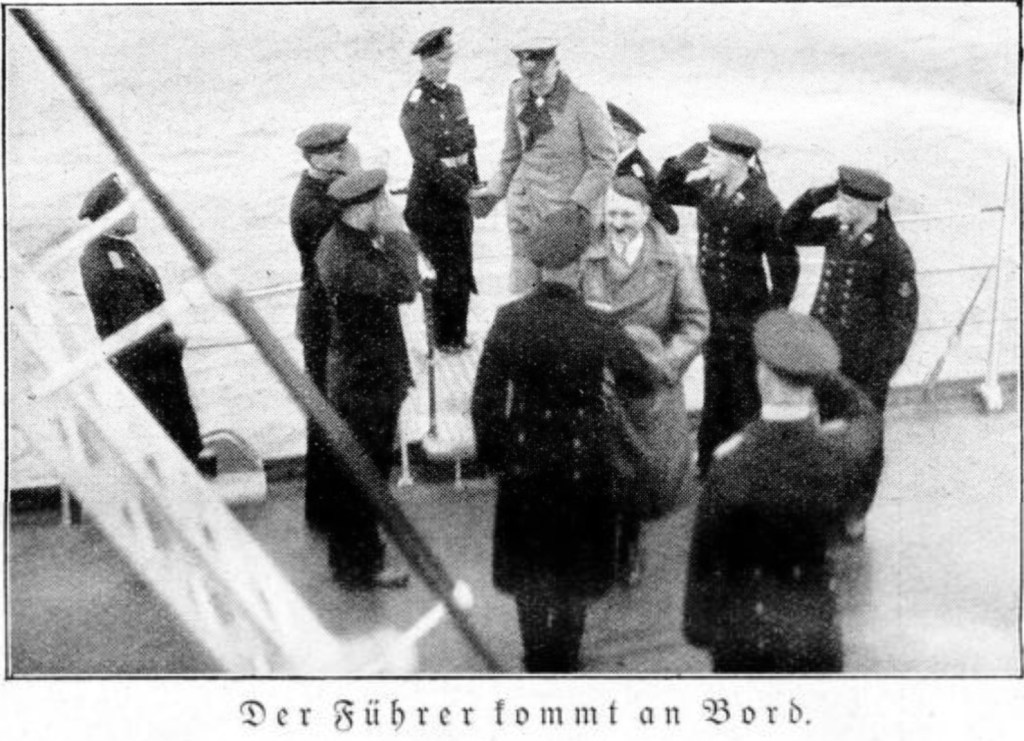
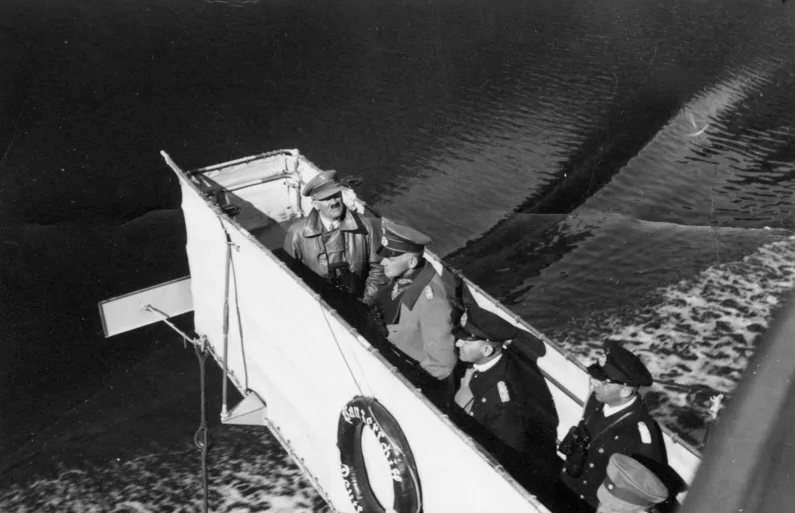
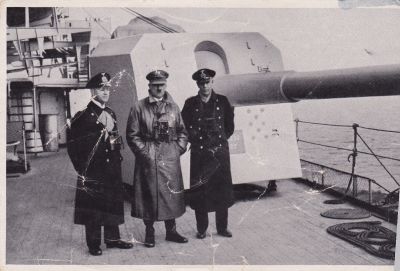
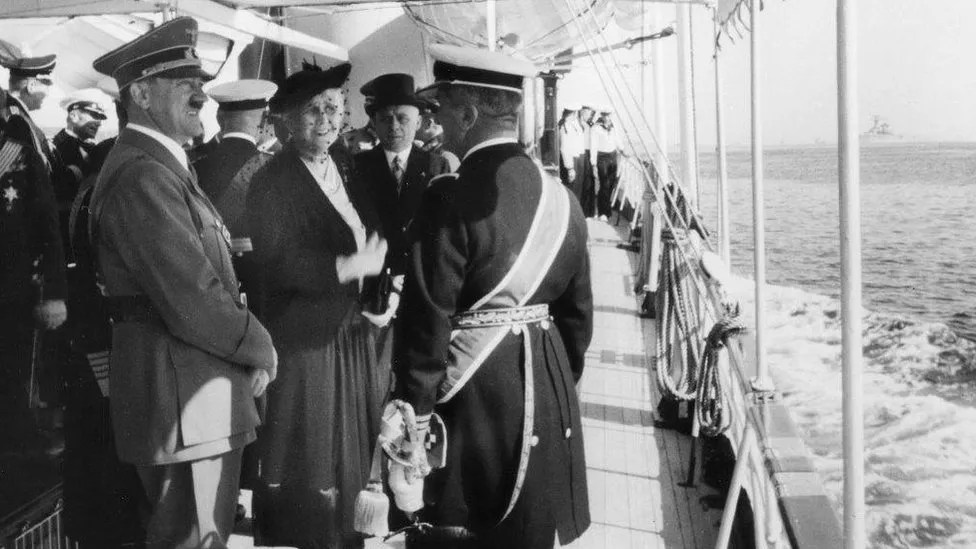
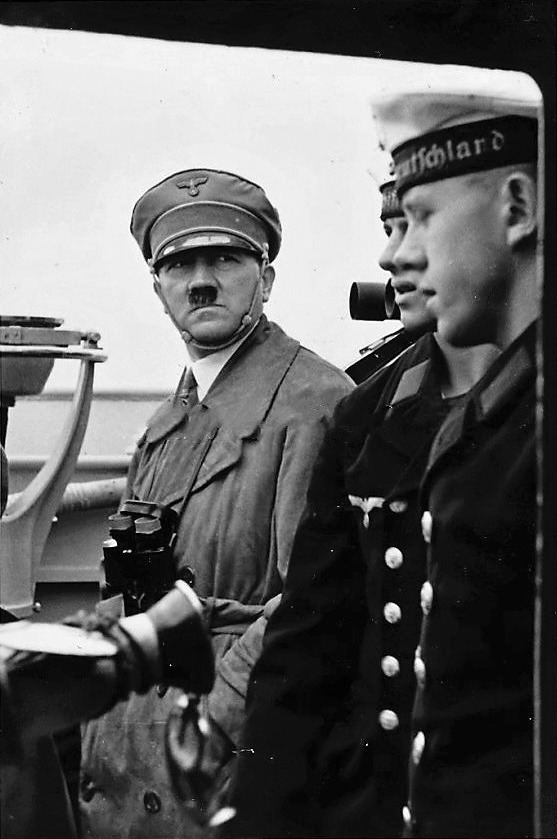
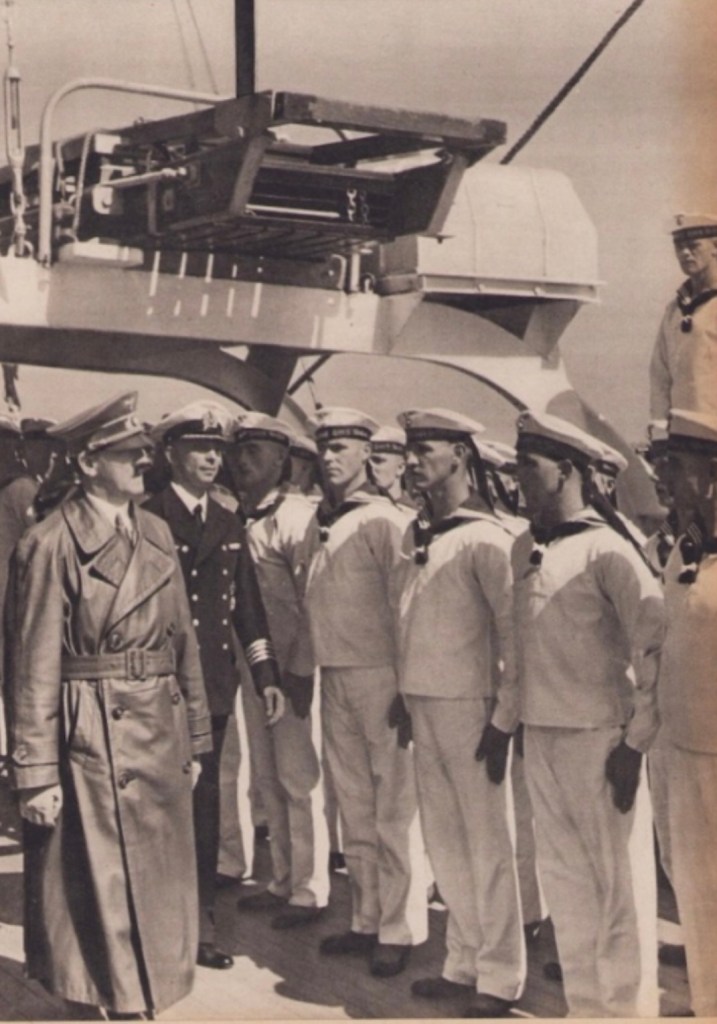
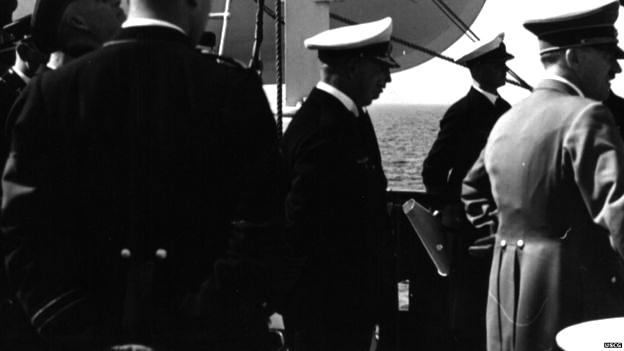
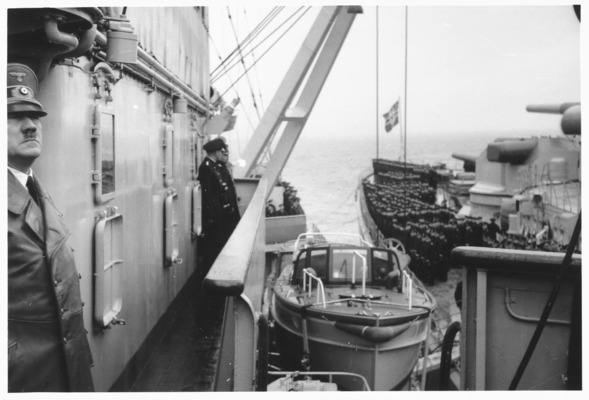
Adolf Hitler took a two day trip to Norway in April of 1934 on the Panzerschiff Deutschland. Hitler boarded the ship on the 12th of April with army leaders Reichskriegsminister Werner von Blomberg, Commander-in-Chief Werner Freiherr von Fritsch and Admiral Erich Raeder. On this excursion Hitler managed to reassure the army leaders that he would deal with Ernst Röhm if he ever made any attempt to take over the army. Below are twelve photographs of Hitler sailing the Norwegian waters and viewing the fjords without ever having left the ship. On 13 April he sailed the Hardangerfjord and passed the Marstein fyr, Austevoll, Tysnes, Odda, Ulvik, and Varaldsøy. The next day on 14 April he sailed the Sognefjord to Balestrand, again never leaving the ship. The Deutschland returned to Deutschland on the 15th without Hitler ever having set foot on Norwegian soil.
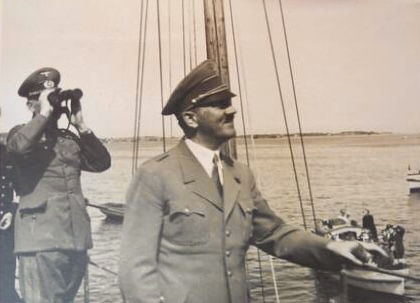
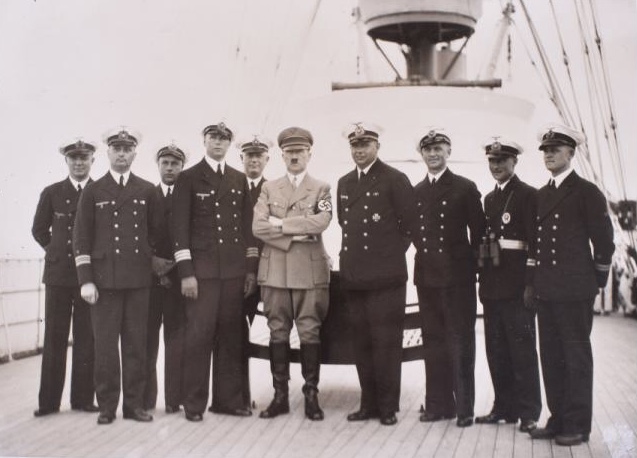
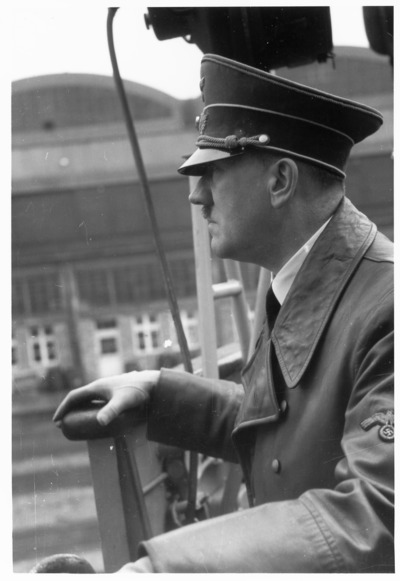
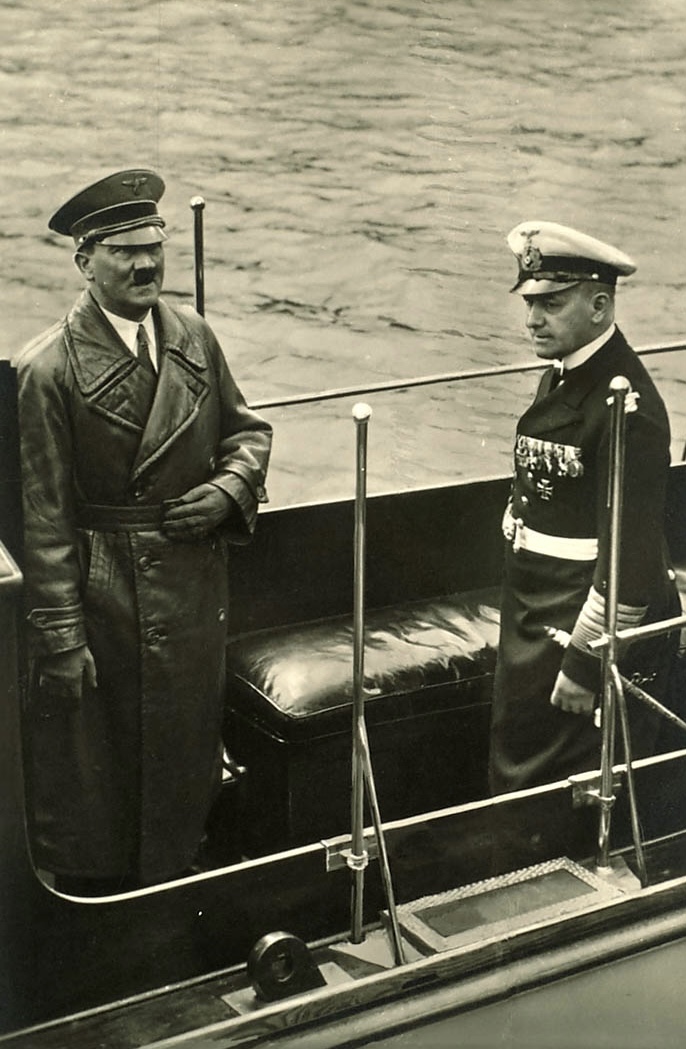
Postcard Führer Adolf Hitler, Reichskriegsminister Blomberg, Oberbefehlshaber Kriegsmarine Raeder / Postcard Führer Adolf Hitler, Reich War Minister Blomberg, Kriegsmarine Commander-in-Chief Erich Raeder boarding the Deutschland on 12 April 1934 for a two day excursion to Norway.Adolf Hitler on deck of the Panzerschiff Deutschland with Admiral Erich Raeder on 14 April 1934. In the background is Balestrand, Norway.Adolf Hitler observes the scenery from on board the Deutschland while touring the Norwegian fjords in April 1934. “Adolf Hitler: Bilder aus dem Leben des Führers”. Sammelwerk Nr. 15 Adolf Hitler Bild Nr. 162 Gruppe 67Adolf Hitler observes the scenery on board the Deutschland in the Norwegian fjords, April 1934. One of the few pictures that exist of Hitler when he visited Norway without having setting foot on Norwegian soil. In the book “Hitler’s Norway”, historian Berit Nøkleby writes that “the visit was not official, he did not go ashore anywhere, and only two Norwegian pilots met him during the trip”. ”Midday sun in the fjord”. From left: The navigation officer Korvettenlapitän Junker, the head of the naval command, the Führer, the Minister of Defense. Adolf Hitler with Erich Raeder and Werner von Blomberg in Norway. Published in Illustrierter Beobachter / Folge 18 Samstag, 5. Mai 1934, 9.Jahrgang.Adolf Hitler an Bord der “Deutschland” eine Fahrt in die Nordsee.Adolf Hitler presented this signed photograph from his Norway cruise while in WiIhelmshaven at the launch of the battleship “Scharnhorst” on 3 October 1936.Adolf Hitler during a trip to Norway with Panzerschiff Deutschland, 1933-’34. He is flanked by the ship’s commander, Kapitän Hermann von Fischel (later Vizeadmiral). Sammelbild 15 Adolf Hitler Nr. 141 Der Führer inmitten seiner blauen Jungen, Matrosen, Kriegsmarine / Collector’s picture from “Adolf Hitler: Bilder Aus Dem Leben Des Führers” No. 141 ‘The leader in the midst of his blue boys, navy sailors aboard the Deutschland on 12 April 1934’.Nordsee.- Adolf Hitler, Generaloberst Werner von Blomberg und Admiral Erich Raeder auf dem Panzerschiff “Deutschland”, 12 April 1934.Adolf Hitler with Naval Officials including Kriegsmarine’s Grand Admiral Raeder (left) and the commander of the Deutschland Captain Hermann von Fischel (right) during the Norway trip in 1934 on board the Deutschland.Adolf Hitler with Naval Officials including Kriegsmarine’s Grand Admiral Raeder (left) and the commander of the Deutschland Captain Hermann von Fischel (right) during the Norway trip in 1934 on board the Deutschland.
Kiel Naval Review 1933
For two days in May of 1933 a grand festival was organized to honor Chancellor Hitler in Kiel with parades and flottenmanöver (fleet maneuvers) on a scale not seen since the days of the Kaiser. The port city of Kiel had become a major center for ship building as the Kreigsmarine renounced the limitations that had been imposed by the Treaty of Versailles. The opening of the Kiel Canal in 1895 by German Emperor Wilhelm II also marked an important stage in the growth of Germany as a maritime power. The canal made Kiel one of the greatest naval bases in Europe by linking the North Sea with the Baltic Sea. As Germany became naval-minded the port grew rapidly, evolving into one of the great naval bases of the world.
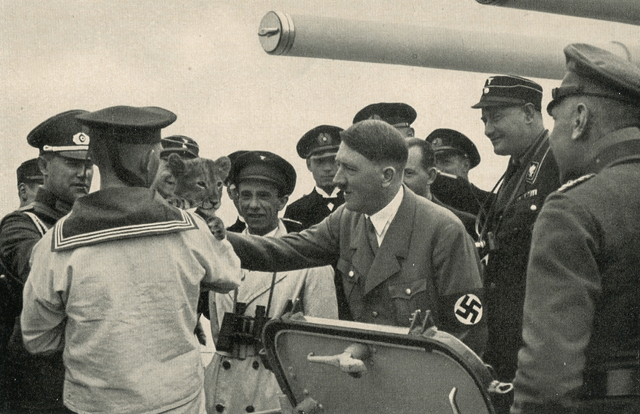
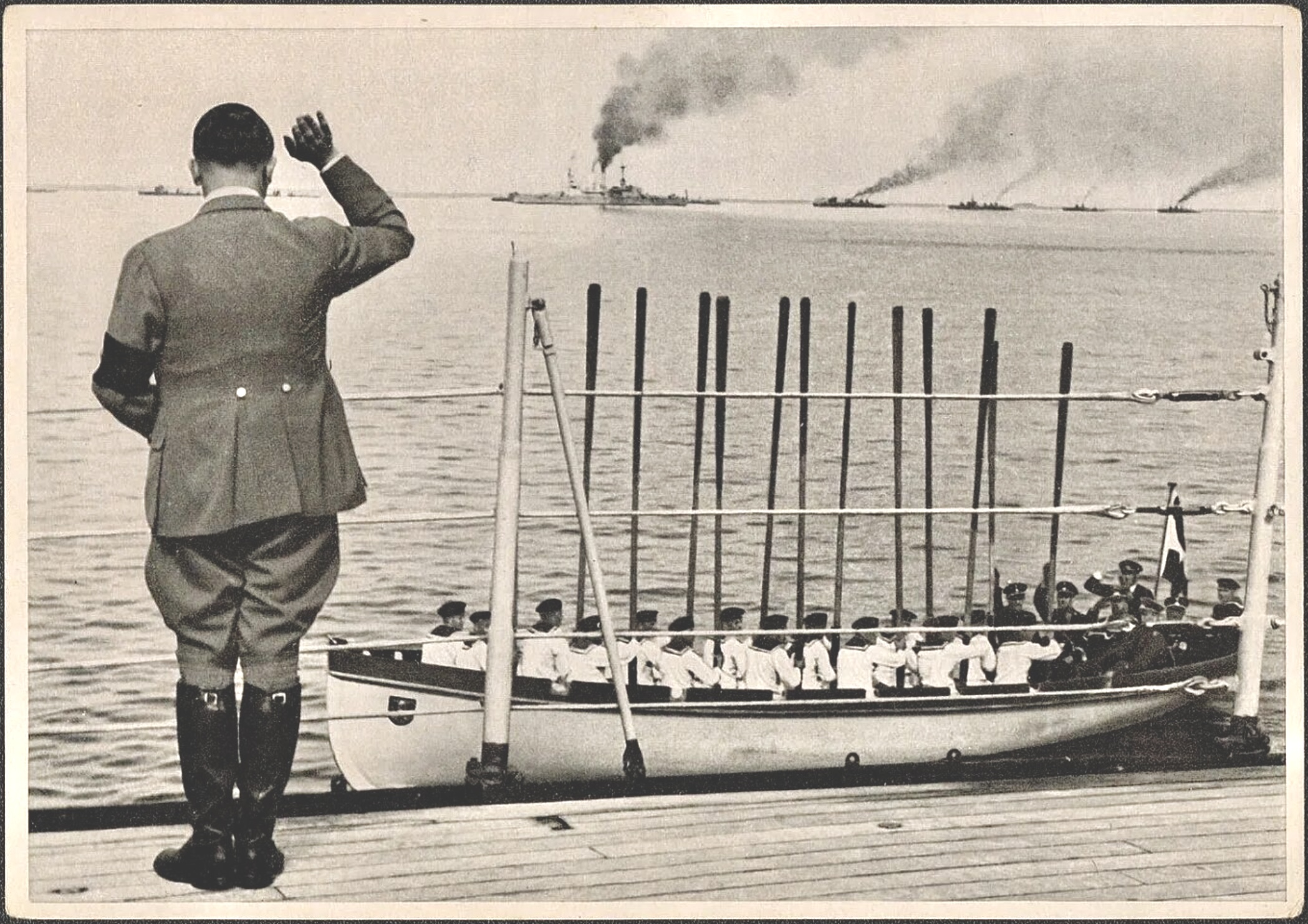
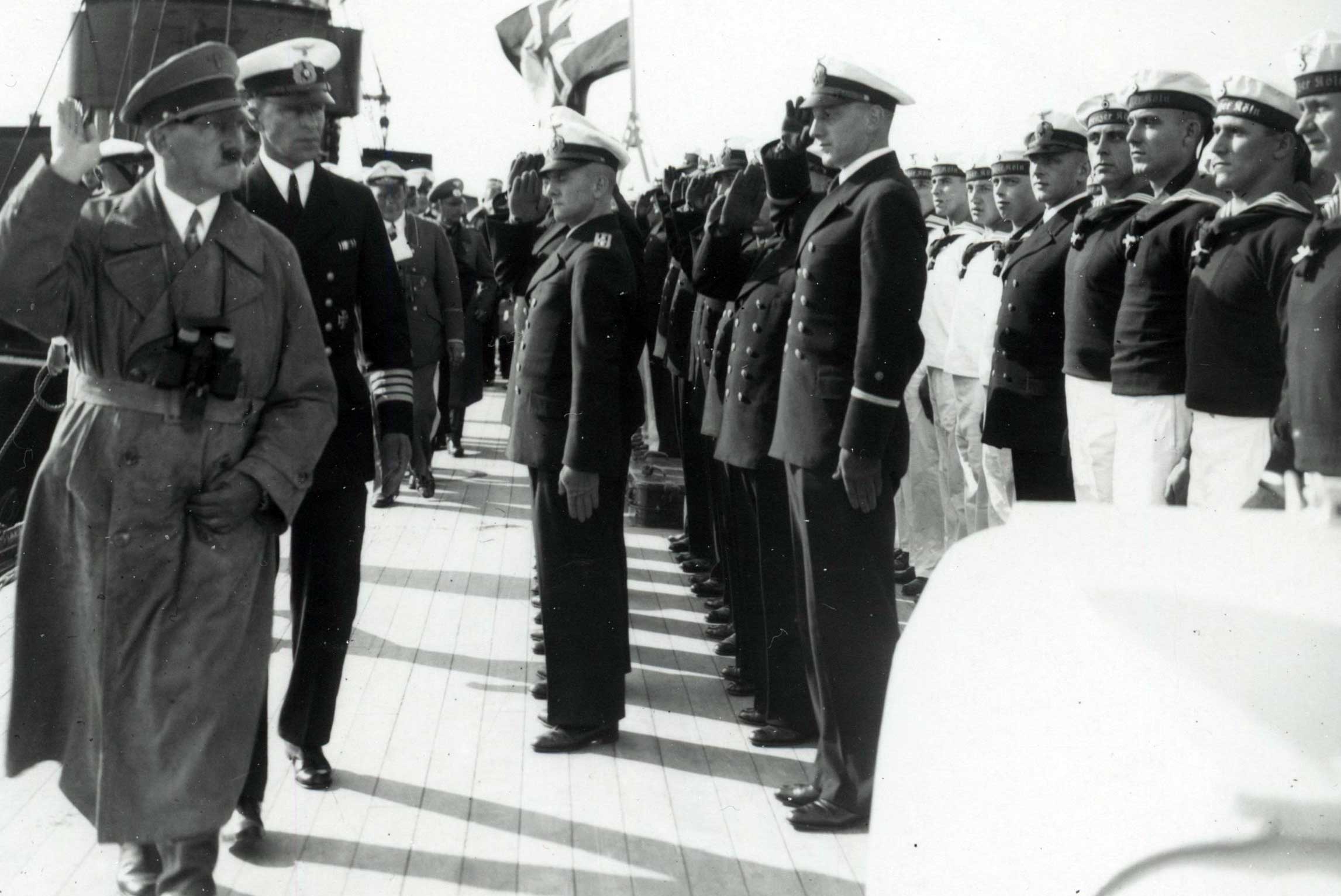
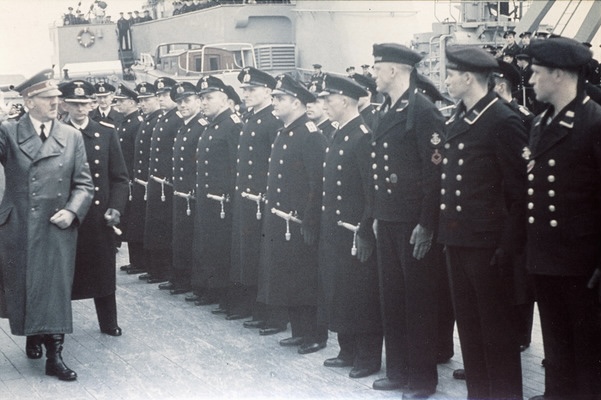
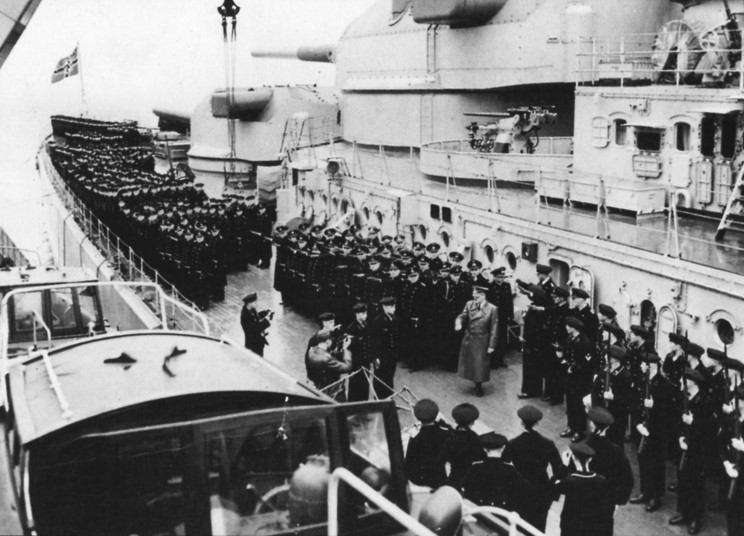
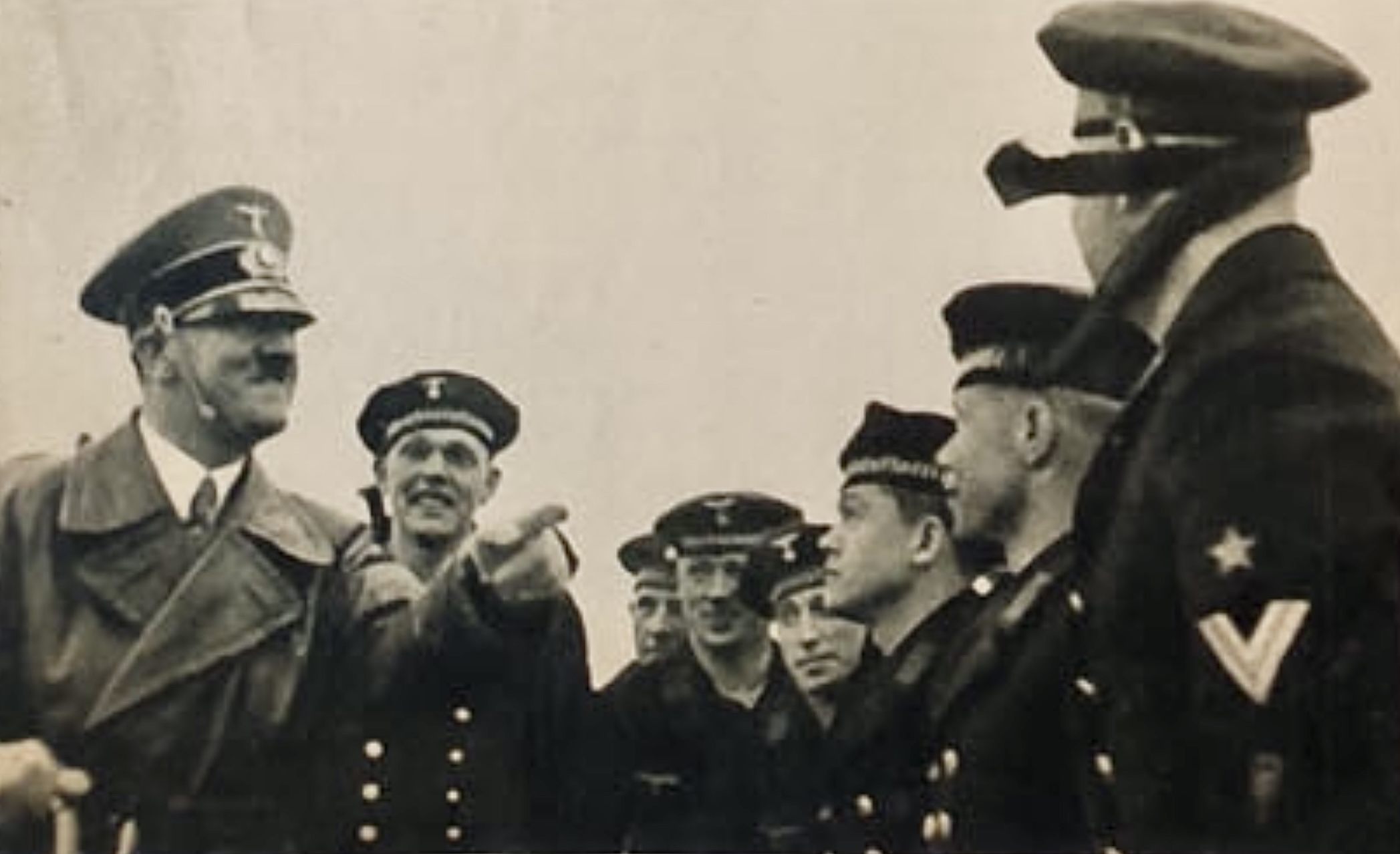
Adolf Hitler and Adolf Huehnlein on board the cruiser ‘Leipzig’ at a naval review honoring him in Kiel on 22 May 1933. This two day event featured a grand parade and flottenmanöver (fleet maneuvers) on a scale not seen since the days of the Kaiser.Adolf Hitler reviewing a parade of sailors in Kiel on 22 May 1933. All German naval vessels in this area, from the “pocket battleship” Deutschland to the last tugboat, assembled to pay homage to Chancellor Hitler in a way in which no German Chancellor has ever been honored before. Collector’s picture Germany awakens No. 142 “The blue boys have arrived”Adolf Hitler and Joseph Goebbels are shown the lion cub mascot of the battleship Schleswig-Holstein on 23 May 1933. The lion is the symbol of the city of Schleswig, derived from the two blue lions on the coat of arms. Hitler went on to spent time with Joseph Goebbels and his family at the beach in Heiligendamm immediately following this two day celebratory event in Kiel. Chancellor Adolf Hitler and Admiral Erich Raeder reviewing the German Fleet in Kiel on 22 May 1933.Collector’s picture from Germany awakens, No. 144, “The leader with the blue boys”, Adolf Hitler, Kriegsmarine review at Kiel on 22 May 1933.Sammelbild Der Staat der Arbeit und des Friedens, Adolf Hitler, Flottenbesuch in Kiel, Stimmungsbild – Salem Cigarettenfabrik, Folge II Bild 287
Hitler’s Battleships
The first battleships constructed under Hitler’s regime in Germany were the two Scharnhorst-class ships the Scharnhorst and Gneisenau in 1936. The two Bismarck-class battleships followed with the Bismarck being completed in early 1939 and her sister ship Tirpitz shortly after. The Bismarck was the most feared battleship in the German Kriegsmarine (War Navy) at over 250 metres in length. Yet it would only sink one ship in her one and only battle on 27 May 1941. It was the Bismarck’s destruction that solidified U-boats as Hitler’s weapon of choice.
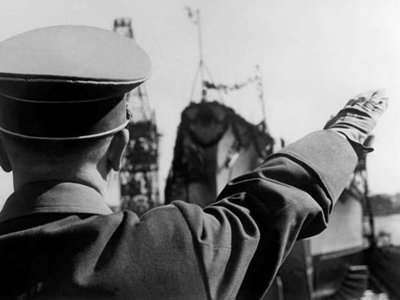
Adolf Hitler salutes the shipbuilders at the launch of the Bismarck in Hamburg. Bismarck was laid down at the Blohm & Voss shipyard on 1 July 1936. The ship was assigned construction number 509, and the contract name Ersatz Hannover, since she had been ordered as a replacement for the old battleship Hannover. The ship was launched on 14 February 1939 with Adolf Hitler in attendance.
Before the launch of the battleship “Bismarck”, Hitler visited the grave of Otto von Bismarck in Friedrichsruh on 13 February. The Führer placed a laurel wreath at the tomb of the Chancellor of the Old Reich, and stayed as a guest of Prince von Bismarck and his wife at the Friedrichsruh Castle.
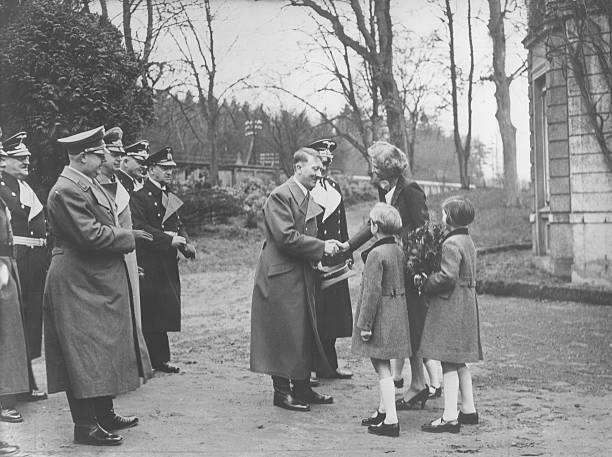
The visit to the von Bismarck family in Friedrichsruh in the Sachsenwald on the occasion of the launch of the ‘Bismarck’ included a visit to a display model of the old armored cruiser ‘SMS Fürst Bismarck’. Hitler’s entourage included Legation Counselor Walther Hewel, General Admiral Erich Raeder, Otto von Bismarck (grandson of the Reich Chancellor); Princess Ann-Marie, Gauleiter Hinrich Lohse, Wehrmacht adjutant Major Rudolf Schmundt, Minister of State Dr. Otto Meissner, Head of the Presidential Chancellery, Gauleiter Hinrich Lohse, State Secretary Ernst Freiherr von Weizsäcker, and Reich Foreign Minister Joachim von Ribbentrop.
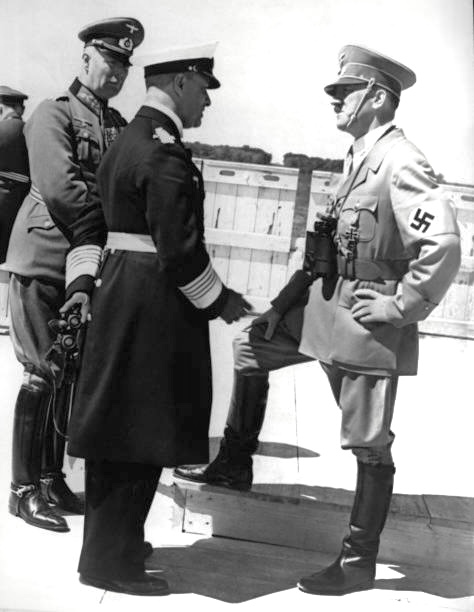
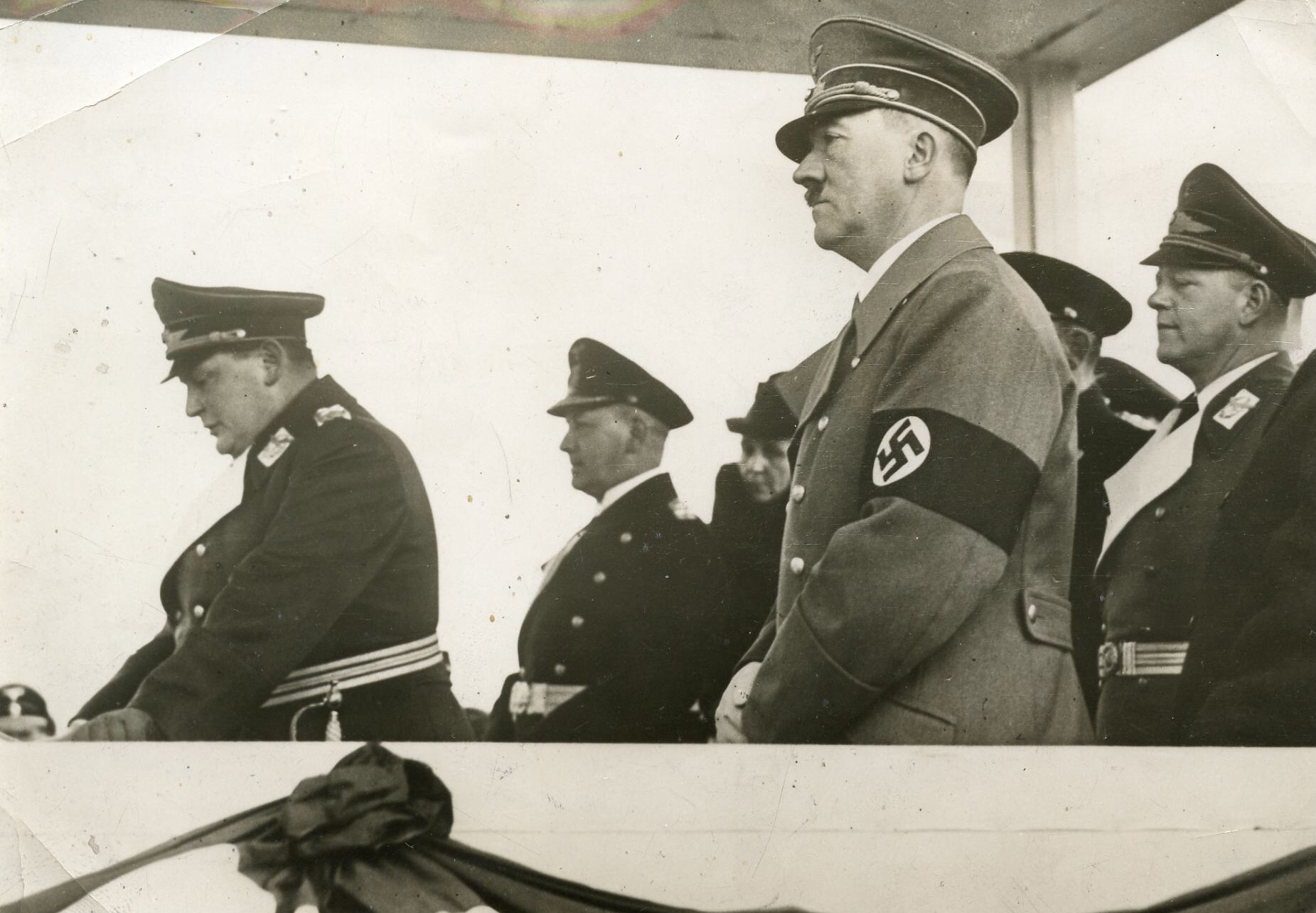
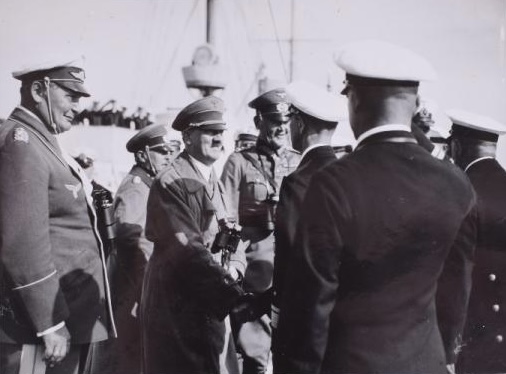
Adolf Hitler at the ‘stapellauf’ of the Schlachtschiff Bismarck on 14 February 1939.Adolf Hitler, Großadmiral Dr. h. c. Erich Raeder, der Oberbefehlshaber der Kriegsmarine, Generalfeldmarschall Hermann Göring und Reichsführer Himmler beim Stapellauf des Schlachtschiffes BismarckFrom left to right: Reich Foreign Minister Joachim von Ribbentrop, SS-Reichsfuehrer Heinrich Himmler, Adolf Hitler, Generalfeldmarschall Hermann Goering, Reich Minister Rudolf Hess and the envoy Prince Bismarck at the launch of the “Bismarck” on February 14, 1939. With a weight of 41,700 tons and a length of 250.5 m, the Bismarck was the largest battleship of the German Kriegsmarine.Adolf Hitler at the launching of the battleship Tirpitz in Wilhelmshaven on 1 April 1939Adolf Hitler at the launching of the battleship Tirpitz in Wilhelmshaven on 1 April 1939Adolf Hitler in Wilhelmshaven for the launch of the Tirpitz on 1 April 1939.Admiral Raeder talks to the Führer during military exercises on 15 June 1938.Hitler visiting the cruiseline ‘Scharnhorst’ owned by the Norddeutscher Lloyd; Hitler is delivering a speech while the crew is listening – 1935 – Photographer: Presse-Illustrationen Heinrich Hoffmann – Published by: ‘Die Gruene Post’ 20/1935Adolf Hitler aboard the new German express liner “Scharnhorst” during a meeting with Dr, Goebbels, Herr Hess and Captain Von Frideburg, the commander of the ship.Besichtigung d.Dampfers Scharnhorst 4. Mai 1935On the christening platform, as the battleship Scharnhorst is launched at Wilhelmshaven, Germany, 3 October 1936. Among those also on the platform, just to the right of Hitler, are General Werner von Blomberg and Admiral Erich Raeder. Photograph from the New York Times Paris Bureau collection in the U.S. National Archives.Adolf Hitler and Hermann Goering arriving for the launch of Germany’s first aircraft carrier Graf Zeppelin in Kiel on 8 December 1938.Adolf Hitler and Hermann Goering attend the launch of Germany’s first aircraft carrier Graf Zeppelin in Kiel on 8 December 1938.
Adolf Hitler welcomed Miklós Horthy (Regent of the Kingdom of Hungary, official title “Knight Miklós Horthy of Nagybánya”) during a State Visit of Horthy to the harbor in Kiel to view naval maneuvers on 22 August 1938. Hitler greeted the Sailor Regent of Hungary Horthy with pomp and parades, a sea pageant displaying 110 modern war vessels and 37 submarines. A heavy cruiser was launched and Admiral Horthy’s wife Magdolna Purgly joined Hitler to inaugurate the ship as the Prince Eugen. She was named after Prince Eugene of Savoy, a distinguished 18th-century general in the service of the Holy Roman Empire. The cruiser’s task was to support Nazi Germany’s effort to sink American merchant ships. Many Hungarian-Americans were in disbelief on 12 December 1941 when Horthy declared war on the United States.
Adolf Hitler with Admiral Nikolaus Horthy of Hungary in Kiel on 22 August 1938. Hitler sends 110 Modern War Vessels into action before the Sailor Regent of Hungary.Adolf Hitler and Reichsverweser Miklós Horthy. Admiral Nicholas Horthy, sailor Regent of Hungary, review the German fleet in Kiel Harbor on 22 August 1938. His wife officiated at the addition of another powerful unit to the fleet.Adolf Hitler and Admiral Nicholas Horthy, Regent of Hungary, review the German fleet in Kiel Harbor on 22 August 1938. His wife Magdolna Horthy (center) officiated at the addition of another powerful unit to the fleet.Adolf Hitler and Miklos (Nicolas) Horthy de Nagybanya watching the naval review in the Kiel Bay, to the right: Generaladmiral Erich Raeder- 22.08.1938- Photographer: Presse-Illustrationen Heinrich Hoffmann- Published in ‘B.Z.’ 24.08.1938.
During the fleet parade of the Kriegsmarine, the battleship “Gneisenau” passes the “Aviso Grille” with Adolf Hitler and his guest, Admiral Horthy, the Hungarian Regent and ally of Hitler.
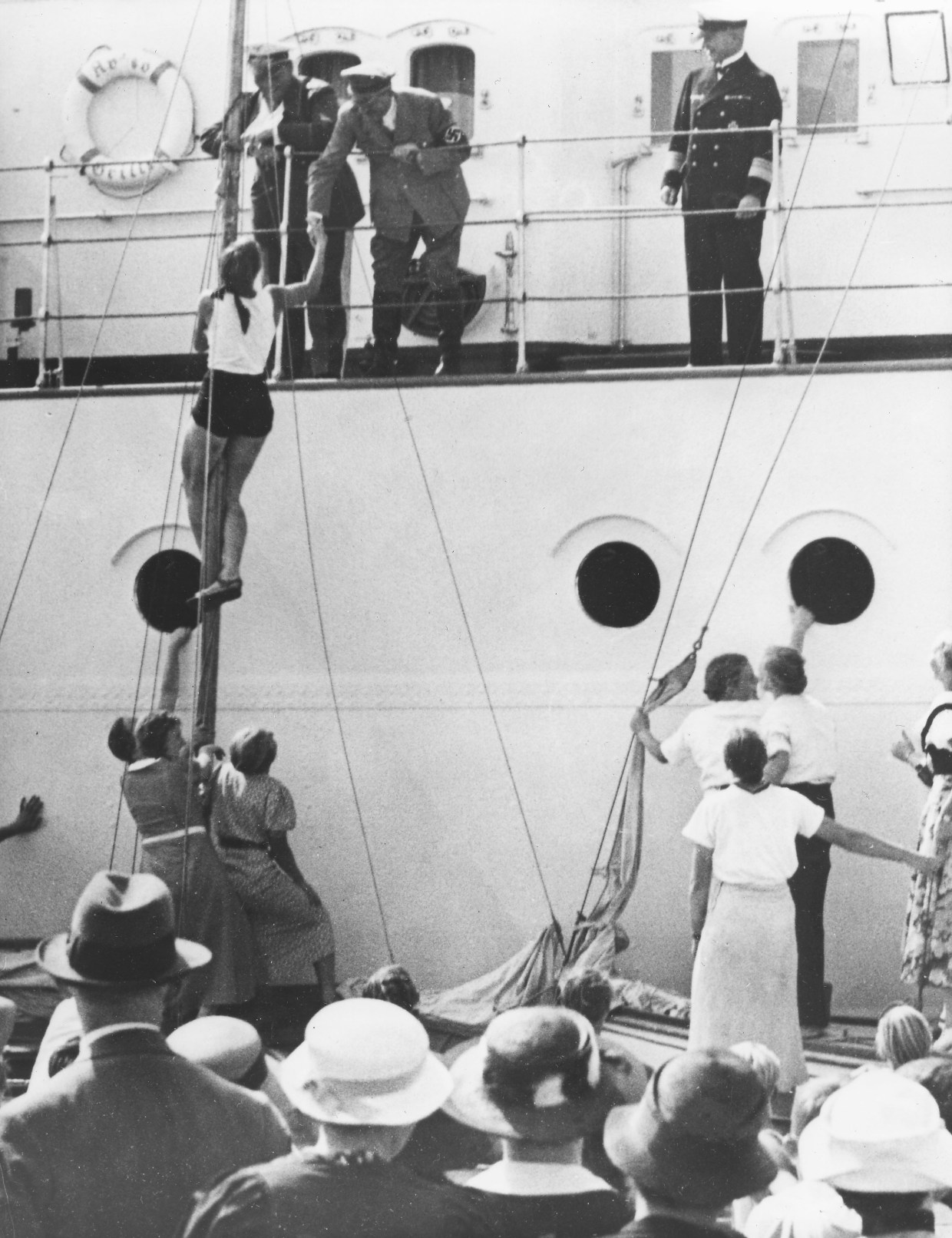
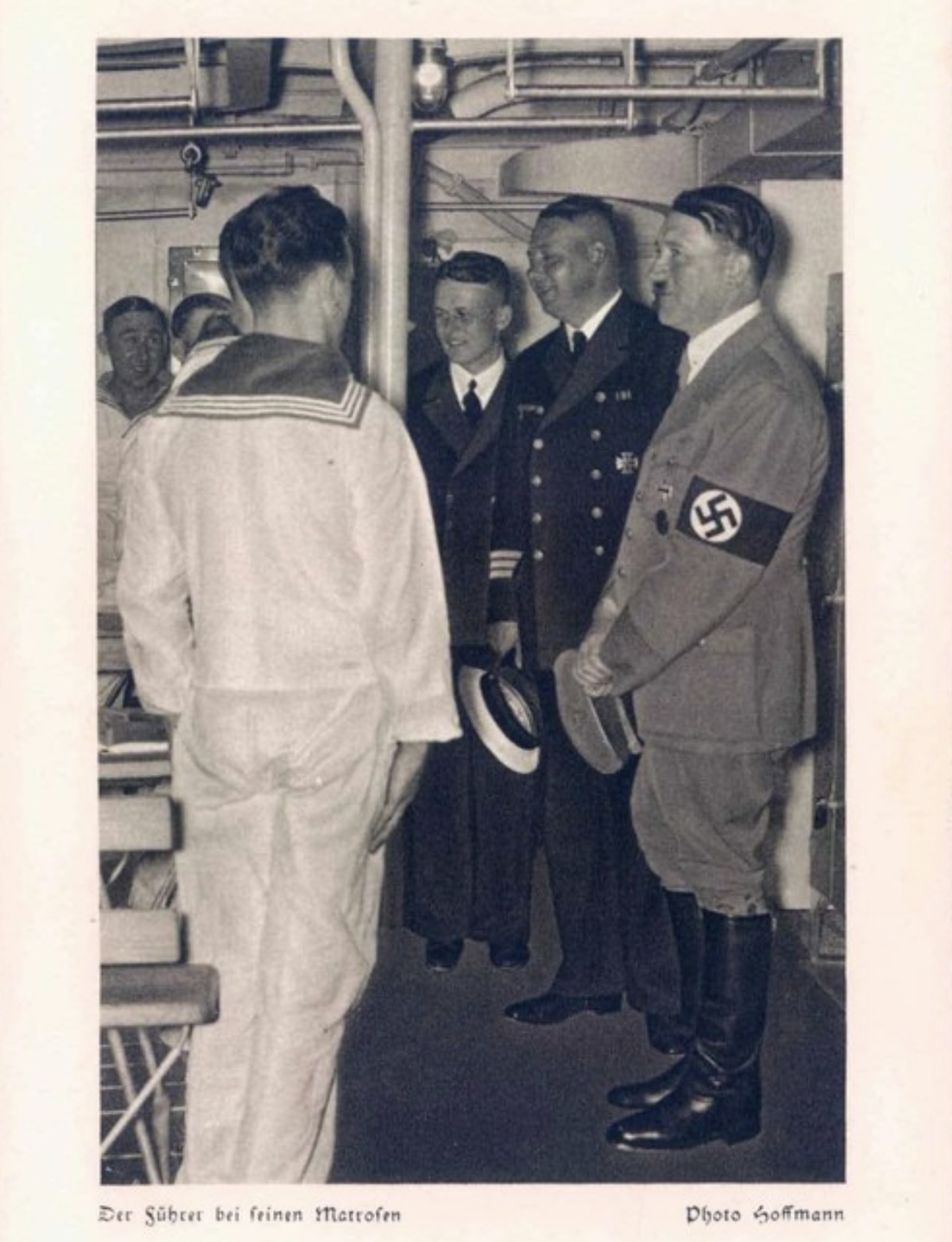
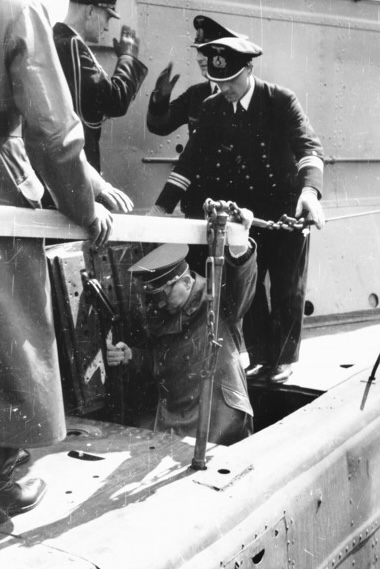
Adolf Hitler watches the naval review on the Kiel Bay with Admiral Erich Raeder.Adolf Hitler visits the cruiser Köln in Kiel on 28 August 1935.Adolf Hitler visits the cruiser Köln in Kiel on 28 August 1935.Adolf Hitler on his yacht the “Aviso Grille” on the occasion of a fleet exercise on 29 August 1935.Adolf Hitler on his yacht the “Aviso Grille” on the occasion of a fleet exercise on 29 August 1935.Adolf Hitler paid a visit to the newly created submarine arm of the Reichsmarine in the port of Kiel on 28 August 1935. After the tour, the Führer was with Reich War Minister von Blomberg in the boat that took them back to the mainland.Der Führer bei seinen Matrosen (The leader with his sailors).An ambitious young woman successfully clambers up the side of the “Aviso Grille” in order to shake Adolf Hitler’s hand. Hermann Goering stands to Hitler’s right and appears quite amused at the woman’s tenacity. Adolf Hitler besucht die Matrosen des Aviso Grille in ihren Mannschaftsräumen (Adolf Hitler visits the sailors of the Aviso “Grille” in their crew rooms).Adolf Hitler enjoying a voyage aboard his private yacht, the Aviso Grille, with Joseph and Magda Goebbels and other prominent dignitaries.
Adolf Hitler in Wannsee on Joseph Goebbel’s yacht: From Berlin-Schwanenwerder he took a yacht trip to Wannsee together with the Goebbels family and back to Berlin-Schwanenwerder on 2 May 1936.
Hitler wears a black visored cap as used by Deutsche Arbeitsfront (DAF) functionaries. The DAF was created to give the Nazi Party complete control over the German economy and was run by Dr. Robert Ley, who established the “Strength Through Joy” organization.
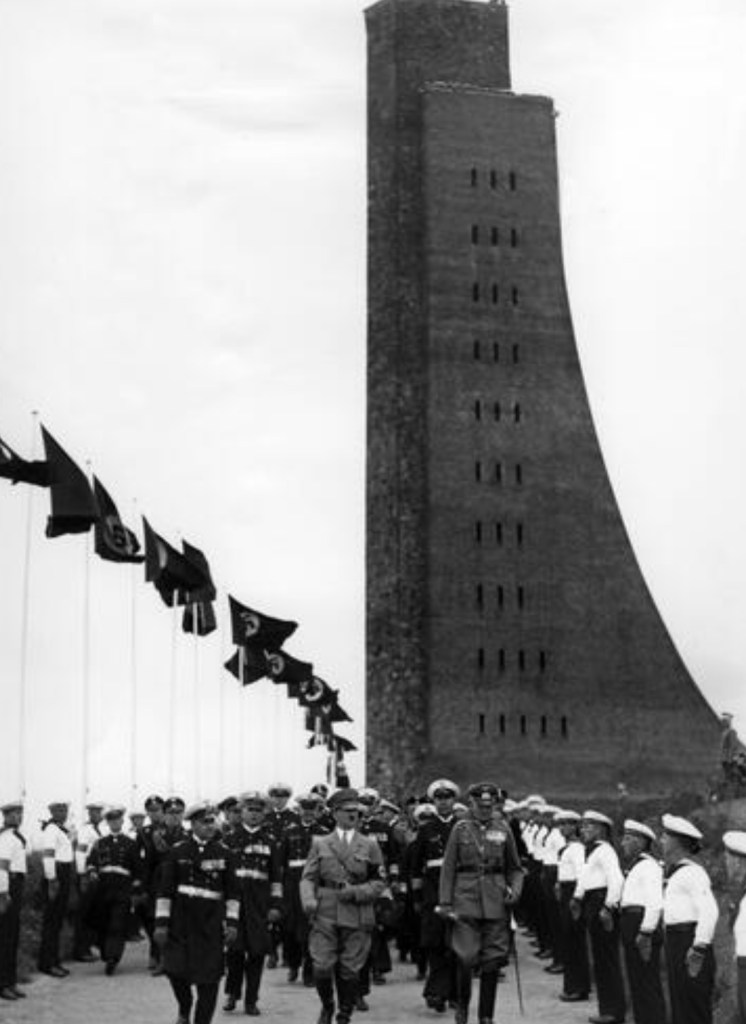
Adolf Hitler, who was more of a man of the mountains than of the sea, frequently stayed aboard the “Grille”. Adolf Hitler out on the deck of his 377-foot yacht ‘Aviso Grille’, or ‘The White Swan of the Baltic’, as Hitler called it. He entertained the highest echelons of the Nazi administration and military on his private yacht. Over 30 staterooms had housed guests including Benito Mussolini, Hermann Göring, Joseph Goebbels, Miklos Horthy, Rudolf Hess, and many others from Germany and the Axis countries. Hitler was the most frequent visitor, showing off his ship and usually spending three or four nights on board. The Aviso Grille was built by Blohm & Voss Shipyard in Hamburg. She was built to be the official German state Yacht in 1935. In May 1936, she conveyed Adolf Hitler and Admiral Erich Raeder in the fleet parade at the dedication of the Naval Memorial at Laboe.Adolf Hitler leaves his yacht the ‘Aviso Grille’ after the march-past of the parade of ships of the Kriegsmarine at the Kiel Fjord. In the foreground is a guard of honor of the ship in attendance for the Laboe Naval Memorial ceremony held on 30 May 1936.
Adolf Hitler attended the opening ceremony of the Laboe Naval Memorial on 30 May 1936 after having observed naval maneuvers and watched a parade in Kiel from the light battleship Aviso Grille. At a ceremony commemorating the dead of the Great War on the twentieth anniversary of the Battle of Skagerrak (May 31, 1916), Hitler laid a wreath honouring the navy’s dead. Apparently Hitler hated the design of the monument in Laboe, calling it “an unrivalled essay in kitsch and bad taste, as it stands there with its inverted bow.”
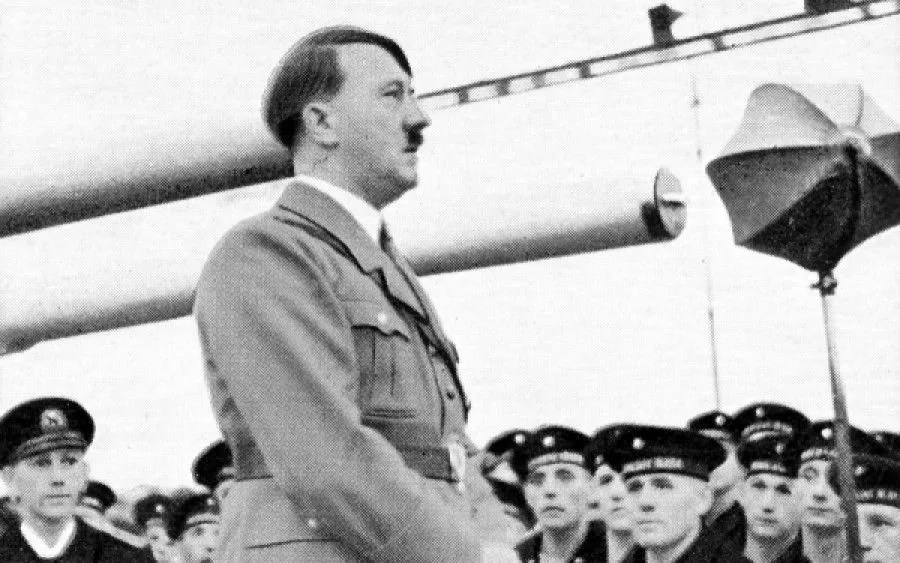
Reich Chancellor Adolf Hitler visits the line ship “Schleswig-Holstein” before delivering an address to the workers of the Blohm & Voss shipyard in Hamburg on 17 August 1934. Hitler later made his lone campaign speech from the balcony of the Hamburg town hall on the referendum on merging the posts of Chancellor and President. Adolf Hitler reviewing the battleship SMS ‘Schleswig-Holstein’, Hamburg, Germany, on 17 August 1934, acknowledging the salutes of the crew. The ‘Schleswig-Holstein’ was a ‘Deutschland’ class battleship launched in 1906. On 1 September 1939 she fired the first shots of World War II at the outset of the Nazi invasion of Poland. A print from Adolf Hitler. Bilder aus dem Leben des Führers, Hamburg: Cigaretten/Bilderdienst Hamburg/Bahrenfeld, 1936.On 21 September 1939, Adolf Hitler reviews men and officers of the pre-dreadnought battleship Schleswig-Holstein, which fired the first shots of WWII, in Danzig-Westerplatte. In the center, to the right of Hitler, is Captain (later Vice Admiral) Gustav Kleikamp, who was captain of Schleswig-Holstein when the order was given for it to attack Polish positions at Westerplatte, which signaled the beginning of the Second World War. Visible to the far right is SS-Obergruppenführer Hans Lammers, a prominent German jurist and Nazi politician. Photograph was originally published in the 22 September 1939 edition of Berliner Volks-Zeitung.Adolf Hitler at the christening of the new schooling ship ‘Horst Wessel’ on 13 June 1936. Adolf Hitler participated at the launch of the sailing school ship ‘Horst Wessel’, which stems from the shipyard of Blohm & Voss in Hamburg. Hitler is accompanied by Reich Minister Rudolf Hess and General Admiral Erich Raeder. The Landungsbrücken building is clearly visible on the horizon, across the Elbe river from the shipyard.Adolf Hitler at the launch of the sailing training ship “Horst Wessel” at the “Blohm & Voss” shipyard on 13 June 1936. Afterwords Hitler took a trip on his yacht “Aviso Grille” to the Überseebrücke Hamburg and ordered the construction of a new bridge, envisioning and personally designing one that would be larger than the Golden Gate Bridge.Adolf Hitler at the launch of the battleship Gneisenau in Kiel on 7 December 1936.Adolf Hitler with General Field Marshal von Blomberg and General Admiral Raeder as they pass the Guard of Honor at the naming ceremony of the battleship Gneisenau in Kiel on 7 December 1936.
Benito Mussolini and King Victor Emanuel III of Italy welcomed Adolf Hitler aboard the Italian battleship Cavour in the Bay of Naples on 5 May 1938. A seven-hour extravaganza unfolded just to impress Hitler with a “series of naval impressions unique in naval history” and what was considered one of the greatest naval demonstration anywhere in the world since the end of the Great War. There were 190 ships involved, 48 sea-planes launched from the decks of warships, and another 72 were sent aloft from land stations. There were also 14 passenger liners in the bay carrying leading persons in Italian society, and thousands of cheering spectators watched from the shore.
AK Mussolini während der Flottenparade auf dem Panzerschiff “Cavour” / Mussolini hosts Adolf Hitler during the fleet parade on the ironclad “Cavour” on his state visit to Naples Italy on 5 May 1938. Adolf Hitler near the barbette of Turret no. 3 of the Italian battleship Conte di Cavour, off Naples, 5 May 1938, during the naval review held in his honor.Adolf Hitler photo taken on the occasion of naval exercises of the Italian fleet on the Bay of Naples, during his official trip to Italy, on 5 May 1938. From the album “The Voyage of the Führer in Italy”, chronicling Hitler’s official visit from 3-9 May 1938.
“The Voyage of the Führer in Italy”: King Victor Emmanuel III and Adolf Hitler, in the company of Nazi and Fascist authorities, during the naval review on board of the war ship ‘Conte di Cavour’, on the occasion of Hitler’s official visit to Italy in May 1938.
Adolf Hitler and the King of Italy Victor Emmanuel III observing Navy maneuvers in the gulf of Naples on 5 May 1938.
On 22 March 1939 Adolf Hitler traveled from Berlin up to Świnoujście in order to board the ironclad “Deutschland” for a two night journey to Memel. The ship was accompanied by a large fleet that traveled across the Baltic Sea up towards the Lithuanian coast. In Memel (later Klaipeda) he transferred over to the torpedo boat “Leopard” to arrive at the port and deliver a speech from the balcony of the city theater on Theaterplatz to the members of the new “Greater German Reich”. Hitler headed back to Świnoujście with an overnight stay on the “Deutschland” after the successful occupation of the Memel area took place by the German Wehrmacht. On his departure from the ship in Świnoujście on the morning of 24 March 1939 he was greeted with fanfare and gun salutes from the assembled warships. An entry by Joseph Goebbels into his diary later that evening stated: “The Führer ponders the solution to the question of Danzig”.
Adolf Hitler stands in front of the Reichskriegsflagge on the battleship Deutschland between Swinmünde and Memel on 23 March 1939.Adolf Hitler on board of the Panzerschiff Deutschland, en route to the “liberation” of the Memelland in 1939. Supreme Commander of the Wehrmacht on Panzerschiff Deutschland in Memel in 1939.Adolf Hitler on the battleship “Deutschland” in the harbor at Memel on 23 March 1939.Adolf Hitler on a unit of the Navy visiting the captured Gdynia naval base in Poland on 21 September 1939. The Germans’ main push towards Gdynia had begun on 8 September and they captured Gdynia six days later on 14 September.
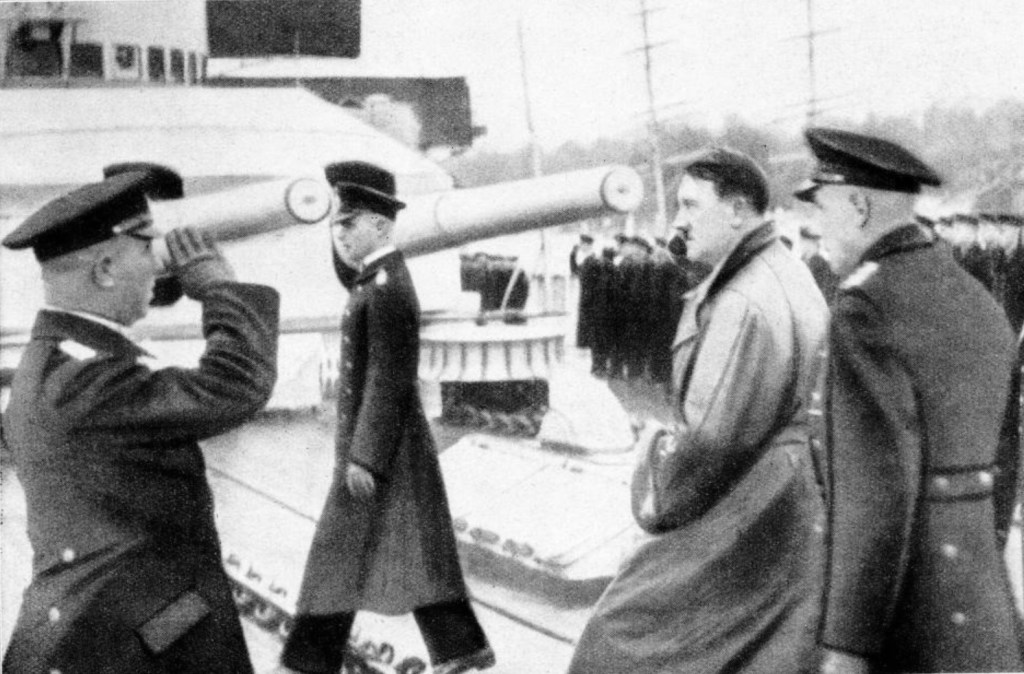
On 5 May 1941 Hitler travelled from Danzig by car ride to Gotenhafen (Gdingen/Generalgouvernement) and to the port in Gotenhafen. He boarded the cutter “Hela” to head for inspections of the Bismarck followed by her newly commissioned sister ship the Tirpitz, which was docked alongside in the harbor. A reception party, headed by Admiral Gunther Lutjens and Captain Lindemann, greeted their commander-in-chief as he boarded. As the battleship’s entire crew stood to attention, the now infamous photograph of Lutjens greeting Hitler with a naval salute, rather than the traditional Nazi one, was taken before the tour commenced. After Hitler toured the battleship, the visiting party joined the Bismarck’s senior officers for a one course vegetarian lunch, Hitler’s well-known preference, in the wardroom.
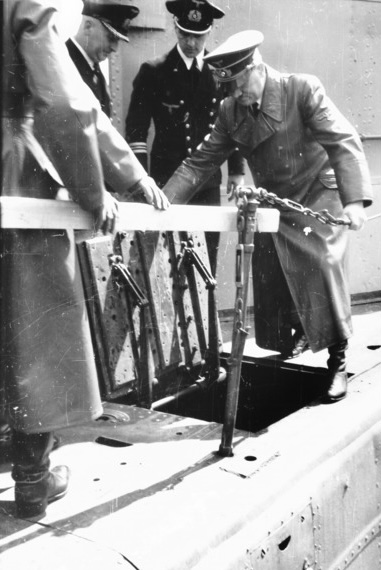
Adolf Hitler inspecting the Bismarck at Gotenhafen (Gdynia) Poland on 5 May 1941.Adolf Hitler stands in the forward fifteen inch gun turret of the battleship Bismarck during a visit to the occupied Polish port of Gotenhafen. Among Hitler’s entourage was Field Marshal Wilhelm Keitel, the head of the German armed forces. Next to Hitler is Ernst Lindemann, the chain smoking captain of the battleship. Lindemann was a gunnery specialist himself, and a graduate of the naval academy at Murwik. Inspektion von Kriegsschiffen 5. Mai 1941Adolf Hitler doing an inspection of the interior of a U-Boat on 6 May 1941 in Danzig.Adolf Hitler doing an inspection of the interior of a U-Boat on 6 May 1941 in Danzig.
The KDF ship “Robert Ley”
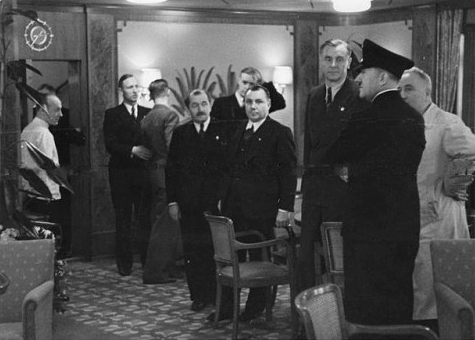
Adolf Hitler took a 3 day cruise aboard the Kraft durch Freude (Strength Through Joy) ship “Robert Ley” in early April of 1939. He arrived the morning of 1 April 1939 at the Wilhelmshaven train station in his Special Train. After the official launch of the battleship “Tirpitz” and a speech to his admirals and commanders, he boarded the cruise ship “Robert Ley” for a trip to the island of Heligoland. The ship arrived in Heligoland on 2 April and then continued to journey across the North Sea on a multi-day excursion. Hitler arrived at the port of Hamburg the morning of 4 April and returned to Berlin to begin discussions about the impending invasion of Poland.
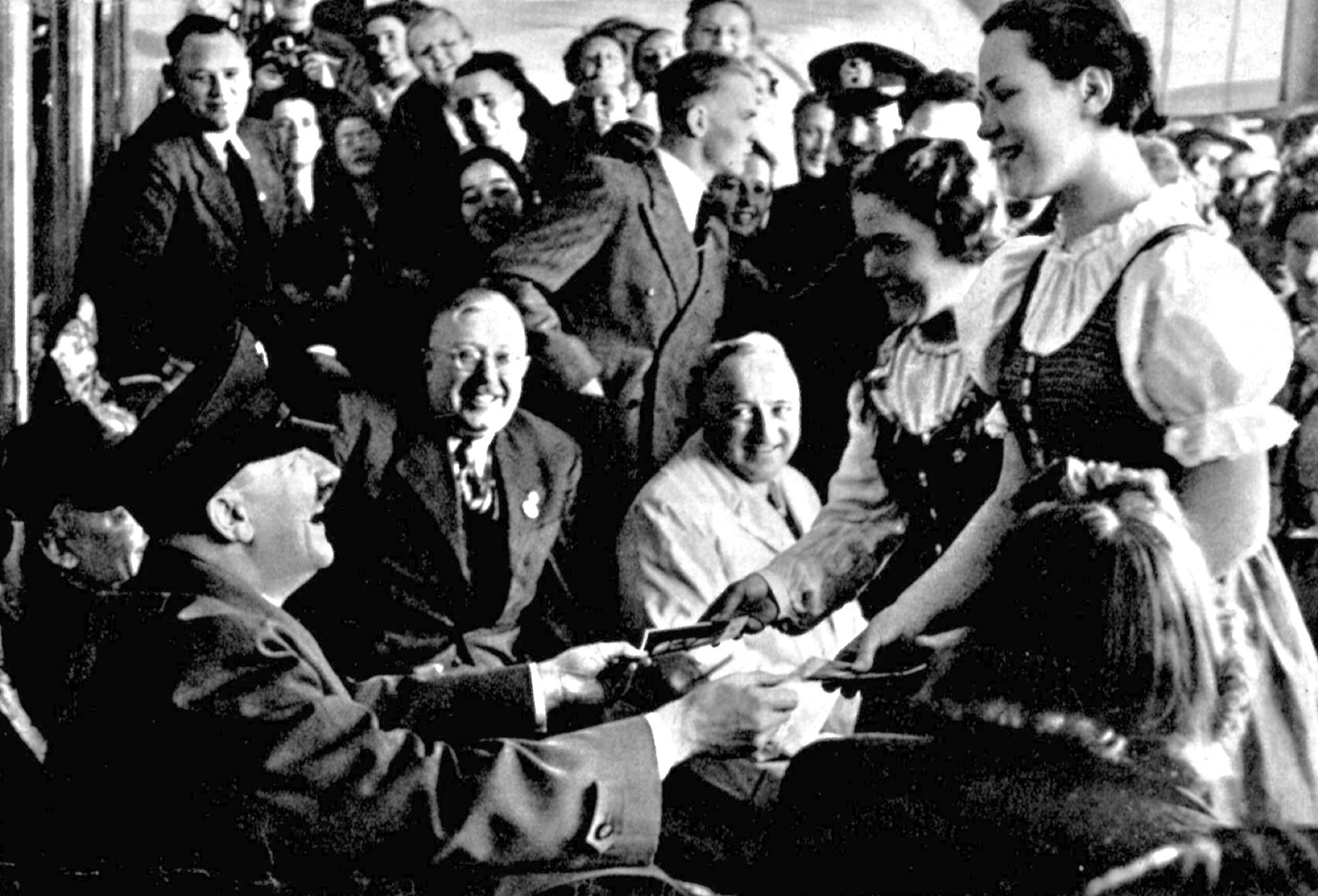
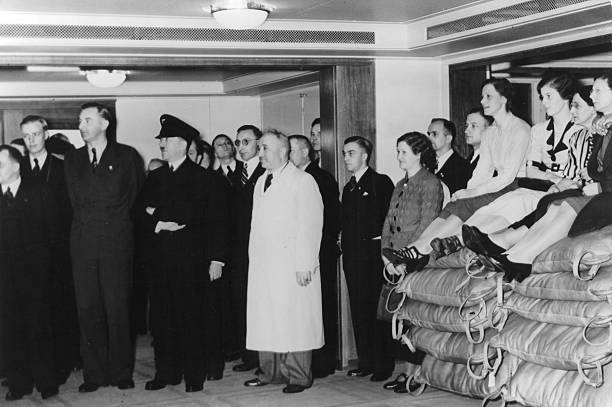
Adolf Hitler on board the Robert Ley KdF (Kraft durch Freude) ship greets crew members on 3 April 1939.Adolf Hitler on board the Robert Ley KdF (Kraft durch Freude) ship greets crew members on 3 April 1939.After his tour on the promenade deck, the Führer took the opportunity to accompany himself with fellow Holidaymakers.The Führer distinguished the great work of the “Strength through Joy” program by taking part in a multi-day trip on the “Robert Ley”. The disciplined on-board camaraderie enabled the Führer to participate in on-board life in an informal manner. Many autographed photos were exchanged with staff and vacationers as a memento of the time enjoyed on their special journey together. Adolf Hitler mingles with German workers and enjoys many of the daily activities on board the KDF flagship “Robert Ley” on 3 April 1939.Adolf Hitler prepares to depart the “Robert Ley” in Hamburg, the newest and most beautiful ship in the KdF fleet.Well I just had to include this magnificent photograph – the cover of the 13 April 1939 Illustrierter Beobachter reporting on Adolf Hitler’s journey on board the “Robert Ley” where these extremely rare and incredible photographs are printed and were just waiting to be re-discovered!
Hitler observes the parade of ships of the flotilla of the “KdF” society. The Department of Travel, Hiking and Vacation organized tourist trips around the country, as well as sea cruises. Strength Through Joy owned two first-class ocean liners, specially built for its needs. A cruise to the island of Madeira cost only 25 dollars. The entire cultural program on the ship, from morning gymnastics to nightly singing of folk songs, served the idea of strengthening national unity. Hitler himself took two cruises on the North Sea in peacetime on one of the ships belonging to the KdF. He visited the islands of Heligoland and Borkum, where he had fun on an equal basis with the other passengers of the ship.
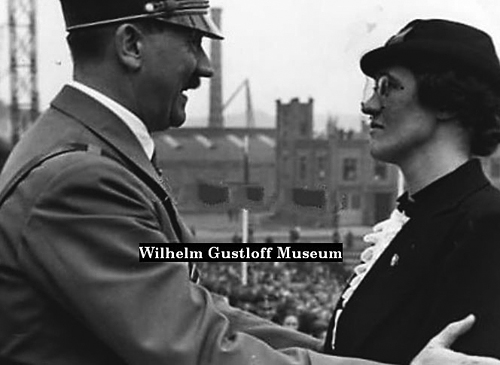
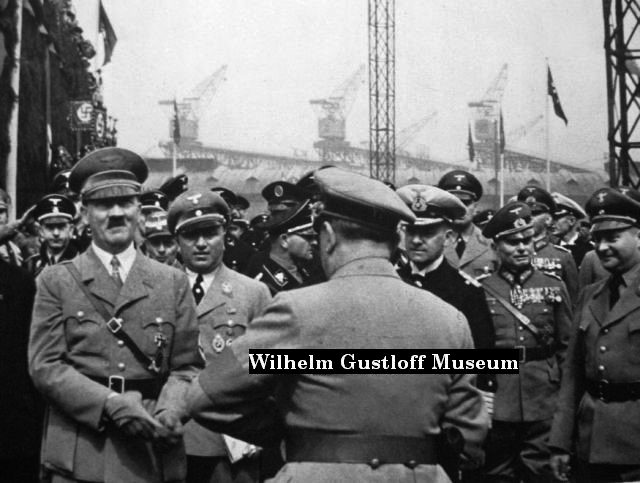
Launch of the other Strength Through Joy ship “Wilhelm Gustloff” in Hamburg and baptism by Gustloff’s wife Hedwig. The “Aviso Grille” with Hitler on board anchors the whole night on Borkum Reede and then accompanies the ships departing to Norway on the Kraft-durch-Freude ship voyage to Brunsbüttel and Kiel on 6 May 1937.
Sailing in Horumersiel
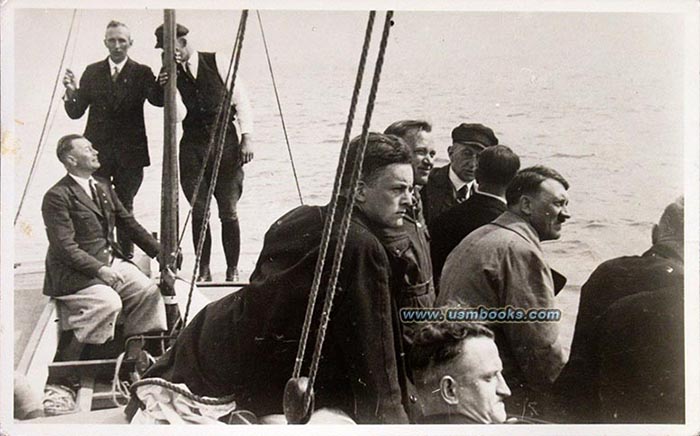
On 20 May of 1932 Adolf Hitler traveled north to Horumersiel from the city of Idar-Oberstein after giving a campaign speech to 40,000 people at the Fußballplatz Klotzberg. As he was progressing along on his whirlwind schedule of campaign rallies, he stayed for six nights at a campaign headquarters set up at the Strandhotel zur schönen Aussicht in the small coastal town of Horumersiel-Schillig on the North Sea. This hotel played host to his large campaign entourage that included his adjutants Julius Schaub and Wilhelm Bruckner. Schaub had even been given the nickname Reisemarschal (“Travel Marshal”) by Hermann Göring as he typically took care of all of Hitler’s travel arrangements and always accompanied him on his campaign journey. He later became Hitler’s chief aide and adjutant (Chefadjutant des Führers) in October 1940, replacing Wilhelm Brückner.
Adolf Hitler is among the passengers on a small sailboat that departed from the Strandhotel zur schönen Aussicht in Horumersiel-Schillig on the North Sea on 25 May 1932. Julius Schaub stands at the center next to a person looking out with binoculars. To the far right Wilhelm Bruckner kneels on the edge of the boat. From an album assembled by Ernest Zaske, a member of the SS on the personal staff of Rudolf Hess.On a boat trip together: Adolf Hitler (2nd from left) and Paul Knüpling (front, middle) of Wildeshausen join other members of Hitler’s 1932 campaign staff. Adolf Hitler later visited the beach hotel in Horumersiel-Schillig on the Northsea coast again on 11 June 1936, after it has been a campaign headquarters during the 1932 elections. The hotel was run by Fritz Tiartz, who may have also been out on this excursion.Adolf Hitler stayed at the Strandhotel zur schönen Aussicht, Horumersiel-Schillig for a week in late May 1932 and took a boating excursion out on the North Sea with Wilhelm Bruckner (seated far left) and other members of his 1932 campaign staff on the 25th of May.
On 22 May 1932 Hitler met Leni Riefenstahl for the first time after formally inviting her to attend his campaign speech held earlier that day in Oldenburg. He had dinner with her at this Inn in Horumersiel and they took a walk on the beach nearby. He also went sailing on this trip on 25 May, perhaps on this particular boat seen in this 1951 postcard.
Leni Riefenstahl had initiated contact with Hitler after attending his campaign rally at the packed Berlin Sports Palace on 27 February 1932 when he officially announced his presidential candidacy. So enraptured and enamored by his performance she immediately wrote to Hitler and he responded by formally inviting her to meet him at the Oldenburg rally being held near the North Sea coast on 22 May 1932, just before her scheduled departure for Greenland to film S.O.S. Eisberg.
With 35,000 people watching his appearance at the Rennplatz horse track (including special guest Leni Riefenstahl), “Hitler Day” on 22 May 1932 was the largest political event that the Oldenburg region had seen up to that point.
When the NSDAP won the absolute majority in the Free State of Oldenburg in May 1932, the city became the location for Adolf Hitler’s celebration for his election success on May 22nd at the Rennplatz horse track. With 35,000 people watching his appearance, it was the largest political event that the Oldenburg region had seen up to that point. With the beginning of Nazi rule in the district capital of Oldenburg, the state horse racing tournaments came to a standstill for several years before they resumed in 1937, and the Rennplatz Ohmstede horse racing arena served as a stage for propaganda events by the SA, SS and Wehrmacht.
Hitler took a break from his campaigning that evening to walk with Riefenstahl from his hotel in Horumersiel up to the beach in Schillig, overjoyed to be in the company of a fellow artist. They talked extensively about films, one of Hitler’s favorite subjects, along with him sharing his mission to save Germany. Having been so impressed by his charisma and the way that he could hold the audience’s attention, Leni’s first reaction to meeting him face to face was how normal he was, “no ranting orator, no future dictator, but just a normal person.”
“We walked silently, side by side until, after a long silence, he halted, looked at me, slowly put his arms around me, and drew me to him. I had certainly not wished for such a development. He stared at me in some excitement but when he noticed my lack of response he instantly let go and turned away. Then I saw him raise his hands beseechingly: “How can I love a woman until I have completed my task?” Bewildered, I made no reply and, still without exchanging a word, we walked back to the inn; there, somewhat distantly, he said, “Good night.” I felt that I had offended him and regretted that I had come in the first place.”
-Leni Riefenstahl (“Leni Riefenstahl’s Memoiren”)
At this same meeting, Hitler had requested of her, “Once we come to power, you must make my films.” Just before Leni was getting ready to depart for Greenland for the filming of S.O.S. Eisberg, Hitler sent her a bouquet of flowers and an autographed portrait of himself, which she carried with her on the duration of the trip. Despite the awkward first impressions (other versions of this event indicate Leni was making advances on Hitler) Riefenstahl would immediately resume contact with Hitler upon her return that October, and later go on to film Triumph of the Will, which is considered the most effective propaganda film ever made.
Adolf Hitler in Horumersiel with Rudolf Hess on a test trip with a lifeboat to Jade Höhe Schillig and return trip to Horumersiel on 23 May 1932. They also paid a visit to a special station created for the rescue of shipwrecked people.
Hitler resumed his arduous election campaign schedule the very next day and headed on to give an election speech in Schützenhof. It appears that Hitler campaigned for several more days in this area of Northern Germany and also spoke at rallies in Delmenhorst, Cloppenburg, Rodenkirchen, Varel and Rüstingen, before heading on to Wilhelmshaven to pay his first official visit to the Navy and to give a campaign speech in the market hall (cattle hall) in front of 10,000 listeners on 26 May 1932.
Adolf Hitler and Rudolf Hess disembark from their tour of the Köln cruiser in Wilhelmshaven on 26 May 1932.
Adolf Hitler arrives in Wilhelmshaven with Rudolf Hess and Heinrich Himmler for the state election campaign on 26 May 1932. The cruiser Köln can be seen in the background.
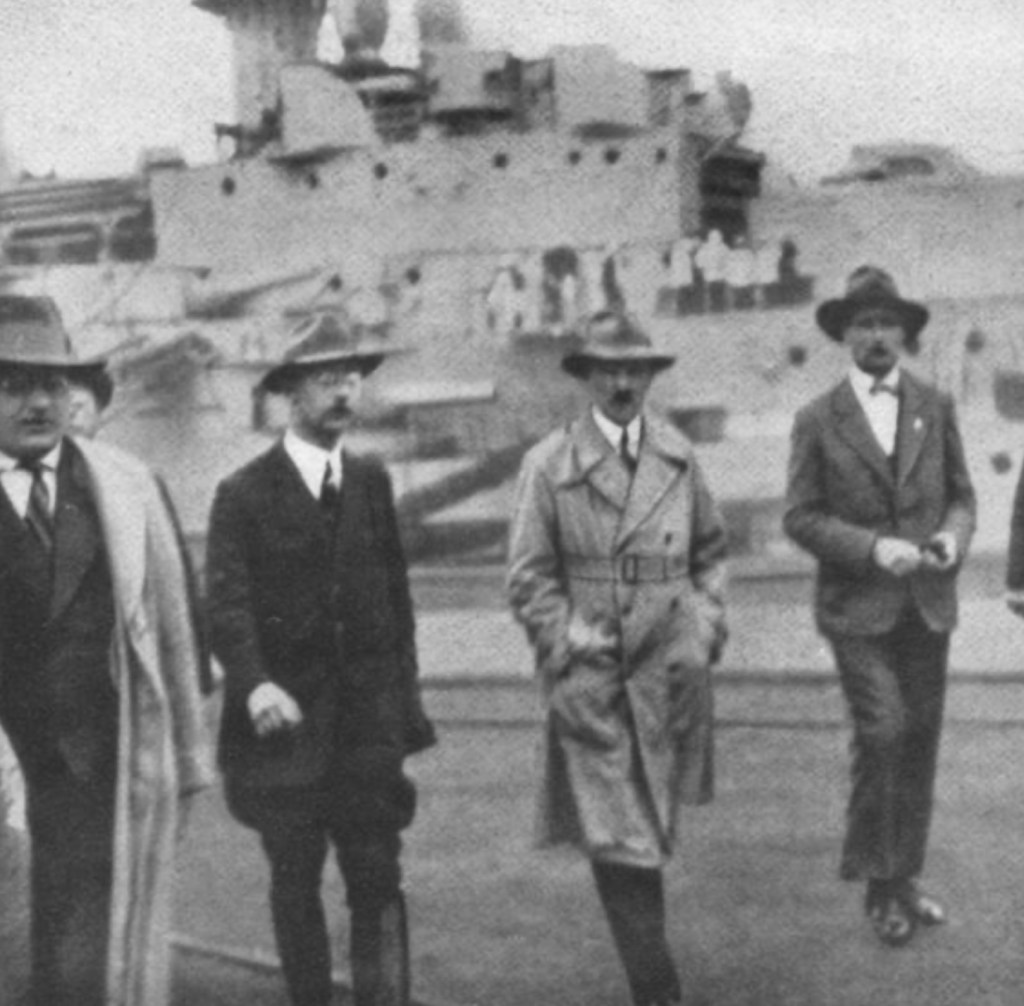
Besichtigung d.Schiffes 26. Mai 1932. From Horumersiel Hitler took a car ride down to Wilhelmshaven, where he had his first contact with the Kriegsmarine on 26 May 1932.
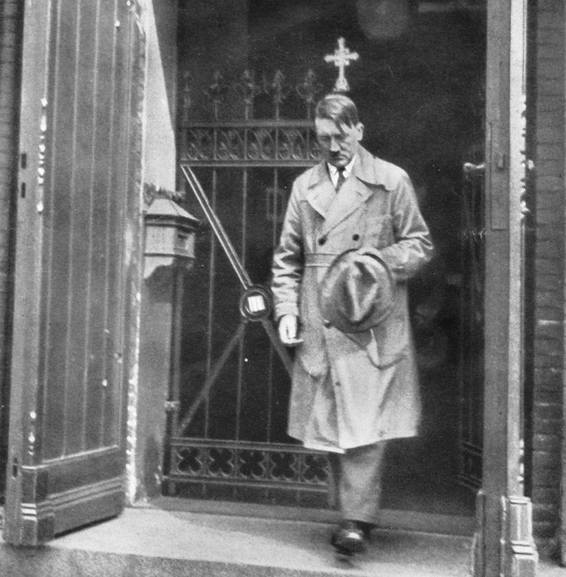
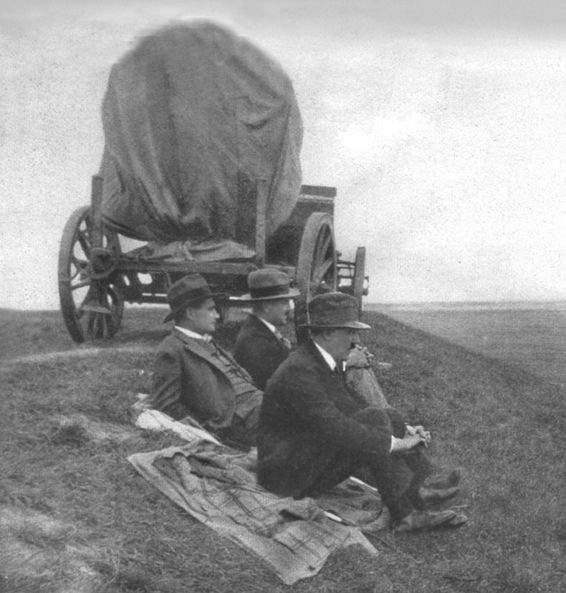
The following two photographs were also taken in Wilhelmshaven on 26 May 1932. The first one shows Adolf Hitler leaving the Reichsmarine Garnisonkirche (Navy Garrison Church) and was featured in Heinrich Hoffmann’s “Hitler wie ihn keiner kennt” (Berlin: “Zeitgeschichte” Verlag, 1932). The caption read: “A photograph accidentally becomes a symbol. Adolf Hitler, the supposed ‘heretic,’ leaves the Marine Church in Wilhelmshaven.” The second photo, also featured in this same book covering Hitler’s 1932 campaign journey, reads “On the North Sea, the Führer observes the maneuvers of the Reichsmarine. ‘The three inseparables’, the leader, his private secretary Hess and his driver Schreck,” and shows Hitler sitting on a dike looking out over the Sea.
Hitler Cruises the Rhine
Exactly one week after the German people had voted by an overwhelming majority to approve the referendum on the merging of the two offices of President and Chancellor into Hitler’s new role as Führer, Hitler headed to the Saarland Loyalty Rally held at Koblenz’s Ehrenbreitstein Fortress on the Rhine’s east bank. This special Saar reunification rally held on 26 August 1934 was an annual event intended for reinforcing the connection and loyalty of the Saarland to the German Reich.
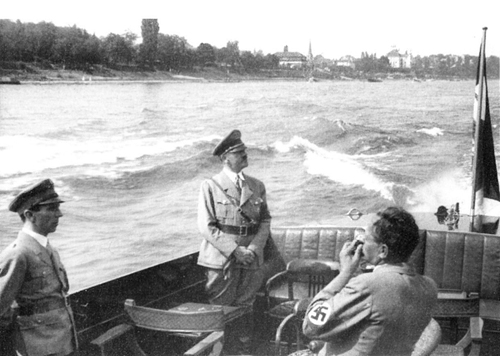
Adolf Hitler travelling on the Rhine to an event at Ehrenbreitstein on 26 August 1934, passing the Rheinhotel Dreesen.
Adolf Hitler had spent the night in his special suite at the Hotel Dreesen in Bad Godesberg before taking a cruise on the Rhine down to Koblenz. The federated Saar societies were hosting their 14th annual convention here since it’s inhabitants had come under French control in 1919 under the League of Nations mandate. The Versailles Treaty stipulated that a popular referendum was to be held fifteen years later to determine the region’s future. The Nazi regime organized countless mass rallies to convince voters to erase the “shame of Versailles” and bring the Saarland “home to the Reich” in the lead up to the referendum scheduled for 13 January 1935.
Postcard of Adolf Hitler during a cruise on the Rhine on 26 August 1934.Sammelwerk No. 8: Germany becomes stronger, the struggle and victory of the NSDAP. card/photo Image no. 182 Group 32 On the Rhine near Godesberg. Next to the leader Heinrich Hoffmann, the movement’s visual chronicler.The original caption on the back of this photo reads: “Adolf Hitler on the Rhine at Königswinter while the Dutch paddle boat ‘Juliana, Princess of the Netherlands’ passes by. The captain and crew give the salute.” Adolf Hitler greets enthusiastic Dutch passengers on the Juliana during a cruise on the Rhine on 26 August 1934.Adolf Hitler enjoying a cruise on the Rhine on 26 August 1934.Adolf Hitler enjoys a cruise on the Rhine on 26 August 1934 as he heads to Koblenz with Joseph Goebbels and Heinrich Hoffmann.Postcard of Adolf Hitler during a cruise on the Rhine on 26 August 1934 arriving in Koblenz. The Deutsches Eck (German Corner) is the name of a promontory in Koblenz where the Mosel river joins the Rhine, known for a monumental equestrian statue of William I, first German Emperor, erected in 1897 in appreciation of his role in the unification of Germany.
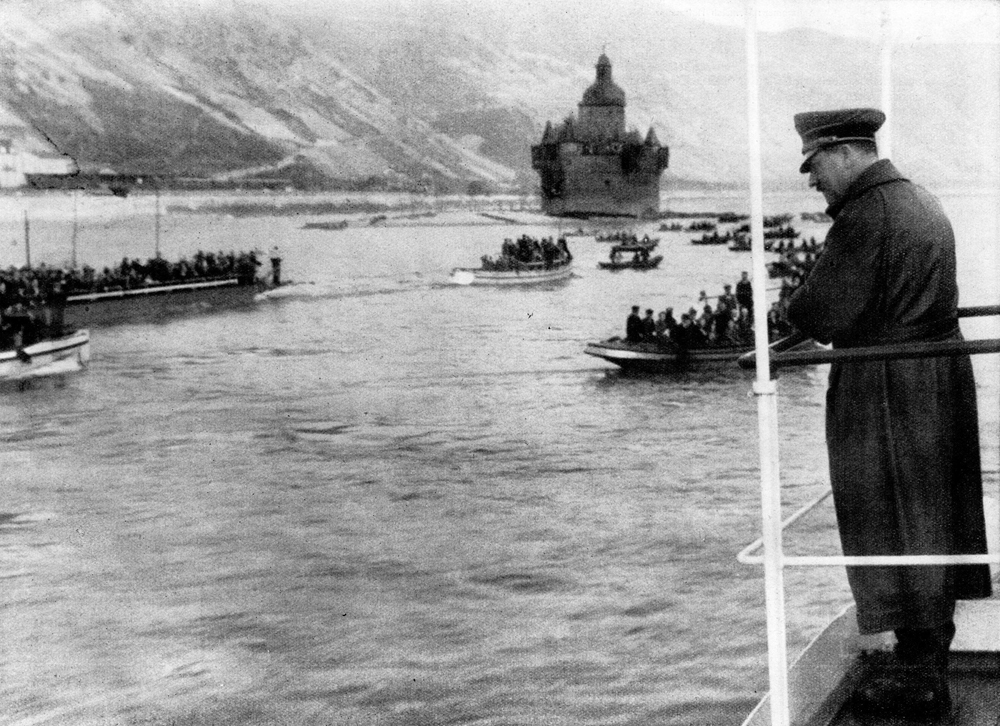
On 10 April 1936 Adolf Hitler took another cruise on the Rhine river aboard the tour ship ‘‘Preussen”, a steam boat constructed in 1885. Here Hitler is seen passing the Pfalzgrafenstein Castle near Kaub on his tour down the Rhine from Koblenz to Mainz. The Bereisungsschiff Preussen was based in Koblenz-Ehrenbreitstein, the seat of the Rhine construction administration. In addition to its function as a tour ship, it was also used for representational purposes and there were many high-ranking personalities that had traveled on board including Kaiser Wilhelm II and Reich President Paul von Hindenburg.
Adolf Hitler on the Rhine river aboard the Preussen steam boat near Kaub on 10 April 1936. In the background is the Pfalzgrafenstein Castle. This journey is significant as it occurred shortly after German troops remilitarized the Rhineland. The remilitarization of the Rhineland was a violation of the Treaty of Versailles, which had forbidden Germany from stationing armed forces in the area. Rudolf Hess and Joseph Goebbels converse aboard the Rhine steamship Preußen on 10 April 1936 as Hitler takes a snooze in the background. (Previously misattributed to the Aviso Grille visit of 29 August 1935).Adolf Hitler relaxes with Reich Propaganda Minister Joseph Goebbels and Reich Governor Röver on the deck of the Preußen steam boat on 10 April 1936.
Adolf Hitler and Dr. Morell on a boat trip on the river Rhine near Bad Godesberg on 22 September 1938.
1936 Olympics Sailing Regatta
A choice needed to made for the 1936 Berlin Summer Olympics between the Berliner Müggel Lake district or the Kiel area for hosting the sailing regatta. The Organizing committee made the decision in favor of the big boats and picked Kiel. As a result of the distance between Berlin to Kiel, a special committee for Yachting sprung to life to assist the Organizing Committee for the XIth Olympiad. Since Kiel was mainly a military port, this Committee had to cooperate not only with the local authorities but also with the German Fleet Command in Kiel to ensure the success of the races. One race area was created to the East of Schilksee and two in the harbor area more into the Firth of Kiel. Tribunes for spectators were placed on barges and on land near the course.
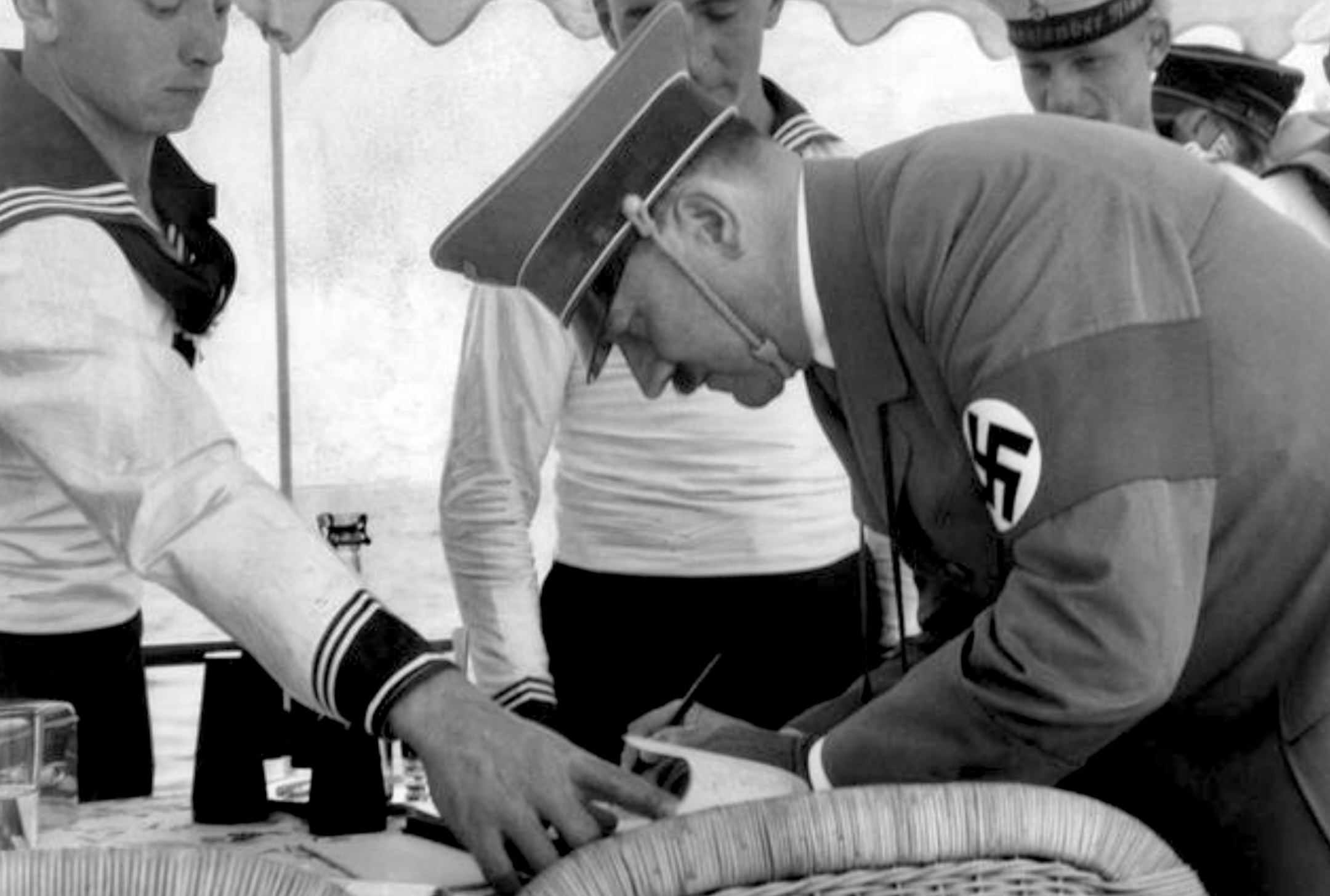
Adolf Hitler watches the Olympic sailing race on board of the Nixe yacht with admiral Friedrich Götting on 9 August 1936.Adolf Hitler signs autographs for young sailors on board of the supply vessel ‘Nixe’ on 9 August 1936.Adolf Hitler watches the Olympic sailing race on board of the Nixe yacht with admiral Friedrich Götting on 9 August 1936.Adolf Hitler with the Commander of the navy and Chairman of the Reichs Sports, Hans von Tschammer und Osten, at the sailing regattas on the Kiel Canal on 9 August 1936.Chancellor Adolf Hitler salutes a passing ship at the sailing regattas of the XIth Olympiad on the Kiel Canal on 9 August 1936.
Hitler on Holiday
Adolf Hitler frequently went sailing when on holiday around the beautiful lakes of the Bavarian Alps. Be sure to visit my “Hitler on Holiday” album to see many more photographs of Hitler on boats! 🛥
Hitler in a boat by the Chiemsee Autobahn Rasthaus dock in 1937. The Raststätte Chiemsee was the first large service area on the Autobahn. Chiemsee is a large resort lake in southern Bavaria located between Munich and Salzburg, and therefore a route traveled frequently by Adolf Hitler when headed out on holiday to the Bavarian Alps.
MYSTERY BONUS PHOTO:
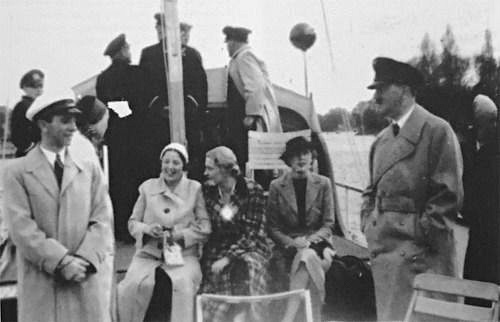
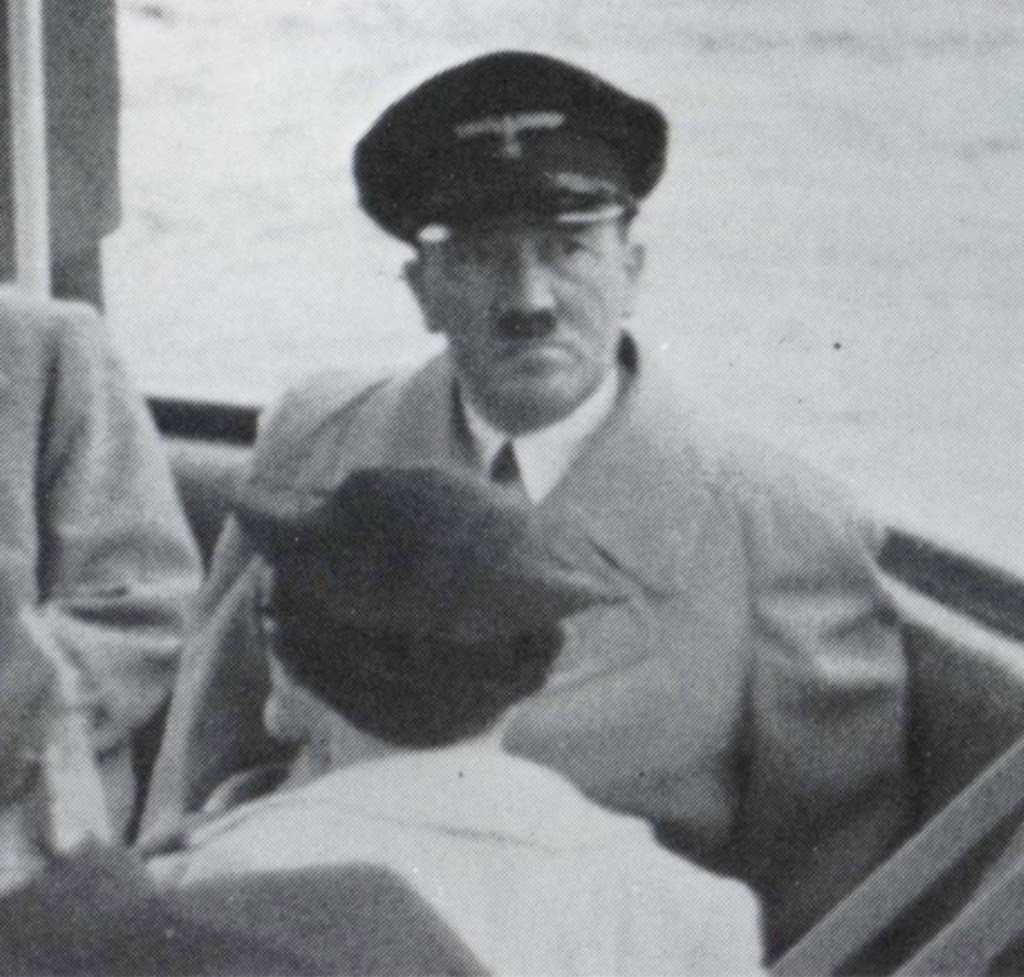
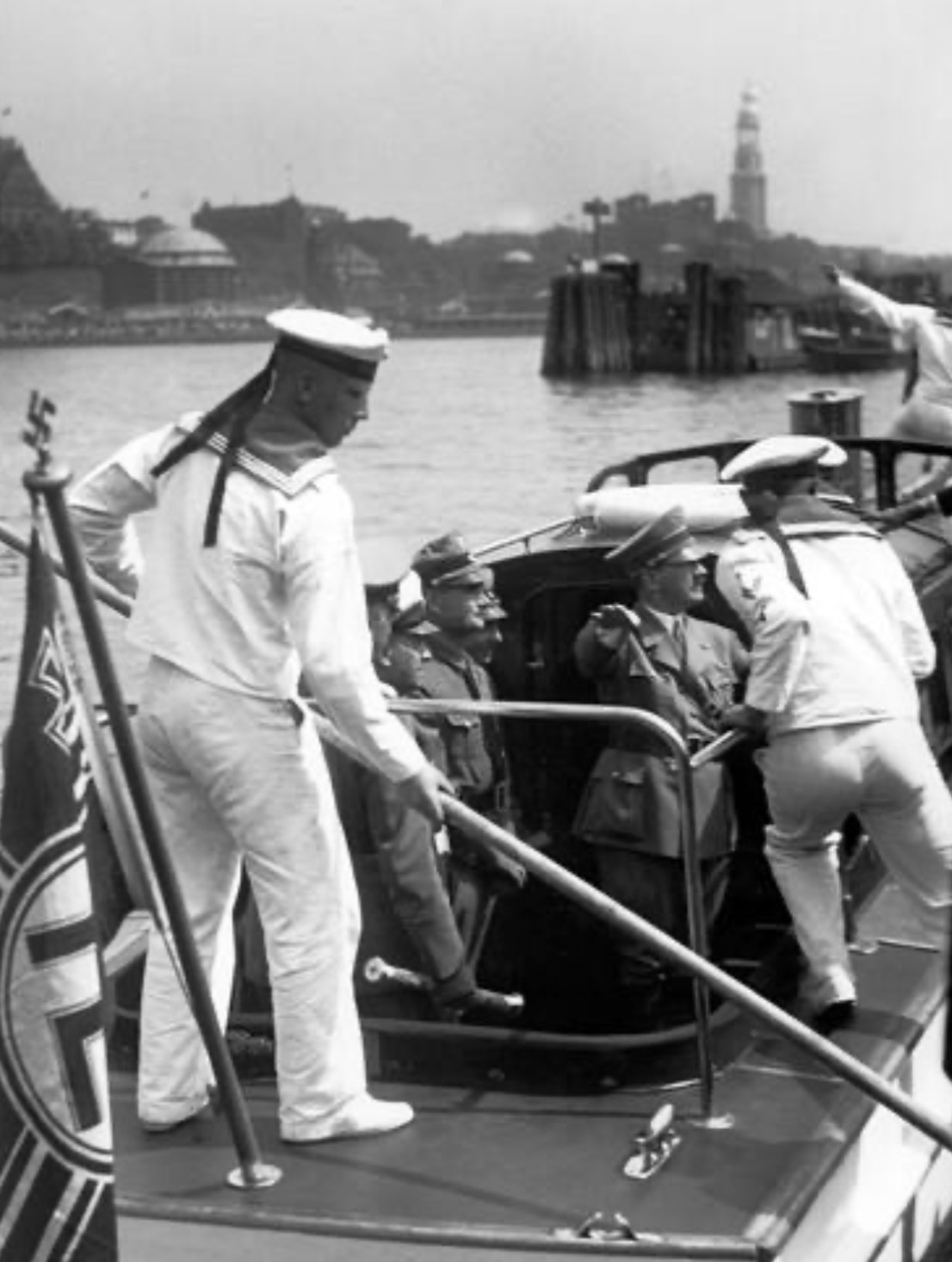
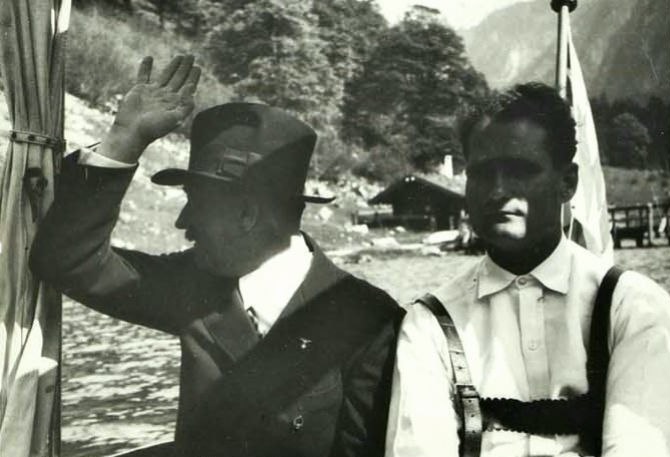
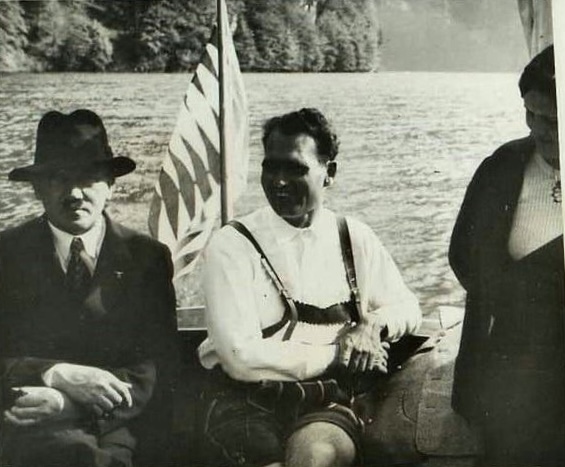
Here’s a very special photograph that I just added to my collection of Adolf Hitler on a water taxi! I don’t have any information about the location, date or event but wanted to share it with everyone since it’s so unusual and rare!
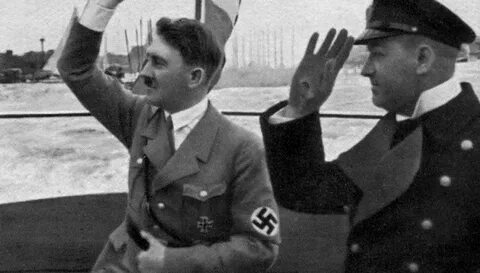
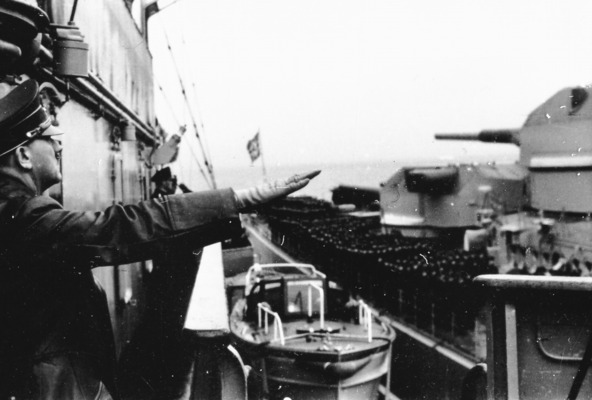
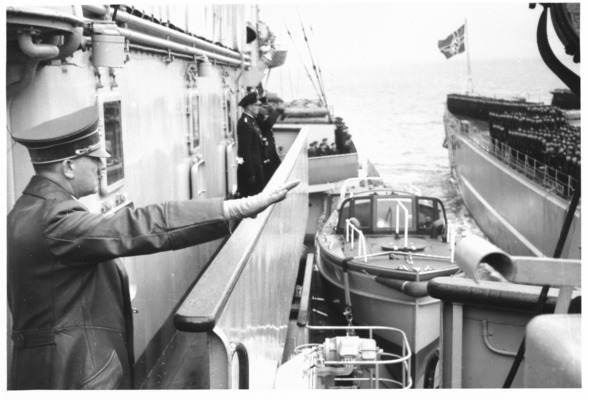
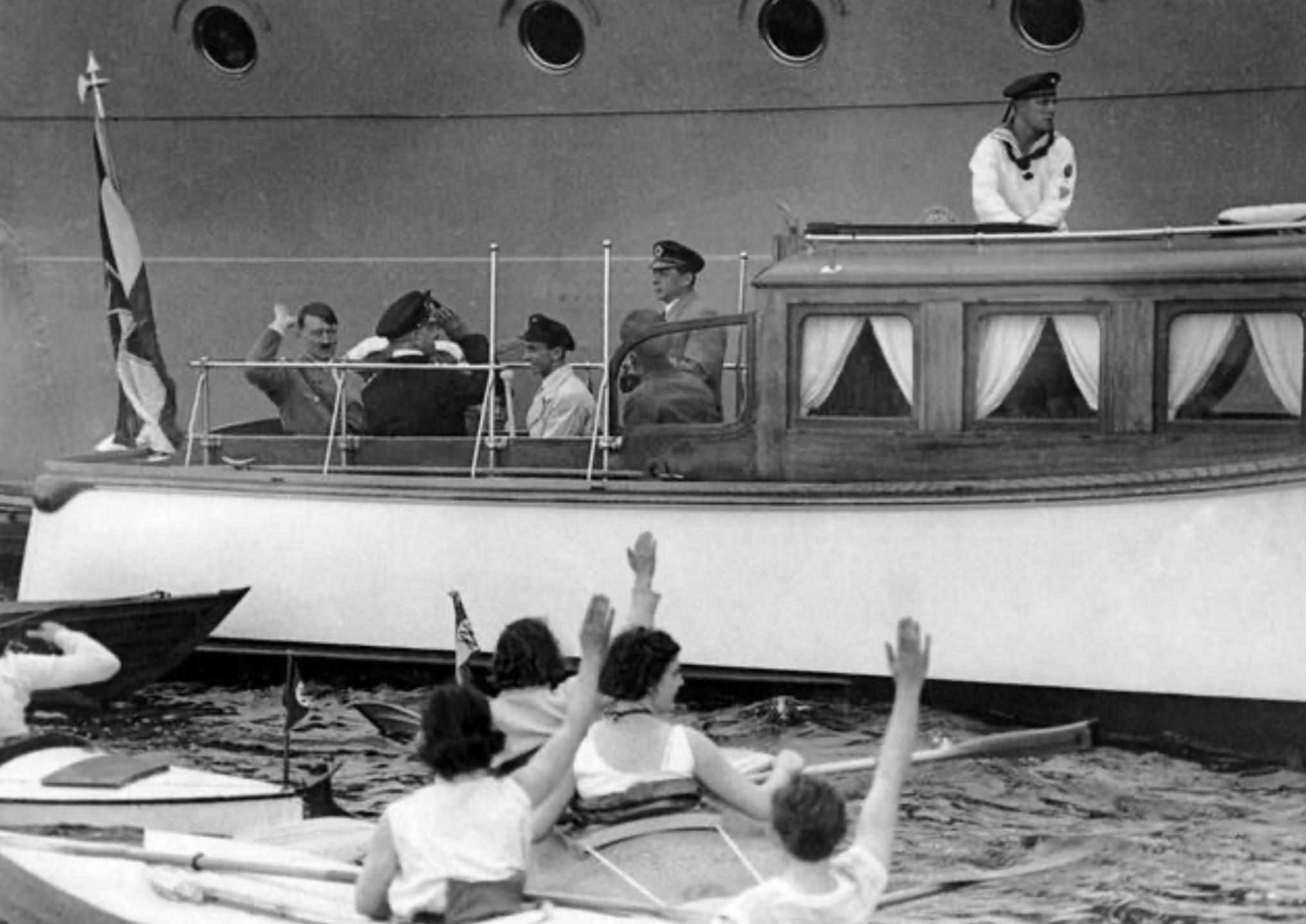
No information yet – but I discovered two more Hitler on a water taxi photos for my collection that I added below. Most likely this is in Hamburg given the “Hafenpolizei” boat seen in the background.Adolf Hitler leaves the battleship ‘Leipzig’ in Kiel on 22 May 1933, after an inspection together with Joseph Goebbels, Franz von Papen, Admiral Erich Raeder, und Werner von Blomberg. Heinrich Hoffmann can be seen standing on the ferry with his camera. Canoeists greet the Führer with the Hitler salute.
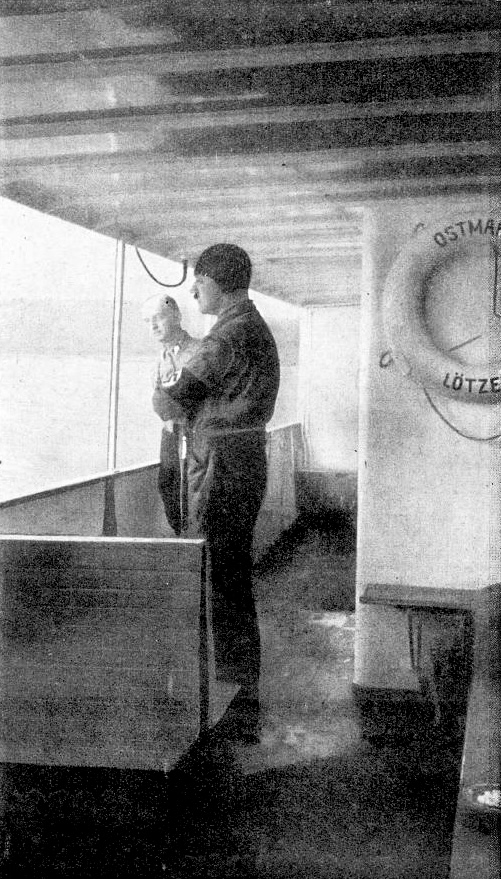
Adolf Hitler takes a cruise on Lake Niegocin in Lötzen (now Giżycko, Poland) on Das Motorschnellschiff Ostmark on 16 July 1932. The region of Masuria (Polish: Mazury; German: Masuren) in northern Poland is famous for its 2,000 lakes. Hitler delivered a speech at the fairgrounds in Lötzen in front of 5000 listeners earlier this day.
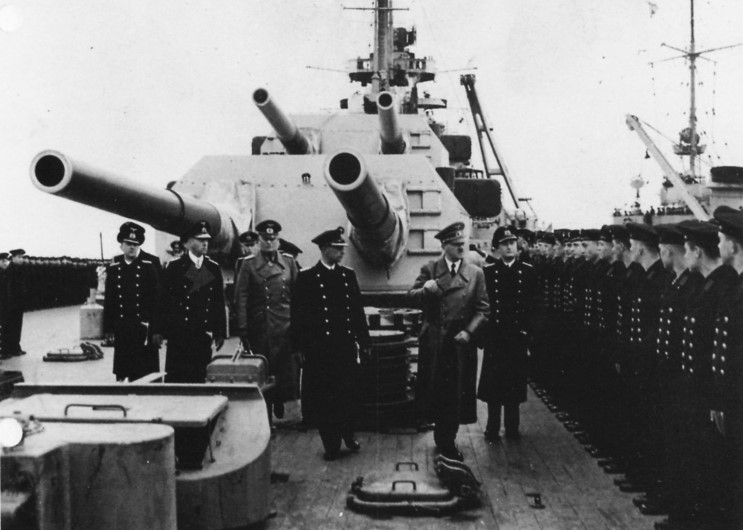
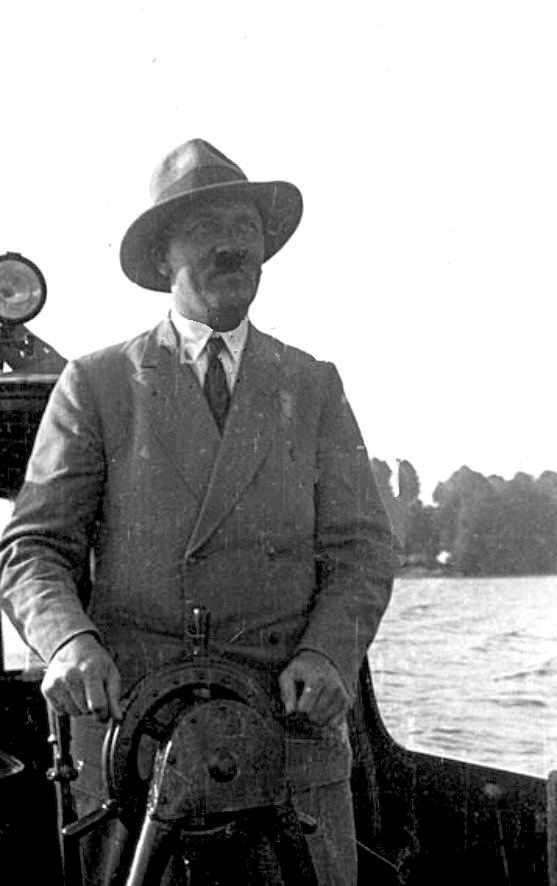
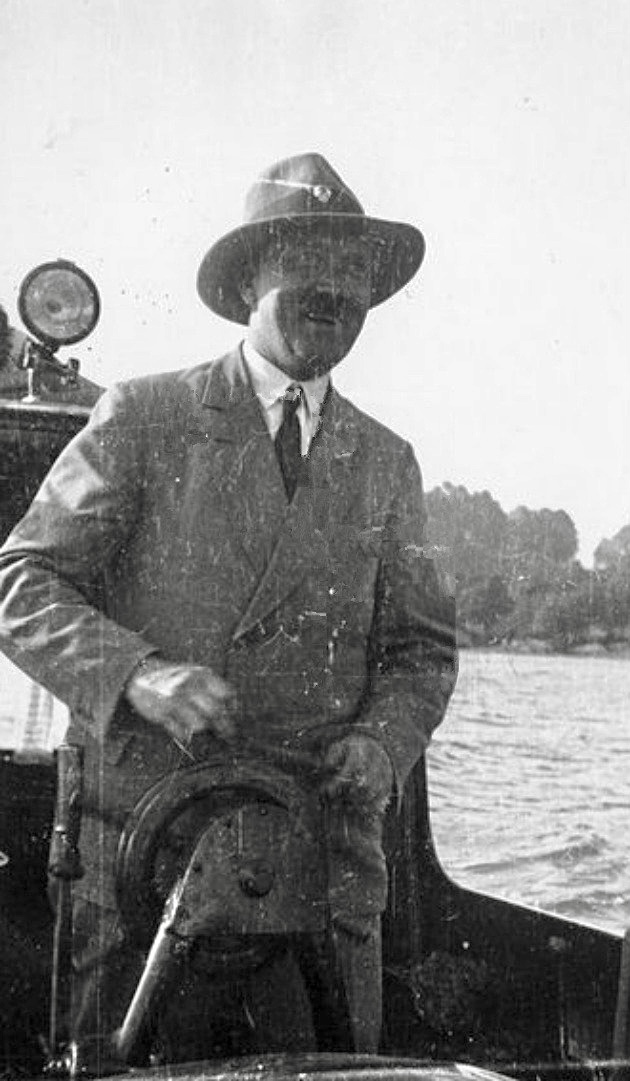
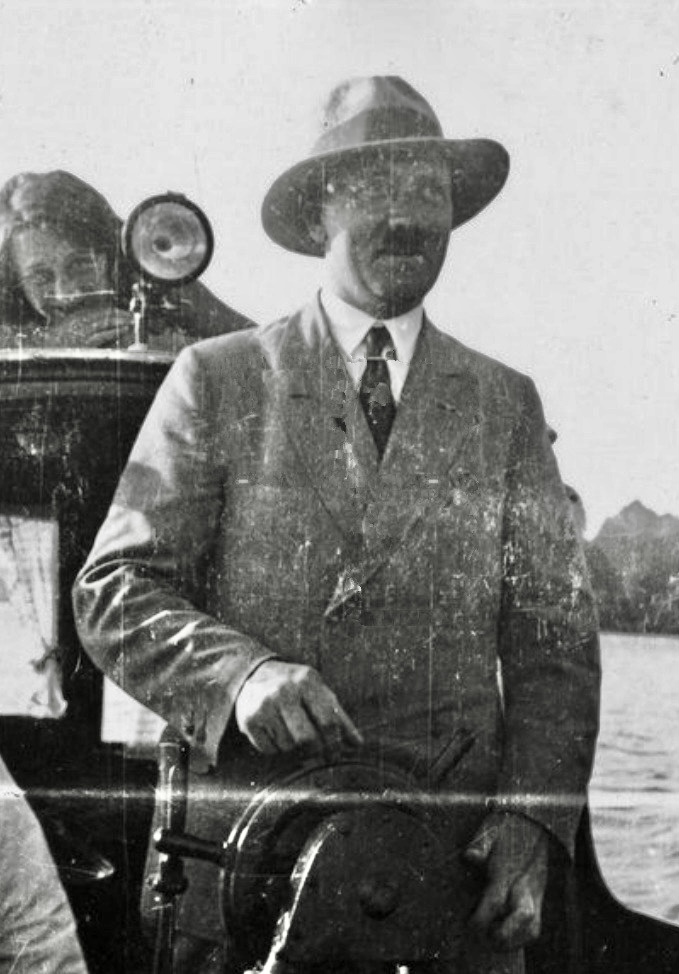
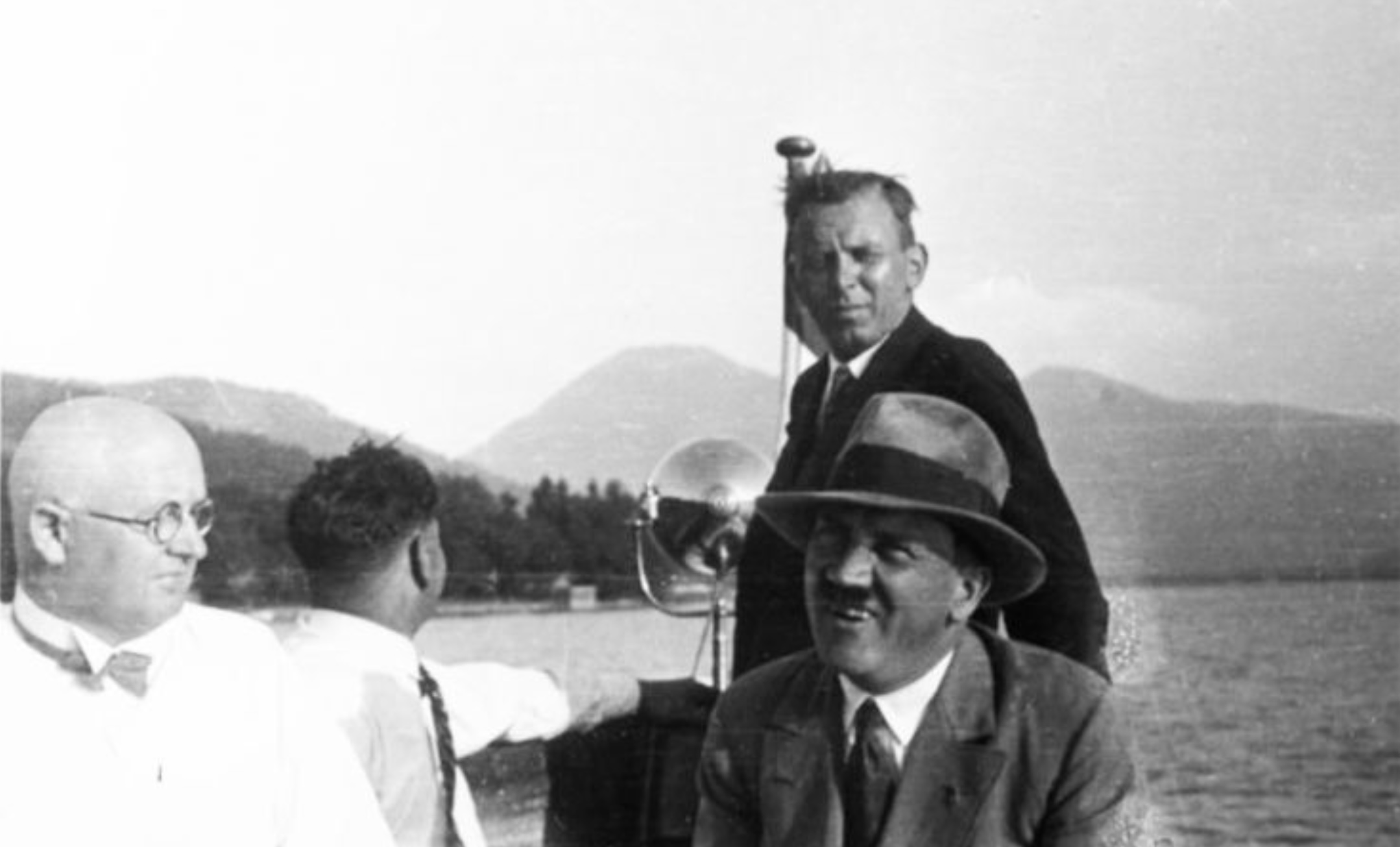
Adolf Hitler thoroughly enjoying a ride on a water taxi in 1932. This might also be Lake Niegocin.Adolf Hitler inspecting a model of the pocket battleship “Deutschland” on 1 April 1935 on his first official visit to the German Museum in Munich, with members of the museum board (including Hugo Bruckmann to the left of Hitler) on a guided tour through the exhibition departments. Hitler was interested in this visit especially for the congress hall, the airships, road engineering, automobile and finally the shipbuilding division. There he was captivated especially by the model of the battleship Deutschland, which had been donated to the museum in August 1934 by the Admiralty and represented a prime specimen of the new German weapon technology.Adolf Hitler visit to the Kiel plant of the Deutsche Werke Kiel Aktiengesellschaf on 29 May 1936.Führer und Reichskanzler Adolf Hitler, Großadmiral Erich Raeder, Besuch bei der Kriegsmarine. Adolf Hitler and von Blomberg approaching and getting ready to mount the Admiral Graf Spee.Adolf Hitler visiting floating units of the Kriegsmarine with Admiral Erich Raeder in Kiel, here headed to an inspection of the armored ship “Admiral Graf Spee” on 29 May 1936.Adolf Hitler walking past a lined-up guard of honor of the crew of the battleship ‘Admiral Graf Spee’ on 29 May 1936.Fotograf: Heinrich Hoffmann Tegernsee; Gruppenbild (Hitler in Anzug m.Hut lächelnd; am Steuerrad; auf d.Boot Adolf Müllers während e.Urlaubs); Müller, Lotte; Hitler,Adolf Hitler enjoys a cruise on the Tegernsee on Adolf Müller’s boat during a vacation on 2 August 1932. After Geli’s death, Adolf Hitler had travelled to Sankt Quirin am Tegernsee to the country house of the Munich-based printer Adolf Müller, the publisher of Mein Kampf and a close confidante of Hitler from the earliest days of the Nazi party. Several other high-ranking Nazis also had homes around the lake, including Heinrich Himmler, Max Amman and Franz Xaver Schwartz (seated far left).Screenshot I took from Putschgirl’s website back in 2022, I really miss her posts – they were always much more insightful and personable than mine, but I try my very best. Especially since there aren’t many people blogging about Hitler anymore and there is still a little bit of interest remaining amongst this very niche community.
I love history and have always been infatuated with the design and style of the 1920’s. Unfortunately I can’t time travel back to this era, so I live vicariously through books, movies and photos.
So many varied photos, none of which I’ve ever seen before! Fantastic to see this selection and learn more about those times, such as Hungary declaring war on the United States in 1941. The quote by Leni Riefenstahl is also extremely interesting! Fascinating history lessons with great photos.
Thank you so very much!! This has without a doubt been my favorite blog post so far, even though when I first started it I actually feared it might be a bit boring – who knew that the topic of boats and battleships would dredge up this many incredibly interesting offshoots of discovery! I just added several more fascinating details to the Leni Riefenstahl story, as well as 2 more great photos of Hitler’s Norway trip! Enjoy 🤗
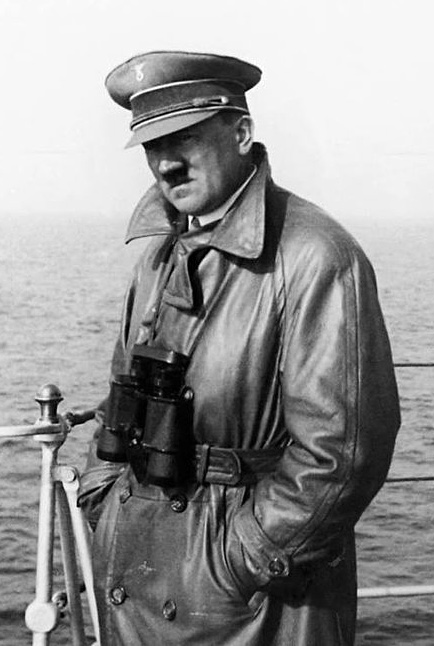
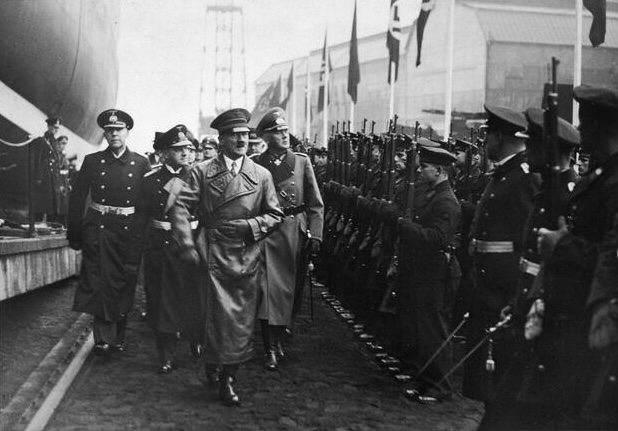
[…] eines Schiffes. (Postcard showing Führer and Chancellor Adolf Hitler in a long leather trench coat on board a ship). Nach seiner Rede in der Weitzer Maschinenhalle. Links neben Hitler Gauleiter Josef Bürckel. […]
[…] launching his abortive putsch. Chancellor of Nazi Germany Adolf Hitler with his Mercedes on the Rhine River ferry in Königswinter, North Rhine-Westphalia, Germany in 1937. In the background is the Petersberg […]
[…] Hitler. On 22 August 1938, Hungarian president Miklós Horthy’s wife, Magdolna Purgly joined Adolf Hitler to inaugurate his new heavy cruiser ship the Prince Eugen in Kiel. The heavy cruiser’s task was to support Nazi Germany’s effort to sink […]
Hi, just wanted you to know that I followed you, Putschgirl, and someone else with “Wolf” in their name (?) in the 2010s when I was a teen. You wouldn’t believe how much impact you’ve had on my life and in an inadvertent way probably lended me many of the “unusual personal problems” you’d mentioned in the About Website. Regardless I’m very thankful for the content you posted then, and that you continue to post. In many ways I wish I’d participated in this community as much as I did on the Bitchute homage-video-sphere concerning the early Bavarian Fascisti movement.
Thank you for the years and efforts 🙂
Oh yeah and I also wanted to ask if you would know details on what pomade, electric shaver, and male grooming products Adi might’ve used in his time? I really enjoyed the fine details of his barbers interview on Putschgirls old blog.
Thank you so much for reaching out and getting in touch with me!!! I am so very grateful to hear from you it means so very much, especially since the loss in our community of Putschgirl’s and Madchenfurwolf’s blogs. Those were priceless treasures and I deeply grieve those losses every single day. I have made every attempt to step up this site and try and fill some of the painful void left behind. I recall that Hitler’s barber August Wollenhaupt used a Jacob Schick electric razor and that Hitler used Peri rasierwasser and Peri Kopfwasser shampoo. I also tracked down this article last summer with tons of details about his morning routine.
https://popularhistoria.se/politik/politiker/adolf-hitler-privat
“No staff assisted him during the precise morning ritual. He bathed every day and washed himself with Steckenpferd-Lilienmilch soap. The shaving was always done with two razors and in two rounds, first a rough shave and then a fine shave. The punctual toilet routine took him a good twenty minutes and ended with application of a Pfeilring skin cream and a bath with Dralles Birkenwasser hair lotion to keep his parting of the hair in place.”
Hope this helps and PLEASE stay and touch and definitely let me know other things you’d like to see on here 🤗
[…] Adolf Hitler with Rudolf Hess and visitors on the terrace of Haus Wachenfeld. Rudolf Hess and Adolf Hitler aboard the new German express liner ‘Scharnhorst’ on 4 May 1935, departing Bremerhaven for a trip to Helgoland, Borkum as […]
[…] exhibition and attended a special reception held in the town hall in Cologne. Hitler then took a boat trip down the Rhine to Koblenz. His speech was delivered at the Saartreue rally on the plateau of the […]
[…] Lithuania had just returned to Germany. They reached the city of Memel just after 8 a.m. and Herr Hitler arrived on board the pocket battleship Deutschland at 9.30 a.m. He arrived in a sour mood, as he had gotten […]
This is absolutely magnificent. I believe history should be stupied by personal anecdote, personality, hidden powers , cultural dynamics of the period focused upon.
In my years of study , literally since a child, I have never , seen such beautiful photos of The Third Reich, and its leaders .
Adolf Hitler personal dynamic charisma: Inner light comes threw them .
One can see how he could impress the individual as well as the broad masses.
I am amazed how almost everyday for many years I still come across the most amazing photographs that have been lost and perhaps even unseen for decades. I know it still remains controversial to show photographs of Hitler smiling or appearing warm and engaging, perhaps because it disturbs people that he was so human, but that is the only way to truly understand his magnetism and charisma. Most people are only exposed to the photographs that show him brooding and disengaged. Also most of the historical emphasis is on WW2 and not on the 1920’s and his early rise to power, which to me personality is the most fascinating time period to study. Also the early 1930’s when he was really experimenting with his image and shaping the whole “Führer” persona, as so many different facets of his personality still come through. I don’t think anyone can ever truly grasp what a complex and dynamic person he was, but these photographs are the best option we have to glimpse who he really was and not what the modern history books try to project. I’m glad that you enjoyed these, I’m always adding more, and this particular album is my favorite as it contains some especially rare pics.









































































 Heinrich Hoffmann Photo Gallery