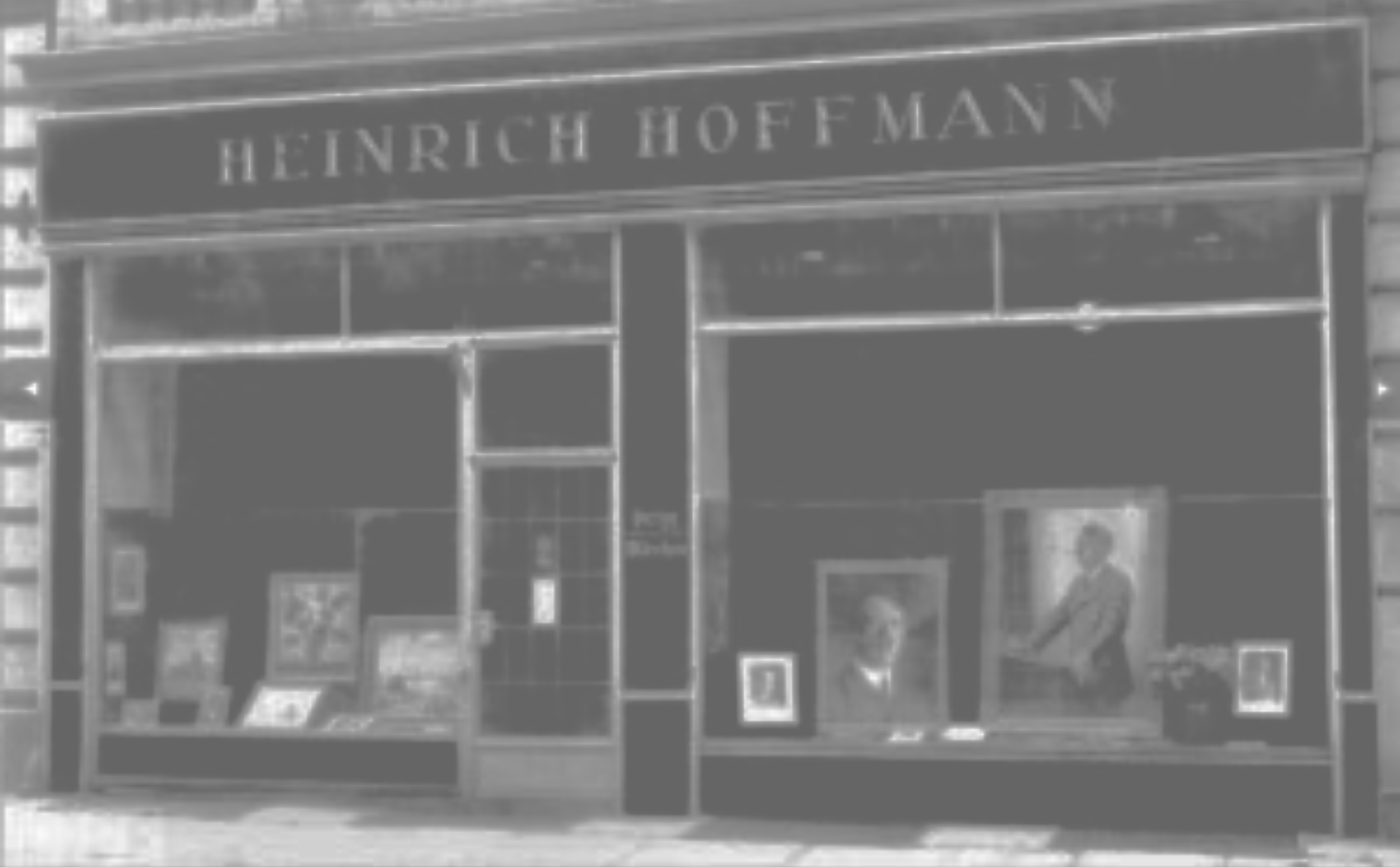

Heinrich Hoffmann published this cigarette card photo book on Adolf Hitler titled “Bilder aus dem Leben des Führers” (Pictures from the Life of the Führer) in 1936. These books were sold as a blank album and the owner would purchase the 200 photographs separately and manually paste them in to complete the album. Over 2 million of these books had been printed and sold by the year 1940. The propagandist motive of this Nazi coffee table book was its devotion to the deification of Adolf Hitler. It contained numerous pictures of Hitler’s entourage, highlighted several major events in his early career and political life, and described his work and achievements in his first few years in power. Text and speeches were included by Joseph Goebbels, Julius Schreck, Otto Dietrich, Wilhelm Bruckner, Robert Ley, Albert Speer, Fritz Todt, Baldur von Schirach, Philipp Bouhler and Julius Schaub.
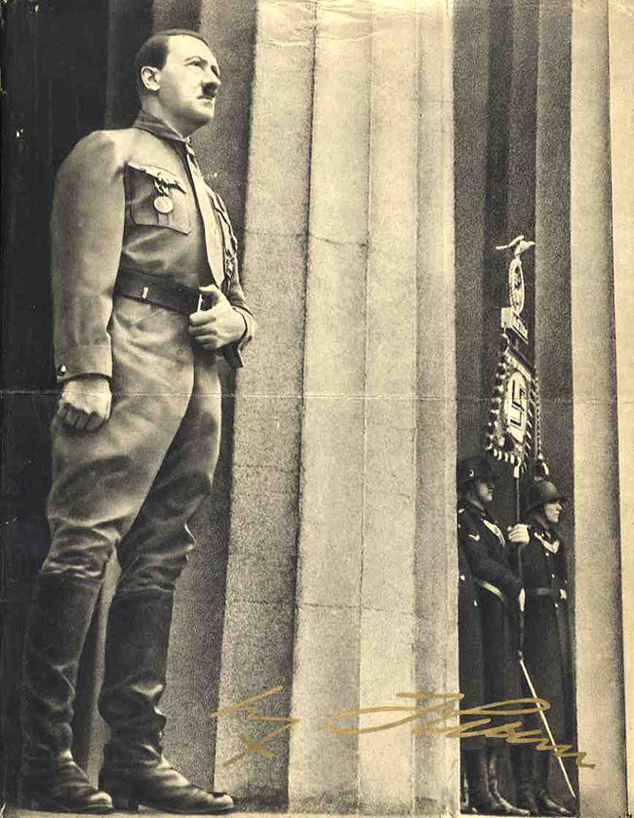


Collecting cigarette cards was a very popular and long held tradition in Germany dating all the way back into the 1890’s. These inexpensive cards were small enough to be included inside cigarette packages and were widely collected and traded among all ages. Larger cigarette cards that could not fit into cigarette packages were introduced much later as an added collecting incentive. A collector would receive “points” upon purchase of cigarettes and the points could be accumulated and mailed into the manufacturer to acquire the larger collectible card sets. The books that were needed for displaying the cards were also purchased directly from the cigarette companies. Each individual card would be pasted into the blank spaces provided in the albums. Some of the books could hold as many as 1000 cards. Just like today’s sports cards, these were all eagerly traded and highly desirable collectibles.
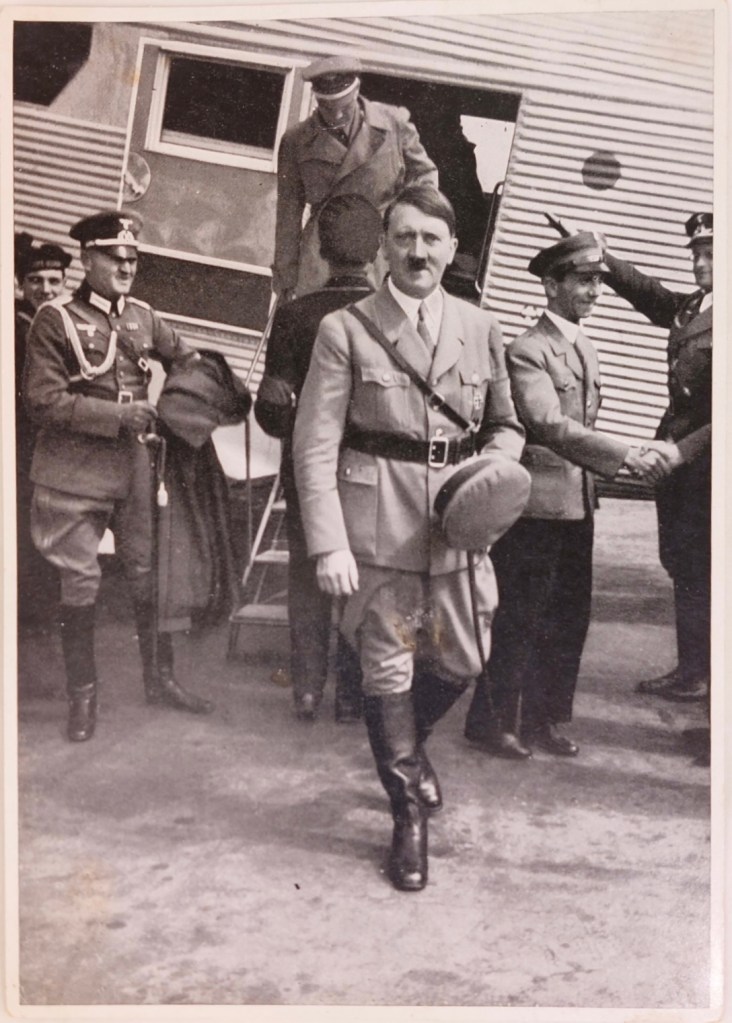
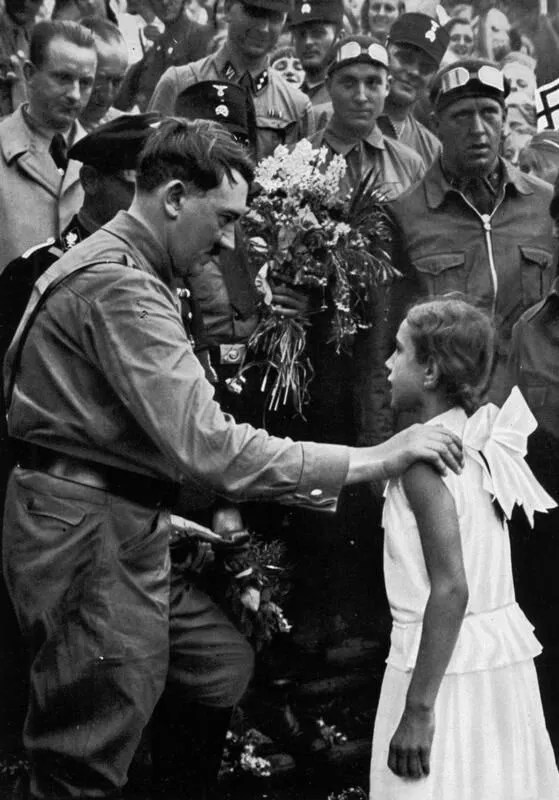
Cigarette-Bilderdienst of Hamburg was the German tobacco company which published the book and sold the 6 sets of photos to complete the album. This particular collection was known as Sammelwerk Nr. 15 “Adolf Hitler“ and picture groups 62-67 belong to this work. This photo is the very first in the set and is captioned “The Führer promotes aviation through his example.”
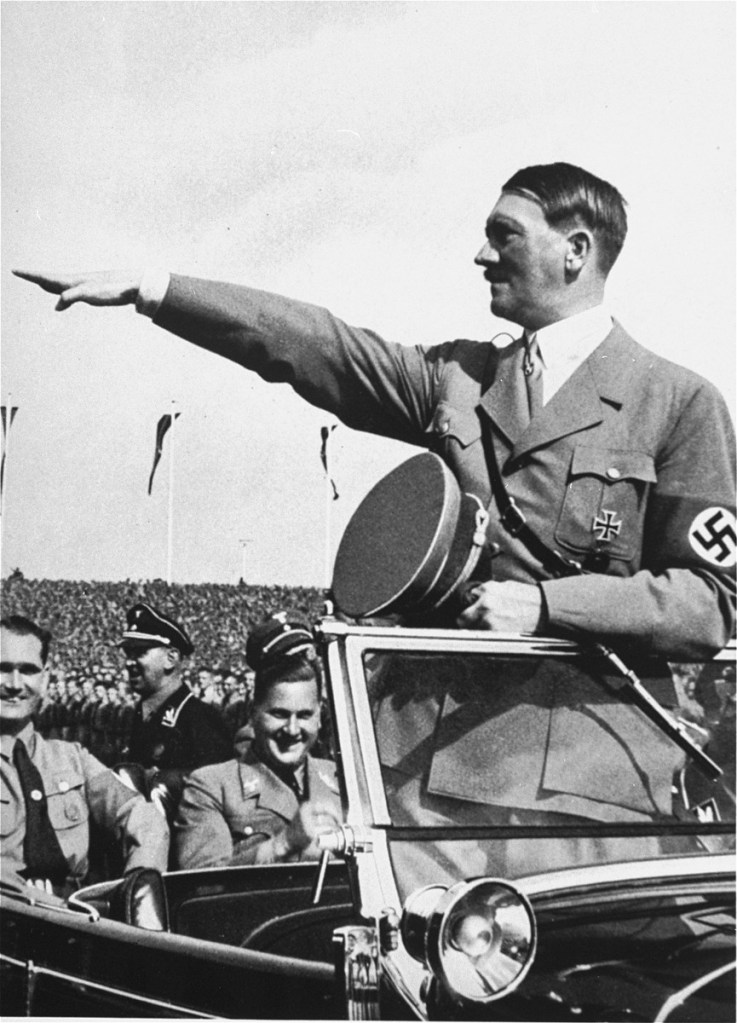
Adolf Hitler was actually thoroughly repulsed by cigarette smoking and would not tolerate smoking anywhere in his vicinity. He considered it a disgusting and extremely unhealthy habit, and had came to believe that it caused diseases like cancer, even well before that was scientifically proven and documented. Being a very health conscious individual, he did not believe cigarette smoking was good for the strength and prosperity of the “master race” and it became unpopular to smoke under the Nazi regime. Despite this stigma, soldiers were still rationed cigarettes, and cigarettes were still allowed to be sold and were taxed at a rate of 90%, becoming a large source of income for the government. Collectible cards were also identified as a great means for disseminating propaganda by the Nazis, therefore Hitler tolerated cigarette sales during his first 9 years in power, all the way up until 1942 when he decided to officially ban cigarettes altogether.


The book is divided into 13 chapters, following a two page introduction written by Dr. Joseph Goebbels. The thirteen topics that are visually documented through hundreds of Hoffmann’s photographs include Hitler’s travels, his interactions with German civilians and workers, highlights from his speeches, scenes from both his private life and his work as a statesman, and his numerous projects involving the construction of new buildings and roads. There is also a chapter devoted to his early career as an artist that include reproductions of five of his original paintings. The last two chapters cover the history of the Wehrmacht and the National Socialist movement. The book also includes a transcript from the speech “Our Hitler” given over the radio by Goebbels in honor of the Führer’s 46th birthday in 1935.
The Führer and his Travels, by SS Brigadeführer Julius Schreck

The Führer and the German People, by Dr. Otto Dietrich
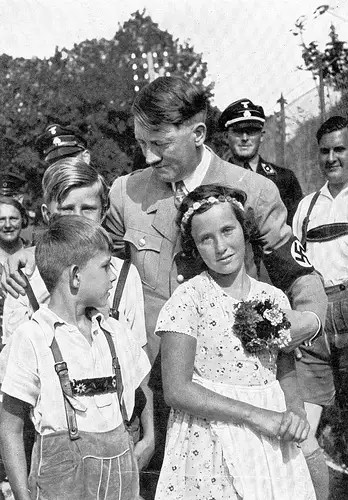
The Führer as a Speaker, by Dr. Joseph Goebbels


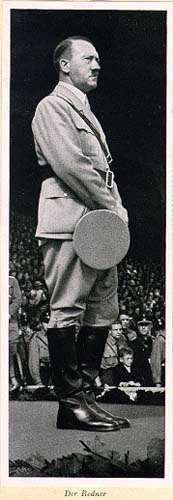
This section of the book also features a spread of four photographs taken during Hitler’s speech to the Hitler Youth from the 1935 Reichsparteitag in Nuremberg. Joseph Goebbels, in his text for the chapter “Der Führer als Redner,” presents Hitler as a unique master of rhetoric, able to speak to the masses in a way that inspires them to greatness. Goering’s speech from the 1935 rally is also included in this chapter:
“An entire people, an entire nation feels strong and happy today because you came to this people not only as the Führer, but also as a savior.”


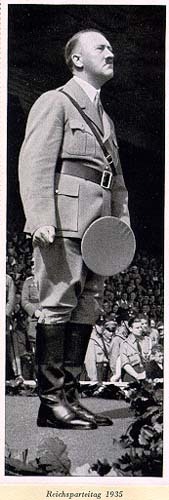
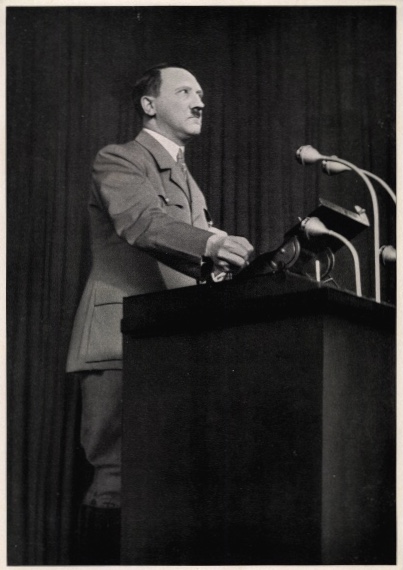
The Führer speaking during the election campaign on Germany’s freedom in 1936. One of the 11 photographs that accompany Goebbels’s discussion of Hitler’s speaking ability.
The Führer’s Private Life, by Obergruppenführer Wilhelm Brückner


The Führer as a Statesman, by Dr. Joseph Goebbels


The Führer and the German Worker, by Dr. Robert Ley

The Führer and the Arts, by Dr. Joseph Goebbels

The Führer’s Buildings, by Architect Albert Speer

Adolf Hitler’s Roads, by Generalinspektor Fritz Todt
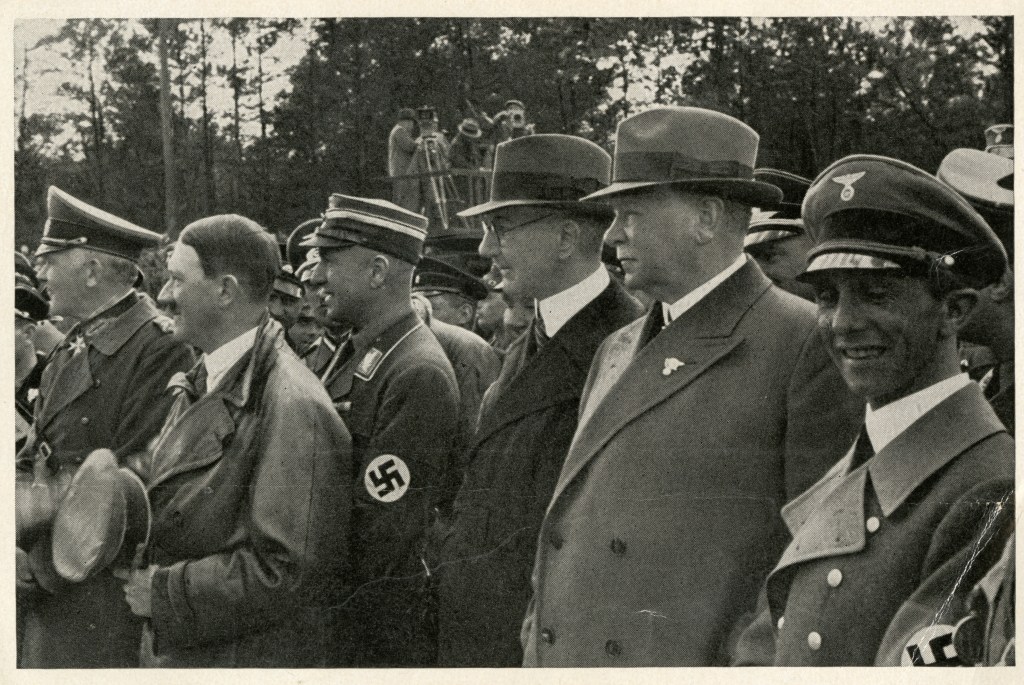
The Führer and the Wehrmacht, by Oberstleutnant Foertsch

The Führer and the German Youth, by Baldur von Schirach

The Führer and the National Socialist Movement, by Philipp Bouhler

The book concludes with the text from “Our Hitler: A Radio Address to the German People on the Führer’s Birthday”, given by Dr. Joseph Goebbels on Hitler’s 46th birthday on 20 April 1935. The back of each individual card also included the notation “Auswahl und künstlerische Bearbeitung der Bilder dieses Werke lagen in den Händen des Reichs-Bilderichterstatters der NSDAP, Heinrich Hoffmann, München” (“The selection and artistic processing of the images in this work were in the hands of the Reich Image Judge of the NSDAP, Heinrich Hoffmann, Munich”)
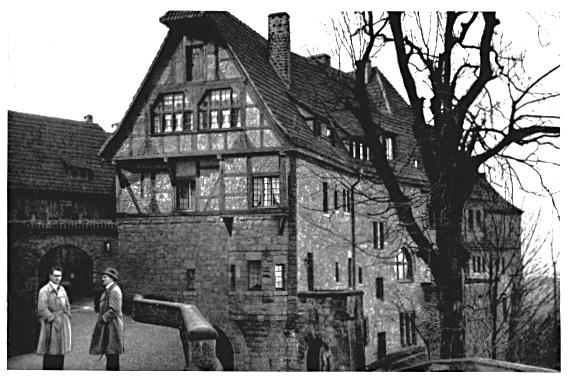


 Heinrich Hoffmann Photo Gallery