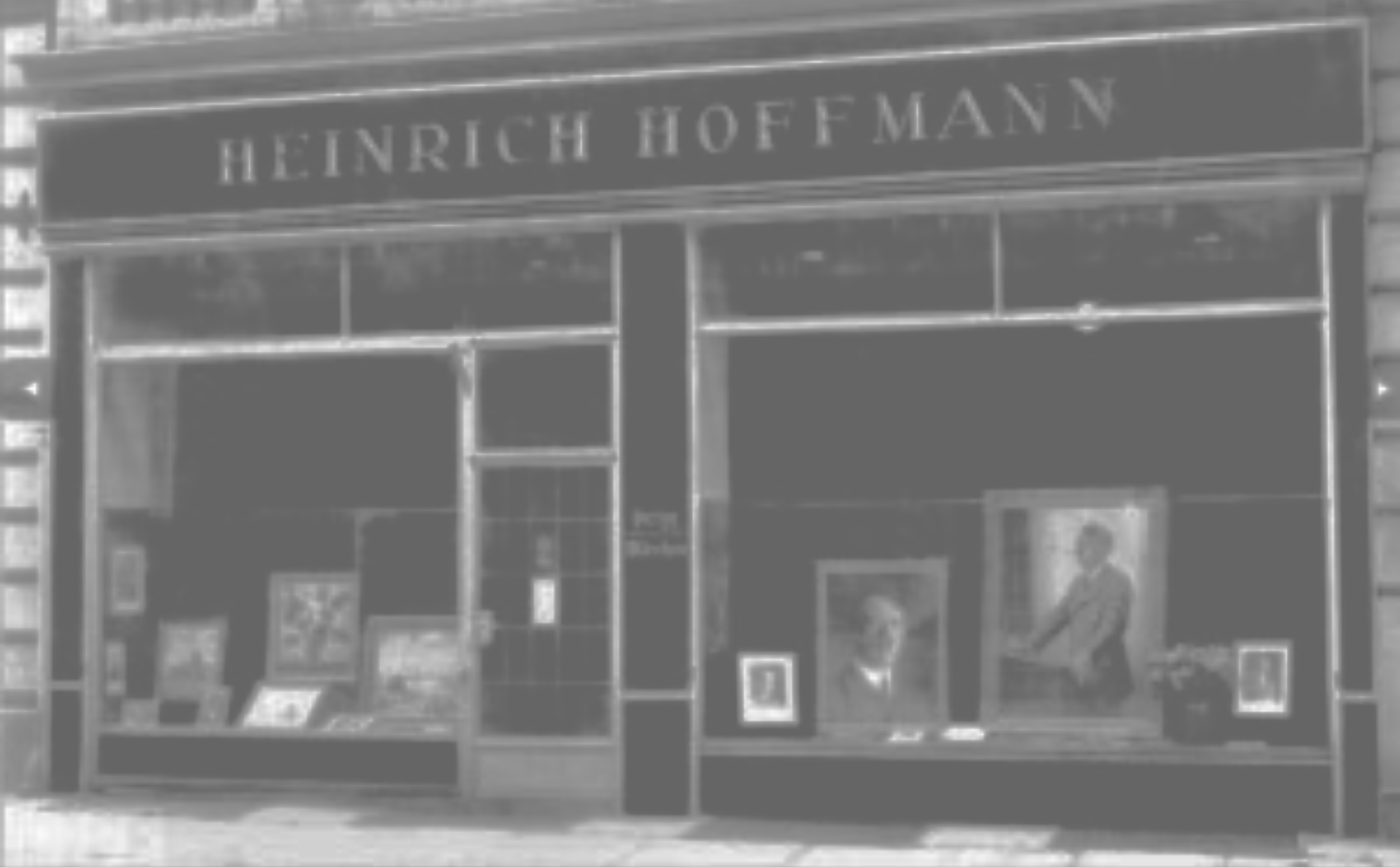
Heinrich Hoffmann (1885 – 1957) served as Adolf Hitler’s official photographer from when Hitler took control of the Nazi party in 1921 until his death in 1945. Hoffmann estimates he took over half a million photographs of Hitler over the course of his career. His portraits were the most significant source of Nazi propaganda materials published over the course of close to 25 years, everything from postcards, posters, magazines, postage stamps and picture books. Click on eachtheme below to see a complete photo albumdevoted to that particular event or topic.
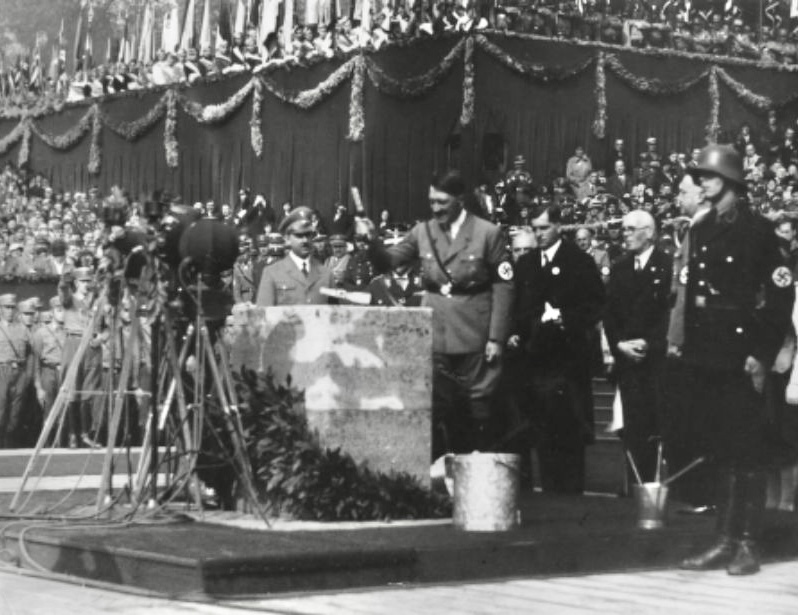
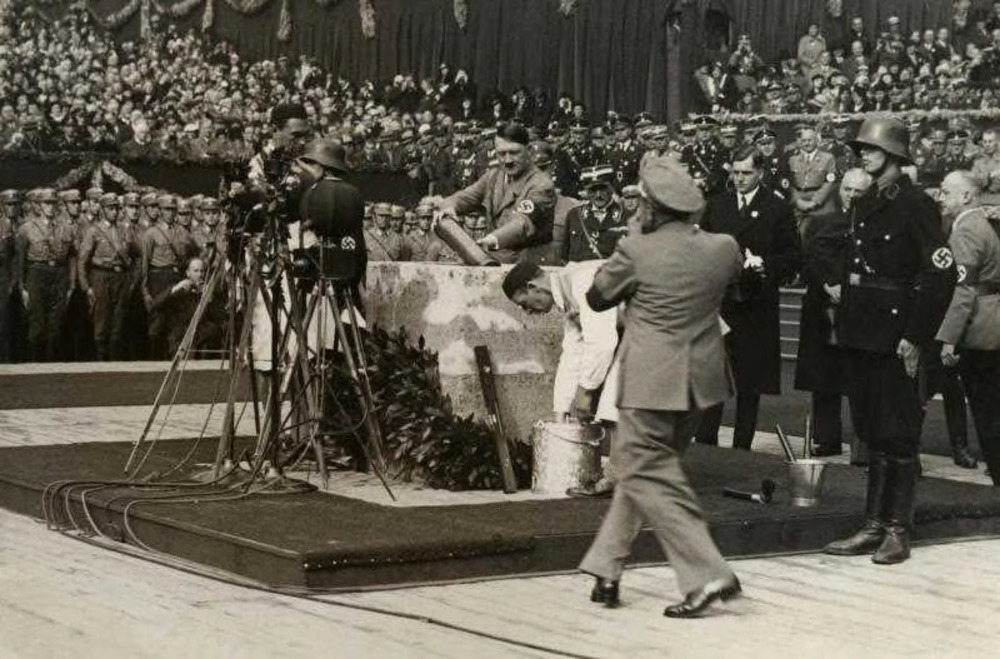
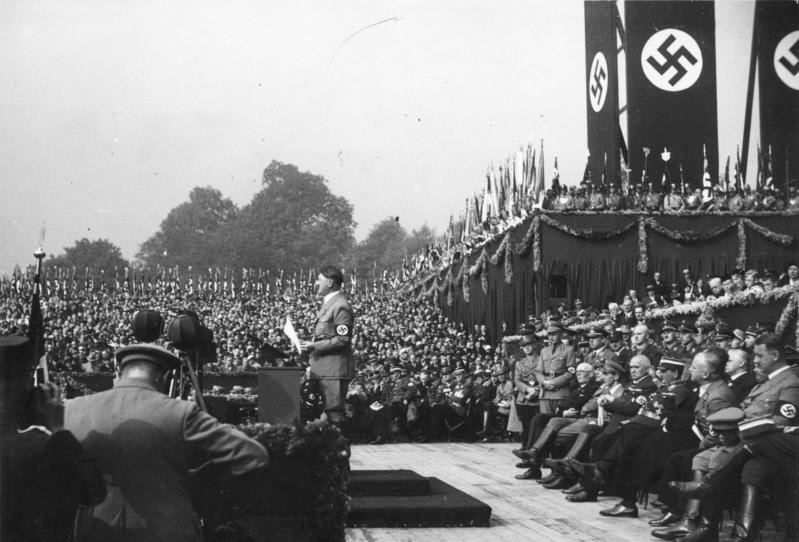
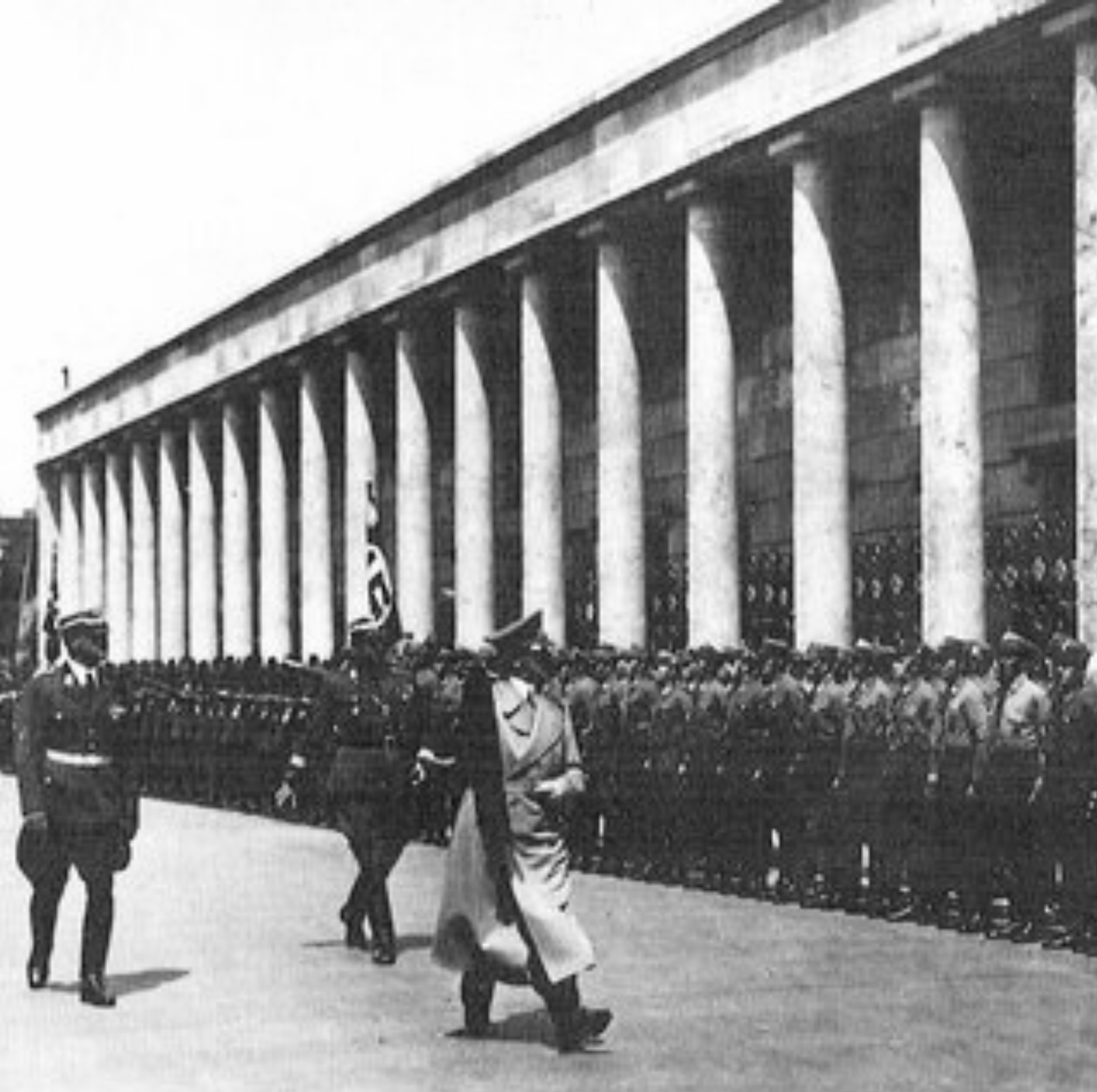
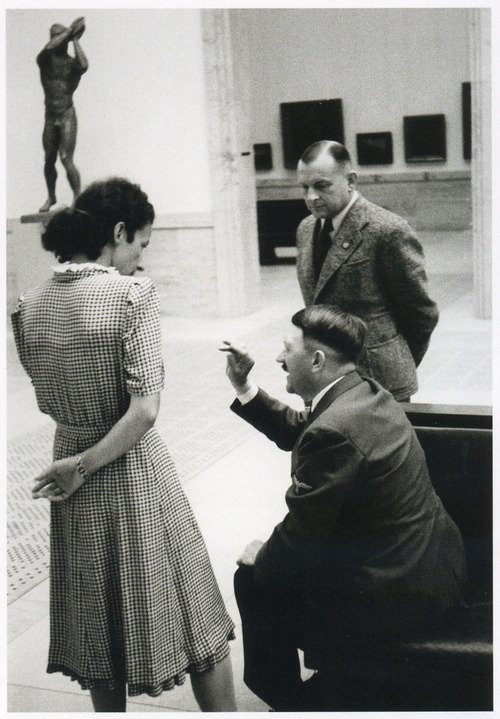
The Führer’s “Haus der Deutschen Kunst” (House of German Art) in Munich was intended to showcase what Adolf Hitler regarded as the best and finest of German art. The inaugural exhibition was titled the “Große Deutsche Kunstausstellung” (Great German Art Exhibition), and was intended by the Nazis to demonstrate what is “proper art” in contrast to the condemned modern art on display in the concurrent “Entartete Kunst Ausstellung” (Degenerate Art Exhibition). Heinrich Hoffmann published a photo book in 1937 documenting the construction of the museum, from Hitler laying the first cornerstone to the grand opening that occurred on 18 July 1937. The other photos include Adolf Hitler examining a maquette of the building, the ground-breaking ceremony and building under construction, topping out ceremony, as well as various exterior and interior scenes of the exhibits that are included below.
“The art of the Führer is that he assembles the individual mosaic stones.”
– Adolf Hitler, speech at the Führertagung of the NSDAP in Plauen on 12 June 1925
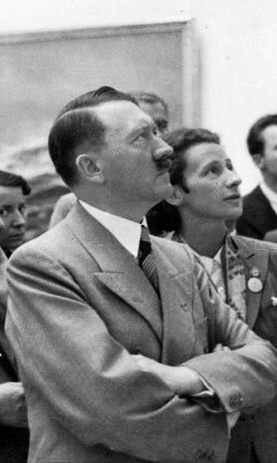
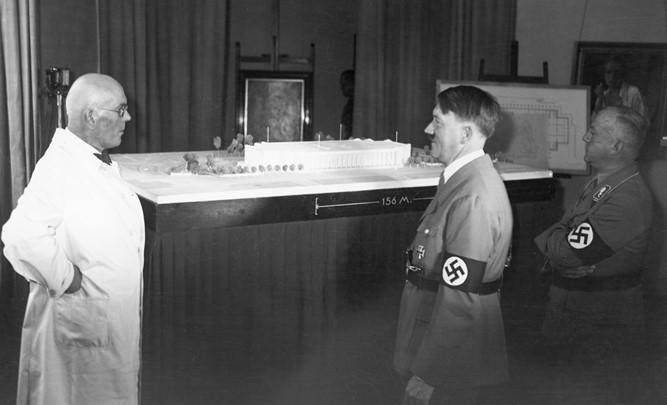
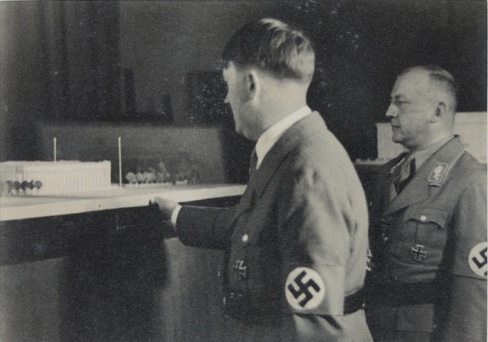
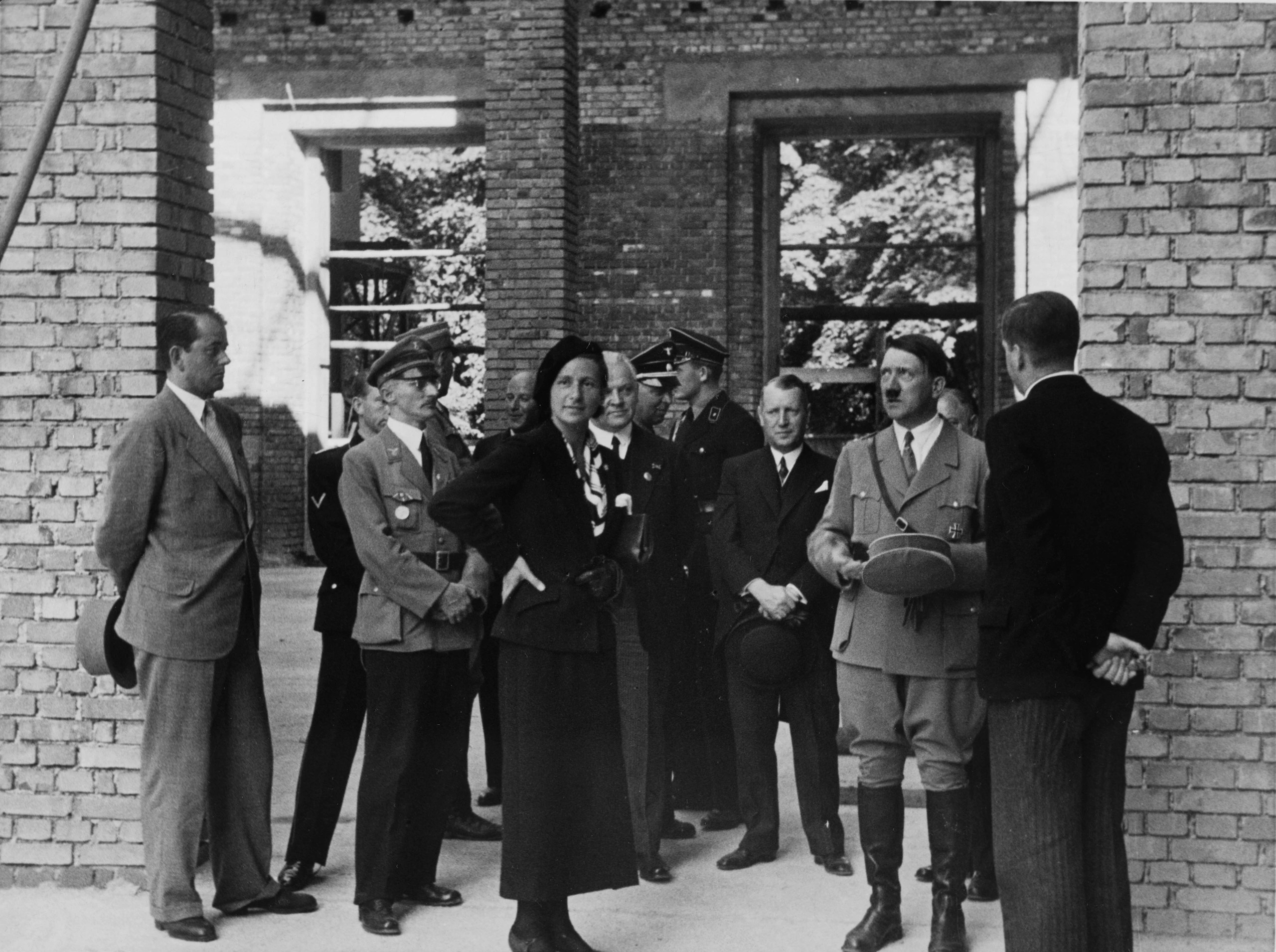
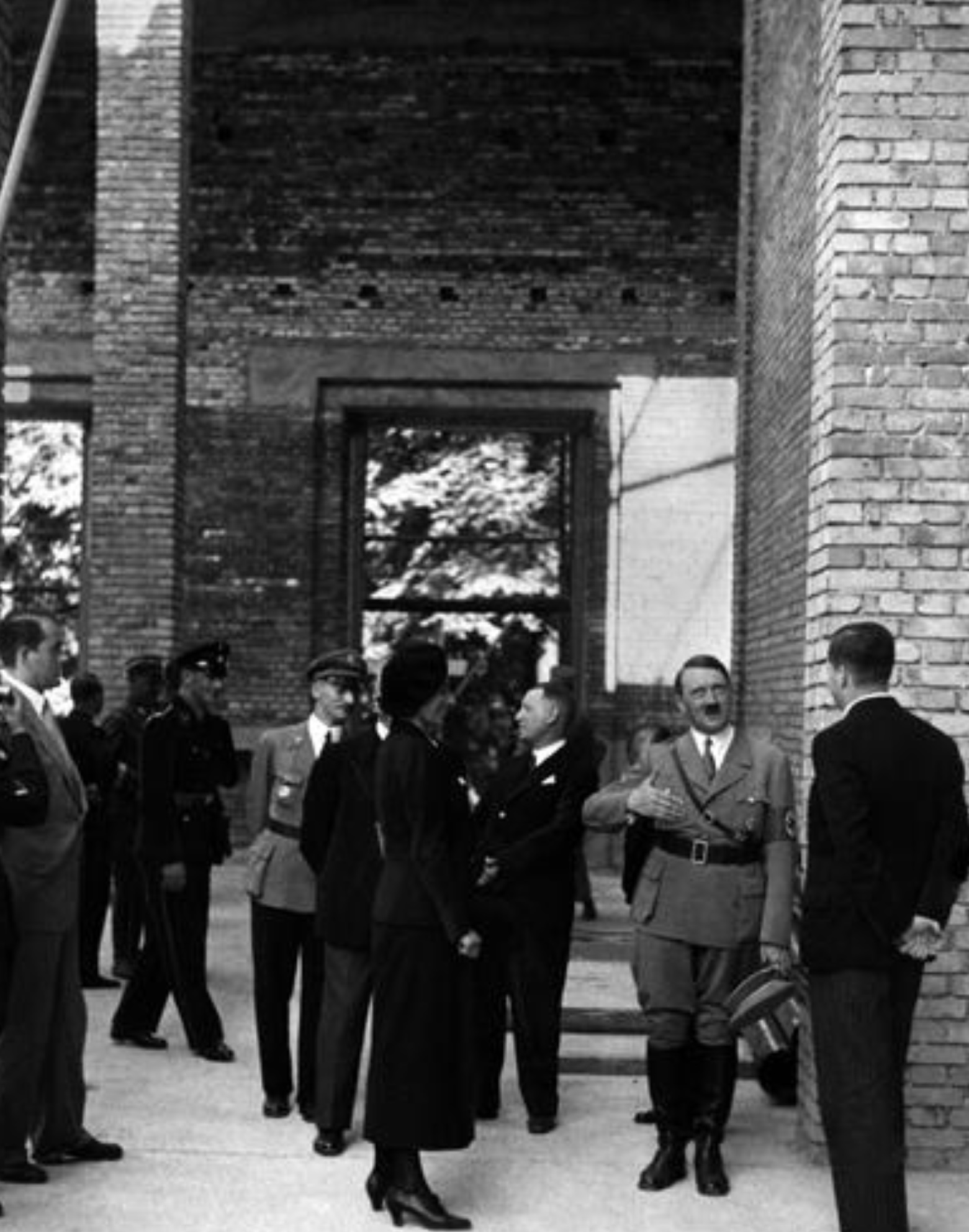
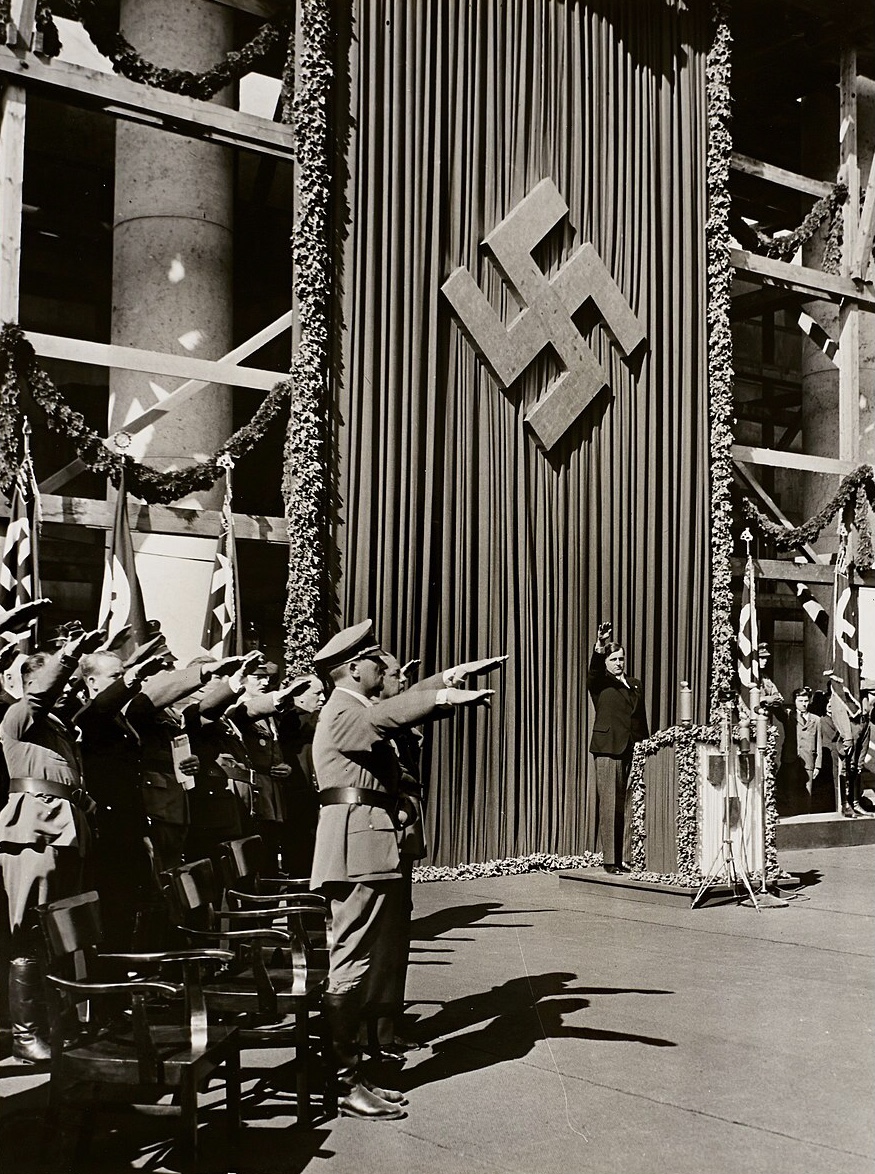
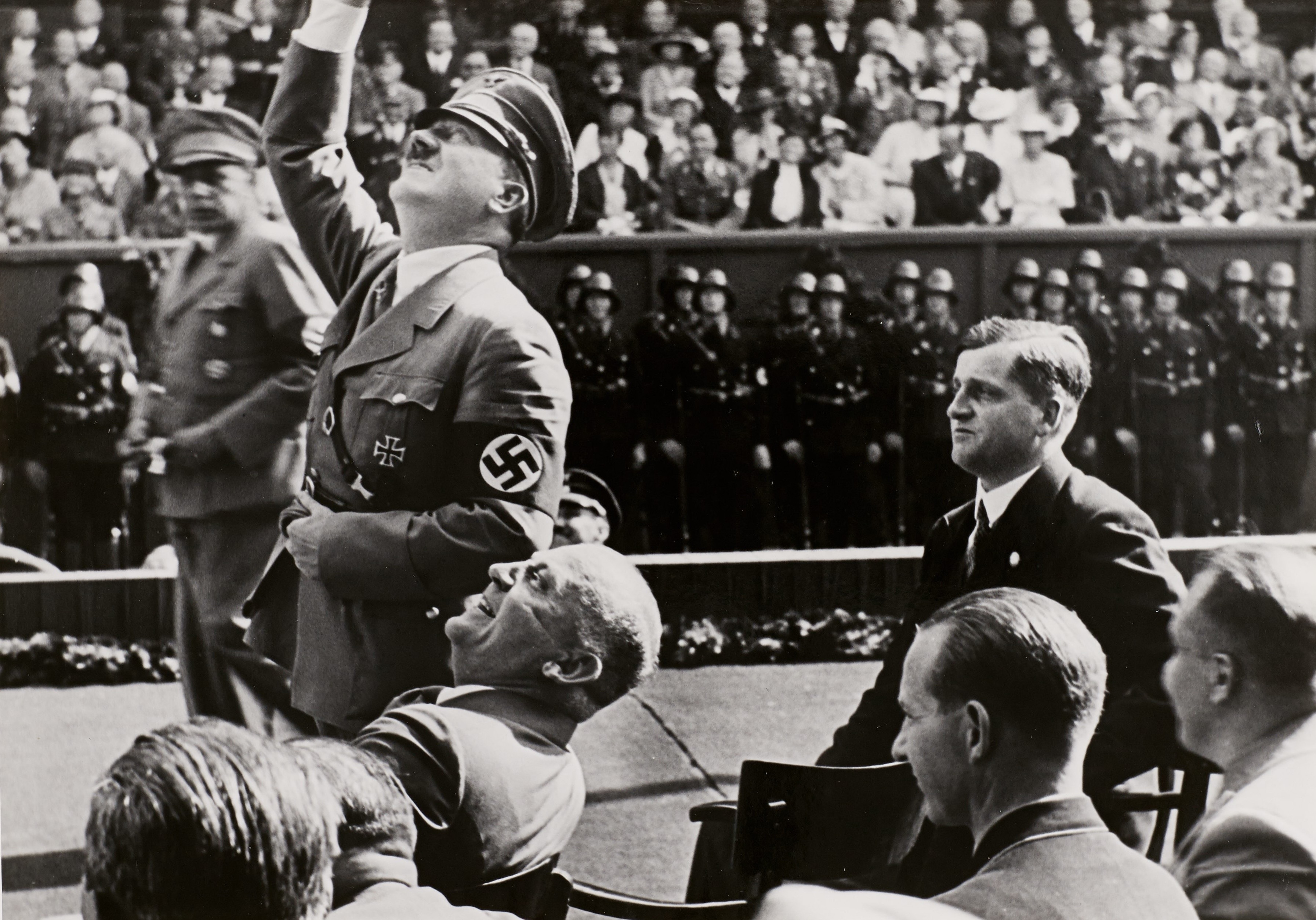
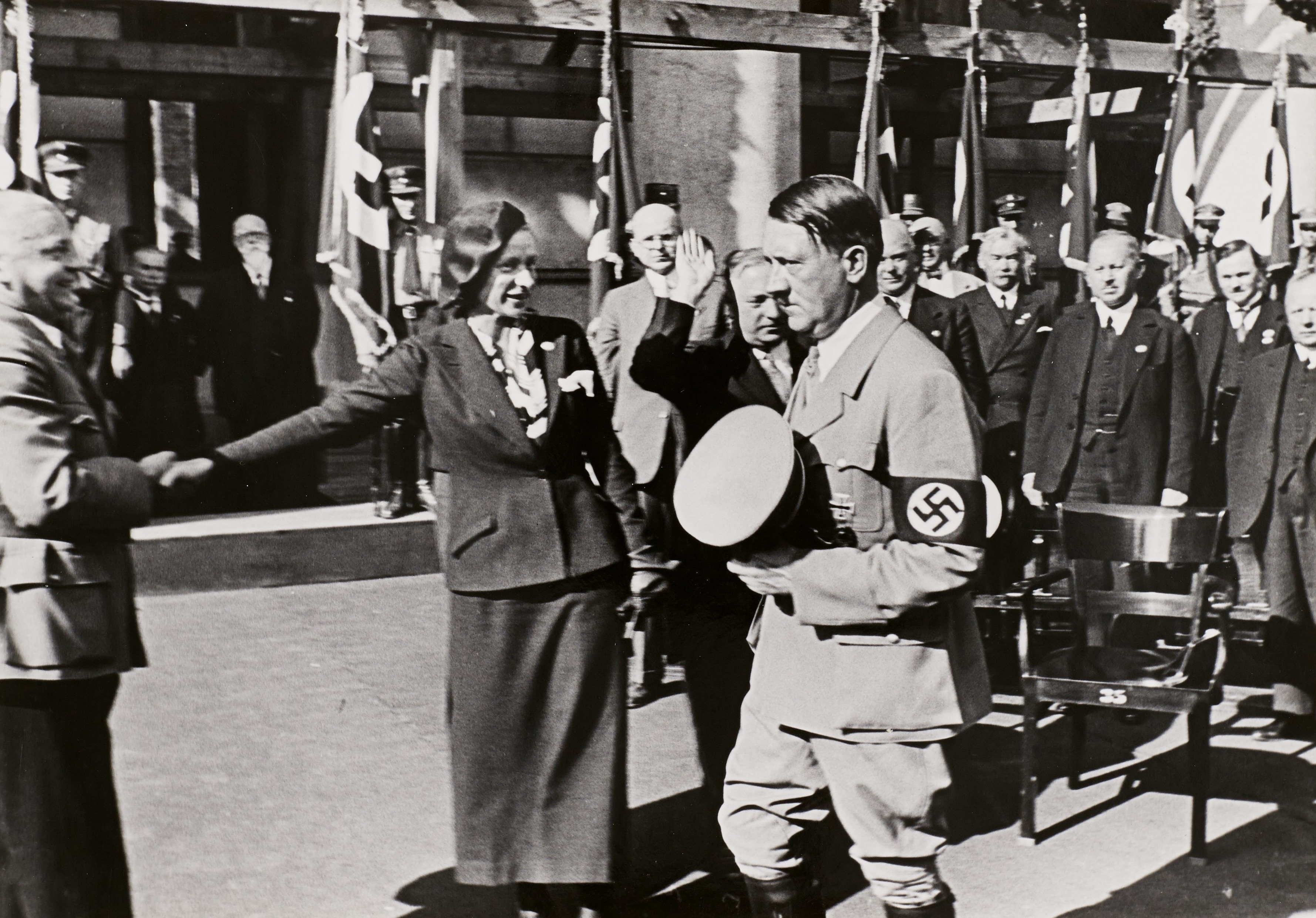
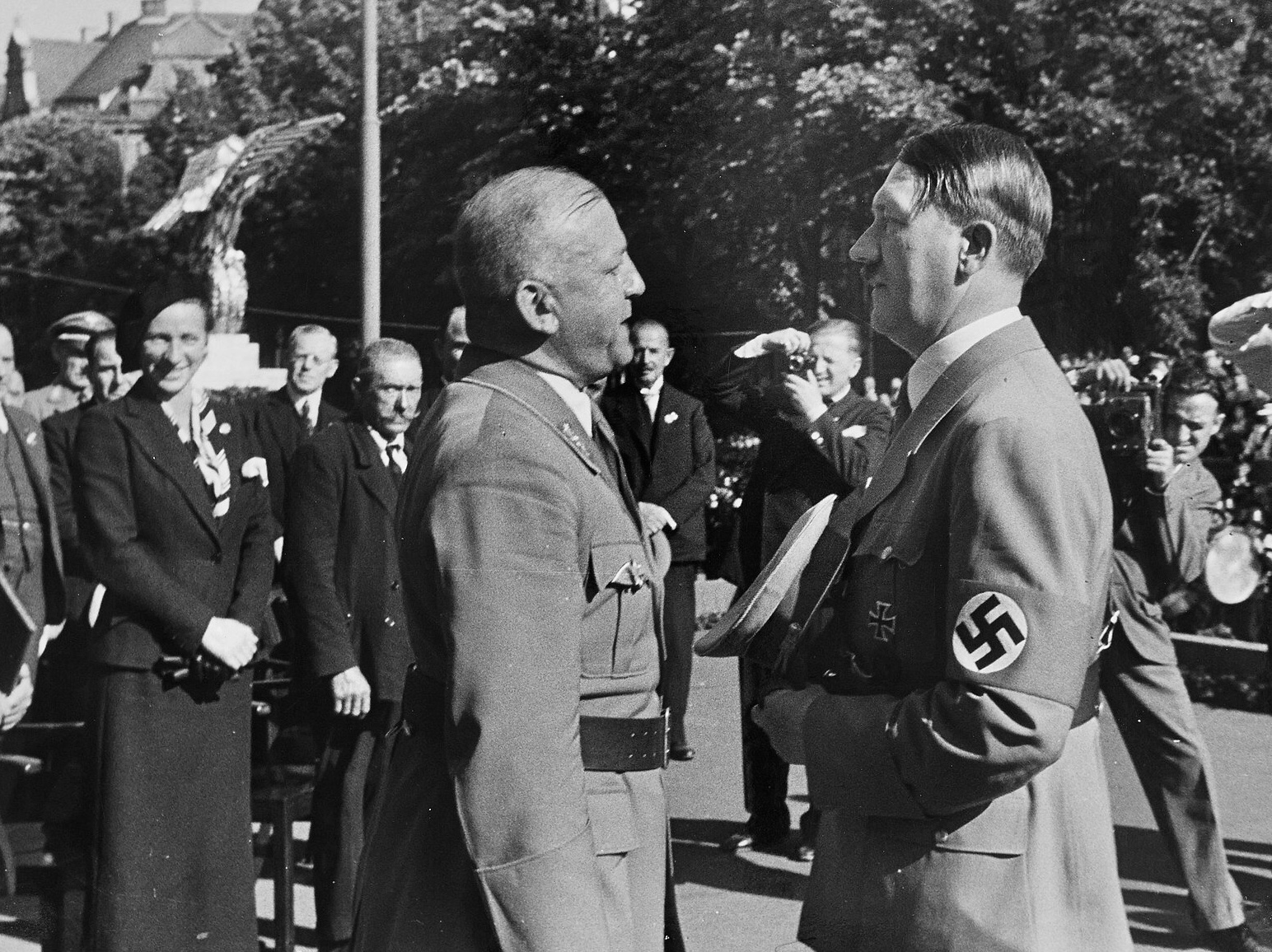
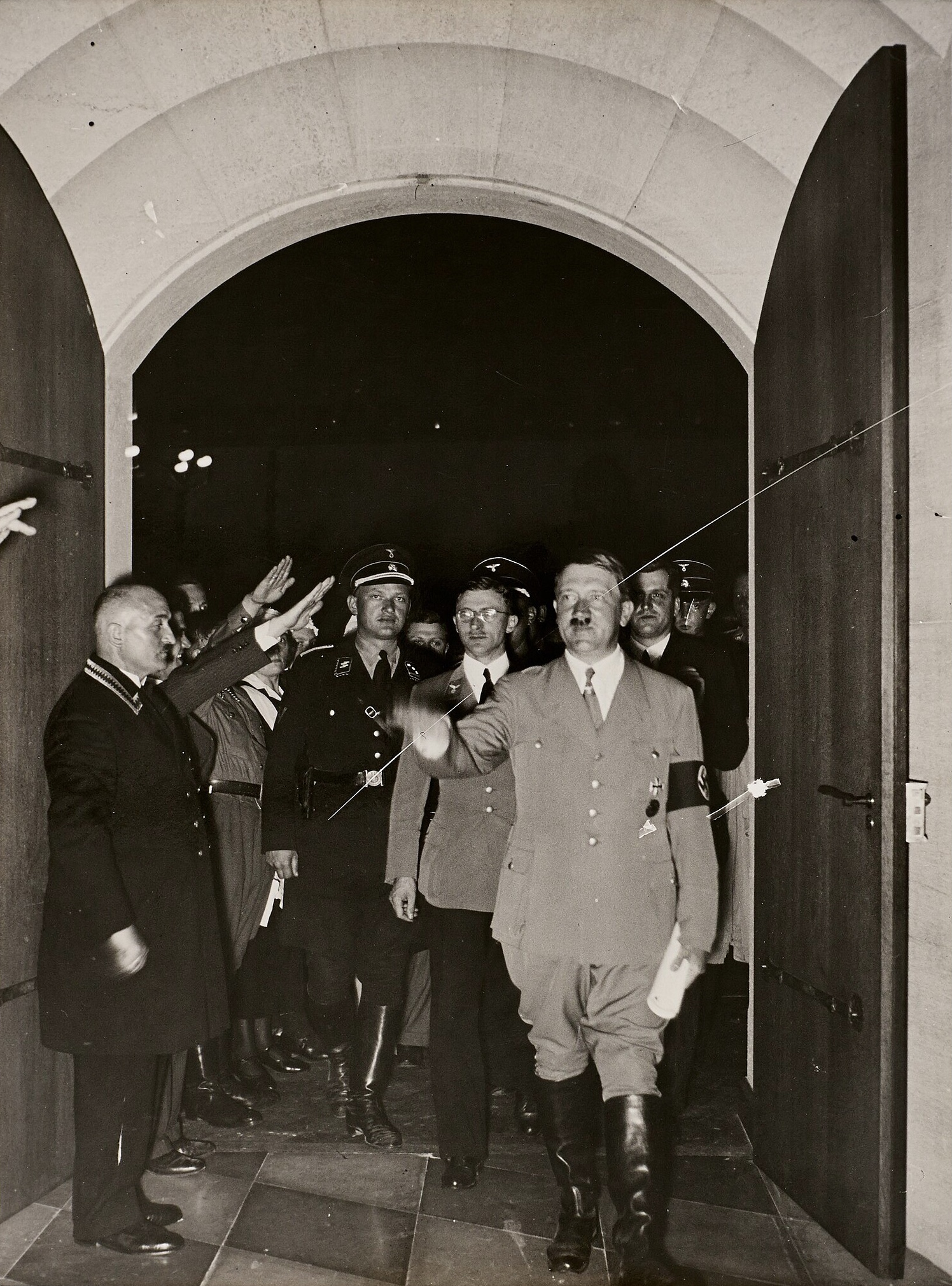
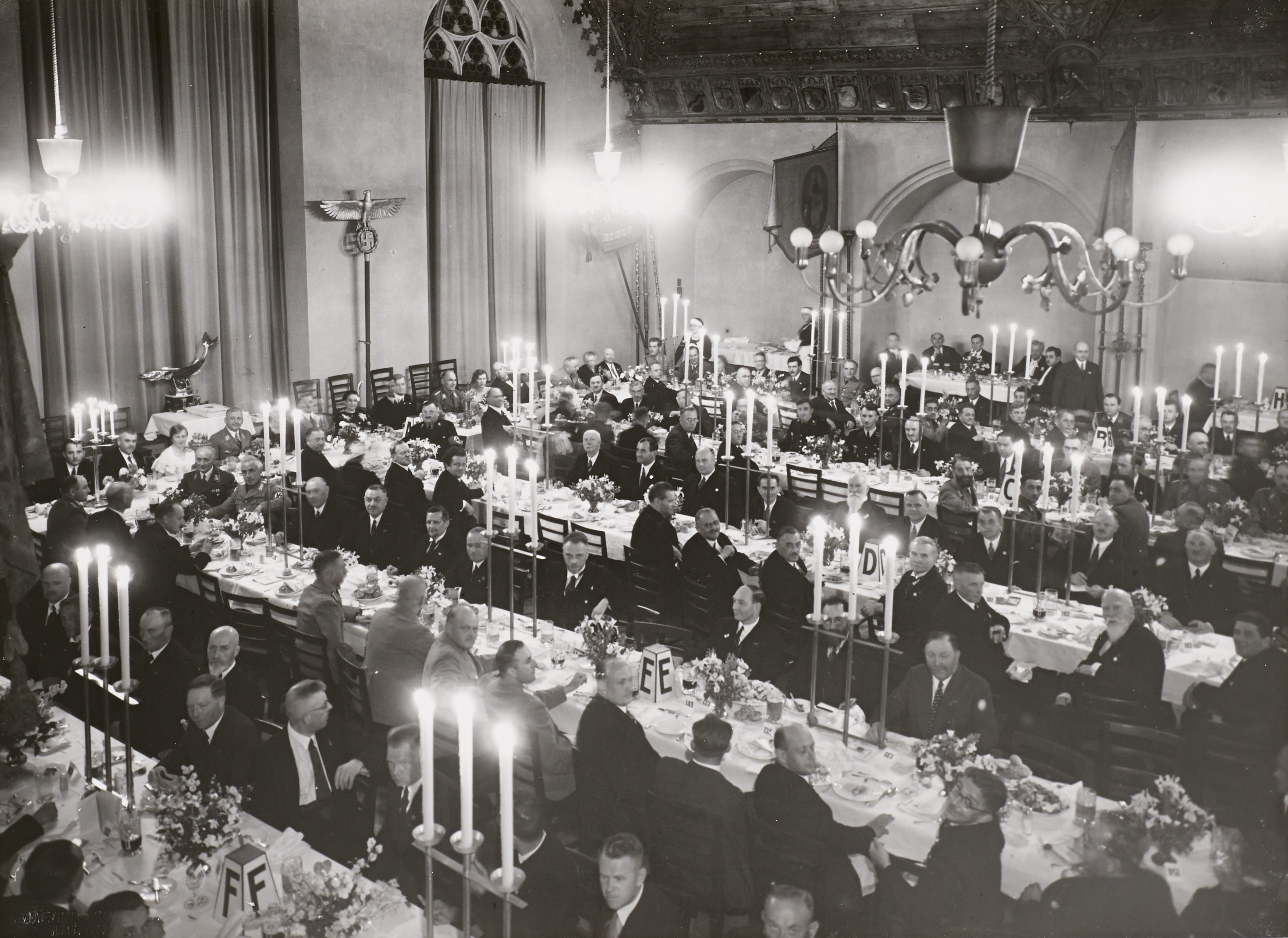
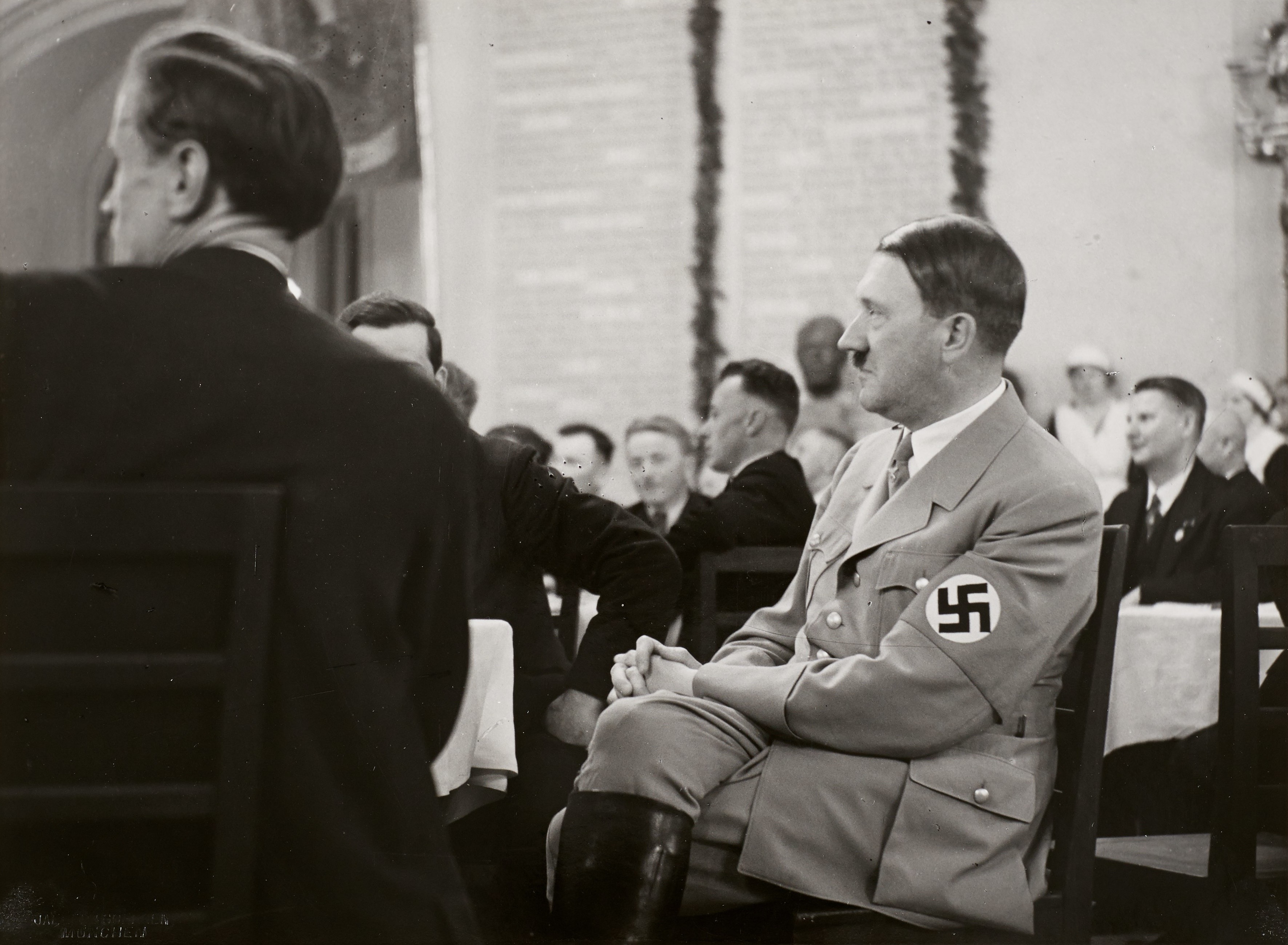
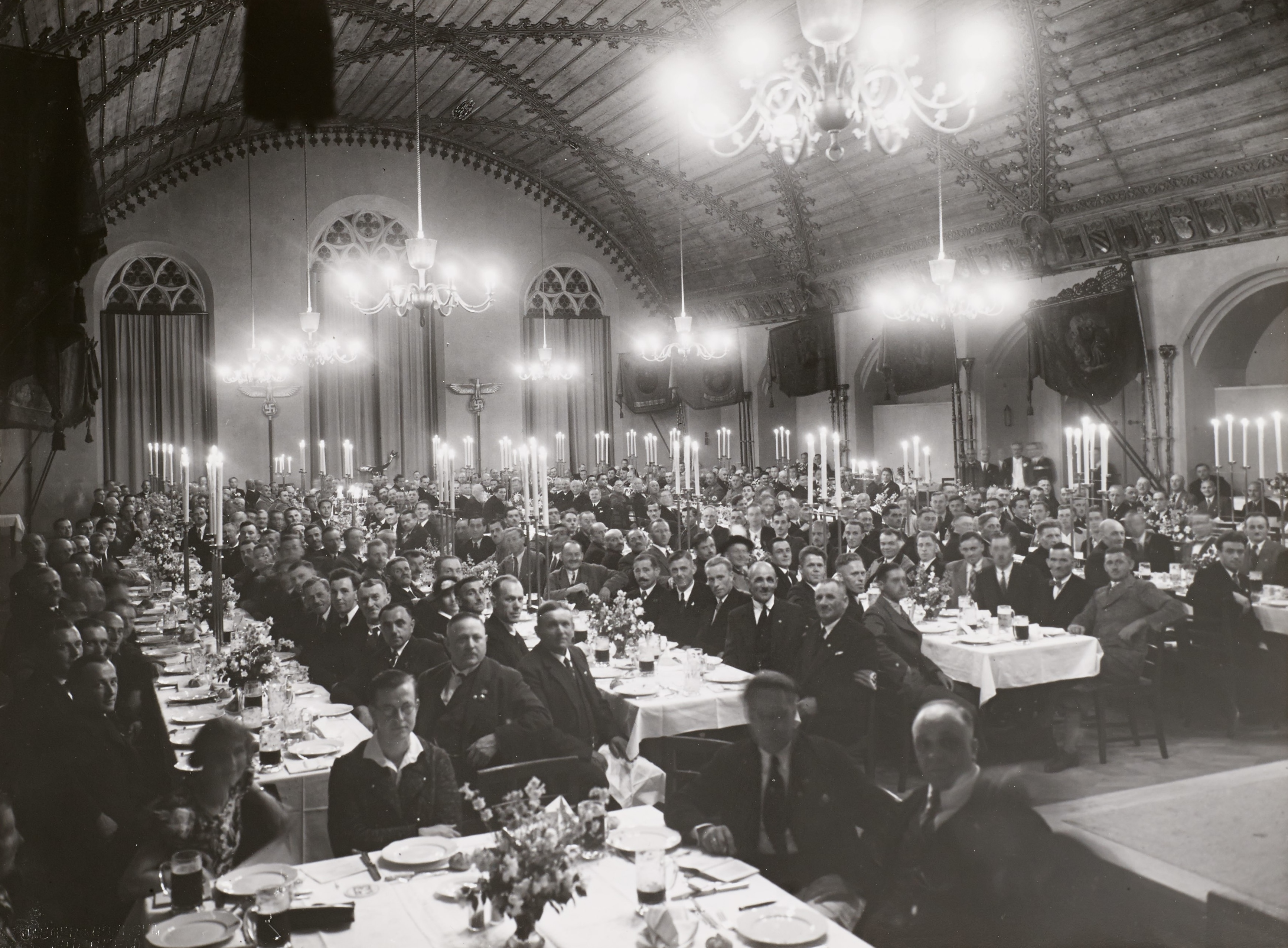
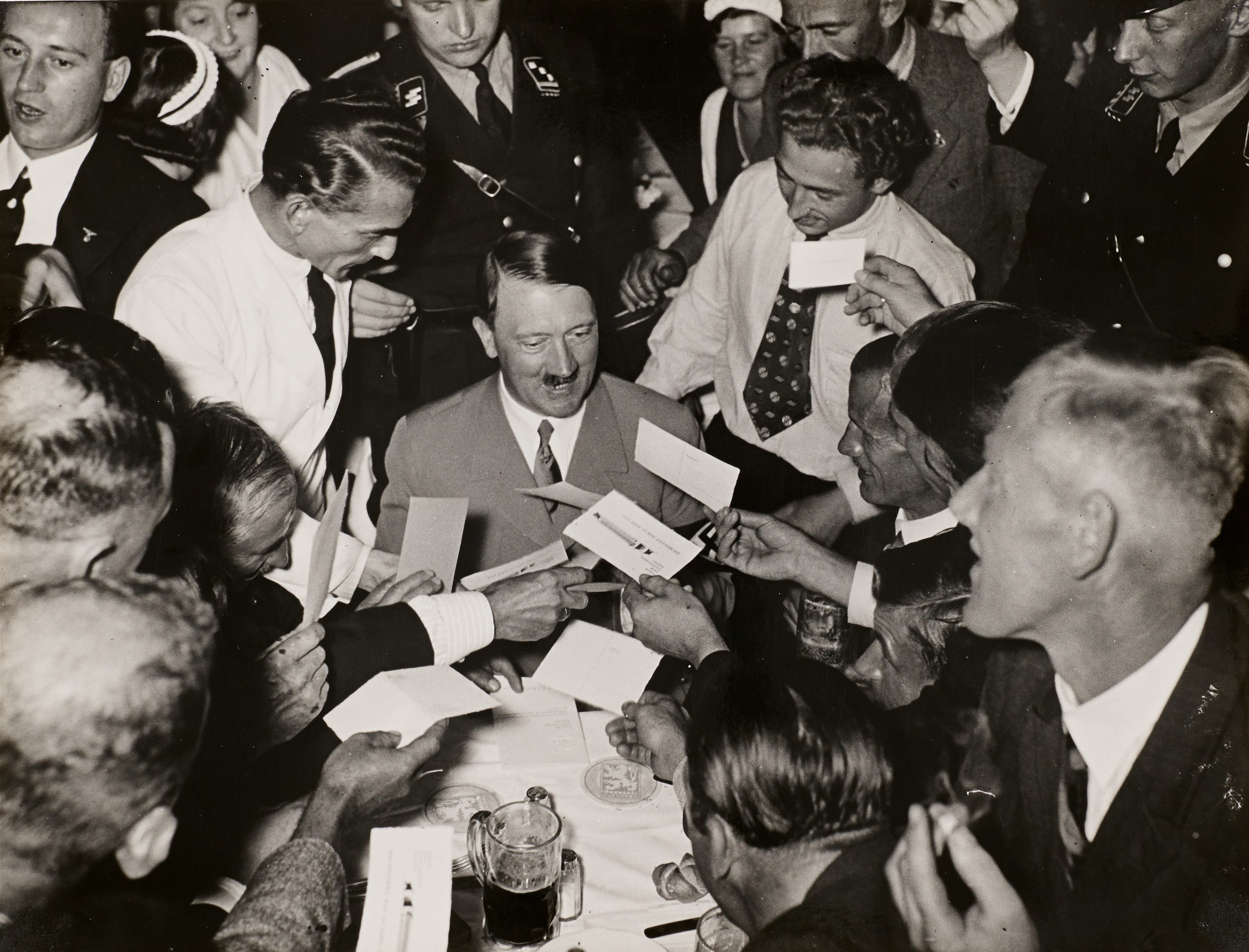
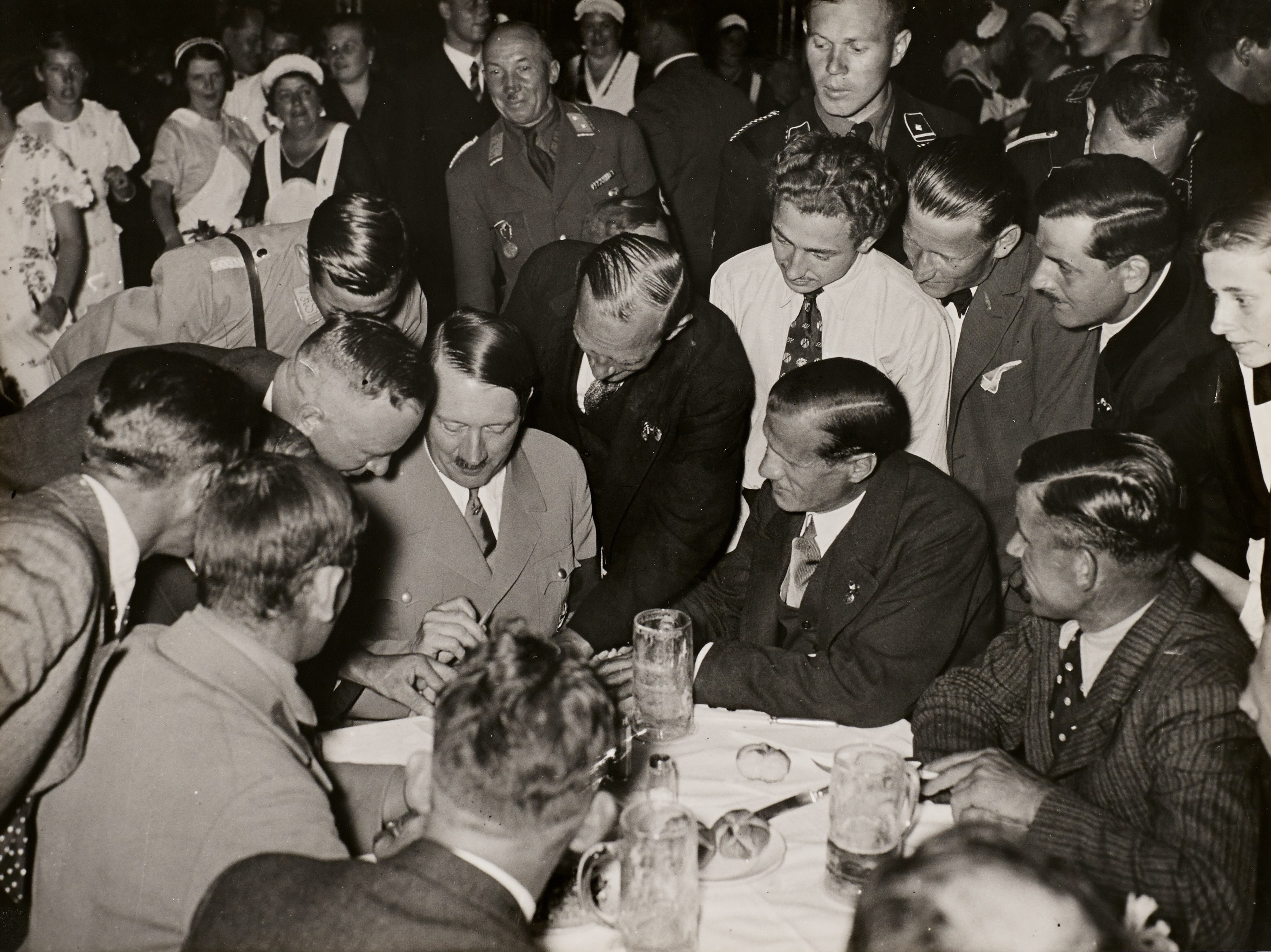
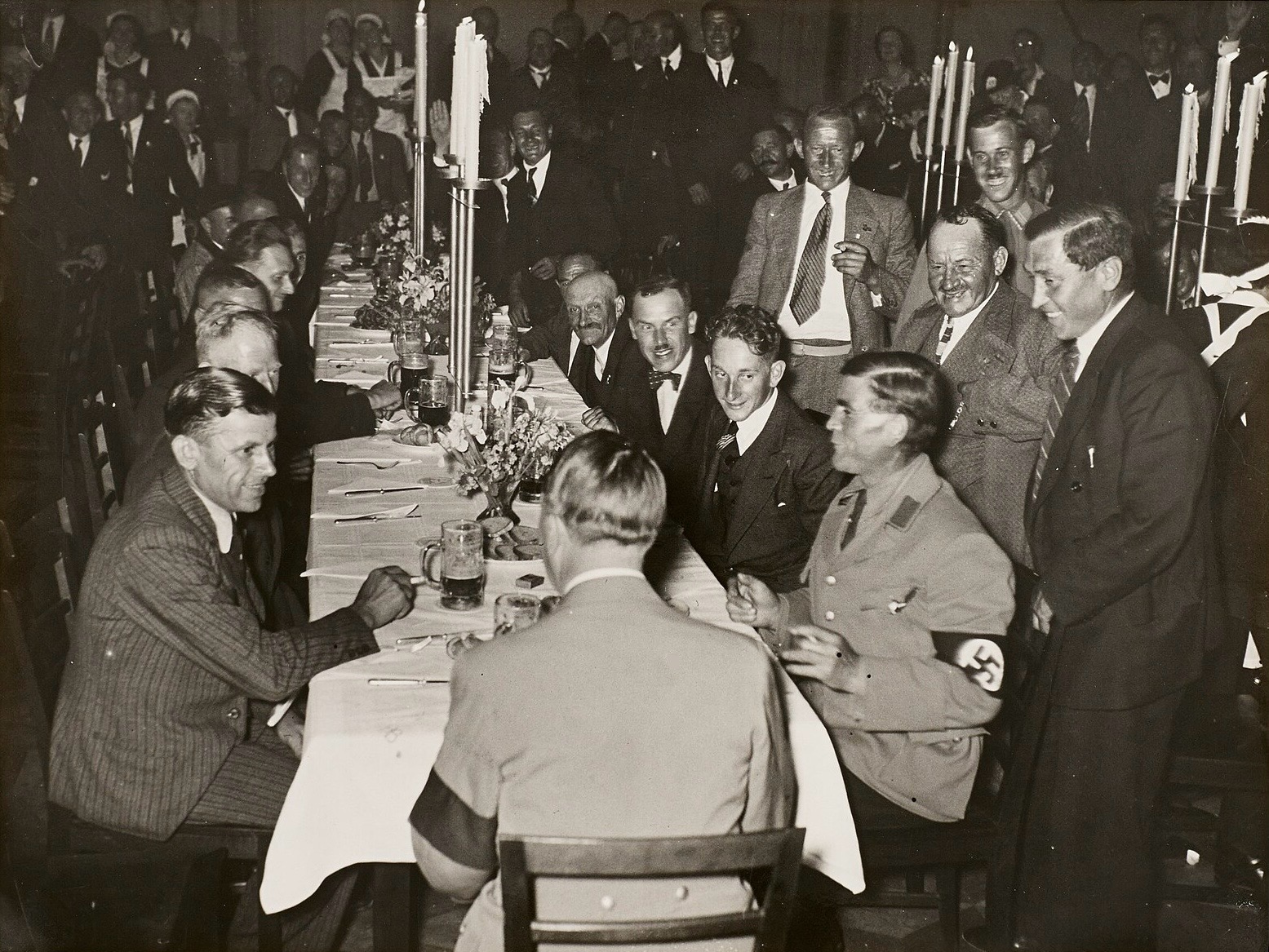
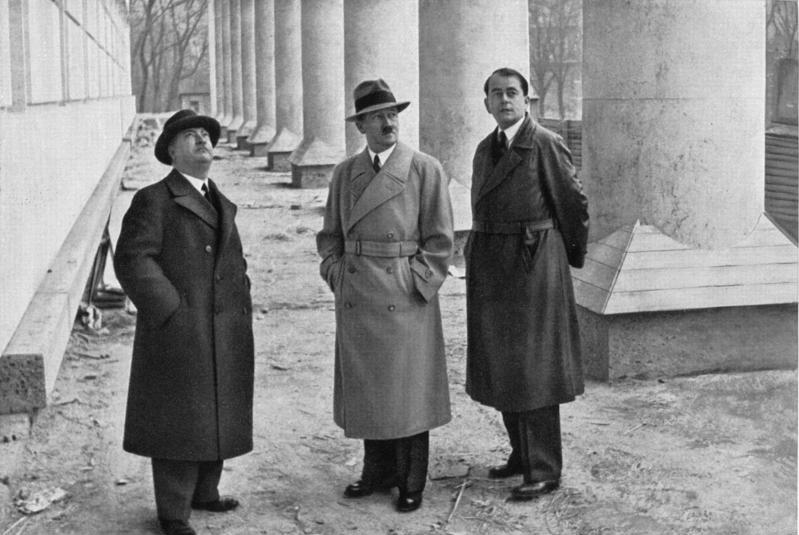
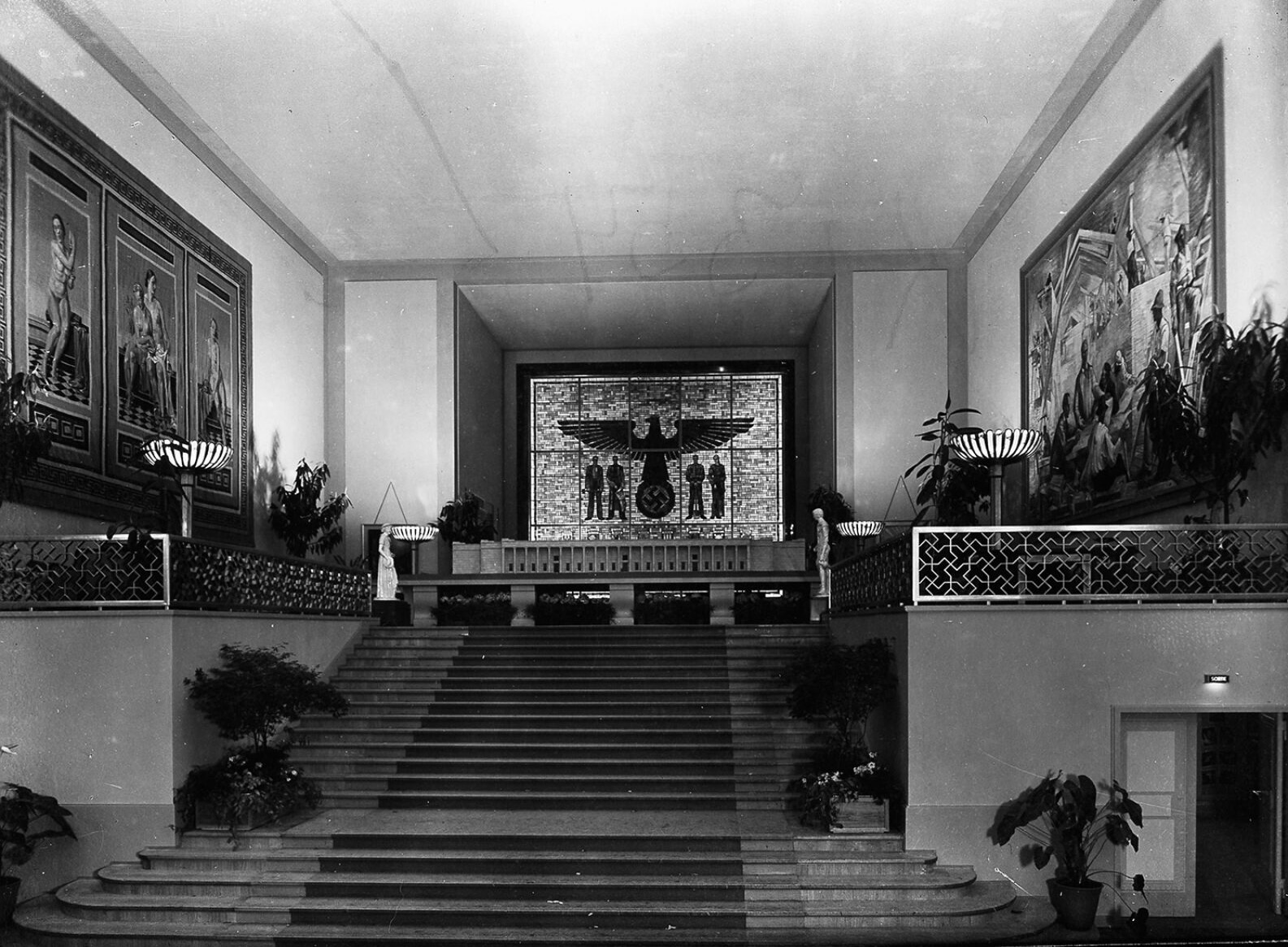
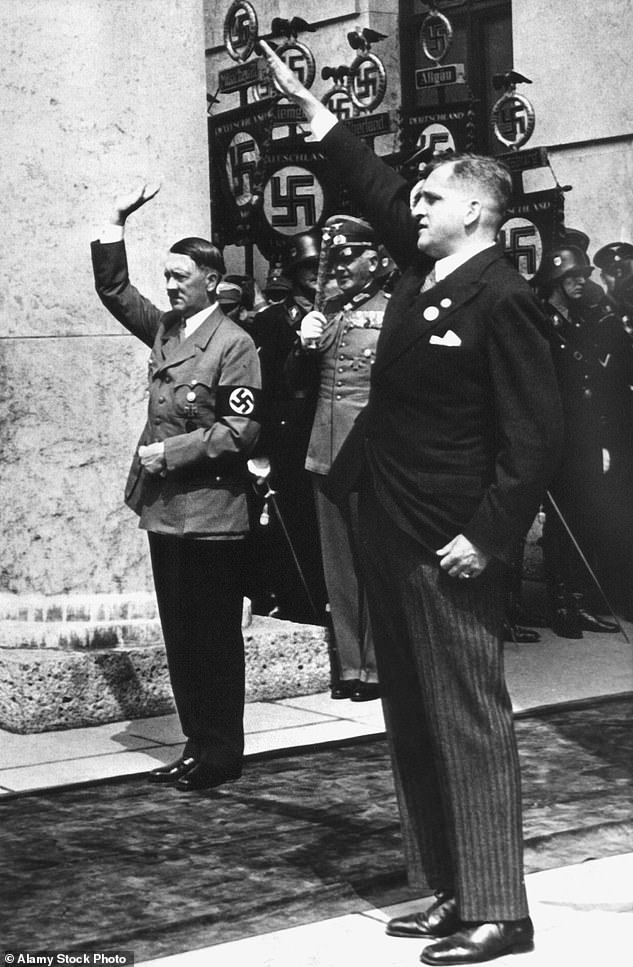
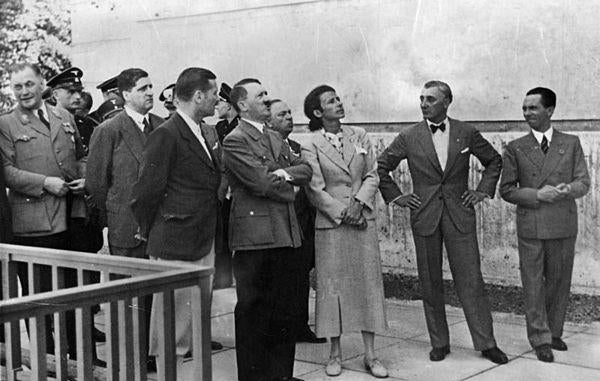
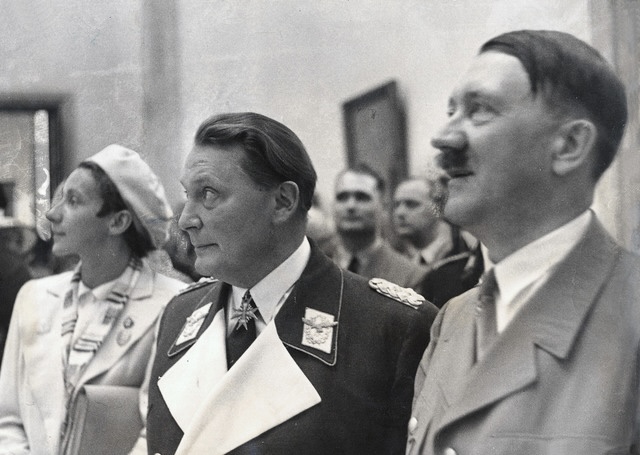
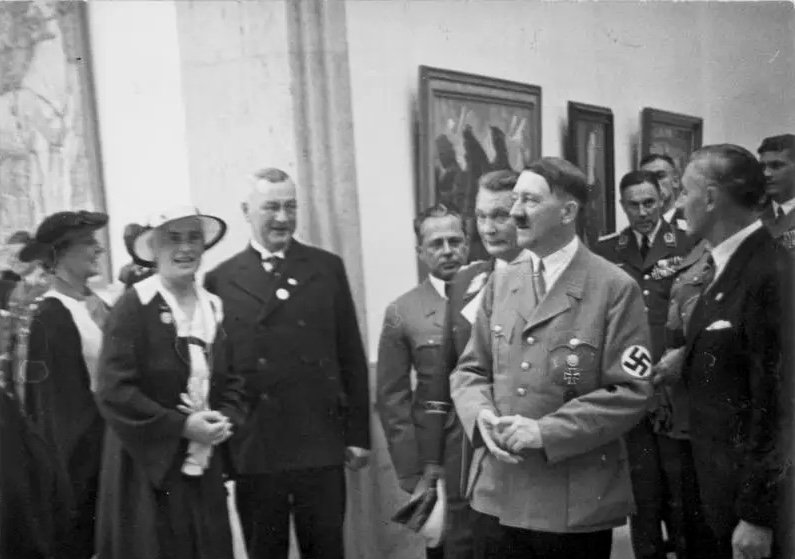
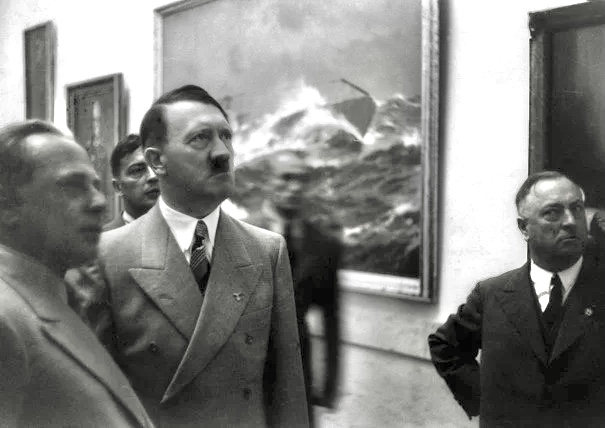
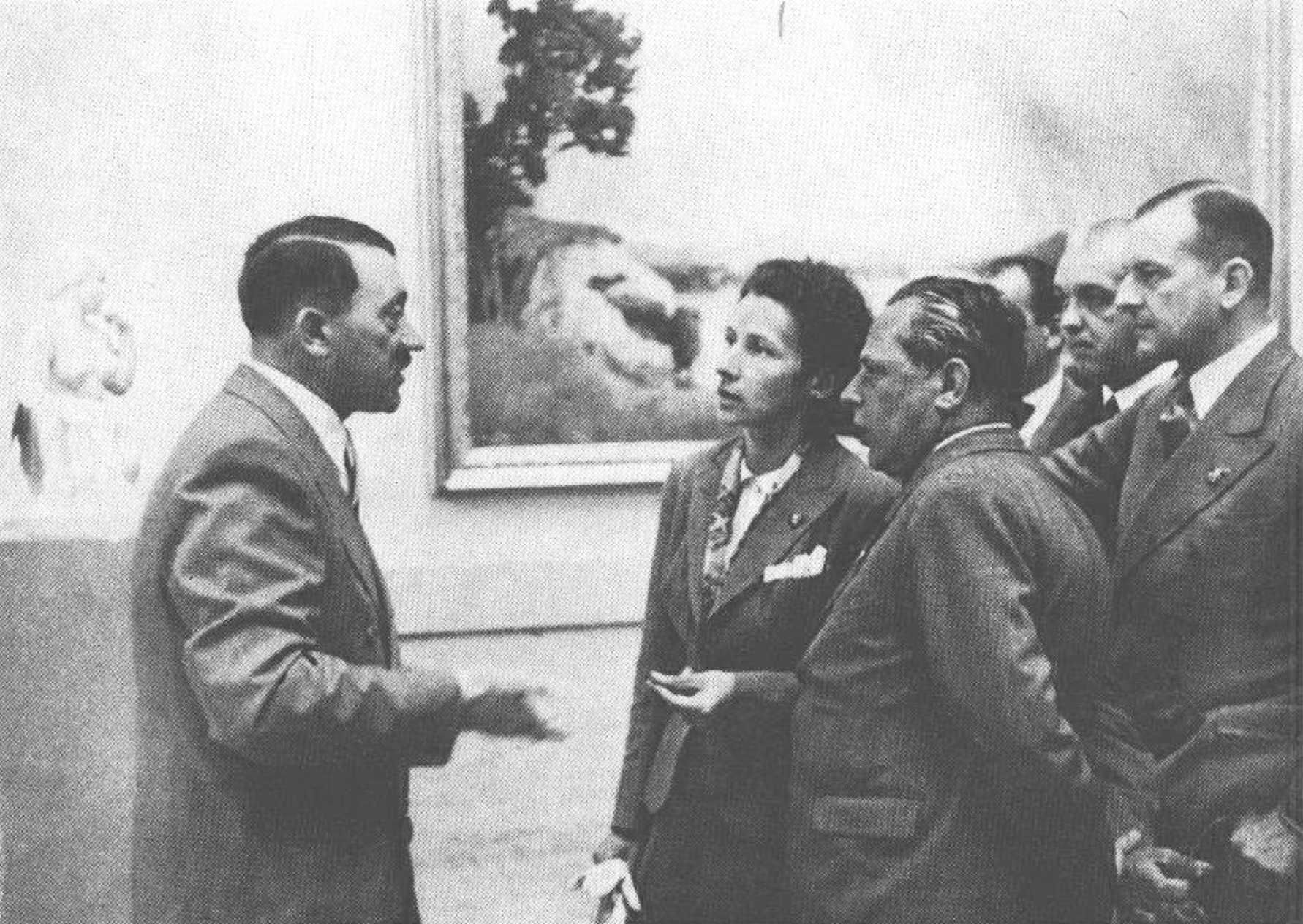
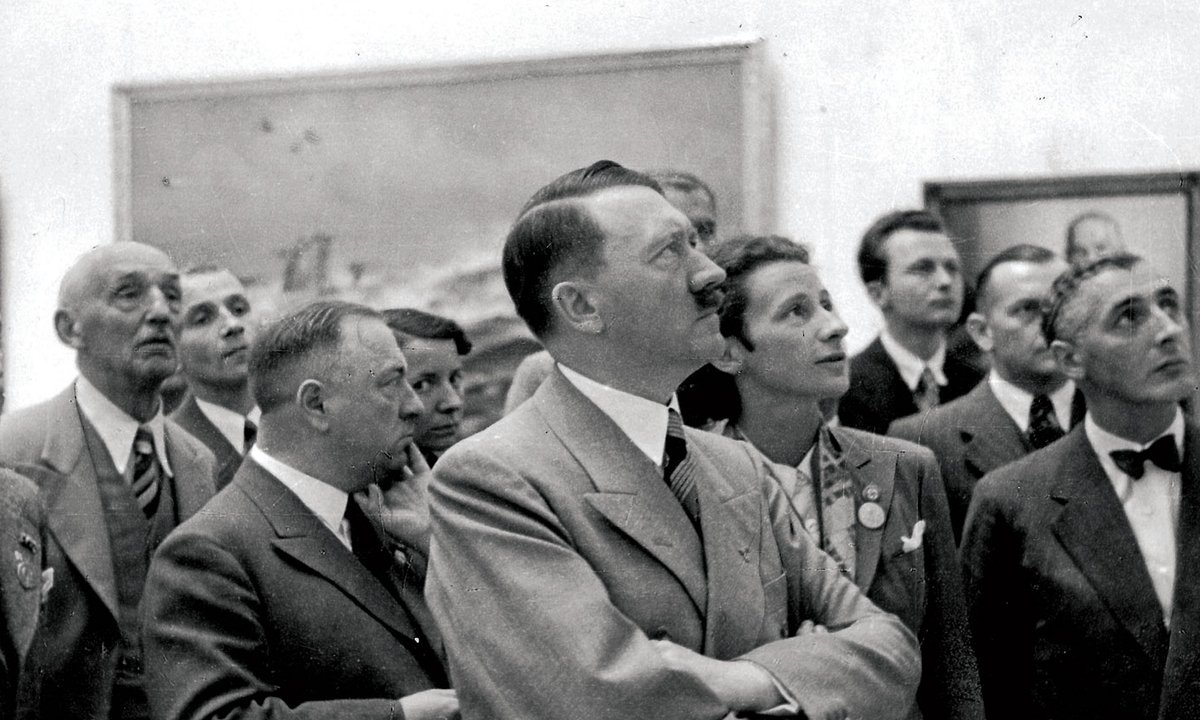
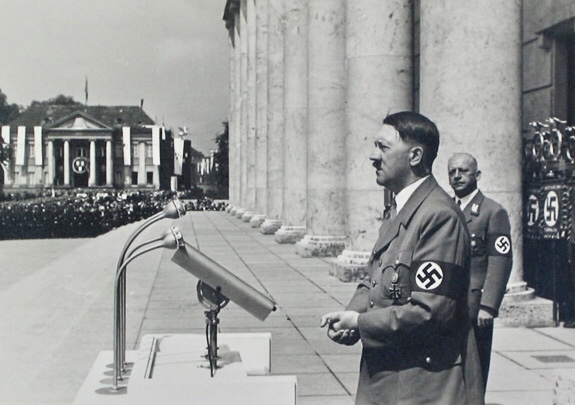
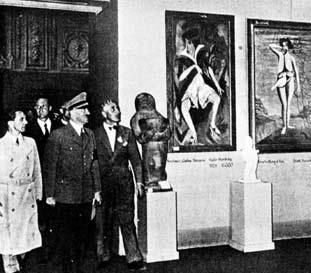
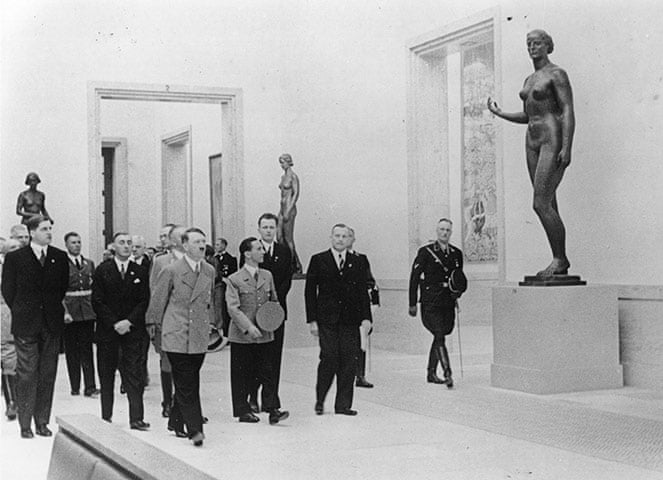
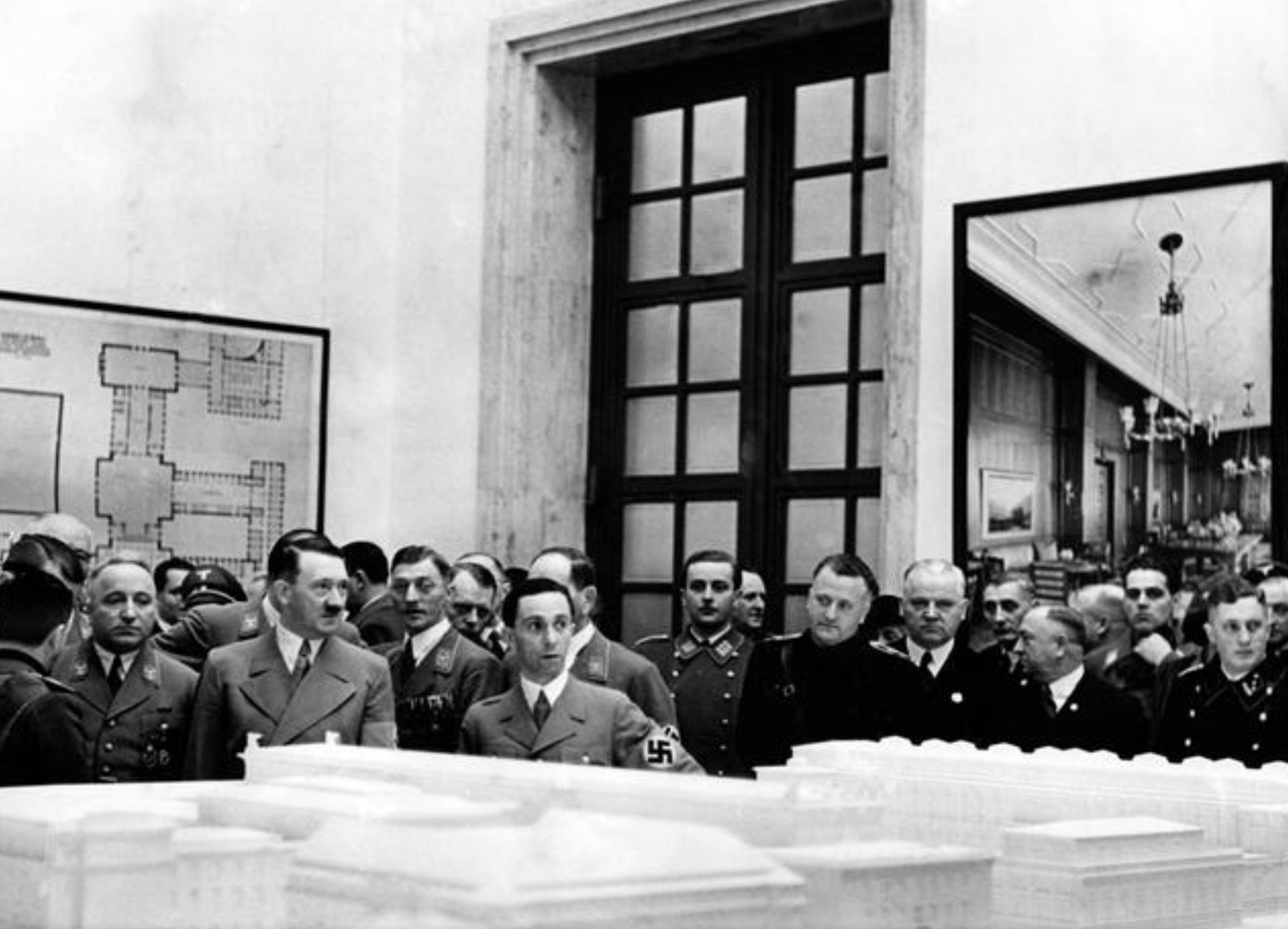
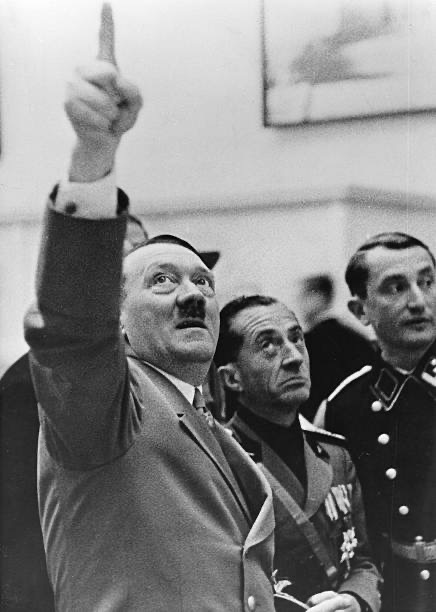
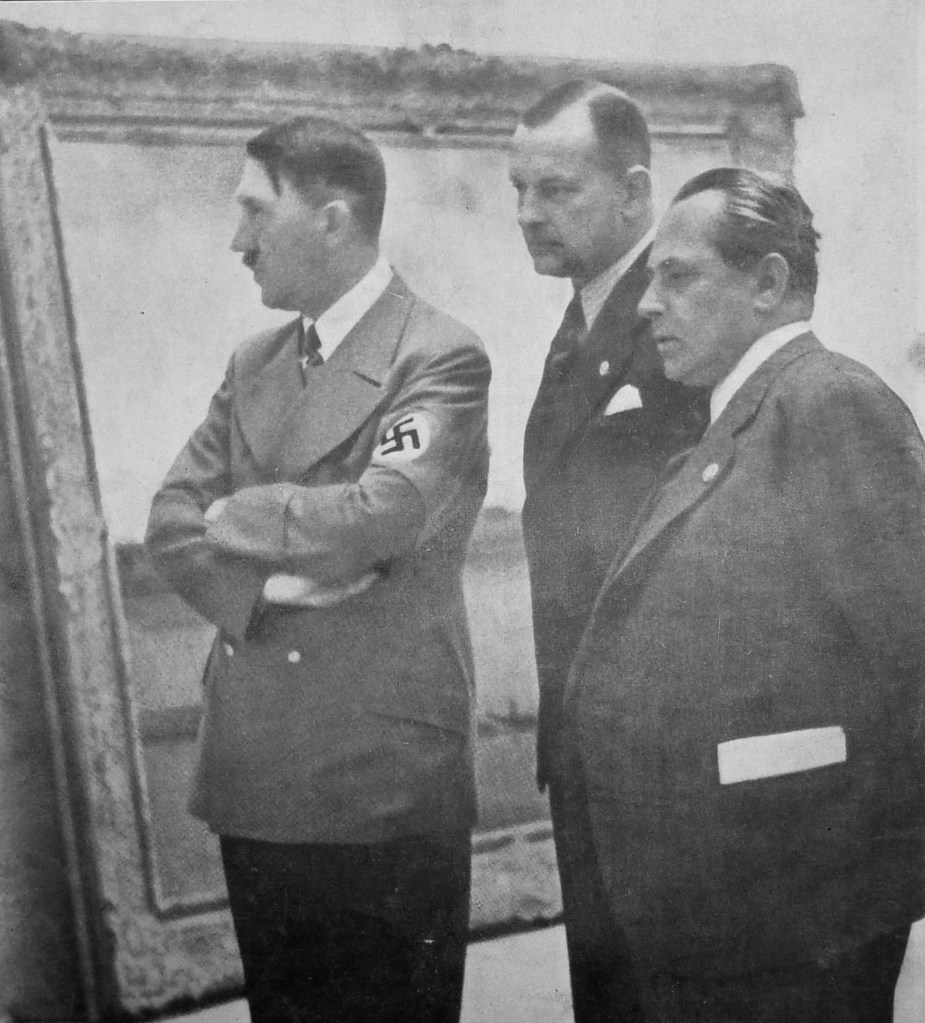
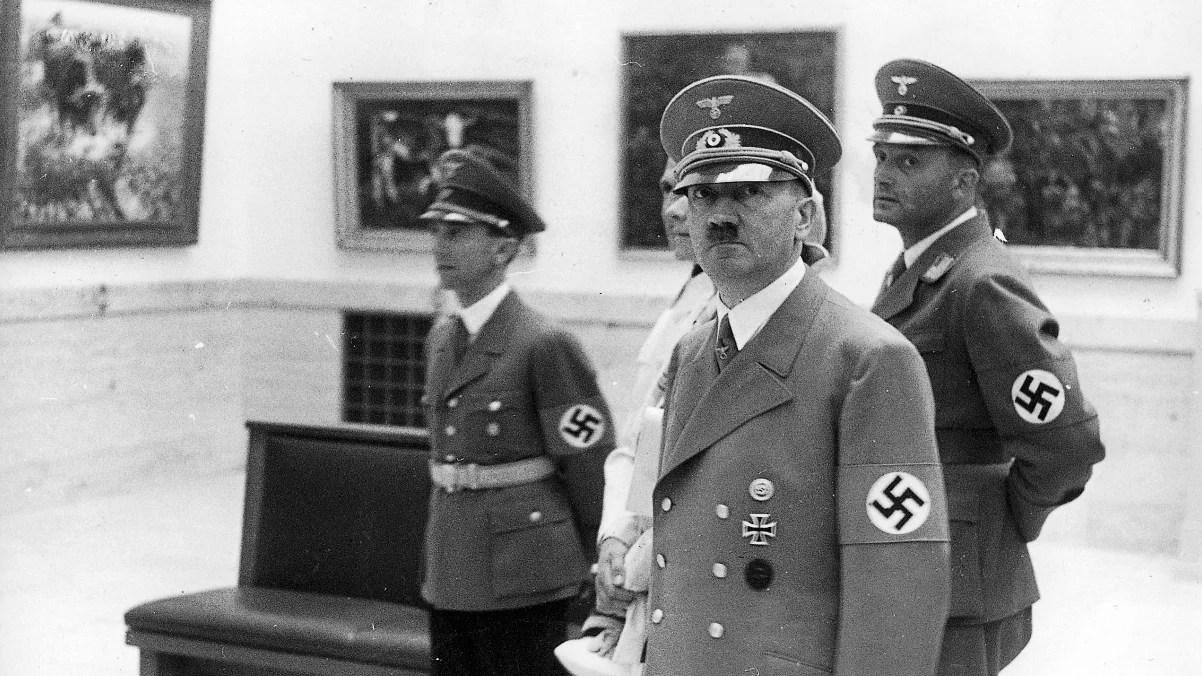
Architect Paul Ludwig Troost (1879-1934) unveiling a maquette of the Haus der Deutschen Kunst building, and Adolf Hitler examining the model on 1 August 1933. Troost’s work held a special fascination for Hitler, who himself once had aspirations of being an architect, and he would make time to visit the architect’s studio whenever he had the opportunity.Adolf Hitler and Gauleiter Adolf Wagner pay a visit to the studio of Professor and Architect Paul Ludwig Troost in Munich on 1 August 1933.Adolf Hitler at the official cornerstone laying 15 October 1933. Behind Hitler is the banker August von Finck and the architect Paul Ludwig Troost (3rd from the right). At the ceremonial hitting of the foundation stone with a hammer at the ‘House of German Art’ in Munich, the hammer broke off in Adolf Hitler’s hand. It was a much talked about occurrence that was viewed as a bad omen (in fact architect Troost died just three months later). After Troost passed away in January 1934, the construction was continued by his co-worker Leonhard Gall and his widow Gerdy Troost.Adolf Hitler with Gerdy Troost and August von Finck visiting the construction site of the House of German Art on 29 June 1935. Albert Speer, standing off to the far left, is also inspecting the building on the occasion of the topping-out ceremony.Adolf Hitler with architect Gerdy Troost and banker August von Finck visiting the construction site of the House of German Art. One can almost hear Hitler regaling Troost and Finck once more with his cherished monologue “Oh how I wish I had been an architect!”Adolf Hitler inspecting the construction site of the Haus der Deutschen Kunst in Munich with Albert Speer on 30 June 1935.Haus der Deutschen Kunst, Munchen, Nazi Germany – Richtfest (topping-out ceremony) held on 29 June 1935 with Gerdy Troost (left) and Adolf Wagner, Gauleiter of Munich, speaking to Adolf Hitler. (NSDAP Propaganda)A celebratory banquet was held in the Old Town Hall in Munich on 29 June 1935 in connection with the topping-out ceremony during the construction of the House of German Art. Heinz Linge, Karl Fiehler, August von Finck Sr. attend the banquet with Adolf Hitler.Haus der Deutschen Kunst Richtfest (topping-out ceremony) Festessen (banquet) 29.6.1935 Guests asking Hitler for his autograph.Architects Leonhard Gall and Albert Speer viewing progress with Adolf Hitler on construction of the House of German Art in Munich on 28 February 1937.A large model of the House of German Art was featured inside the entrance hall of the German Pavilion at the World Exhibition in Paris, 24 May – 25 November 1937. The interior also featured the painting “The Four Elements” by Adolf Ziegler (left), a glass window by August Wagner (middle), and the painting “Bauhütte” by Rudolf Hengstenberg (right). Photography by Heinrich Hoffmann.Adolf Hitler inaugurates the House of German Art in Munich. Hitler and the banker August von Finck showing the Hitlergruß. Feldmarschall Werner von Blomberg Salutes in front of the SS standard bearers on 18 July 1937.Adolf Hitler, Joseph Goebbels, Gerdy Troost (the designer’s widow), and Adolf Ziegler (second from the right) visit the House of German Art. Its grand opening in July of 1937 was honored by an exhibition of the best native works of art, according to the Nazis. Ziegler, Hitler’s favorite painter, was tasked to oversee the purging of what the Nazi Party described as “degenerate art”.Adolf Hitler, Joseph Goebbels and Hermann Goering on 18 July 1937 at the grand opening of Munich’s Haus der Deutschen Kunst. Gerdy Troost accompanies them on the first walk through the exhibit.Adolf Hitler and General Hermann Goering take a tour of the innaugural exhibition at the ‘House of German Art’ in Munich at the official opening on 18 July 1937. Gerdy Troost at left, was the widow of the late architect Paul Ludwig Troost, who designed the House of German Art.Tag der dt. Kunst im Haus der Dt. Kunst am 18.7.37, welcher gleichzeitig eingeweiht wurde. (“Day of German Art” in the House of German Art on 18 July 1937, which was inaugurated at the same time as the museum.) Heinrich Hoffmann stands to Hitler’s right. Next to him is MackenzieKing, the Prime Minister of Canada. King was deeply enamored with Hitler, and saw his 1937 diplomatic visit with the Führer to be the pinnacle of a spiritual journey and what he believed was a divine mission to bring peace to an increasingly unsettled Europe.Heinrich Hoffmann (left) tours the galleries with Adolf Hitler and architect Prof. Leonhard Gall just before the grand opening of the House of German Art in 1937. In the background is the painting ‘Wiedererstanden, U-26’ by Claus Bergen. The painting was bought for 4.000 Reichsmark by Adolf Hitler and was later hung in the New Reich Chancellery in 1939. Adolf Hitler before the official opening of the 1937 exhibit at the German House of Art in Munich.Before the official opening of the 1937 exhibit Hitler visits the German House of Art in Munich with (L to R) Professor Adolf Ziegler, Frau Professor Gerdy Troost, assistant to Troost Professor Leonhard Gall and Professor Heinrich Knirr.
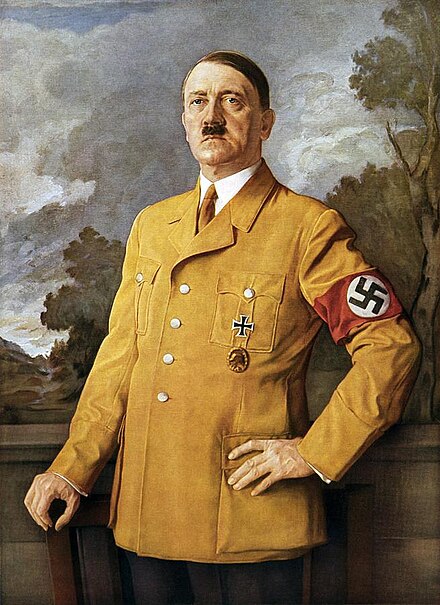
Austrian painter Heinrich Knirr is best known for creating the official portrait of Adolf Hitler in 1937 and is the only artist known to have painted Hitler in person. His work was titled: “Hitler, the Creator of the Third Reich and Renewer of German Art”. (Adolf Hitler, der Schöpfer des Dritten Reiches und Erneuerer der deutschen Kunst).
The Nazis, in their typical flamboyant fascist fashion, put on a lavish grand opening ceremony for the art museum, which included an historical pageant and military parade along with speeches by Propaganda Minister Joseph Goebbels and of course Hitler himself. Goebbels had also assembled an exhibit of “degenerate art” which premiered simultaneously, in another gallery located nearby at the Hof Garden. While 420,000 people visited the inaugural “Great German Art” exhibit at the new Nazi art museum, over 2 million people attended the defamatory “Degenerate Art” show. Intended as a way to “educate” the public on the “art of decay,” the 740 modern works of art were exhibited to demonstrate that modernist tendencies, such as abstraction, were an indication of a society’s moral and cultural decline.
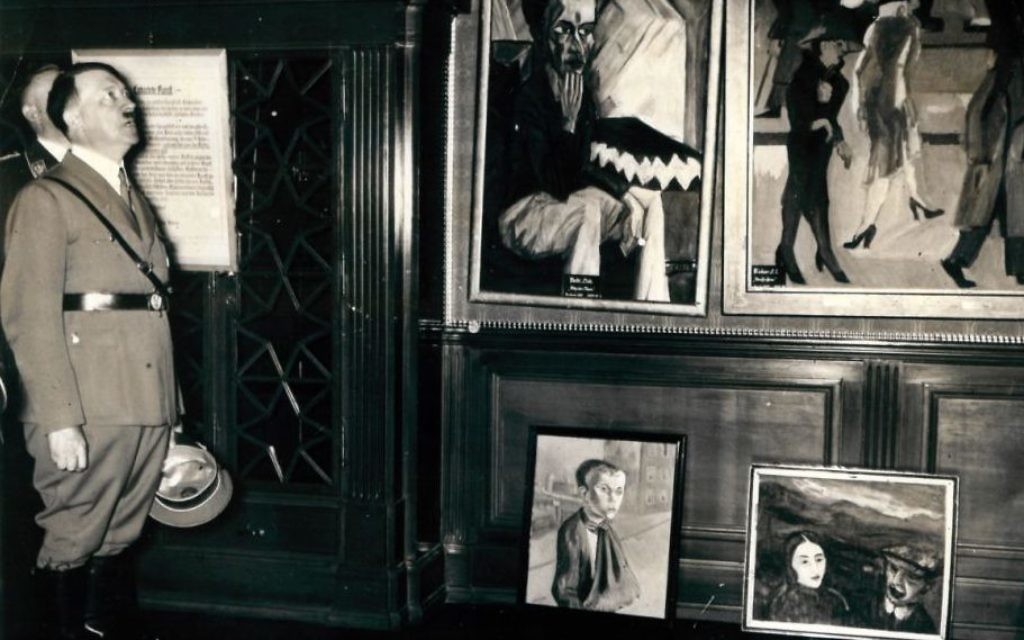
Adolf Hitler visits the atrium of the town hall in Dresden on 29 May 1934. The work of German painter and engraver Erich Heckel, one of the founders of the Expressionist group Die Brücke (The Bridge) in Dresden, entitled “Sitzender Mann” (Seated Man) is featured prominently in an exhibit entitled “Entartete Kunst”. The work is dated to the year 1920 and was pulled from the Stadt Gallery in Dresden.
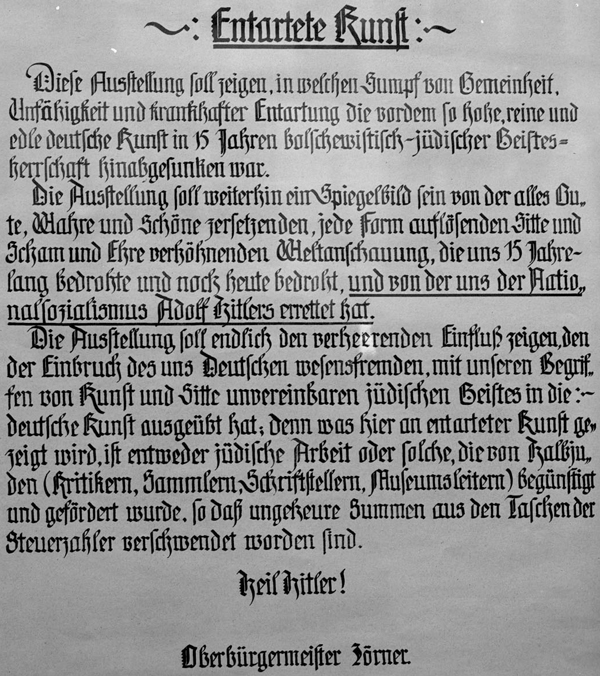
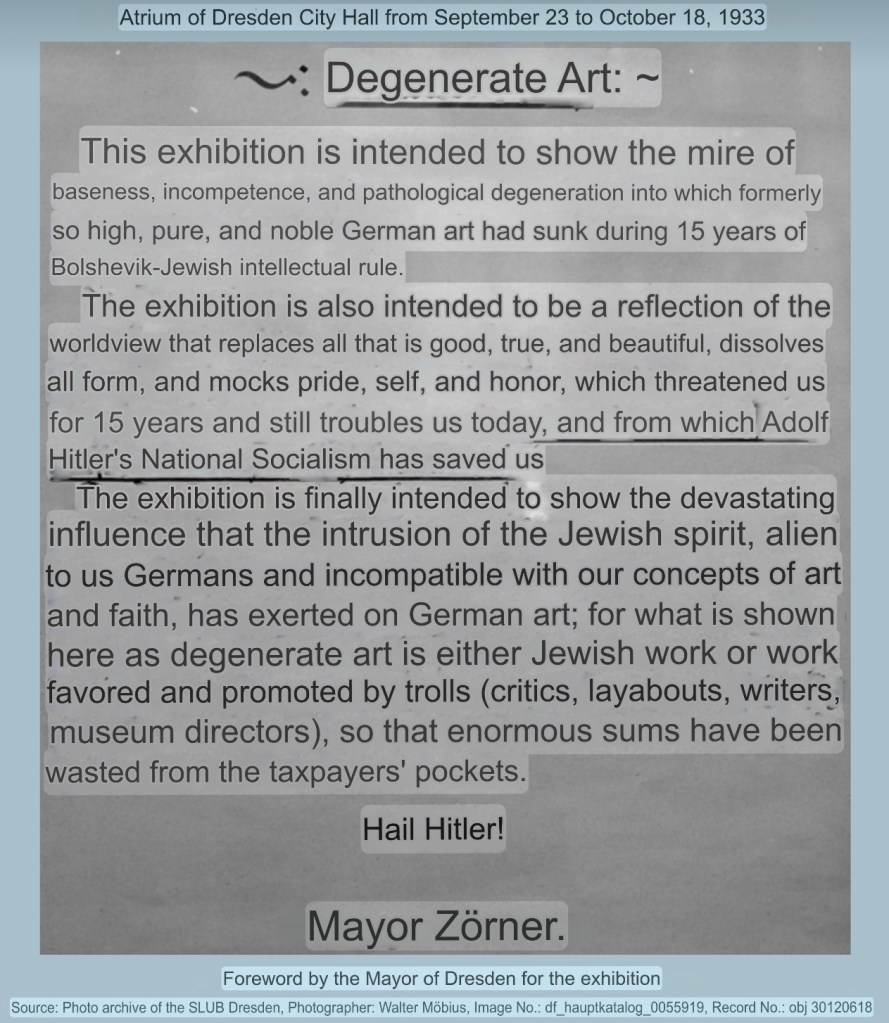
In September 1933, the Nazis created the Reich Chamber of Culture. The Chamber oversaw the production of art, music, film, theater, radio, and writing in Germany. Local government officials began opening so-called “chambers of horrors” and “exhibitions of shame” in an effort to make a mockery of modern art. On 23 September 1933, a local exhibition entitled “Entartete Kunst” (Degenerate Art) was opened at the Rathaus in Dresden. The exhibition then traveled through a dozen German cities (Dresden, Mannheim, Karlsruhe, etc.) over the next several years. Curators across the country began removing all avant-garde works from museums and placing them into storage. These initial assaults on artistic freedom were not centrally organized, and as a result, Nazi definitions of “good” and “bad” art remained unclear.
By 1937, more than 20,000 modernist works, including those by Vincent Van Gogh, Marc Chagall and Pablo Picasso were withdrawn, sold or destroyed. Three weeks before the grand opening of the House of German Art, Nazi Propaganda Minister Joseph Goebbels made plans to show the public the forms of art that the regime deemed unacceptable. He organized the confiscation and exhibition of so-called “degenerate” art, in order to more clearly contrast and define what “truly German” art should look like. “Entartete Kunst” was the culmination of the series of infamous exhibitions held to denounce the artistic avant-garde as a threat to German “purity”, and served to escalate the methodical “purge” of German collections.
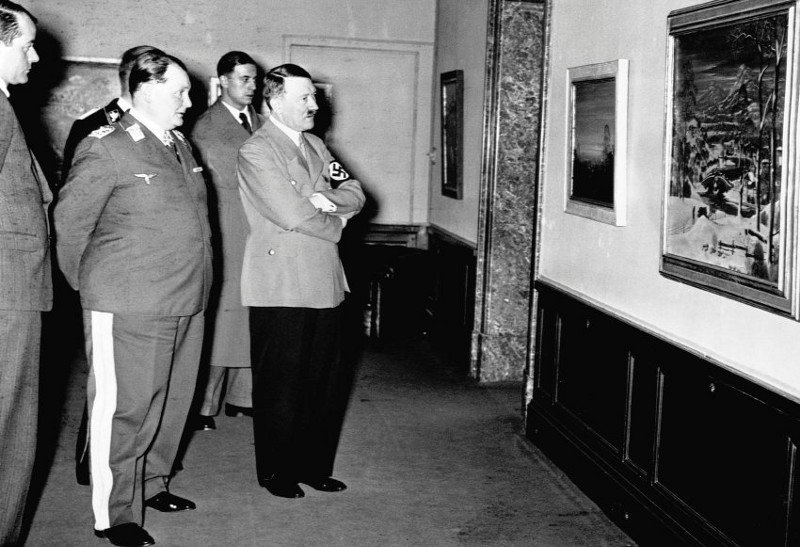
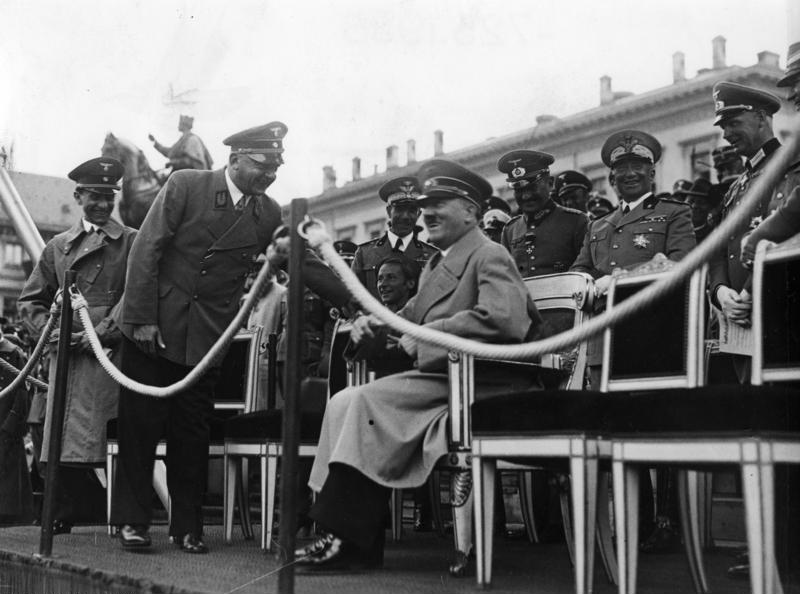
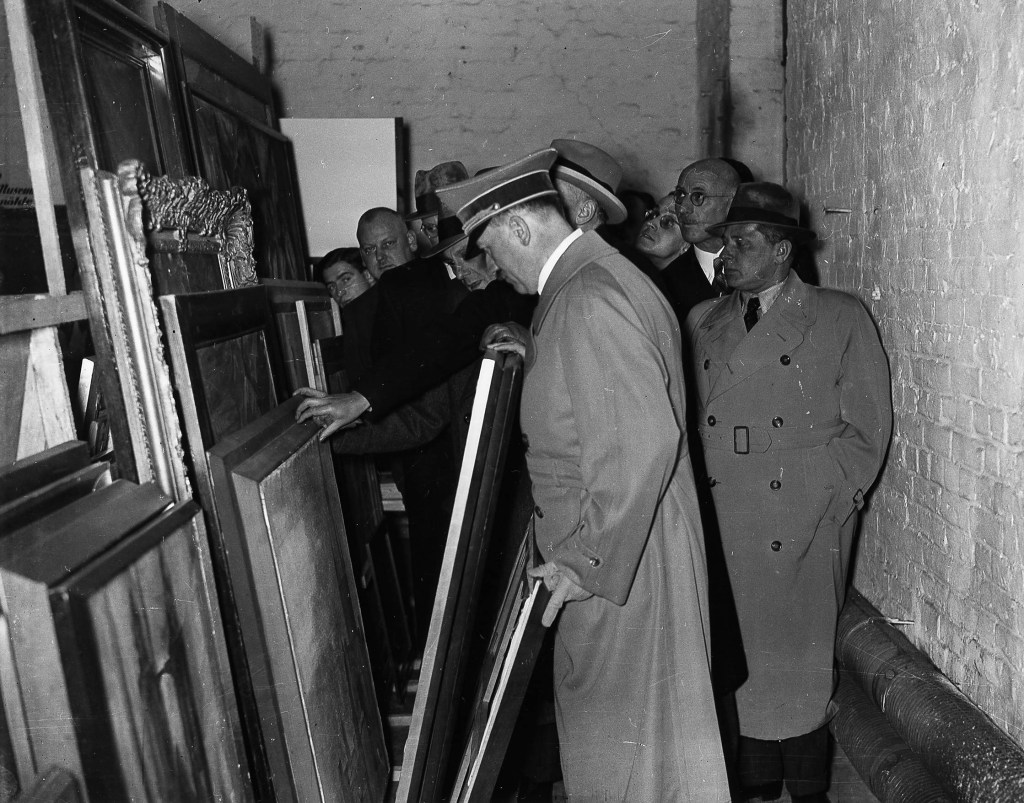
Hermann Goering and Adolf Hitler examine a painting at the “Entartete Kunst” (Degenerate Art) exhibit. The Nazis staged the exhibition in a propaganda drive to demonstrate what they had deemed as “the moral and cultural decadence of Jewish and modernist artists”. The big parade on the Day of German Art in Munich showing Adolf Hitler with his honorary VIP guests. State Minister Gauleiter Wagner greets the Führer, to the left of the State Minister Reichsminister Dr. Goebbels, second from the right the Italian Chief of General Staff Pariani on 10 July 1938.
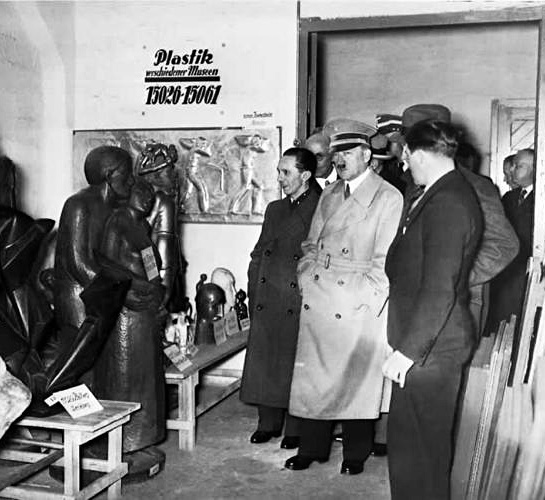
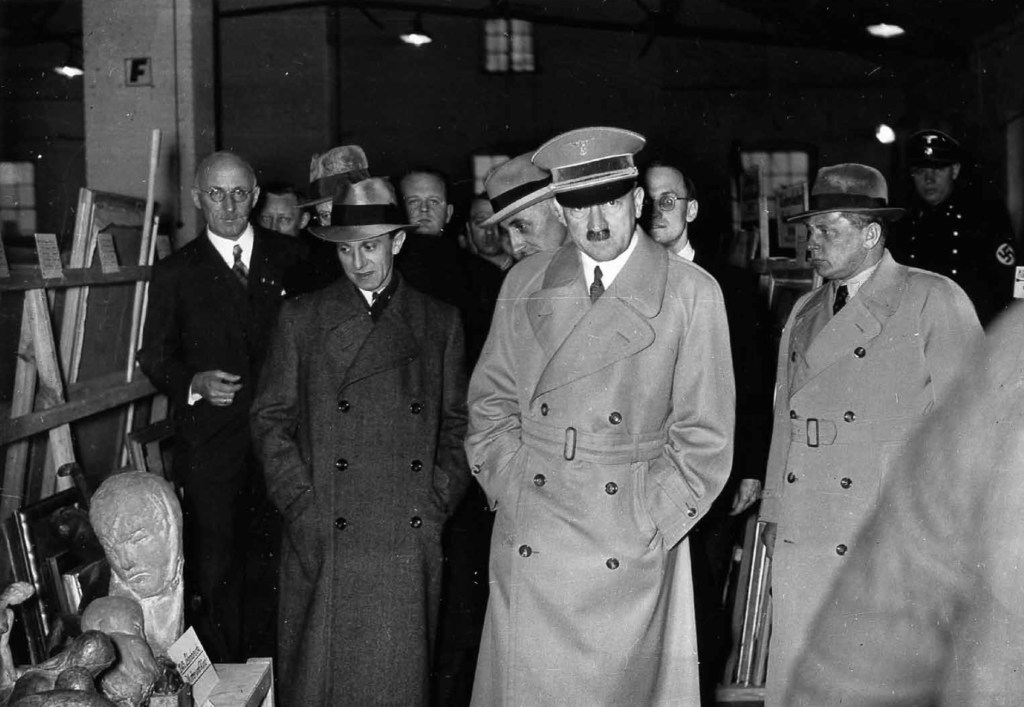
Below are a pair of images showing Adolf Hitler inspecting confiscated works of art in the Victoria-Speicherhaus warehouse at Köpenicker Straße 24a in Berlin on 13 January 1938. Joseph Goebbels and Heinrich Hoffmann oversee the process of sorting out the pieces deemed worthy of display in Hitler’s art museum and “Entartete Kunst” that is to be destroyed. Their preferred art dealers are Karl Haberstock from Berlin and dealer Maria Dietrich from Munich.
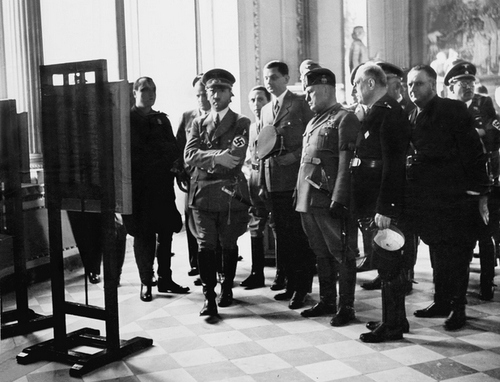
Italian dictator Benito Mussolini played host to Adolf Hitler in 1938, and on May 9th dedicated an entire day to showing off Florence’s art treasures to the Führer.
Hitler spent over four hours exploring the Uffizi Gallery on his state visit to Italy in May of 1938. Il Duce was visibly bored to death as Der Führer eagerly took in every minute detail on the considerably extended guided tour of the museum. After this trip, a greatly inspired Hitler decided to step up his game as an art collector. A special organization was formed by the NSDAP Office of Foreign Affairs called the Einsatzstab Reichsleiter Rosenberg in order to acquire the treasures of the occupied European nations. Divided into four battalions of SS men, they set out to seize and confiscate historic paintings, sculptures and religious artifacts. Answering to the Reich Minister of Foreign Affairs, Joachim von Ribbentrop, it is estimated that they stole as much as 20 percent of the cultural treasures across nearly all of Europe.
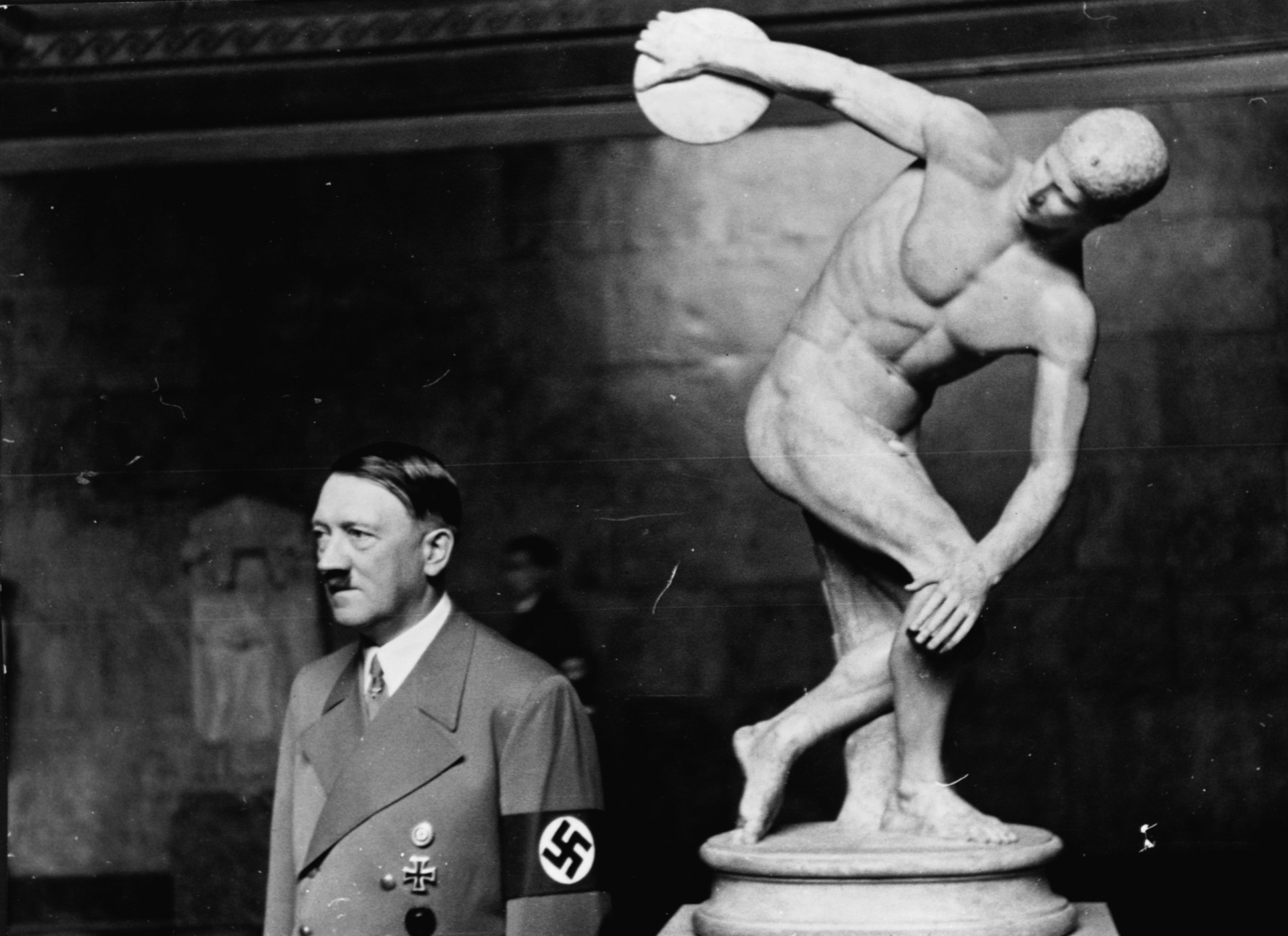
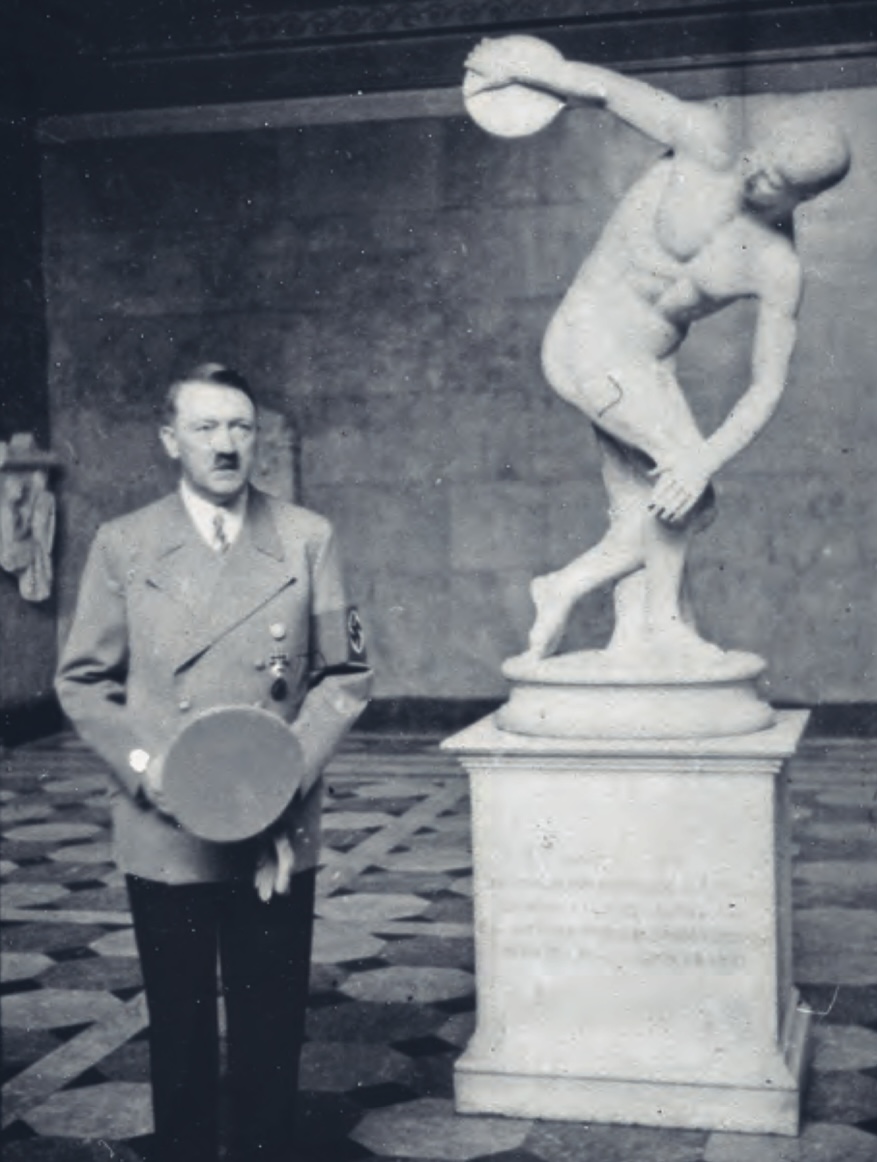
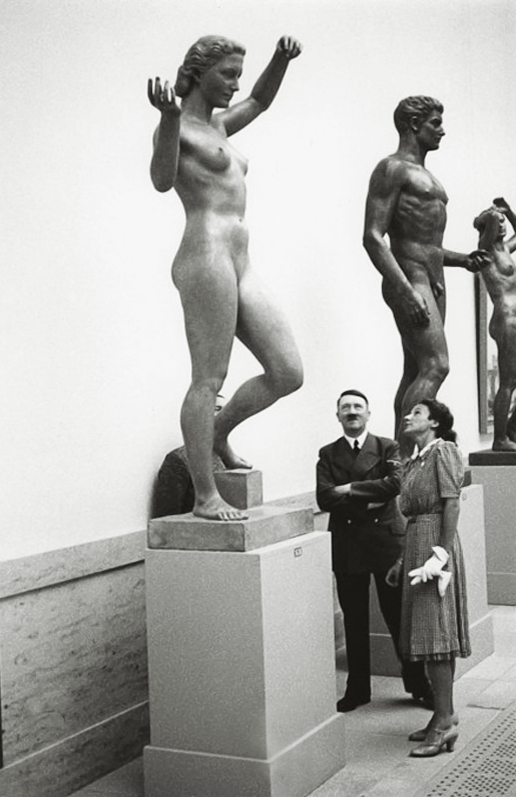
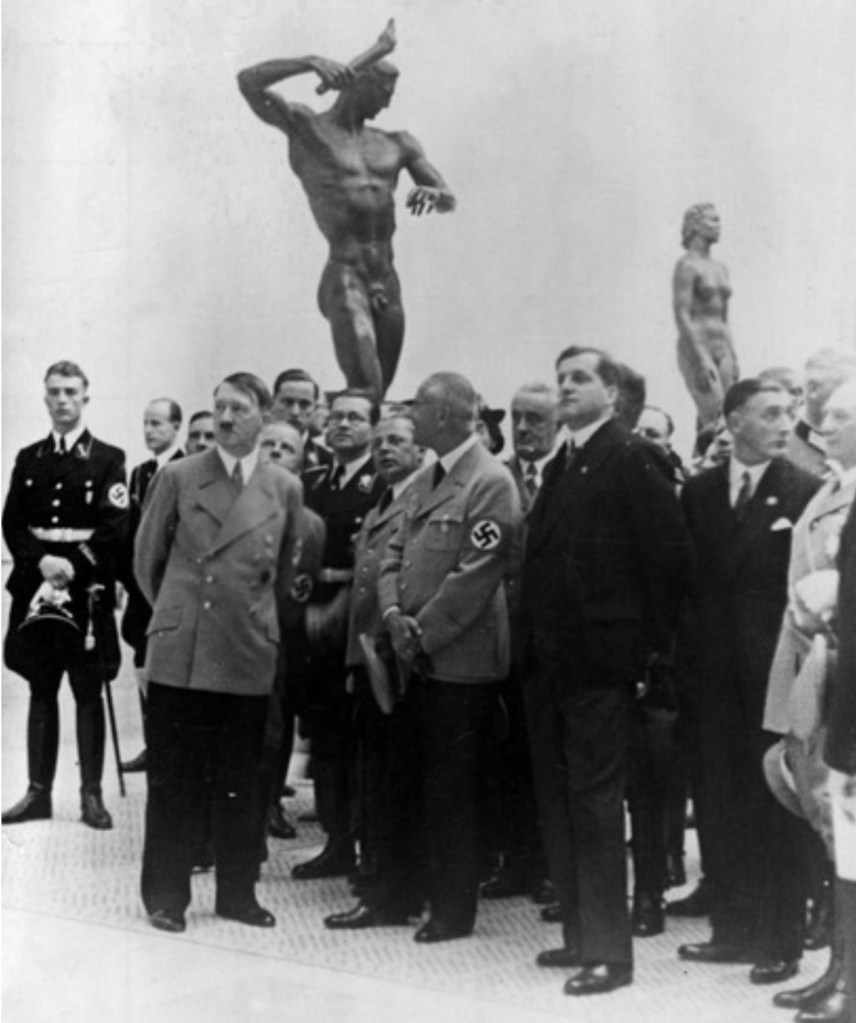
Hitler presented the Discobolos of Myron to the Glyptothek in Munich as a gift to the German people during the Day of German Art in June 1938. The Nazis’ use of imagery from classical antiquity such as the muscular nude male encouraged a physically fit population and conveyed the state’s ideal of a disciplined and militarized masculinity. Hitler’s deep fascination with Ancient Greece and its ideals of beauty became embedded in the Nazi Party’s use of the heroic nude male body as a unifying symbol and to confer the prestige and heritage of Greece and Rome to the German people.
“What makes the Greek ideal of beauty immortal,” wrote Adolf Hitler, “is the wonderful combination of the most glorious physical beauty with a brilliant mind and the noblest soul.”
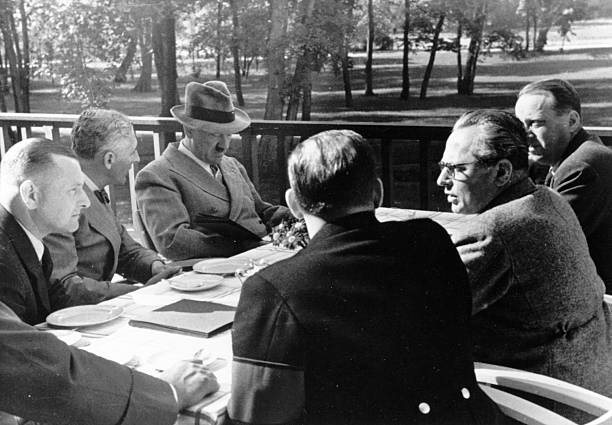
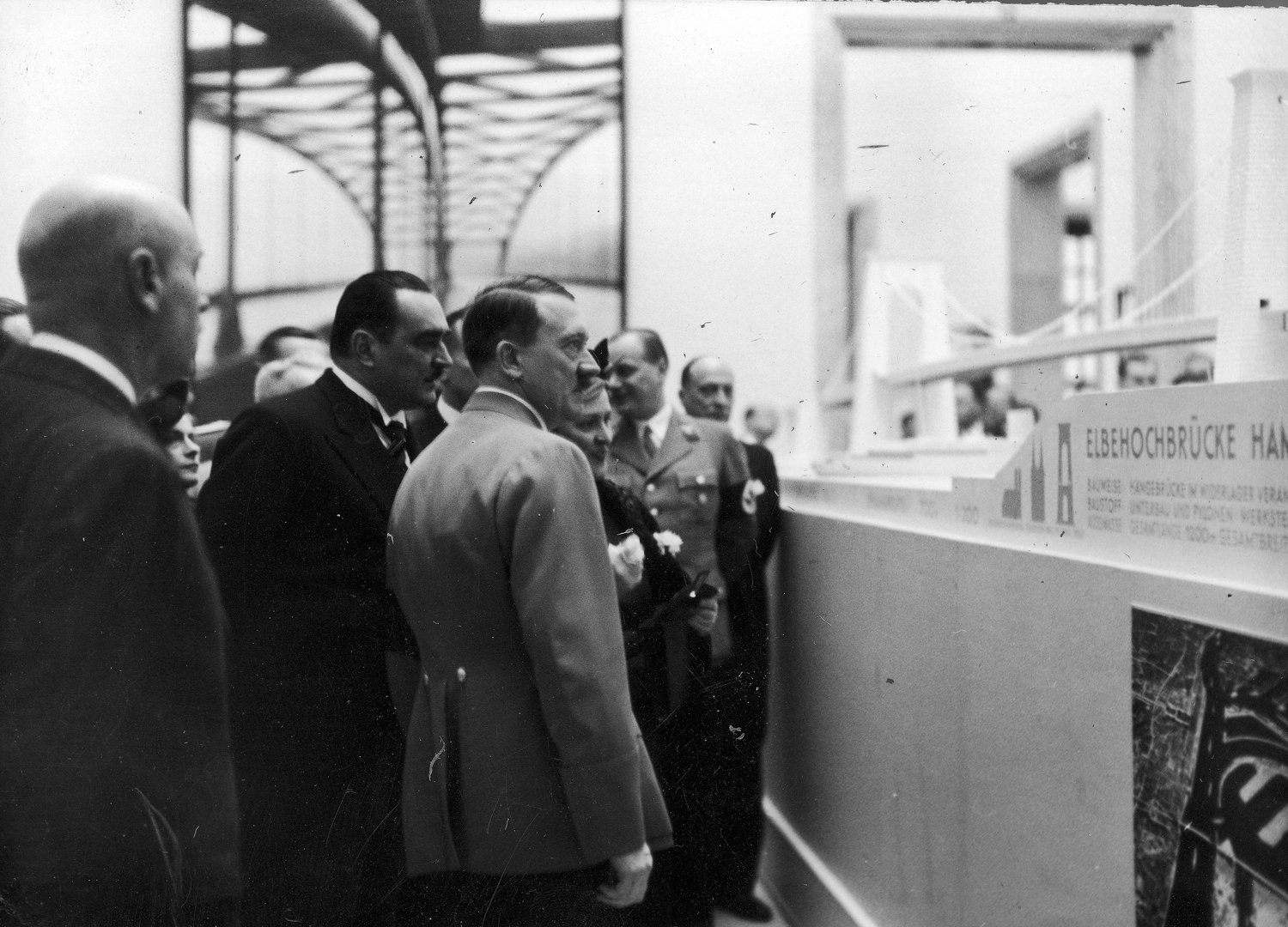
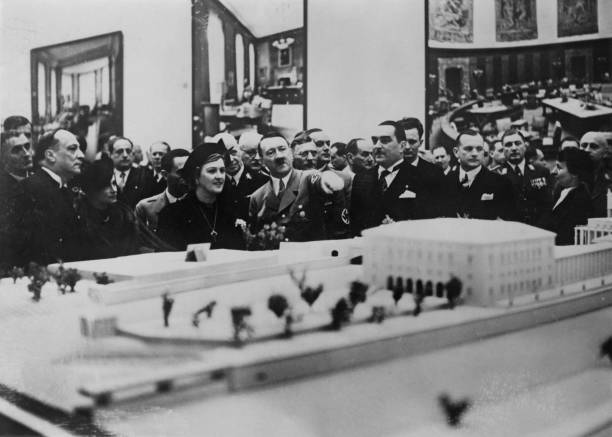
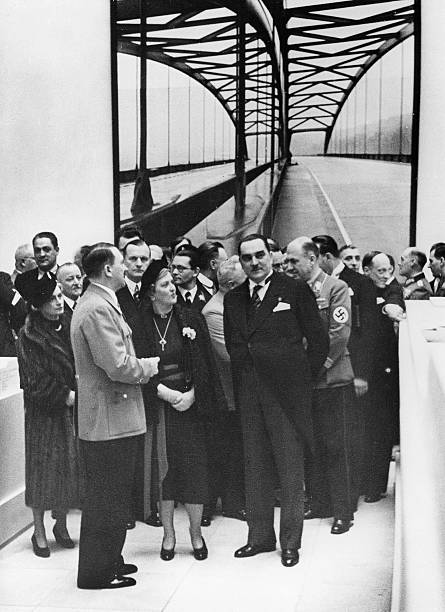
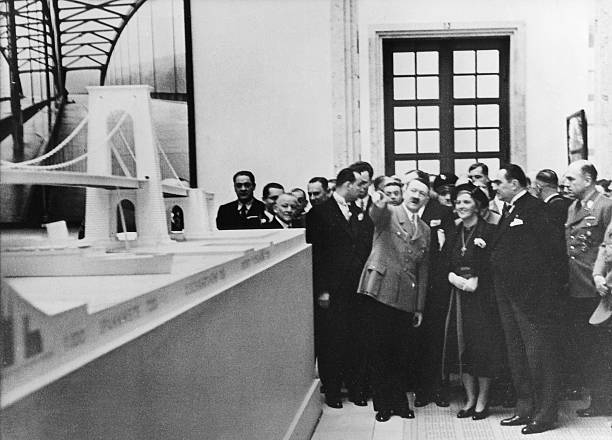
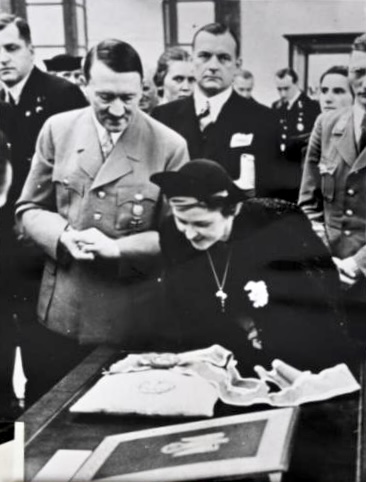
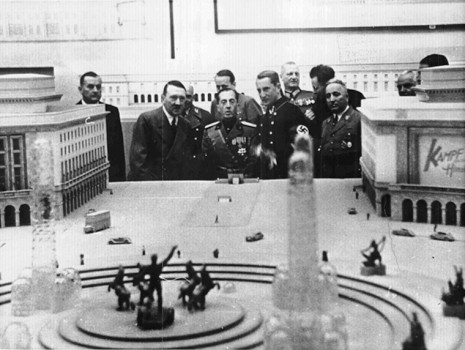
Adolf Hitler joins Hermann Giesler, Karl Hanke and Adolf Ziegler for lunch after a preliminary visit to the ‘Great German Art Exhibition’, out on the back terrace of the House of the German Art at the English Garden in Munich; in the group at the table (from left) Adolf Ziegler, President of the Reichs Chamber of Fine Arts, Karl Kolb, Director of the House of German Art, State Secretary Karl Hanke, Hitler’s photographer Heinrich Hoffmann, and the architect Hermann Giesler, on 10 July 1939.Adolf Hitler with Yugoslavian Prime minister Milan Stojadinović and his wife Augusta in the Haus der Deutschen Kunst on 22 January 1938, the official opening of the exhibit titled “Große Deutsche Architektur- und Kunsthandwerk-Ausstellung” [“Great German Architecture and Crafts Exhibition”]Hitler mit dem Ehepaar Stojadinovic vor einem Modell der ElbhochbrückeAdolf Hitler and Augusta Stojadinović, the wife of Yugoslavian Premier Milan Stojadinović, view an exhibit in the Haus der Deutschen Kunst on 22 January 1938.German chancellor Adolf Hitler accompanied by Joseph Goebbels at the 1938 Nazi Art Exhibition, during the ‘Day of German Art’ celebrations in Munich in July. This second edition of the annual ‘Great German Art Exhibition’ included a five-mile parade representing 2,000 years of German culture.Adolf Hitler with a model of his redesign plans for the city of Munich at the Haus der Deutschen Kunst. This special architecture exhibit opened after speeches by Joseph Goebbels and Hitler before they toured the Deutschen Architekturausstellung (German architectural exhibition) on 10 December 1938. A reception was held for the Minister of Economic Affairs of Italy Ferruccio Lantini. Hitler is accompanied here by Dr. Robert Ley, Lord Mayor of Munich Karl Fiehler and Joseph Goebbels.Adolf Hitler and Minister Ferruccio Lantini in front of a model of the Rundes Platz in BerlinDer Tag der Deutschen Kunst Adolf Hitler bei einem Rundgang durch die ausstellungssäle im Hause der Deutschen Kunst. The Day of German Art – Adolf Hitler on a tour of the exhibit rooms in the House of German Art on 16 July 1939 with Heinrich Hoffmann.Adolf Hitler und Joseph Goebbels bei Eröffnung der Großen Deutschen Kunstausstellung im Haus der Deutschen Kunst in München am 16. Juli 1939. (Hitler and Goebbels at the opening of the Great German Art Exhibition. Opening of the Great German Art Exhibition in the House of German Art in Munich on 16 July 1939). Adolf Hitler and Joseph Goebbels on a tour through the exhibition.The Italian ambassador Dino Alfieri, accompanied by Adolf Hitler and Josef Goebbels, visits the Great German Art Exhibition in the House of German Art on 16 July 1939 on the Day of German Art.Adolf Hitler with Gerdy Troost and Director Karl Kolb at the House of German Art in July 1940. Hitler had placed Kolb as well as his photographer Heinrich Hoffmann in charge of selecting the art pieces to be featured in the annual exhibitions at the museum. Hitler was very particular in his preferences for the display of each individual work of art, down to the spacing between the paintings and the lighting on the sculptures. This meeting was in preparation for the fourth edition of the Große Deutsche Kunstausstellung (Great German Art Exhibition) that premiered on 27 July 1940.
I love history and have always been infatuated with the design and style of the 1920’s. Unfortunately I can’t time travel back to this era, so I live vicariously through books, movies and photos.
[…] Professor Leonhard Gall reviewing plans for the first major Nazi architectural project, the House of German Art. He was assistant to architect Paul Troost, and after Troost’s death in 1934, Gall took […]
[…] on 7 January 1936. Leonhard Gall, Adolf Hitler, and Albert Speer visit the construction site of the Haus der Deutschen Kunst in Munich on 5 April 1936. Adolf Hitler visits the German participants in the team competition of […]
No, the Nazi leadership did not select modern art for destruction. That’s an urban myth. Leadership of the Third Reich realized that such art was worth substantial financial amount. Virtually all of the art was removed from museums, but saved for sale.
So what happened to the art? The answer is simple. It was stored in a German apartment building. Unfortunately, much of it was destroyed in a fire when Berlin suffered a similar fate.
Another urban myth: most of the modern German art was deliberately destroyed.
However, leadership of the Third Reich realized that such art was worth substantial financial amounts. Virtually all of the art was removed from museums, but saved for sale.
So what ultimately.happened to the art? Circumstances varied for each work. Much of it was stored in a German apartment building during the war. Unfortunately, this particular work was destroyed in a fire when Berlin suffered a similar fate.
Another urban myth: most modern German art was lost. Actually, most art including public art survived the war. Indeed, from time to time Third Reich art can be purchased by the public at auction.
ERRATA: As a website WordPress is terribly prone to error. It arbitrarily fails to provide a.keyboard to write text, fails to provide editing capability, erases comments or incorrectly double posts such commentary, and notoriously is user unfriendly. With these WordPress errors in mind, the following errata is posted.
The following commentary is changed:
So what happened to the art? The answer is simple. It was stored in a German apartment building. Unfortunately, much of it was destroyed in a fire when Berlin suffered a similar fate.
So what happened to the art? The answer depended upon the particular work. Apparently, profit prevailed over dogma. Many artworks were stored in a German apartment building, the exact number currently unknown. Unfortunately, much of it was destroyed in a fire when Berlin suffered a similar fate.,
As for other works, they tended to survive the war. Indeed, from time to time artwork from the period can be putchasrd at auction.




 Heinrich Hoffmann Photo Gallery