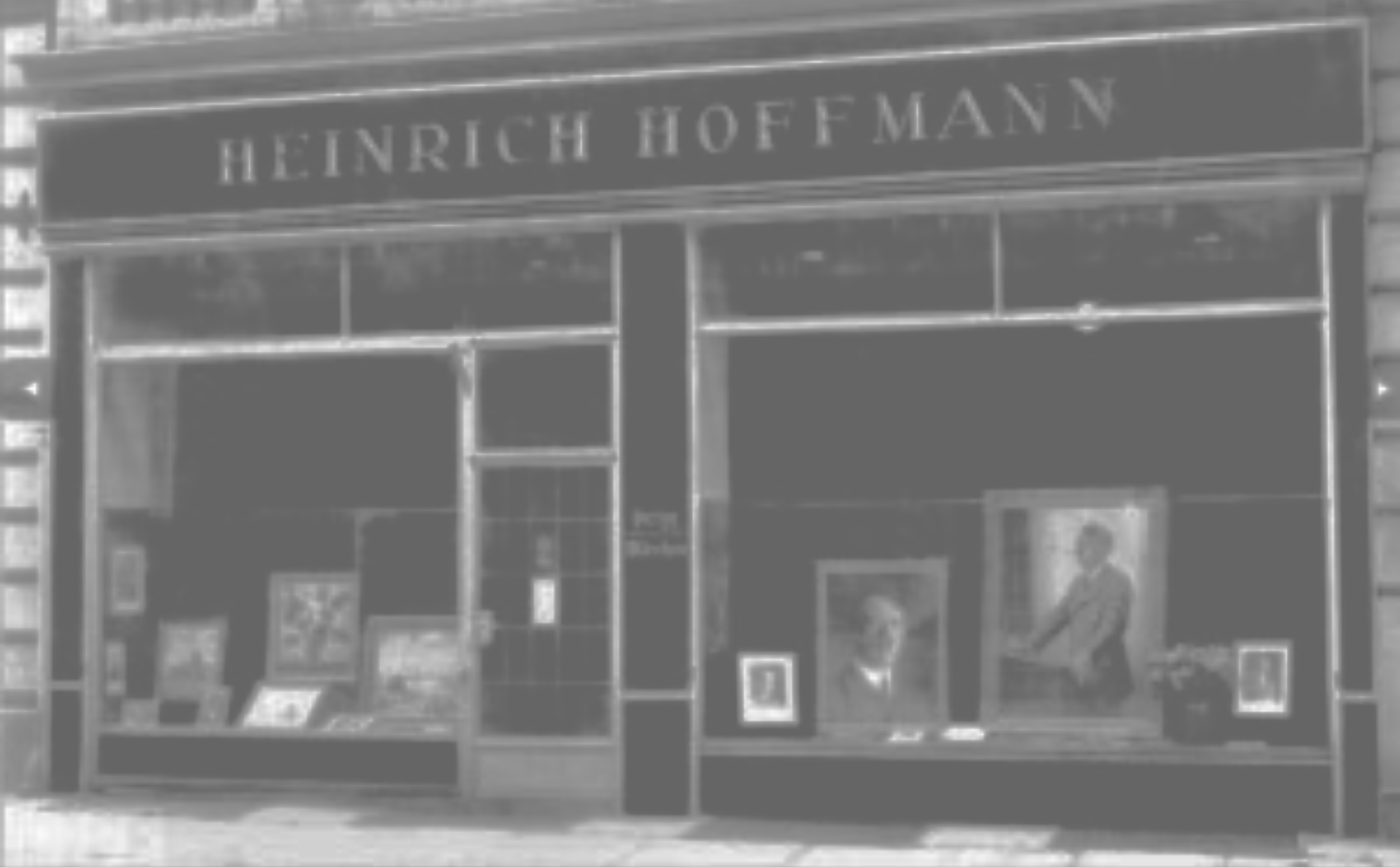
Heinrich Hoffmann (1885 – 1957) served as Adolf Hitler’s official photographer from when Hitler took control of the Nazi party in 1921 until his death in 1945. Hoffmann estimates he took over half a million photographs of Hitler over the course of his career. His portraits were the most significant source of Nazi propaganda materials published over the course of close to 25 years, everything from postcards, posters, magazines, postage stamps and picture books. Click on eachtheme below to see a complete photo albumdevoted to that particular event or topic.
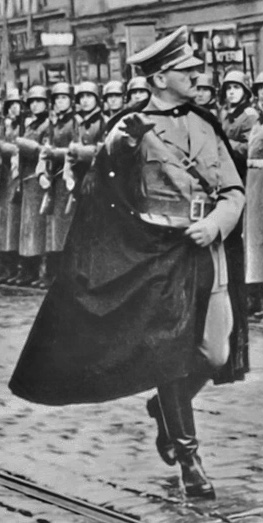
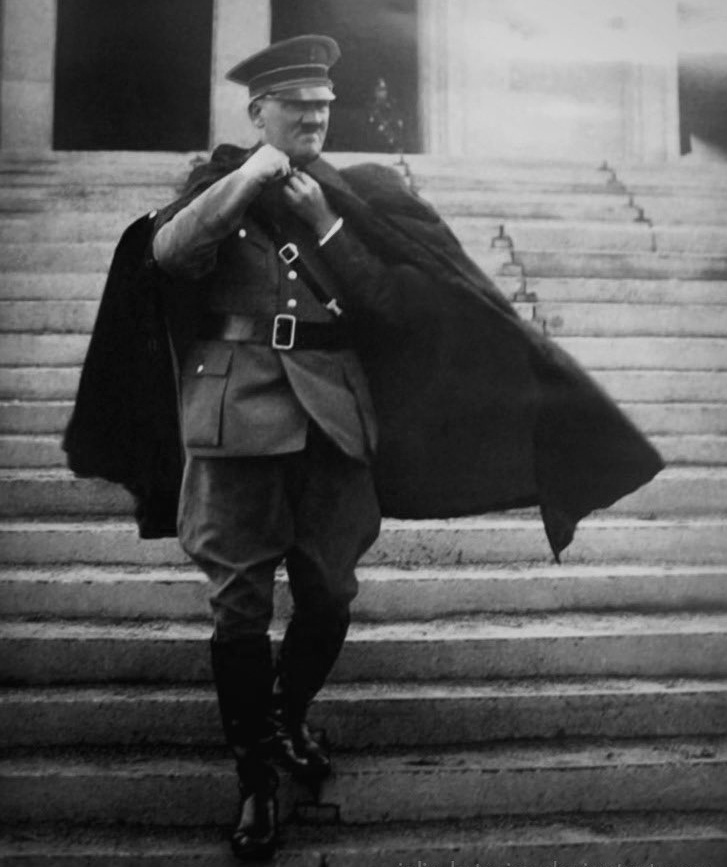
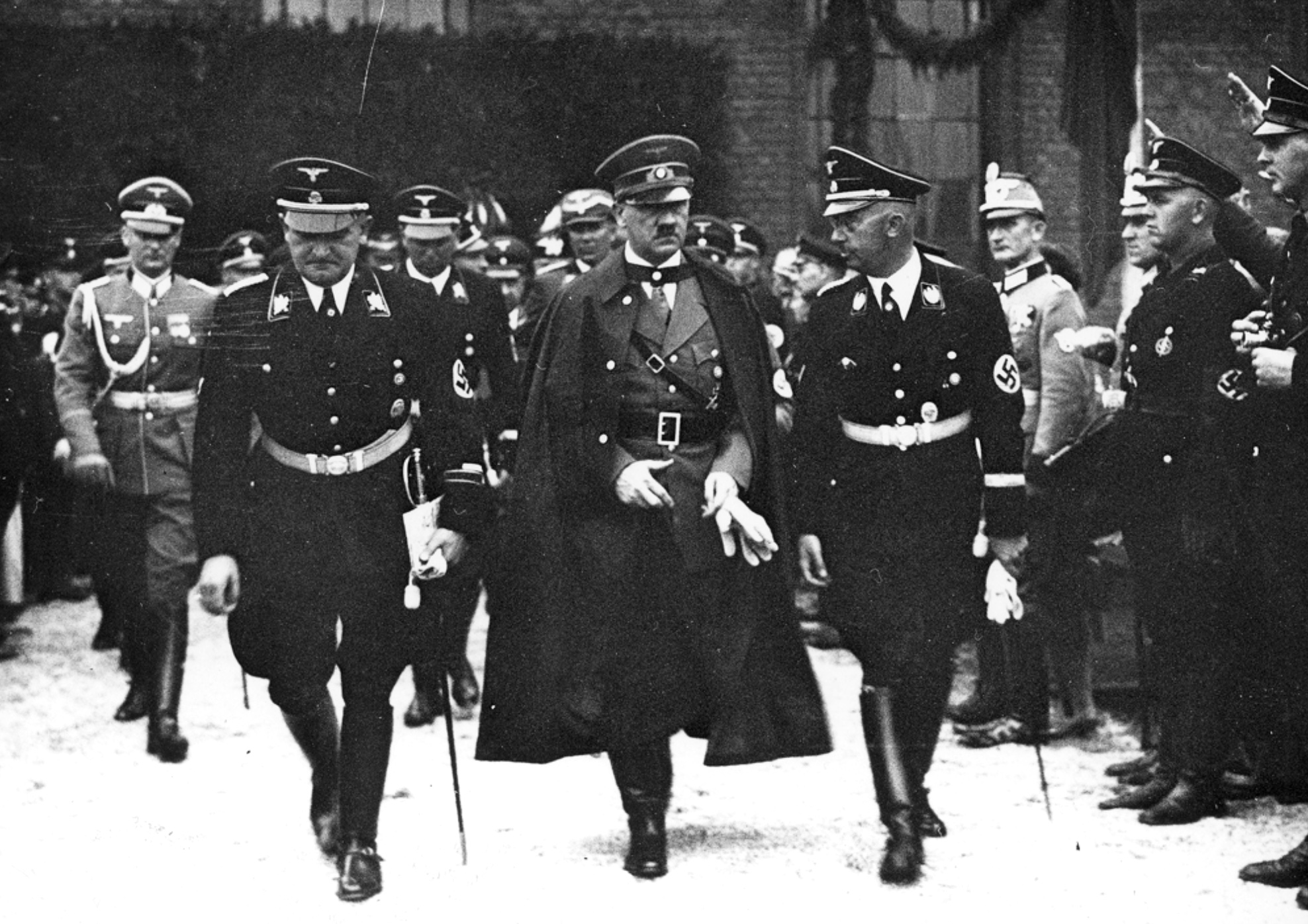
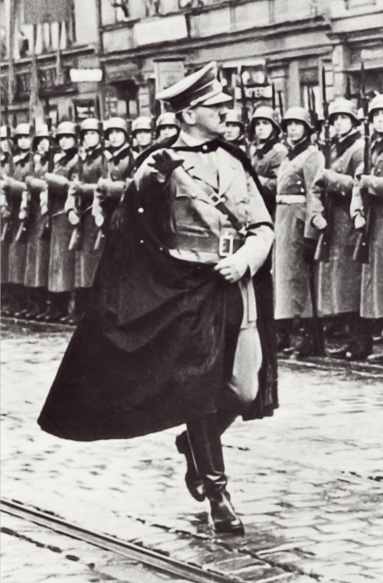
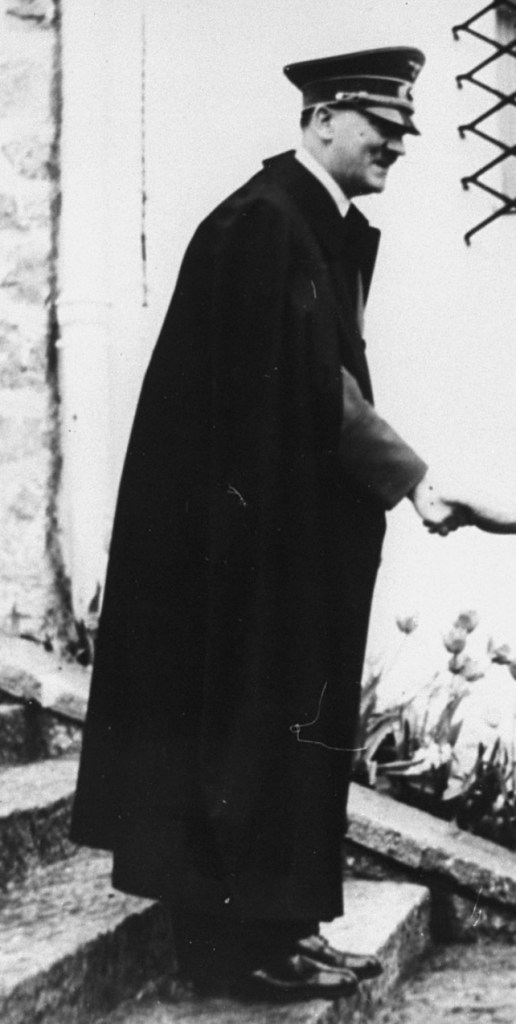
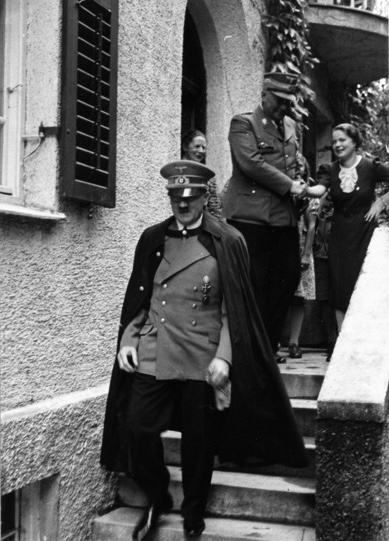
As if the hyper-masculine, alpha male energy dripping off this man wasn’t already intense enough, Hitler starts throwing on a cape in the late 1930’s. As the ultimate symbol of strength, power and authority, this addition to his uniform wardrobe catapults him into a whole new realm of almost mythical immortality. It also helps that capes can intimidate enemies and project a sense of supernatural invincibility, an opportune choice at the advent of this voracious villain thrusting the entire world into war and chaos.
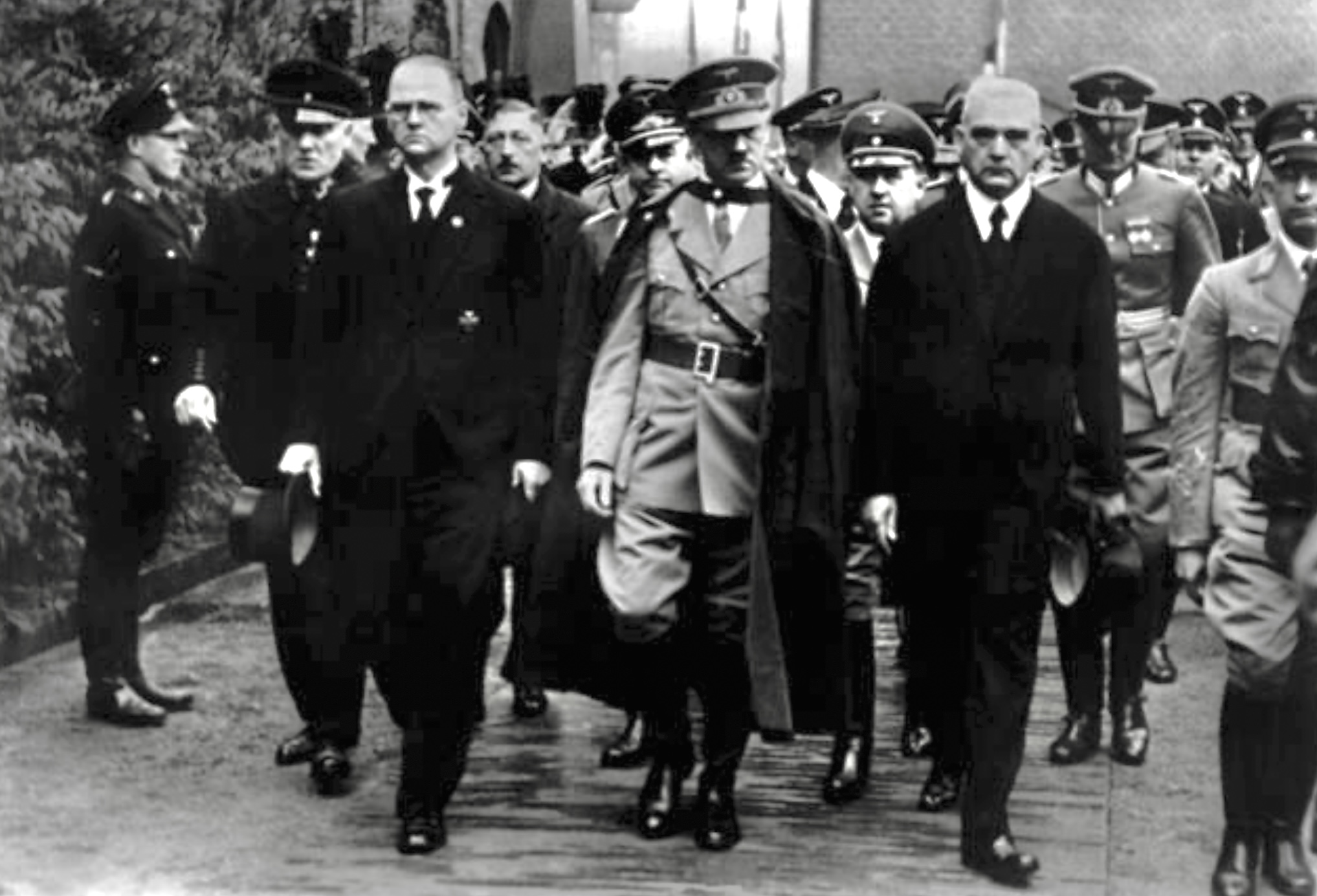
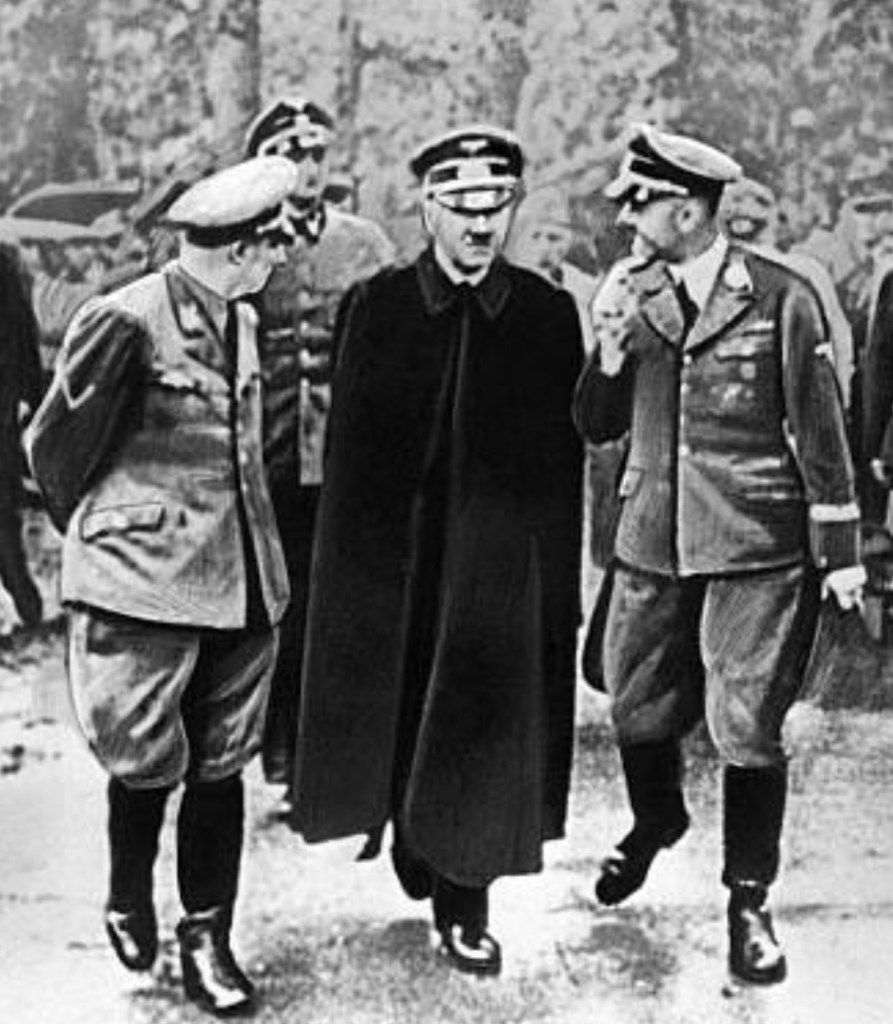
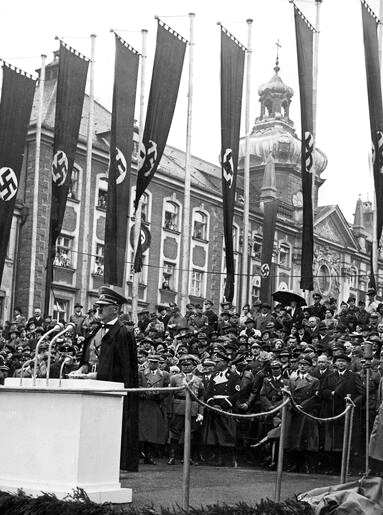
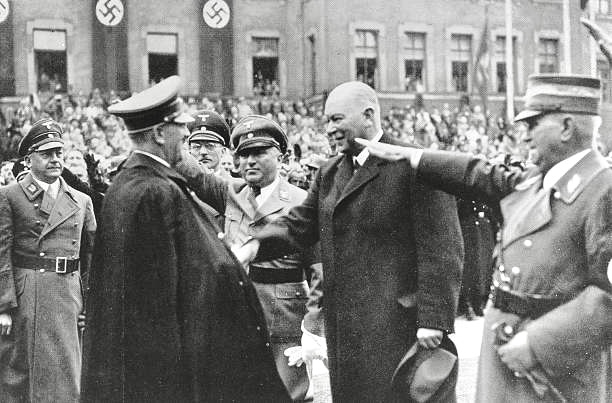
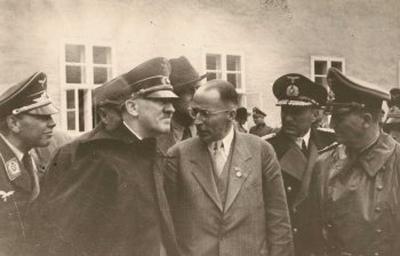
Adolf Hitler descending the stairs of the Luitpold Hall (old Congress Hall) on the Nuremberg Rally Grounds. He wears a cape as he leaves at the conclusion of the 8th Party Congress in September 1936.Adolf Hitler and Heinrich Himmler at the funeral of industrialist Emil Kirdorf on 16 July 1938. As the general manager of GBAG, a major coal company, Kirdorf was the first major figure from the business world to join the Nazi Party. Kirdorf reportedly gave the party 100,000 marks in 1927 ($350,000 in today’s money) to save it from bankruptcy. He was personally awarded by Adolf Hitler the Order of the German Eagle, Nazi Germany’s highest distinction, on his 90th birthday on 8 April 1937, for his support of the Nazi Party in the late 1920’s.Adolf Hitler, General Director Dr. Vögler (Deputy Chairman of the Vereinigte Stahlwerke AG) and Director Kauert (Gelsenkirchener Bergwerks AG) at the Rheinelbe colliery in Gelsenkirchen on 16 July 1938 before heading to the funeral service for industrialist Emil Kirdorf on 16 July 1938.Adolf Hitler in an open car in Gelsenkirchen arriving at the funeral service for Emil Kirdorf with his entourage. Thousands of people lined the route to the Rheinelbe colliery. It was Hitler’s only visit to the city on the occasion of Emil Kirdorf’s funeral on 16 July 1938.Adolf Hitler delivers a speech and eulogy at Emil Kirdorf’s funeral held in Gelsenkirchen on 16 July 1938.Adolf Hitler with Ilse and Inga Terboven during a visit to Josef Terboven in hospital, in Essen on 16 July 1938.Adolf Hitler inspecting his troops in Berlin on 4 December 1940.
Brace yourselves ladies (and gents), this only gets better 😉
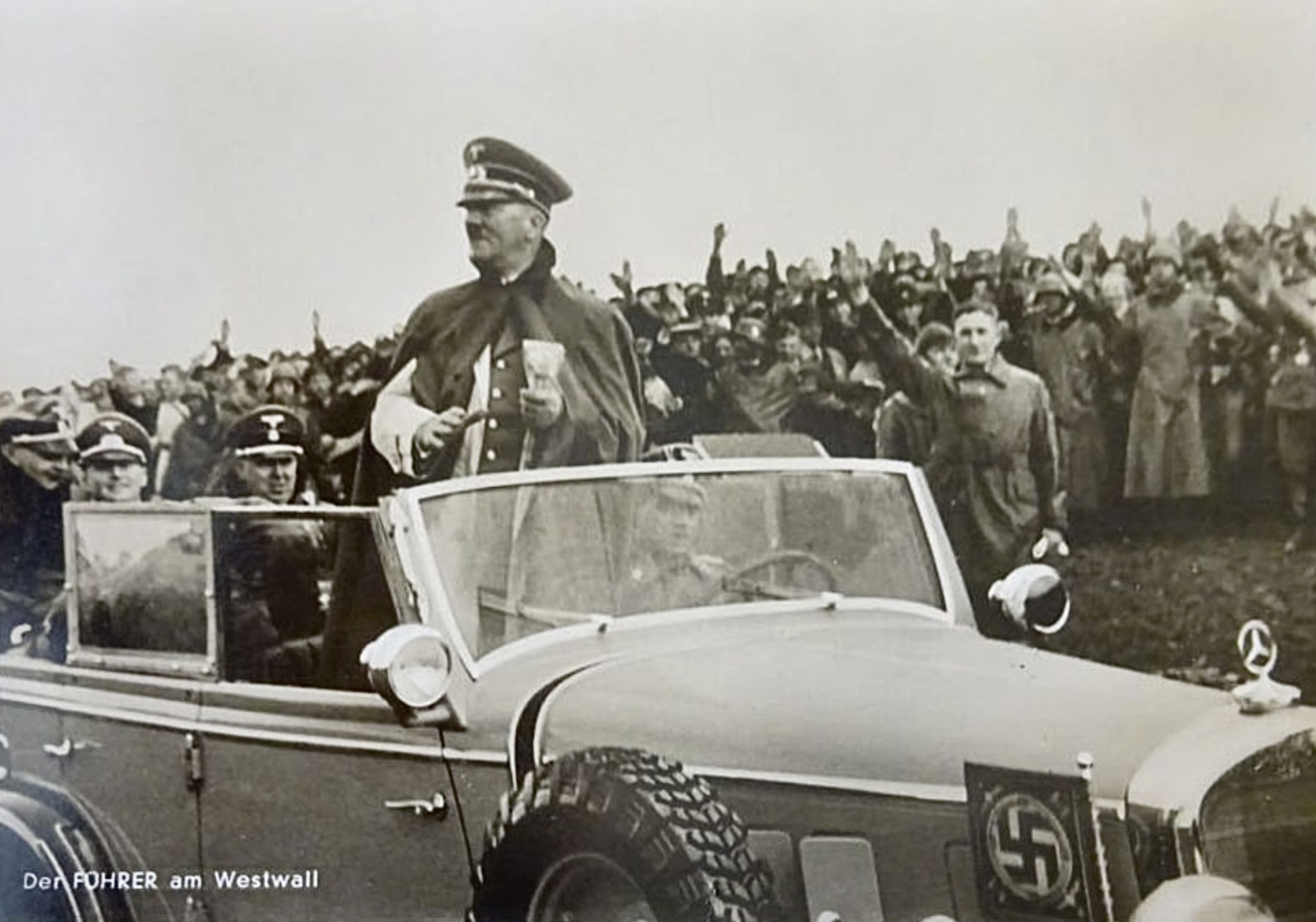
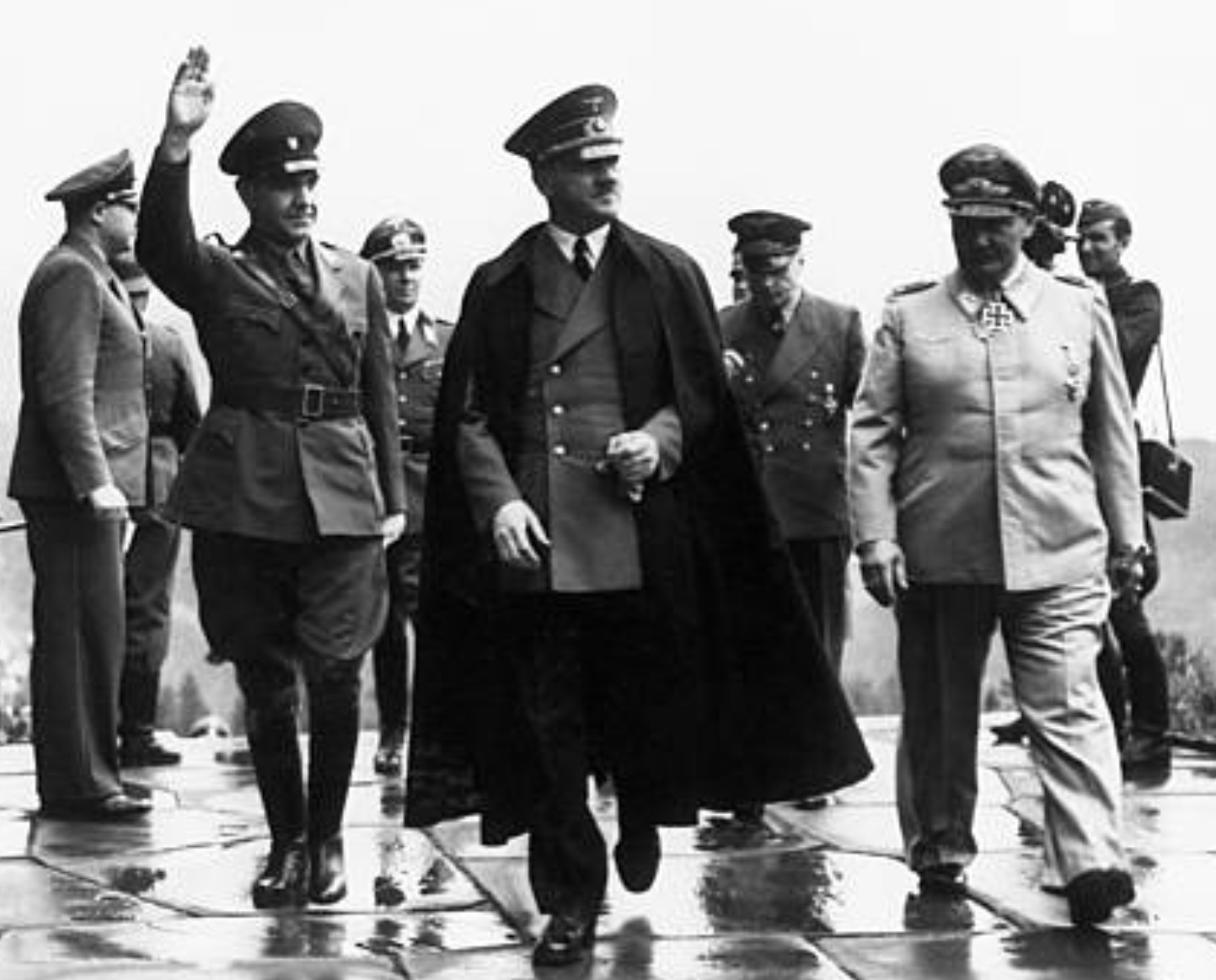
Adolf Hitler during a trip out to the German line of defensive forts against France, known as West Wall or Siegfried Line on 28 February 1939. (Adolf Hitler am Westwall, 1939).Adolf Hitler in 1939 at the West Wall.Adolf Hitler during a trip out to the German line of defensive forts against France, known as West Wall or Siegfried Line, on 28 February 1939. Adolf Hitler am Westwall, 1939.Adolf Hitler with Benito Mussolini on the Berghof terrace on 19 January 1941.Adolf Hitler with Reichsmarschall Hermann Göring at the Berghof on 9 June 1941 on the occasion of the state visit of Croatian dictator Ante Pavelic (to Hitler’s right).Adolf Hitler receives König Boris III of Bulgaria at the Berghof on 7 June 1941.. Hewel, von Ribbentrop and Keitel are in the background.Adolf Hitler bei einer Besprechung auf dem Reichsparteitaggelände, v.l.: Architekt Ruff, Hitler, Gruppenführer Schaub und Polizeipräsident Martin. Adolf Hitler meets about the construction progress on the Nuremberg Nazi Party Rally Grounds on 25 July 1939.
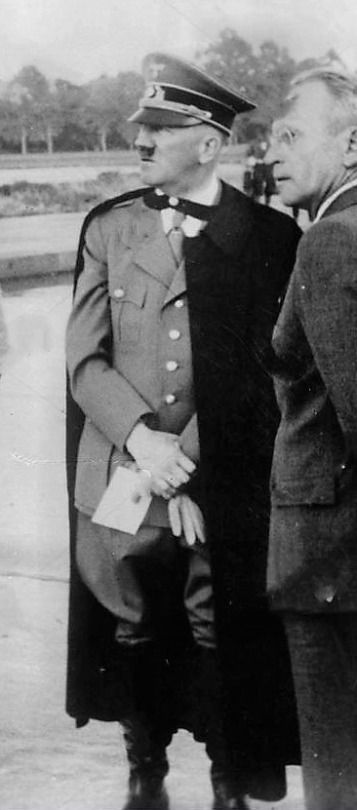
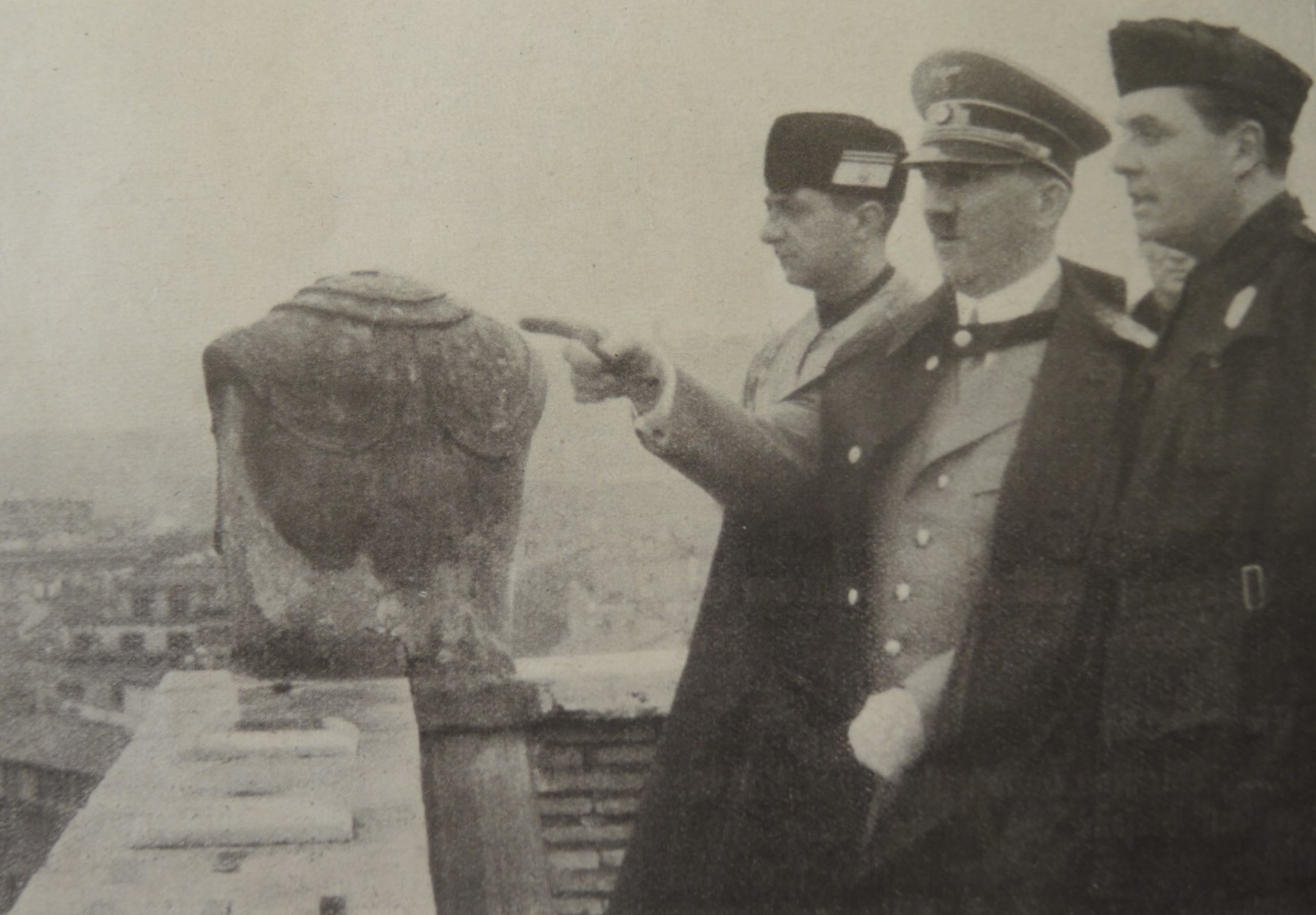
Adolf Hitler (center in a cape) and architect Franz Ruff (right) are visiting the construction site of the Congress Hall on 25 July 1939. On the left is a 1:1 model of the future façade of the building. Franz Ruff, the son of Ludwig Ruff, was responsible for completing the Nuremberg Party Congress Hall after his father’s death in 1934.
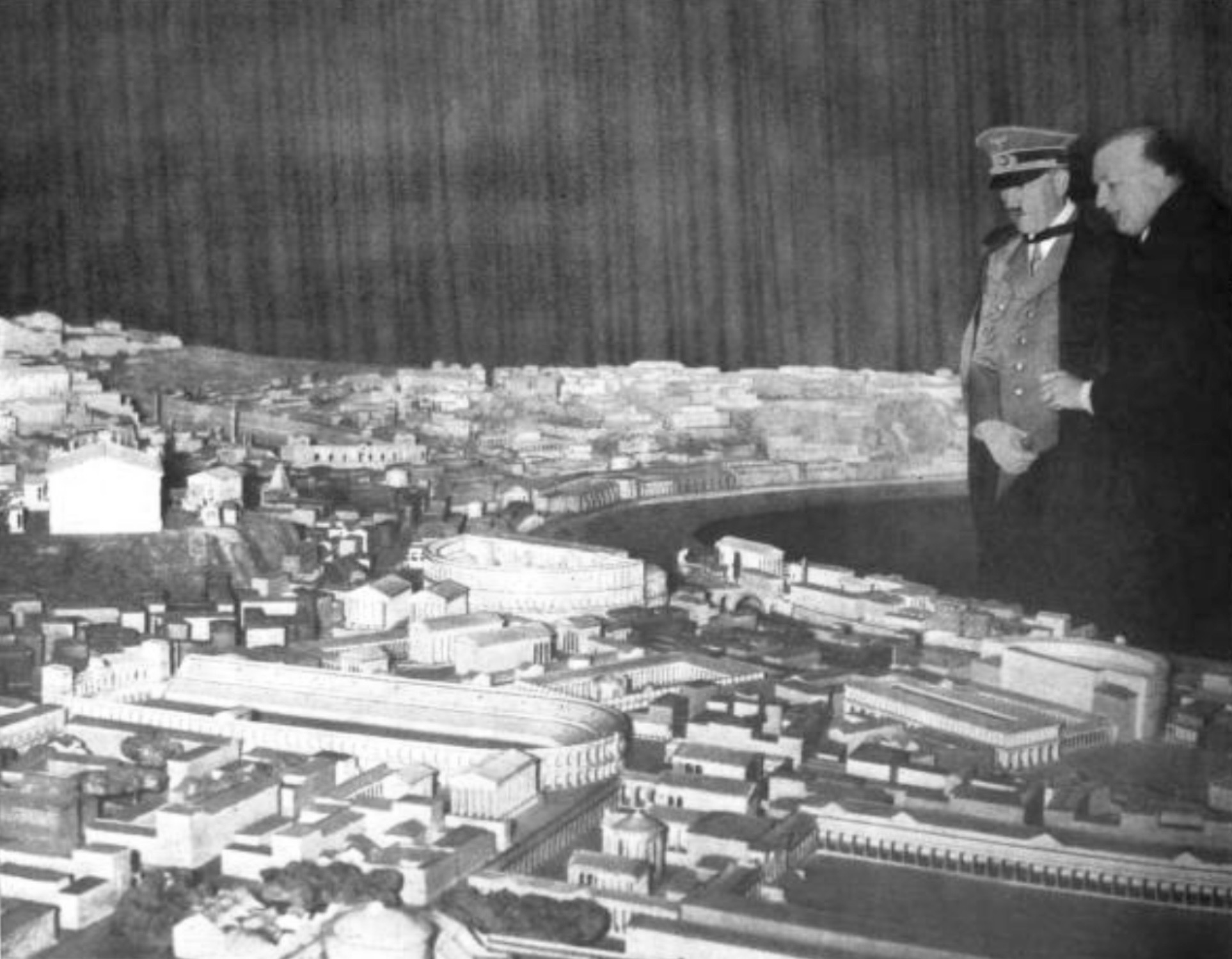
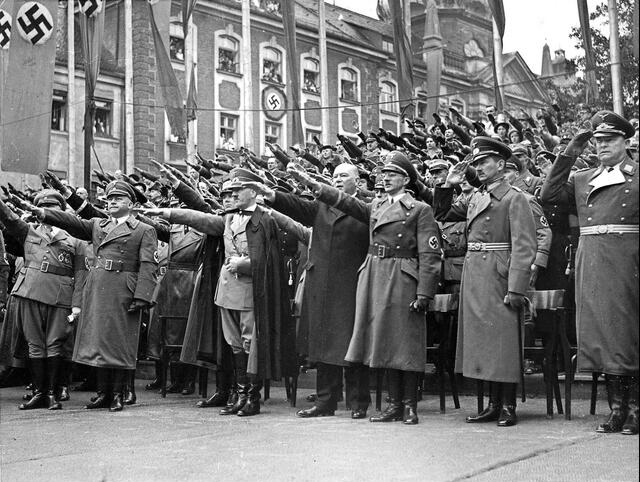
Albert Speer accompanies Adolf Hitler at the inspection of the construction work on the Nazi Party Rally Grounds in Nuremberg on 23 July 1936.In Grünau on the Langer See, Adolf Hitler follows a rowing competition of the Olympic Games held on 11 August 1936. Next to him is Reich Interior Minister Wilhelm Frick and Admiral Erich Raeder.Adolf Hitler attends the rowing cup of the Olympic Games in Berlin-Gruenau with Reichsminister Wilhelm Frick (I.) – Published by: ‘Das 12 Uhr Blatt’ 15.08.1936Adolf Hitler performs the Nazi salute with other party members in the stands of the Grünau Regatta Course in Berlin, Germany during the rowing event at the 1936 Summer Olympics. The men’s eight competition was held from 11 to 14 August, and was won by a United States crew from the University of Washington.Professor Giulio Quirino Giglioli shows Hitler an exhibition model of ancient Rome, part of the Augustus exhibition held at the Palazzo delle Esposizioni on the Via Nazionale in Rome, on 6 May 1938. With this exhibition, Rome celebrated the 2000th anniversary of Emperor Augustus’s birth for an entire year. The “Mostra Augustea della Romanità” exhibit also aimed to connect the Fascist regime under Mussolini to the glory of the ancient Roman Empire, featuring plaster casts, reconstructions, and models of Roman landmarks.Adolf Hitler with the Italian journalist Giuseppe Bottai and accompanied by archaeologist Ranuccio Bianchi Bandinelli on his tour of Florence on 9 May 1938.Adolf Hitler departs from his visit to Hermine Hoffmann to go and deliver a speech on the underground railway construction site at Goetheplatz in Munich on 22 May 1938. Hermine Hoffmann (1857 – 1945) had been assigned during World War I to raise the morale of Gefreiter Adolf Hitler by knitting socks and sending parcels to him in the field. Adolf Hitler gives the signal for the beginning of the work on the first section of the subway (U-bahn) on 22 May 1938 in the ‘Capital City of the Movement’. In his speech he explains joyously: ‘In 7 years (1945) Munich will have a thoroughly new look and will become the most beautiful city in Germany.’Adolf Hitler at the foundation stone laying of the subway in Munich on 22 May 1938. At the construction site Lindwurm-Zimssen street in Munich, Adolf Hitler gives the sign for the beginning of the work on the first phase of construction for the subway.At the start of construction on the Munich underground on 22 May 1938, Adolf Hitler speaks at Lindwurmstrasse at the corner of Ziemssenstrasse in Munich between Sendlinger Tor and Goetheplatz. Adolf Hitler and Fiehler at a celebration for the beginning of the construction of the U-Bahn in Munich 1938. Adolf Hitler at the celebration for the beginning of the construction of the Lindwurmstrasse corner of Ziemssenstrasse subway station on 22 May 1938 in Munich. The guests of honor giving the Nazi salute: from left to right, Reich Leader Robert Ley, Regional Party Leader Adolf Wagner, Adolf Hitler, Reich Minister Julius Dorpmueller, Mayor Karl Fiehler, General Ritter von Schobert and General of the Air Force Hugo Sperrle.Celebration for the start of construction of the underground railway at Goetheplatz in Munich: Reich Transport Minister Dr. Julius Dorpmüller greets Adolf Hitler; in the group on the right: Prime Minister Ludwig Siebert, from left: Gauleiter Adolf Wagner, the Mayor of Munich Karl Fiehler and Dr. Robert Ley, leader of the German Labor Front (DAF) on 22 May 1938.Henrich Focke (rechts) mit dem Führer Adolf Hitler (links). Henrich Focke was a German aviation pioneer from Bremen and also a co-founder of the Focke-Wulf company. He is best known as the inventor of the Fw 61, the first fully controllable helicopter flown in 1936. He has been called “father of the helicopter”.Color photograph of Adolf Hitler in a cape by photographer Walter Frentz.Adolf Hitler standing In the rain with Nazi officials near a train filled with soldiers and artillery at the Wolfsschanze station to receive Mussolini. He had just survived an assassination attempt and was only slightly injured on 20 July 1944.
I love history and have always been infatuated with the design and style of the 1920’s. Unfortunately I can’t time travel back to this era, so I live vicariously through books, movies and photos.
[…] and accoutrements, but yeah don’t even get me started when he threw on a trench coat or a cape, or broke out his summer white uniform. He generally preferred very understated uniforms and for […]











 Heinrich Hoffmann Photo Gallery