Heinrich Hoffmann (1885 – 1957) served as Adolf Hitler’s official photographer from when Hitler took control of the Nazi party in 1921 until his death in 1945. Hoffmann estimates he took over half a million photographs of Hitler over the course of his career. His portraits were the most significant source of Nazi propaganda materials published over the course of close to 25 years, everything from postcards, posters, magazines, postage stamps and picture books. Click on eachtheme below to see a complete photo albumdevoted to that particular event or topic.
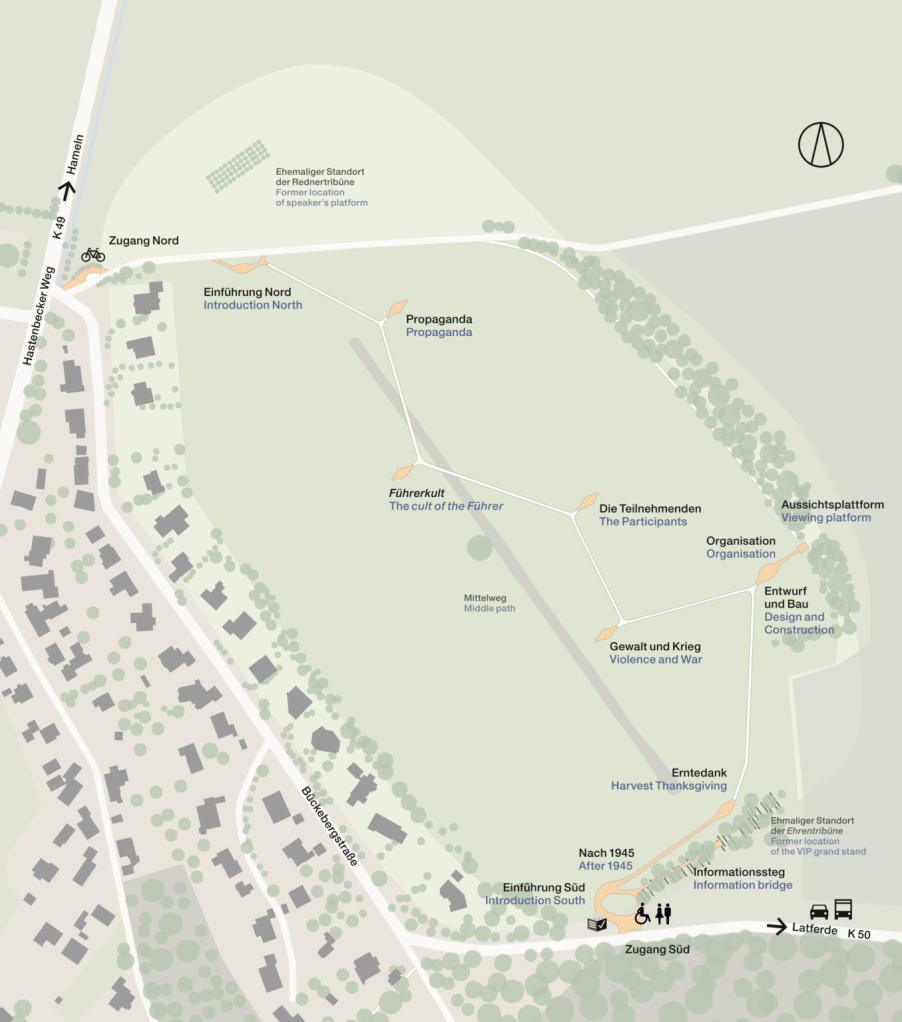
The Erntedankfest (Harvest Thanksgiving Festival) is a traditional holiday held at the time of the autumn harvest to celebrate the importance of and to give recognition to the achievements of German farmers. In 1933 Adolf Hitler decreed that the Erntedankfest should be celebrated annually on the first Sunday of October. The Reichserntedankfest (Reich Harvest Thanksgiving Festival) became a public holiday and was held every year through 1937. The main event took place on the Bückeberg Hill near Hamelin in Germany, where millions of people attended to see the Führer and to hear his speech. This Thanksgiving rally was one of the biggest annual events held during the Nazi Era and symbolically was one the most important celebrations in the Third Reich.
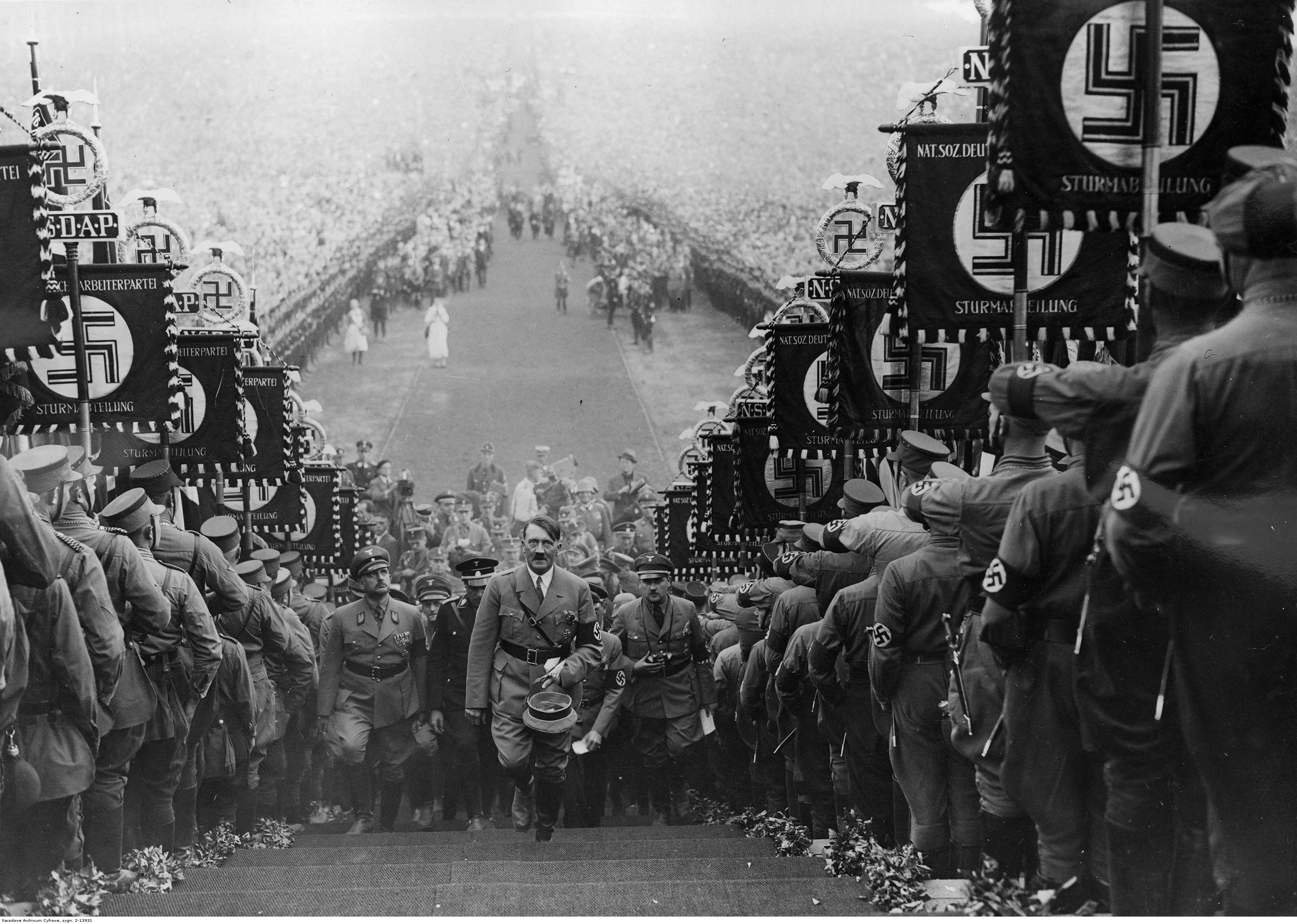
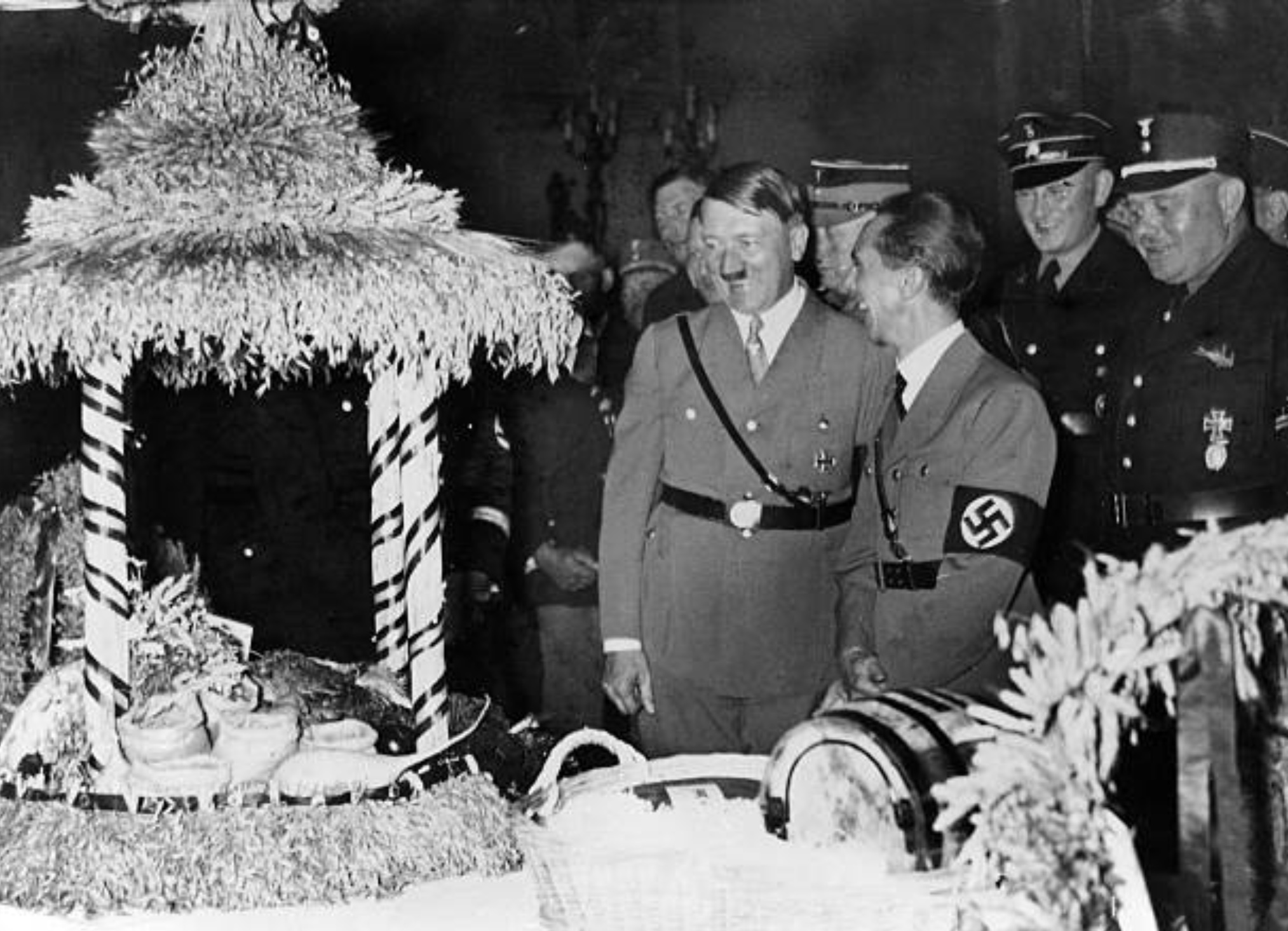
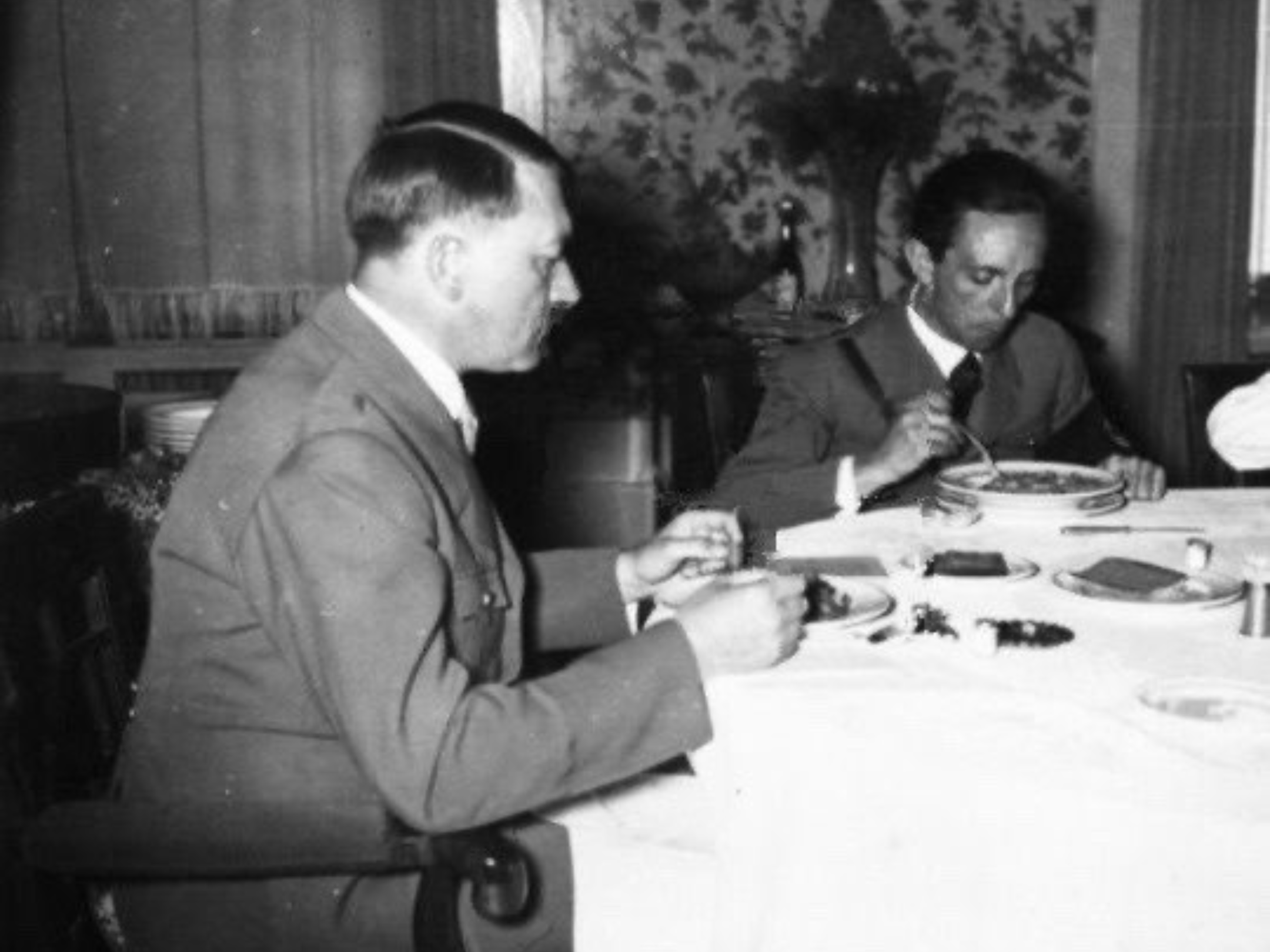
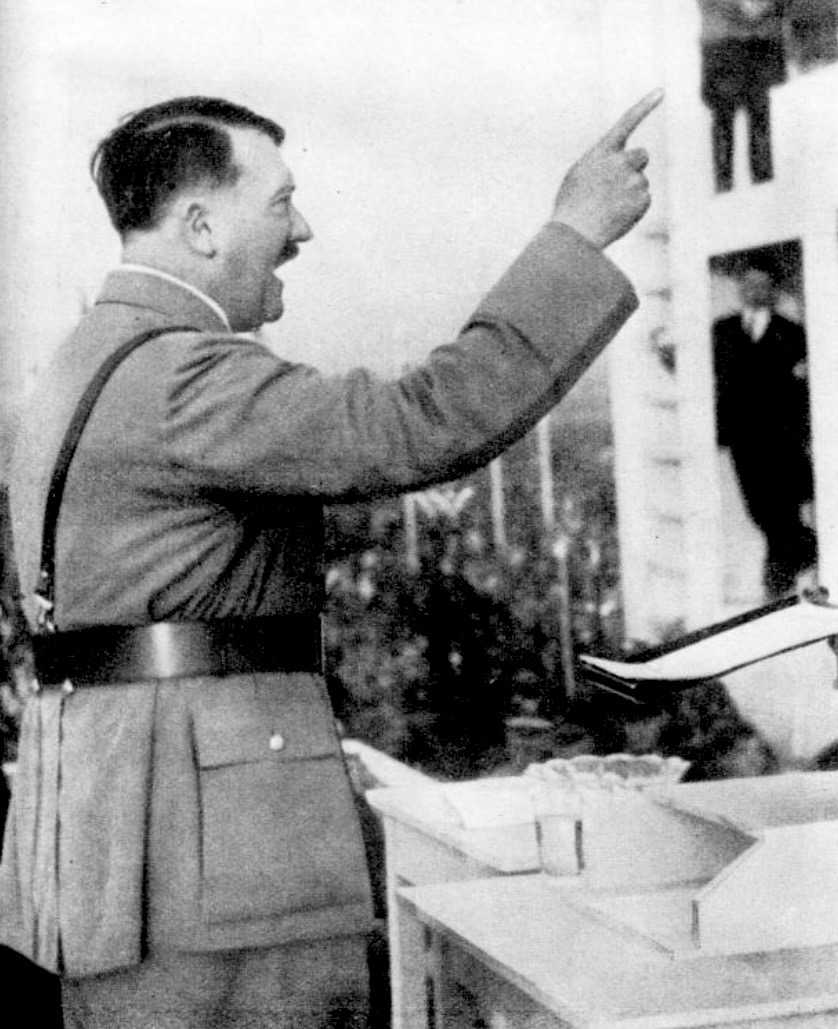
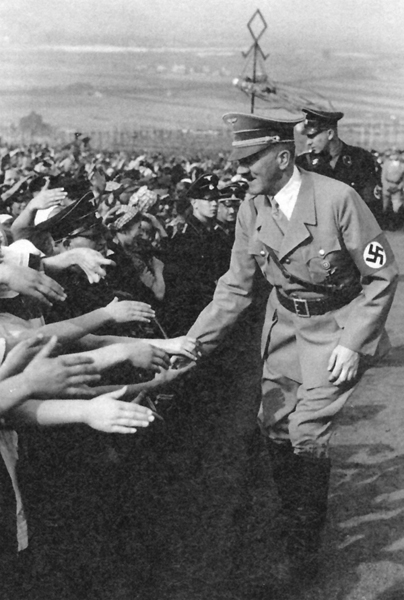
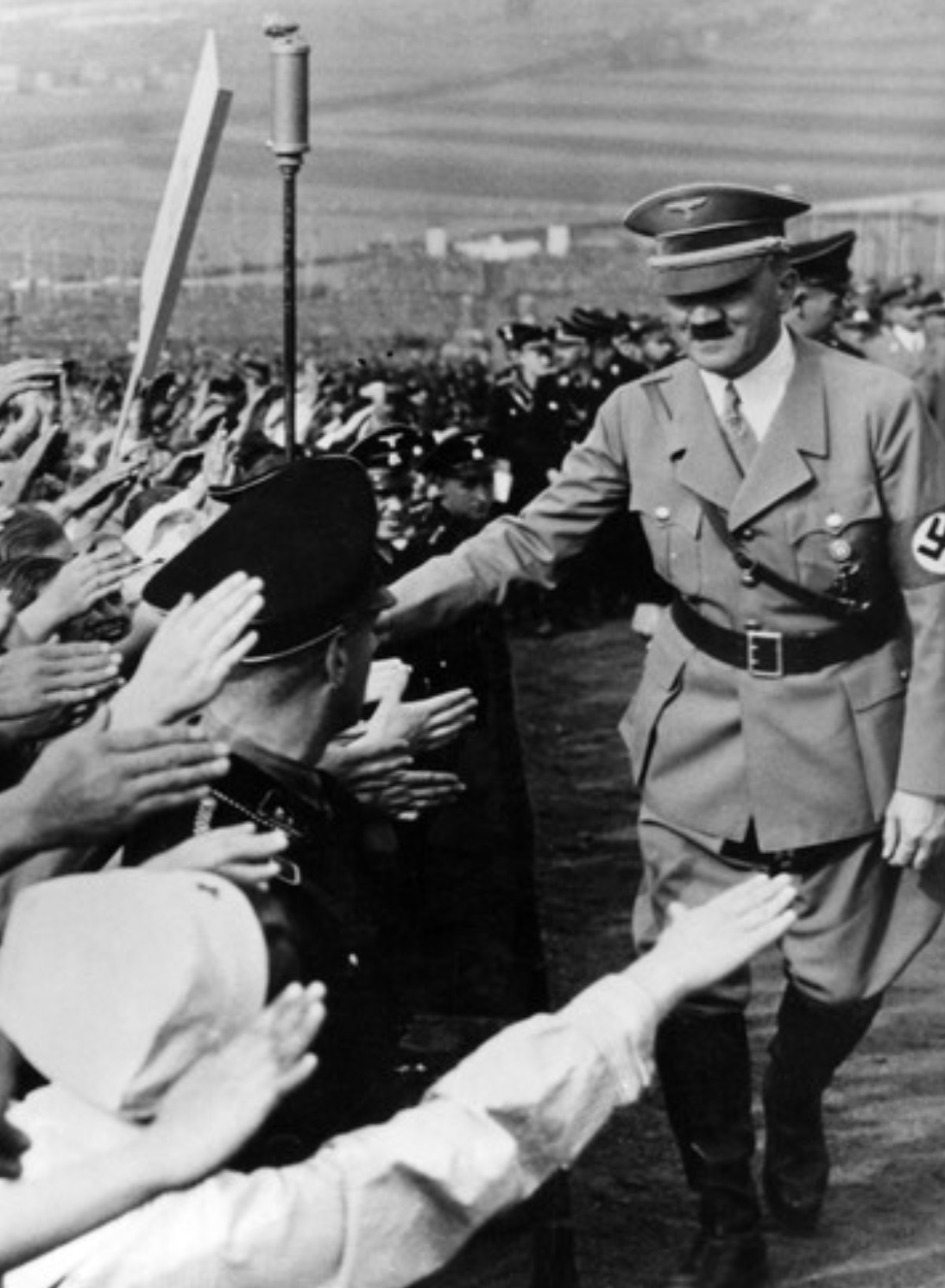
This is undoubtedly one of Heinrich Hoffmann’s most famous photographs of Adolf Hitler, and it was taken at the Bückeberg Reichserntedankfest (Harvest Thanksgiving Festival) on 30 September 1934, where 700,000 people were in attendance. TIME magazine has named this photograph as one of the 100 Most Influential Photographs of All Time.Adolf Hitler walking along the Führer’s way towards the harvest monument during the first Reichserntedankfest held on 1 October 1933.The 8 October 1933 issue of “Zeitbilder,” a supplement to the Vossische Zeitung, a German newspaper published in Berlin between 1704 and 1934, covering the 1933 Erntedankfest.Harvest Festival 1933, Adolf Hitler and Joseph Goebbels enjoying the gifts received from German farmers back at the Reichskanzlei (Reichs Chancellery)- Published in ‘Berliner Montagspost’ 02.10.1933- Photographer: Presse-Illustrationen Heinrich Hoffmann- 01.10.1933.
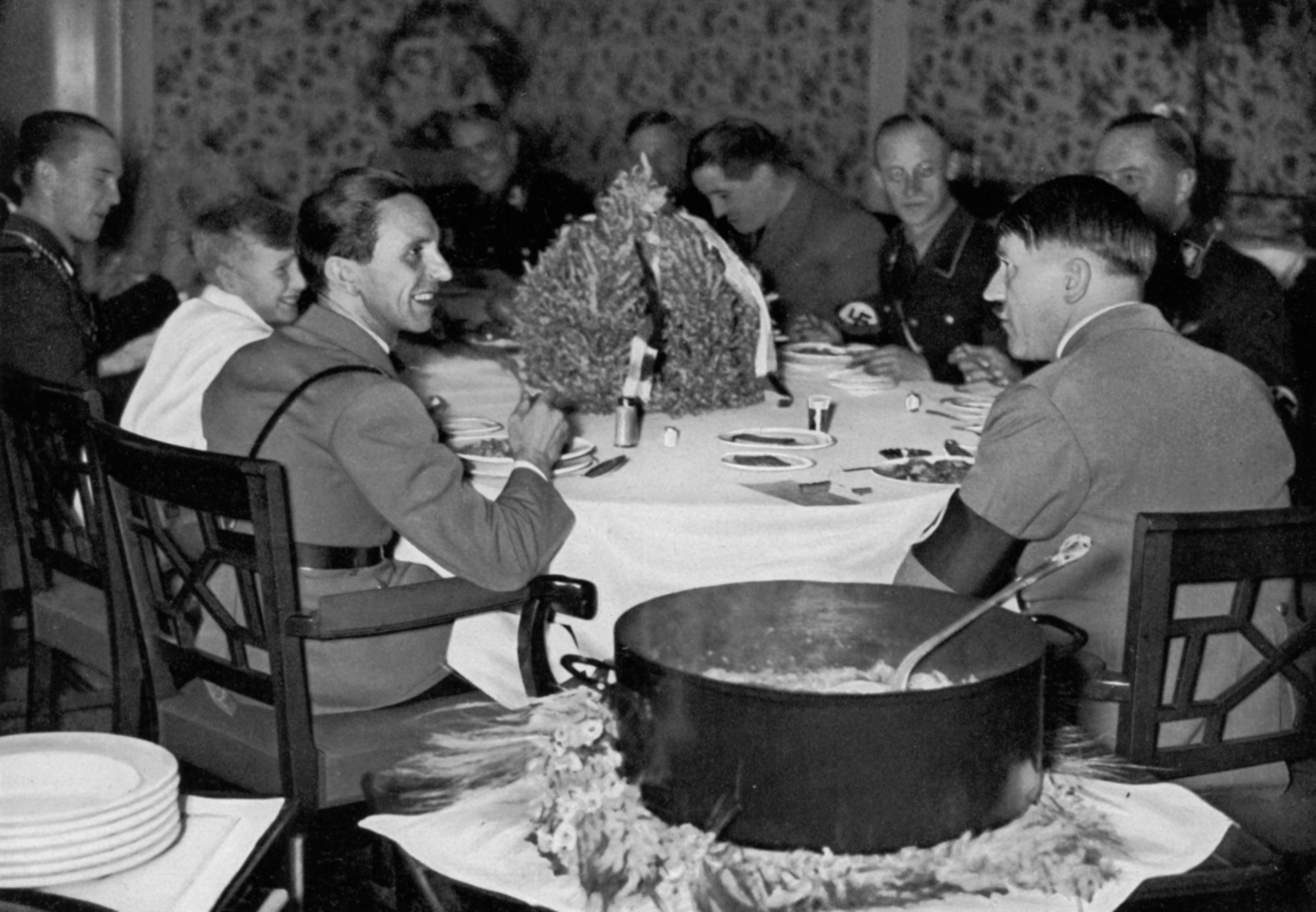
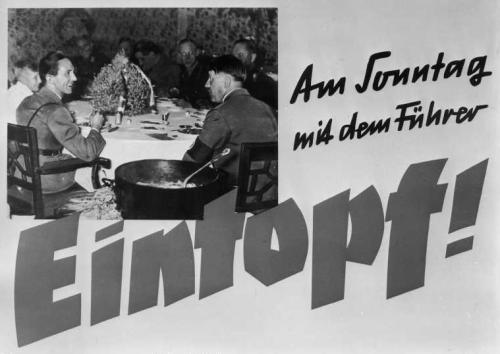
The first official Stew Sunday (Eintopfsonntag) in the German Reich took place on Sunday, 1 October 1933 the evening after the first Reichserntedankfest. During the Nazi regime it was repeated on the first Sunday of October through March to support the recently founded Winter Relief Organization (Winterhilfswerk / WHW). By order of the Reich government the population was obliged to only eat simple stew dishes, the price of which should not exceed half a Reichsmark per person. The difference between the higher price of a usual Sunday meal would then be donated to the WHW charity program.
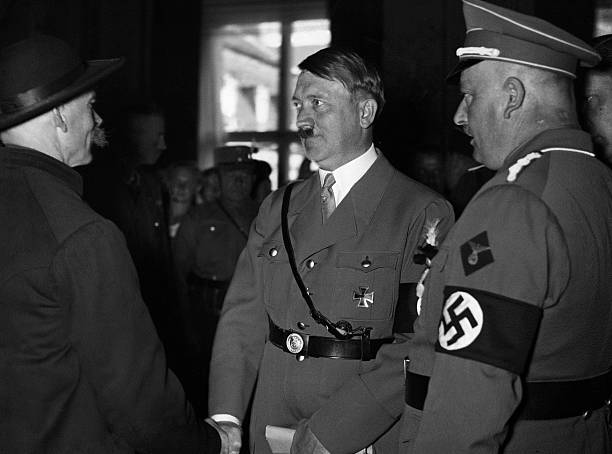
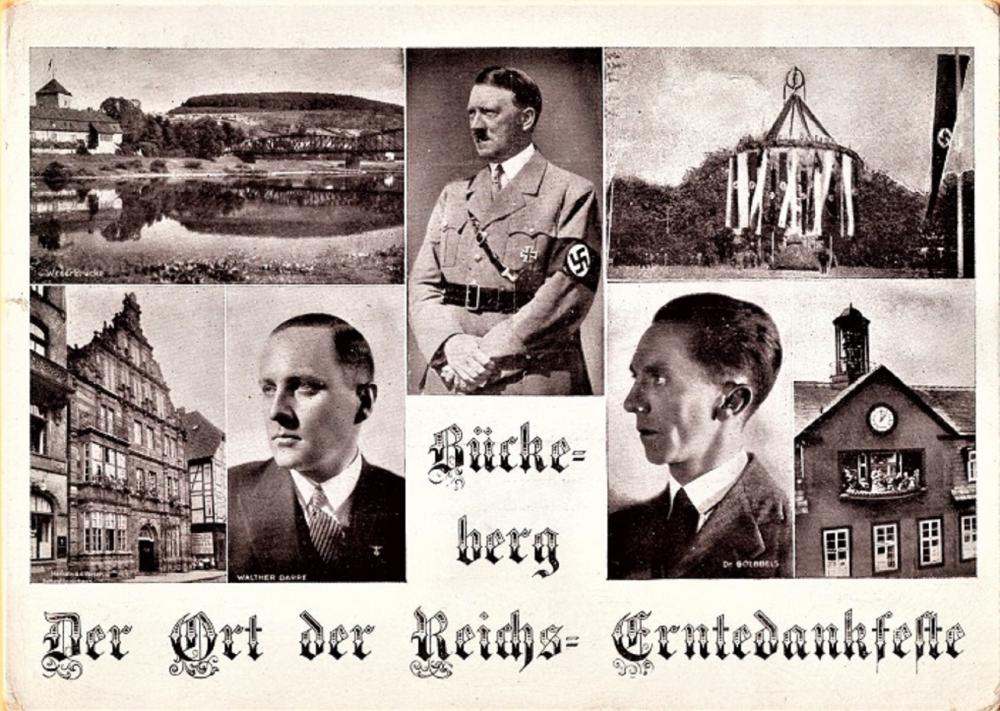
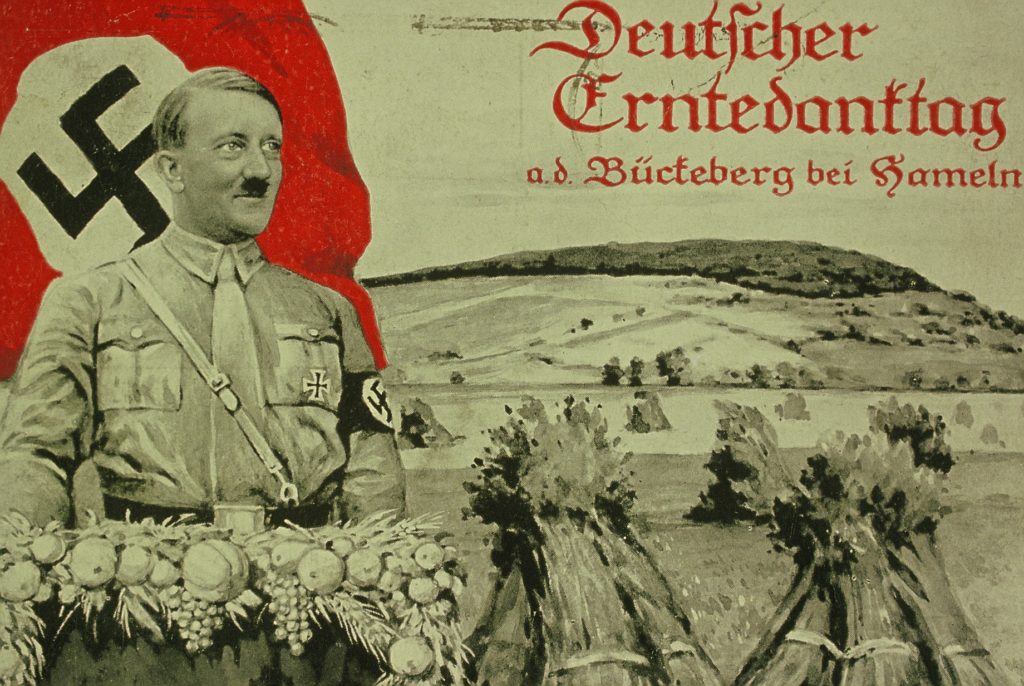
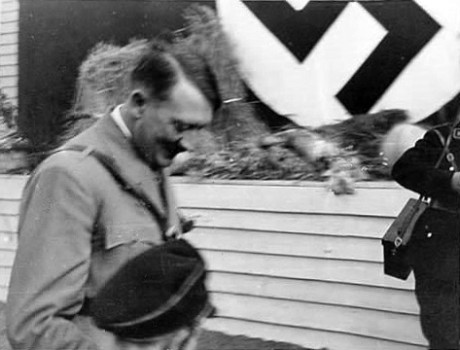
Walther Darré, Adolf Hitler und Joseph Goebbels am “Eintopfsonntag”. Darré joined the National Socialist Party in 1930 at the behest of Adolf Hitler and was the Reichsminister of Agriculture from 1933 to 1942. He was recruited by Hitler because of his Blood and Soil ideology.Hitler shaking hands with a civilian- Photographer: Presse-Illustrationen Heinrich Hoffmann- Published by: ‘Berliner Montagspost’ 02.10.1933Bückeberg Der Ort der Reichs Erntedankfeste (Bückeberg the site of the Reich’s harvest festivals) Hoffmann postcard.Postcard from the German Harvest Thanksgiving Festival (Deutscher Erntedanktag) at Bückeberg, district of Hamelin-Pyrmont, depicting the “Führer” Adolf Hitler as a friend of the farmers.
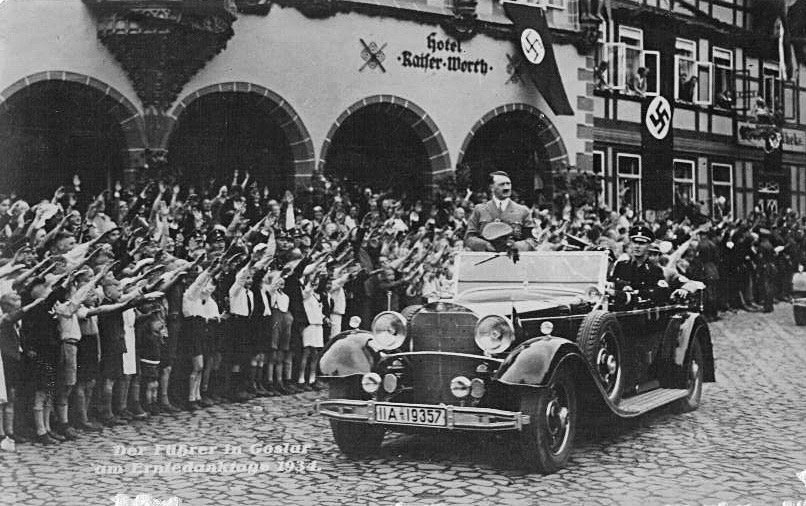
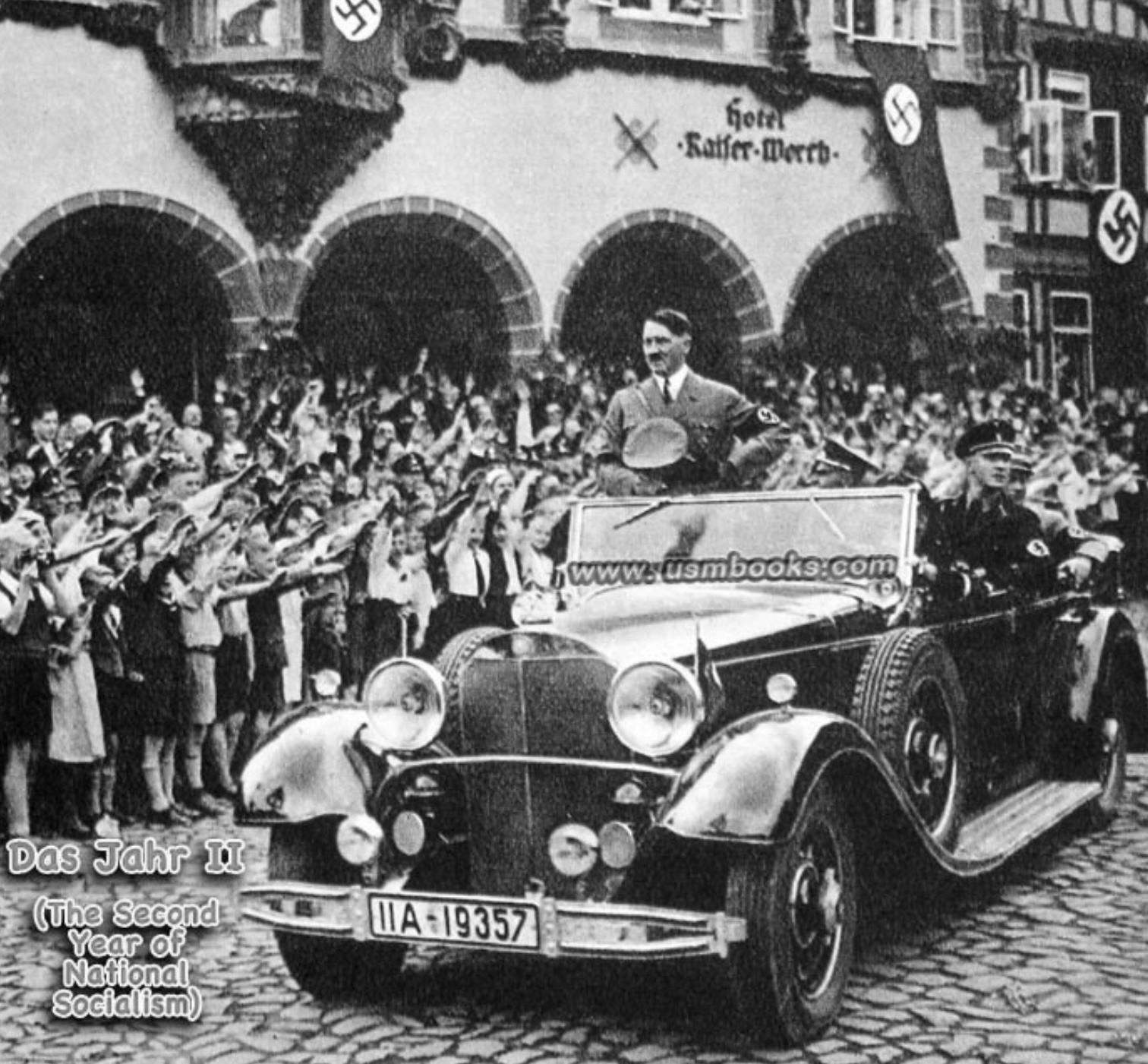
Between 1934 and 1939, Goslar hosted the annual National Farmers’ Rallies (Reichsbauerntag). These massive, heavily choreographed events were designed to elevate the German peasant to the forefront of Nazi racial and societal goals. These acted like a “Nuremberg Rally” for the agricultural sector, and always ran concurrently with the Erntedankfest hosted in Hamelin. The city of Goslar was heavily utilized during the Third Reich era for propaganda and rural agricultural policy. Because of its medieval imperial history, the Nazis declared Goslar a “Peasant Capital” (Reichsbauerndorf). Goslar was also the administrative center for Nazi Minister of Food and Agriculture, Richard Walter Darré, the chief architect of the Blut und Boden (Blood and Soil) ideology.
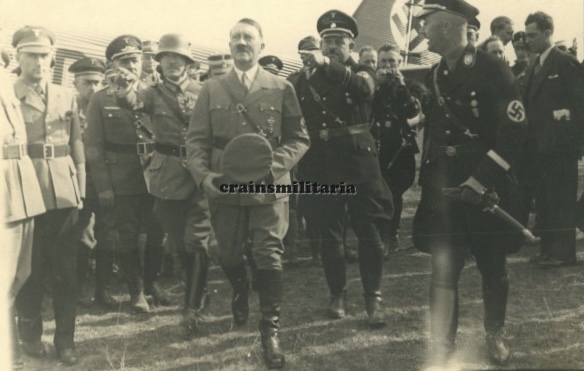
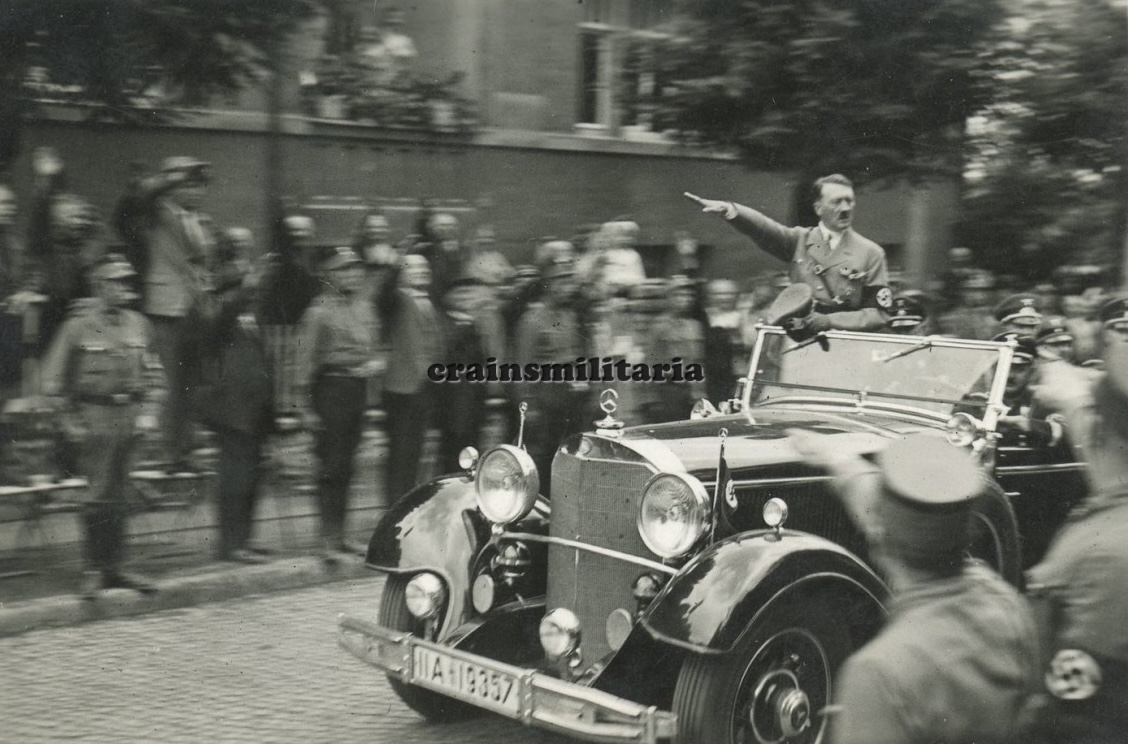
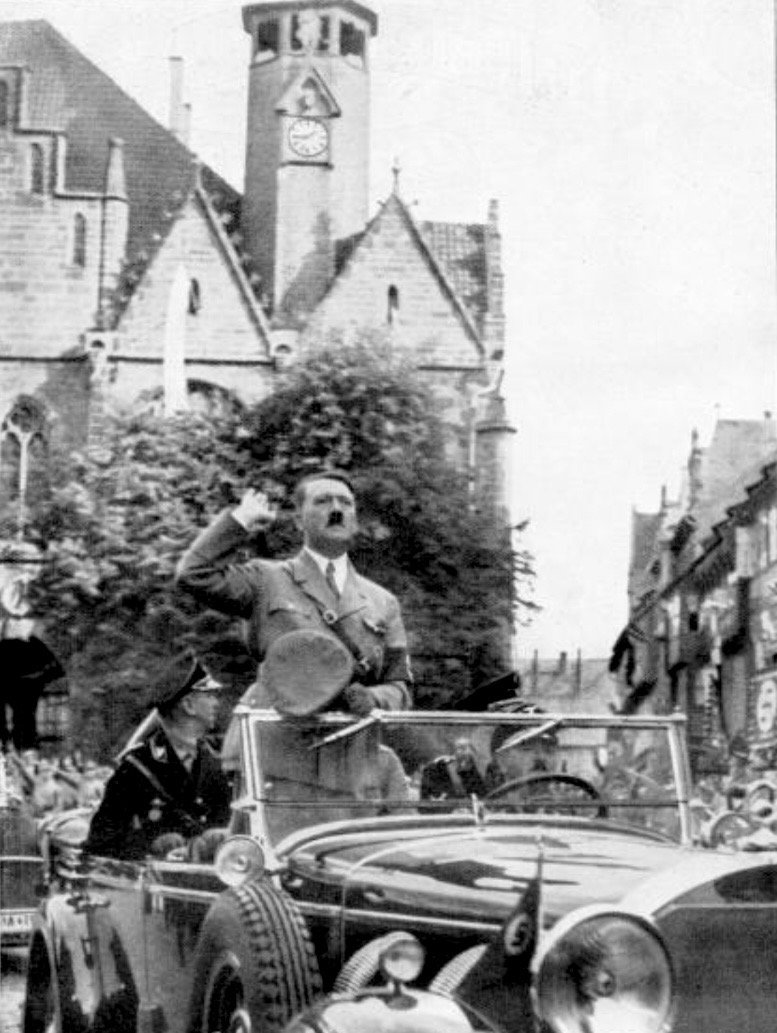
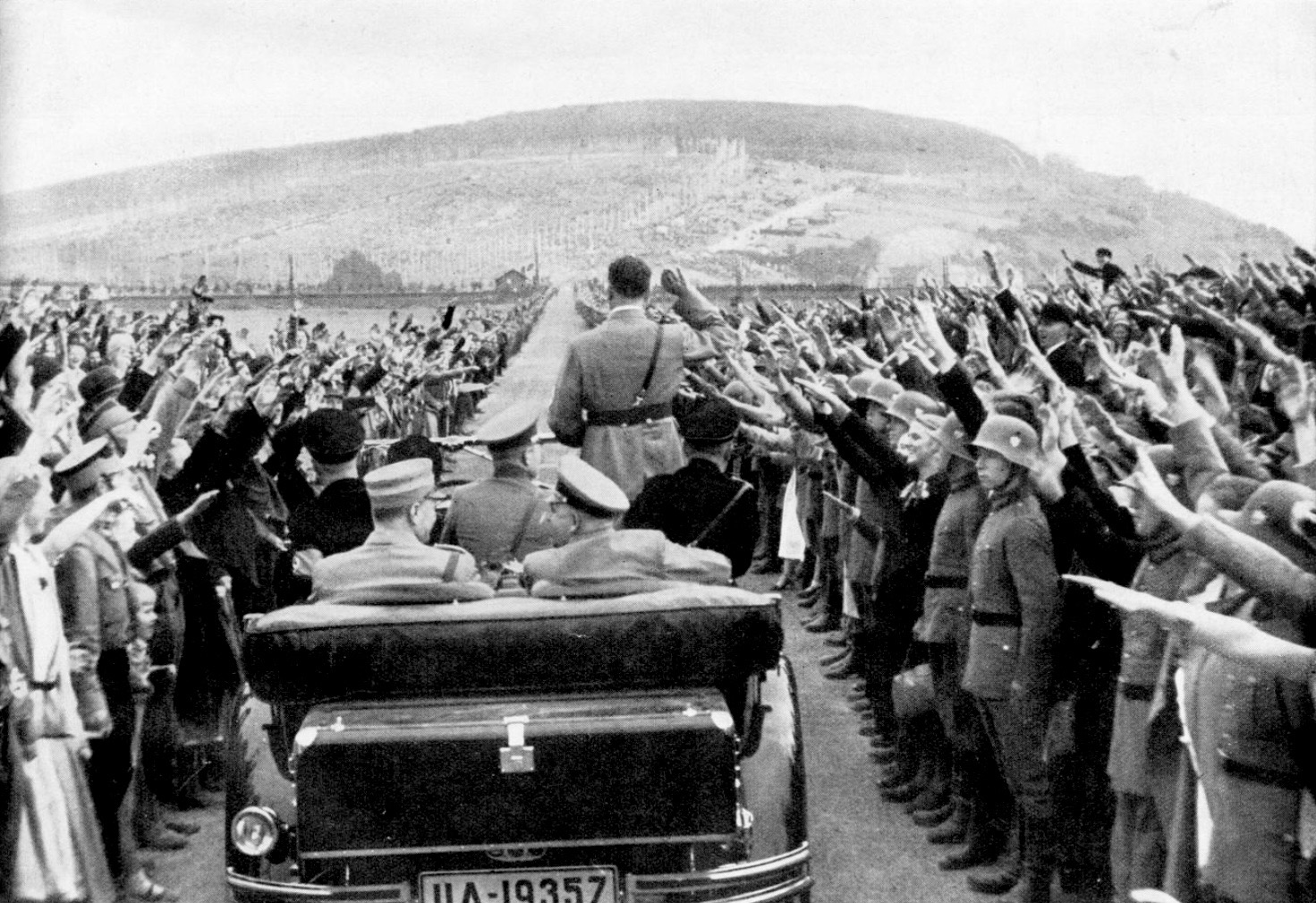
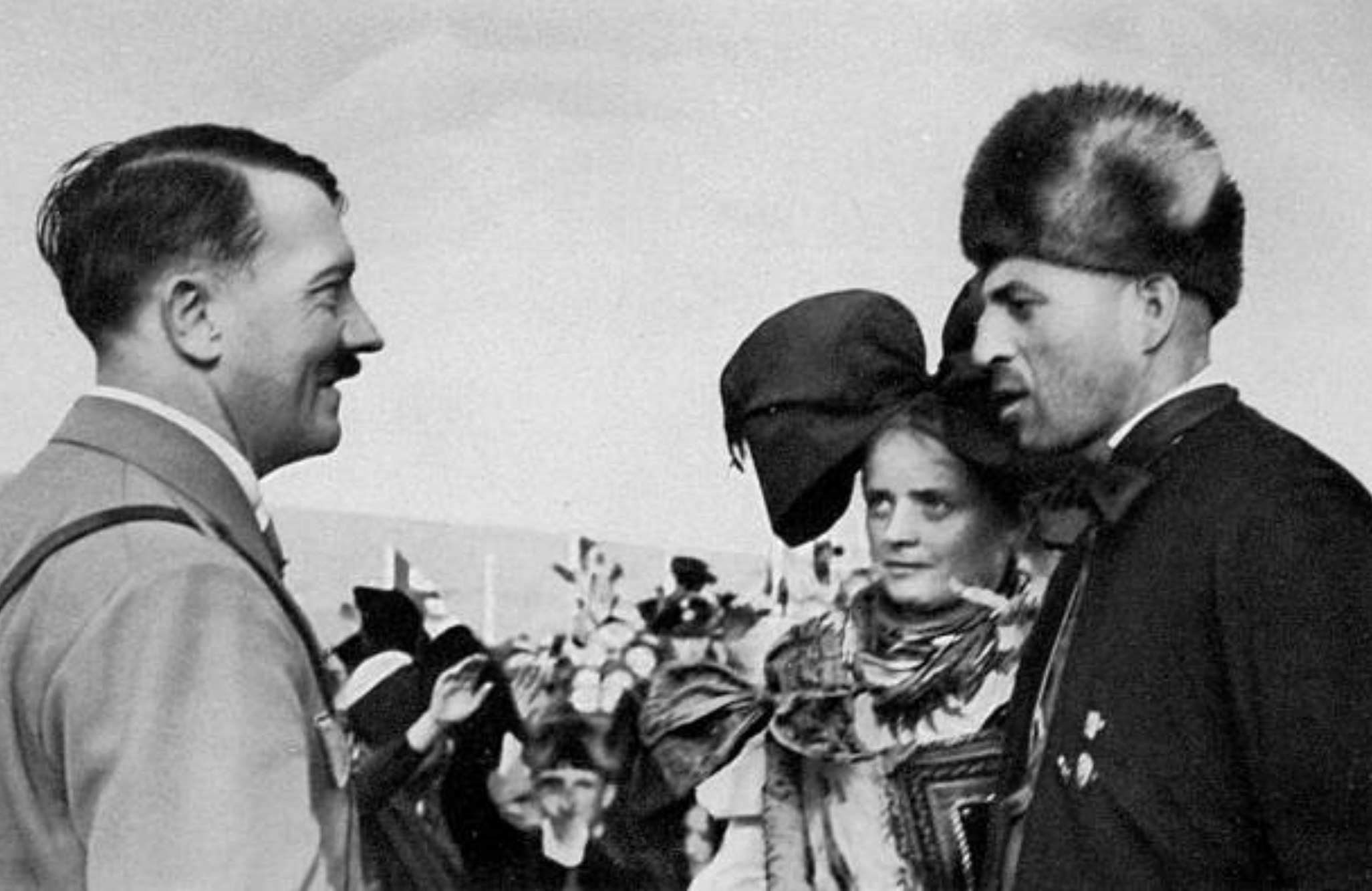
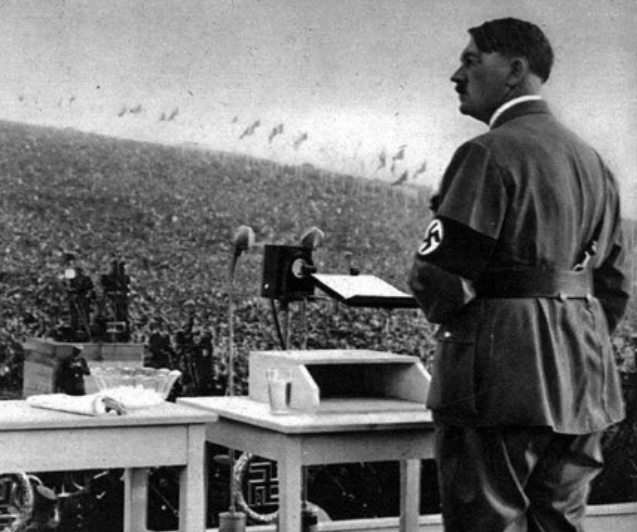
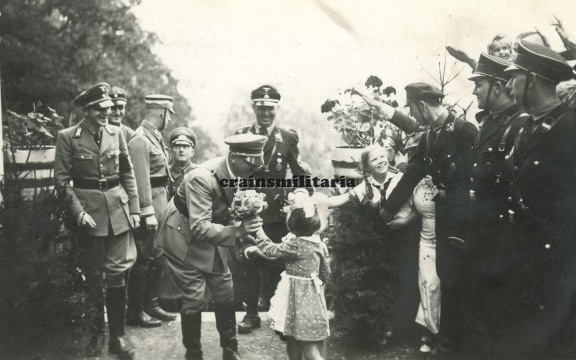
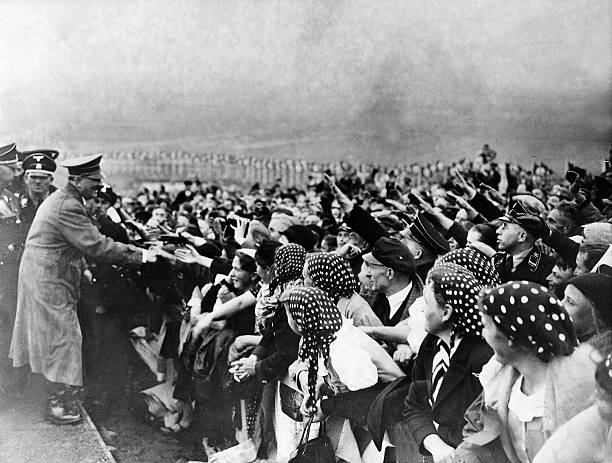
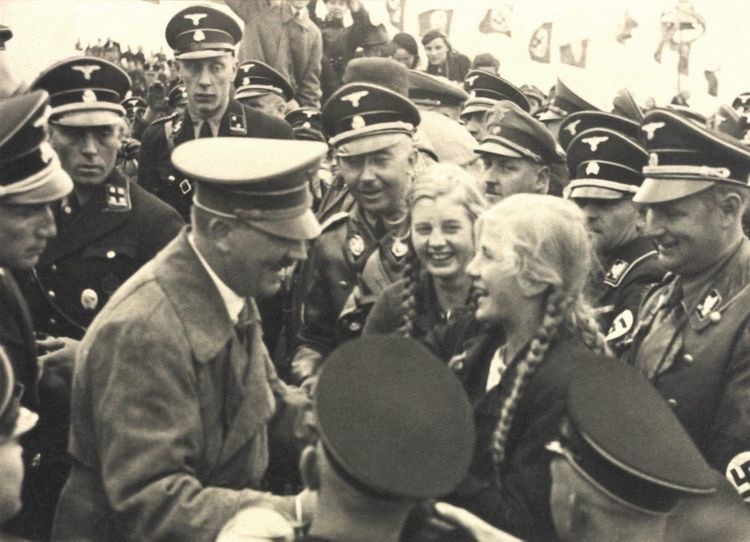
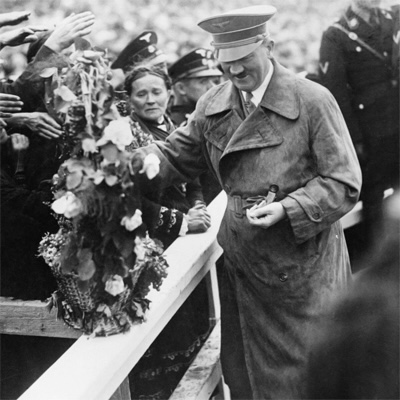
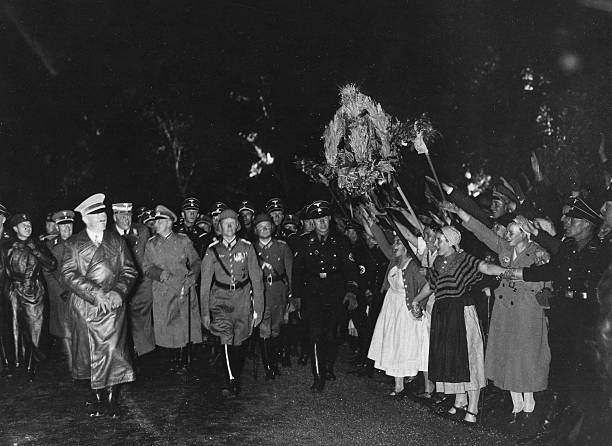
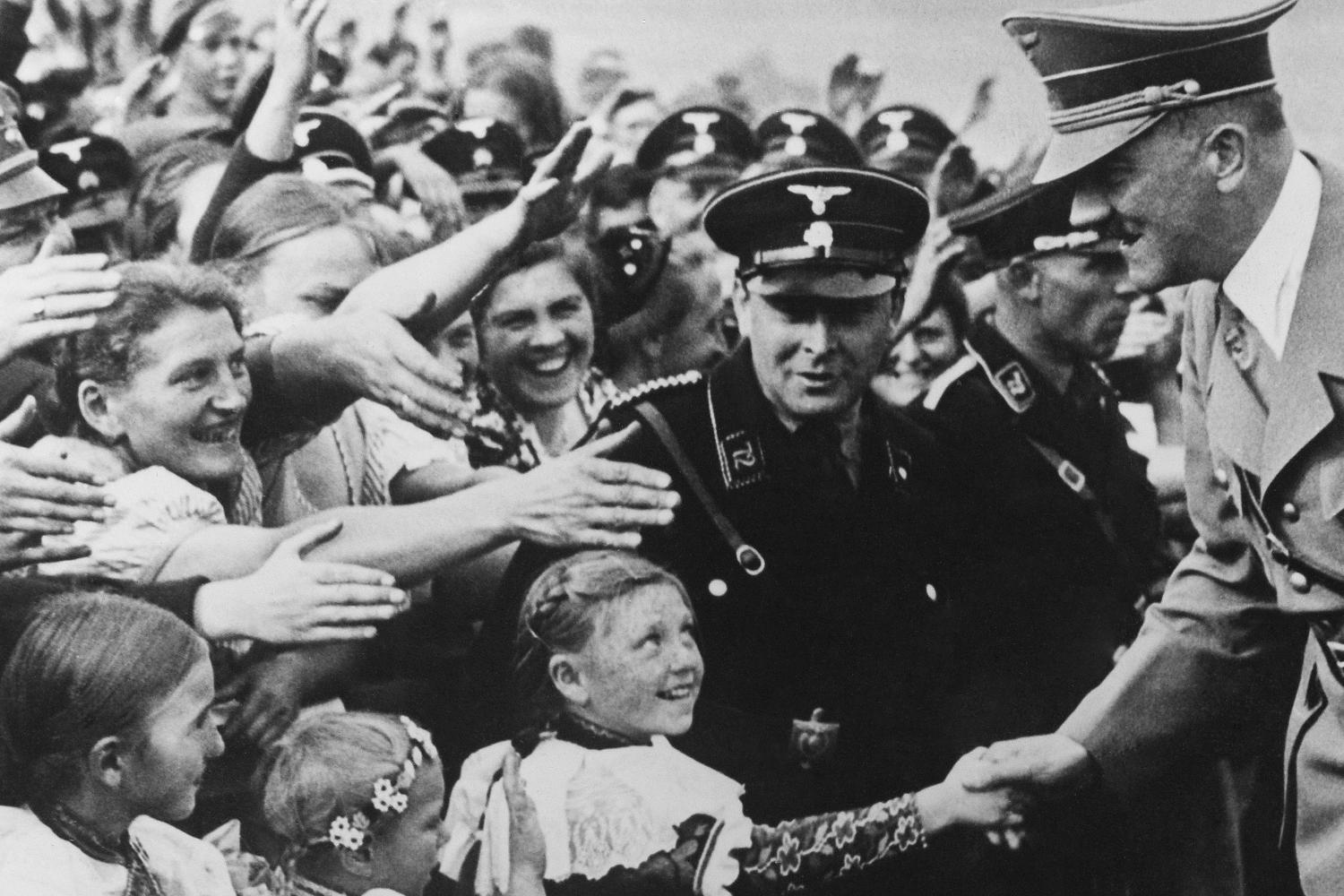
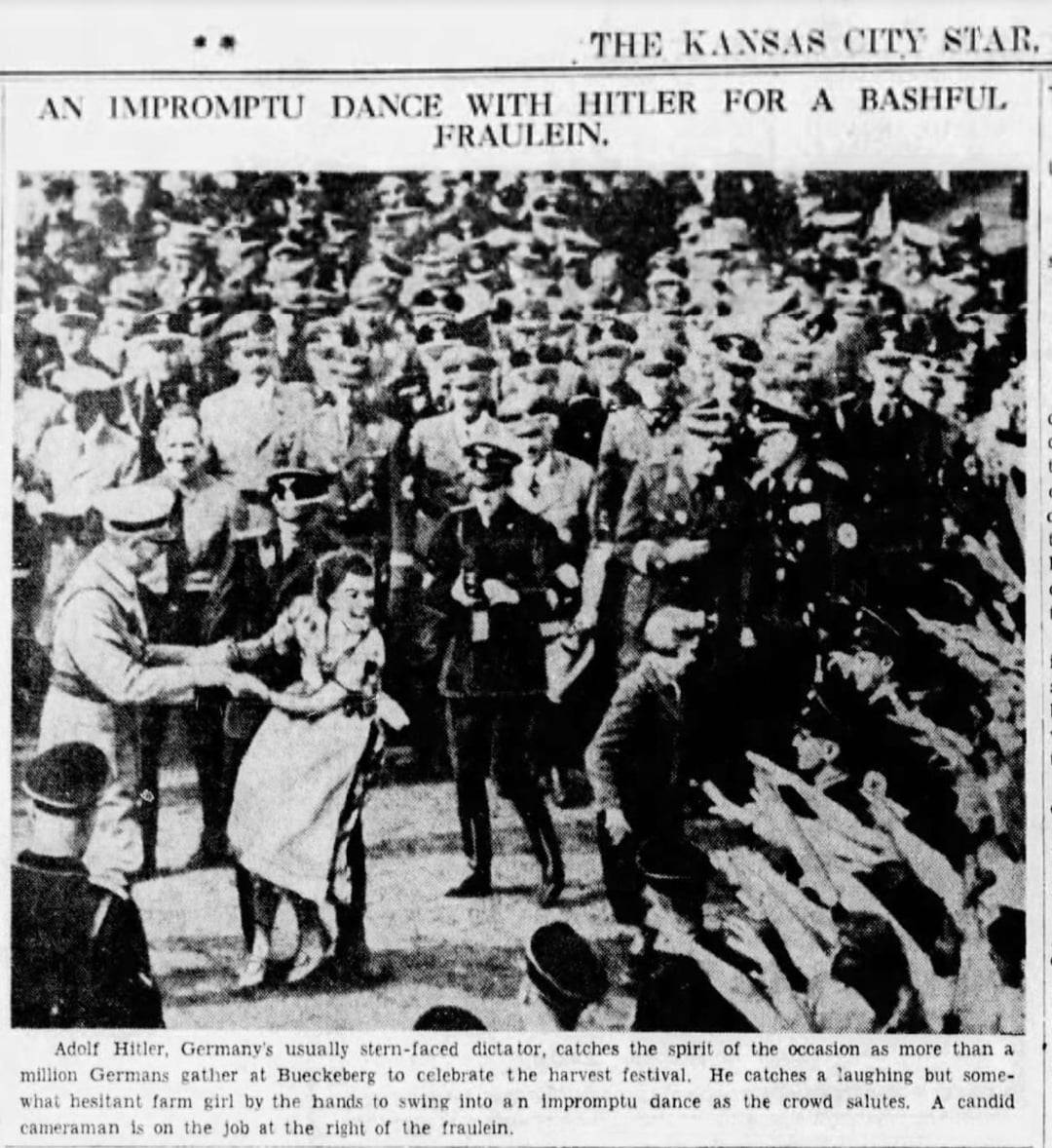
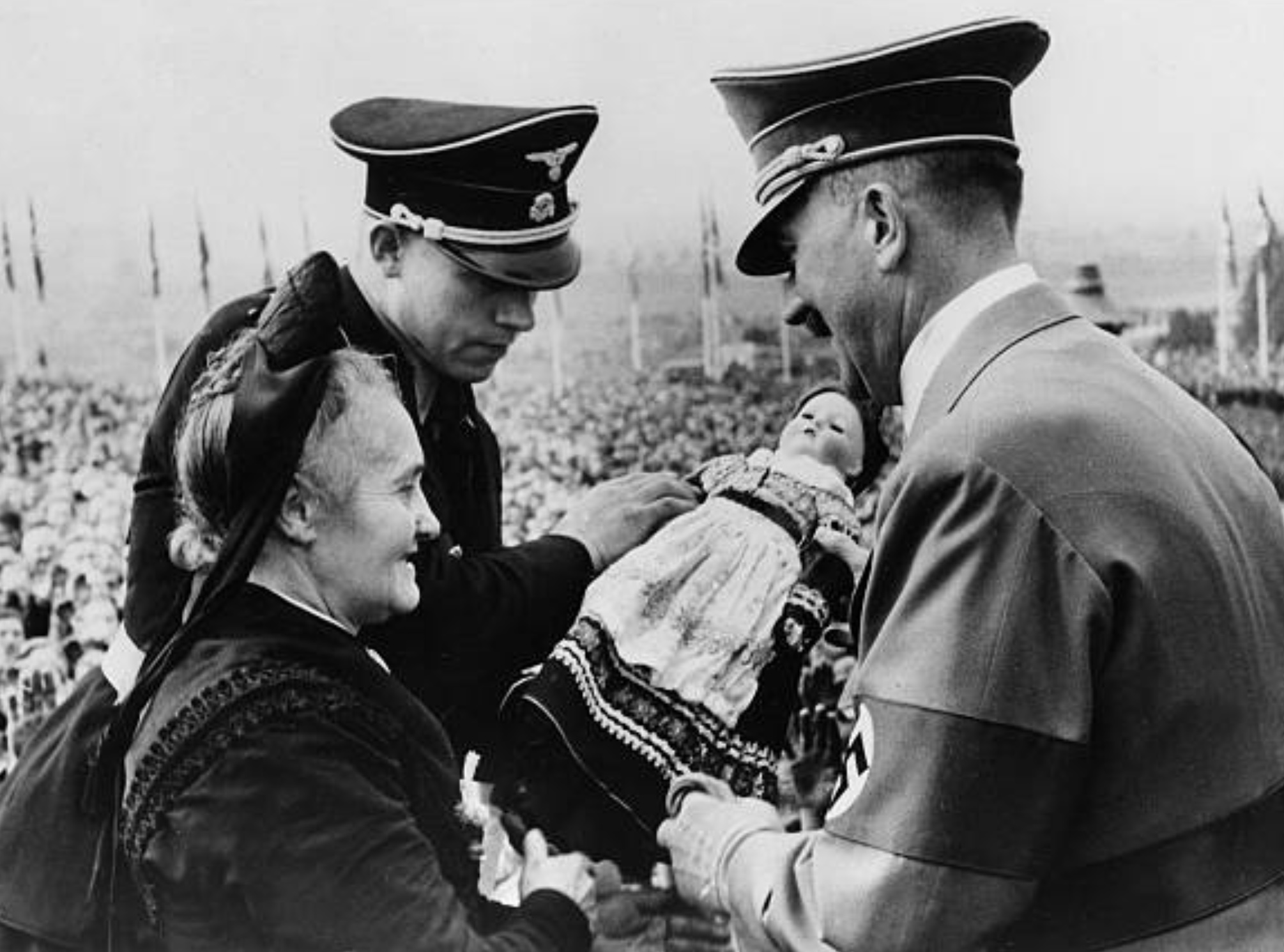
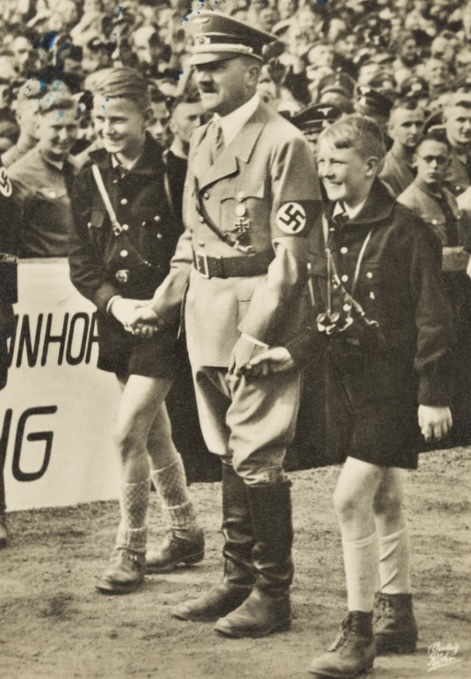
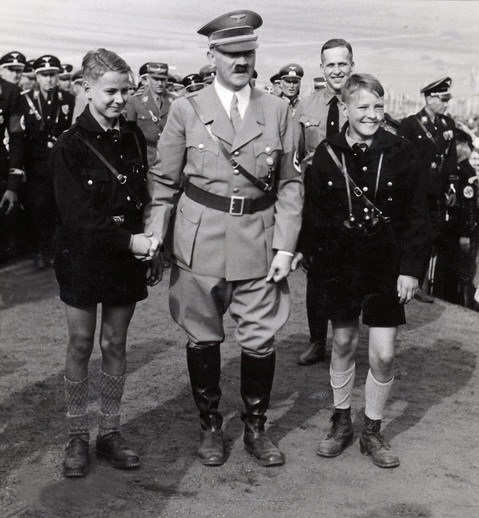
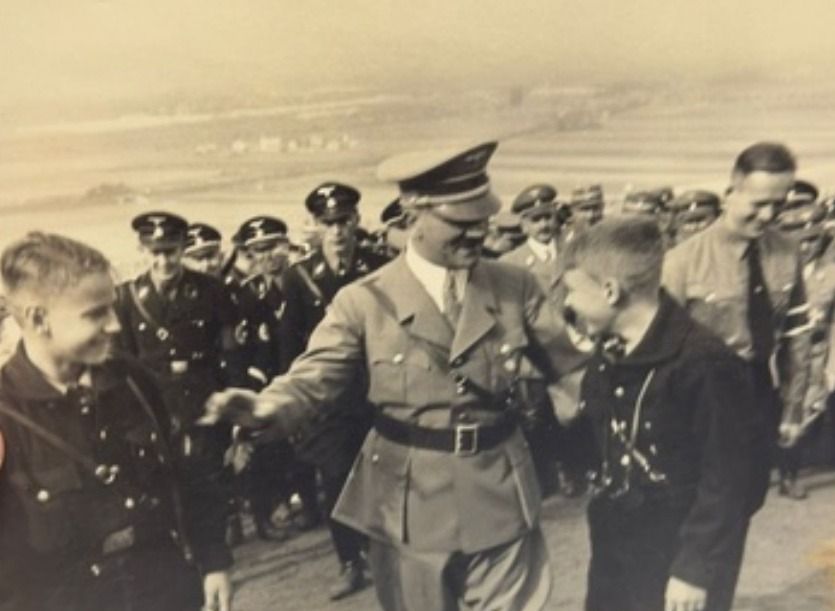
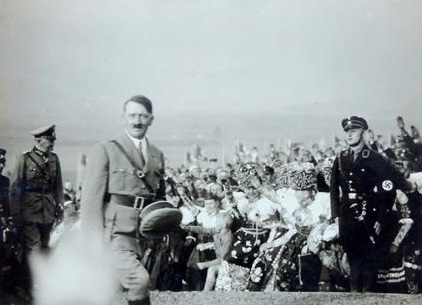
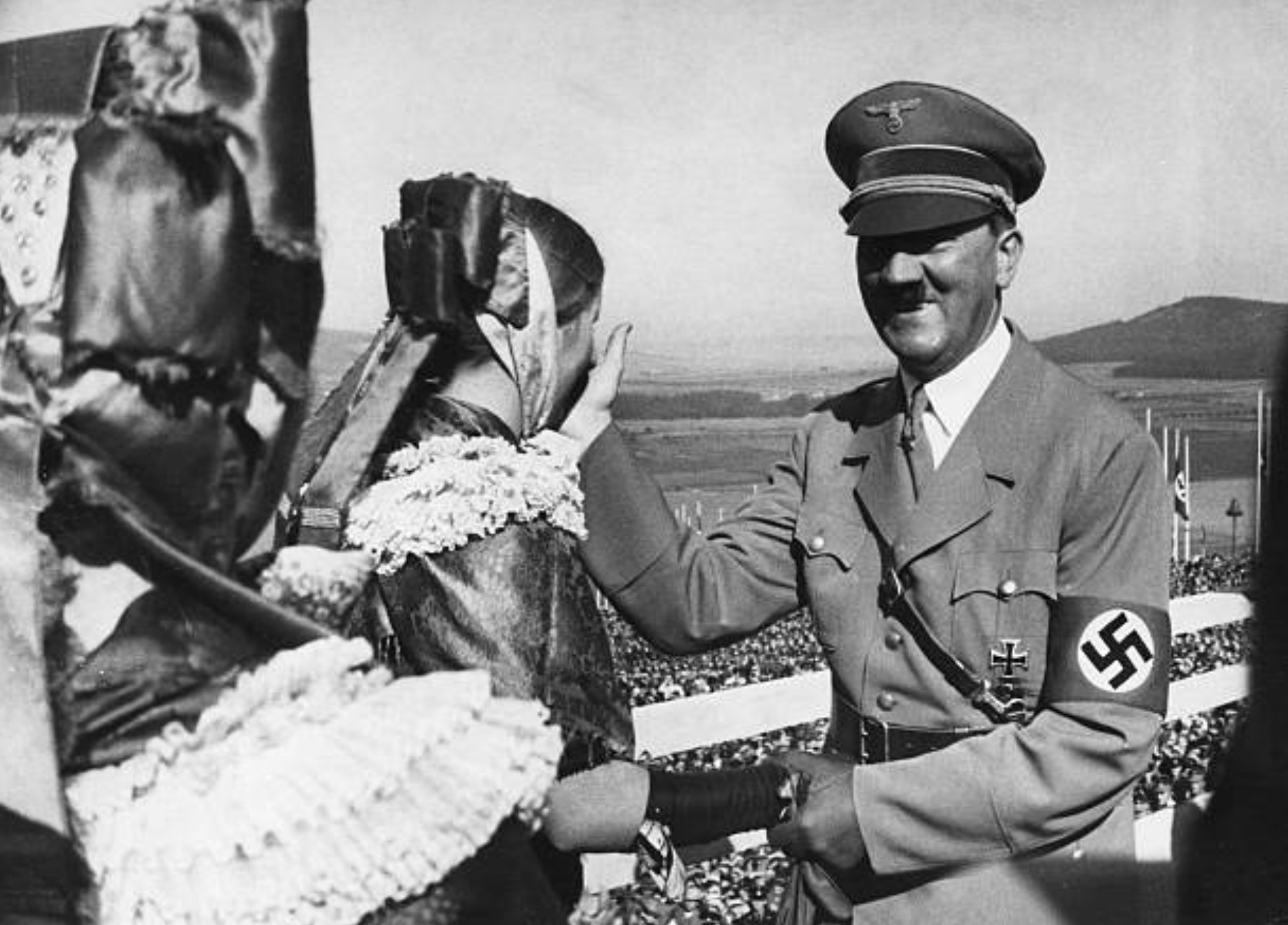
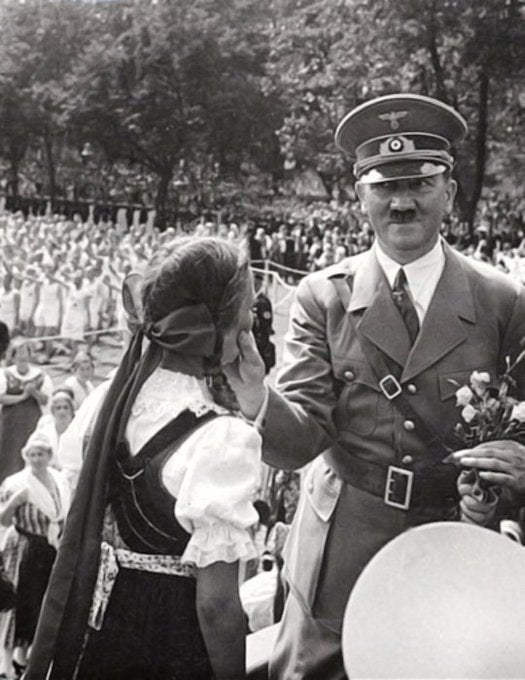
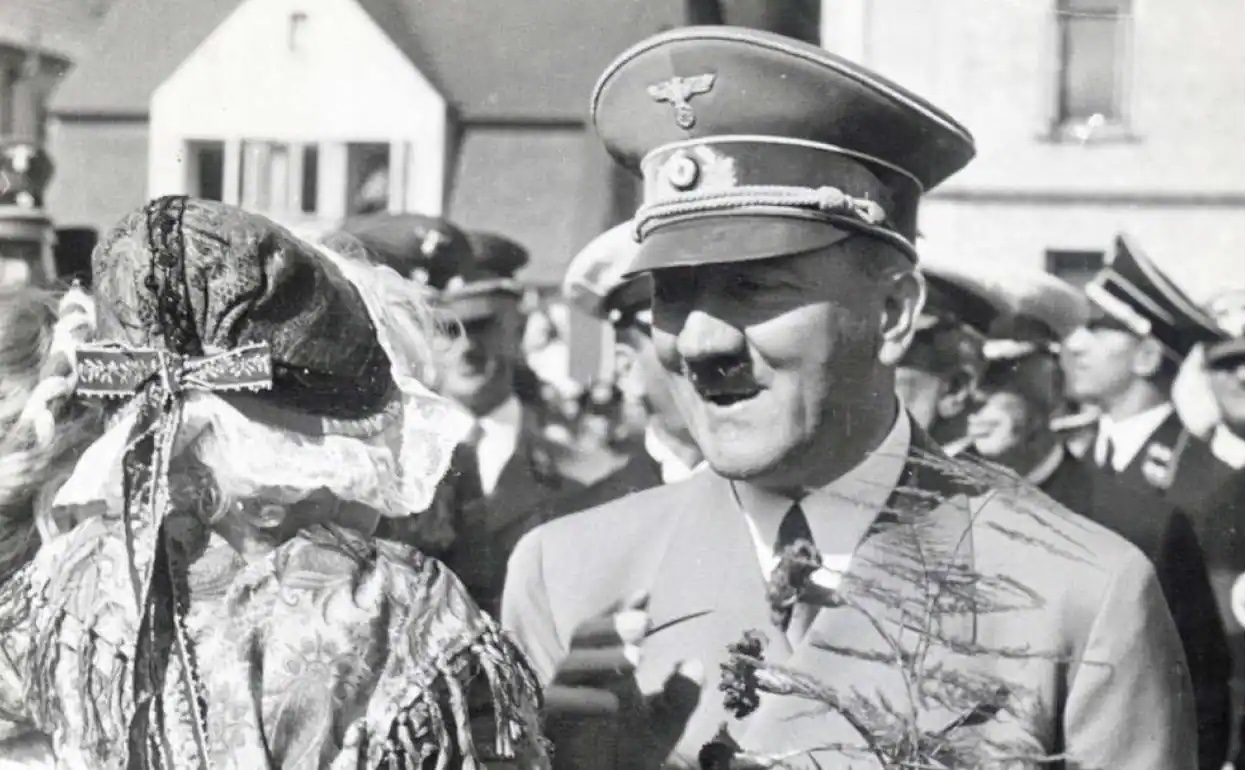
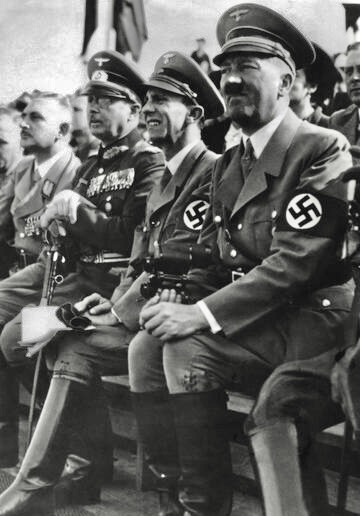
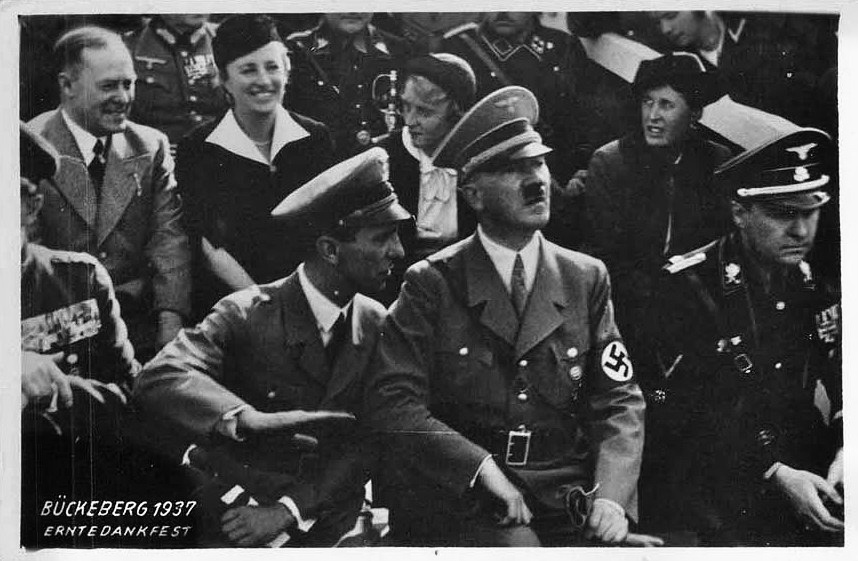
Adolf Hitler with Allgemeine SS officers and a Heer officer, shortly after landing with a Junkers Ju 52 at Goslar in route to the Erntedankfest on 30 September 1934.The Führer in Goslar on Thanksgiving Day 1934Hitler in der “Reichsbauernstadt” Goslar . Picture taken at the Marktplatz Goslar on 30 September 1934. Hitler arrived in Goslar around 10 o’clock and was received by farmers. He delivered a speech in the Kaiserpfalz at the Kaiserbleek.Adolf Hitler driving through Hildesheim on his way to the Erntedankfest ceremony held on 30 September 1934.Adolf Hitler greets several women in traditional costumes at the Erntedankfest on the Bückeberg on 30 September 1934.Postcard of Führer and Chancellor Adolf Hitler with women in traditional costumes at Bückeberg, reads ‘strahlende augen leuchten aus ihren gesichtern, dann sie durften heute beim Führer sein’ (beaming eyes shine from their faces, that they were allowed to be with the Führer today)The crowd welcomes Adolf Hitler on the Reichserntedankfest (Reich’s Harvest Thanksgiving Festival) on the Bückeberg Hill near Hameln, Germany on 30 September 1934.Erntedankfest Bückeberg – Hitler mit Bäuerinnen Der Festplatz auf dem Bückeberg beiHameln: Adolf Hitler begrüsst BückeburgerBäuerinnen in Festtagstracht 30 September 1934.Erntedankfest 1934Adolf Hitler is showered with gifts at the 1934 Erntedankfest as Joseph Goebbels looks on.Adolf Hitler greets the crowd for the Erntedankfest on 30 September 1934.Sammelwerk Nr. 15 Gruppe 64 Bild Nr. 16 “Adolf Hitler: Bilder Aus Dem Leben Des Führers”. Adolf Hitler begrüßt Ehepaar in hessischer Tracht, Bückeberg, Erntedankfest 1934 (Collectible picture Adolf Hitler welcomes a couple in Hessian costume, Bückeberg, Thanksgiving Day 1934)Postkarte: Hitler leibhaftig zu berühren war von vielen Festteilnehmern heiß ersehnt, gelang aber nur wenigen. Das Konzept des Festes ließ dafür während Hitlers „Weg durchs Volk“ ausdrück- lich Raum). (Postcard: Touching Hitler in person was something many of the festival participants had longed for, but only a few managed to do so. The concept of the festival expressly left room for this during Hitler’s “path through the people”.Bückeberg, Reichserntedankfest, Bäuerin begrüßt Führer Adolf Hitler Adolf Hitler und eine Bäuerin beim Erntedankfest auf dem Bückeberg.Heinrich Hoffmann postcard: “The highlight of the Thanksgiving celebration is the leader’s speech”Adolf Hitler delivers his speech at the annual harvest festival on the Bückeberg Hill on 30 September 1934.Adolf Hitler on a trip through Goslar on 6 October 1935. From his car, Hitler says thank you for a harvest flower at the time of the harvest thanksgiving celebrationAdolf Hitler welcomed by a local girl during a short visit to Hildesheim, on 6th of October 1935, after attending the “Erntedankfest” ceremony on the Bückeberg. Harvest festival 1935 at the Bueckeberg, women enthusiastically greeting Adolf Hitler.View of the podium during the greeting of Adolf Hitler at the Reichserntedankfest (“Reich Harvest Festival”) on Bueckeberg, on the left and right stand SA standard bearers on 6 October 1935.An Erbhofbauer (hereditary farmer) hands over the harvest crown to Adolf Hitler (seen from behind in party uniform) in 1935.Adolf Hitler at the Harvest Festival in Goslar on 6 October 1935 on the estrade balcony of the imperial palace, behind him is Joseph Goebbels. Hitler is protected by his SS guards, who stand in front of the balcony and carry flags as they view the Großer Zapfenstreich. The Großer Zapfenstreich (“Grand Tattoo”, “Beating Retreat”) is a military ceremony performed in Germany and Austria. It is similar to the military tattoo ceremony performed in English-speaking countries, and is the most important ceremonial act executed by the German armed forces,Unterwerfung und Glaube. Der monströse Mantel, in den Hitler gekleidet ist, ist der Tatsache geschuldet, dass das Fest des Jahres 1936 verregnet war. Der Begeisterung der Festteilnehmer tat das offenkundig keinen Abbruch. (Submission and Faith. The monstrous coat in which Hitler is dressed is due to the fact that the 1936 festival was rainy. This obviously did not dampen the enthusiasm of the festival participants.)“Das Spalier des Jubels: Tausende von Händen strecken sich dem Führer entgegen, der immer und immer wieder auf dem Weg zur Tribüne verweilt, um die Grüsse der Bauern entgegenzunehmen”; im Gefolge Hitlers nach links: SS-Obergruppenführer Joseph (Sepp) Dietrich und Reichsführer SS Heinrich Himmler- 04.10.1936Erntedankfest 1936Adolf Hitler arrives to a fawning crowd of ecstatic young women on the Bückeberg for the annual Erntedankfest on 4 October 1936.Adolf Hitler is showered with an array of handmade gifts as he greets spectators during the annual Erntedankfest on 4 October 1936.Adolf Hitler on the festival grounds on the ‘Bueckeberg’ near Hameln: Adolf Hitler on the VIP stand with (to the left) Wilhelm Meinberg, ‘Reichsobmann des Reichsnaehrstandes’, Richard Walter Darre and Joseph Goebbels – 4 October 1936 – Published by ‘Berliner Montagspost’ 05.10.1936Adolf Hitler on the festival grounds on the ‘Bueckeberg’ near Hamelin on 4 October 1936 at the presentation of the harvest crown.Adolf Hitler holding a speech at the Bueckeberg Harvest Festival on 4 October 1936. Photographer: Presse-Illustrationen Heinrich Hoffmann- Published in ‘Berliner Montagspost’ 05.10.1936Closing of the official celebrations in Goslar, the ‘Reichsbauernstadt’: Adolf Hitler on the way to a reception for representatives of the state farmers’ associations in the Imperial Palatinate; in Hitler’s entourage on the far left is the Italian Propaganda Minister Dino Alfieri, second to the right is the personal adjutant SA Obergruppenführer Wilhelm Brückner on 4 October 1936.The Führer Adolf Hitler is welcomed by an enthusiastic crowd upon his arrival at the Bückeberg Harvest Festival on 3 October 1937.Adolf Hitler is welcomed by the farmers on National Harvest Day on 3 October 1937.Adolf Hitler greets a large group of ecstatic young women for National Harvest Day on 3 October 1937.Image taken from the Sunday 17 October 1937 addition of the Kansas City Star, titled “AN IMPROMPTU DANCE WITH HITLER FOR A BASHFUL FRAULEIN” and covering the 1937 Erntedankfest. “Adolf Hitler, Germany’s usually stern-faced dictator, catches the spirit of the occasion as more than a million Germans gather at Bueckeberg to celebrate the harvest festival. He catches a laughing but somewhat hesitant farm girl by the hands to swing into an impromptu dance as the crowd salutes. A candid cameraman is on the job at the right of the fraulein.”Erntedankfest 3 Oktober 1937 – Auf dem Bückeberg bei Hameln; Hitler im Gespräch mit einer Bäuerin Der Festplatz auf dem Bückeberg beiHameln: Adolf Hitler im Gespräch mit einer Bäuerin, die eine Puppe in der eigenen Landestracht als Geschenk überreicht (Harvest Festival – On the Bückeberg near Hamelin; Hitler in conversation with a peasant woman. The fairground on the Bückeberg near Hamelin: Adolf Hitler in conversation with a farmer’s wife who presents a doll in her own national costume as a gift)Adolf Hitler at the Erntedanktag harvest thanksgiving festival. Nazi leaders are greeted by a young woman at Bückeberg, Germany. 3 October 1937.Adolf Hitler with Hitler Youth during the Harvest festival in Bueckeberg, 1937.Adolf Hitler with a young woman in folk costume at the 1935 Erntedankfest held on 6 October. The Erntedankfest was an important component of Nazi ‘blood-and-soil ideology’. Hitler wanted all Germans to identify themselves with a “glorious historic past” based on descendants who worked off the land, since Hitler associated cities and industry with the reviled institutions of socialism, communism and trade unions.Adolf Hitler greets a young woman in folk costume at the Erntedankfest held on 6 October 1935.Erntedankfest – Auf dem Bückeberg bei Hameln; Hitler begrüßt jubelnde Jungbäuerinnen Der Festplatz auf dem Bückeberg beiHameln: Adolf Hitler begrüßt jubelndeJungbäuerinnen in Festtagstracht 6 October 1935.
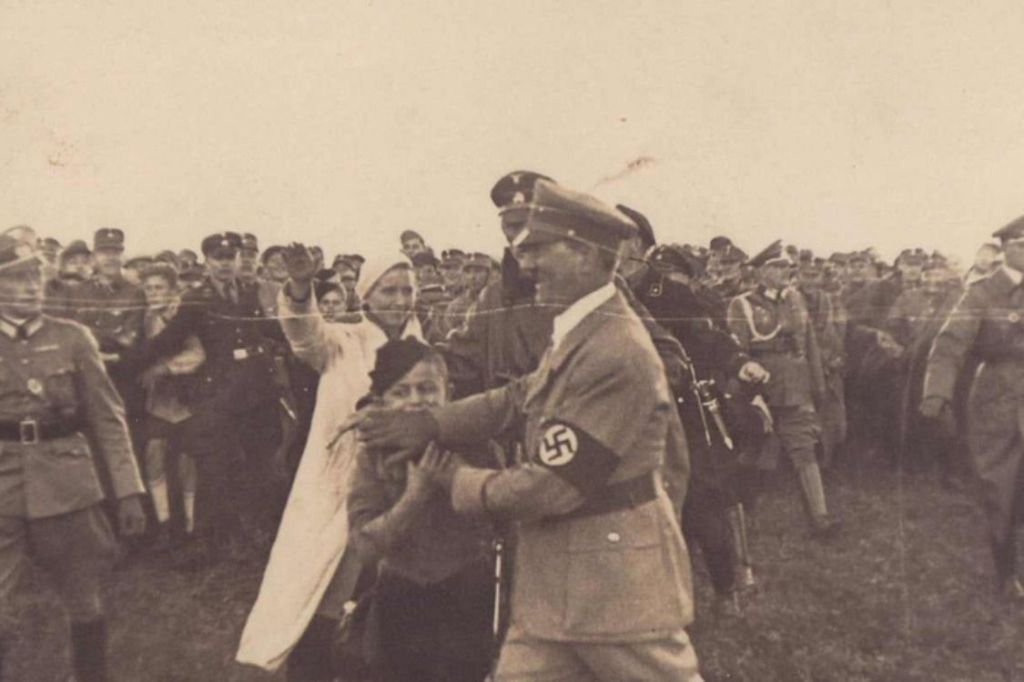
The most anticipated moment of the celebration was the arrival of the Führer at noon, followed by Hitler walking on the Führerweg (Führer’s way) toward an altar where he would be awarded the harvest crown. The 800-metre procession took Hitler 45 minutes to complete due to frequent stops to meet and greet the crowd. Only Hitler´s photographer Heinrich Hoffmann was allowed to take photographs of the Weg durch das Volk (pathway through the people).
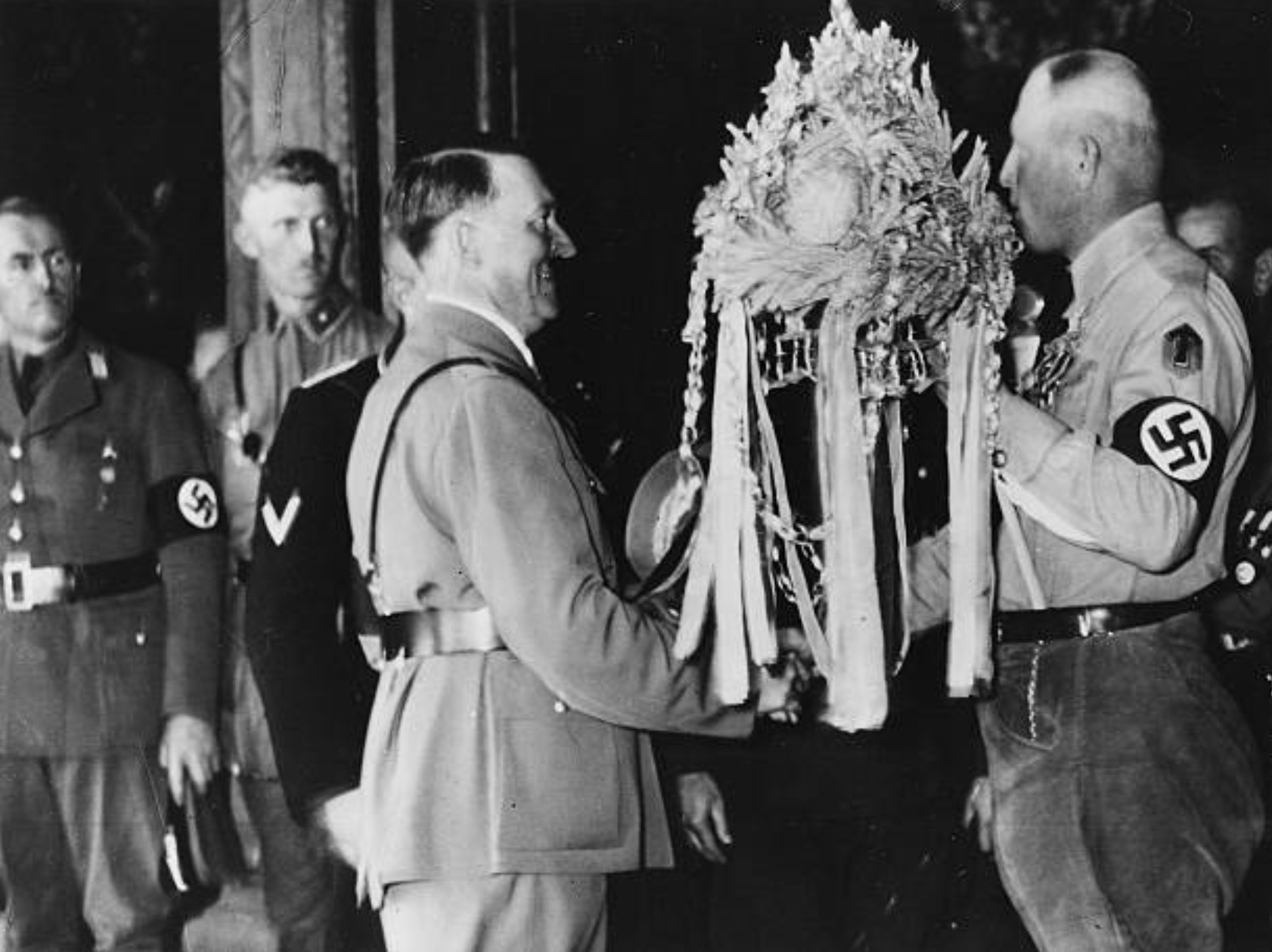
Erntedankfest – Ein Vertreter der ostpreussischen Bauernschaft überreicht Hilter die Erntekrone. Empfang für Bauernfuehrer in der Kaiserpfalz in Goslar: Ein Vertreter der ostpreussischen Bauernschaftueberreicht Hitler die Erntekrone. Thanksgiving – A representative of the East Prussian peasantry presents Hilter with the harvest crown. Reception for peasant leaders in the Kaiserpfalz in Goslar: A representative of the East Prussian peasantry presents Hitler with the harvest crown on 30 September 1934.Führer and Reich Chancellor Adolf Hitler at the harvest festival, Bueckeberg, on 30 September 1934, shaking hands with people from the crowd, The desire of every attendee was to not just see, but to touch Hitler, who was seen as a mythical hero God or sacred object to be worshipped.Adolf Hitler receives flowers from a woman in traditional costume upon his arrival at the Erntedankfest in 1937.Adolf Hitler greeting farmers during the German harvest thanksgiving festival on 3 October 1937. The Erntedankfest became an important component of the Nazi “Blut und Boden” (blood and soil) ideology, with roots dating back to pagan Germany. The Nazi’s had also usurped this traditionally Christian celebration in order to orchestrate National Socialism as a type of new religion.Adolf Hitler at the harvest festival at Bueckeberg, 3 October 1937, shaking hands with people from the crowd as he approaches the alter of harvest offerings to deliver his “sermon”. The Nazi’s intentionally adopted religious terms such as “altar” and “pulpit” to give the event a religious aura of sacred worship, and to firmly establish the Führer as the incarnation of a Norse God. There are many “heros” in the pantheon of ancient German mythology, and Hitler actually came to believe he was the living embodiment of Wotan.Adolf Hitler attends the Reich Harvest Festival on the Bueckeberg with Joseph Goebbels on 3 October 1937.Postcard from the 1937 Erntedankfest featuring Adolf Hitler and Joseph Goebbels.
The original site of the annual Reichserntedankfest now features exhibits and has offered monthly guided tours since November 2021. More information can be found at Dokumentations- und Lernort Bückeberg
I love history and have always been infatuated with the design and style of the 1920’s. Unfortunately I can’t time travel back to this era, so I live vicariously through books, movies and photos.
[…] propaganda photo book ‘Hitler Abseits von Alltag’. Adolf Hitler on the festival grounds of the Erntedankfest on the ‘Bueckeberg‘ near Hameln: Adolf Hitler on the VIP stand with (to the left) Wilhelm Meinberg, […]
[…] Hitler also passed through Brakel on his way to the Reich Harvest Festival (Reicherntedankfest) in Bückeburg on 5 October 1936, where he went by way of Gut […]























 Heinrich Hoffmann Photo Gallery