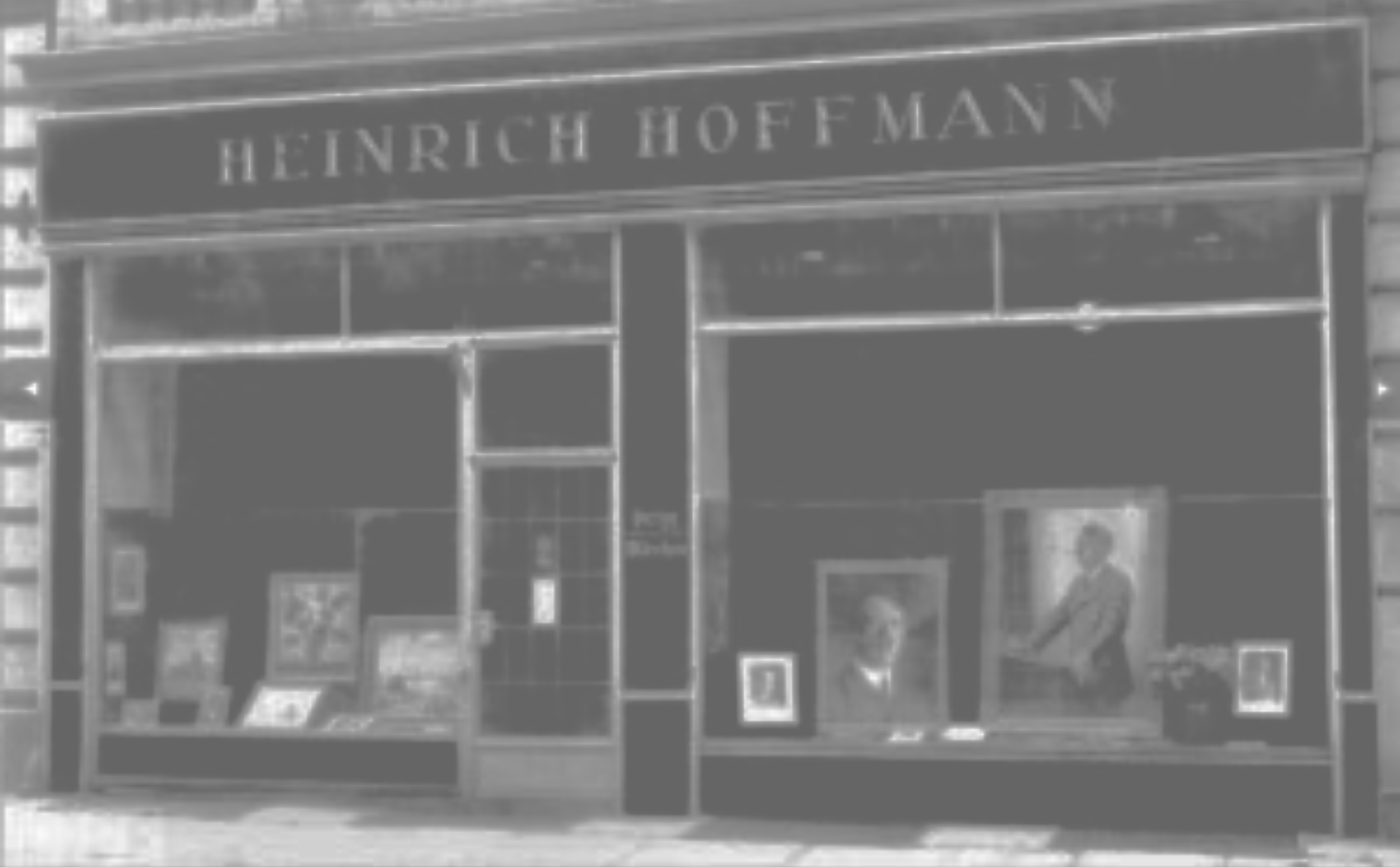
Heinrich Hoffmann (1885 – 1957) served as Adolf Hitler’s official photographer from when Hitler took control of the Nazi party in 1921 until his death in 1945. Hoffmann estimates he took over half a million photographs of Hitler over the course of his career. His portraits were the most significant source of Nazi propaganda materials published over the course of close to 25 years, everything from postcards, posters, magazines, postage stamps and picture books. Click on eachtheme below to see a complete photo albumdevoted to that particular event or topic.
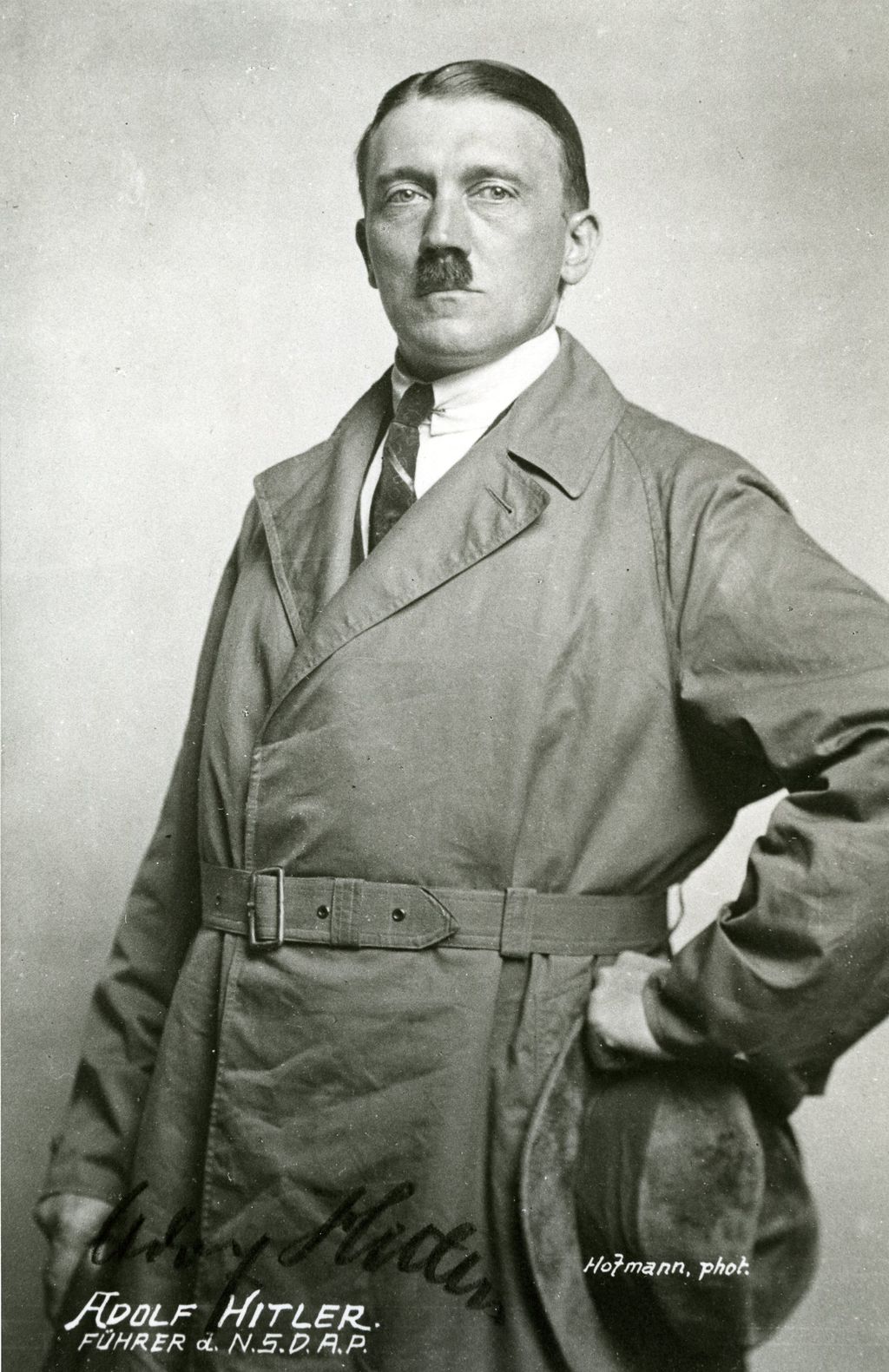
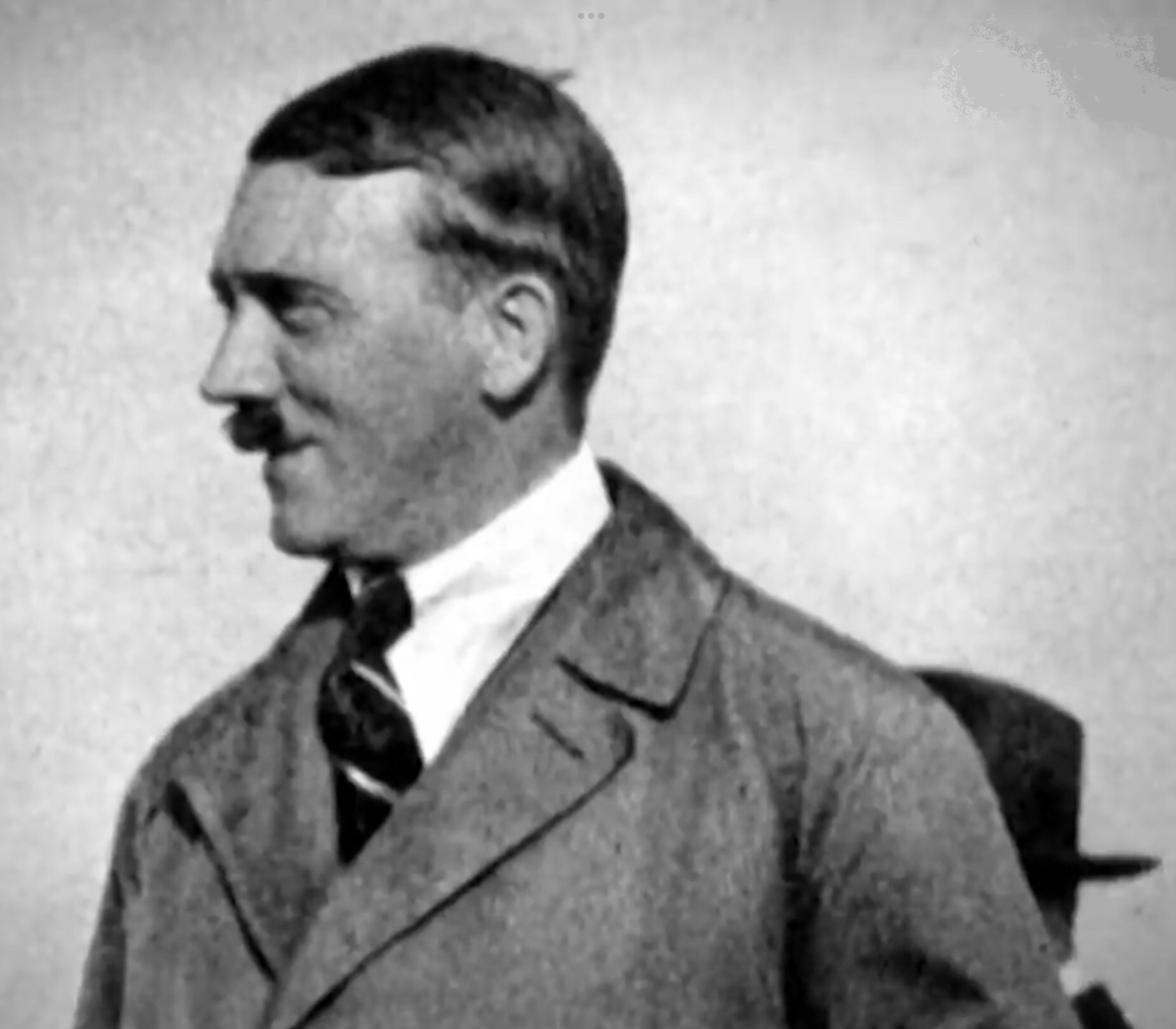
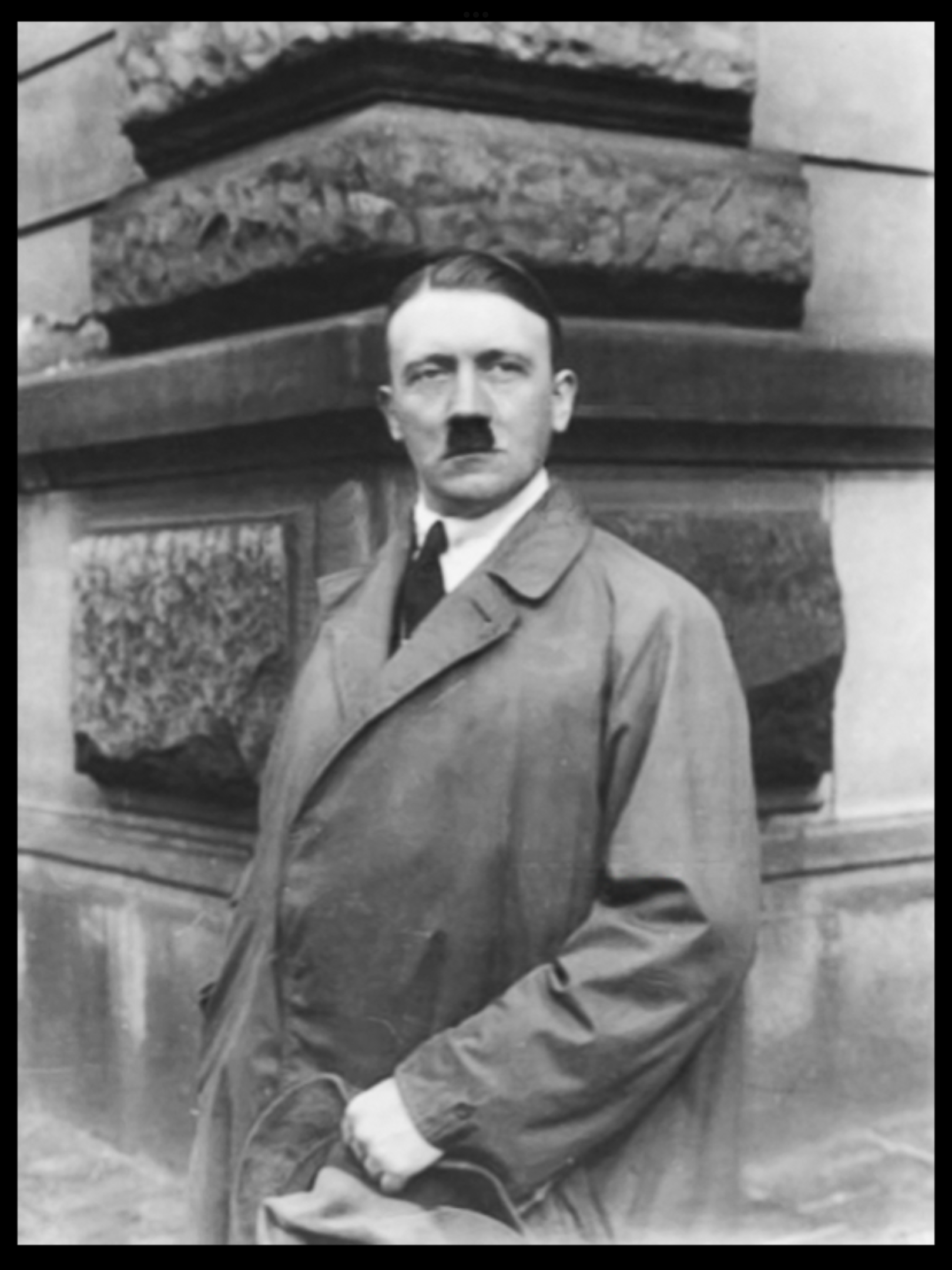
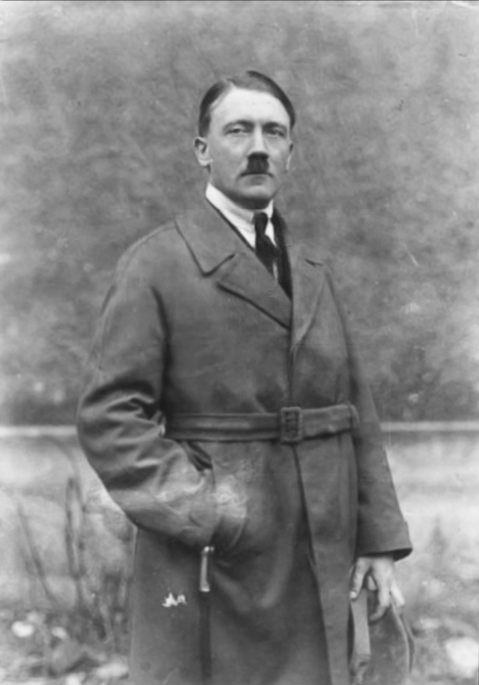
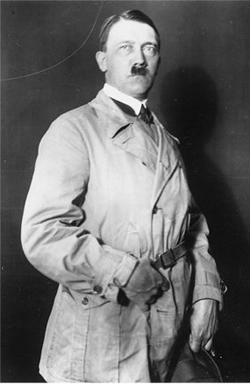
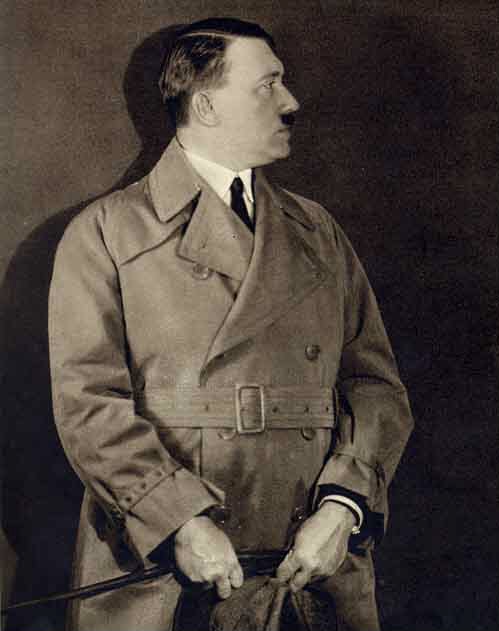
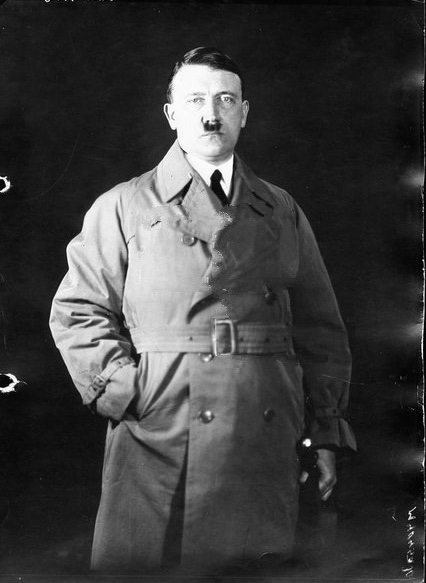
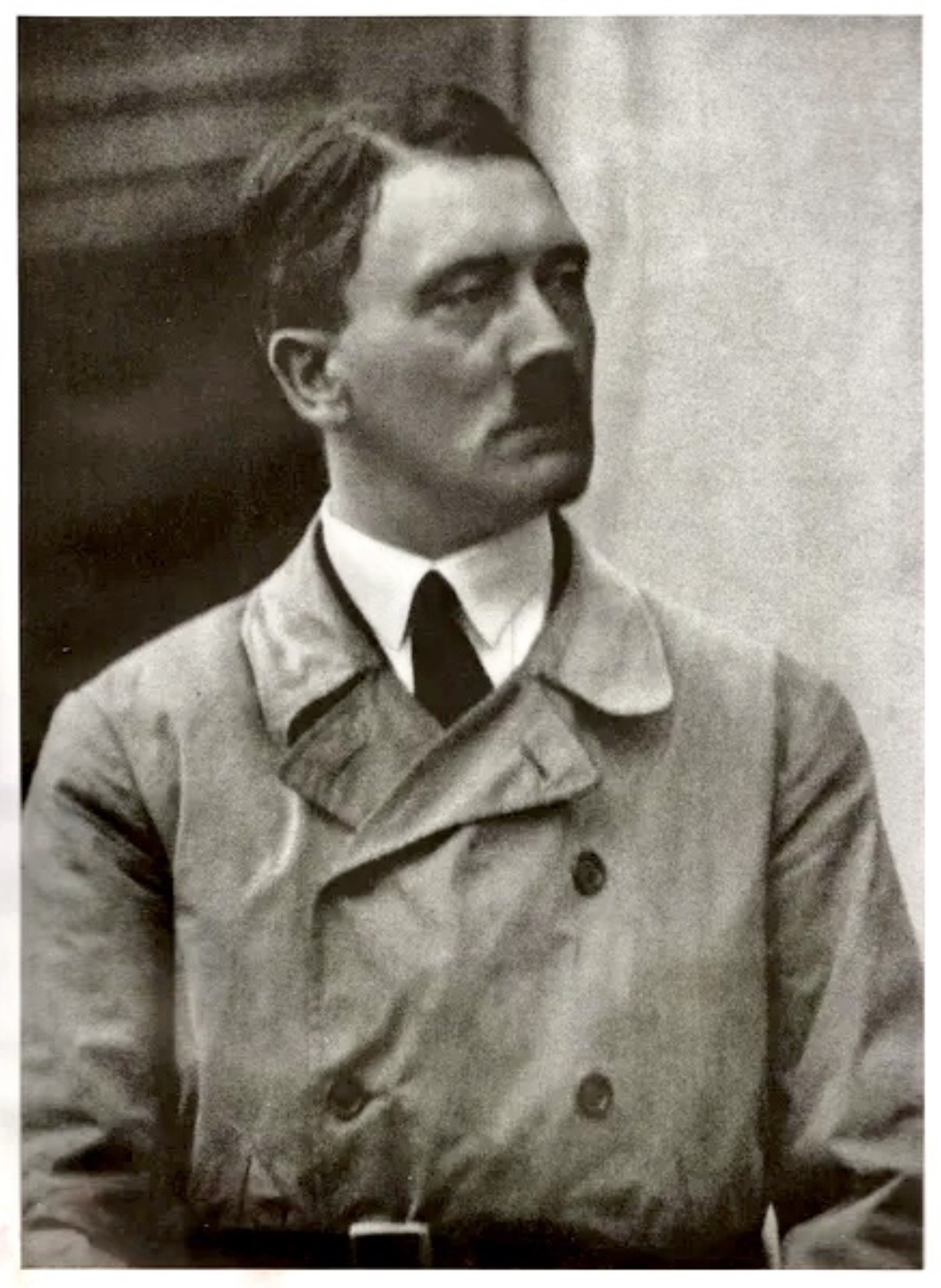
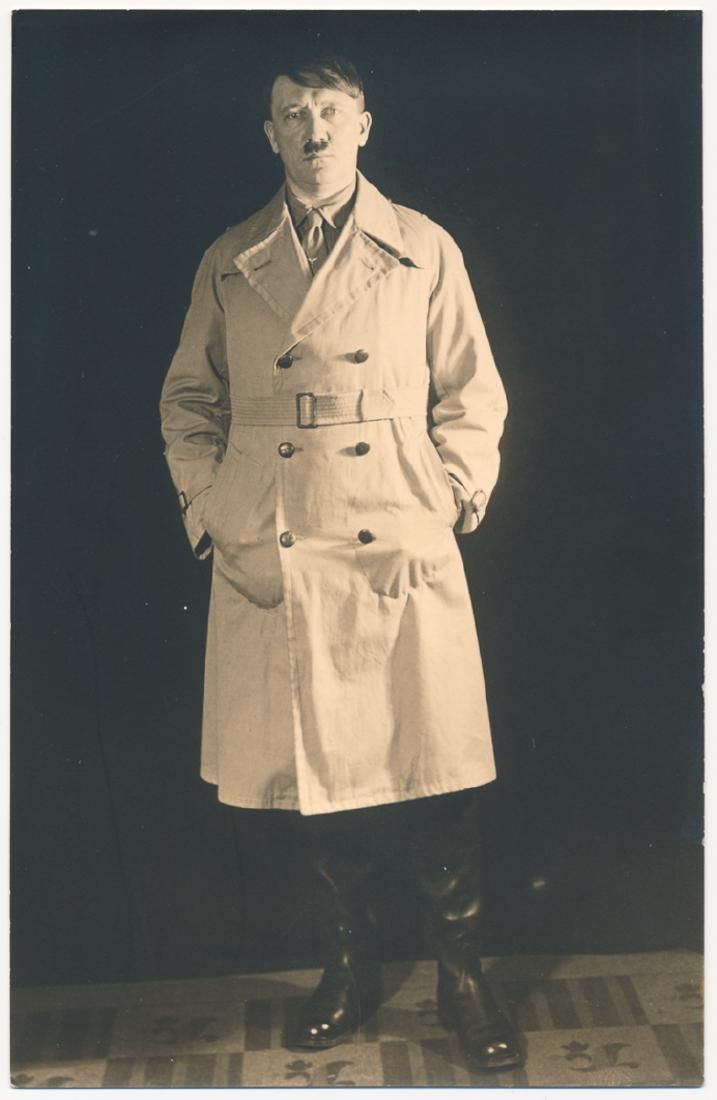
This first group of portraits of Adolf Hitler range from late 1923, around the time of the Beer Hall Putsch, to just after he had served 264 days of his five-year sentence in Landsberg Prison from 1 April to 20 December 1924. Upon his release Hitler swiftly reorganized and re-founded the Nazi Party on 27 February 1925 with himself as its undisputed leader. He decided that the “new” Nazi Party was no longer going to be a paramilitary organization, and had abandoned any intention of taking power by force in favor of participation in electoral contests. Hitler continued to rapidly expand the base of his party until it had reached 130,000 members by the end of the decade. Several formal portrait sessions were taken at Hoffmann’s studio for party publications during the late 1920’s as Hitler was experimenting with his public image. The trench coat and dog whip seems to be a ubiquitous favorite during this particular time period.
“He looks so dashing, with his boots and his riding crop. He really is an imposing figure.”
-Maria Reiter, Adolf Hitler’s lover c.1926
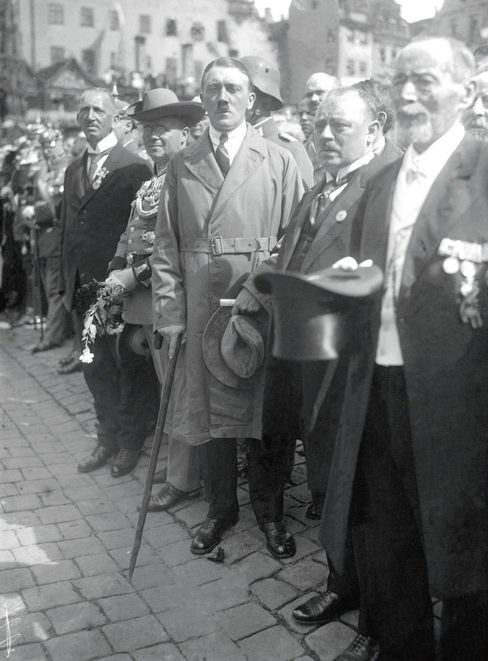
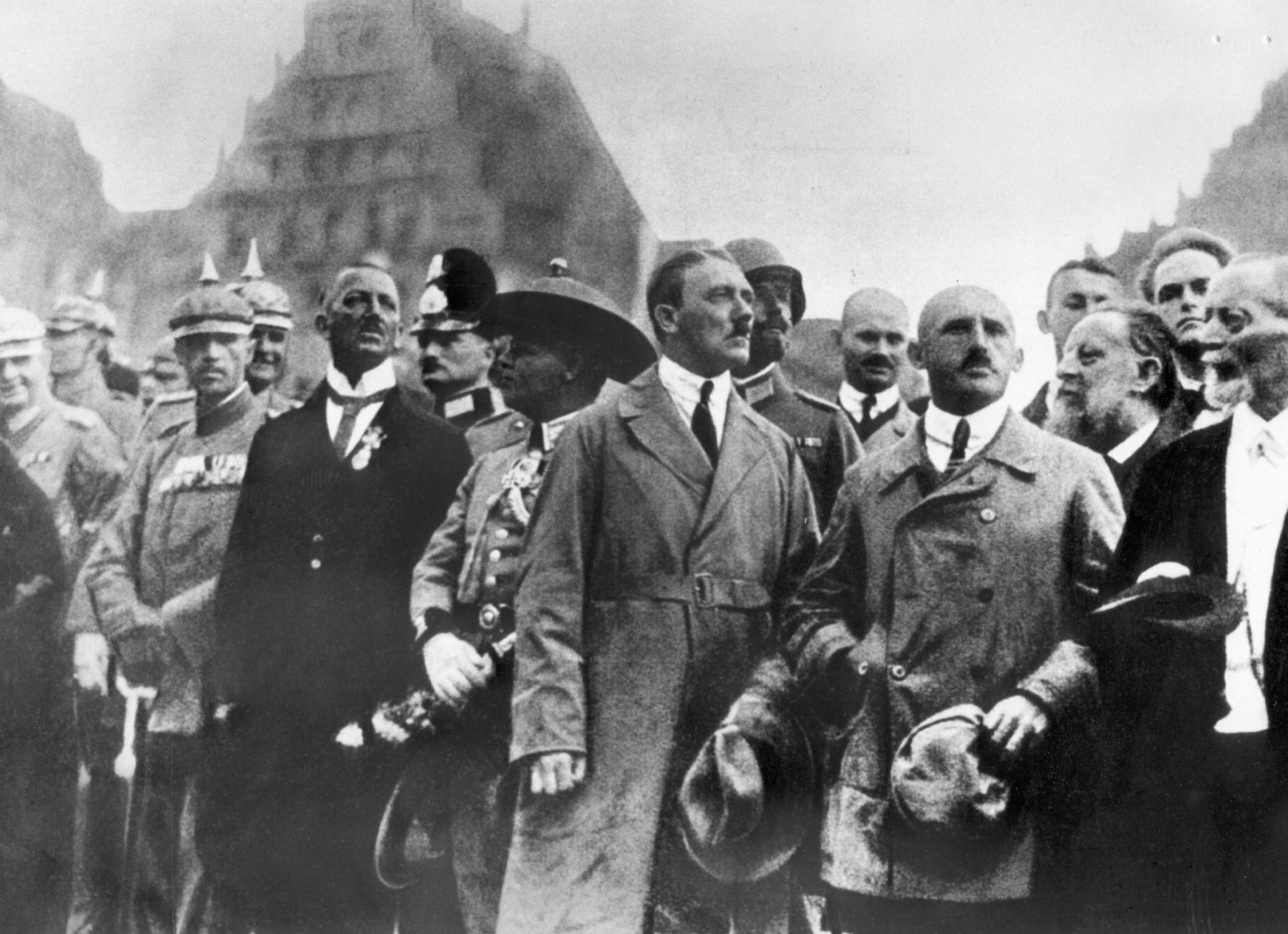
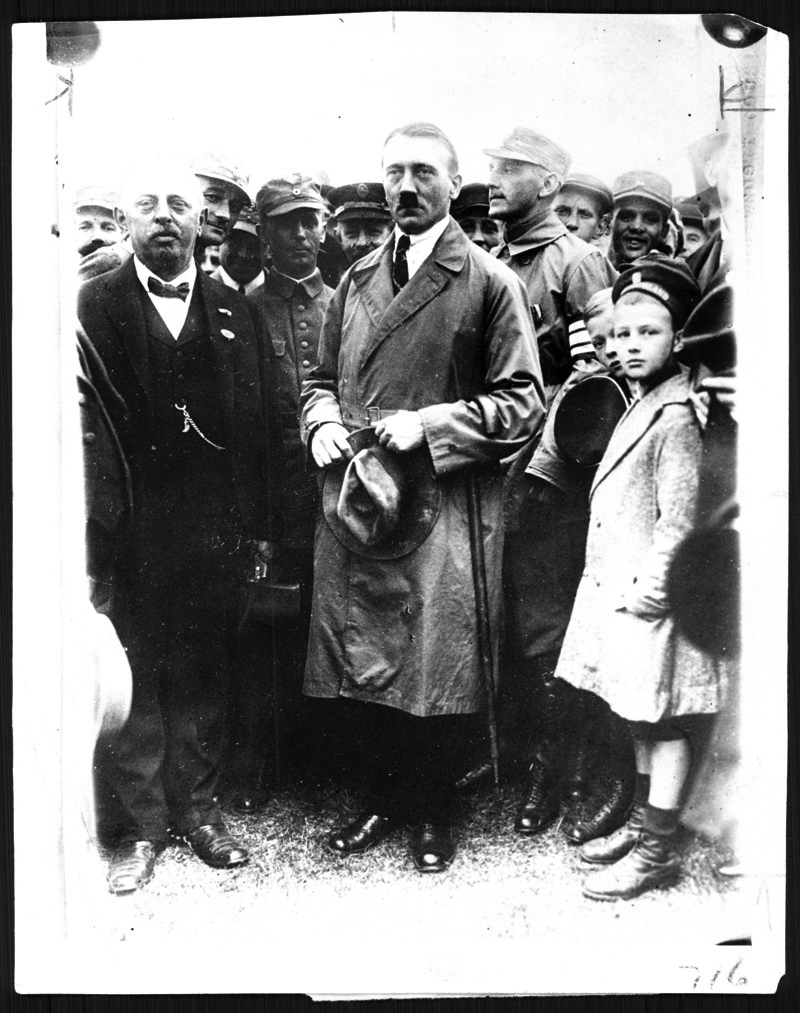
Portrait of Nazi leader Adolf Hitler in September 1923. In the early 1920s, Hitler was attracting thousands of new members to the Nazi Party.Adolf Hitler in September 1923, just a couple of months before the Beer Hall Putsch.Rally of the Völkisch-Nationalenrechte (‘German Day’) in Nuremberg. Adolf Hitler inspects the march past of the combat units on 2 September 1923.Adolf Hitler with NSDAP Bavarian party members watch the SA parade at the Deutscher Tag (German Day commemorating the anniversary of the battle of Sedan) in Nuremberg on 2 September 1923.
This patriotic event, planned as a commemoration of the battles of Sedan on 1-2 September 1870, and Tannenberg (17 August – 2 September 1914), was the 4th “German Day” in Nuremberg. It actually became an “army show” with marching parades and a large rally with 100,000 participants from patriotic and national associations. This particular event ended up serving as a model to the National Socialists for their later Nazi party rallies in Nuremberg. The founding of the Deutscher Kampfbund is considered the most important political result of the “German Day” in Nuremberg.
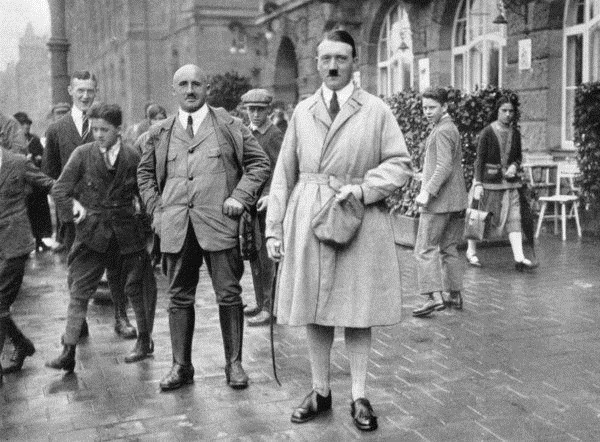
Adolf Hitler and Julius Streicher watching the parades on the Nürnberger Hauptmarkt at the 1923 Deutscher Tag.Adolf Hitler and Julius Streicher during a visit to Nuremberg in 1923 in front of the “Deutscher Hof”.
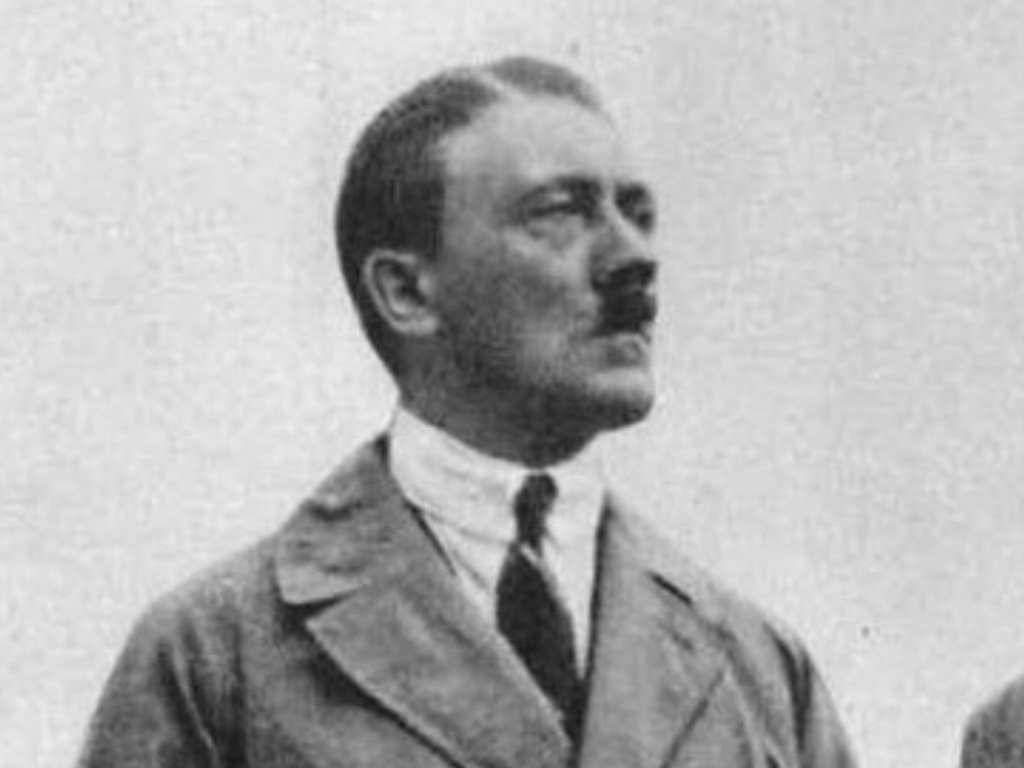
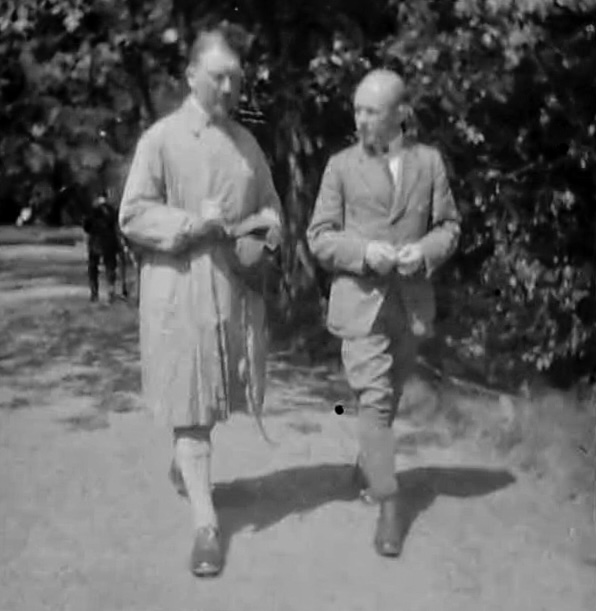
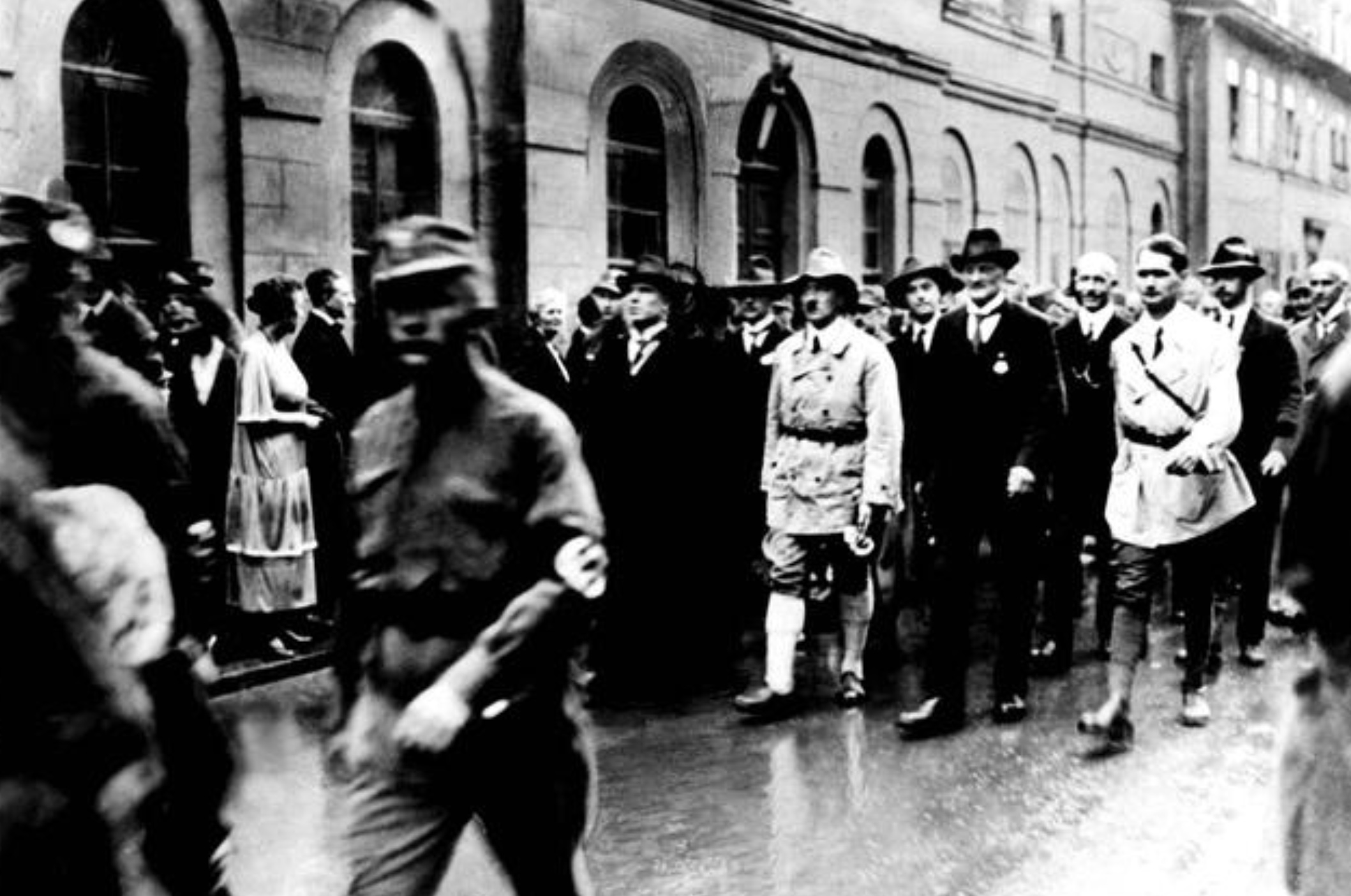
There is a possibility the photograph above may actually be from a different event, possibly in 1925. Hitler’s trench coat looks much more similar to this coat that he was photographed wearing here on a walk with Helmuth Brückner in Munich on 6 June 1925.
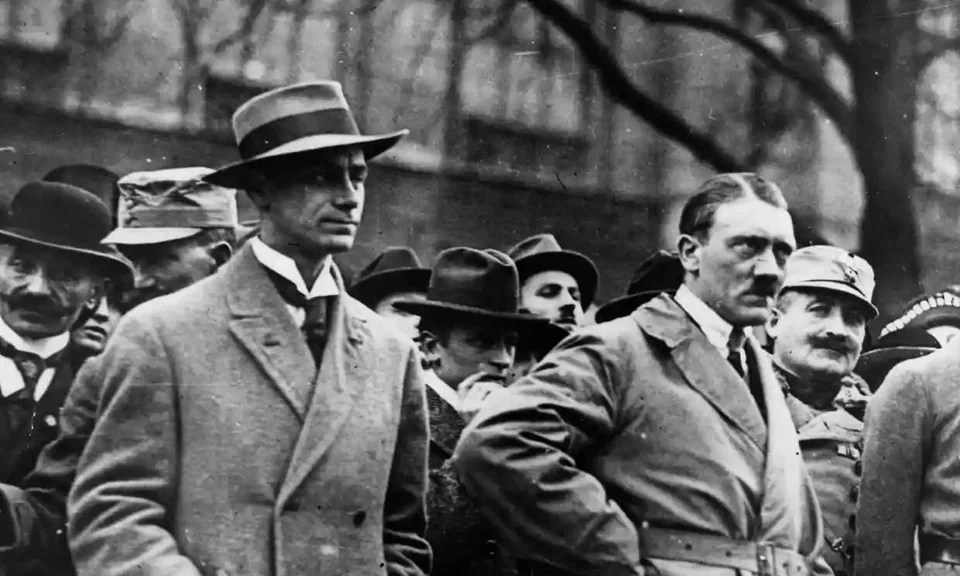
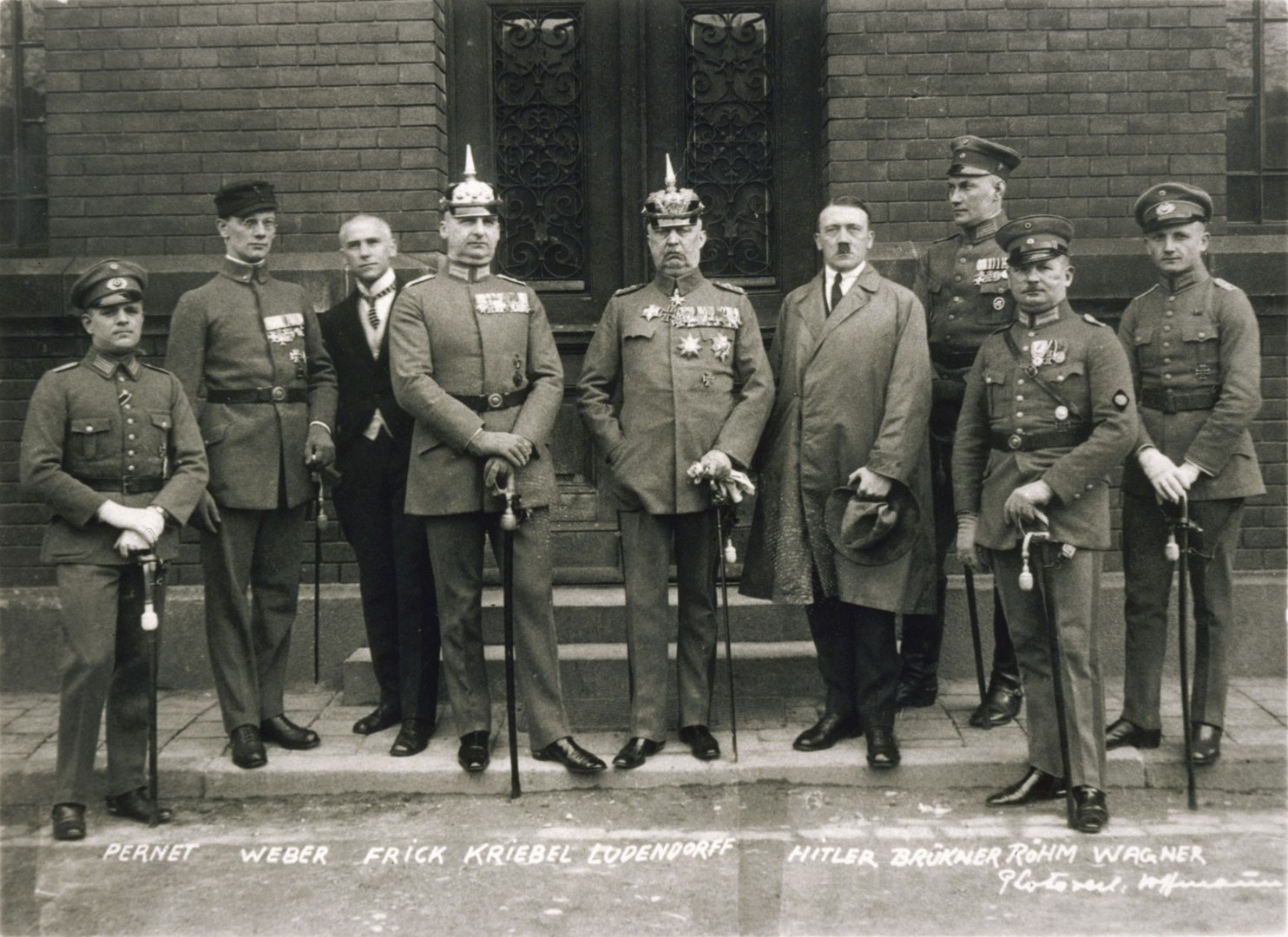
Adolf Hitler participates in the Deutscher Tag (German Day) in Bayreuth held on 30 September 1923 and observes a parade through the town with the participation of 4,000 SA men. That evening he gave a speech in the Margrave’s Riding Hall and also granted an interview to a journalist from the United Press. He also seeks out the British writer Houston Stewart Chamberlain and has an hour-long conversation with him. Just the day before, Hitler was first introduced to the Wagner family. Before the returning to Munich the following day on the 1st of October, Hitler visited the Wagner family at their home, Villa Wahnfried. He is given a tour of the building before he visits Richard Wagner’s grave in the garden and pays his respects alone.Adolf Hitler in conversation with Victoria Melita of Russia in Fröttmaning on 15 April 1923. While in Germany, Victoria showed an interest in the Nazi Party, which appealed to her because of its anti-Bolshevik stance and her hope that the movement might help restore the Russian monarchy.Alfred Rosenberg with Adolf Hitler on 4 November 1923, just 4 days before the Beer Hall Putsch in Munich. Friedrich and Christian Weber are behind Hitler during the march past of the SA and other paramilitary groups to mark the laying of the Kriegerdenkmal war memorial foundation stone in the Hofgarten. Rosenberg edited the party’s daily newspaper, and in 1928 he founded the Fighting League for German Culture, dedicated to rooting out “degenerate” art and books. He was found guilty of war crimes at the Nuremberg Trials and was executed in October 1946. The main defendants in the Putsch trial from left. Pernet, son of Ludendorff, the leader of the ‘Bund Oberland’ Friedrich Weber, Wilhelm Frick, Hermann Kriebel, Erich Ludendorff, Adolf Hitler, Wilhelm Brückner, Ernst Röhm, Adolf Wagner on 3 March 1924.Adolf Hitler posing in front of the Infantry School of the Reichswehr in Munich where he was on trial for his participation for the Beer Hall Putsch, taken on 3 March 1924, just one month before beginning his sentence at Landsberg Prison.Adolf Hitler as one of the defendants in the Beer Hall Putsch (Munich Uprising) trial. Heinrich Hoffmann took portraits of all the defendants in the Putsch trial standing in this same spot in front of the Infantry School of the Reichswehr where the trial was held starting on 26 February 1924. This photograph was taken on 3 March 1924.Adolf Hitler posing inside of the Infantry School of the Reichswehr in Munich where he was on trial for his participation for the Beer Hall Putsch, taken on 3 March 1924, just one month before beginning to serve his sentence at Landsberg Prison.Portrait taken of Adolf Hitler in a trench coat and holding his dog whip in front of the Infantry School of the Reichswehr on 3 March 1924, less than one month before serving his sentence at Landsberg Prison.
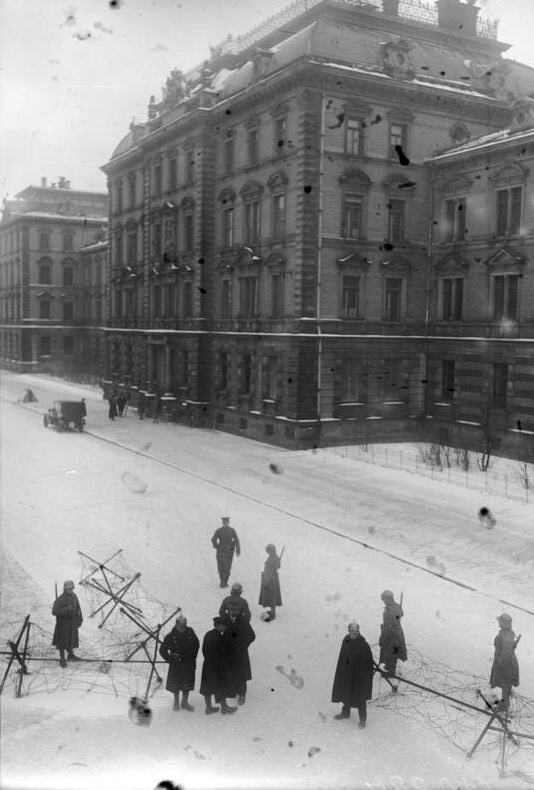
This is a photograph of the Infantry School of the Reichswehr as it appeared in February 1924 at the start of the Beer Hall Putsch Trial.
After announcement of his verdict, Hitler was taken to a second-floor room to await transport back to Landsberg prison. He walked to the window and waved to the crowd below, where cries of “Heil Hitler!” rang out through the streets.
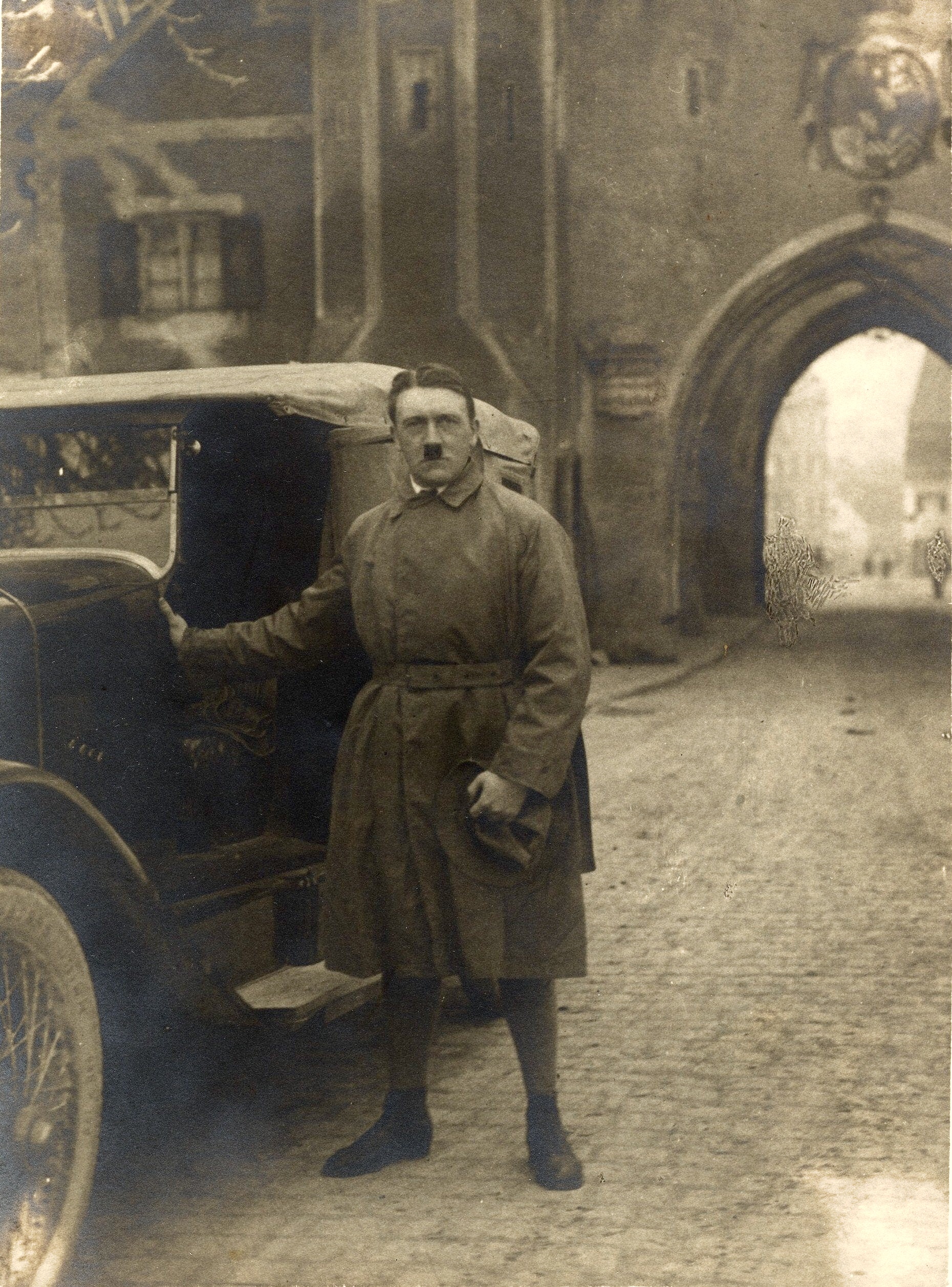
In a petition dated 13 September 1924, Adolf Hitler expressed his desire to purchase a new Mercedes Model 11/40 (preferably in gray with wire wheels) on credit from the anticipated earnings from his book ‘Mein Kampf’ serving as a promissory, though it appears that the paltry budget of the National Socialist Party actually paid for it. Five days before Christmas of 1924, this shiny new Mercedes pulled up to Landsberg’s front gates to collect Hitler on a brutally cold winter day. Hoffmann rushed to capture this historic moment due to the frigid temperature.Portrait taken of Adolf Hitler shortly after his release from Landsberg Prison in early 1925. Another photograph from this session of Hitler wearing Bavarian costume (lederhosen) was rejected in favor of this trench coat portrait. Luckily the lederhosen portrait was not destroyed and can be enjoyed on my “Hitler in Lederhosen” post!This is a really nice portrait pairing of Adolf Hitler in a trench coat holding his dog whip. These were both taken in 1928.This is a really nice portrait pairing of Adolf Hitler in a trench coat holding his dog whip. These were both taken in 1928, and possibly belong to the same portrait session I have titled “Hitler in Black Suit Set #2” where he is wearing the square diamond incrusted swastika pin on his lapel.
I always suspected that there were more portraits taken in the 1928 trench coat series – and here is a most delightful discovery I just found while working on my Stettin album – BUT I can’t find a good quality version in high-res 😩 but I’ll certainly keep trying…
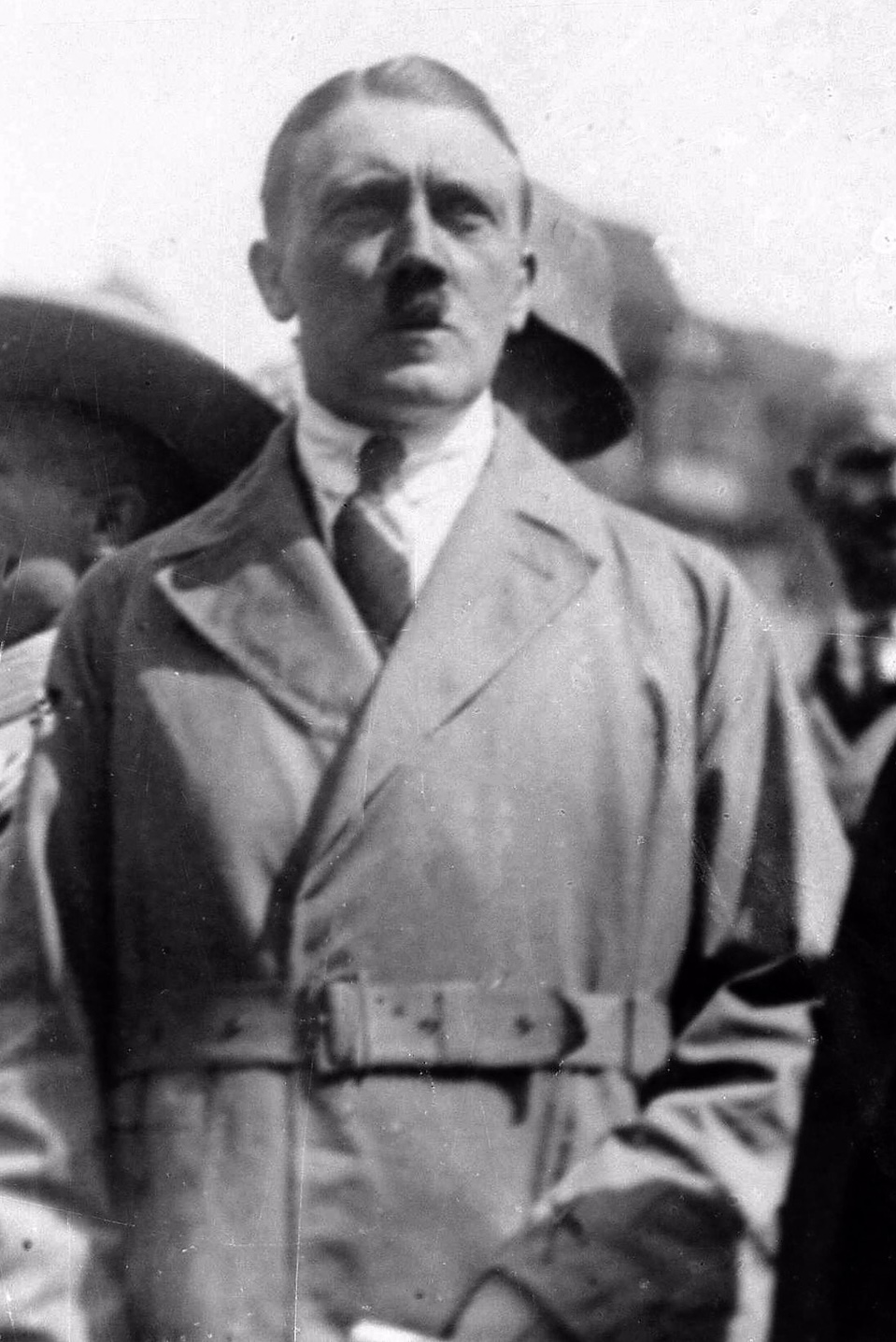
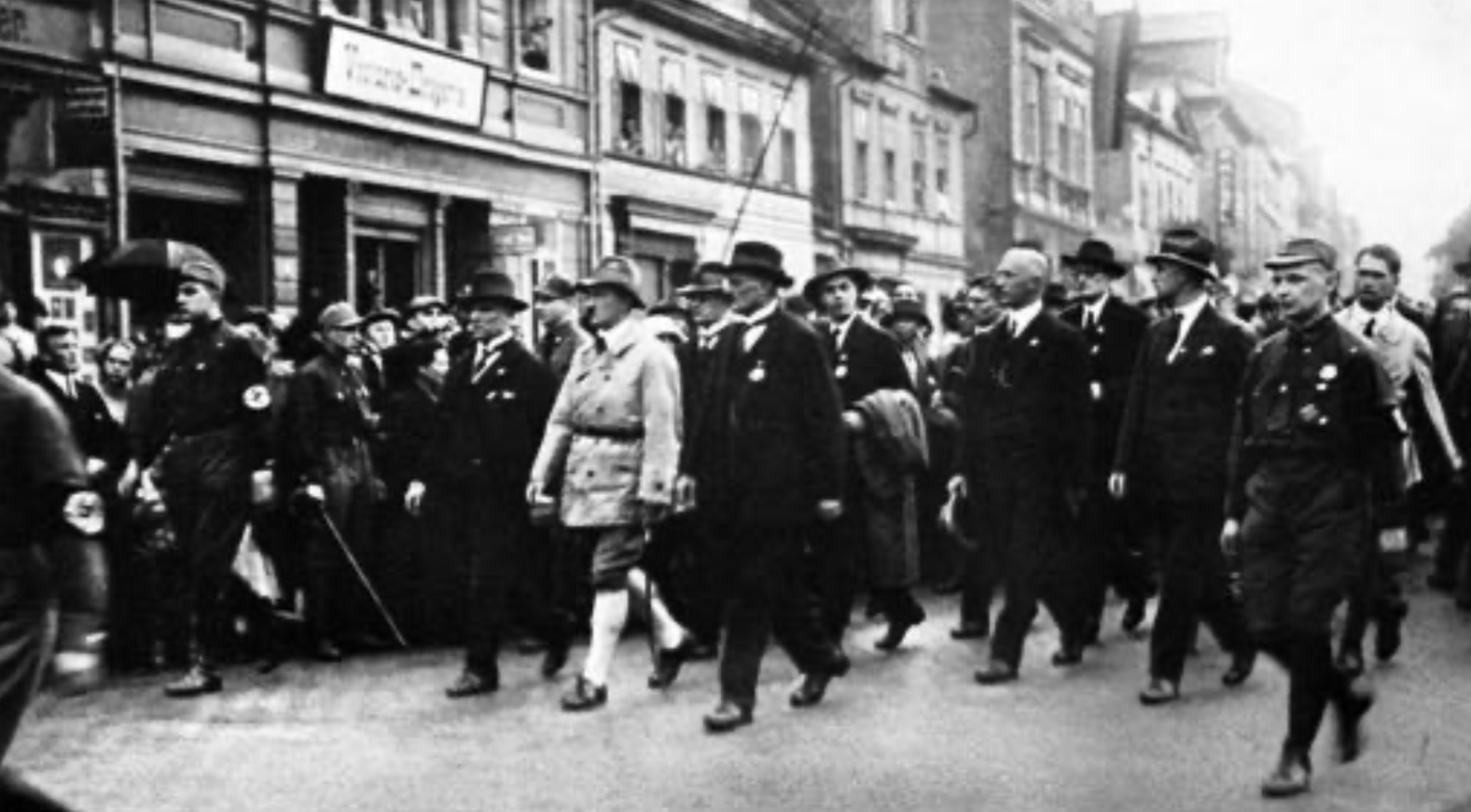
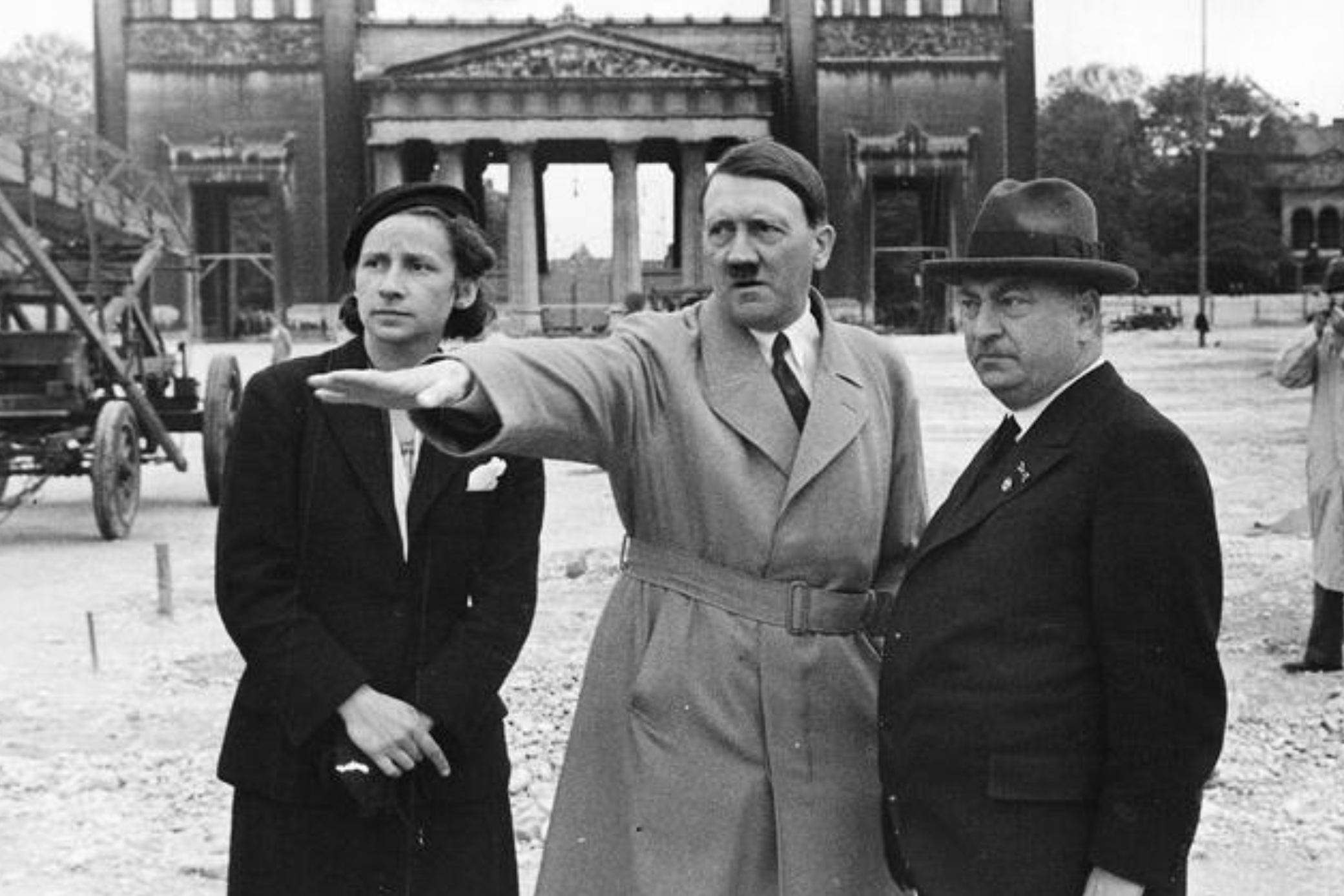
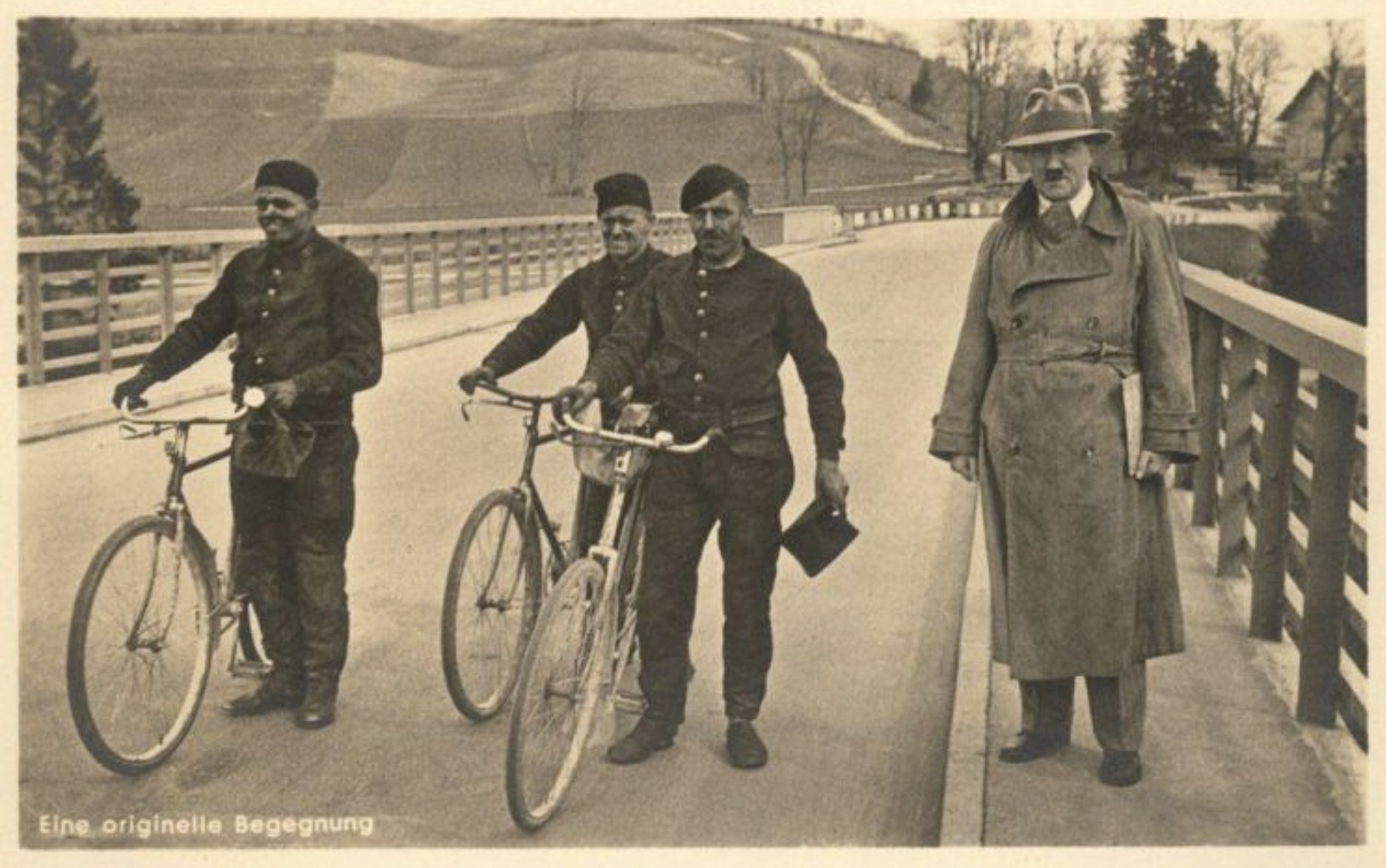
Portrait of Adolf Hitler, leader of the NSDAP, in Weimar on 3 July 1926.Adolf Hitler with Rudolf Hess and Erich Ludendorff at a march through Weimar on 3 July 1926.Adolf Hitler at the 2nd National Socialist German Workers’ Party Congress in Weimar. Over 6000 were in attendance, and witnessed the first public display of the SS on 3 July 1926. Each rally was given a programmatic title, this year was called “Refounding Congress”. Starting in 1927 the annual Reichsparteitag would take place exclusively in Nuremberg.Adolf Hitler leads a demonstration march of 4,500 party members on 4 July 1926 in Weimar. This is the first appearance of the brown shirt uniforms and display of the Nazi salute. Marching towards the marketplace. Hitler refrains from giving a public speech due to the 2 year ban still in effect on him speaking in public. The Hitlerjugend (Hitler Youth) is also founded on this day.Adolf Hitler and Joseph Goebbels pose with party members in Hattingen on 26 November 1926. Hitler visits the NSDAP regional group in Hattingen (Ruhr), 26 November 1926: Group photo in front of Maerker’s restaurant. Next to Hitler stands Goebbels, behind him the Ruhr region Gauleiter Viktor Lutze).Wow this portrait appears to go with the early 1928 photo session I have posted under “Hitler in SA Brown Shirt”, but as he’s put on a trench coat for this shot I’ll just keep this one right here.Beautiful photo of Adolf Hitler in a trench coat holding his dog whip, but I can’t find a place or date, looks like at an airport in the background, probably taken about 1932.Adolf Hitler visiting the house of the German poet Friedrich von Schiller in Weimar on the occasion of the 175th birthday of Schiller on 10 November 1934. The crowd salutes Hitler as he walks past them, holding his hat in one hand. A print from ‘Adolf Hitler. Bilder aus dem Leben des Führers’, Hamburg: Cigaretten/Bilderdienst Hamburg/Bahrenfeld, 1936.Adolf Hitler in conversation with Gerdy Troost and architect Leonhard Gall in Munich’s Königsplatz on 9 June 1935.On 16 April 1936 Adolf Hitler visits Landsberg am Lech, and spends 15 minutes in his former cell at Landsberg Prison after visiting the construction site on Neue Bergstraße (“Reichsmusterstraße”).Adolf Hitler crosses the Echelsbacher Bridge across the Ammer Gorge in Echelsbach on 16 April 1936 on his way to Landsberg. Hitler holds his sketchbook under his left arm, as he liked to make pencil sketches of landscapes and buildings on his roadtrips. A “notable encounter” occurred when three chimney sweepers also crossed the bridge on their bicycles, which meant an omen of good luck for Hitler.
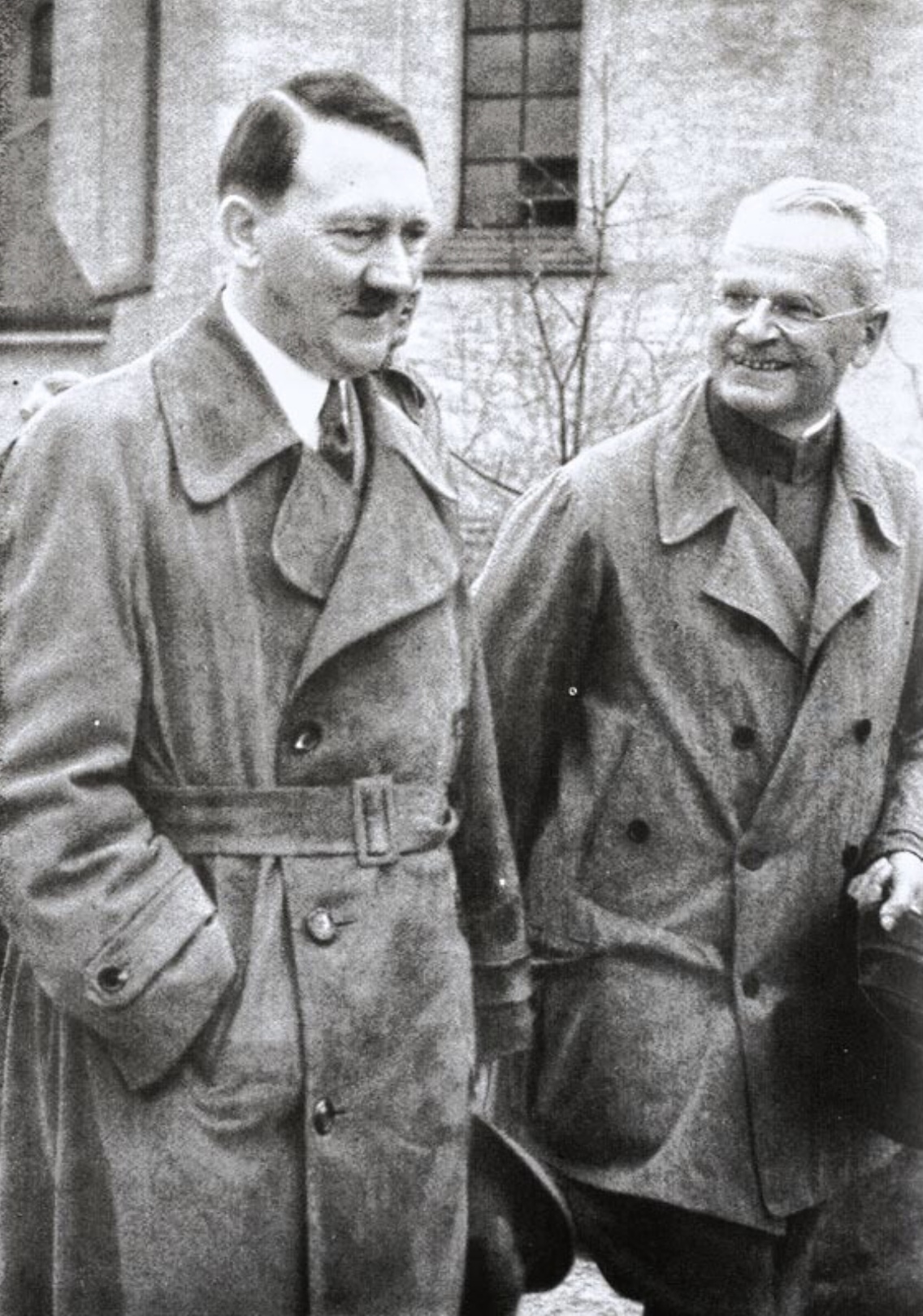
Eva Braun, seen here with her camera, joined Hitler and Hoffmann on this road trip to Landsberg Prison on 16 April 1936. The dark grey suede trench coat seen here and in the 2 photos above was quite flattering on Der Führer and appears to be one of his most favored coat choices throughout the year of 1936.
Adolf Hitler is greeted by his half sister Angela Raubal (mother of Geli Raubal) along with Magda Goebbels and her son Harald Quandt as they pick up Hitler from the Templehofer airfield in Berlin on 5 March 1933, after he had just returned from giving a speech in Königsberg.
I love history and have always been infatuated with the design and style of the 1920’s. Unfortunately I can’t time travel back to this era, so I live vicariously through books, movies and photos.
[…] his choice of uniforms and accoutrements, but yeah don’t even get me started when he threw on a trench coat or a cape, or broke out his summer white uniform. He generally preferred very understated uniforms […]
[…] was rejected by him in favor of another one from this same portrait session where he is wearing trench coat. Taken on the 9th of November 1925, this is the same year that the Schutzstaffel (SS) is officially […]
[…] 1928’. This photo session appears to include the 2 portraits of Adolf Hitler in his trench coat with dog whip taken in 1928. The square diamond encrusted swastika pin on his lapel is not visible […]
There are photos of Hitler in his trench coat taken by Eva Braun who worked for Hoffmann at the time of taking them. Would you consider those as Hoffmann photos and post them as well?
Absolutely! I have many of Eva Braun’s photos on here, as well as Georg Pahl, I just make a note in the description to give the proper credit. I recently discovered my most favorite Hitler portrait isn’t a Hoffmann photo (to my utter shock and amazement) so I gave the photographer proper credit versus depriving it being shared! 🤗
[…] Eiffel Tower photographs were actually taken on a later date than when he’s seen donning a white trench coat, versus the impressive leather coat seen in the iconic shots. According to International News […]
[…] Yet another HUGE album of photographs to enjoy of Hitler wearing a trench coat (in addition to the Set #1 album). This collection of pictures is a particularly humongous one because, if you really think […]











 Heinrich Hoffmann Photo Gallery