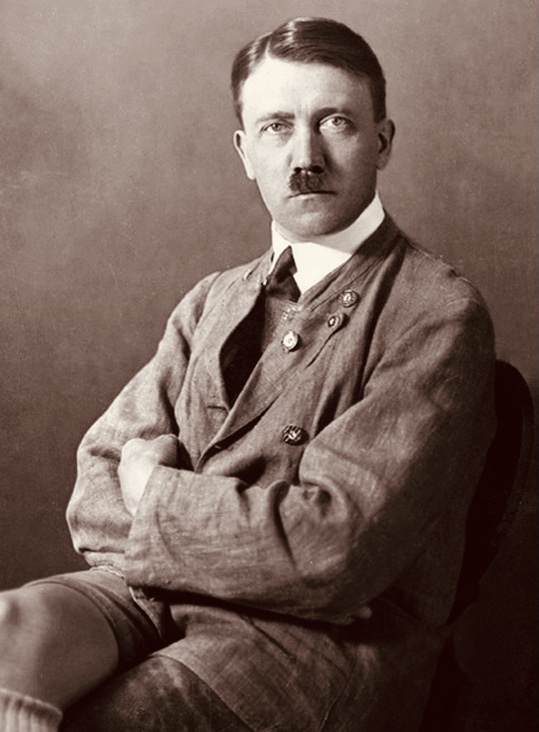
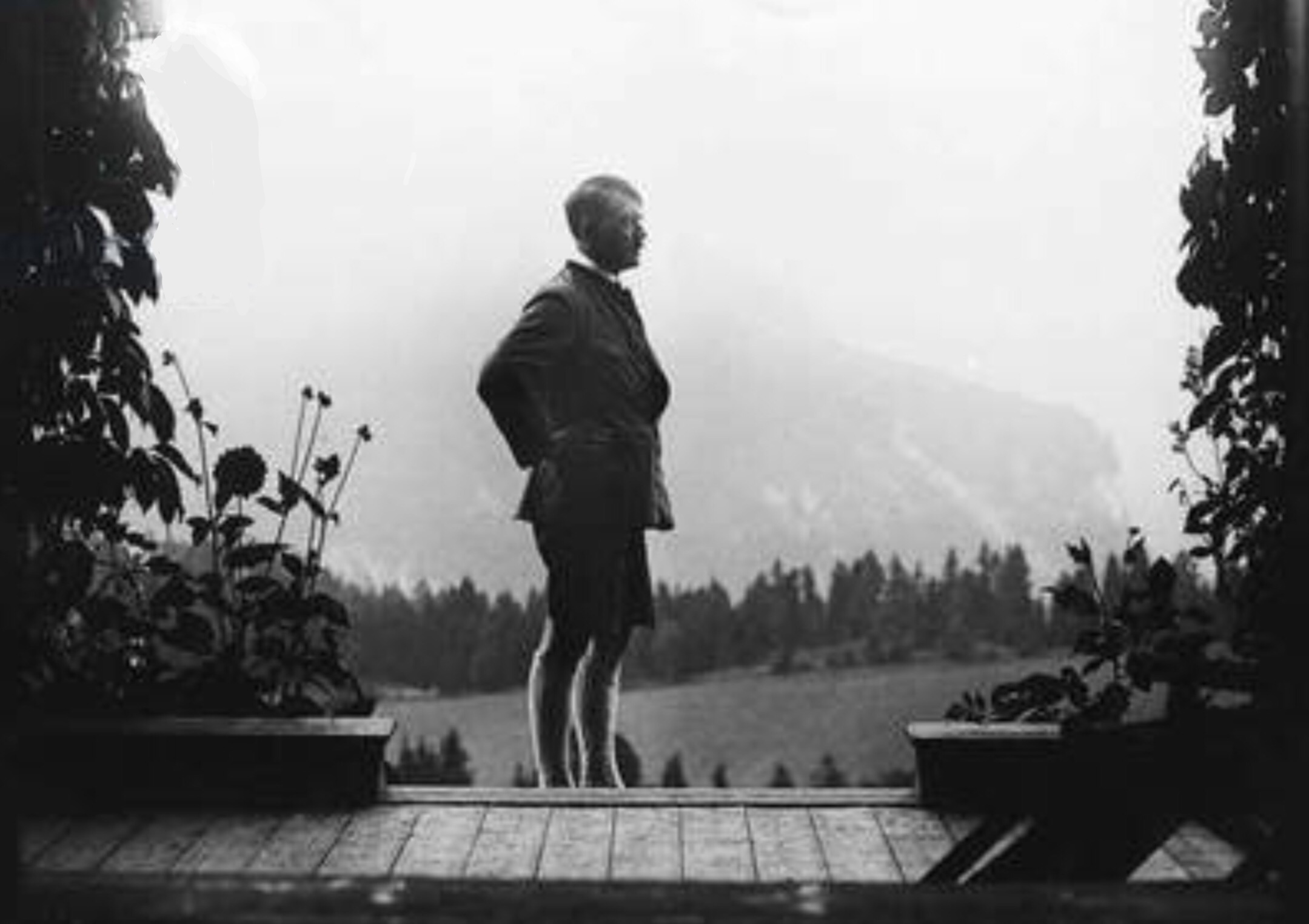
This group of photographs ranges from the years 1924 to 1929. I’ve discovered that the last few in this set are not Hoffmann photos, but I thought they went well with this particular portrait session that took place in Hoffmann’s Munich studio in July 1926. My other two posts in the “Hitler in Lederhosen” series, featuring portraits taken in March 1927 and August 1927, are all Heinrich Hoffmann photos. Hitler banned all images of himself wearing shorts from publication after he became Chancellor in 1933. The original intent of these portraits was to create the image that he was one of the people, but once he came to power that was no longer the image he wished to portray, as he felt Lederhosen made him look like a peasant, and were “beneath one’s dignity”.

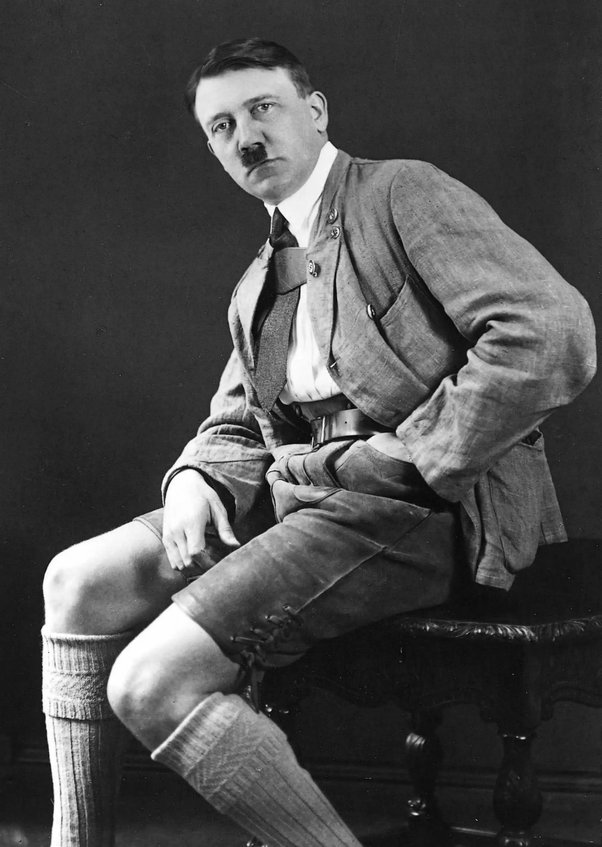
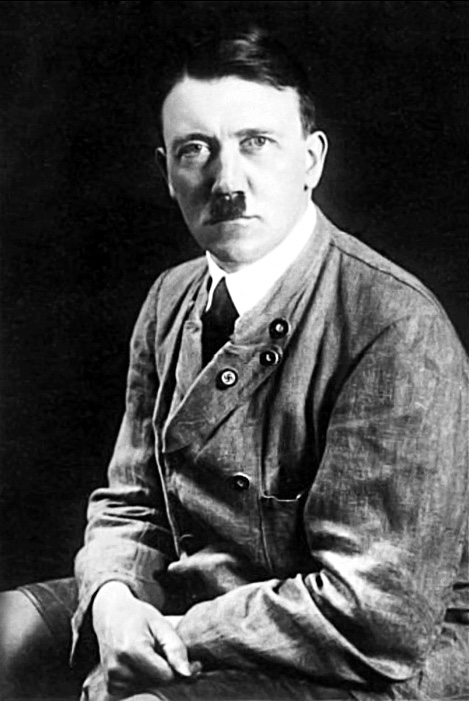


Postcards produced from this series:

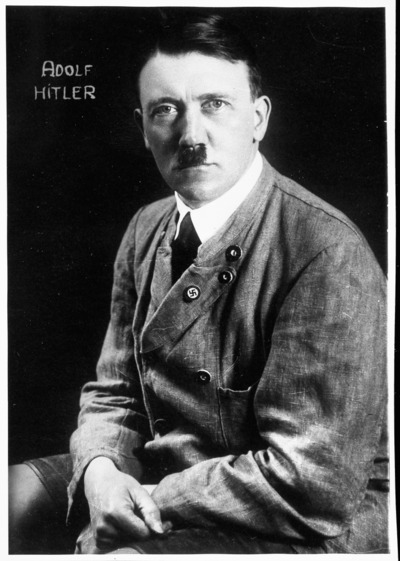
(It would seem that Adolf Hitler missed out on yet another potential calling in his life after failing as an artist, if only he had found success as a super model!)
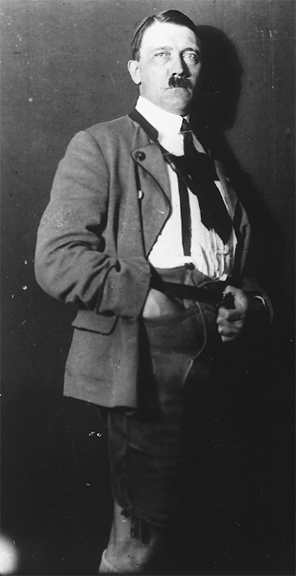
Adolf Hitler was especially fond of the great outdoors and would often travel up to the mountains of Bavaria to enjoy the many wonders of nature. Below are many more photographs where he is decked out in traditional Bavarian lederhosen for his jaunts through the woods. Lederhosen would have also been an especially appealing attire of choice for Hitler because of their association with traditional German folk culture. In fact for this very reason lederhosen became very popular with most of the right wing political groups which sprang up in Germany after WWI. Many photographs from the 1920s show groups like the Storm Troopers (S.A.) wearing them. Hitler actually really liked to wear lederhosen and apparently they became his favorite choice of clothing in the 1920’s.

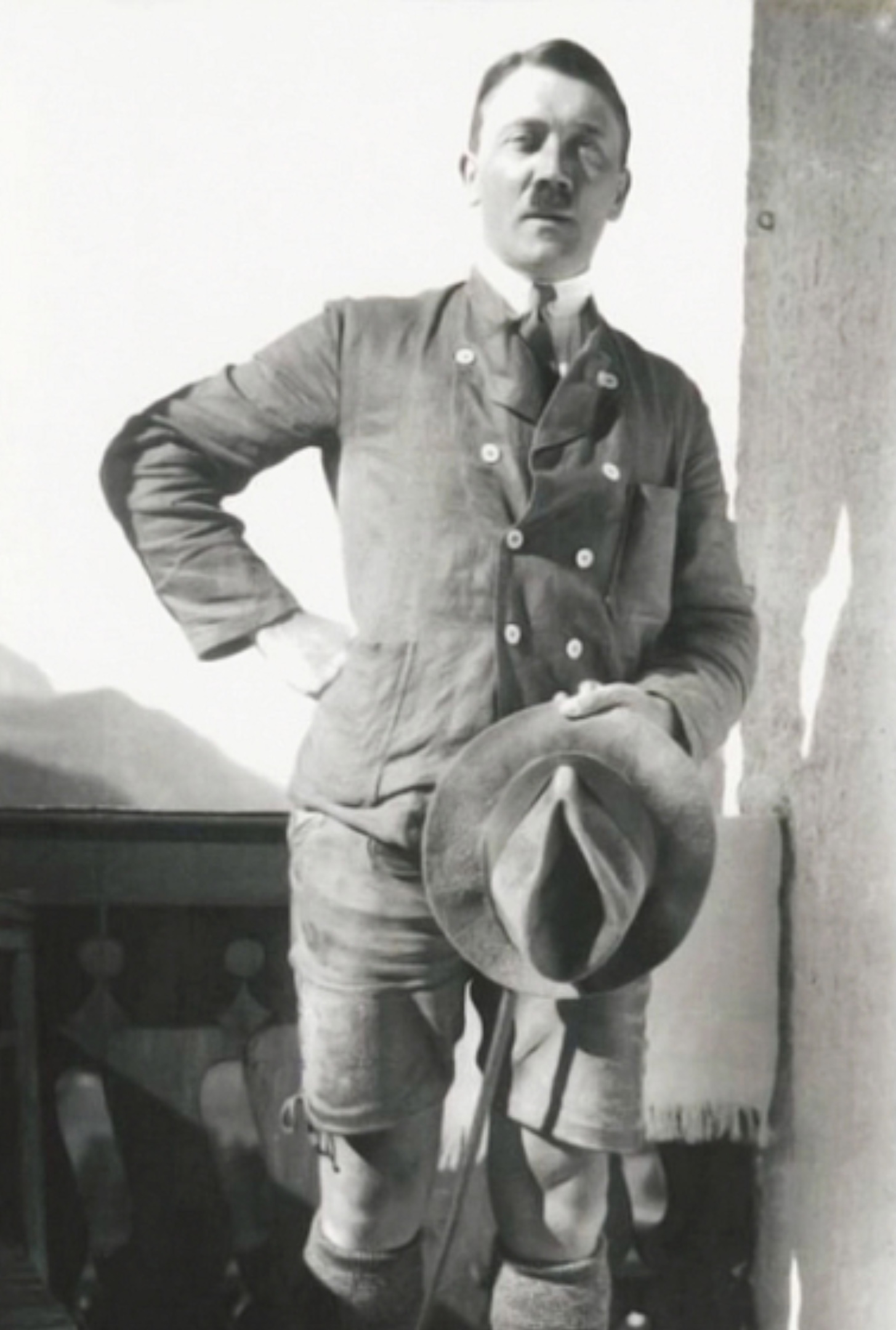

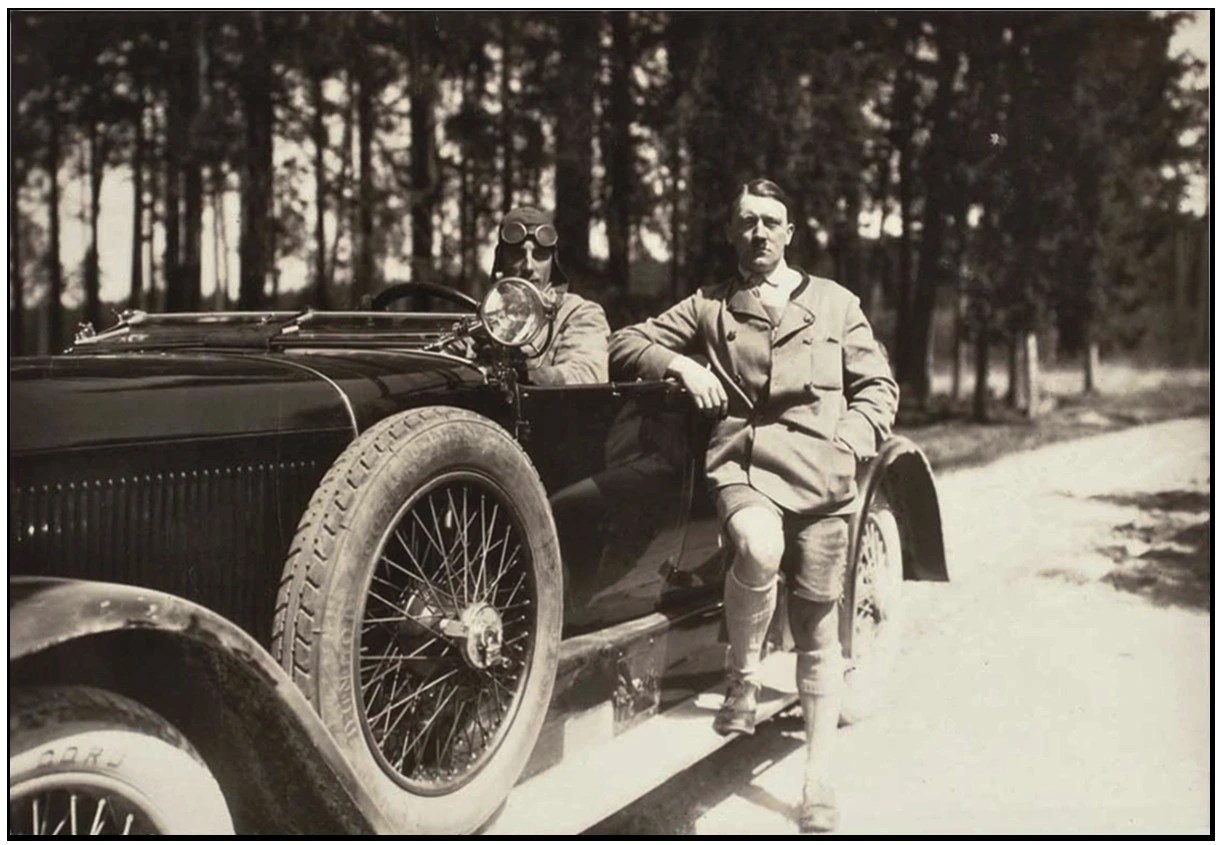



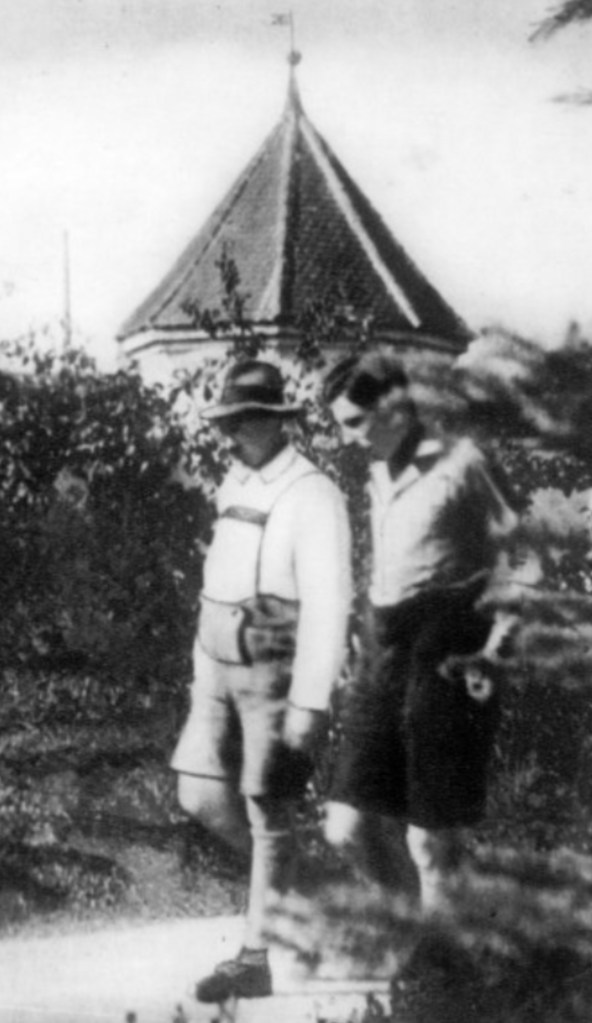
Adolf Hitler, wearing a fedora hat and lederhosen, takes a walk with fellow prisoner Emil Maurice in the enclosed fortress garden at Landsberg Prison in the summer of 1924. (Photo from the book by Hans Kallenbach: With Adolf Hitler at Landsberg Fortress. Munich 1939)
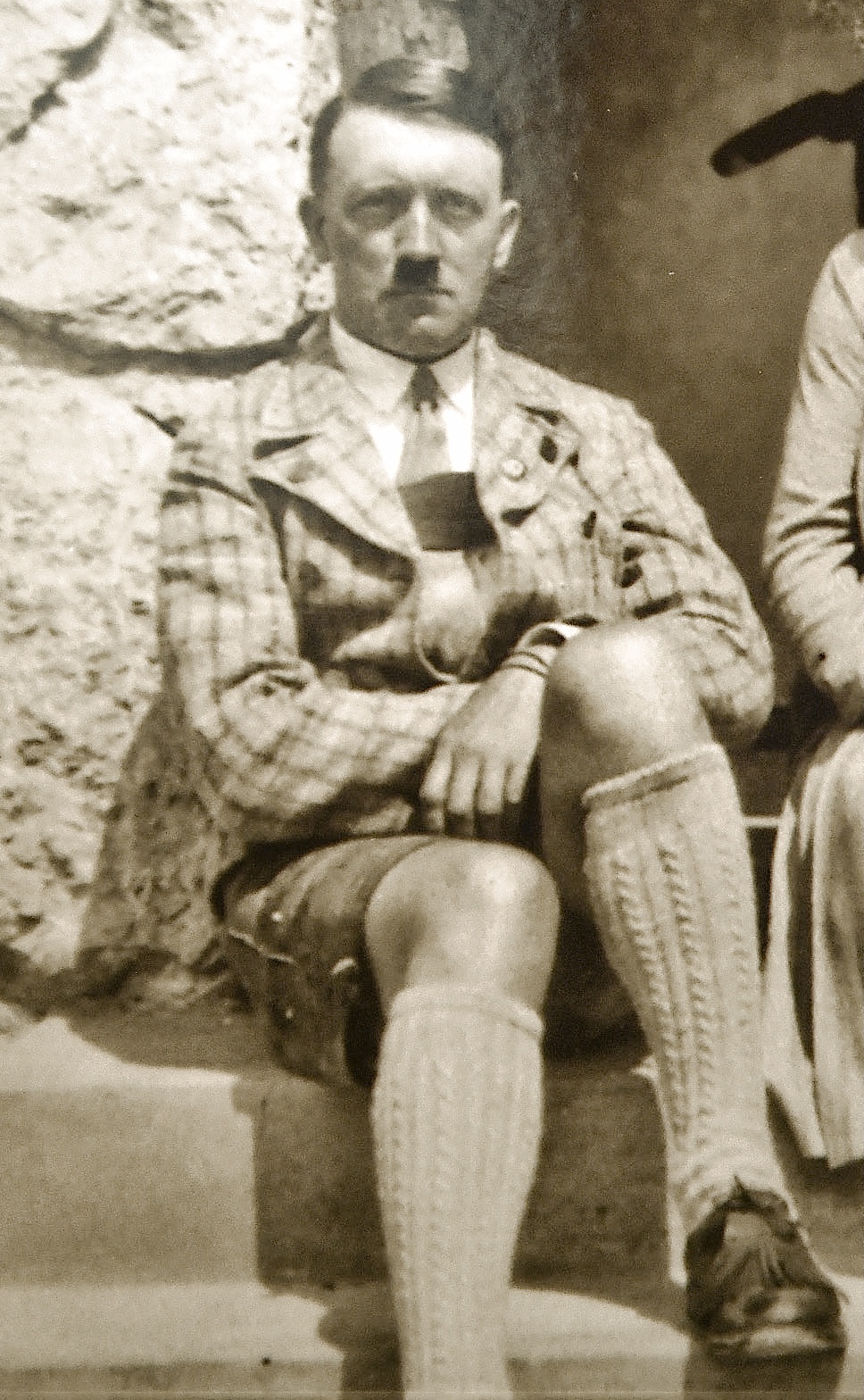

From Left to Right: Grete (Geli) Raubal, Otto Strasser, Hitler, Gregor Strasser, and Anton Strasser. Scene: Dinkelsbühl Bavaria. Time: 1927. Result: Otto Strasser alone has escaped the Fuehrer’s Murderous Rage (Photo from the book “Inside Hitler – From the German of Kurt Krueger, M.D.” Introduction by Otto Strasser. Published in 1941) This appears to be taken at the Wörnitztor, part of the medieval fortifications of Dinkelsbühl. This visit included lunch and coffee with the parents of Otto Straßer at Deutschhofberg 2 in Dinkelsbühl on 24 August 1927.
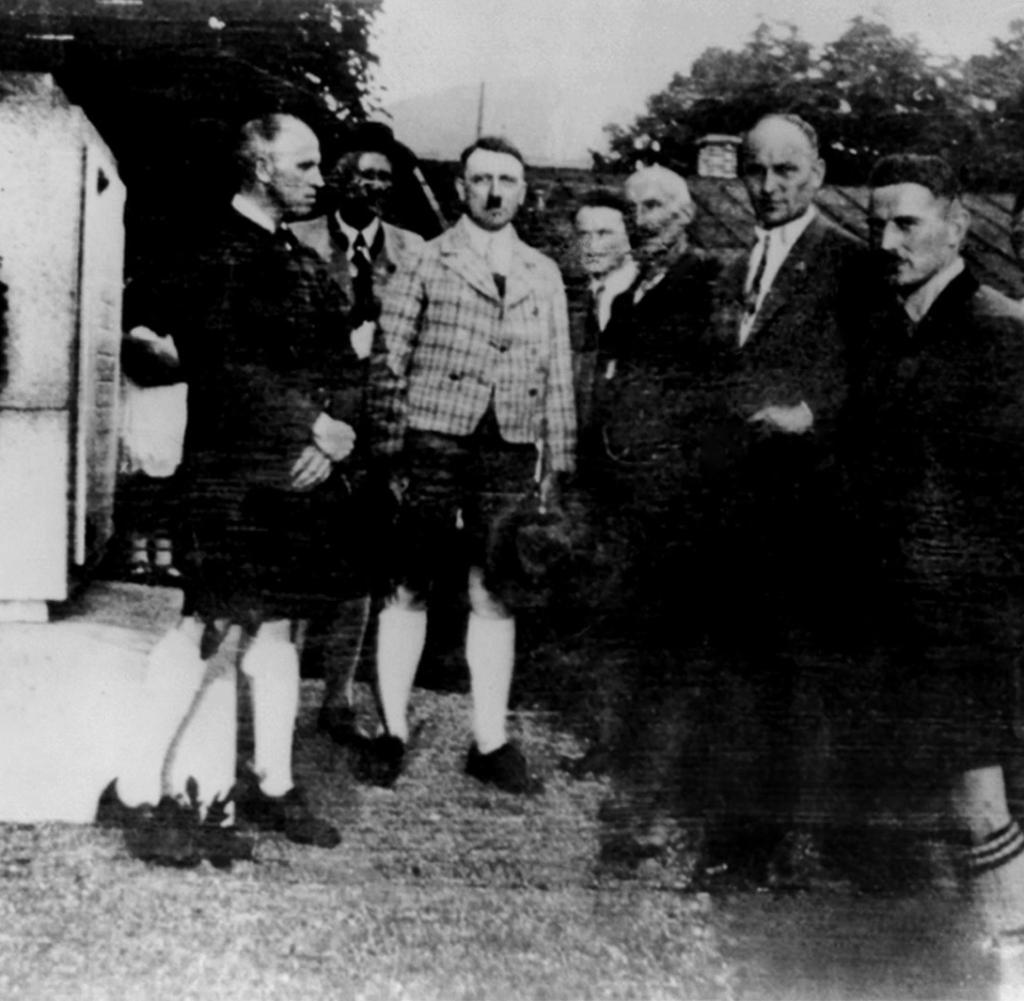

Mystery solved!!!
Adolf Hitler visits the Oberland-Denkmal in Schliersee on 3 July 1927 with (left to right) Mathias Kahlen [politician]; Josef Kössl; Adolf Hitler [politician]; Franz Danninger [politician] ; Ludwig Noisinger Moosbauer; Karl Munzert; Otto Schlutt.
“Denkmal des Freikorps Oberland für die in Oberschlesien Gefallenen in Schliersee” (Memorial of the Oberland Freikorps for those who fell in Upper Silesia in Schliersee).
The Freikorps Oberland holds a significant place in the history of the Weimar Republic. As a voluntary paramilitary organization, it emerged during the early years of the republic and played a crucial role in combating communist and Polish insurgents. The Freikorps Oberland earned its reputation with an impressive victory in the 1921 Battle of Annaberg, displaying its prowess and determination to defend the fledgling democracy.
Following its success, the Freikorps Oberland’s influence expanded further, particularly in Bavaria, where it ultimately became the core of the Sturmabteilung (SA). The SA, later known as the Brownshirts, played a critical role in the rise of Adolf Hitler and the Nazi Party in the 1930s. However, it is noteworthy that some former members of the Freikorps Oberland distanced themselves from the Nazis and their ideology.


 Heinrich Hoffmann Photo Gallery