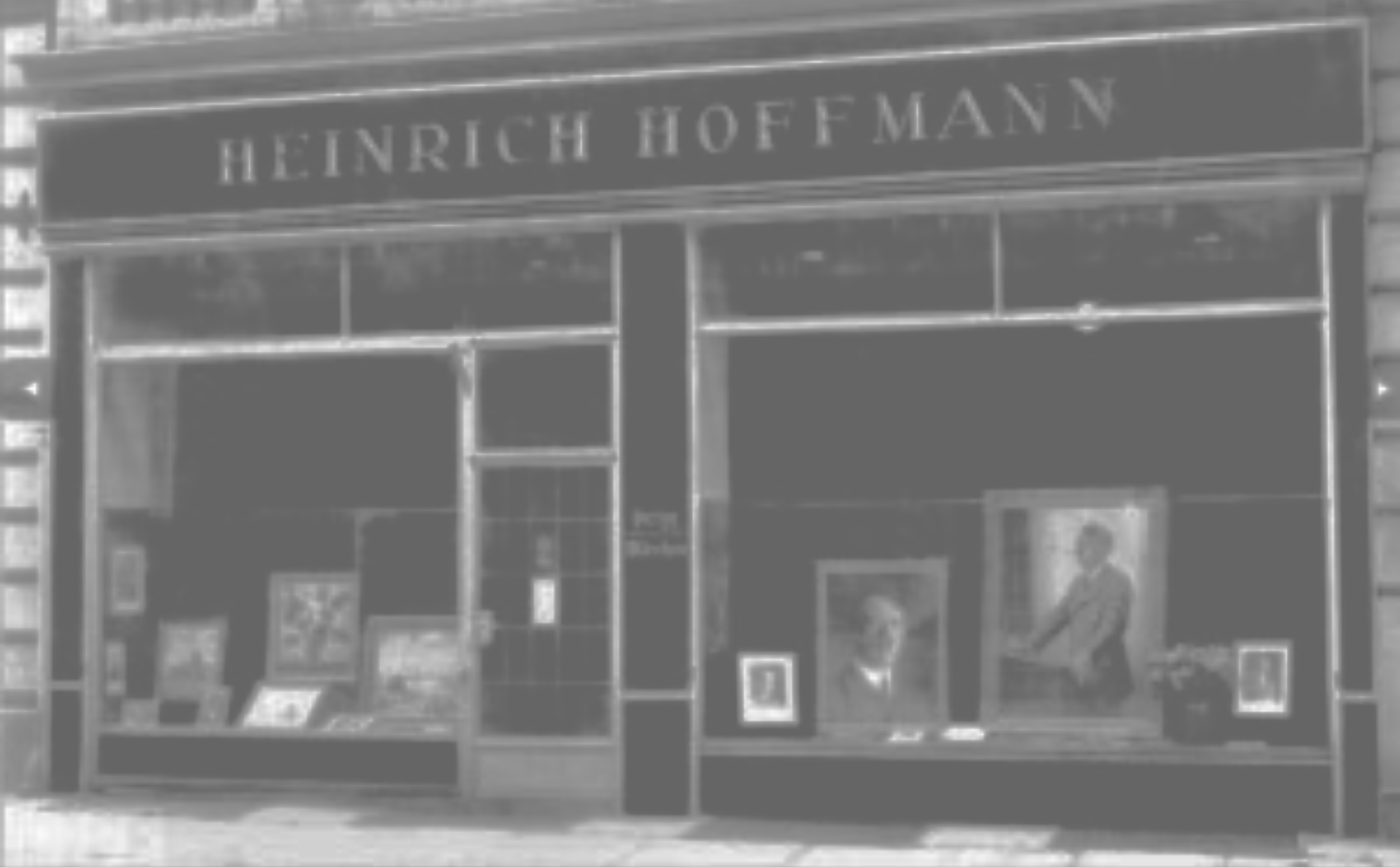
- David Littlejohn in “The SA 1921-45: Hitler’s Stormtroopers” (Osprey publishing 1990):
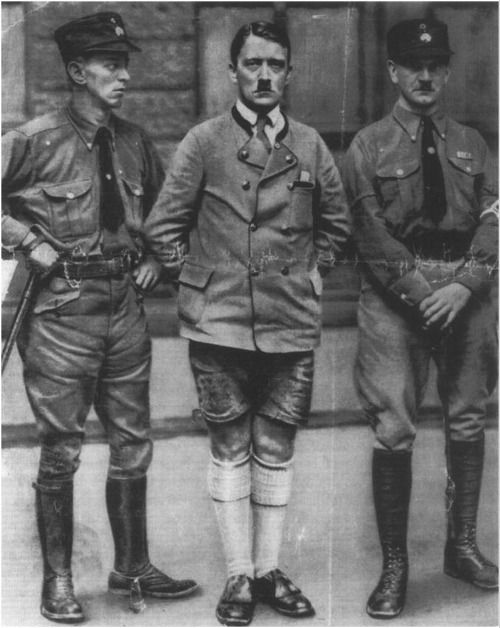
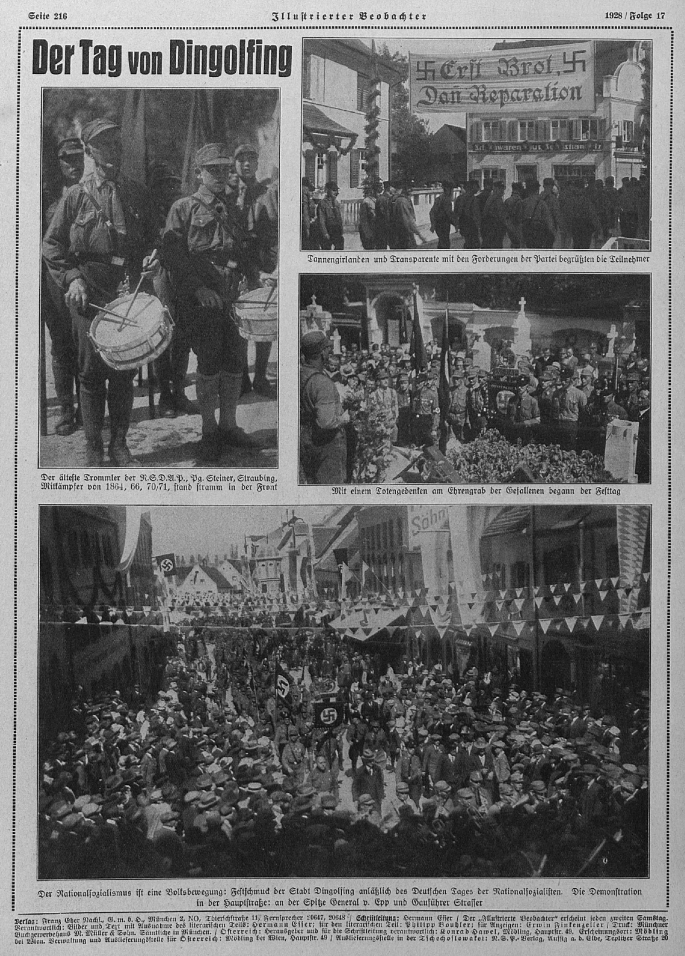
A grey windjacket was popularly worn over either civilian or part-military attire. A swastika armband was the only constant feature. (…) Formal uniform was introduced in January 1923, consisting of a field-grey tunic and breeches and tan-coloured képi with the national cockade. Rank was signified by white bands around the brassard. The SA Standarte (Standard) also made its first appearance in January 1923; at this stage the letters NSDAP appeared on the front. (…)
When the SA was re-activated in February 1925 it adopted an all-brown uniform. Rank was still, as previously, indicated on the brassard, but in November 1926 collar patches in different colours to denote different regions were introduced.
1925

- First Official NSDAP uniform
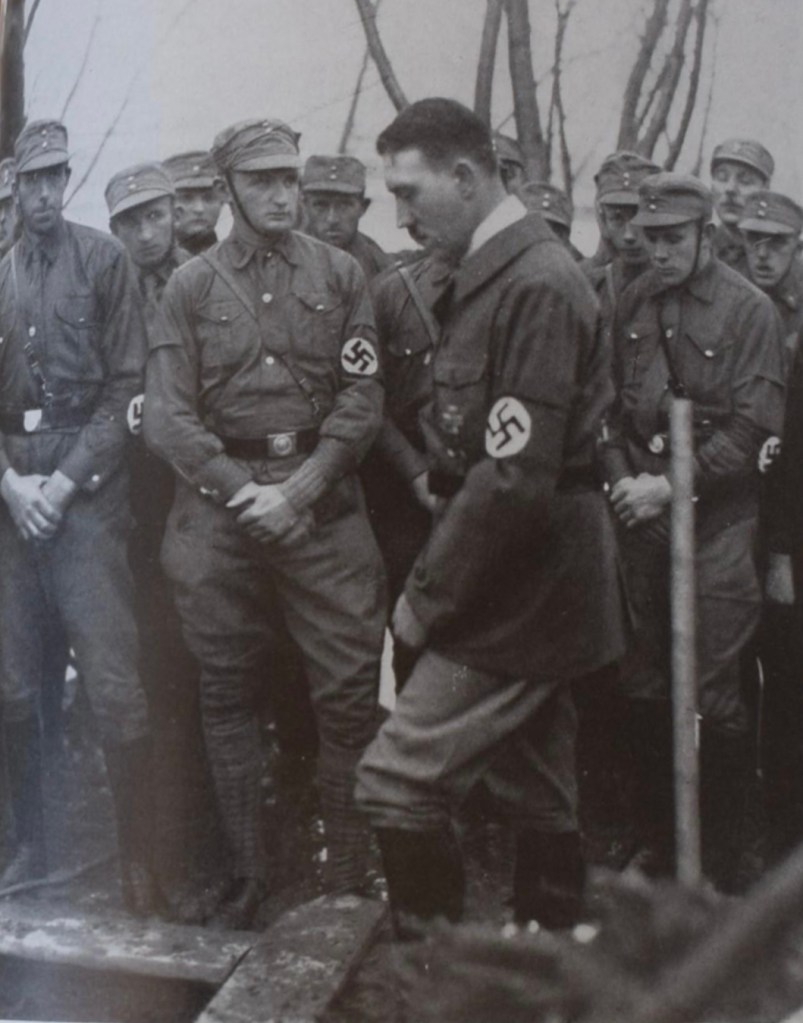
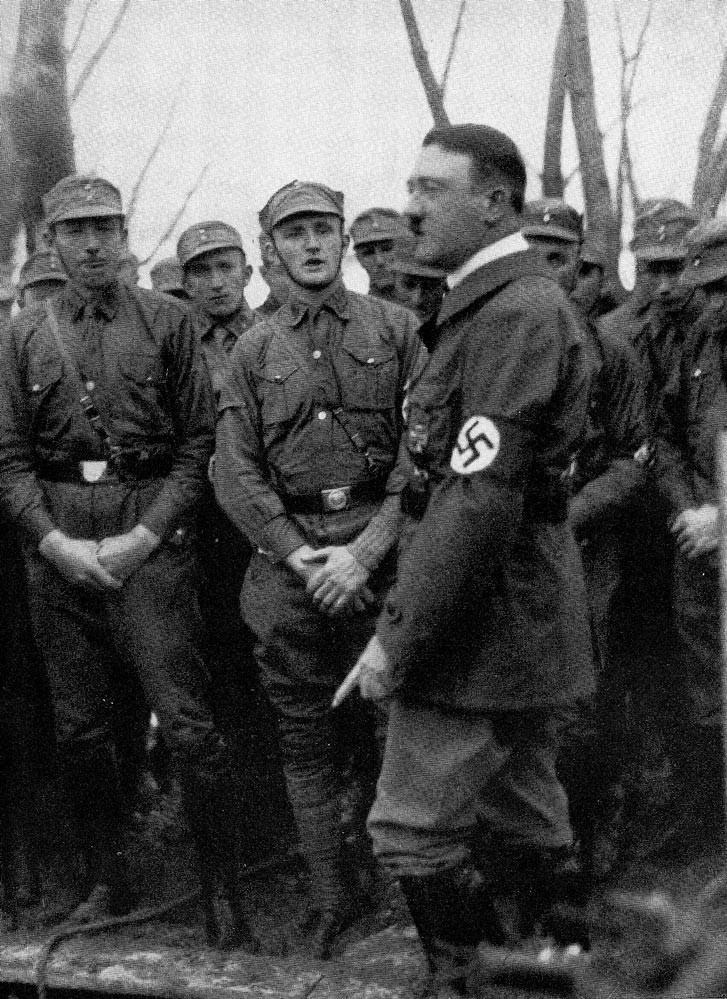
- The diverse attire comprises a combination of civilian and military clothing.
- Among the garments are uniforms worn by World War I veterans and members of Freikorps, with collar tabs on certain tunics featuring the Edelweiss emblem of the Bund Oberland. Additionally, some caps also bear this flower emblem on their side, along with rank insignia displayed on certain shoulder straps.
- Several individuals are wearing peaked ski caps with buttoned front closure, adorned with a cockade and Swastika pin. (Initially, members of the early SA did not have official headgear and mostly wore grey Austrian-style ski caps until the introduction of the soft kepi.)
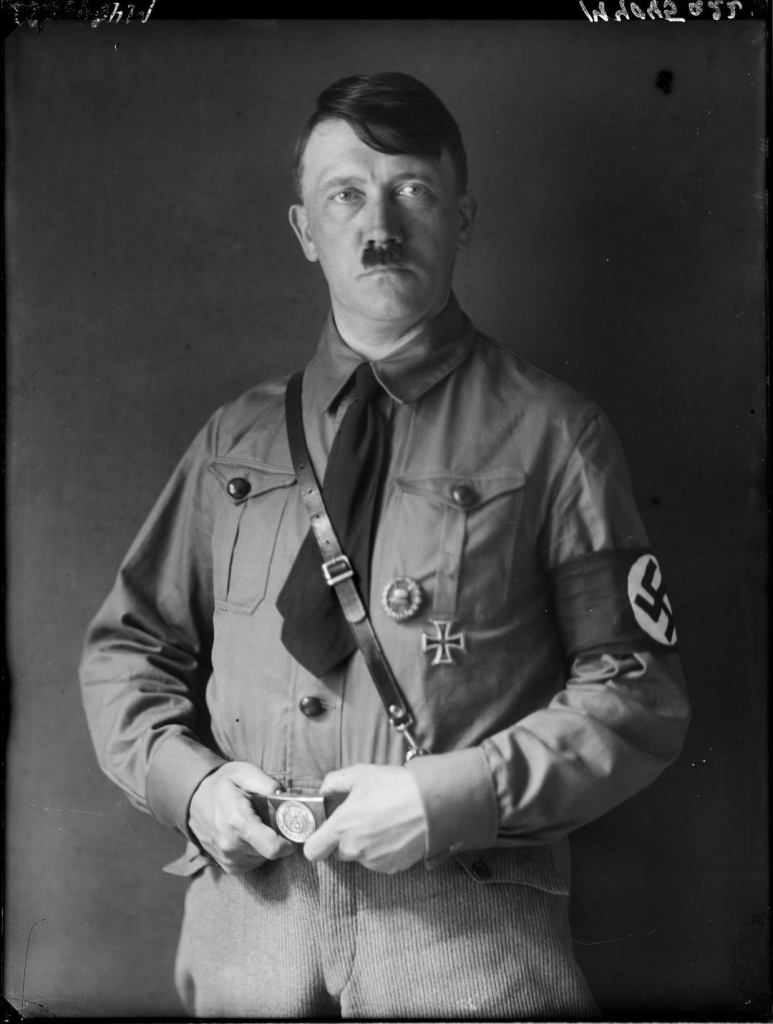
- Various Nazi swastika pins, military belt buckles, and military decorations on the uniforms.
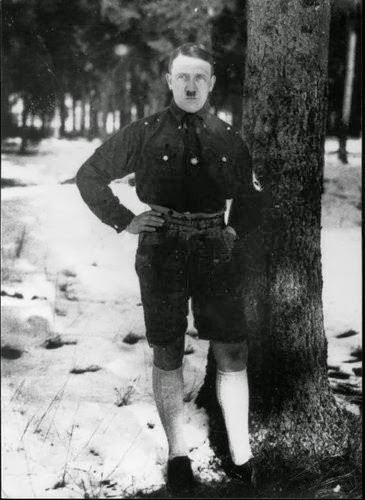
- Long trousers, breeches, knee high stockings, puttees, leather leggings, etc.
- Leather shoes, ankle boots.


1926
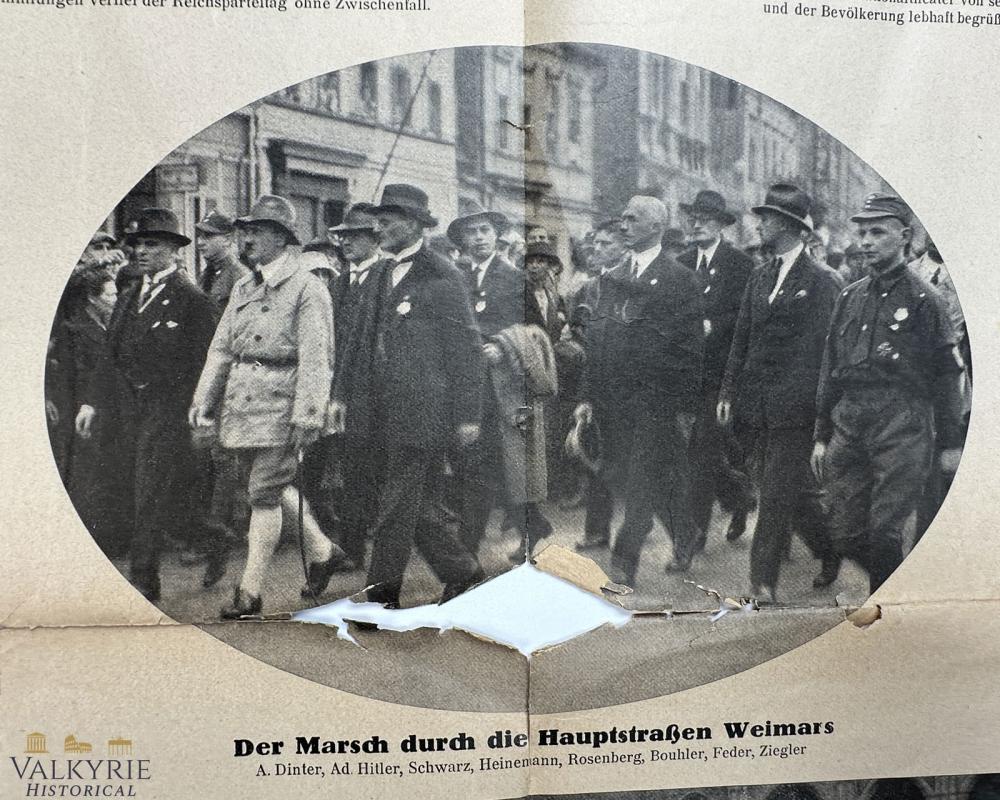
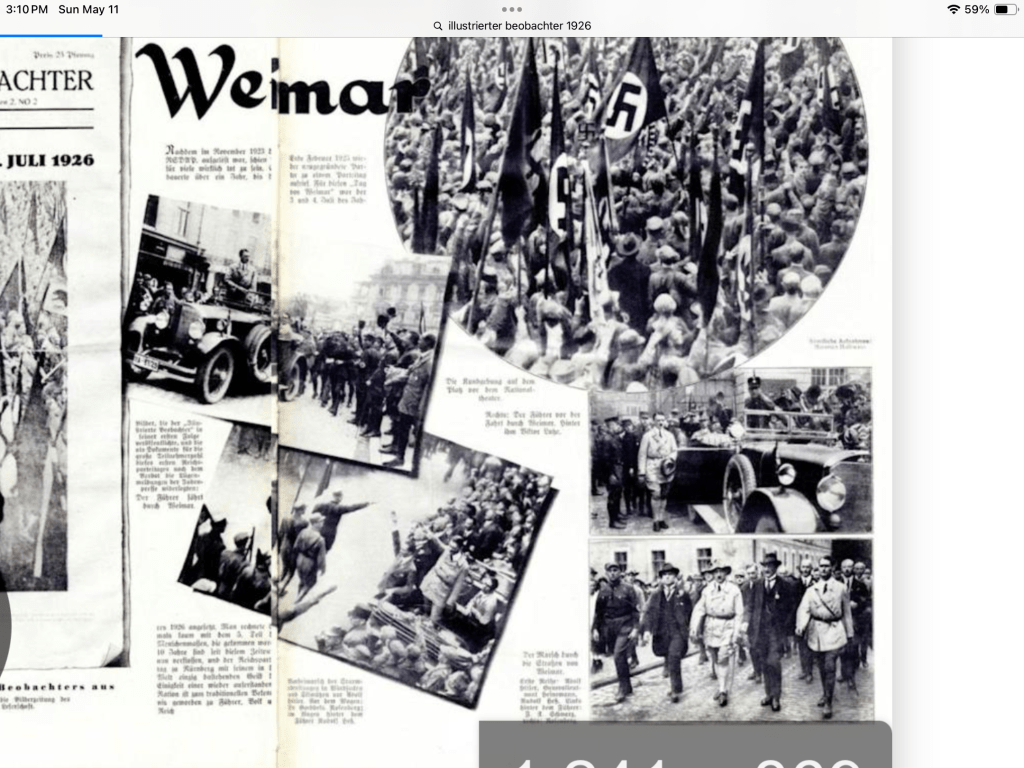
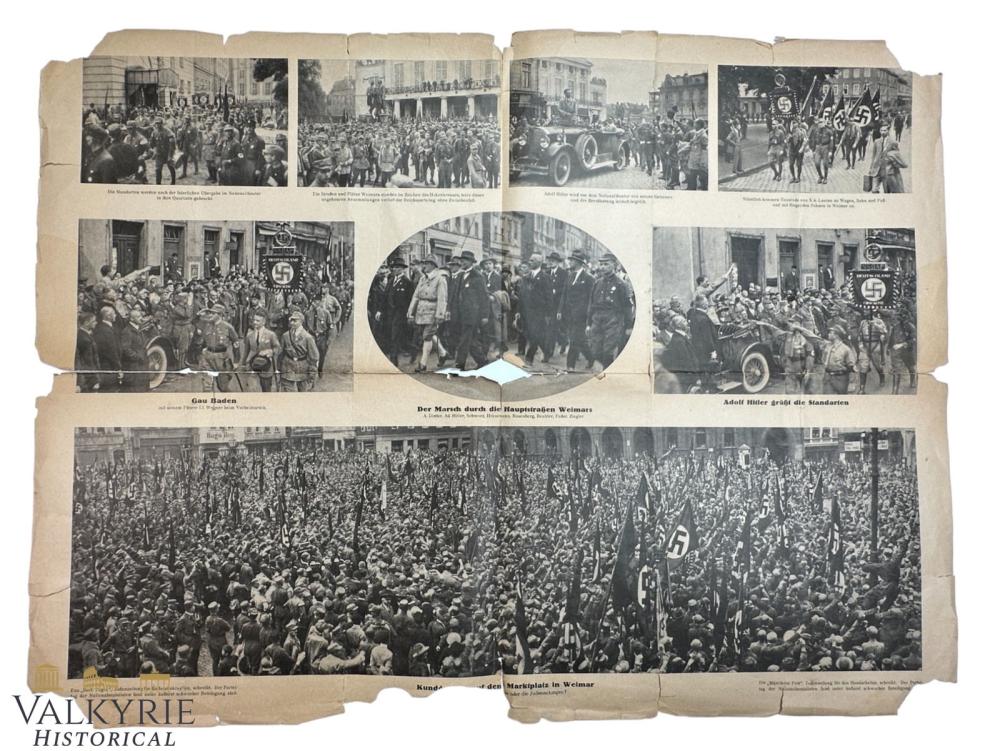

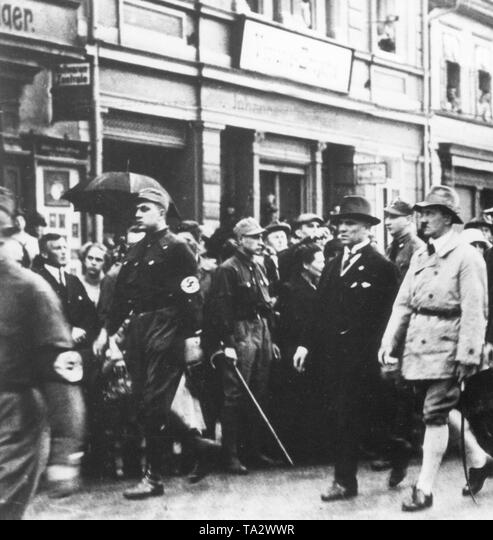
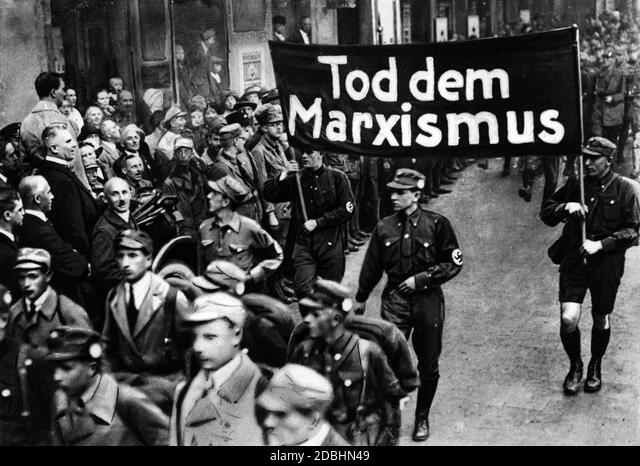
”Der shirt” appears in 1926


1927
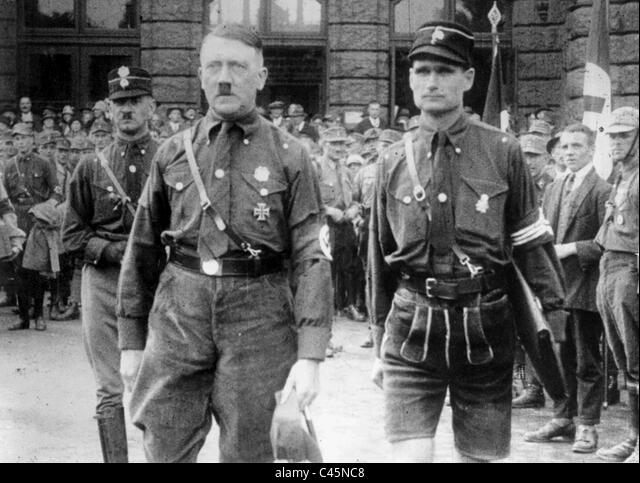
Uniform one
In 1924, while the NSDAP was legally banned following the Beer Hall Putsch, Frontbann (underground SA) leader Gerhard Rossbach located a large store of war-surplus brown denim shirts in Austria, originally intended for tropical uniforms.[3] When the SA (which included the nascent SS) was re-founded in 1925 following Hitler’s release from prison, these brown shirts were issued as uniforms.
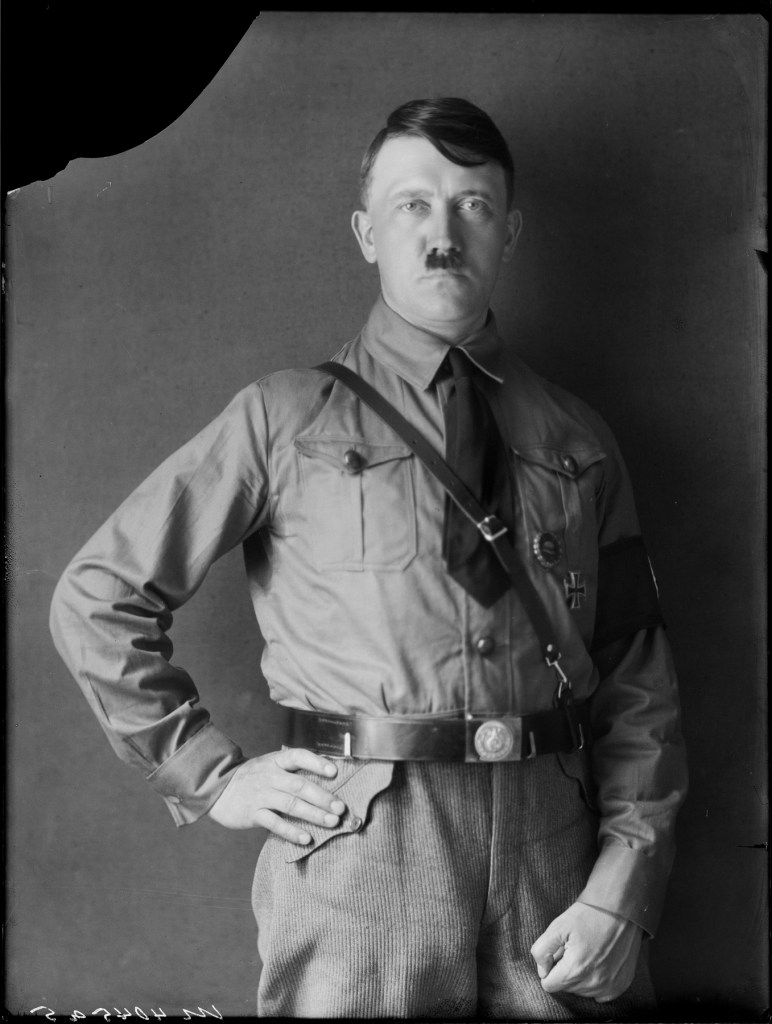
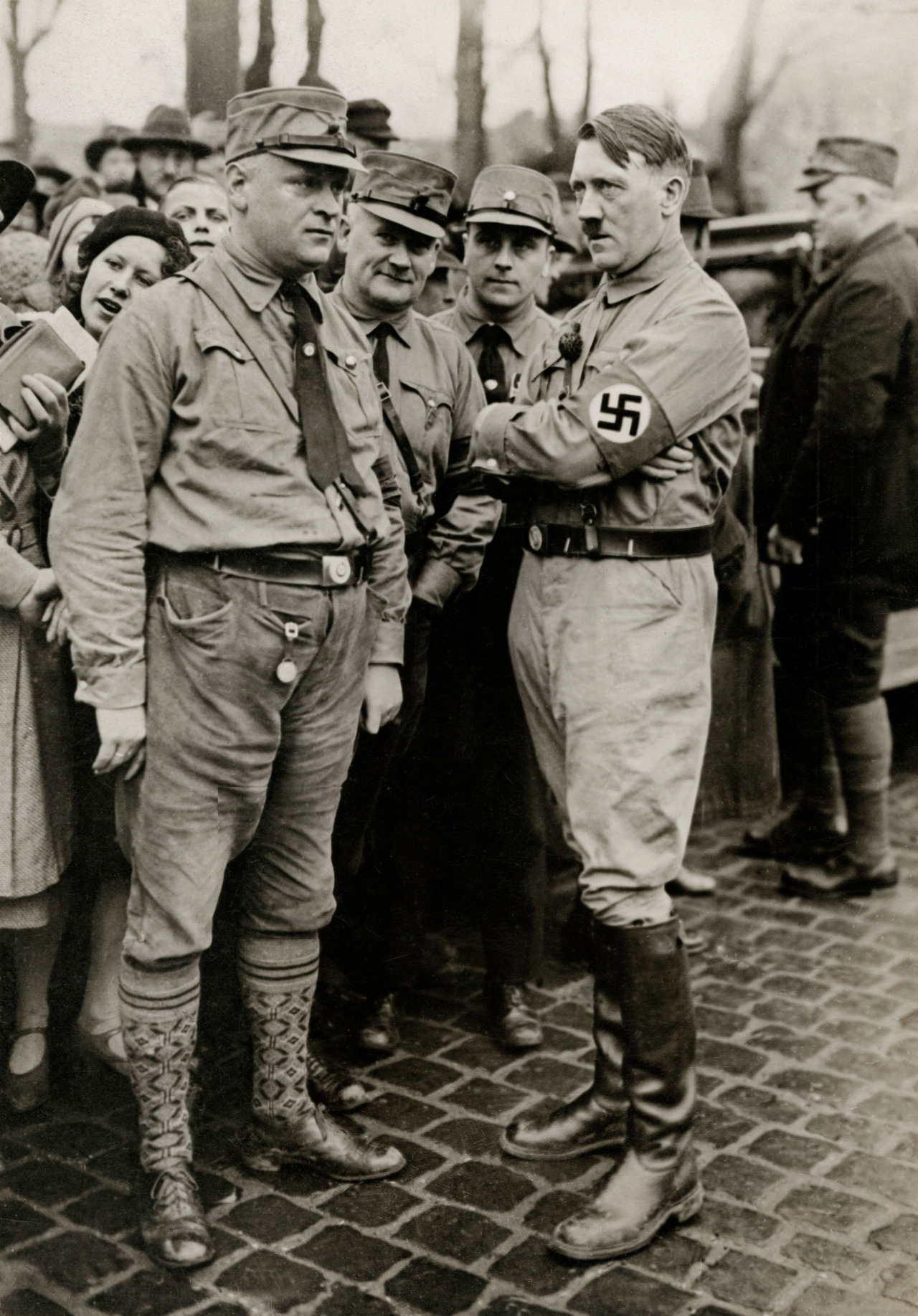
Brownshirt: Denim
Shirt buttons: white mother-of- pearl
Cufflinks: ? type of metal
Necktie: cotton?
Tiepin: metal
EK award: ? metal
Armband: rayon?
Crossbelt and waistbelt: dyed leather with ? type of metal fittings
Box style buckle: brass with nickel centerplate
Riding breeches or jodhpurs: corduroy
Knee-high socks: wool
Lace-up ankle boots: leather
Shoe laces: cotton?
Austrian style ski cap: wool
Flap buttons on cap: ? type of metal


1928
Uniform 2 ?

1929

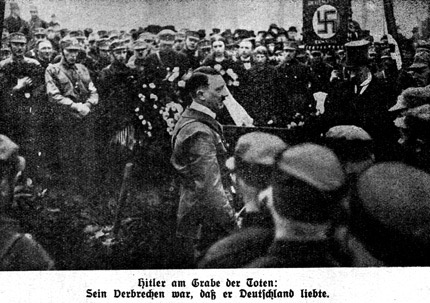
Adolf Hitler speaking at the funeral held on 13 March 1929 for one of the two victims of Die Blutnacht von Wöhrden. Otto Streibel, killed in action on 7 March 1929.



1930
Uniform 3 (?)
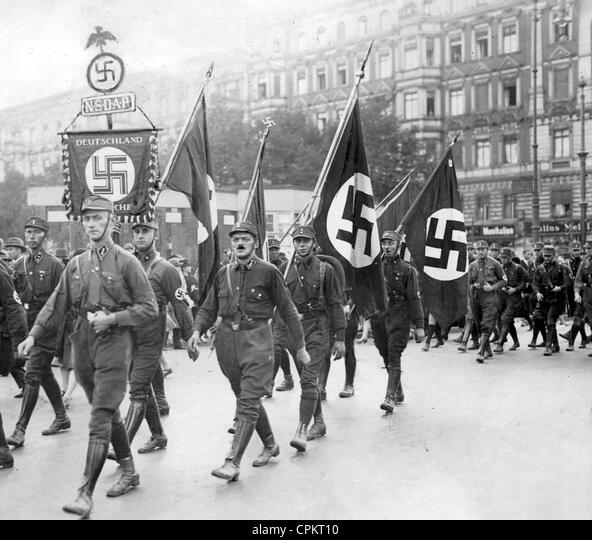
1931

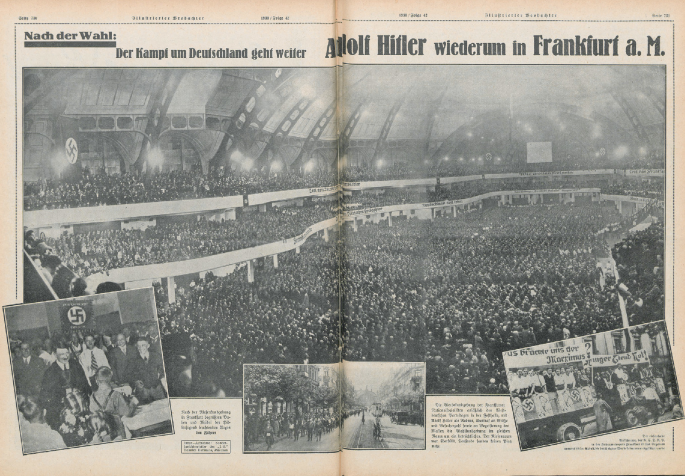
1932
”Der Jacket” makes an appearance
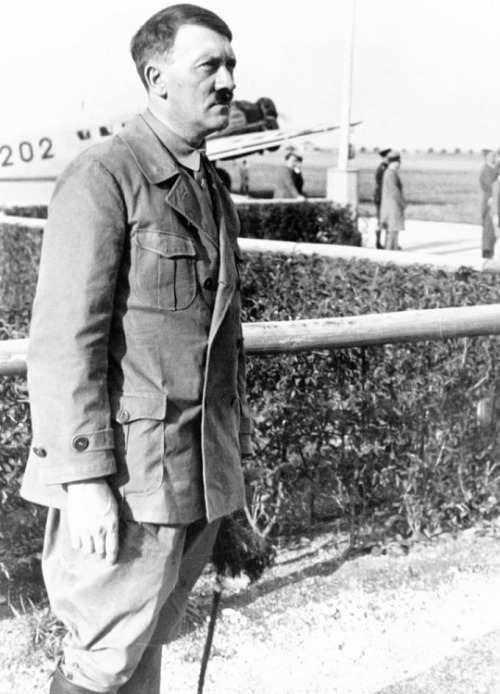
 Heinrich Hoffmann Photo Gallery