
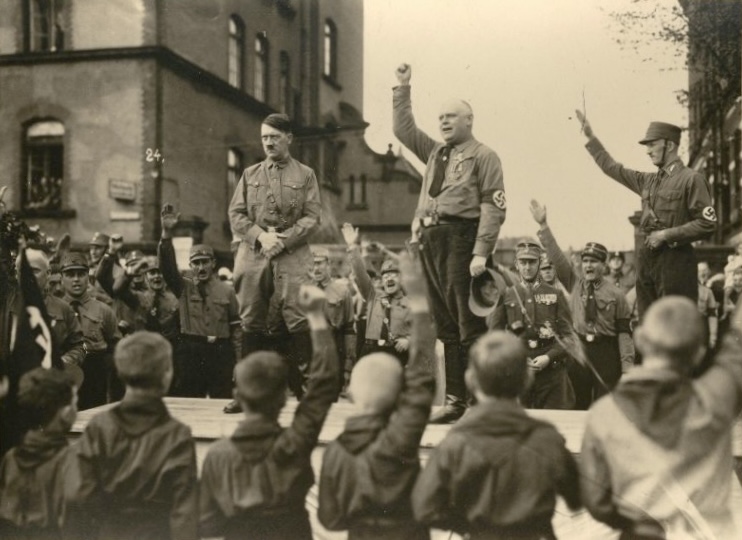
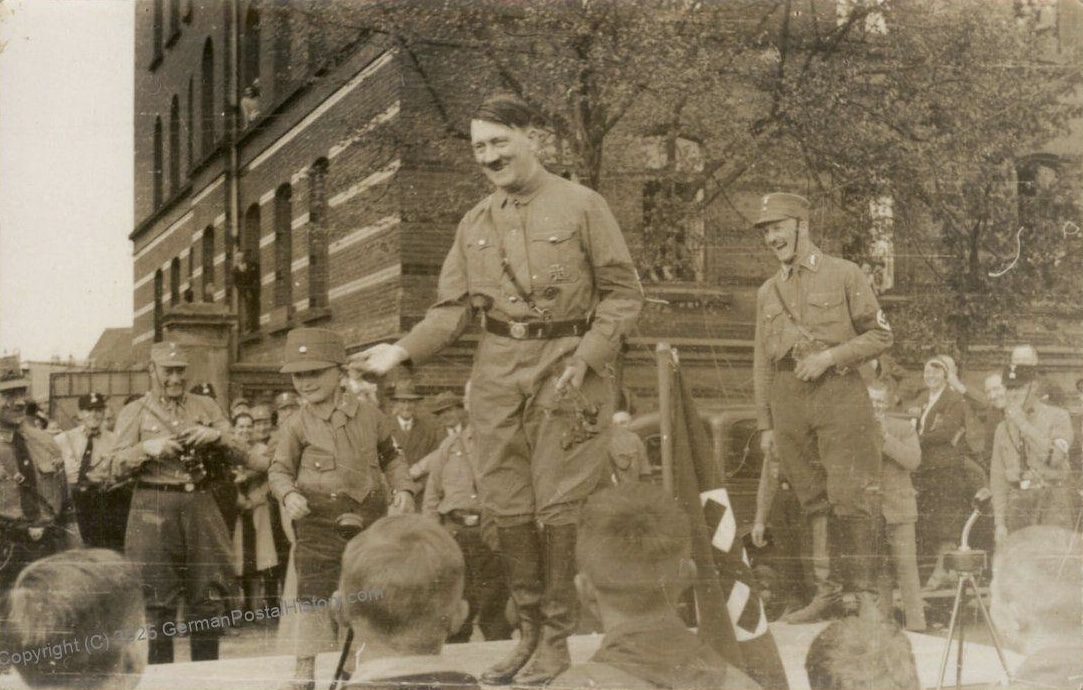
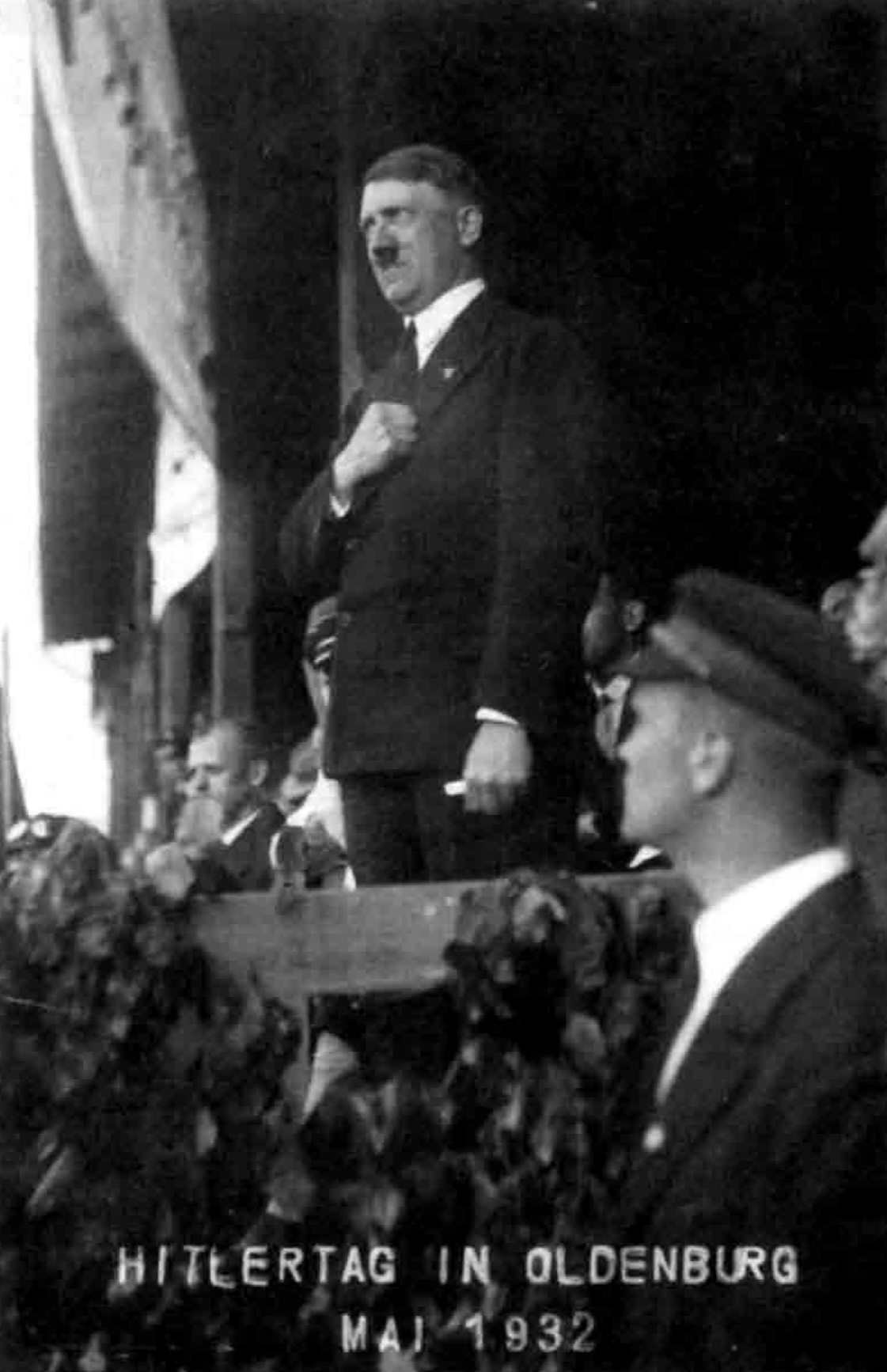
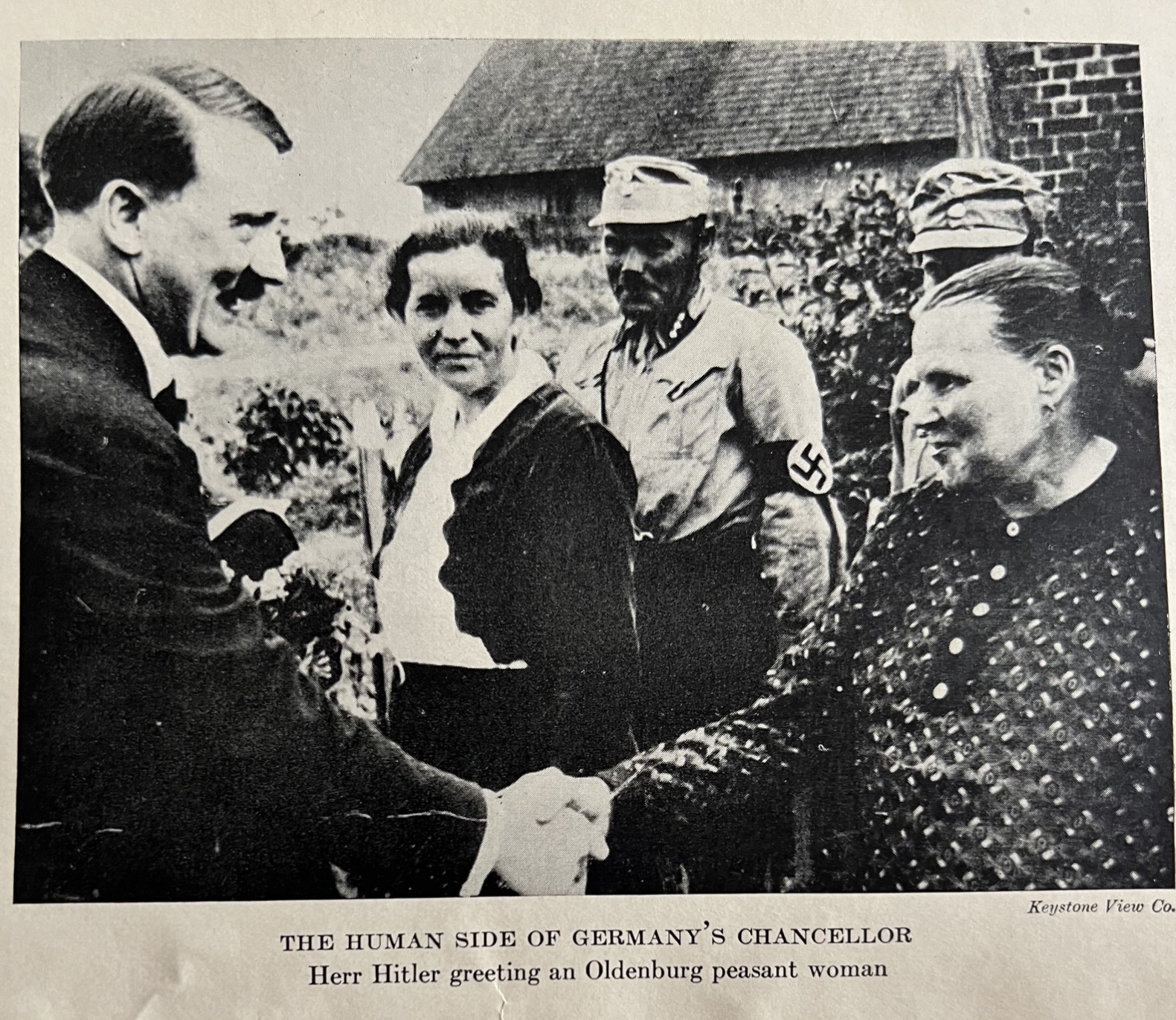
On 10 May 1931, Adolf Hitler presented a sweeping campaign speech exactly one week before the local 17 May Reichstag elections were scheduled to be held in the Oldenburg province. The NSDAP held a special “Hitler Day” and a “Hitler Parade” in Oldenburg. Over 5,000 SA men marched in front of Hitler’s speaking platform set up at the Pferdemarkt in the center of the city. The event wasn’t without the usual conflict, as several fights broke out between the Communists and National Socialists. The Oldenburg rally provided an early glimpse into the party’s organizational strength, and its successful efforts in projecting an image of power and unity. I must say that Hitler appeared especially poised and confident on this particular day, as is enticingly revealed in the following set of photographs.


At the time of National Socialism, the Pferdemarkt in Oldenburg was a meeting place for various major events. And even before the National Socialists took power, the horse market was on 10 May 1931 the stage for a campaign event of the National Socialist German Workers’ Party (NSDAP) for the state election. Many people came to see the party leader Adolf Hitler and to hear his speech. There were a few small protests on the sidelines, but most were enthusiastic about the goals of the party. This enthusiasm for the party finally culminated in the absolute majority vote for the NSDAP the following year in the 1932 state election. It was in the Free State of Oldenburg that the first National Socialist state government in Germany was elected.

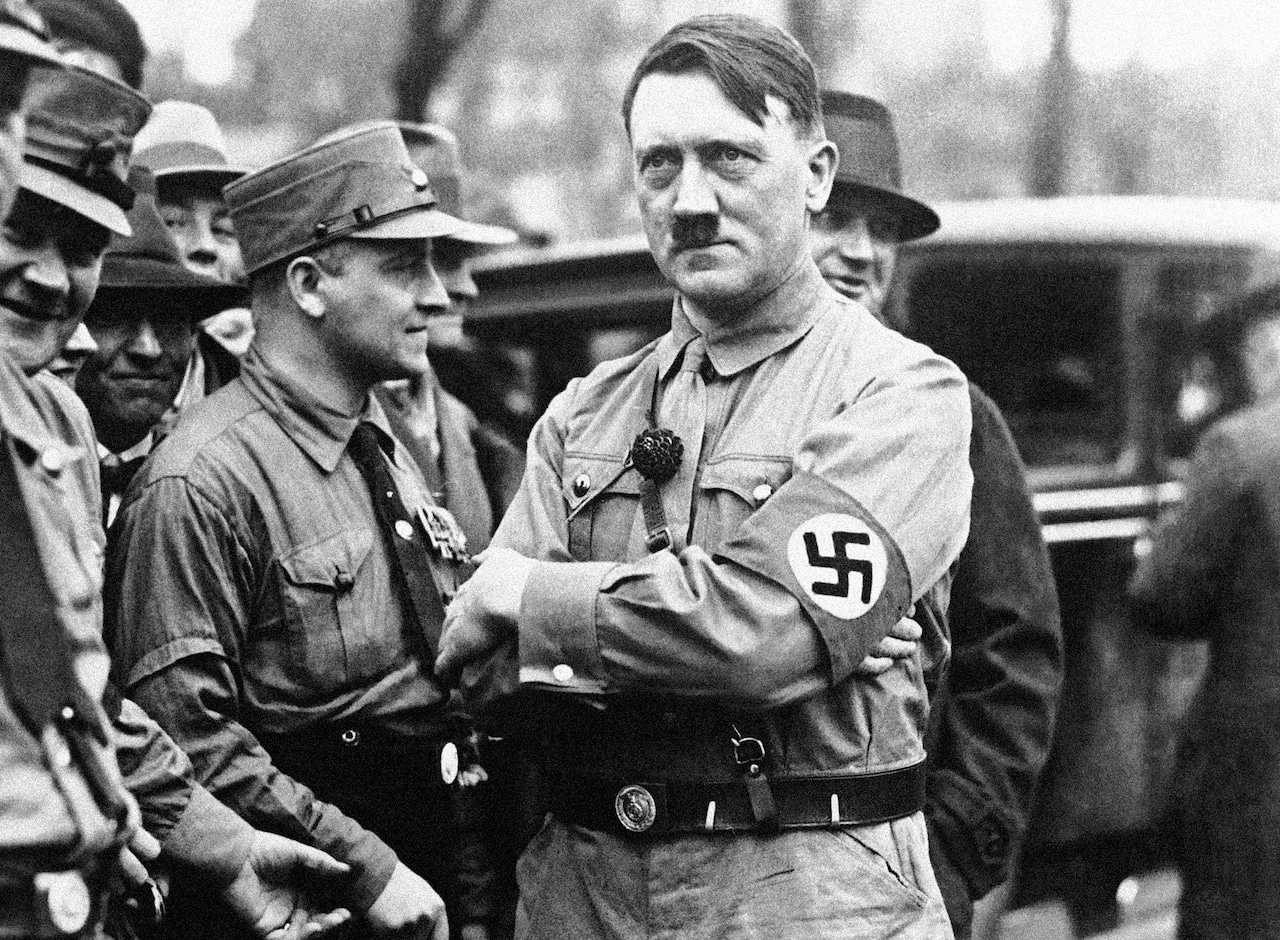
Hitler’s Pinecone Pin
So what’s with the pinecone? Hitler had fought exceedingly hard to win over the Oldenburg area to vote for the NSDAP. One of the largest voting blocks that he needed to prevail upon was Catholic. The pine cone artifact on Hitler’s uniform may therefore be a play to the Catholic vote. In Catholicism, pine cones are associated with eternal life, rebirth, and spiritual enlightenment. They are featured in Christian art and symbolism, including a prominent 13-foot sculpture in the Vatican. The pinecone has also been mentioned in connection to the Tree of Life.


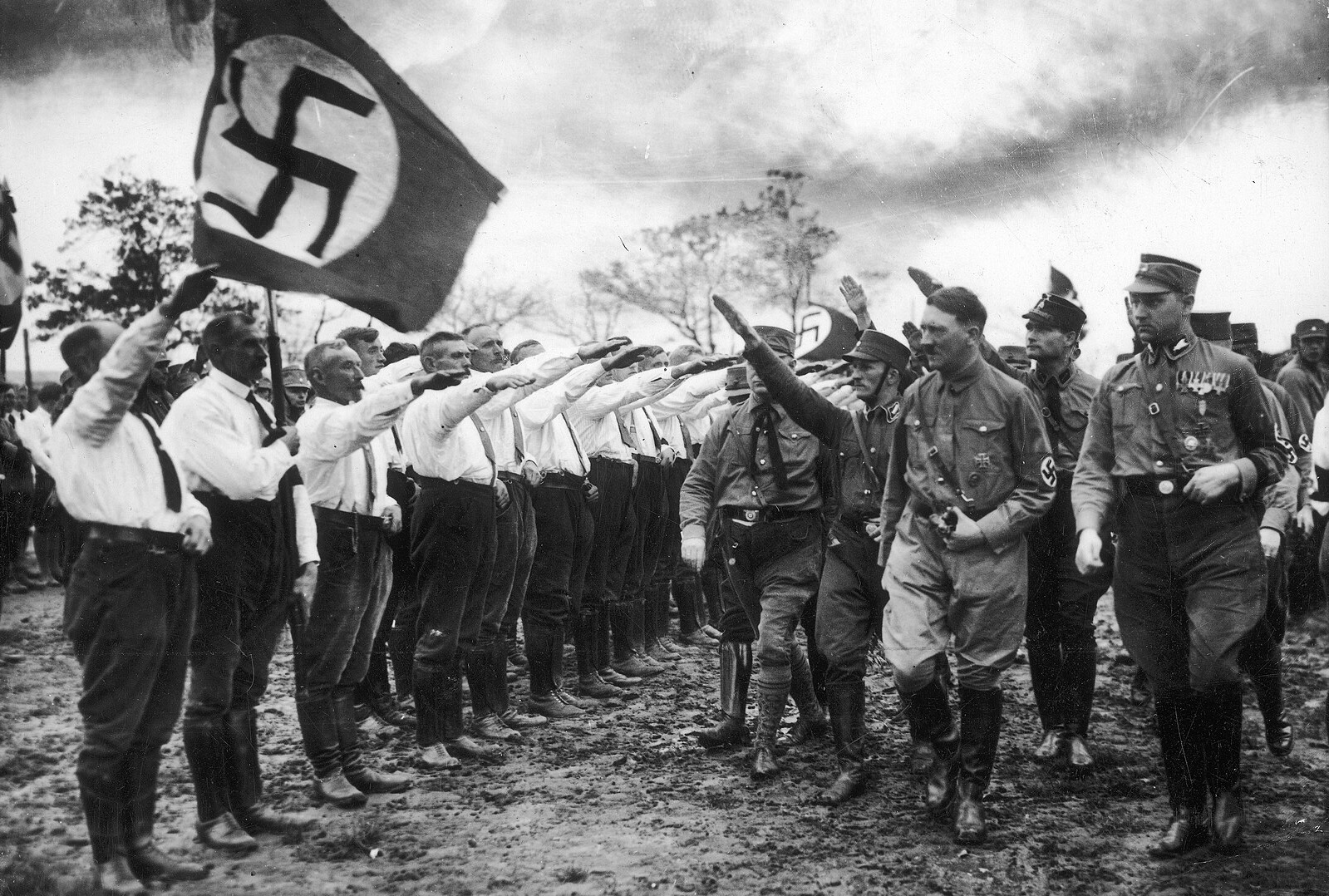
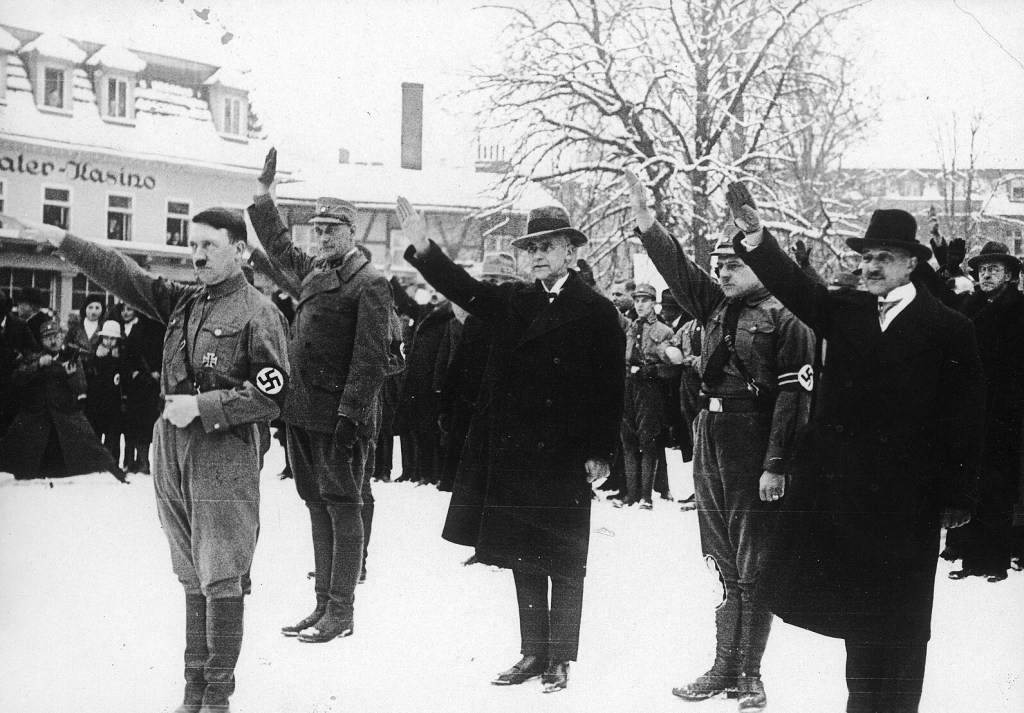
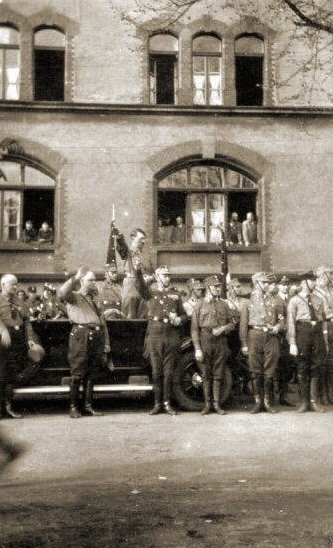
In June 1930, Chancellor Brüning’s government began banning Nazi uniforms in three states. This move was intended to curb political violence and maintain order amidst rising tensions between them and other parties. The ban was later extended to the entire country in November 1931 by a federal decree. The ban had little effect on the Nazis, who continued to wear uniforms, often in modified forms like these white shirts, as demonstrated by the SA members here in 1930.

In June 1930 a ban had been placed on uniforms (NSDAP brownshirt) and it was still in place at the time of the 2 November 1930 Gautag Weser-Ems in Oldenburg and the 10 May 1931 campaign event. Anyone caught wearing the uniform in public faced a hefty fine and jail time.
Gautag Weser-Ems

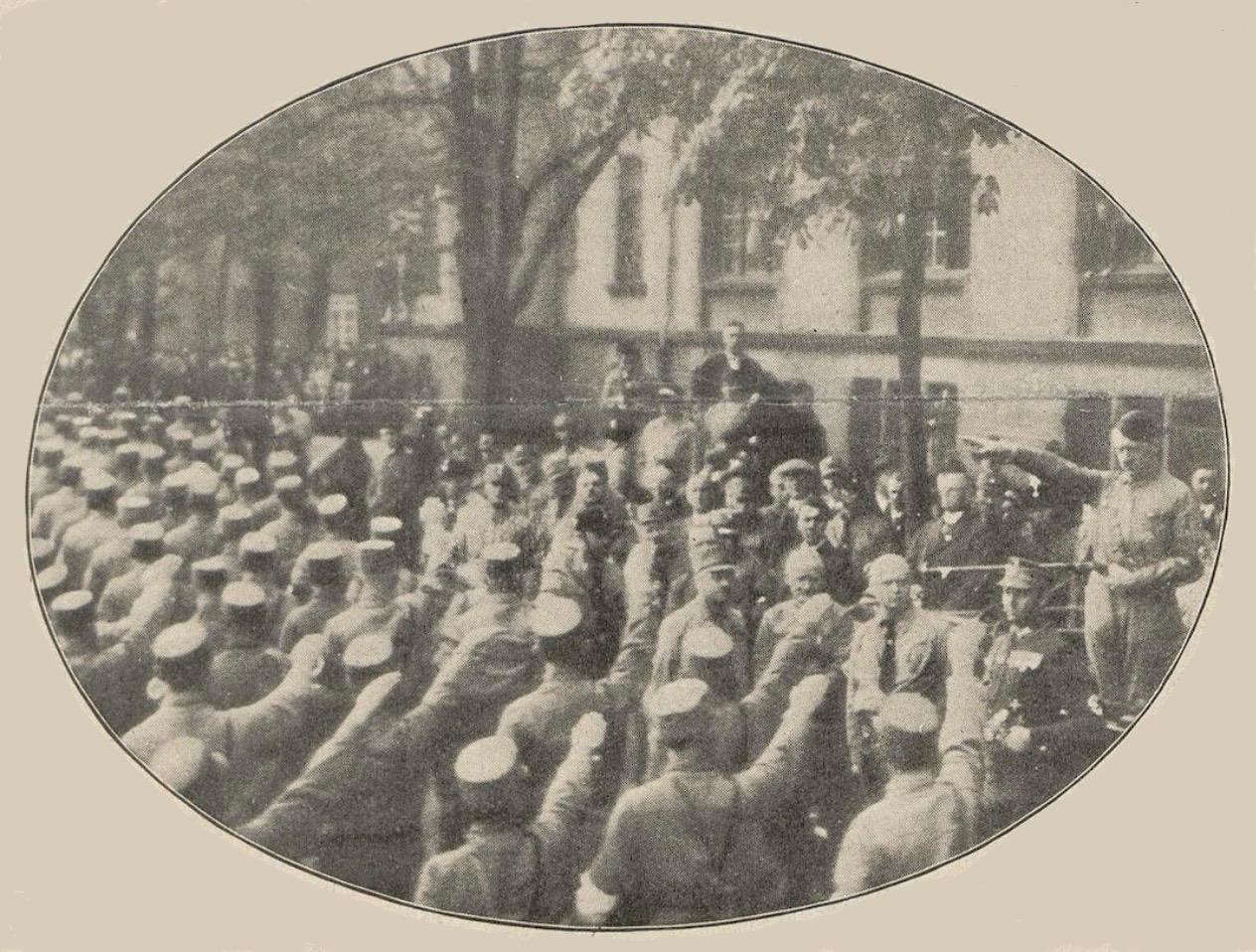
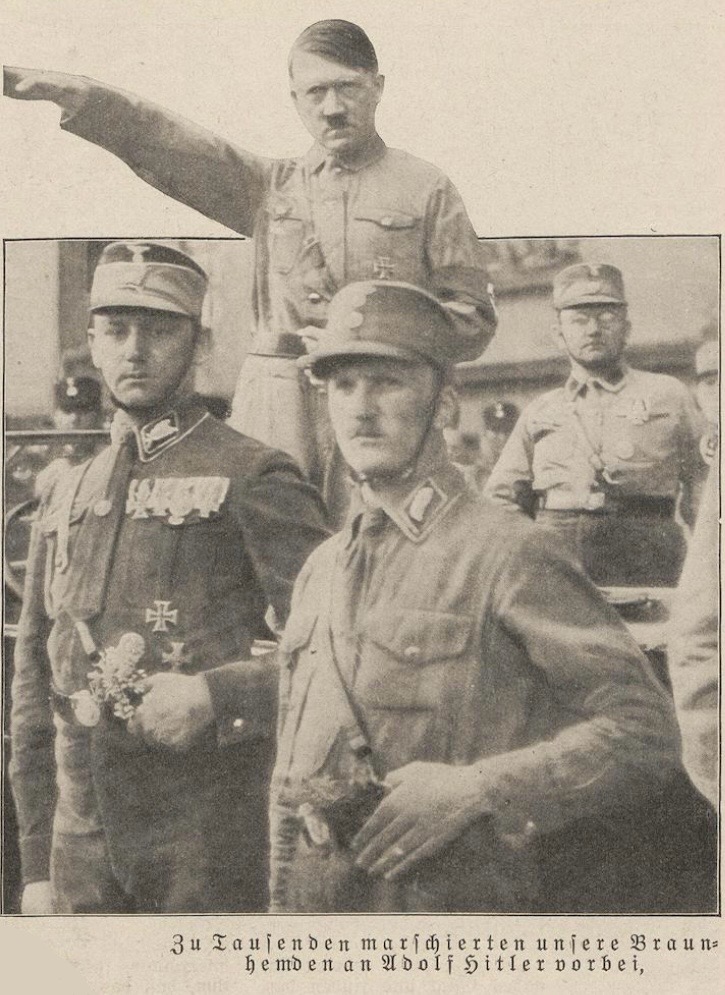

“Lately Adolf Hitler’s strength has seemed to wane. In the German State of Oldenburg last week he waxed mightily. The election was for the local Diet, but Chancellor Heinrich Bruning of all Germany went out to electioneer against the Fascists. Result: In the Oldenburg Diet of 44 members, the Hitlerites raised their representation from three to 19, thus becoming the leading party. Roman Catholics and Jews, bitterest Hitler foes, number in Oldenburg 124,000 Catholics, 1,500 Jews. Total population: 545,172.”
The NSDAP in Oldenburg
The local branch of the Oldenburg Nazi Party was founded three times: in 1921, 1923, and 1925. The first two branches existed only briefly, as the one founded in 1921 collapsed due to lack of members (14), and the second (50 members) was banned in September 1923. The local ban request was justified as follows: “According to its program, in the press, at meetings, rallies, and leaflets, the party persecutes the Reich and state governments, the constitution, individual ministers, all parties, government measures, and the Jews with unsurpassable agitation. The insults, particularly against the latter, and the destruction of their civil rights guaranteed by the constitution occur in forms and expressions and in an accumulation that are unparalleled and lack any trace of a sense of justice and decency.”

On the advice of the Reich Minister of the Interior, the ban was lifted in 1925 and the party was reestablished. But the state government specifically placed a ban on Adolf Hitler speaking, which had been requested by the Jewish State Council on 4 September 1925, with the justification: “Hitler’s appearance has an irritating effect and disturbs the peace in which the various religious communities in Oldenburg have lived together.” The ban on Hitler speaking in Oldenburg, however, only lasted five months. In 1928, the concerns of the Jewish Community Council were no longer taken into account and Hitler appeared for his first speech in Oldenburg at the Ziegelhof halls on 18 October 1928 in front of 3000 listeners.


The private photograph below comes with a story. A young woman named Frau Lenz of Heidelberg had traveled up to Oldenburg just to listen to Hitler deliver a street speech on 2 November 1930. She explained that before Hitler had risen to power, the country was in the depths of the Great Depression and the towns were filled with homeless children and unemployed young people. But thanks to Hitler, the young people who wandered around the town became more upright, the autobahn was being built, and she could feel that the country was improving. Hitler had been a ray of light that appeared from the depths of defeat in World War I. In the early days of the Nazi Party, its main support base was workers and some patriotic forces, but after Hitler took power, it was women and young people who supported his popularity. For women like Frau Lenz that were living under the Third Reich, Hitler had been a real idol.
The Nazi Party achieved an absolute majority in the state elections in Oldenburg on 29 May 1932. This marked the beginning of the first National Socialist state government in Germany. A week earlier, on May 22, Adolf Hitler spoke at an election rally in front of 35,000 people at the Rennplatz. It was the largest party event ever held in Oldenburg. The press wrote of the event with tremendous enthusiasm. The subsequent victory in the state election with 48.4% enabled the NSDAP to take over the government in a state of the German Reich for the first time.


The importance of Oldenburg to the party was reflected in a police report from the end of 1928, which had stated: “Leading figures of the NSDAP have recently repeatedly indicated that they no longer consider Bavaria, but Oldenburg, to be the stronghold of the party, and that the National Socialist revolution will one day begin in Oldenburg.”
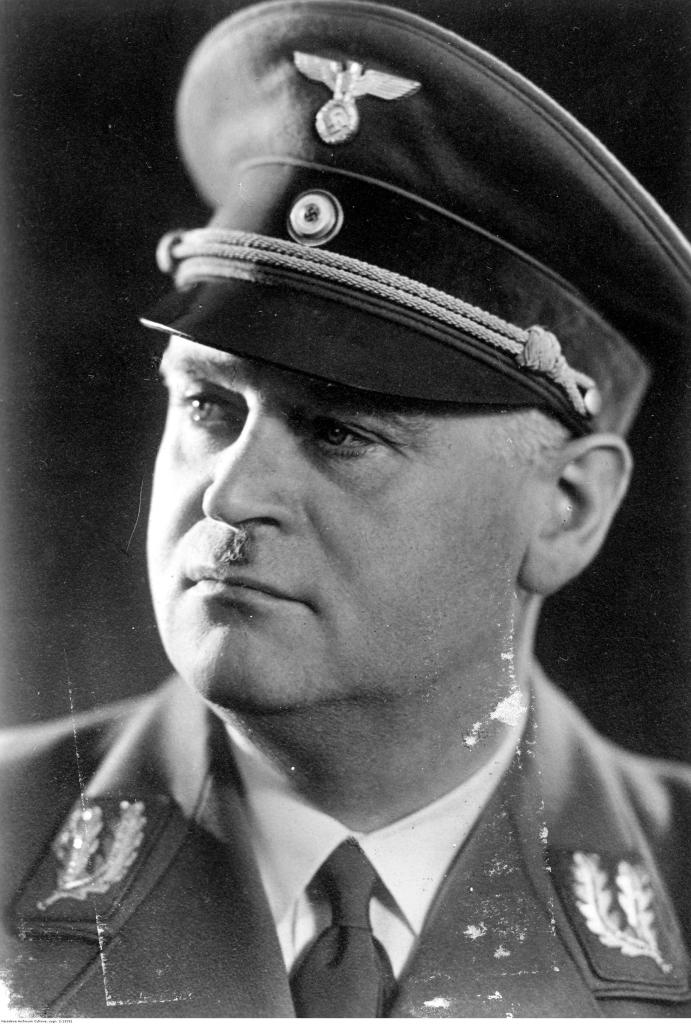
Carl Georg Röver (born 12 February 1889 in Lemwerder – died 15 May 1942 in Berlin) was a German Nazi Party official who’s main posts were Gauleiter of Weser-Ems and Reichsstatthalter of Oldenburg/Bremen.


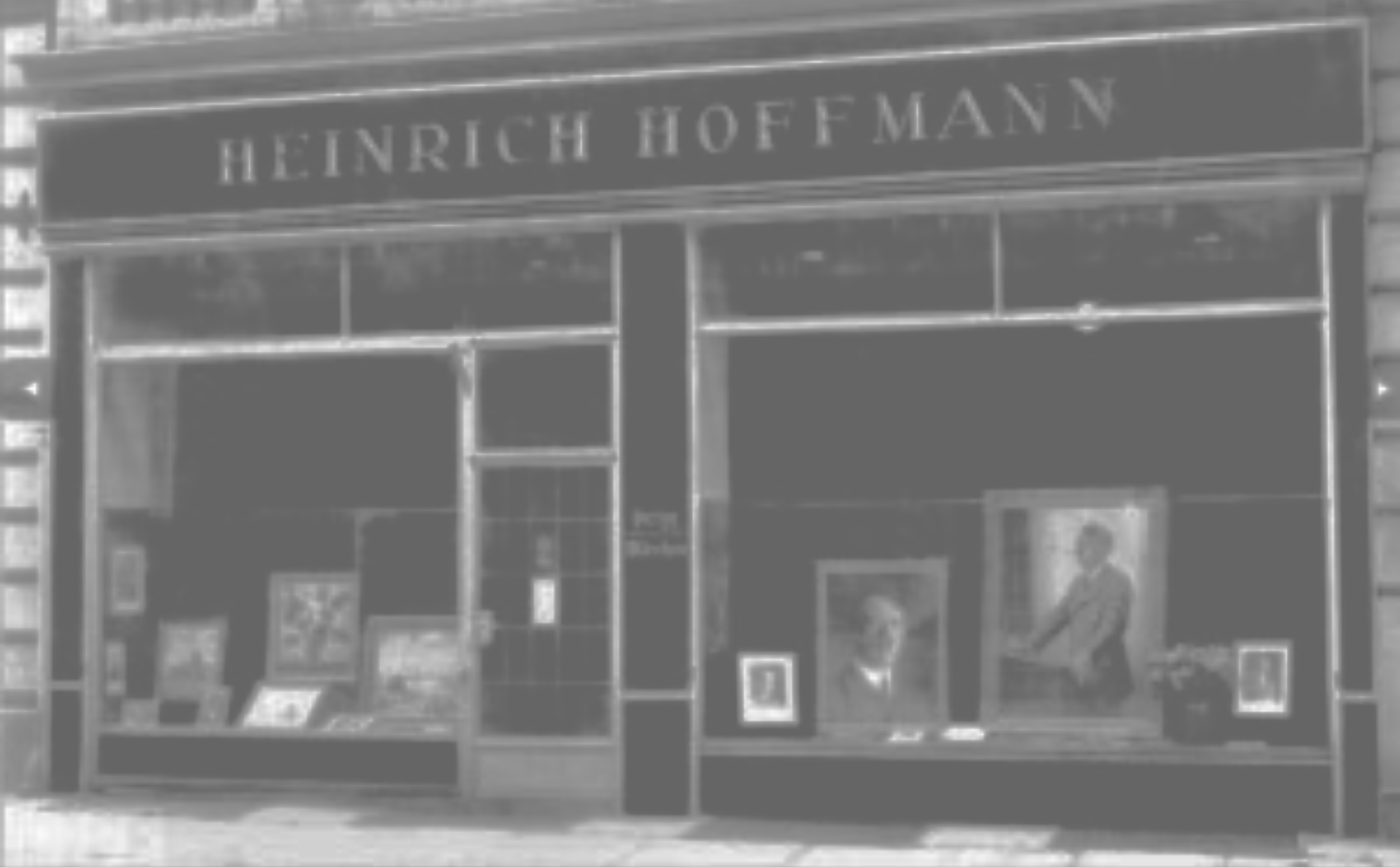
 Heinrich Hoffmann Photo Gallery