Heinrich Hoffmann (1885 – 1957) served as Adolf Hitler’s official photographer from when Hitler took control of the Nazi party in 1921 until his death in 1945. Hoffmann estimates he took over half a million photographs of Hitler over the course of his career. His portraits were the most significant source of Nazi propaganda materials published over the course of close to 25 years, everything from postcards, posters, magazines, postage stamps and picture books. Click on eachtheme below to see a complete photo albumdevoted to that particular event or topic.
On 1 August 1936 the Games of the 11th Olympiad opened in Berlin, just six months after the success of the Winter Olympics hosted in Garmish-Partenkirchen. Adolf Hitler greatly admired classical images of Greek gods and goddesses, and regarded Greco-Roman civilization as providing the seeds of Germanic culture. The Olympics were viewed as a means to promote his idea of the supremacy of the Aryan race and the German nation. When the International Olympic Committee had decided to award Germany the games in 1931, their intention was to give the country a post-World War I boost and speed its return to the international community. Less than two years later, the Weimar Republic had fallen, and Hitler turned the 1936 summer games into a significant propagandistic success.
“The sportive, knightly battle awakens the best human characteristics. It doesn’t separate, but unites the combatants in understanding and respect. It also helps to connect the countries in the spirit of peace. That’s why the Olympic Flame should never die.”
— Adolf Hitler, commenting on the 1936 Berlin Olympic Games.
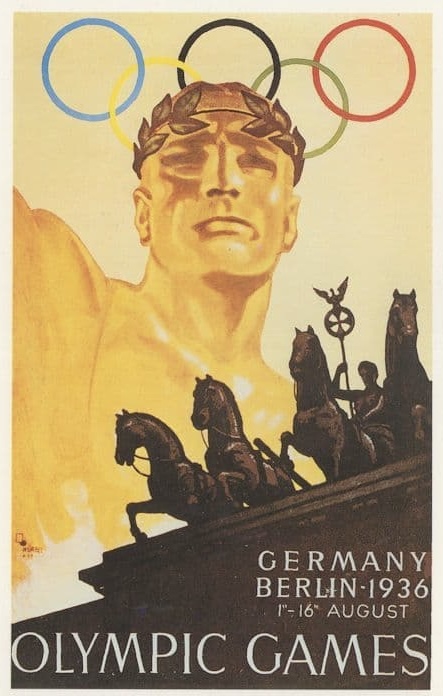
The official poster for the 1936 Olympic Games was created by Nazi artist Franz Würbel. Classical realism was strongly favored by Hitler, and the design incorporates sculpture from Berlin’s landmark Brandenburg Gate and a heroic Olympian athlete crowned with laurels.
The Reichssportfeld (State Sports Ground) in Berlin was designed for the Olympic Games in 1936, but it was conceptualized by Adolf Hitler as a venue that would still be used hundreds of years after his death. It was built from the finest materials on the best piece of land available in Reichshauptstadt Berlin, the capital of Nazi Germany, and was so important to the Führer that it had its own subway station. It is an important historical note that this subway station was not called “Olympic Stadium”, but rather S-Bahnhof Reichssportfeld. Adolf Hitler manifested his vision for the Reichssportfeld with the support of Dr. Frick, his Minister of the Interior, over the course of 3 years.
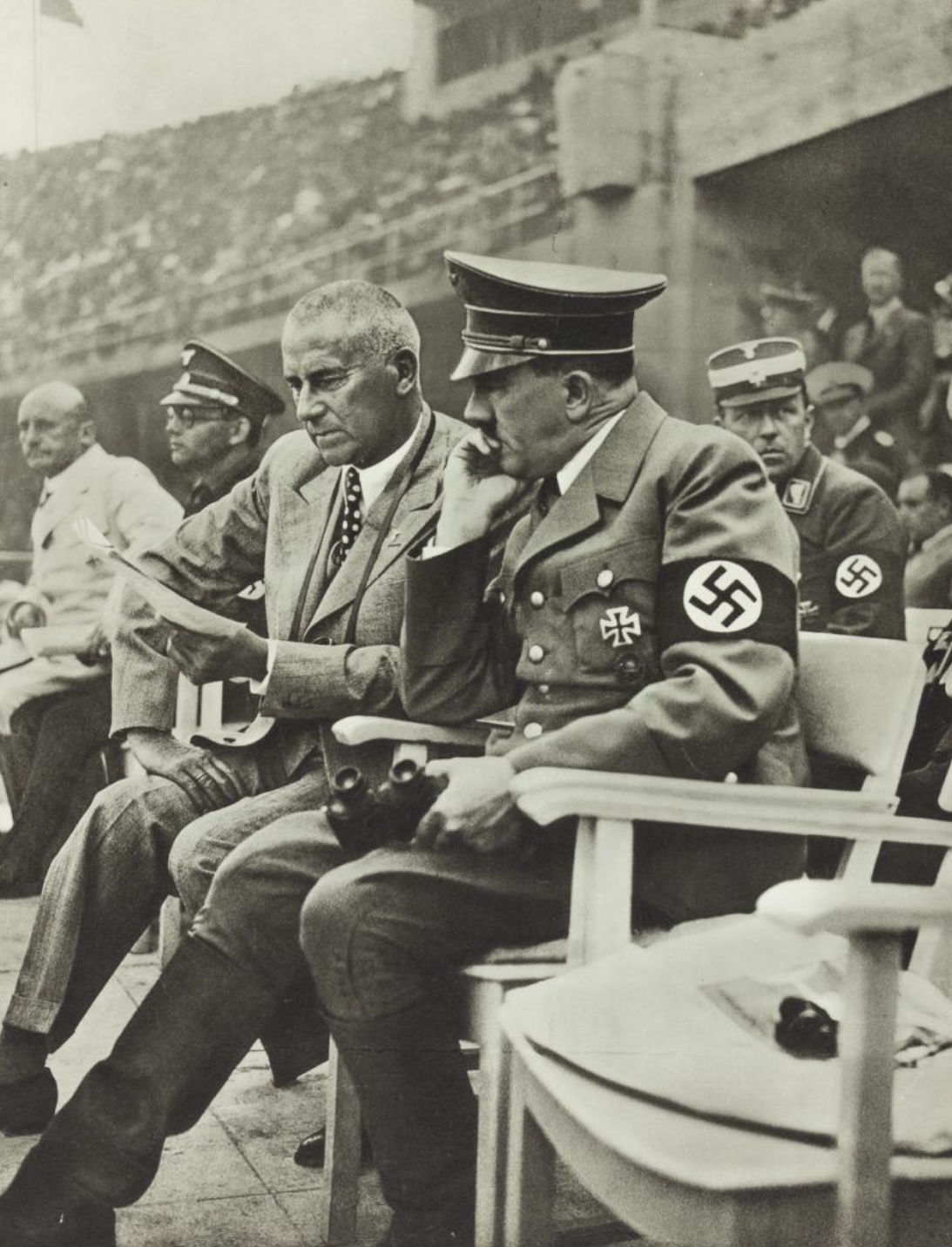
Der Führer mit Dr Frick bei der ersten Planung des Reichssportfeldes – While the Reichssportfeld (State Sports Ground) in Berlin was designed specifically for the Olympic Games in 1936, it was conceptualized by Adolf Hitler as a venue that would be used for centuries after his death. Here Hitler explains his vision to Frick while visiting the grounds on 5 October 1933.Reich Chancellor Adolf Hitler and Reich Minister of the Interior Wilhelm Frick inspect the opening of the Olympic junior training course in preparation for the Olympic Summer Games to be hosted in Berlin in 1936. Hitler greets the youngest participant at 13 years of age on 5 October 1933.Adolf Hitler visits of the construction site of the Reichssportfeld Olympic Stadium with Reichssportführer Hans von Tschammer und Osten on 31 October 1934.
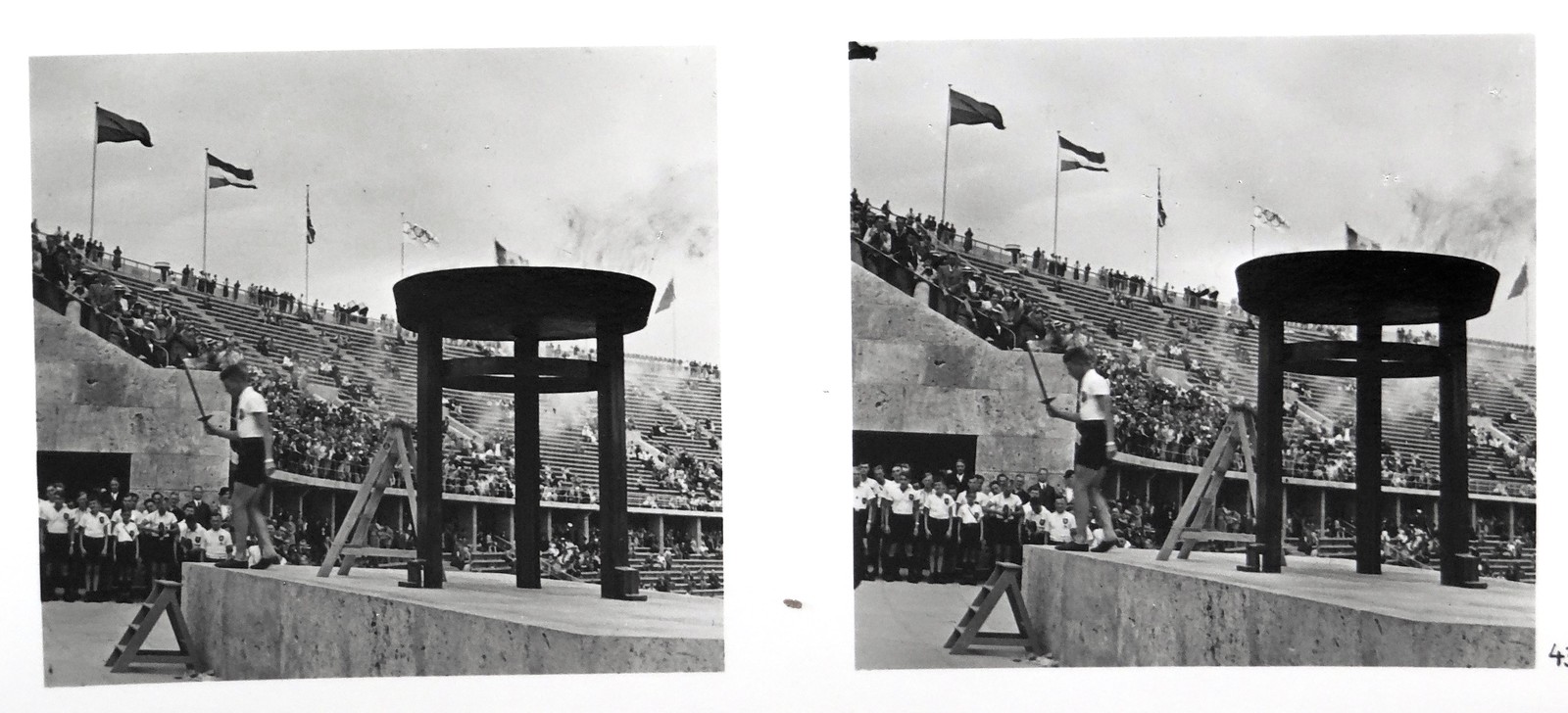
The Olympic torch relay tradition actually started at Adolf Hitler’s 1936 Berlin Olympics and was the brainchild of Carl Diem, who was the Secretary General of the Organizing Committee. The Olympic Flame was run from Greece to Germany over the course of 12 days, ending with the lighting of a “colossal brazier in the Berlin stadium before the Führer’s approving gaze.” The torch meandered through Greece, Bulgaria, Yugoslavia, Hungary, Austria, Czechoslovakia and Germany with each runner covering a kilometer. The International Olympic Committee gave its approval to the idea of transporting a flame from Greece to Berlin in May of 1934. The route passed through the capitals of each of the countries visited.
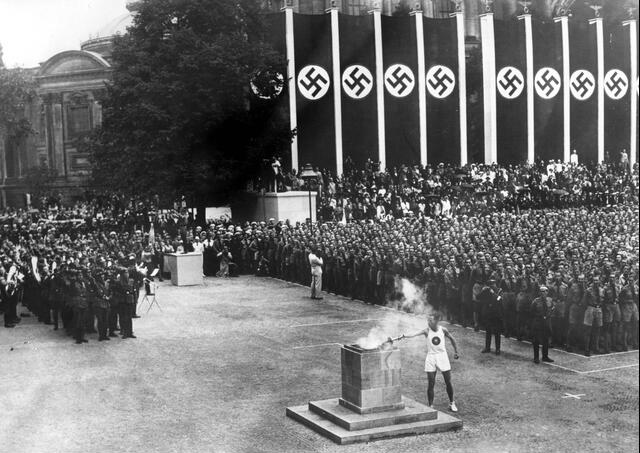
The relay reached Berlin on 1 August 1936. Before joining the Opening Ceremony, the flame was used to light a cauldron that burned for the whole of the Games in the Lustgarten in the city center of Berlin.
Nazi soldiers salute to greet the arrival of the Olympic torch and commencement of the 1936 games. Swastika banners hang in the background to maximize the propaganda value to Adolf Hitler and Nazi Germany.Adolf Hitler leaves the Reich Chancellery on Wilhelmstraße in an open Mercedes to make his way to the opening ceremony of the Olympic Games on 1 August 1936.Adolf Hitler crosses Berlin in his car on his way to the Olympic stadium for the opening of the 1936 Olympic games.
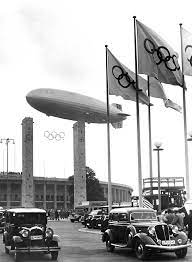
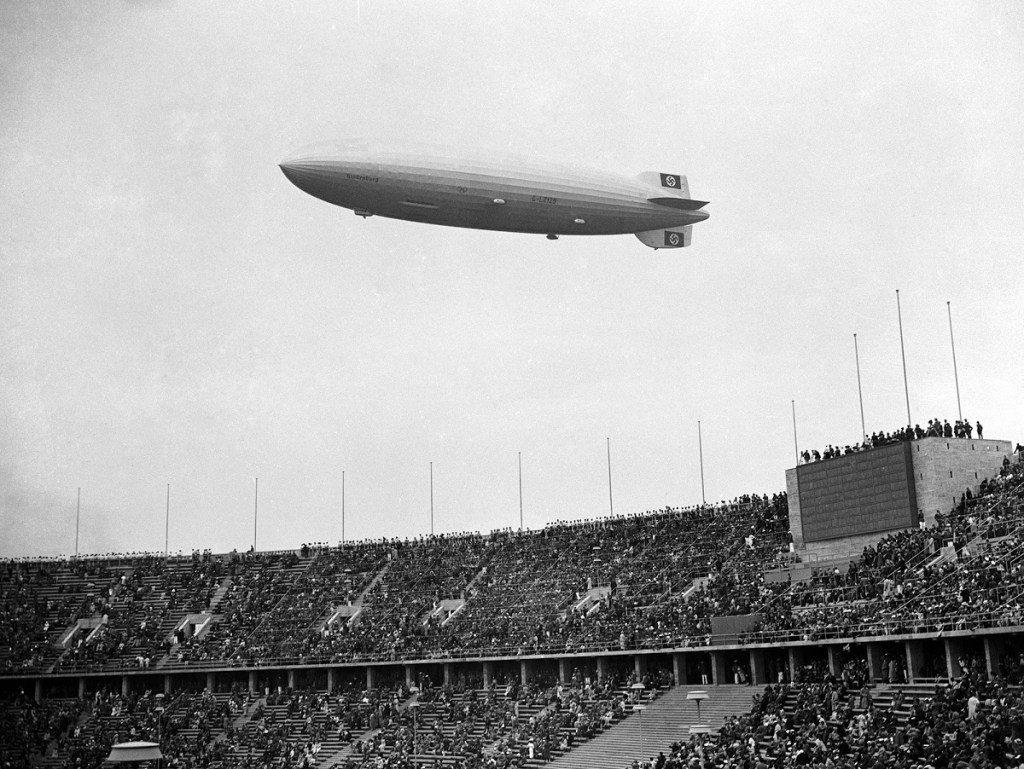
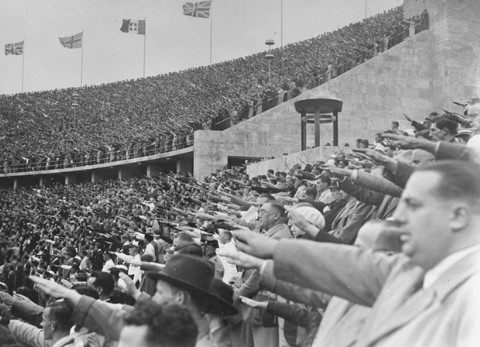
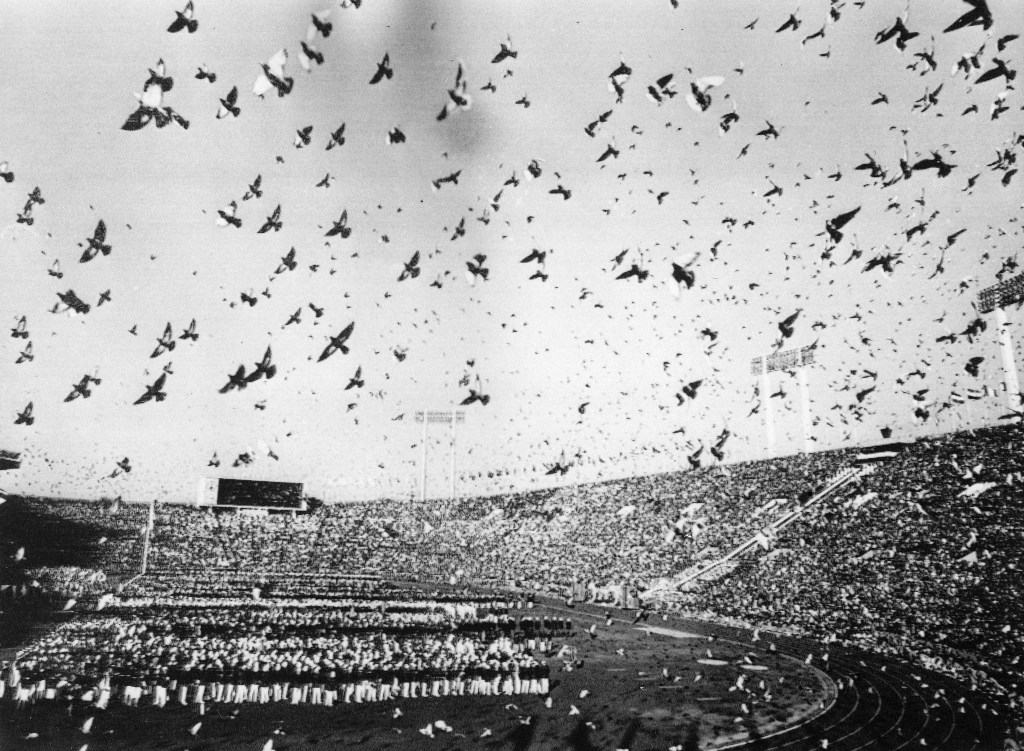
Adolf Hitler opened the Olympic summer games in front of 100,000 spectators at the Olympic Stadium in Berlin on 1 August 1936. Musical fanfare directed by the famous composer Richard Strauss announced the Führer’s arrival to the largely German crowd. A flourish of pomp and ceremony involved the release of 25,000 pigeons, 3,000 singers and a flyover by the German airship Hindenburg. Nazi leaders pulled out all the stops to wow visiting foreign notables, journalists and tourists, and to glorify Hitler. More than three years had elapsed since Hitler gained power, and this was the moment to show the new and thriving Germany to the world. The Third Reich would be presented as powerful, peaceful and modern. Writer Thomas Wolfe described the opening as an “almost religious event, the crowd screaming, swaying in unison and begging for Hitler. There was something scary about it; his cult of personality.”
Propaganda Minister Joseph Goebbels had immediately recognized the potential symbolic value of the Hindenburg as a showcase for German strength and technology. Goebbels offered Hugo Eckener 2 million marks to accelerate the completion of LZ-129, which launched on 4 March 1936. Hindenburg made 17 round trips across the Atlantic in 1936, with ten trips to the United States and seven to Brazil. Shortly before the arrival of Adolf Hitler to declare the Games open, the airship crossed low over the packed stadium while trailing the Olympic flag on a long weighted line suspended from its gondola. On September 14, the ship flew over the annual Nuremberg Rally. The airship only flew for a total of 14 months until it was destroyed by fire on 6 May 1937.
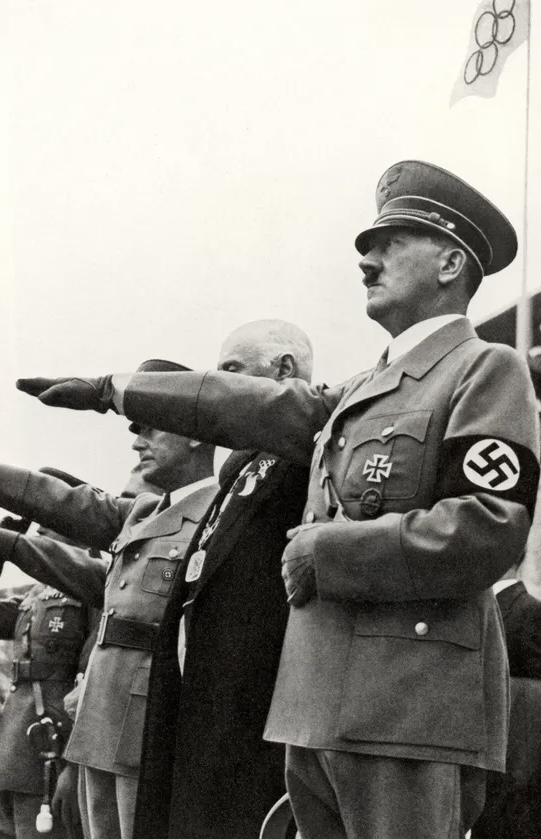
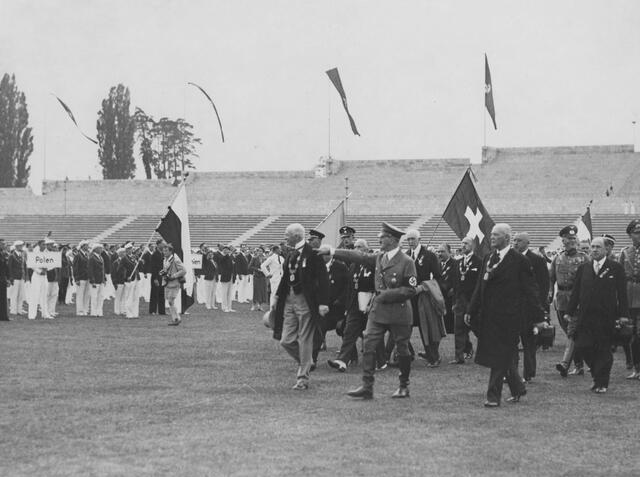
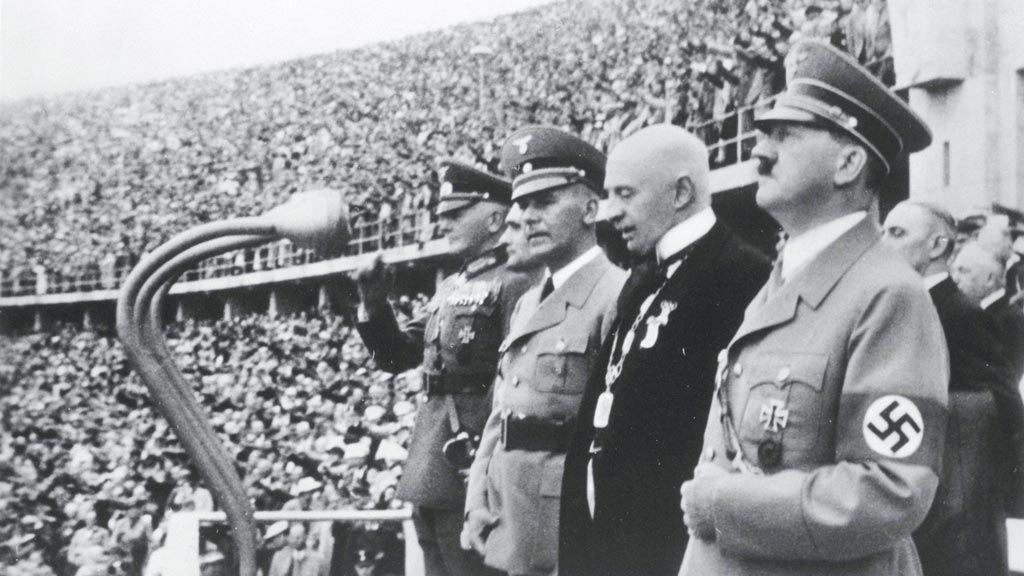
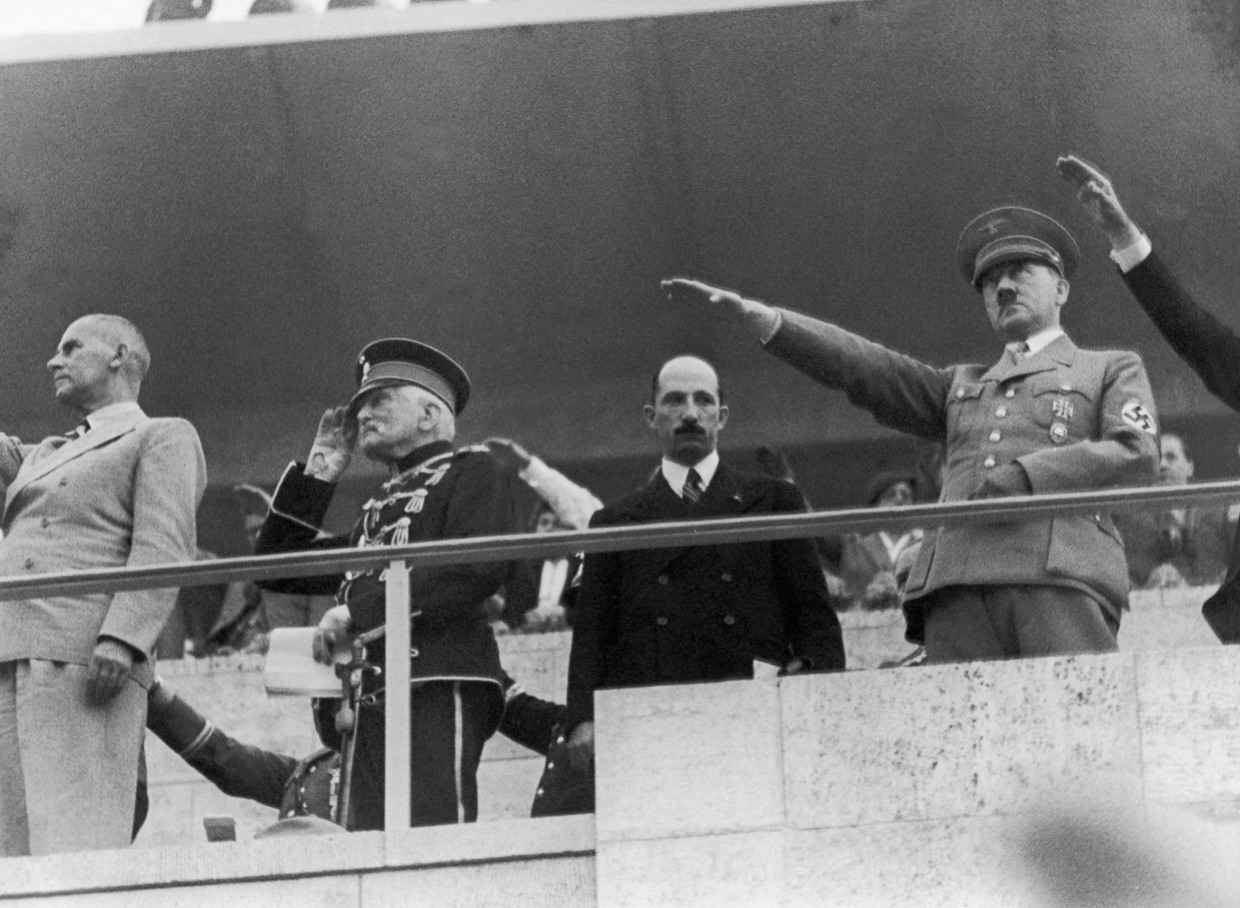
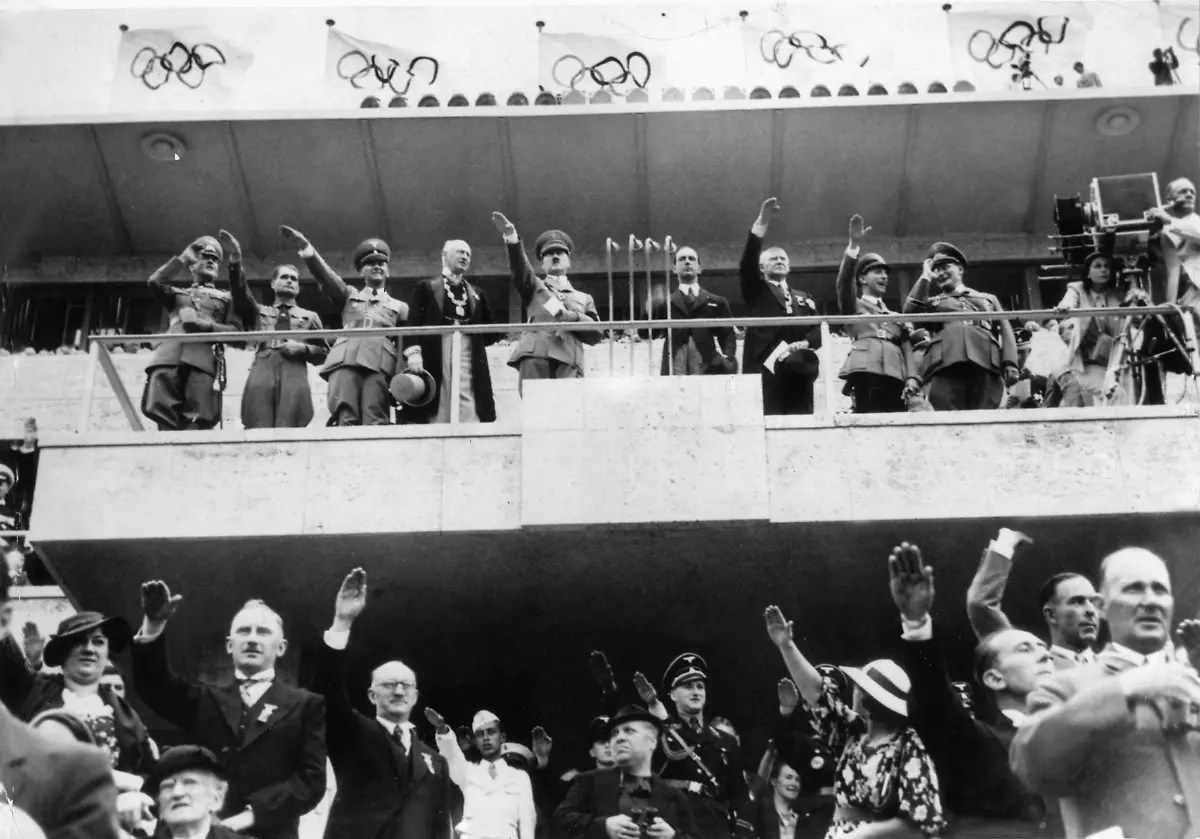
Pictured Olympiastadion in Berlin, a stadium built for the 1936 summer olympics with room for 100,000 people, on the grand opening of the olympic games 1 August 1936.Before the ceremonial opening of the XI Olympic Games. Together with the members of the International and National Olympic Committee, the leader and Reich Chancellor goes through the marathon gate into the stadium. Left of Adolf Hitler [Henri] Count Baillet-Latour, right Excellency [Theodor] Lewald. Organizing Committee of the Olympic Games, IOC, State Secretary, Germany Baillett-Latour, Henri de Graf: President of the International Olympic Committee (IOC), Belgium.Berlin Olympics 1936. The 1936 Summer Olympics (German: Olympische Sommerspiele 1936), officially known as the Games of the XI Olympiad (German: Spiele der XI. Olympiade) and commonly known as Berlin 1936, were an international multi-sport event held from 1 to 16 August 1936 in Berlin, Germany. Adolf Hitler in front attending the opening with athletes from the different countries in the background.Adolf Hitler with other NS functionaries at the Berlin Olympic Stadion, 1936. Summer Olympics in Berlin, 1936: View on the Führer tribune with (from left) Rudolf Hess, Reich Minister of the Interior Wilhelm Frick, General Field Marshal August von Mackensen, Adolf HItler, Joseph Goebbels and Hermann Göring. All of them greet a German winner with the Hitlergruß, apart from Mackensen who salutes him.Count Henri de Baillet-Latour, President of the XI Olympic committees in the official gallery with Adolf Hitler.Adolf Hitler and his staff salute the teams during the opening ceremonies of the XI Olympic Games on 1 August 1936 in Berlin, Germany.Adolf Hitler (right) stands with dignitaries in a VIP area during the 1936 Olympic Games in Berlin.
Apparently not all went exactly according to plan during the course of the opening ceremony. U.S. distance runner Louis Zamperini, one of the athletes present, related an incident that occurred immediately after Adolf Hitler declared the Games open. “They released 25,000 pigeons, the sky was clouded with pigeons, the pigeons circled overhead, and then they shot a cannon, and they scared the poop out of the pigeons, and we had straw hats, flat straw hats, and you could heard the pitter-patter on our straw hats, but we felt sorry for the women, for they got it in their hair, but I mean there were a mass of droppings, and I say it was so funny…”
Adolf Hitler watches the lighting of the Olympic flame before the start of the 1936 Olympic Games.
Hitler’s ability to take nostalgic imagery and turn it into something fresh and modern, as well as his mastery of theatrical production, shaped the ceremonies and rituals that define the Olympics to this day.
Lighting the Olympic Flame at the 1936 Summer Olympic Games in Berlin on 1 August 1936. Stereoview card from the book “Die Olympischen Spiele 1936” by Heinrich Hoffmann.Adolf Hitler takes the salute at the opening ceremony. At right is Leni Riefenstahl with her cameraman. To her right are Goering and Goebbels.
Director Leni Riefenstahl was commissioned by Hitler to make a propaganda film about the 1936 Olympic Games. The first half of her two-part film “Olympia” opens with a renowned introduction that compares modern Olympians to classical Greek heroes. Thrilling coverage ensues of the games’ most celebrated moments, including American athlete Jesse Owens winning an unprecedented four gold medals.
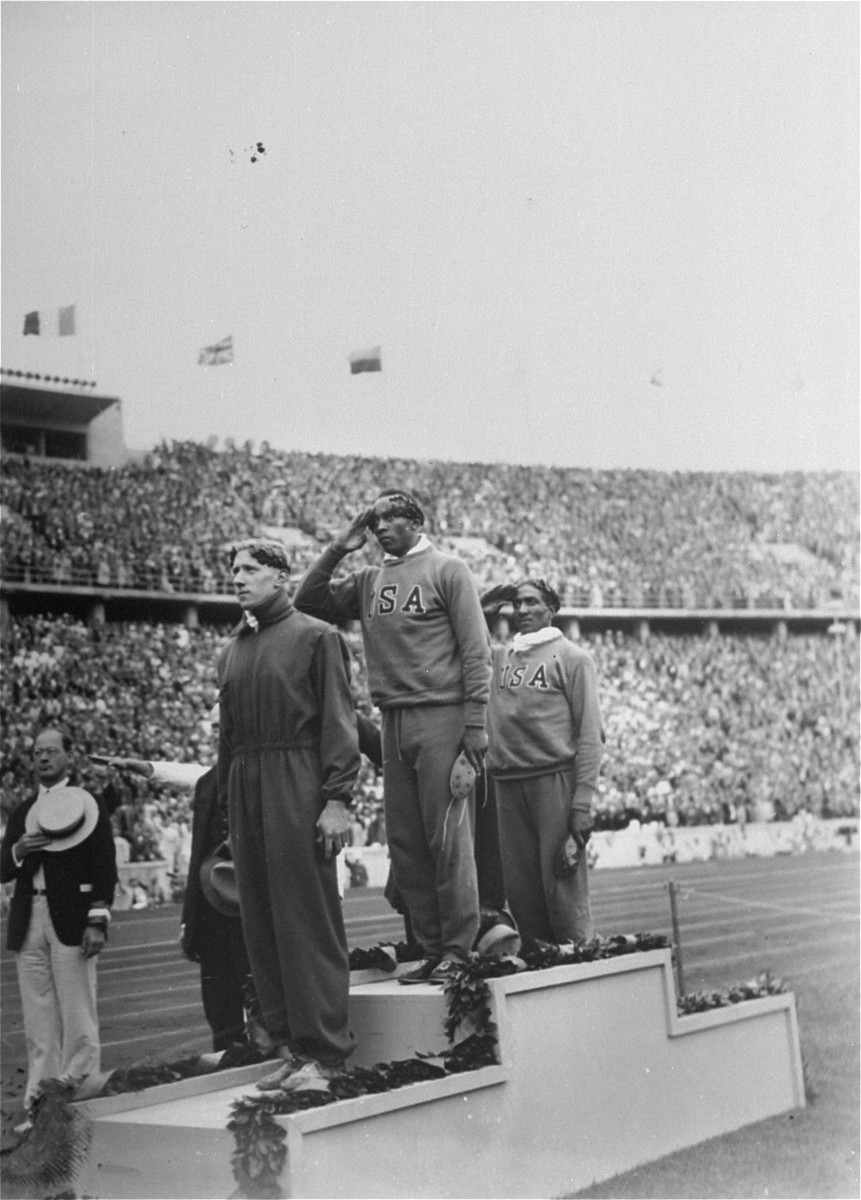
Jesse Owens’ gold-medal winning feats at the 1936 Olympics in Berlin struck a powerful propaganda blow to Adolf Hitler. The Nazi leader had planned to use the German games as a showcase of supposed Aryan superiority. Instead there was a Black American athlete on the podium being photographed by Hitler’s personal photographer, Heinrich Hoffmann. Owens also figures prominently in the groundbreaking film “Olympia” by Hitler’s favorite director Leni Riefenstahl.
American Olympic runner Jesse Owens and other Olympic athletes compete in the twelfth heat of the first trial of the 100m dash. Owens won the race. He ultimately took first place in the event, finishing the race in 10.2 seconds, a record time; however, the record was disallowed by German officials, who claimed that Owens had had the benefit of a tailwind.
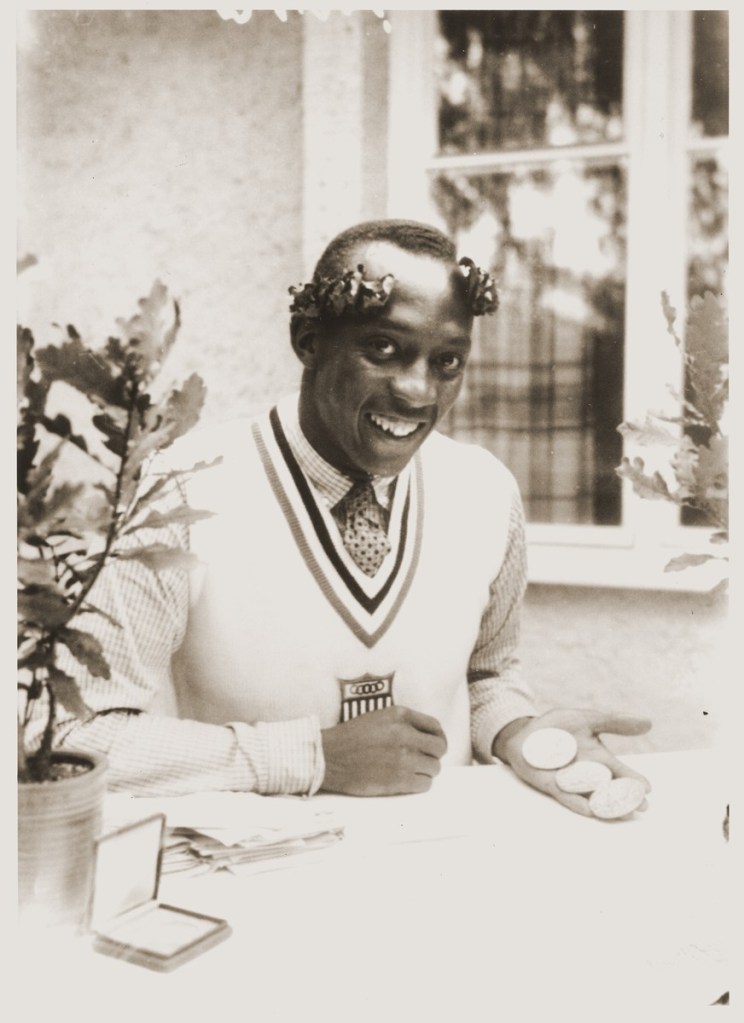
Jesse Owens poses for Heinrich Hoffmann with his first three gold medals at the 11th Summer Olympic Games. He won gold in the men’s 100m and 200m races and in the long jump competition. On August 9, Owens went on to win his fourth gold medal in the 4 × 100 meter sprint relay race.
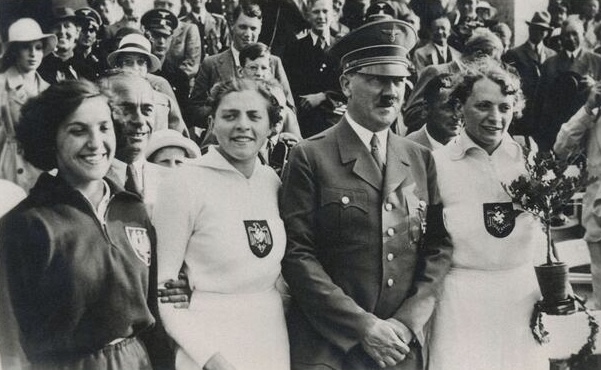
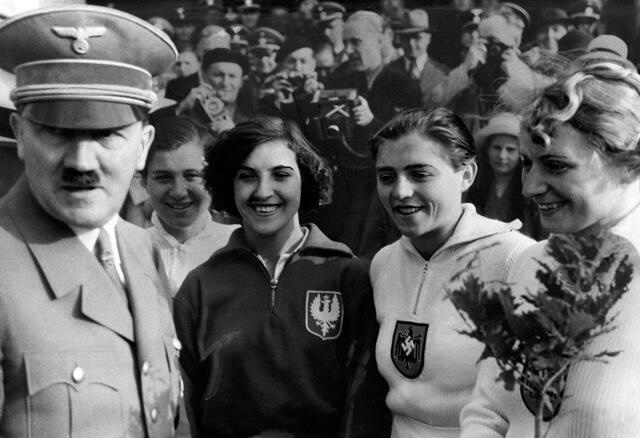
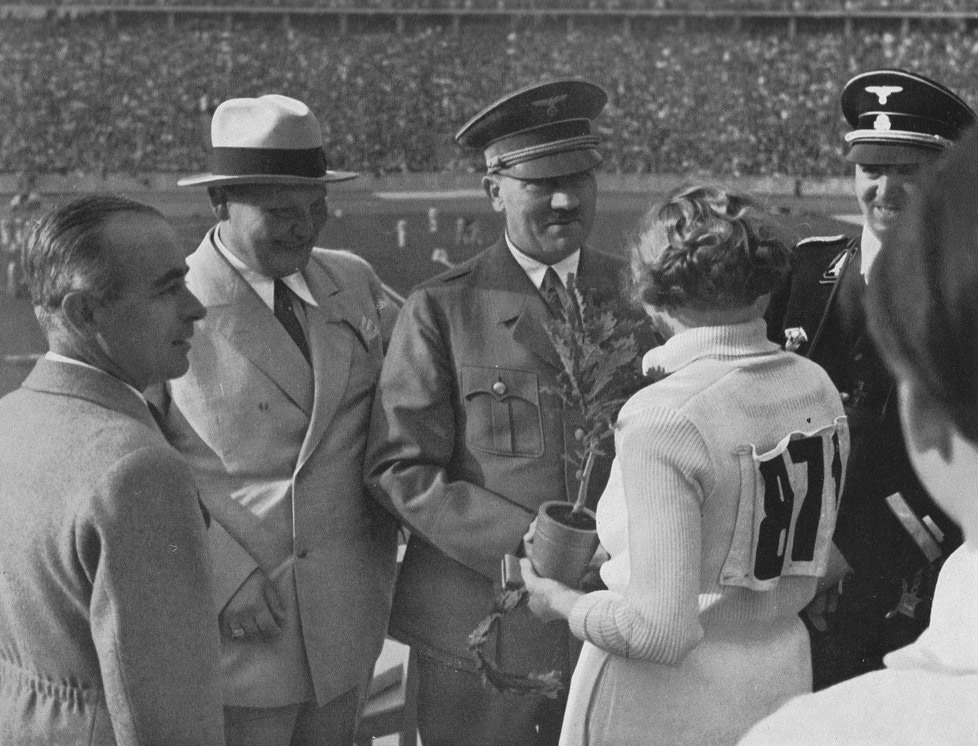
Adolf HITLER with Tilly Fleischer, right, who secured the first gold medal for Germany in the Olympic Games in the javelin event with 45.18 meters. Left to Right: Miss Kwaniewska (Poland) (BRONZE), Miss Kreuger (Germany) (SILVER), Adolf Hitler and Miss Fleischer (Germany).Adolf Hitler with the medal winners in Javelin throwing, Tilly Fleischer, Luise Krüger and the Polish athlete Maria Kwasniewska,Adolf Hitler receives an olive branch as a symbol of peace from 1896 marathon champion Spyridon Louis.Adolf Hitler visits the Olympic village in Döberitz and talks to the German sprinter team in front of house Helgoland on 17 June 1936.Olympic photo postcard with Adolf Hitler congratulating the winner of shot-put event Hans-Otto Woellike during the 1936 Olympic Games in Berlin on 2 August 1936.Adolf Hitler congratulating the German gymnasts on 15 August 1936. Germany’s gymnasts carried off five gold medals in the Berlin Olympic Games.Adolf Hitler on the rostrum at the Olympic stadium, to the right: Joseph Goebbels, to the left: the Minister of the Interior of the Third Reich Wilhelm Frick, Rudolf Hess, Philip Bouhler, watching as Jesse Owens defeats his white opponents in the Olympic Games on 4 August 1936.Helen Stephens, U.S. woman sprint star from Fulton, MO., is honored by being the first and only of the American Olympic team to be received by Chancellor Adolf Hitler in his private reception room beneath the stands in Olympic Stadium. The winner of the Women’s 100 meter event is shown with Der Führer shortly after their introduction on 4 August 1936.August 1936: Adolf Hitler watching the Olympic Games in Berlin with Crown Prince Umberto of Italy.
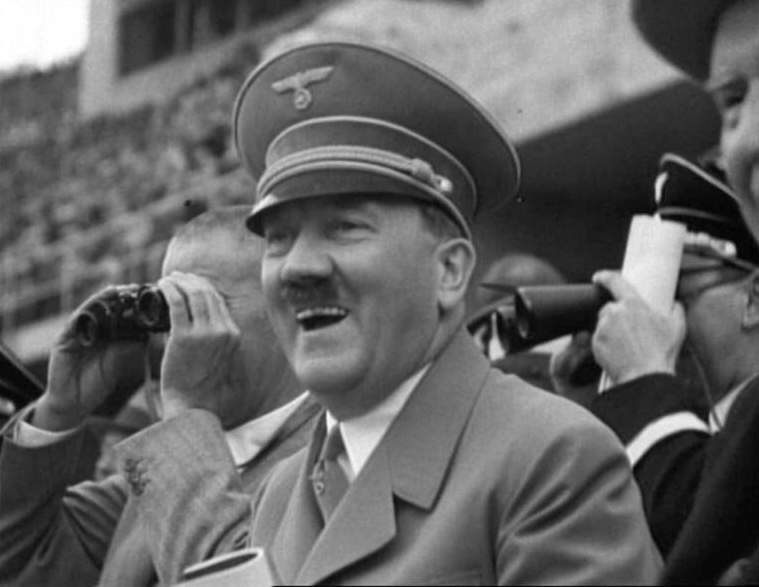
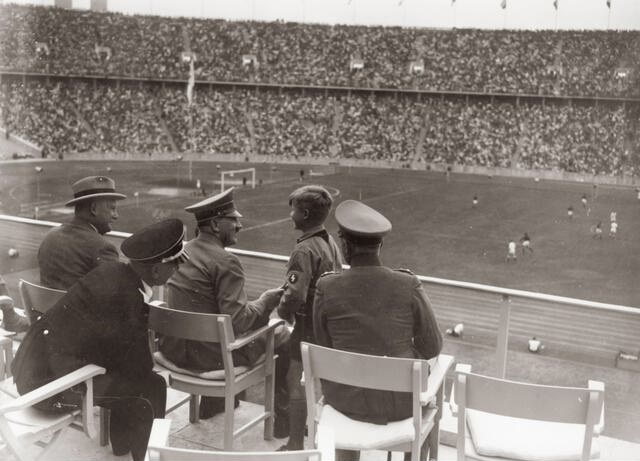
Adolf Hitler watches a football game from the stands of the 1936 Berlin Olympic Games. The 1936 Berlin Olympic Games under Adolf Hitler’s Nazi dictatorship were more than just a global sporting event; they were also a showcase of Nazi propaganda.
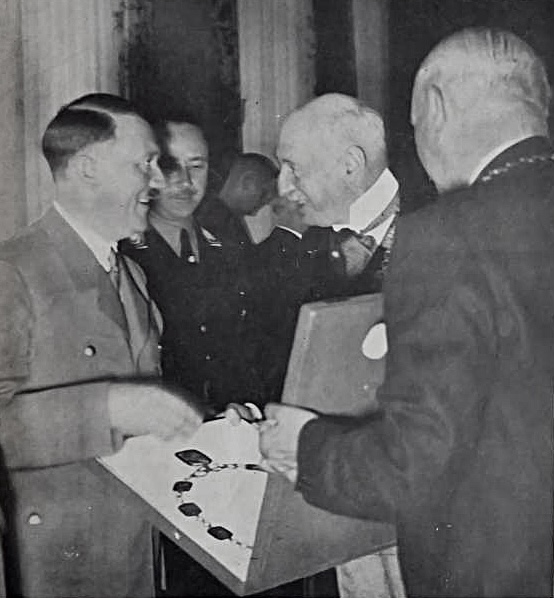
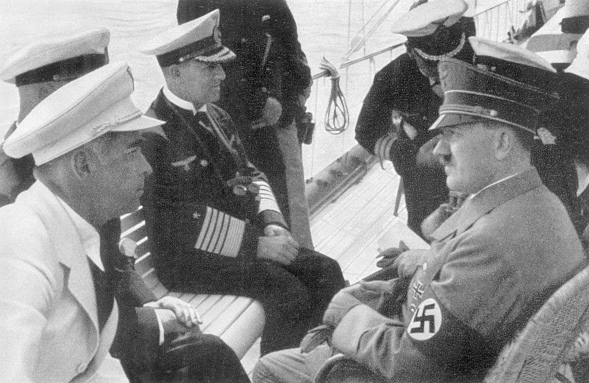
Sven Anders Hedin, Swedish explorer and travel writer shakes hands with Adolf Hitler, who asked him to deliver a speech on “Sport as a Teacher” at the 1936 Summer Olympics in Berlin’s Olympic Stadium.IOC committee member J. Sigfrid Edström of Sweden meets Reich Chancellor Adolf Hitler at a reception for the IOC in Berlin on 1 August 1936. Edström befriended Hitler and went on to attend the Nuremberg Rally held the following month and openly expressed his fascination with Hitler’s leadership qualities and power.Reception of the IOC. and OC. (International Olympic Committee and Organizing Committee) with the Führer in the Reich President’s Palace with Henri de Baillet-Latour and Theodor Lewald on 1 August 1936. Hitler is presented with his own gold “Chain of Honor” designed by sculptor Walter E. Lemcke and gifted to each of the Members of the International Olympic Committee.Adolf Hitler and the President of the International Olympic Committee, Count Henri de Baillet-Latour, at the opening of the Olympic Games in Berlin on 1 August 1936.Adolf Hitler with Czar Boris III of Bulgaria at the Olympic games, 1936. Bulgarian King Boris III watches the Olympic games next to Hitler.Olympische Spiele 1936 in Berlin- Glueckwuensche fuer Tilly Fleischer, Gewinnerin der Goldmedaille im Speerwerfen der Damen (mit dem Ruecken zur Kamera); dahinter von rechts: Adolf Hitler, Hermann Göring, Reichssportfuehrer Hans von Tschammer und Osten. Adolf Hitler with Tilly Fleischer at the Olympics. She holds an oak sapling, given to the athletes as gifts from Germany.Adolf Hitler congratulates the winners of the javelin throwing, 1936. After the competition of the women in the javelin throwing during the Olympic Games in 1936, which was held in the Olympic Stadium, Adolf Hitler congratulates the winners. From left to right: the javelin throwers Fleischer, Kruger, Kwasniewska (Poland). To the right of Hitler with a white hat: Hermann Goring.Adolf Hitler shakes hands with an Olympic swimming pool official during the 1936 Nazi Germany Olympics in Berlin.In Grunau, Adolf Hitler follows a rowing competition of the Olympic Games. Next to him: Reich Interior Minister Wilhelm Frick and Admiral Erich Raeder.Adolf Hitler in the VIP box during the football match between Germany:and Norway (Score: 0:2), which took place in the scope of the Olympic Games.Die Weite Welt (The Wide World) was a Sunday supplement photo magazine addition to the newspaper Berliner Lokal-Anzeiger. The cover of the 16 August 1936 edition features Adolf Hitler watching the Olympic sailing regatta on the Kiel Fjord.Adolf Hitler with the Commander of the navy and Chairman of the Reichs Sports Hans von Tschammer und Osten on board at the sailing regattas on the Kiel Canal on 9 August 1936.Olympic games 1936 in Berlin, ceremony of taking down the Olympic flag, at the stand of honor: from right: Hermann Goering, Joseph Goebbels, Adolf Hitler, Tsar Boris III. of Bulgaria, General August v. Mackensen, and Wilhelm Frick.Adolf Hitler attends a swimming competition at the swimming stadium Berlin during the Olympic Summer Games, This was the event where the famous kiss occurred….
The Impromptu Kiss 💋
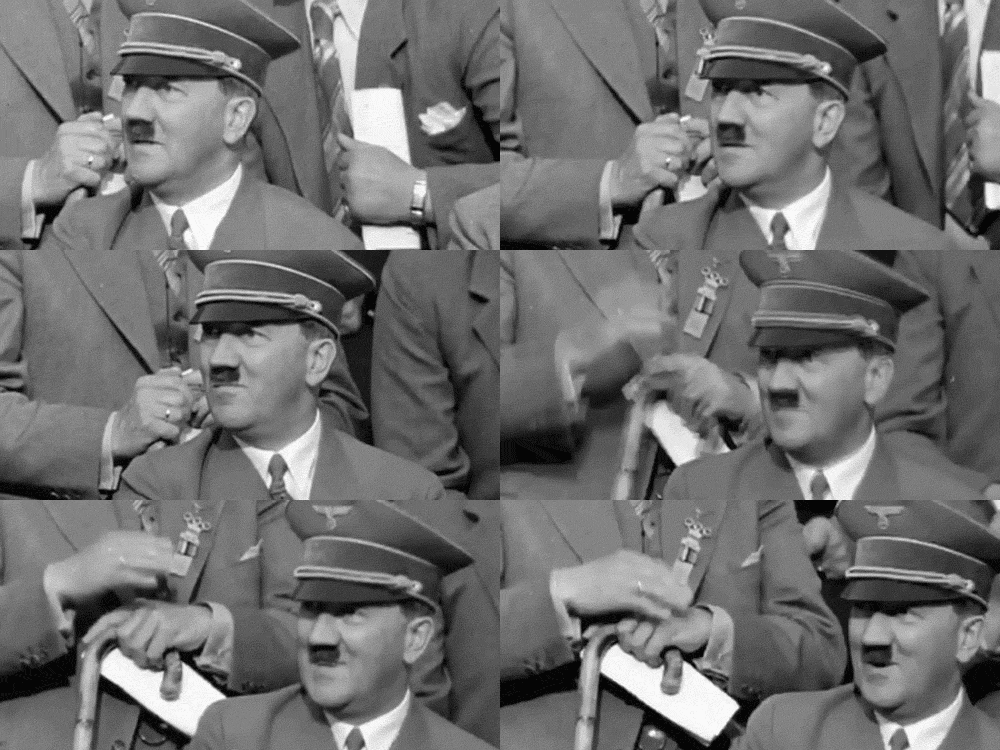
Carla De Vries was an American tourist vacationing in Europe in 1936. The Norwalk, California dairy farmer had seized on the upcoming Summer Olympic Games as the perfect opportunity to see the Continent. She decided to spontaneously plant a kiss on the official host, Adolf Hitler, while attending the men’s 1500 meters free-style swimming competition on 15 August 1936. “Hitler was leaning forward, smiling, and he seemed so friendly that I just stepped up and asked for his autograph, which he wrote on my swimming ticket. He kept on smiling and so I kissed him”.
Adolf Hitler reacts graciously to a spontaneous kiss from an excited American woman at the Berlin Olympics on 15 August 1936.
Propaganda Publications
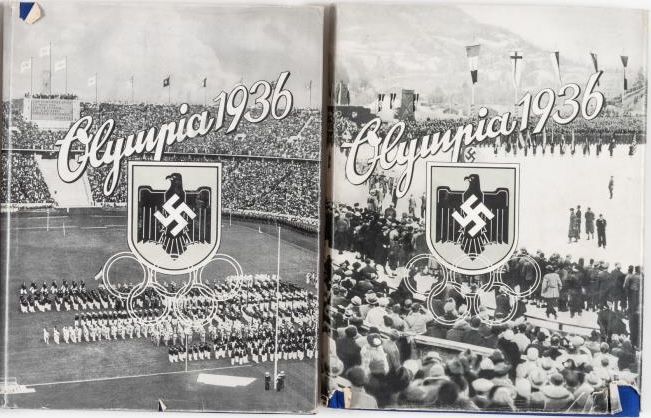
“Die Olympischen Spiele 1936” (The Olympic Games 1936) is a stereoview card book published by Heinrich Hoffmann and Ludwig Haymann (Diessen am Ammersee: Raumbild-Verlag Otto Schonstein), 1936, 60pp. This hardbound propaganda publication celebrated German achievements at the 1936 Olympics. The album contains a set of one hundred stereoview cards, all taken by photographer Hoffmann.
This Third Reich photo book was assembled for tourists visiting Germany for the 1936 Olympic Winter and Summer Games. The introduction gives a hearty welcome and discusses all of the recent accomplishments of the new National Socialist government of Adolf Hitler. Black and white images depict German life as happy and prosperous and having fully recovered from the privations of the First World War.
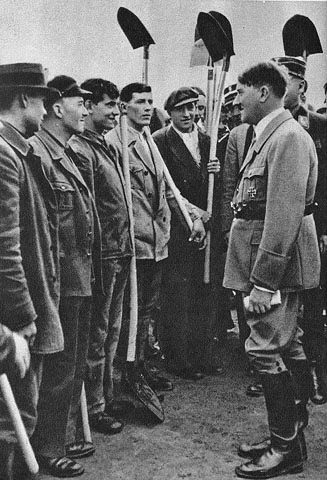
“One and all feel that they posses a personal link with their Führer. He addresses workers in their own factories, and chats with farm hands during harvest time. An informal and frequent scene during road building operations when the Führer chats to road workers!”
Two volume Cigarette Card Album set. Volume 1 features the Winter Olympics at Garmisch-Partenkirchen and Volume 2 features the Summer Olympics in Berlin, each one containing 200 individual collectors cards.
I love history and have always been infatuated with the design and style of the 1920’s. Unfortunately I can’t time travel back to this era, so I live vicariously through books, movies and photos.
[…] though Hitler was not a sports fan himself, he was well aware of how hosting the 1936 Winter and Summer Olympic Games would uplift Germany’s prestige around the […]
[…] Sport youth on the occasion of the opening of the Olympic training course, in preparation for the Olympic Summer Games in Berlin in 1936. Hitler greets the youngest participant of 13 years. Adolf Hitler heads to the […]






























 Heinrich Hoffmann Photo Gallery