Heinrich Hoffmann (1885 – 1957) served as Adolf Hitler’s official photographer from when Hitler took control of the Nazi party in 1921 until his death in 1945. Hoffmann estimates he took over half a million photographs of Hitler over the course of his career. His portraits were the most significant source of Nazi propaganda materials published over the course of close to 25 years, everything from postcards, posters, magazines, postage stamps and picture books. Click on eachtheme below to see a complete photo albumdevoted to that particular event or topic.
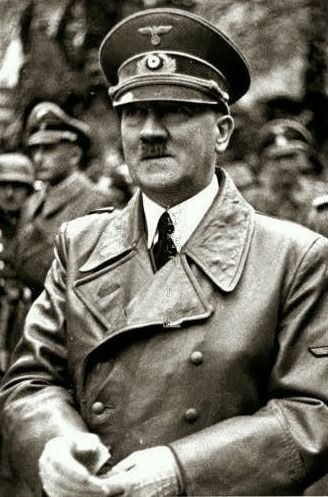
This has certainly been one of the most enjoyable groups of Heinrich Hoffmann photos to gather and assemble together. Adolf Hitler always looks dapper but there is just something extra special about Hitler in leather – whether donning his lederhosen look of the roaring 20’s or long leather trench coats of the late 30’s, Hitler and leather just go together like sauerkraut and wienerschnitzel. Not much of an explanation is really needed on this particular theme, most of these photos were taken by Hoffmann in the late 1930’s or shortly after the outbreak of WW2. I even included a bonus trio of Eva Braun’s personal photos since she also took some particularly phenomenal ones on New Year’s Day in 1940 at the Berghof 😉
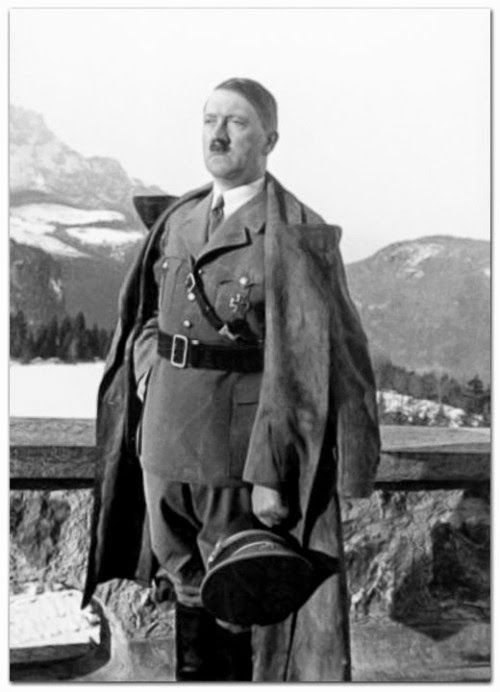
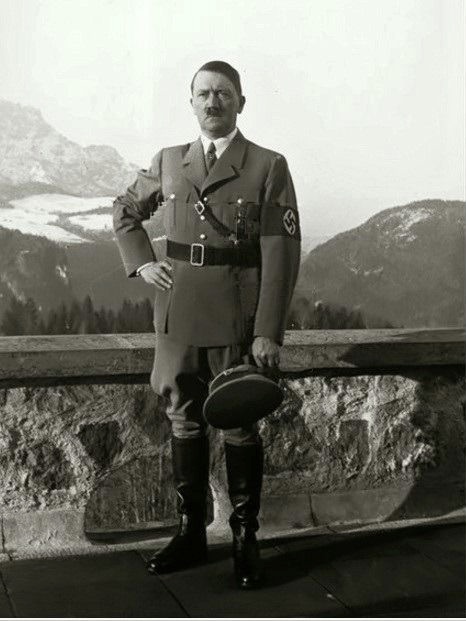
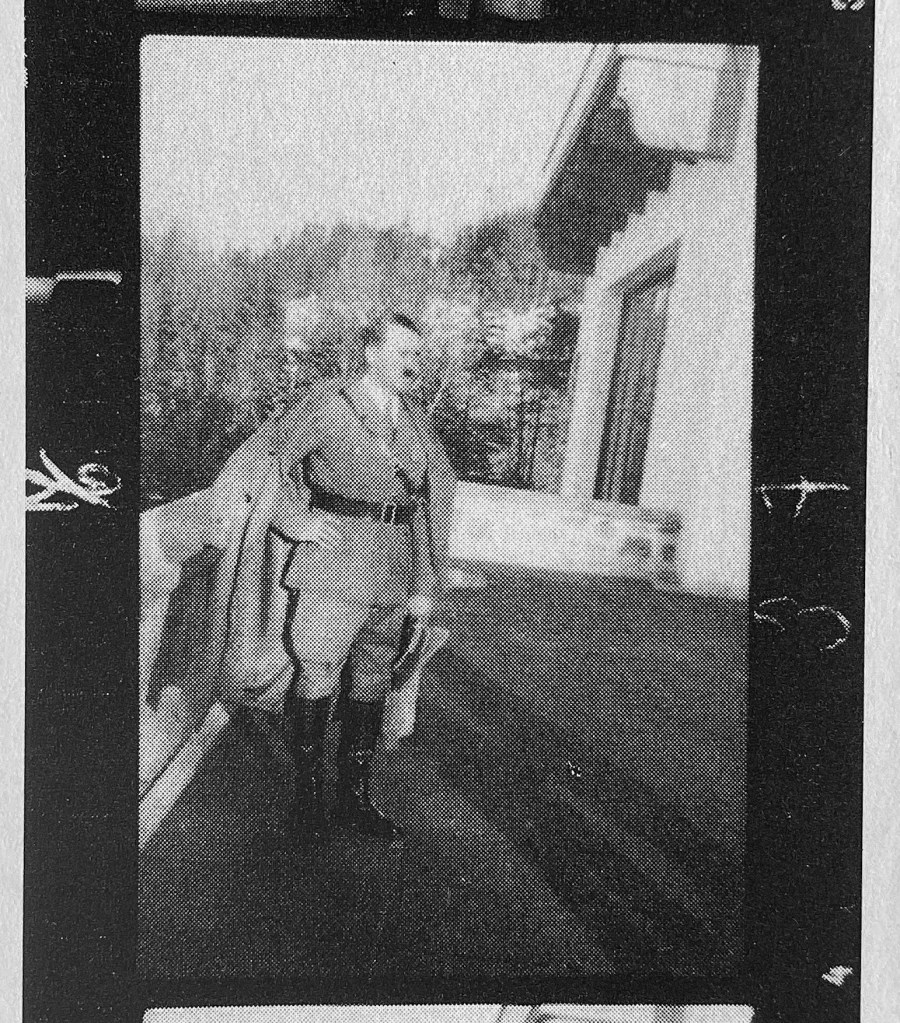
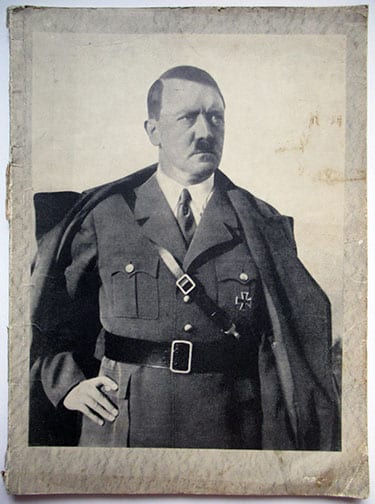
Photoshoot on the Berghof terrace by Heinrich Hoffmann to test Adolf Hitler’s new uniform on 25 March 1937.Photoshoot on the Berghof terrace on 25 March 1937. This was the photo selected as the cover image of Heinrich Hoffmann’s special edition book “Das Deutschland Adolf Hitlers” published to expound on all of Adolf Hitler’s achievements in his first 4 years in power.
“Das Deutschland Adolf Hitlers”
This is a special edition book published in 1937 full of photos showing everything that had improved in Germany in the first four years under the leadership of Adolf Hitler. The first chapter shows the chaotic situation after World War One with a high unemployment rate and seemingly no future for the youth. The following chapters deal with the improvement of the economy through the new special employment and construction programs like the Reichsautobahn, the construction of homes for workers and farmers, and the newly created Third Reich mass organizations like the Reichsarbeitsdienst, the NSKK, and the Wehrmacht. It was published by Verlag Franz Eher, the publishing house of the NSDAP, as a special edition of the “Illustrierter Beobachter”.
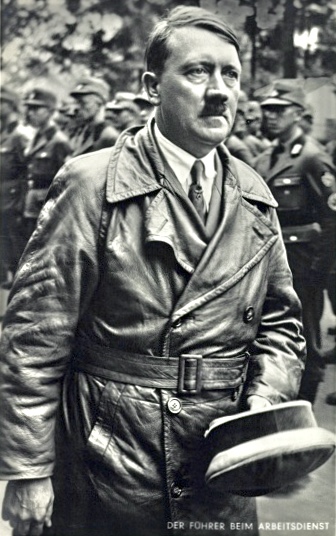
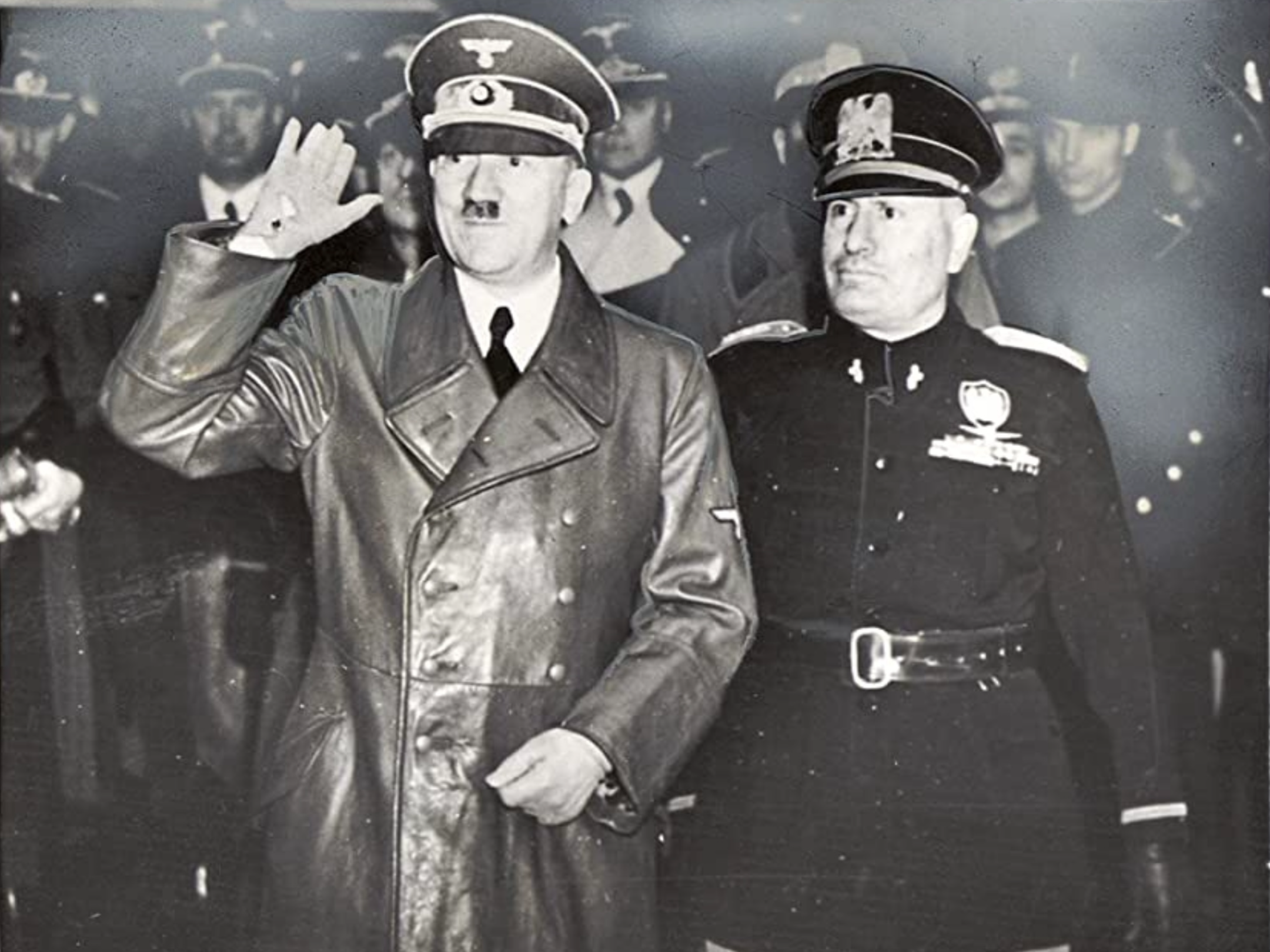
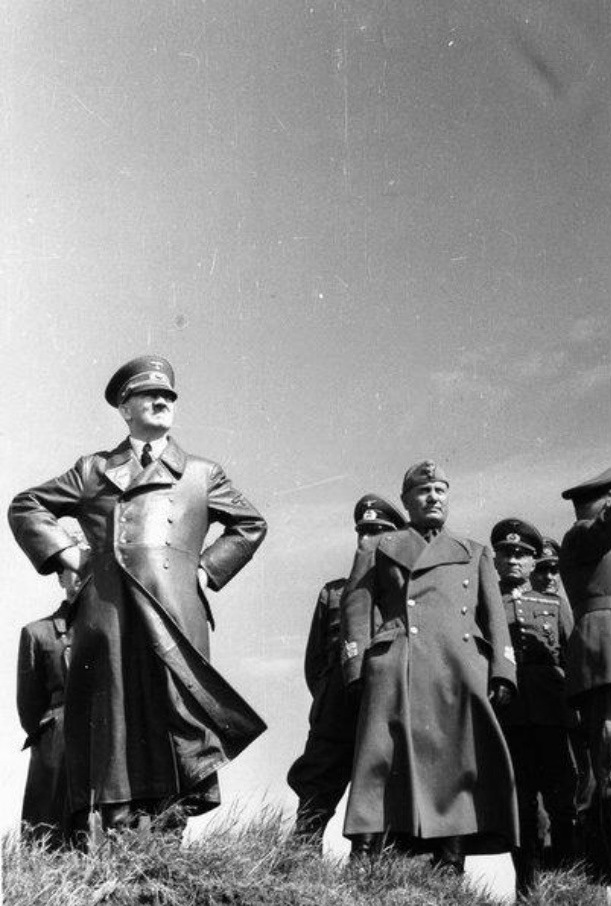
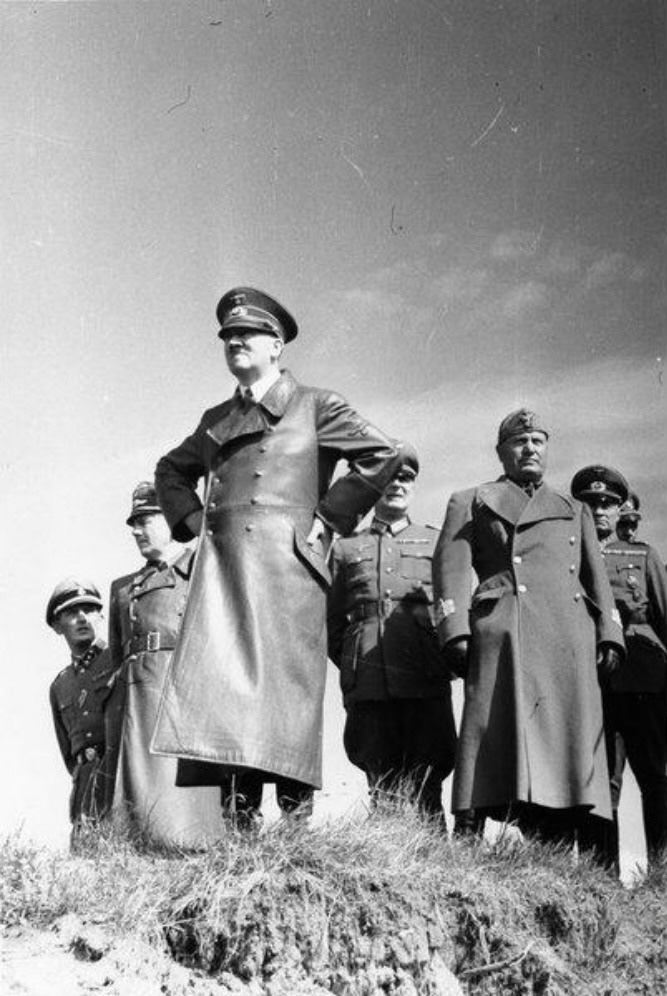
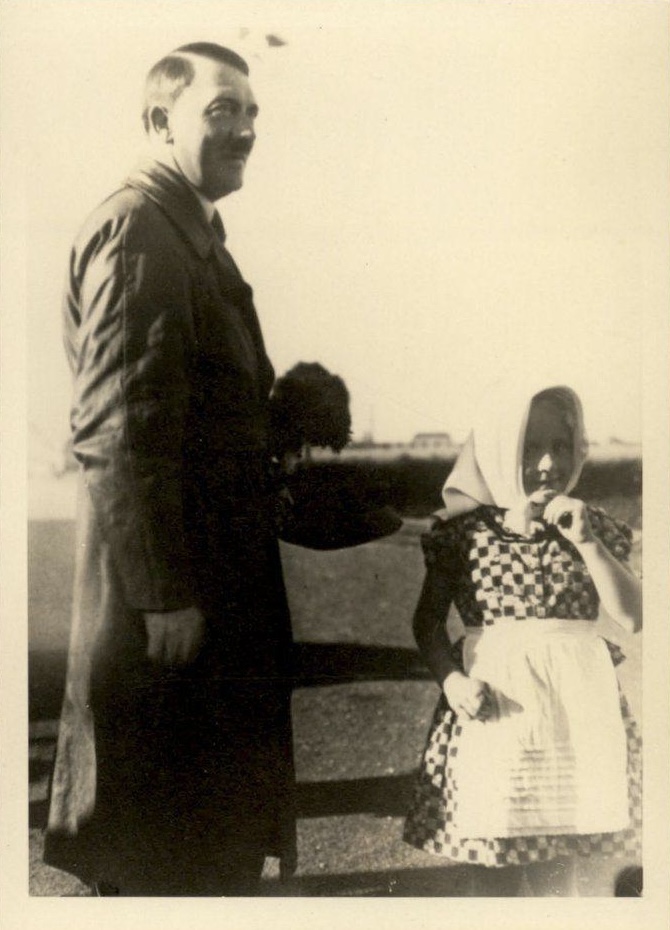
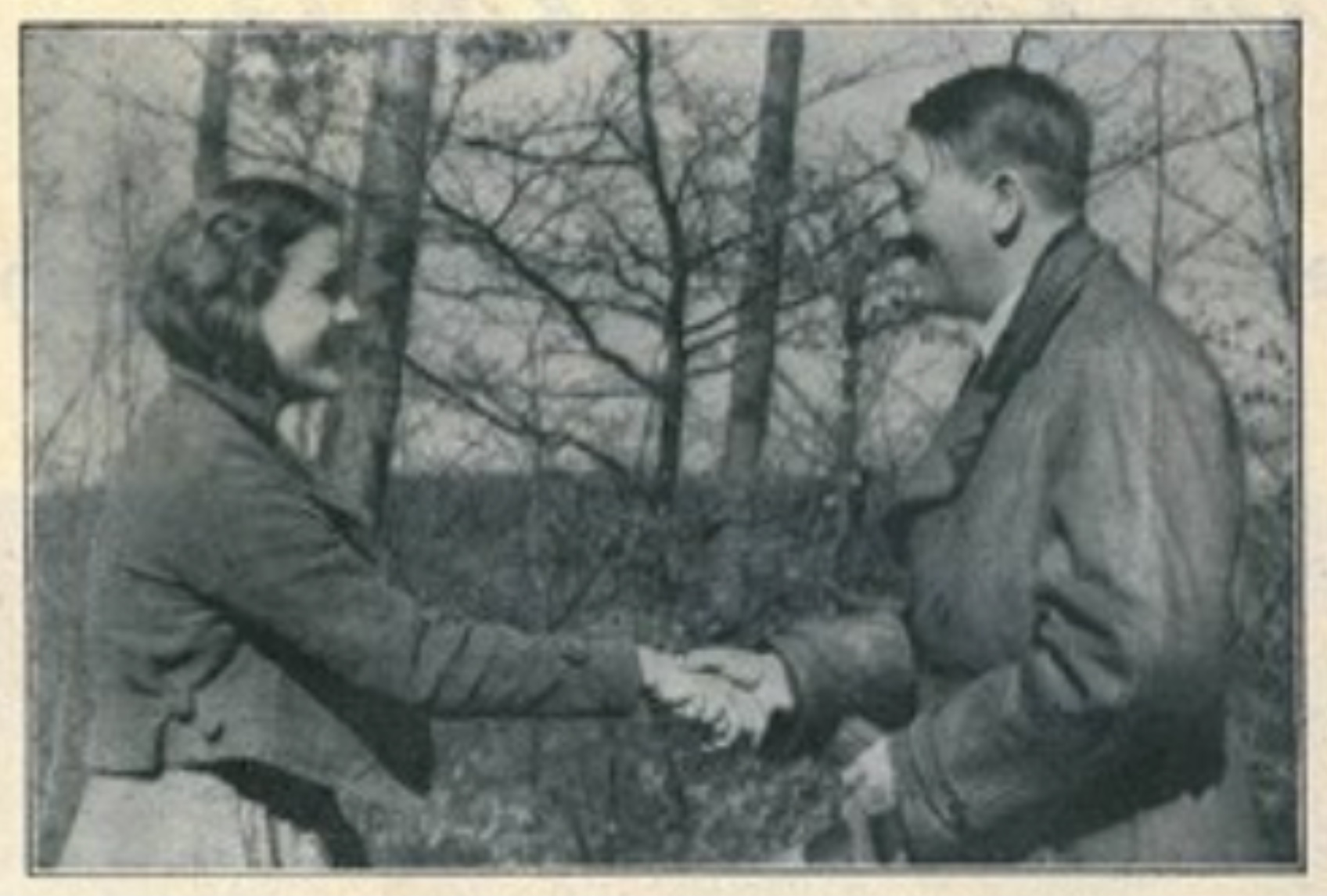
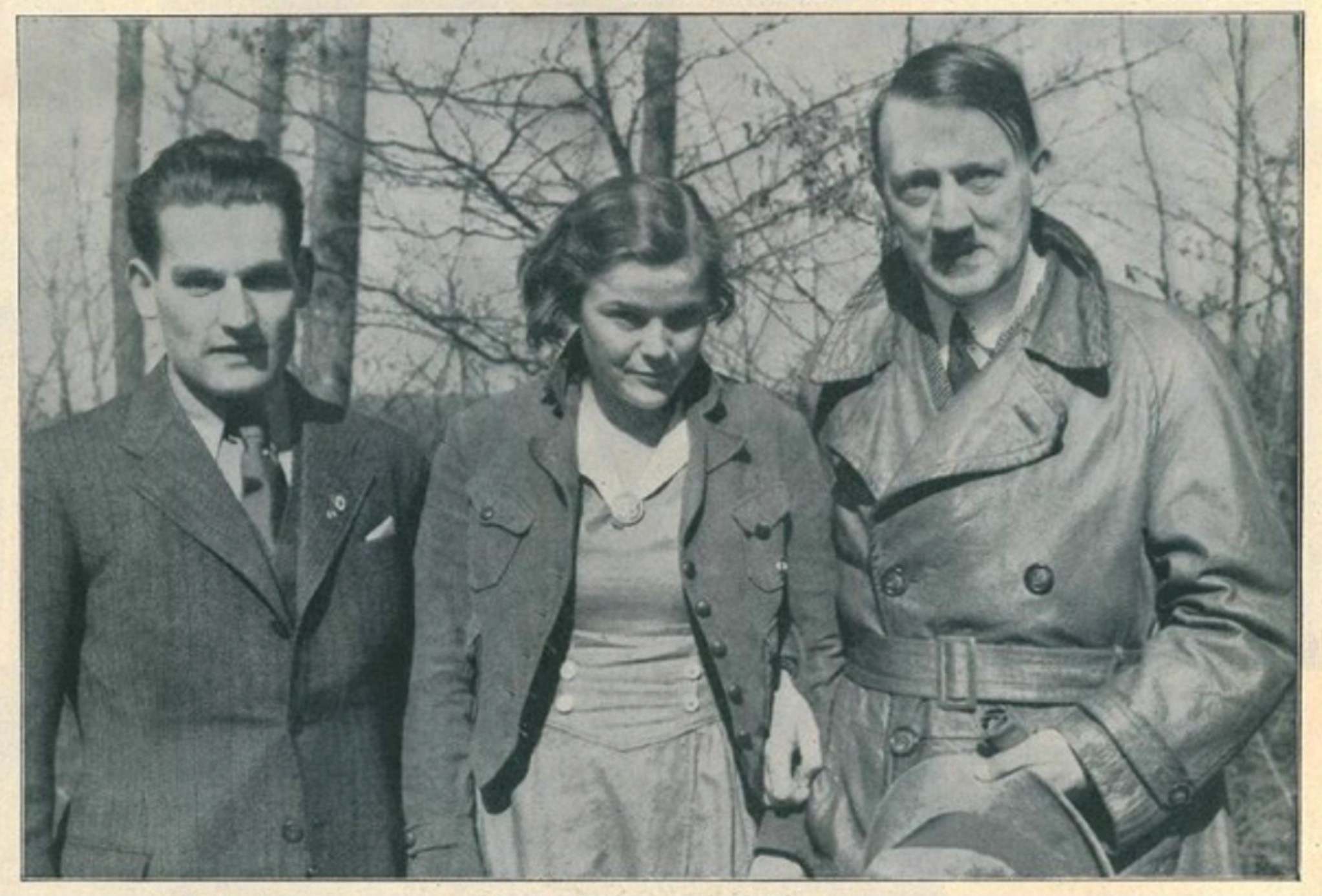
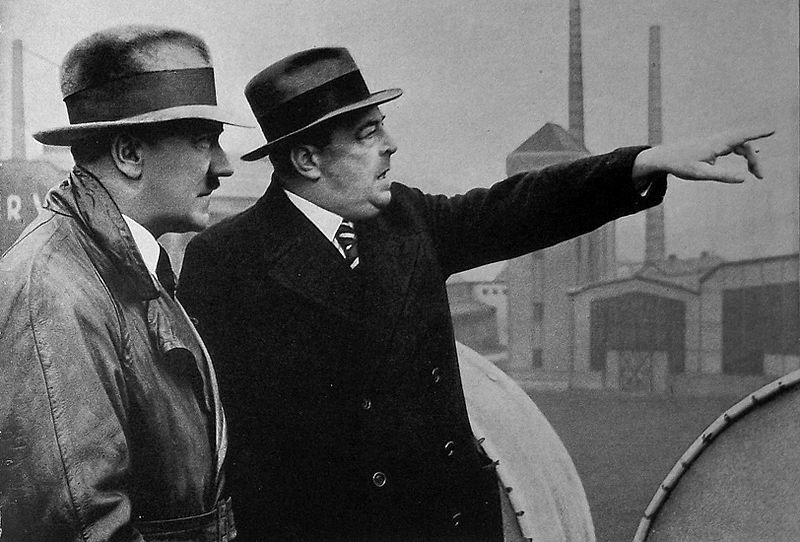
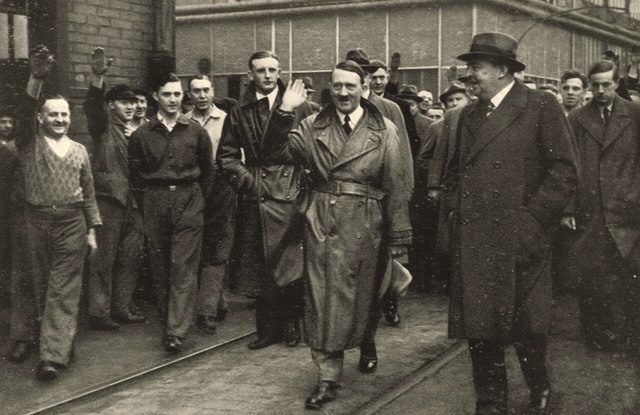
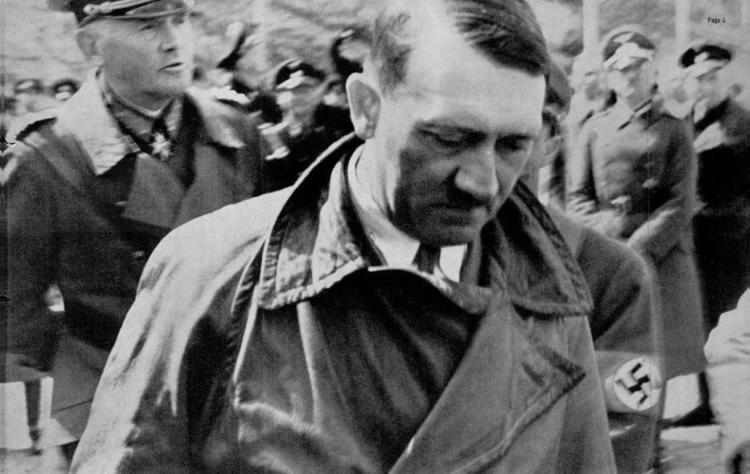
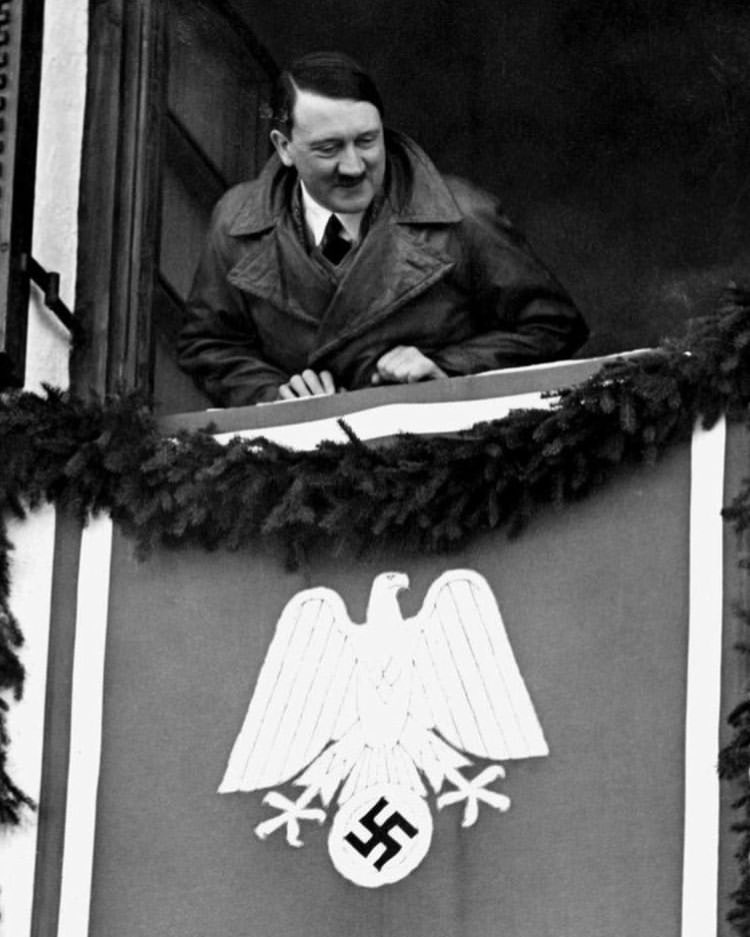
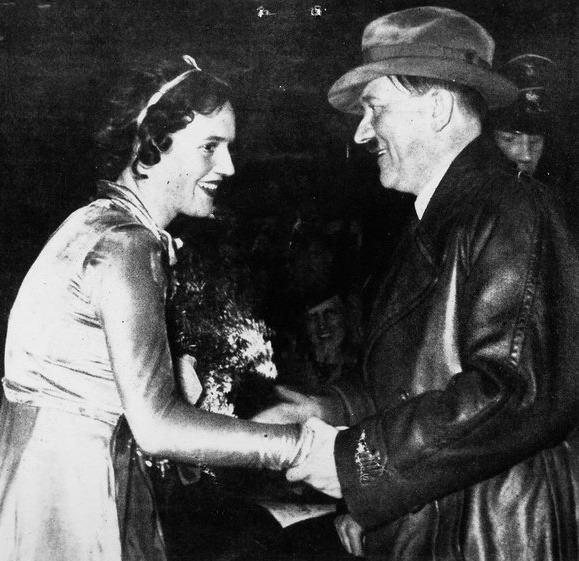
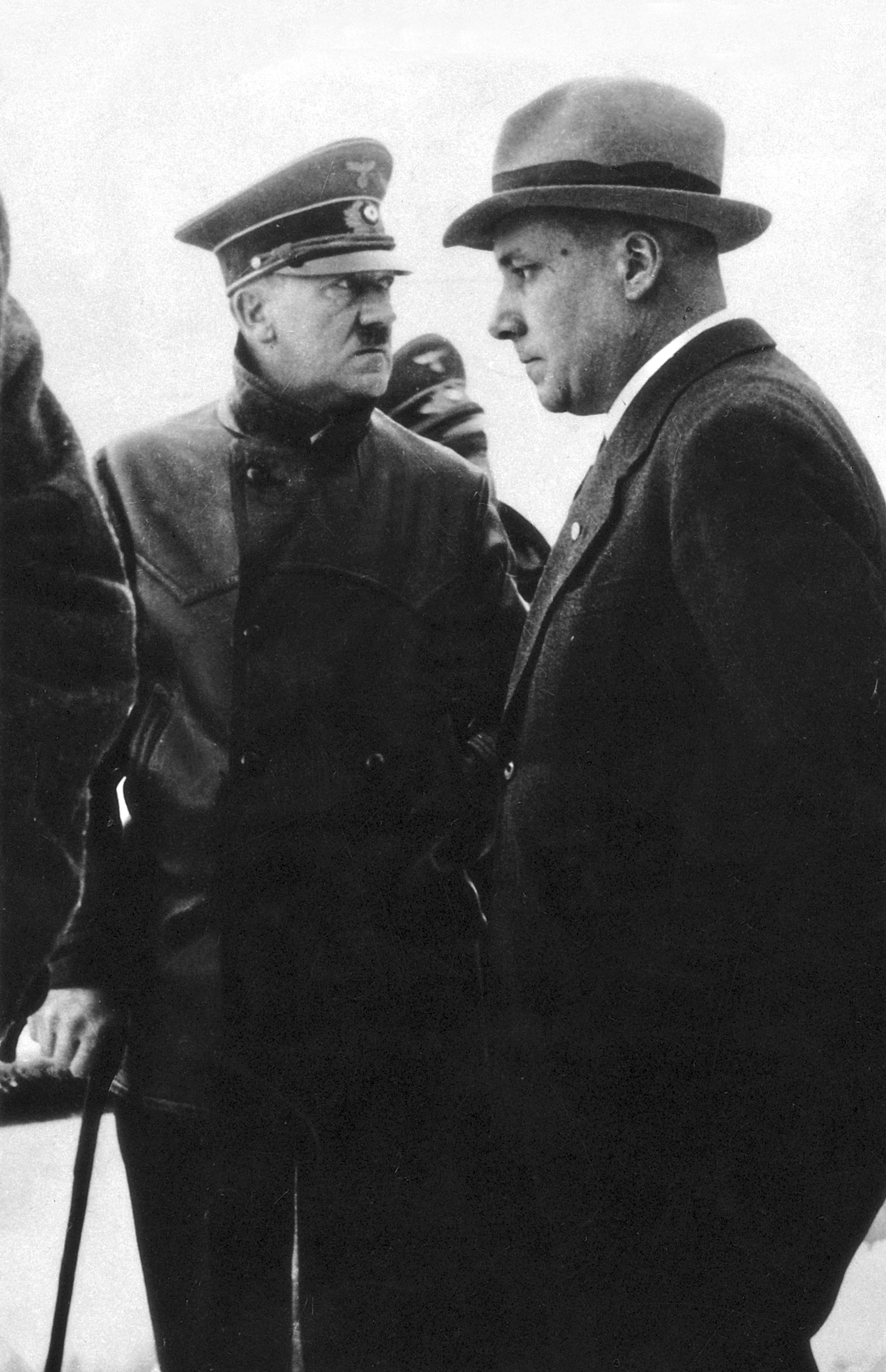
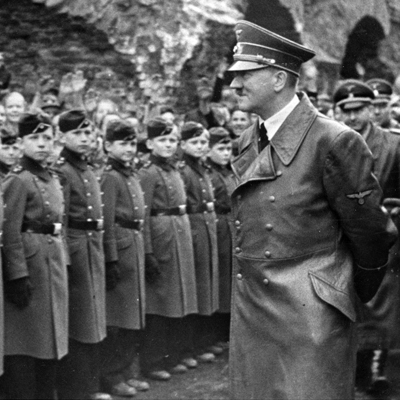
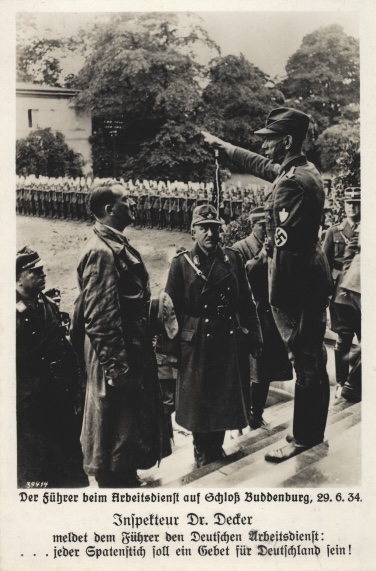
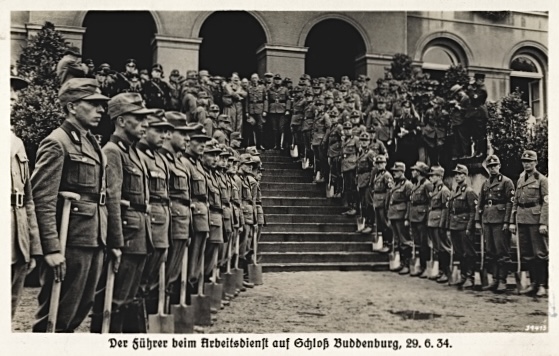
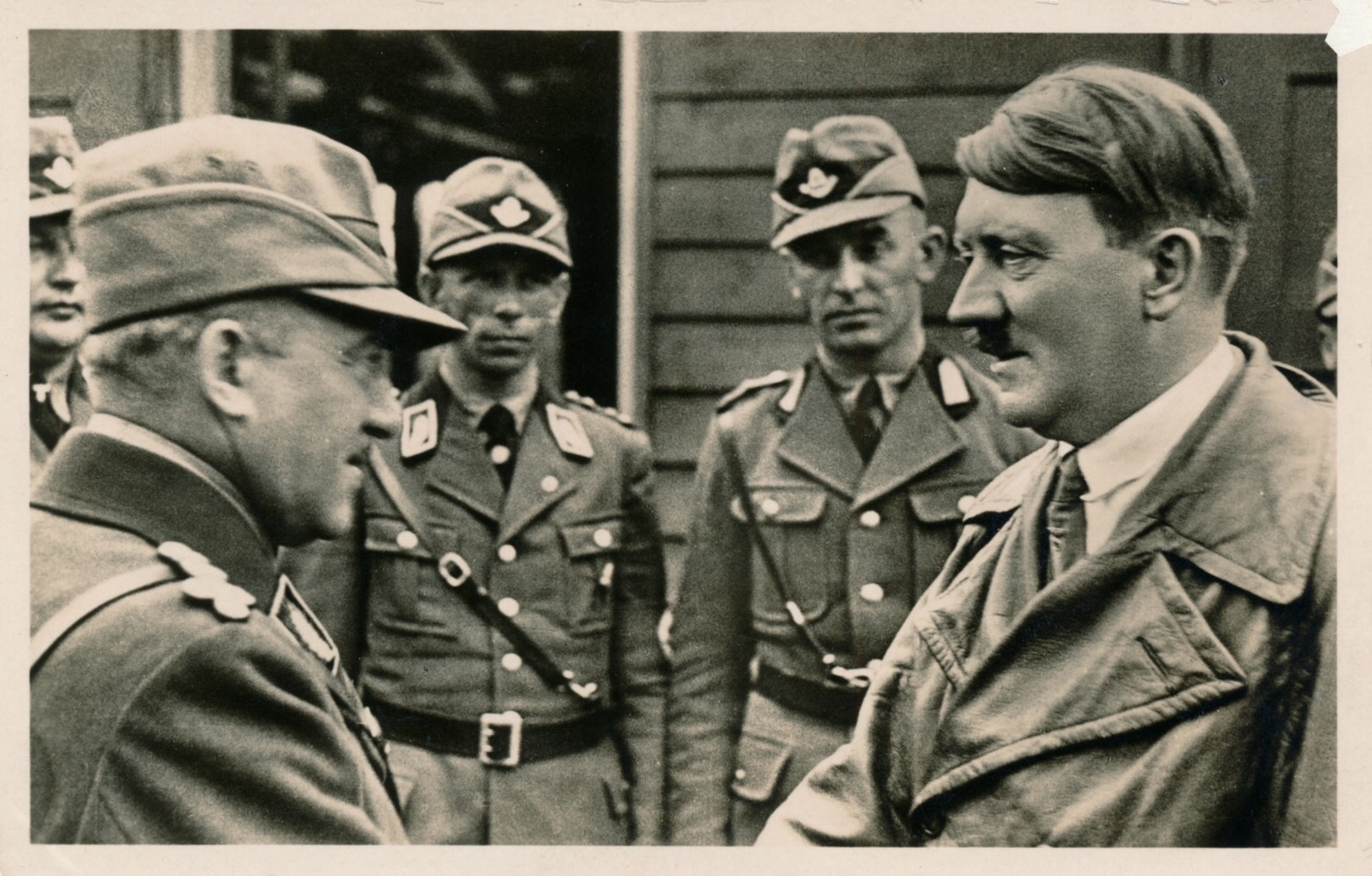
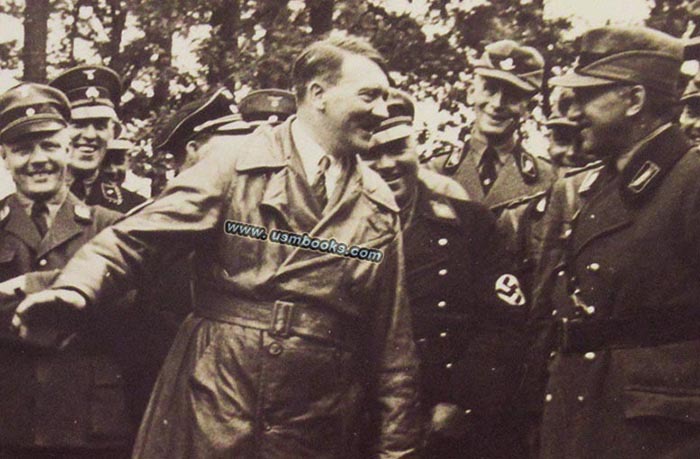
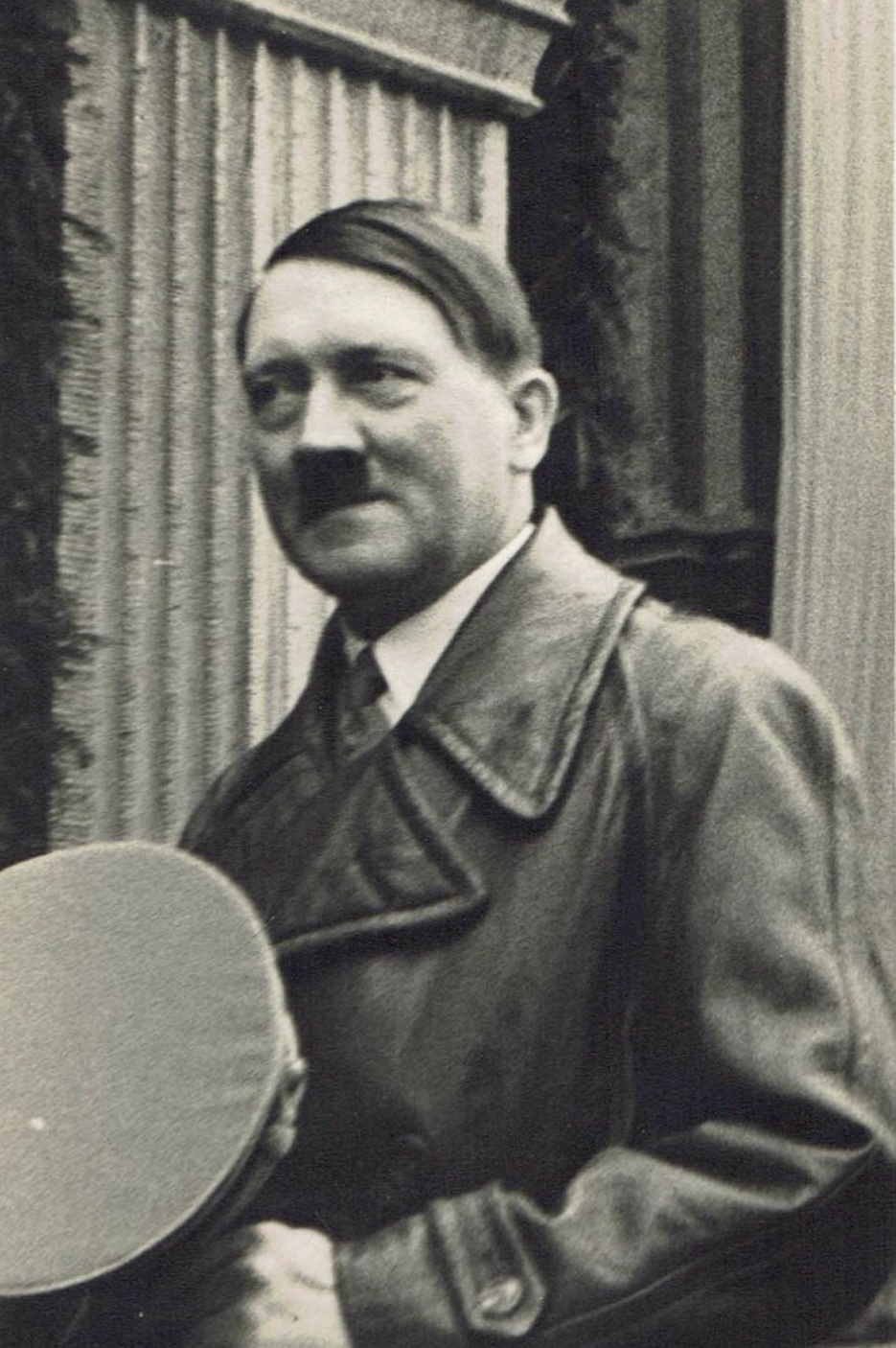
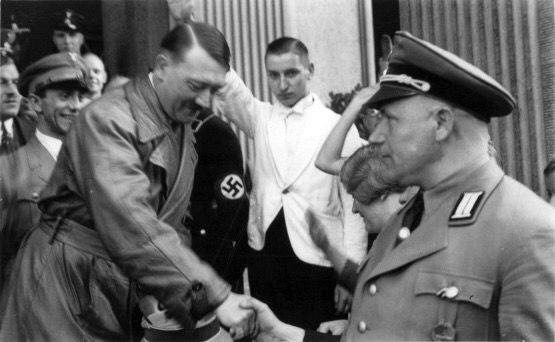
Cover photo of ‘DAS DEUTSCHLAND ADOLF HITLERS’ a special edition book showing everything that had improved in Germany in the first four years under the leadership of Adolf Hitler.Hitler and Mussolini in Florence during the negotiation at Sala Clemente des Palazzo Vecchio on 28 October 1940.Adolf Hitler arrives in Marburg an der Drau, Austria (now Maribor, Slovenia) on 26 April 1941. Adoring Austrians clearly approve of this gorgeous full length leather trench coat.A young girl presents flowers to Adolf Hitler at the Munich airport right before he departs for the Nuremberg Rally (Reichsparteitag) on 4 September 1934. This photograph was taken by Dr. O. P. Geissler of Hannover. This absolutely breathtaking photo of Adolf Hitler was taken near Essen on 14 April 1935, shortly after his visit to the Höntrop steel plant of the Bochum Association. Das Interessante Blatt was an Austrian magazine which was published weekly from 1882 to 1939. Adolf Hitler appears on the cover of the magazine in February 1939. This photo was also featured in the special edition book “Adolf Hitler, Ein Mann Und Sein Volk” published by Illustrierter Beobachter in 1936.Adolf Hitler paid a visit to the Bochum Association on 14 April 1935, during which he had Albert Vögler, Fritz Thyssen and Walter Borbet, among others, show him the Höntrop work.Adolf Hitler paid a visit to the Bochum Association on 14 April 1935, during which he had Albert Vögler, Fritz Thyssen and Walter Borbet, among others, show him the Höntrop work.“Adolf Hitler, Meeting the Representative of the Factory Workers” Picture 92 Group 64 by Heinrich Hoffmann. Hitler touring the Höntrop work on 14 April 1935.Adolf Hitler with industrialists in Bochum on 14 April 1935. From left: Gauleiter Josef Wagner (Gau Westphalia-South), Albert Vögler (Vereinigte Stahlwerke), Hitler, Walter Borbet (Bochumer Verein) and Hitler’s personal physician Dr. Karl Brandt.Adolf Hitler with the industrialists Albert Voegler (Vereinigte Stahlwerke), Fritz Thyssen (Thyssen AG) and Walter Borbet (Ruhrstahl AG) in Bochum on 14 April 1935.Adolf Hitler visiting industries in the Rhineland and Westphalia. Hitler acknowledging the salutes of workers during a visit to a factory on 14 April 1935. A print from Adolf Hitler. Bilder aus dem Leben des Führers, Hamburg: Cigaretten/Bilderdienst Hamburg/Bahrenfeld, 1936.Adolf Hitler on 16 April 1935 in Rothenburg ob der Tauber in front of the “Eisenhut” hotel. The Nazi party referred to Rothenburg as the “most German of German towns” and when Hitler visited he was welcomed with massive crowds, hearty cheers and “Heil Hitler” salutes.Adolf Hitler on 16 April 1935 in Rothenburg ob der Tauber in front of the Hotel Eisenhut. The Nazi party organized day trips from all across the country to visit Rothenburg to show followers and supporters how they should aim to live and to inspire them to cultivate a similar ideal town with a strong sense of family and community.Adolf Hitler’s eyes fill with tears as he stands over Horst Wessel’s grave. On the left is General Blomberg, whose marriage to a clerk later resulted in his forced resignation.Adolf Hitler at the state funeral of Hans Schemm, who died 5 March 1935 in an air crash. Schemm was given a lavish state funeral, attended by Hitler unannounced and by most Party and State dignitaries. One observer noted that it was the biggest Bayreuth had ever seen and far more ostentatious than Richard Wagner’s funeral.Adolf Hitler photographed on the balcony of his room at the Olympiahaus Hotel during the 1936 Winter Olympics in Garmisch-Partenkirchen on 16 February 1936. Adolf Hitler greeting British skater Megan Taylor in Munich at the Prinzregentenstadion for an ice skating event held on 10 March 1936. München; Prinzregentenstadion; Eislaufveranstaltung 10. März 1936 (Hitler im Profil in Ledermantel mit Hut)Adolf Hitler poses in a leather trench coat circa 1935.Signed photo of Adolf Hitler in leather trench coat c. 1933. Adolf Hitler in leather trench coat c. 1933.Führer and Chancellor of Germany Adolf Hitler on a unit of the Navy visiting the conquered naval base in Gdynia, Poland in September 1939. The Battle of Gdynia was one of the major battles in northern Poland during the Invasion of Poland in 1939. The Nazi’s push towards Gdynia began on 8 September and they captured Gdynia six days later on 14 September.Adolf Hitler with Martin Bormann. One of the main heads of the Nazi Party and personal secretary to Adolf Hitler, Bormann had the full trust of the Führer. Adolf Hitler and Joseph Goebbels visit the studios of UFA in Babelsberg on 4 January 1935 and watch the filming of ‘Barcarole’. On the camera is Friedl Behn-Grund, right next to him is the production manager Gunther Stapenhorst. The film starred Czech actress Lida Baarová, who was involved in a scandalous love affair with Goebbels until 1938, when Hitler demanded he terminate the affair and forbid her from making any further films in Germany.Adolf Hitler at the opening of the Reichsautobahn Darmstadt-Frankfurt on 19 May 1935. With the opening of the short section of the Frankfurt-Darmstadt autobahn, the construction of which had begun with great Nazi propaganda on 23 September 1933, the first section of an autobahn built under the Nazi government in the Reich was opened to traffic. The section from Darmstadt to Heidelberg followed on 3 October 1935.Postcard Führer und Reichskanzler Adolf Hitler, im Mantel an Bord eines Schiffes. (Postcard showing Führer and Chancellor Adolf Hitler in a long leather trench coat on board a ship).Nach seiner Rede in der Weitzer Maschinenhalle. Links neben Hitler Gauleiter Josef Bürckel. (After his speech at the Weitzer wagon factory in Graz, Austria on 3 April 1938. Left next to Adolf Hitler is District Governor Josef Bürckel.) Adolf Hitler visited the capital of Styria after Austria was annexed to the German Reich.Adolf Hitler’s inspection of the future Nazi elite at Napola Graz, the National Political Education Centre in March 1941. Napolas were special schools created by Bernhard Rust to provide the army, the SS, and the police with their next generation of officers. Admission to a Napola was based on the presentation of a medical certificate attesting to the applicant’s outstanding “racial” and physical characteristics. Prospective students also had to show exceptional courage and aggressiveness in athletic competitions in order to be accepted into one of the 16 Napolas.Adolf Hitler on 27 August 1941, at the entrance of the Stępina tunnel in Anlage Süd after a meeting with Benito Mussolini to discuss the war with Soviet Russia. Both leaders arrived by train. and met on Hitler’s Führersonderzug, which stayed in the bunker at Strzyżów, while Mussolini’s engine and carriages remained at Stępina.Adolf Hitler arrives to give a short speech to RAD and SS leaders at the Reichsarbeitsdienst (German Labor Service) Führerschule at Buddenburg Castle in Lünen on 29 June 1934.
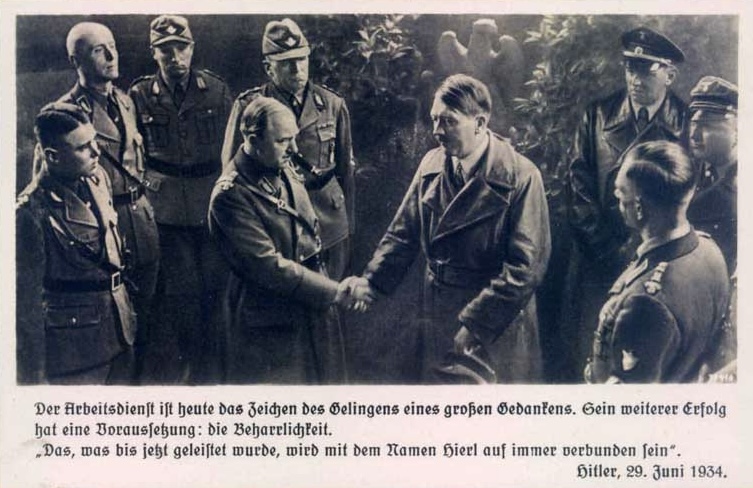
Adolf Hitler left Essen on the morning of 29 June 1934 to head to Lünen for a tour of the district Führerschule of the Reich Labor Service (Reichsarbeitsdienst) located at Schloss Buddenburg. He made a short speech to the RAD leaders at 10:00 AM, thanking the Reich leader of the Labor Service Colonel Konstantin Hierl for his support in building up the RAD.
“That, Dear Hierl, has been your great accomplishment. You have created the National Socialist Arbeitsdienst, and for that I may thank you, and for that the German Volk thanks you.”
Hoffmann published these 3 postcards to commemorate this momentous occasion. Another interesting fact about this date, according to Goebbels’ diary entry for 29 June 1934, Hitler had made the decision to carry out the final purge of the SA and to eliminate Ernst Röhm on the following day.
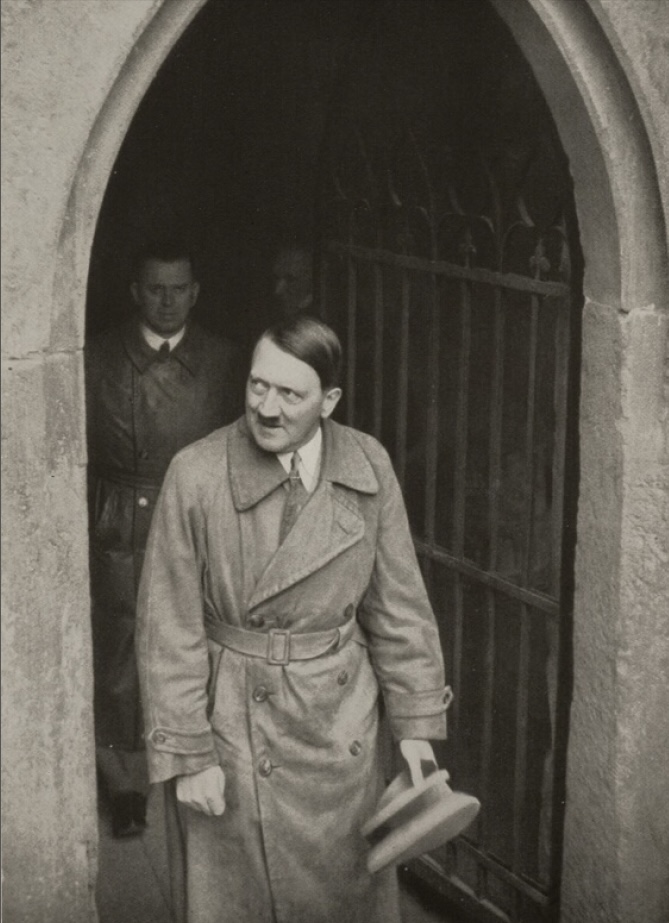
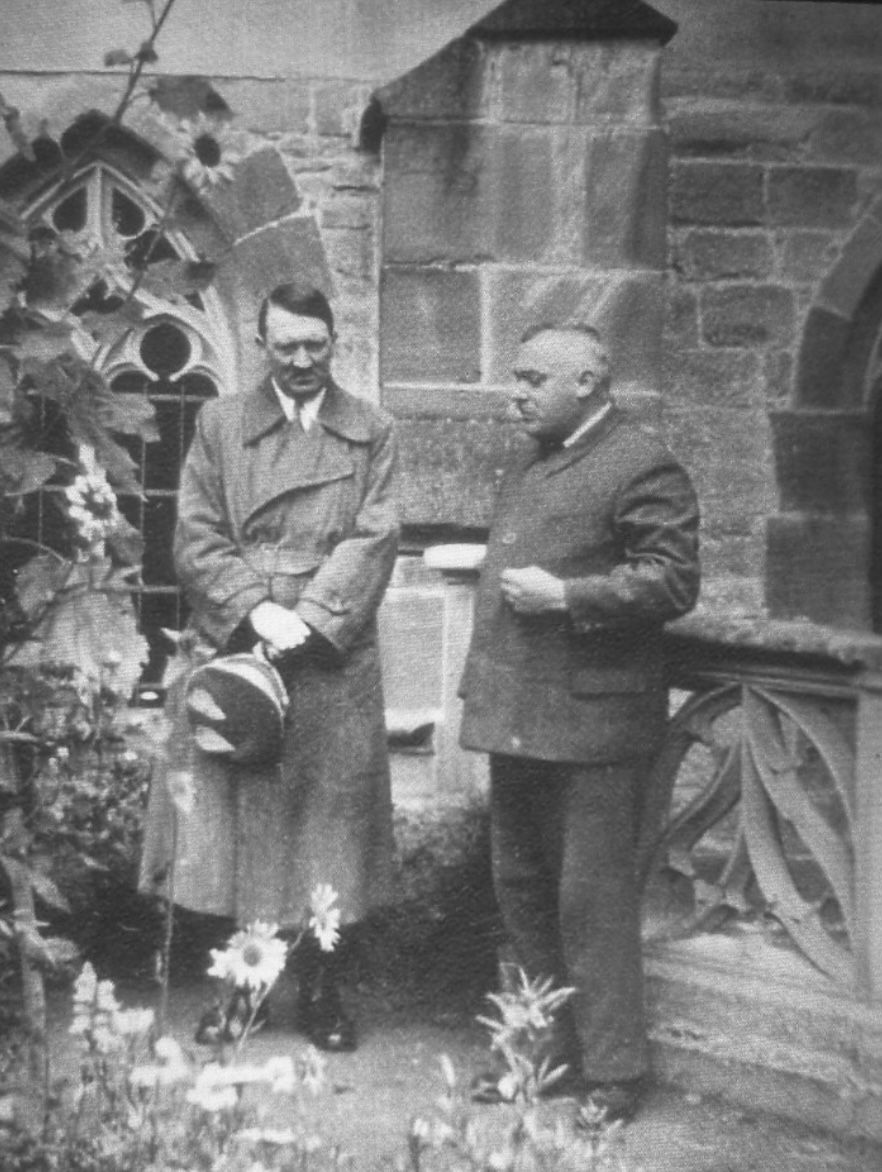
29. Juni 1934 in Buddenburg: Hitler begrüßt in Anwesenheit von RAD- und SS-Führern Reichsarbeitsführer Konstantin Hierl.Adolf Hitler with Labor Service Colonel Konstantin Hierl at the Führerschule of the Reich Labor Service located at Schloss Buddenburg in Lünen on 29 June 1934.Adolf Hitler jokes with Reichsarbeitsführer Konstantin Hierl during his visit to the Führerschule of the Reichsarbeitsdienst or RAD (Reich Labor Service) in Lünen on 29 June 1934.Adolf Hitler observing the morning exercise routine at the Führerschule of the Reich Labor Service located at Schloss Buddenburg in Lünen on 29 June 1934.Adolf Hitler after visiting the SS Leibstandarte Regiment in Hamburg on 17 December 1935.Adolf Hitler greets Karl Dönitz, the German admiral who headed the U-Boat arm of the German Navy, and later succeeded Hitler as Führer after Hitler’s suicide in April 1945.Adolf Hitler crosses the Lustgarten in Berlin with Herr Lutze, his chief of staff, in front of 30,000 oldest men of the SA on 30 January 1936. The Berliner Schloss stands in the background as he heads towards the Altes Museum to deliver a speech on the third anniversary of the seizure of power.Adolf Hitler stands with a member of the Leibstandarte-SS Adolf Hitler (LAH). Photograph by Atelier Photo Hogrefe of Godesberg.Adolf Hitler pauses for a photograph at the entrance of the Rheinhotel Dreesen in Bad Godesberg, Bonn in 1936.Adolf Hitler departs from the Rheinhotel Dreesen in Bad Godesberg, Bonn in 1936.Adolf Hitler on the Königssee with his press chief Otto Dietrich on 24 July 1935.Adolf Hitler at the conclusion of his last election campaign in November 1932. When he arrives back home in Munich, the Führer is presented with flowers by a young girl.Adolf Hitler visiting the monastery at Maulbronn on 26 September 1935. When Hitler first visited the Maulbronn Kloster in 1927 he believed there were medieval frescoes underneath the heavily plastered walls and ordered them to be uncovered in 1933. In his ‘Table Talk’ recorded on 5 September 1942, Hitler spoke of the monastery at Maulbronn as being one of the most beautiful in existence. Frescoes are visible in the connecting hall leading over to the former infirmary and manor house. This gate where Hitler was photographed appears exactly the same today, on the southern side of the old infirmary building and leading out to the church yard by the faustturm on the east side of the complex.Adolf Hitler visiting the monastery at Maulbronn on 26 September 1935.
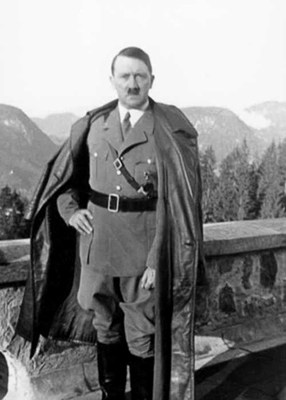
BONUS PHOTOS: Adolf Hitler out on the Berghof terrace in early January 1940, sporting a spectacularly flattering leather trench coat. This dapper dictator was definitely displaying some divine level drip here. These are all from Eva Braun’s albums.
I love history and have always been infatuated with the design and style of the 1920’s. Unfortunately I can’t time travel back to this era, so I live vicariously through books, movies and photos.
I’m so thrilled that you are enjoying it! I find more and more incredible photos of AH everyday and love pulling them all together so keep checking back!
[…] taken on a later date than when he’s seen donning a white trench coat, versus the impressive leather coat seen in the iconic shots. According to International News Service journalist Pierre J. Huss, who […]






















 Heinrich Hoffmann Photo Gallery